Key takeaways
- Otterly.AI, Peec AI, and Profound all do essentially the same core job: they tell you whether your brand appears in AI-generated answers across ChatGPT, Perplexity, and similar engines.
- None of the three give you a clear path to actually improving your visibility. They show you the problem; they don't solve it.
- Otterly is the cheapest entry point ($29/month) but the most limited on optimization. Profound has the deepest analytics but is enterprise-priced and leaves strategy entirely to you. Peec AI sits in the middle but still stops short of content generation.
- If you need a tool that monitors and helps you fix the gaps, you'll need to look beyond these three.
There's a pattern that keeps showing up in the AI visibility tool market right now. A company launches a dashboard that tracks brand mentions in ChatGPT or Perplexity. They call it an "AI SEO platform." Marketers sign up, stare at the data, and then... don't know what to do next.
Otterly.AI, Peec AI, and Profound are three of the most-discussed tools in this space. They're genuinely useful for what they do. But what they do is narrower than most buyers realize before they sign up.
This guide breaks down each tool honestly, compares them side by side, and explains why monitoring alone isn't enough in 2026.
What these tools actually do
Before getting into the specifics, it's worth being clear about the job these tools are built for. AI visibility monitoring means: you give the tool a list of prompts or keywords, it runs those against AI engines (ChatGPT, Perplexity, Google AI Overviews, etc.), and it records whether your brand appears in the responses. Over time, you get a picture of your "share of voice" in AI search.
That's genuinely valuable data. If you have no idea whether ChatGPT mentions your brand when someone asks "what's the best project management tool for remote teams," you're flying blind.
The problem is that knowing you're invisible doesn't tell you how to become visible. And that's where all three of these tools hit a wall.
Otterly.AI

Otterly is the most accessible of the three. It starts at $29/month, has a free tier, and is designed to be easy to set up. You pick your brand, add some prompts, and start seeing data within minutes.
The interface is clean. The reporting is straightforward. For a startup or a solo marketer who just wants to answer "are we showing up in AI search at all?", Otterly does the job without overwhelming you.
Where it falls short is exactly what its own positioning hints at: it's a monitoring tool. Community practitioners who've tested it describe it as effective for basic "are we showing up" checks but lacking optimization guidance. You see that a competitor is being cited more than you. You don't get any direction on what to change.
Otterly tracks up to 6 AI platforms (ChatGPT, Perplexity, Google AI Overviews, Copilot, Claude, and others depending on the plan). The higher-tier plans go up to $989/month, which is a significant jump for what remains fundamentally a tracking dashboard.
Best for: Teams that want a low-cost way to start monitoring AI visibility and don't yet need optimization features.
The gap: No content recommendations, no gap analysis, no path from "we're not visible" to "here's what to publish."
Peec AI
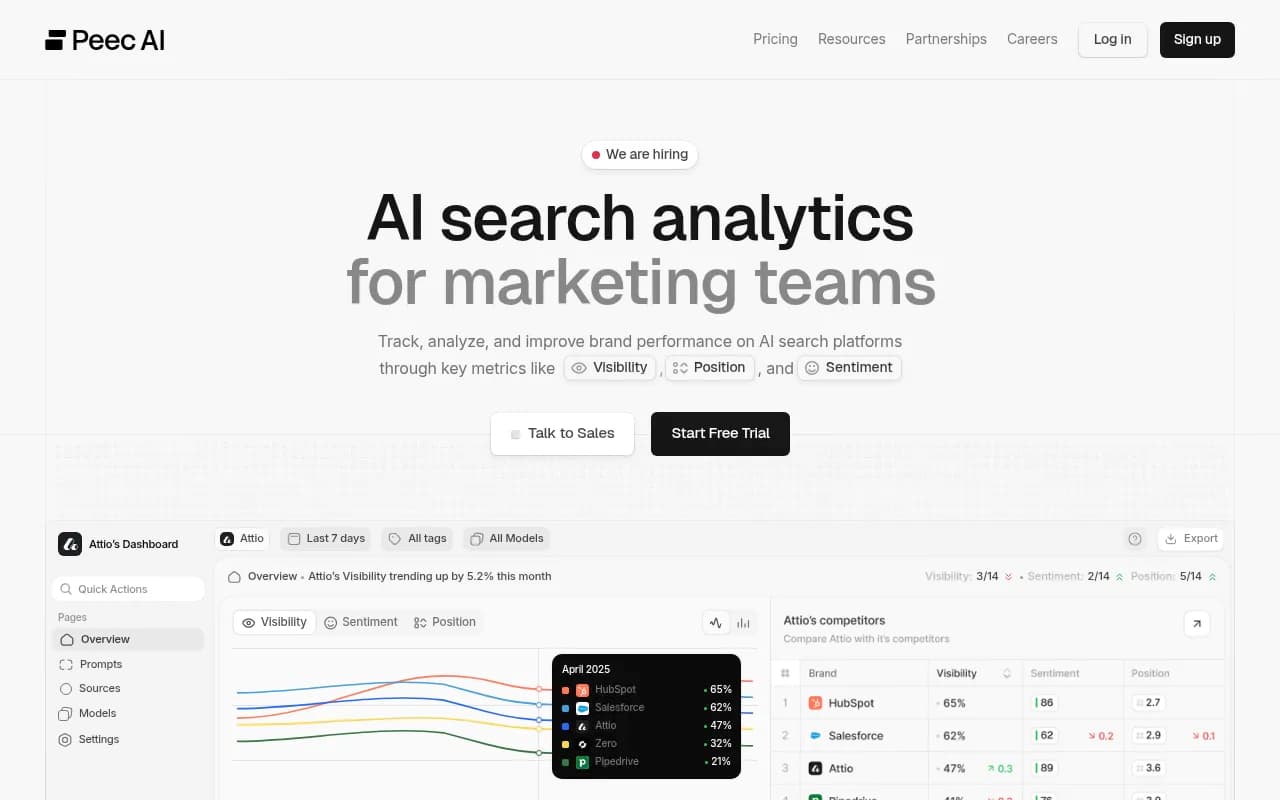
Peec AI positions itself a step above pure monitoring. It does track brand mentions across AI engines, but it also attempts to surface competitive gap analysis -- showing you where rivals are dominating and you're not.
The dashboard is visual and the competitor benchmarking is genuinely useful. If you want to know that your main competitor is being cited in 60% of relevant ChatGPT responses while you're at 12%, Peec AI makes that visible clearly.
It starts at around €89/month (roughly $95-100 depending on exchange rates), which is reasonable for what you get. The platform supports multiple languages and is particularly popular with SaaS and B2B teams.
The competitive gap analysis is the strongest differentiator here. Seeing which prompts you're losing is more actionable than just seeing an overall visibility score. But Peec AI still stops at showing you the gap. It doesn't generate content to fill it, doesn't tell you which specific pages need updating, and doesn't connect visibility changes to actual traffic or revenue.
Best for: Teams that want competitive benchmarking alongside monitoring, particularly in B2B and SaaS.
The gap: Identifies where you're losing to competitors but doesn't help you win those prompts back.
Profound
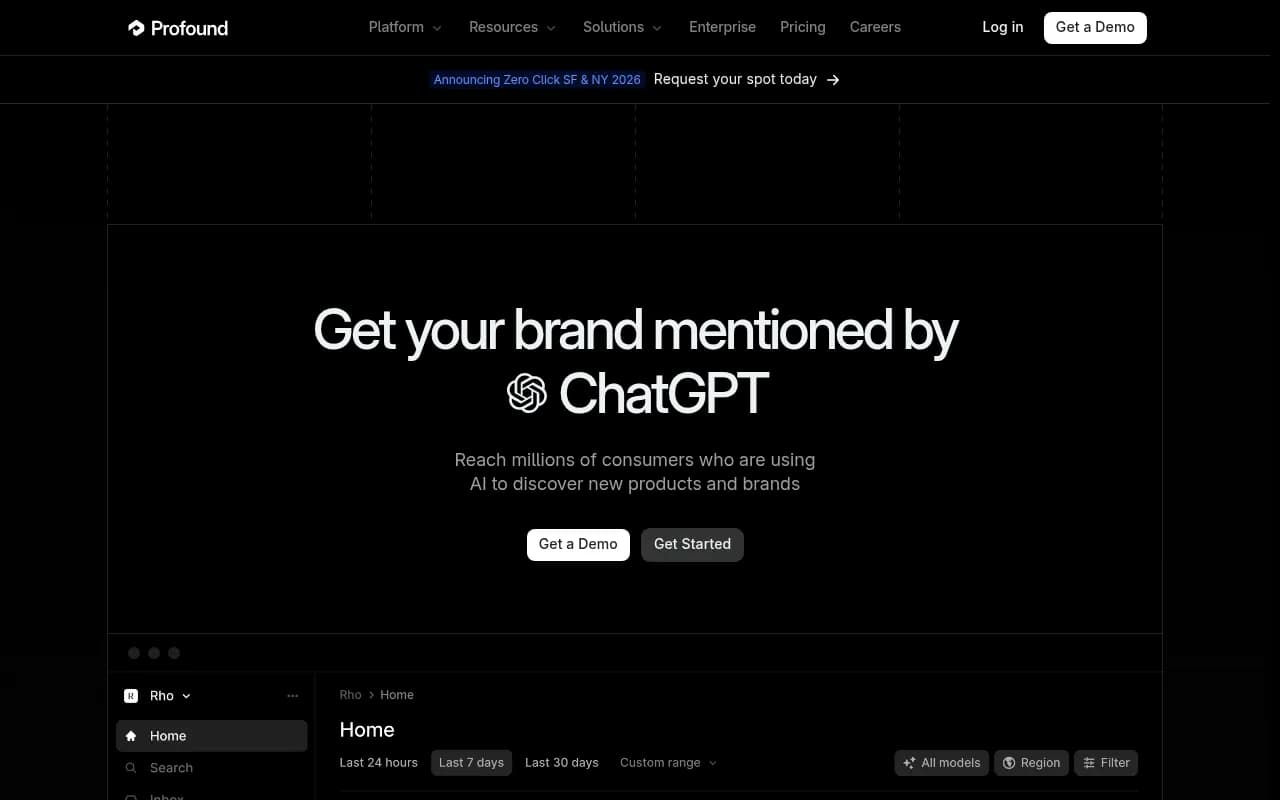
Profound is the enterprise option. It's used by larger brands and Fortune 500 teams, and it shows in both the depth of analytics and the pricing (starting around $99/month but scaling significantly for enterprise features).
The platform tracks 10+ AI platforms and provides detailed dashboards around brand sentiment, citation sources, and topic clusters. If you want to understand how AI models talk about your brand, not just whether they mention it, Profound goes deeper than Otterly or Peec AI.
Profound also has a content operations layer -- it can help teams manage and publish content. But the strategy is still left to you. The platform provides data-rich dashboards and leaves the interpretation and prioritization to your team. For a large enterprise with a dedicated SEO or content team, that's fine. For a lean marketing team, it means you're paying for data you may not have the bandwidth to act on.
API access is available but requires contacting sales, which is a friction point for teams that want to integrate data into their own workflows quickly.
Best for: Enterprise teams with dedicated analysts who can turn detailed visibility data into content strategy.
The gap: Comprehensive data, but no built-in mechanism to go from insight to content to published page.
Side-by-side comparison
| Feature | Otterly.AI | Peec AI | Profound |
|---|---|---|---|
| Starting price | $29/month (free tier available) | ~€89/month | $99/month (enterprise pricing for full features) |
| AI platforms tracked | 6 | Multiple | 3-10+ depending on plan |
| Competitor tracking | Yes | Yes (gap analysis) | Yes |
| Content recommendations | No | Limited | No |
| Content generation | No | No | No |
| Crawler/bot logs | No | No | No |
| Traffic attribution | No | No | No |
| Reddit/YouTube tracking | No | No | No |
| API access | Yes | Yes | Contact sales |
| Best for | Startups, budget-conscious teams | B2B/SaaS with competitive focus | Enterprise with analyst resources |
| Optimization capability | Monitoring only | Monitoring + gap identification | Monitoring + deep analytics |
The pattern is obvious once you lay it out. All three tools are strong at the monitoring layer. None of them close the loop from "here's where you're invisible" to "here's what to publish to fix it."
Why monitoring alone isn't enough in 2026
The AI search market has matured fast. In early 2025, just knowing whether ChatGPT mentioned your brand at all was a competitive advantage -- most companies had no idea. By 2026, that baseline awareness is table stakes.
The brands winning in AI search now are the ones who've figured out the next step: creating content that AI models actually want to cite. That means understanding which prompts have volume, which topics your competitors are covering that you're not, and then publishing content that's specifically engineered to get picked up by ChatGPT, Claude, Perplexity, and others.
None of Otterly, Peec AI, or Profound help you do that. They show you the scoreboard. They don't coach you on how to score.

This gap is real and it's getting more expensive to ignore. AI search now drives 12-18% of referral traffic for many sites, and that share is growing. Being invisible in AI responses isn't a vanity metric problem anymore -- it's a revenue problem.
What to look for if you need more than monitoring
If you've outgrown pure monitoring (or you never wanted to stop there), here's what an optimization-capable platform needs to do:
Gap analysis that shows specific content opportunities. Not just "you're less visible than competitor X" but "here are the 23 prompts where competitor X gets cited and you don't, ranked by prompt volume."
Content generation grounded in citation data. Generic AI writing tools don't cut it here. You need content built around what AI models actually cite -- which sources, which formats, which angles.
Crawler log access. Knowing that GPTBot or ClaudeBot is hitting your site (or being blocked by your robots.txt) is foundational. If AI crawlers can't read your pages, no amount of content optimization will help.
Traffic attribution. Visibility scores are useful, but connecting AI citations to actual sessions and revenue is what makes the investment defensible to leadership.
Promptwatch is built around this full loop -- find the gaps, generate content to fill them, track the results. It's the approach that separates optimization platforms from monitoring dashboards.

Other tools worth knowing about
The three tools in this comparison aren't the only options. A few others are worth a mention depending on what you need.
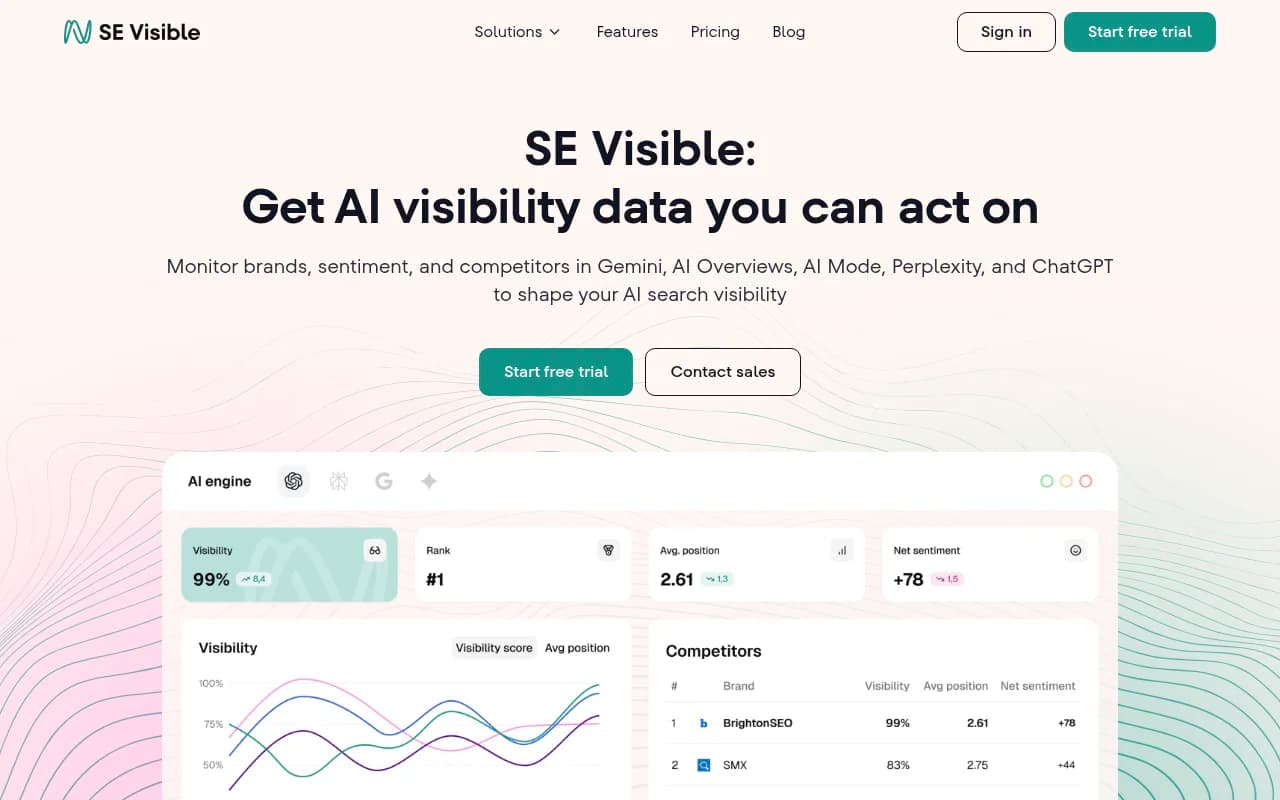
SE Visible (from SE Ranking) is a solid choice if you're already in the SE Ranking ecosystem and want AI Mode tracking layered into your existing SEO workflow.
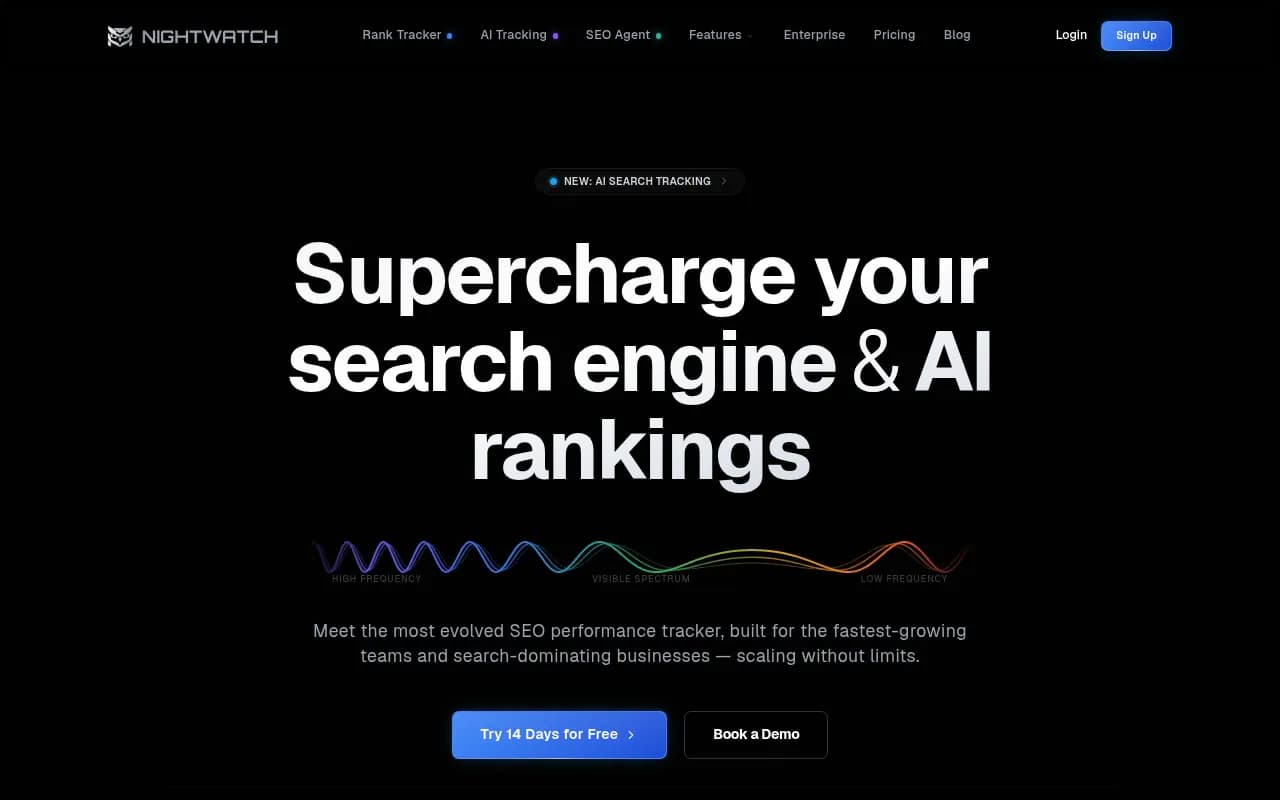
Nightwatch covers both traditional rank tracking and AI search monitoring, which makes it useful for teams that don't want to manage two separate tools.
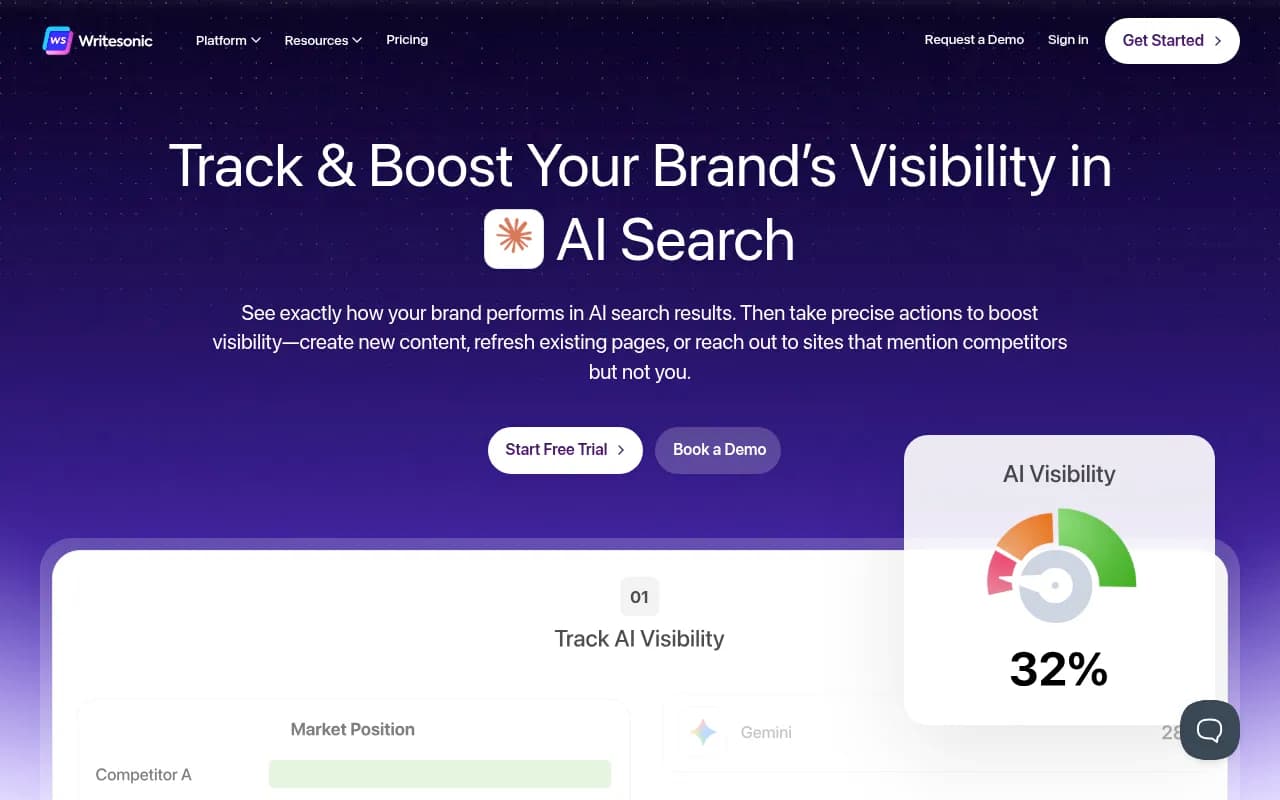
Writesonic has moved into AI visibility with a GEO-focused layer that includes some content optimization guidance, making it closer to an action-oriented tool than the three we've compared here.
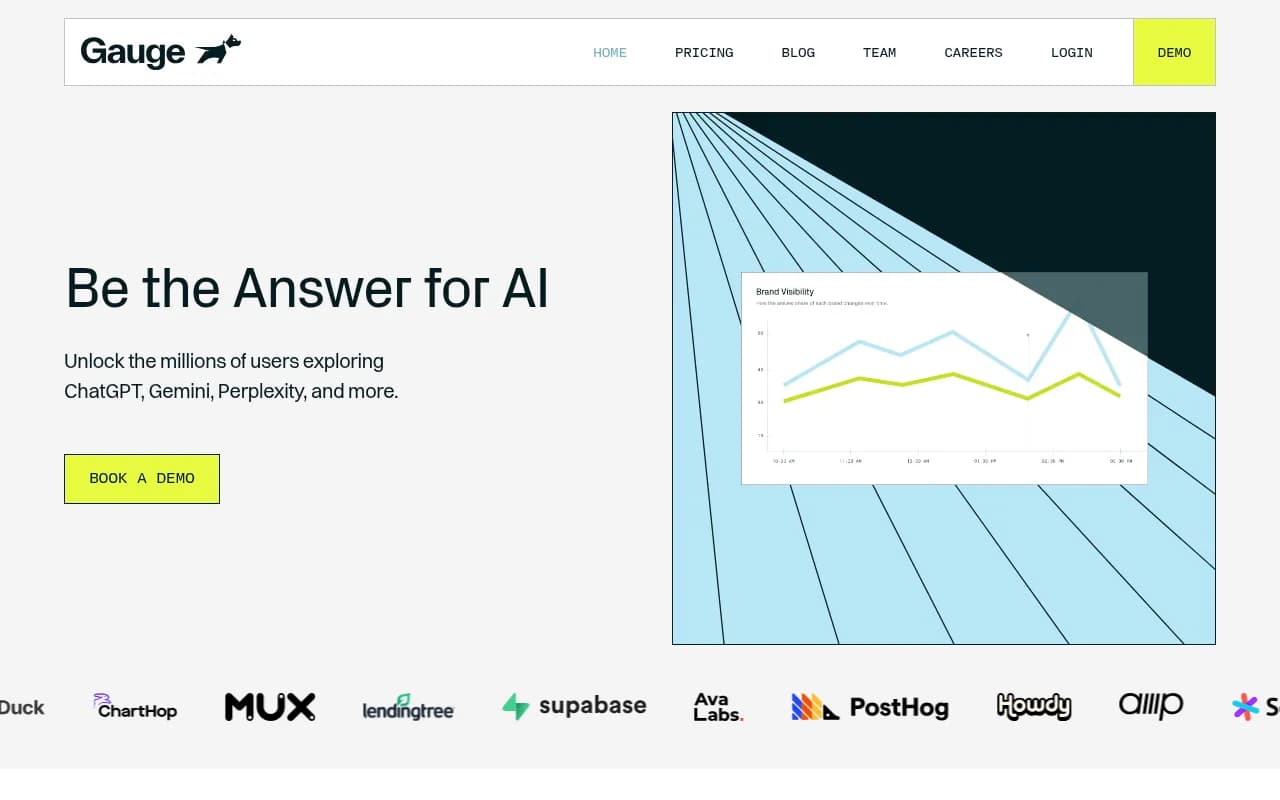
Gauge is worth looking at if content generation is a priority -- it includes content creation as part of the package, which is rare in this category.
The honest verdict
Otterly.AI, Peec AI, and Profound are all legitimate tools. They're not scams or poorly built products. They do exactly what they say they do.
The issue is what they don't say: that monitoring your AI visibility and improving it are two completely different problems, and these tools only solve the first one.
If you're in the early stages of understanding your AI search presence, any of the three will give you useful data. Otterly is the cheapest starting point. Peec AI adds competitive context. Profound goes deepest for enterprise teams with the resources to act on complex data.
But if your goal is to actually move the needle -- to go from invisible to cited, from data to published content, from visibility scores to revenue attribution -- you'll hit the ceiling of all three tools quickly. That's not a criticism of what they built. It's just a description of what they built.
The market has moved. Monitoring was the first chapter. Optimization is where the real work happens now.