Key takeaways
- Otterly.AI is a solid entry-level AI visibility monitoring tool with a clean interface and reasonable pricing
- It tracks brand mentions and citations across major AI engines including ChatGPT, Perplexity, Google AI Overviews, Gemini, and Copilot
- The GEO audit feature gives useful snapshot data, but the platform is primarily a monitoring dashboard -- it shows you what's happening, not what to do about it
- Teams that need content gap analysis, AI-native content generation, or crawler log data will quickly outgrow it
- Best suited for smaller teams, solo marketers, or anyone just getting started with AI search visibility
What Otterly.AI actually is
Otterly.AI launched as one of the first tools built specifically for AI search monitoring, and that timing matters. While most SEO platforms were scrambling to bolt on AI tracking as an afterthought, Otterly was designed from the start to answer one question: is my brand showing up when people ask AI engines about my category?
That focus shows in the product. The interface is clean, onboarding is fast, and you can start seeing data within minutes of setting up your first brand profile. For a lot of teams, that simplicity is genuinely appealing.
But simplicity cuts both ways. The same focus that makes Otterly easy to use also means it stops short of the deeper optimization work that AI search visibility now demands. More on that in a moment.

Core features
Brand mention and citation tracking
Otterly's main job is tracking how often your brand appears in AI-generated responses -- and it does this reasonably well. You set up a brand profile, define your competitors, and the platform queries AI engines on your behalf to see who's getting mentioned and who isn't.
The brand coverage monitoring lets you compare your visibility against competitors across customizable timeframes. You can see whether you're trending up or down, which AI engines mention you most, and where competitors are pulling ahead.
This is useful data. Knowing that ChatGPT mentions a competitor three times more often than you in a given category is actionable -- at least in the sense that it tells you there's a problem. What to do about it is a different question.
GEO audit
The GEO audit is probably Otterly's most talked-about feature. It runs an analysis of your website and AI search presence, flagging gaps in how AI engines perceive and cite your content.
It's a decent starting point for teams new to GEO. The audit surfaces issues like missing structured data, thin content on key topics, and pages that aren't being cited. Think of it as a health check rather than a roadmap -- it tells you something is wrong, but the path to fixing it is largely left to you.
Prompt and query monitoring
You can set up specific prompts to monitor -- questions like "what's the best project management tool for remote teams?" -- and track whether your brand appears in the AI responses over time. This is the core mechanic of AI visibility monitoring, and Otterly handles it competently.
The platform covers the major AI engines: ChatGPT, Perplexity, Google AI Overviews, Gemini, and Copilot. That's solid coverage for most use cases.
Competitor comparison
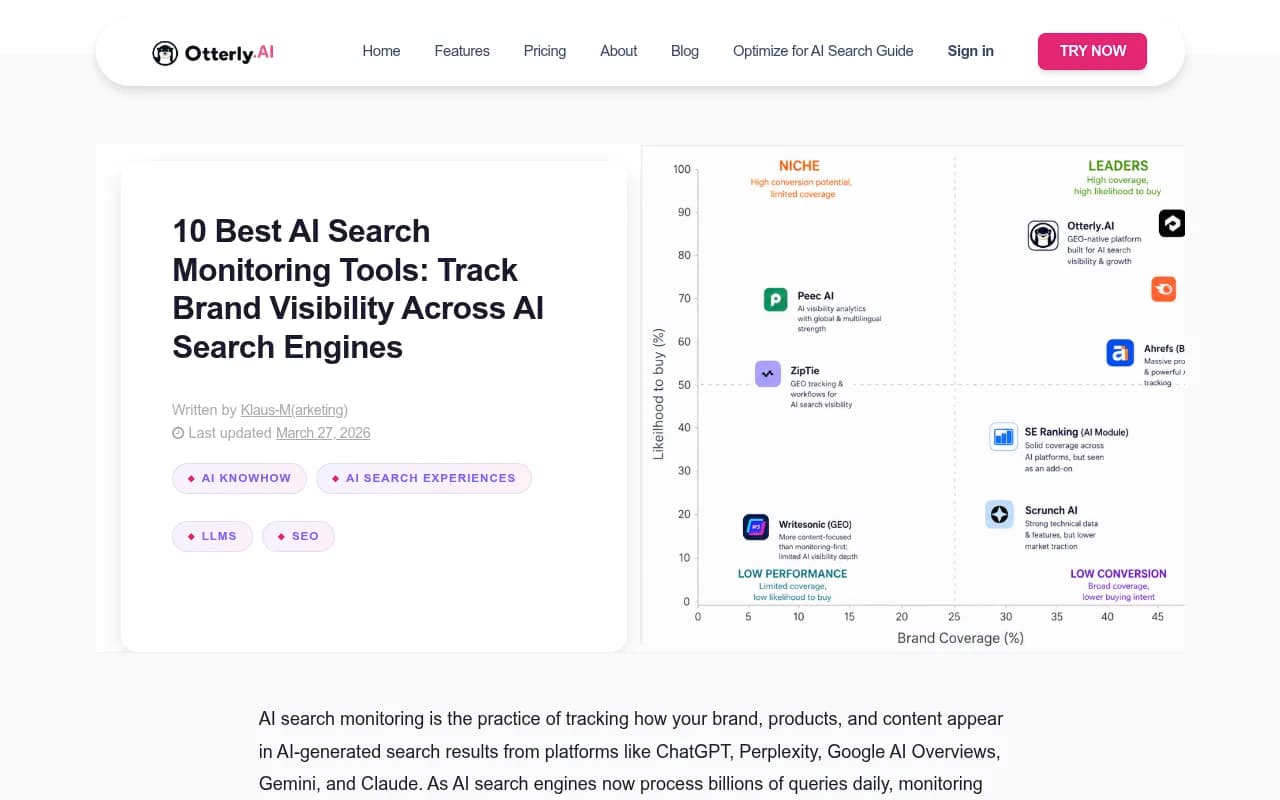
Otterly lets you stack your visibility against competitors across AI engines. The competitor heatmap-style views show who's winning for which prompts, which is useful for prioritizing where to focus.
What the research says
According to Otterly's own 2026 research, 15% of all website traffic now originates from AI agents and bots. ChatGPT accounts for 56% of AI search referral traffic, Gemini 18%, and Perplexity 8%. Those numbers help explain why AI visibility monitoring has become a real budget line item for marketing teams -- the traffic stakes are no longer trivial.
The same research positions Otterly as "the leading AI search monitoring solution of the first hour," which is fair. They were early. But being first and being best aren't the same thing in 2026, when the category has matured considerably.
A Reddit thread from April 2026 on r/Agentic_SEO put it plainly: Otterly is "mostly a monitoring tool. You get signals but not much help on what to actually do next." That's an honest summary of where the platform sits.
Pricing
Otterly.AI is positioned as one of the more affordable options in the AI visibility space. Exact pricing tiers change, but the platform has consistently offered a lower entry point than enterprise-focused competitors like Profound or Scrunch. There's typically a free trial or limited free tier to test the waters.
For budget-conscious teams or solo marketers who just need to know whether they're showing up in AI responses, the price-to-value ratio is reasonable. For teams that need the full optimization loop -- find gaps, create content, track results -- the cost of supplementing Otterly with other tools can add up quickly.
Where Otterly falls short
No content generation
This is the biggest gap. Otterly shows you where you're invisible, but it doesn't help you create the content that would fix that. You're left to take the monitoring data and figure out the content strategy yourself, then use separate tools to execute it.
That's a meaningful workflow friction. The teams getting the most out of AI search visibility work aren't just monitoring -- they're using that data to generate and publish content specifically engineered to get cited by AI engines.
Limited prompt intelligence
Otterly doesn't give you volume estimates or difficulty scores for prompts. You can see whether you appear for a given query, but you can't easily prioritize which prompts are worth targeting based on how much traffic they drive or how competitive they are.
No AI crawler logs
You can't see which AI crawlers are hitting your site, which pages they're reading, or how often they return. This matters more than it sounds. If ChatGPT's crawler is hitting your site but ignoring your most important pages, you want to know that -- and fix it.
No Reddit or YouTube tracking
A meaningful portion of what AI engines cite comes from Reddit discussions and YouTube content. Otterly doesn't surface these signals, which means you're missing a channel that influences AI recommendations.
No traffic attribution
Otterly tracks visibility but doesn't connect that visibility to actual website traffic or revenue. You can see that your brand is being mentioned more, but you can't tie that to a specific page getting more visits or a conversion uptick.
How it compares to alternatives
| Feature | Otterly.AI | Promptwatch | Profound | Peec AI | AthenaHQ |
|---|---|---|---|---|---|
| Brand mention tracking | Yes | Yes | Yes | Yes | Yes |
| Competitor comparison | Yes | Yes | Yes | Limited | Yes |
| GEO audit | Yes | Yes | Yes | No | Limited |
| Content gap analysis | No | Yes | Partial | No | No |
| AI content generation | No | Yes | No | No | No |
| AI crawler logs | No | Yes | No | No | No |
| Prompt volume/difficulty | No | Yes | Partial | No | No |
| Reddit/YouTube tracking | No | Yes | No | No | No |
| Traffic attribution | No | Yes | Partial | No | No |
| ChatGPT Shopping tracking | No | Yes | No | No | No |
| Pricing (entry) | Low | $99/mo | Higher | Low | Mid |
The pattern here is consistent: Otterly does the monitoring part well, but most of the optimization and action-taking capabilities are missing.
Promptwatch is the platform that closes this loop most completely -- it takes you from "here's where you're invisible" to "here's the content to fix it" to "here's proof it worked." That's a different product category, really, even if both tools start with AI visibility monitoring.

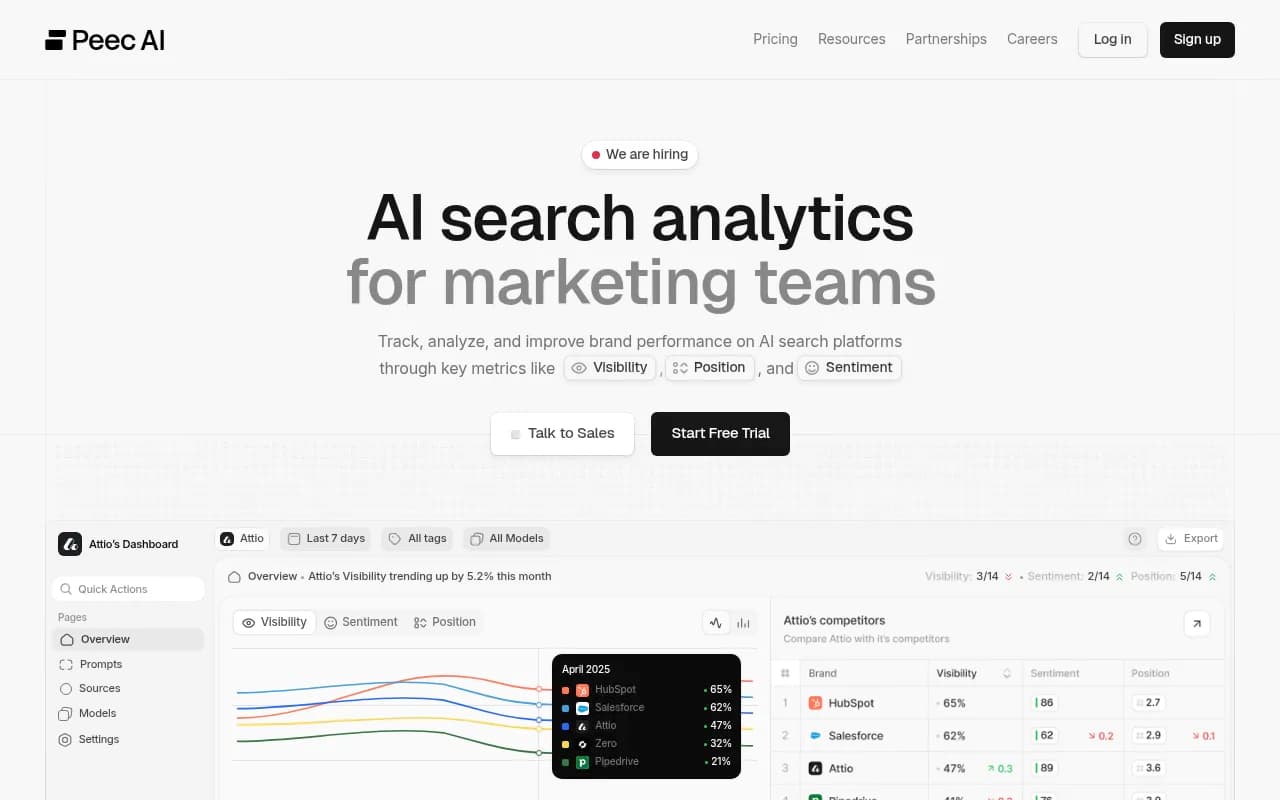
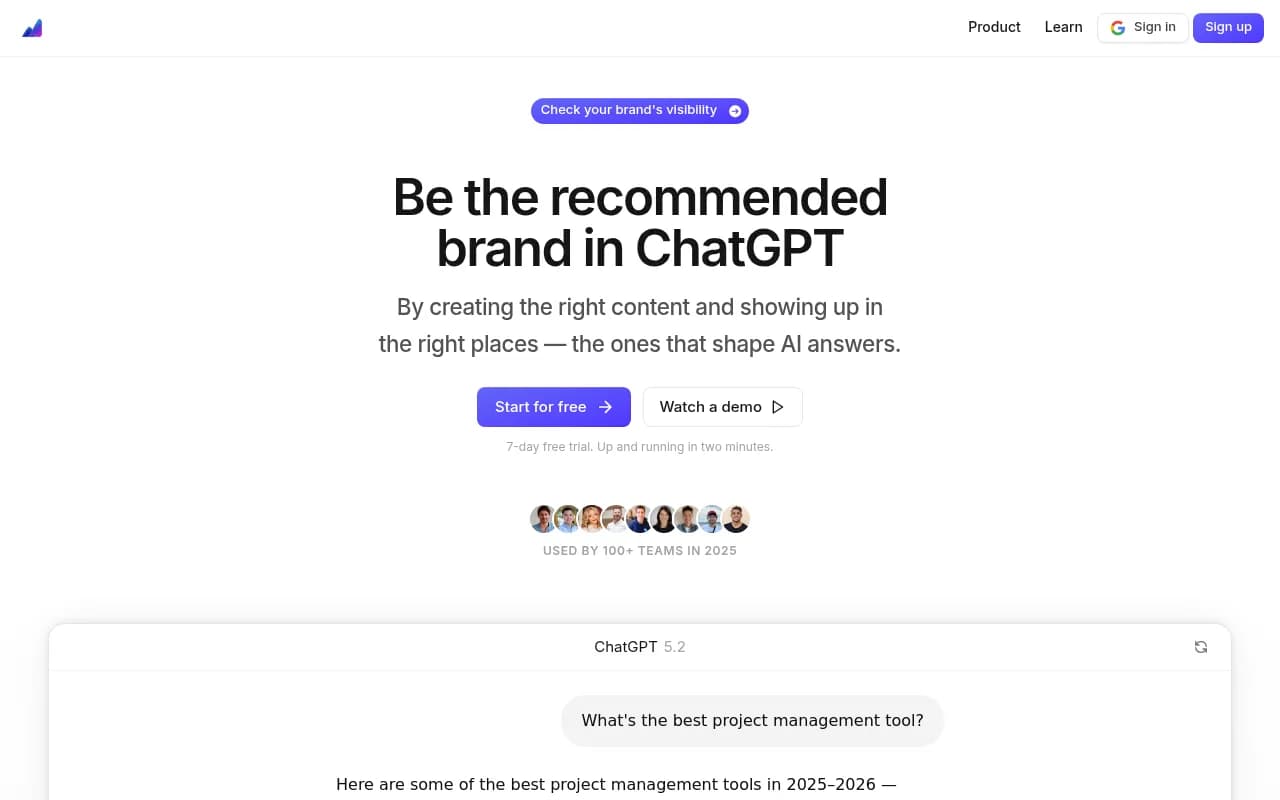
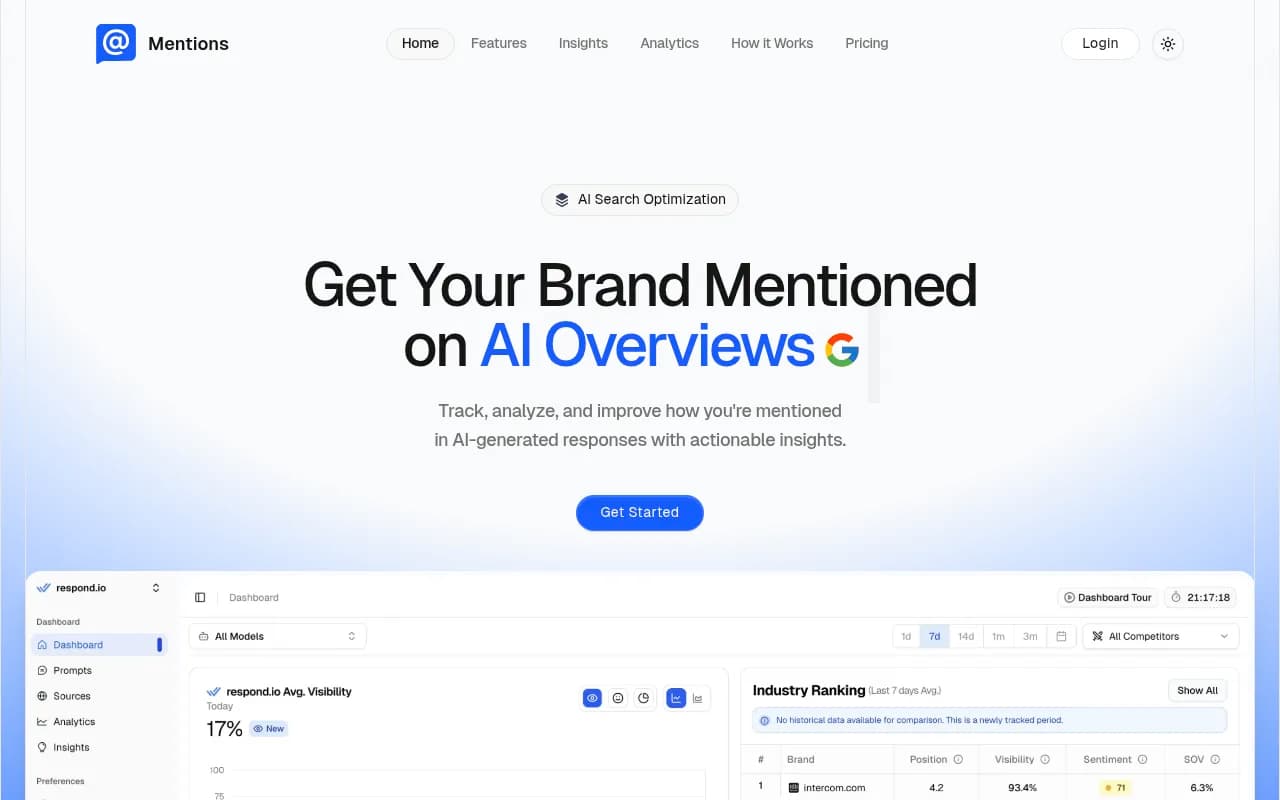
For teams that specifically need monitoring without the overhead of a full optimization platform, there are other lightweight options worth considering too.
Who should use Otterly.AI
Otterly makes sense for a few specific situations:
- You're just getting started with AI search visibility and want a low-cost way to understand the basics before investing in a more complete platform
- You're a solo marketer or small team with limited budget and need simple brand monitoring across AI engines
- You already have a content team and SEO workflow in place -- you just need the monitoring data to feed into your existing process
- You want to show clients or stakeholders that AI visibility is a real issue before making the case for a larger tool investment
It's less suited for teams that need to move fast, generate content at scale, or connect AI visibility directly to business outcomes.
Alternatives worth evaluating
If Otterly's monitoring-only approach isn't enough, here are a few tools that go further in different directions:
For full optimization (monitoring + content generation + attribution):
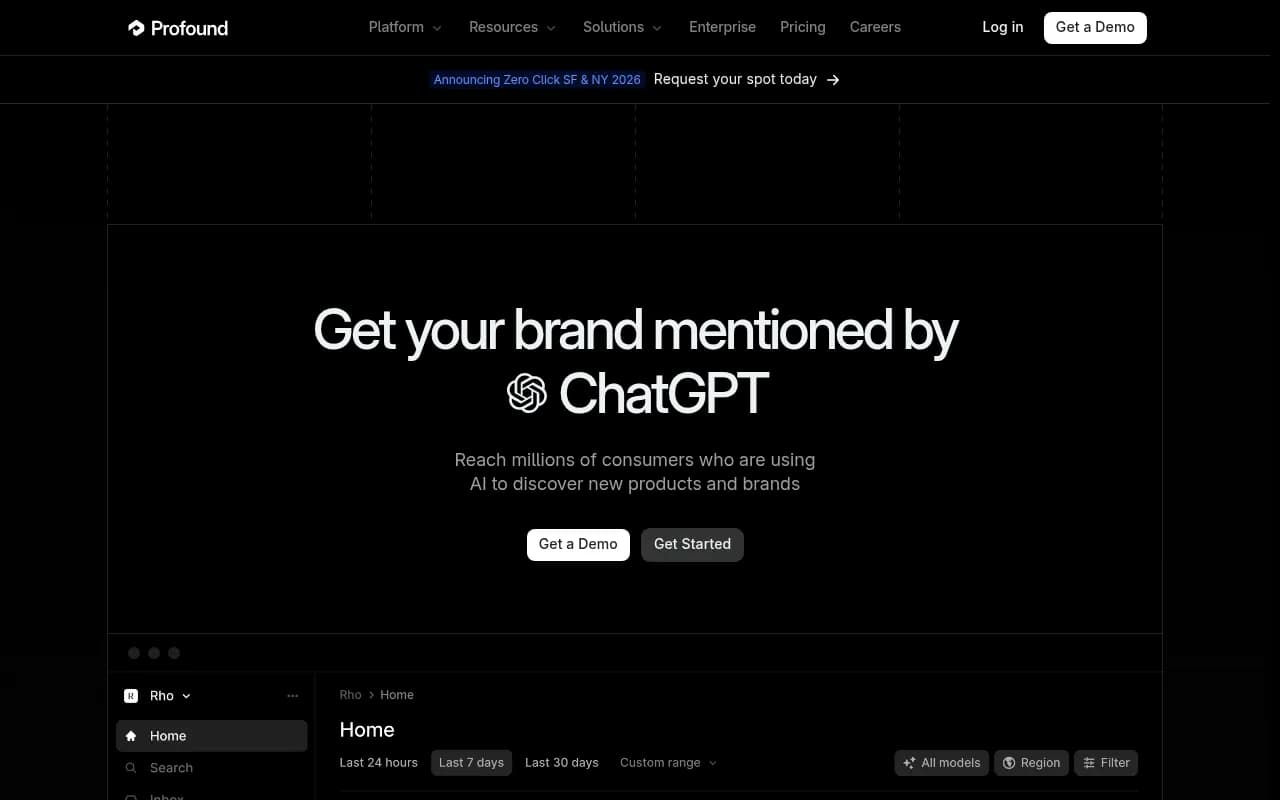
For enterprise-grade AI visibility:
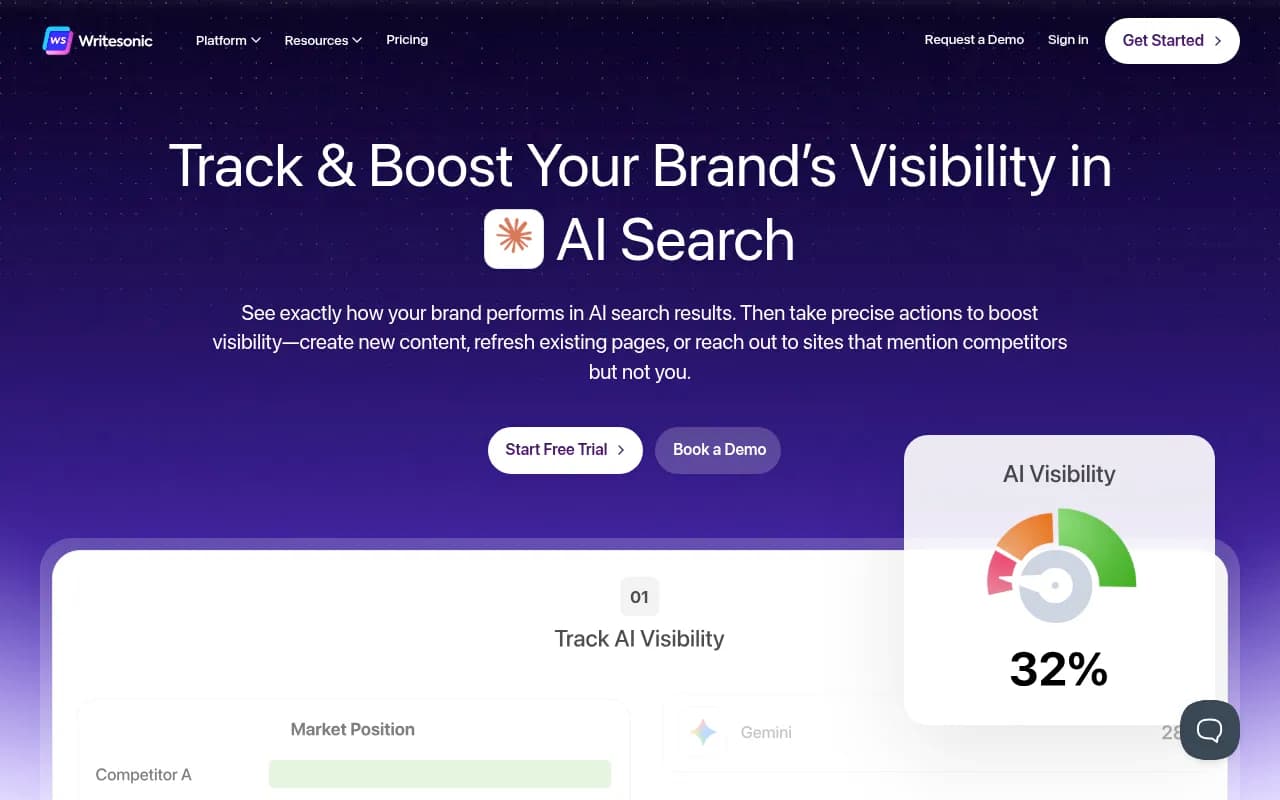
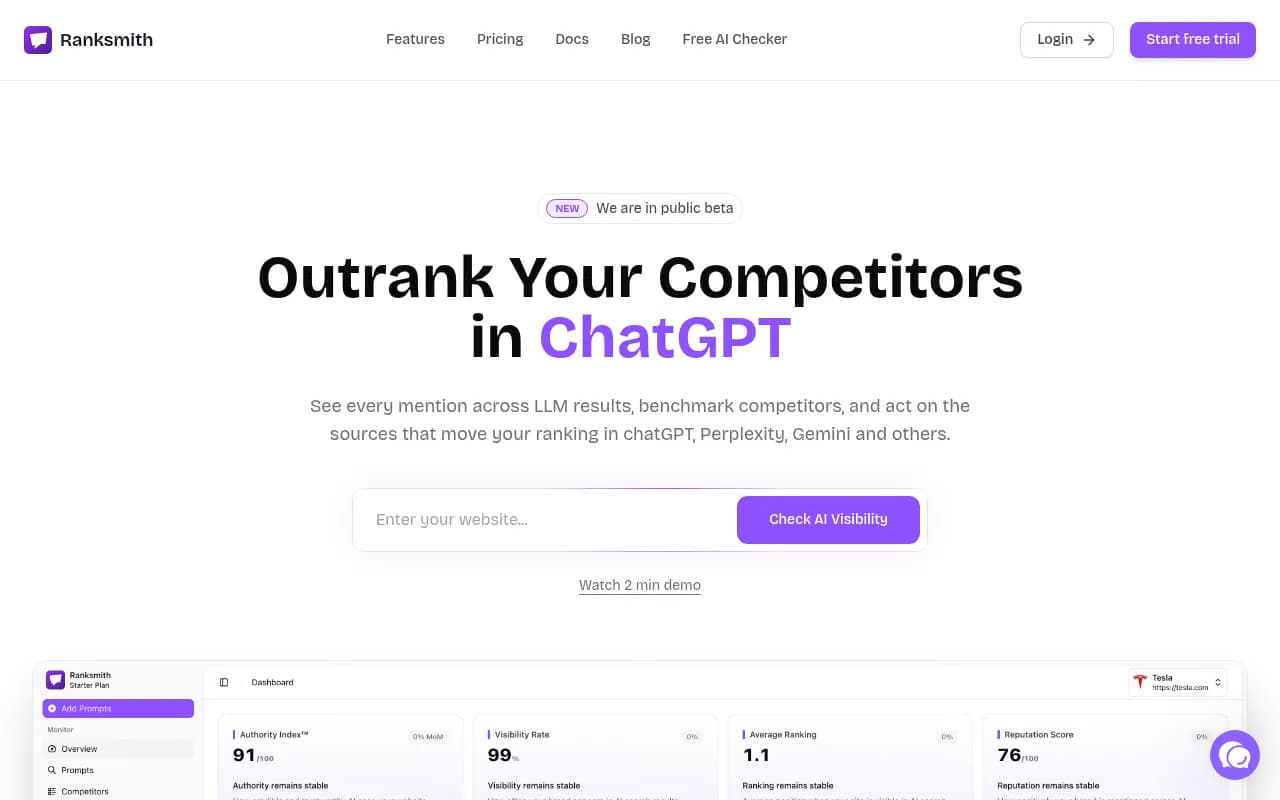
For mid-market teams that want more than monitoring:
For agencies managing multiple clients:
The bottom line
Otterly.AI is a competent, affordable tool for AI search monitoring. If you need to know whether your brand is showing up in ChatGPT, Perplexity, and Google AI Overviews -- and how that compares to competitors -- it does the job without a steep learning curve or a steep price.
The honest limitation is that monitoring is only the first step. Knowing you're invisible doesn't make you visible. The teams winning at AI search in 2026 are the ones who can take that gap data and turn it into published content that AI engines actually want to cite. Otterly doesn't help with that part.
For teams that are serious about AI search as a traffic channel, Otterly works best as a starting point or a lightweight complement to a more complete workflow -- not as a standalone strategy.