Key takeaways
- Rankscale is the most affordable entry point in the AI visibility tracking category at roughly $20/month, making it a solid choice for freelancers and small teams who just want to start tracking.
- Nimt.ai positions itself as a more structured monitoring tool with cleaner reporting, but both platforms are primarily tracking-focused rather than optimization-focused.
- Neither tool offers content generation, AI crawler logs, or deep prompt intelligence — capabilities that matter more as teams move from "are we visible?" to "how do we get more visible?"
- If your goal is to actually improve AI visibility rather than just measure it, you'll likely outgrow both tools quickly.
- For teams that need the full loop — gap analysis, content creation, and citation tracking — a platform like Promptwatch covers what these tools leave behind.
The AI visibility tracking market has exploded in 2026. Dozens of tools now claim to show you where your brand appears in ChatGPT, Perplexity, Google AI Overviews, and other AI engines. Nimt.ai and Rankscale are two of the more frequently compared options, especially among budget-conscious teams who don't want to commit to enterprise pricing before they've even figured out what they need.
This guide breaks down both tools honestly. What they track, what they don't, how their pricing compares, and which one is actually worth your money depending on what you're trying to accomplish.
What Rankscale actually does
Rankscale has become one of the most talked-about budget options in AI visibility tracking. At roughly $20/month for entry-level access, it's the lowest price point in the category by a significant margin, and that alone has driven a lot of attention.
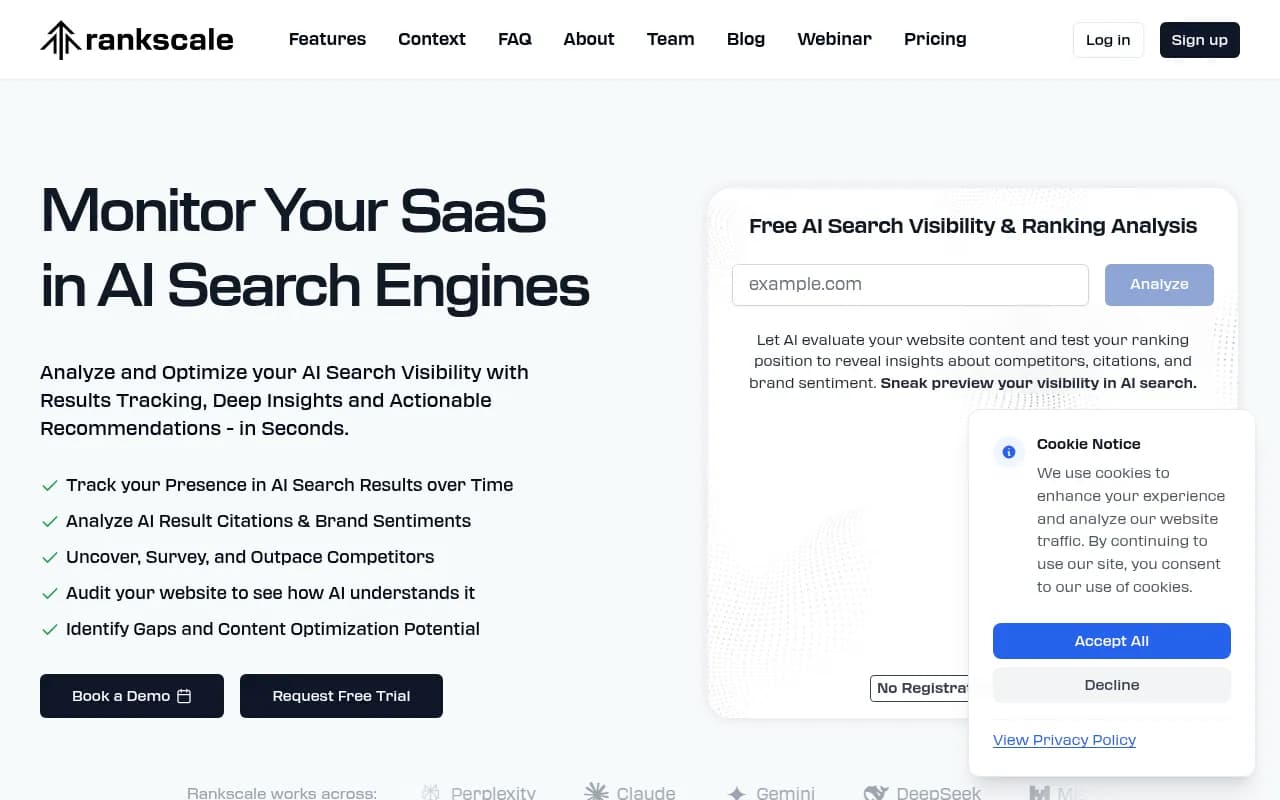
The core functionality is straightforward: you set up prompts, Rankscale runs them across a selection of AI models, and you get reports showing whether your brand was mentioned. It tracks visibility across ChatGPT, Perplexity, and a handful of other models depending on your plan tier.
What makes Rankscale stand out in independent testing (Coalition Technologies ran a detailed comparison and ranked it highly) is its evidence trail. When your brand appears in an AI response, Rankscale shows you the actual response text, not just a mention count. That's genuinely useful — you can see whether you're being cited accurately, whether a competitor is being recommended instead of you, and what the surrounding context looks like.
The accuracy of its tracking has also been noted as above average compared to some competitors that rely purely on API outputs rather than simulating real user queries.
Where Rankscale falls short is everything after the data. There's no content gap analysis, no suggestions for what to create to improve visibility, and no crawler log data showing how AI engines are interacting with your site. You get the score, but no roadmap for improving it.
Rankscale pricing
- Entry plan: ~$20/month
- Higher tiers scale up based on prompt volume and model coverage
- No free trial on the base plan (varies by promotion)
What Nimt.ai actually does
Nimt.ai is a newer entrant that has been positioning itself as a cleaner, more structured alternative to some of the rougher-around-the-edges trackers in this space. The interface is generally considered more polished, and the reporting is designed to be easier to share with clients or stakeholders.
Like Rankscale, Nimt.ai is fundamentally a monitoring tool. You configure prompts, it tracks your brand's appearance across AI models, and you get dashboards showing visibility trends over time. Some users have noted that Nimt.ai's prompt management is more intuitive, which matters when you're running dozens of queries across multiple models.
The platform covers the major AI engines — ChatGPT, Perplexity, Google AI Overviews — and offers some basic competitor comparison features so you can see how your brand stacks up against others in the same AI responses.
What's less clear from public information is the depth of Nimt.ai's model coverage compared to Rankscale, and whether it tracks real user-interface behavior or relies on API calls. This distinction matters because AI models can behave differently in their actual products versus their APIs — the citations, shopping recommendations, and response formats can vary.
Nimt.ai pricing
- Pricing is less publicly documented than Rankscale's
- Appears to target small-to-mid-size teams and agencies
- Free trial or freemium tier available based on current listings
Head-to-head comparison
| Feature | Rankscale | Nimt.ai | Promptwatch |
|---|---|---|---|
| Entry price | ~$20/month | Not publicly listed | $99/month |
| AI models tracked | ChatGPT, Perplexity, others | ChatGPT, Perplexity, Google AIO | 10+ models incl. Grok, DeepSeek, Mistral |
| Evidence trail (response text) | Yes | Limited info | Yes |
| Competitor comparison | Basic | Basic | Heatmaps + share of voice |
| Content gap analysis | No | No | Yes |
| AI content generation | No | No | Yes (Content Agents) |
| AI crawler logs | No | No | Yes |
| Prompt volume/difficulty scoring | No | No | Yes |
| Reddit/YouTube insights | No | No | Yes |
| ChatGPT Shopping tracking | No | No | Yes |
| Traffic attribution | No | No | Yes |
| Best for | Budget-conscious trackers | Small teams, clean reporting | Teams that want to improve, not just monitor |
Where both tools hit the same wall
Here's the honest truth about Nimt.ai and Rankscale: they're both monitoring dashboards. They tell you where you are. They don't tell you why you're there, or how to get somewhere better.
That's fine if you're in the early stages of AI visibility work. Knowing whether your brand shows up at all is genuinely useful information, especially if you're trying to make the case internally that AI search matters. A $20/month tool that gives you citation data and response text is a reasonable starting point.
But most teams hit a ceiling with monitoring-only tools within a few months. The questions shift from "are we visible?" to "why isn't our content being cited for this prompt?" and "what do we need to create to win this topic?" At that point, a tracker gives you no answers.
The other gap is on the technical side. Neither Nimt.ai nor Rankscale offers AI crawler log data — the ability to see when AI engines like ChatGPT's crawler or Perplexity's bot are actually visiting your site, which pages they're reading, and whether they're encountering errors. This is the kind of data that lets you diagnose indexing issues before they become visibility problems. It's a capability that barely any tool in this category offers, which is part of why it tends to be a differentiator for platforms that do.
Who should use Rankscale
Rankscale makes sense if:
- You're a freelancer or solo consultant who needs basic AI visibility data without a large monthly commitment
- You're testing AI search monitoring for the first time and want to understand the category before investing more
- You need evidence trails (actual response text) and Rankscale's accuracy reputation matters to you
- You're working with a client who wants proof that AI visibility tracking is worth doing before approving a larger budget
The $20/month price point is genuinely hard to argue with for what it delivers. If you just need to know whether your brand is showing up and what the AI is saying about you, Rankscale does that job.
Who should use Nimt.ai
Nimt.ai makes sense if:
- You prioritize clean, shareable reporting over raw data depth
- You're managing a small number of brands or clients and want a tidy interface
- You're an agency that needs to present AI visibility data to non-technical stakeholders
- You want a slightly more structured experience than some of the rougher budget tools
The caveat is that Nimt.ai's pricing and feature depth are harder to verify from public information, so it's worth testing the free tier before committing.
When you should look beyond both
Both tools are monitoring-only. If your team has moved past "do we show up?" and is now asking "how do we show up more?" — you need something different.
The tools that close that loop combine tracking with content gap analysis, content generation grounded in real prompt data, and technical diagnostics like crawler logs. That's a different category of product, and it comes at a higher price point. But for teams where AI search visibility is a real business priority, the cost of a monitoring-only tool is often the cost of standing still.
Promptwatch is the most complete option in this space right now. It tracks 10+ AI models including Grok, DeepSeek, Mistral, and Copilot, but more importantly it's built around what happens after you see the data. Answer Gap Analysis shows you exactly which prompts competitors are winning that you're not. Content Agents generate articles and briefs grounded in real citation data. And AI crawler logs show you how AI engines are actually interacting with your site — which pages they're reading, how often they return, and when a crawled page moves to an actual citation.

For agencies, the multi-site support and Looker Studio integration make it easier to manage multiple clients without rebuilding reports from scratch. For in-house teams, the traffic attribution that connects AI visibility to actual revenue is the kind of data that justifies the budget in the first place.
Other tools worth considering in this price range
If you're evaluating Nimt.ai and Rankscale, you're probably also looking at a few other options in the budget-to-mid-range tier. Here are some worth a look:
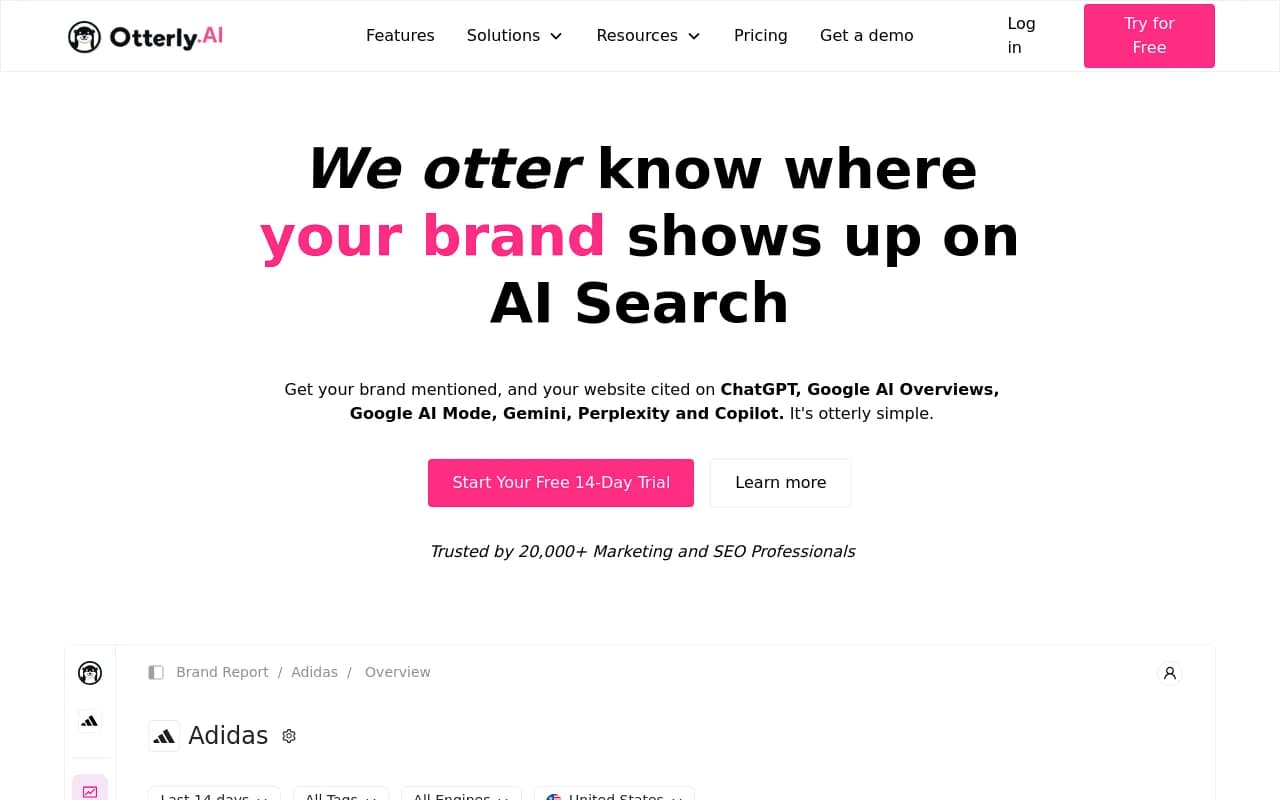
Otterly.AI is another monitoring-focused tool with a clean interface and reasonable pricing. It covers the main AI models and is popular with agencies that need basic tracking without complexity.
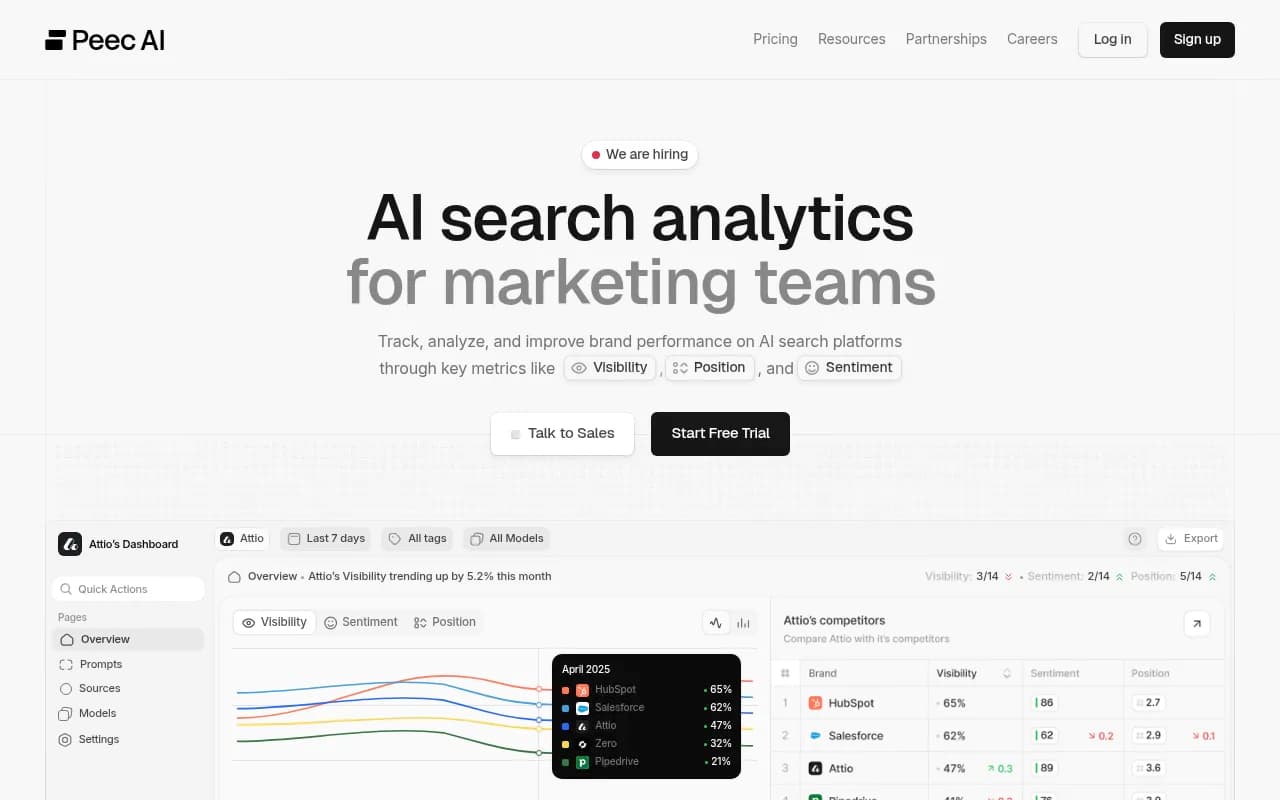
Peec AI goes deeper on research and competitive analysis, making it a better fit for teams that want more context around their visibility data — though it's still primarily a monitoring tool.
Airefs is one of the more affordable options for teams that just need citation tracking across a handful of models without the overhead of a larger platform.
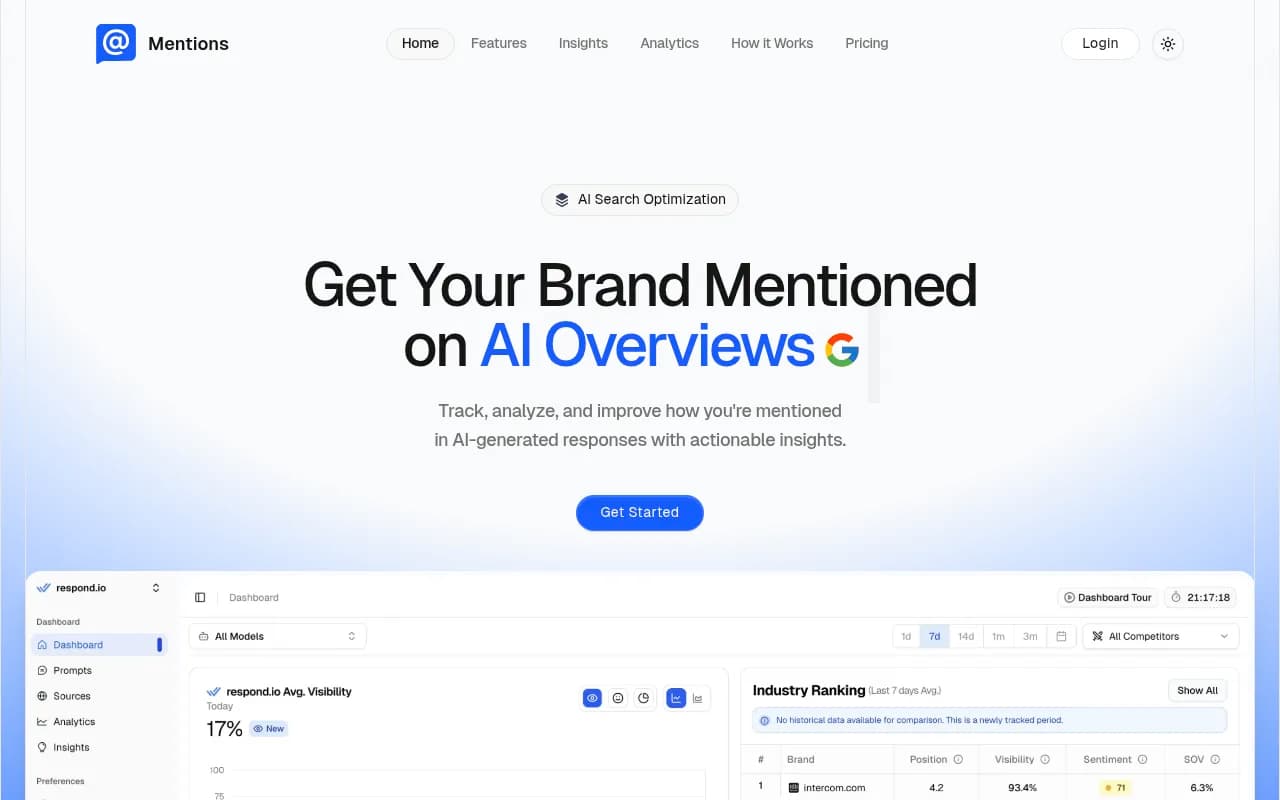
Mentions.so focuses specifically on brand mention tracking in AI search, which is a narrower use case but useful if that's your primary concern.
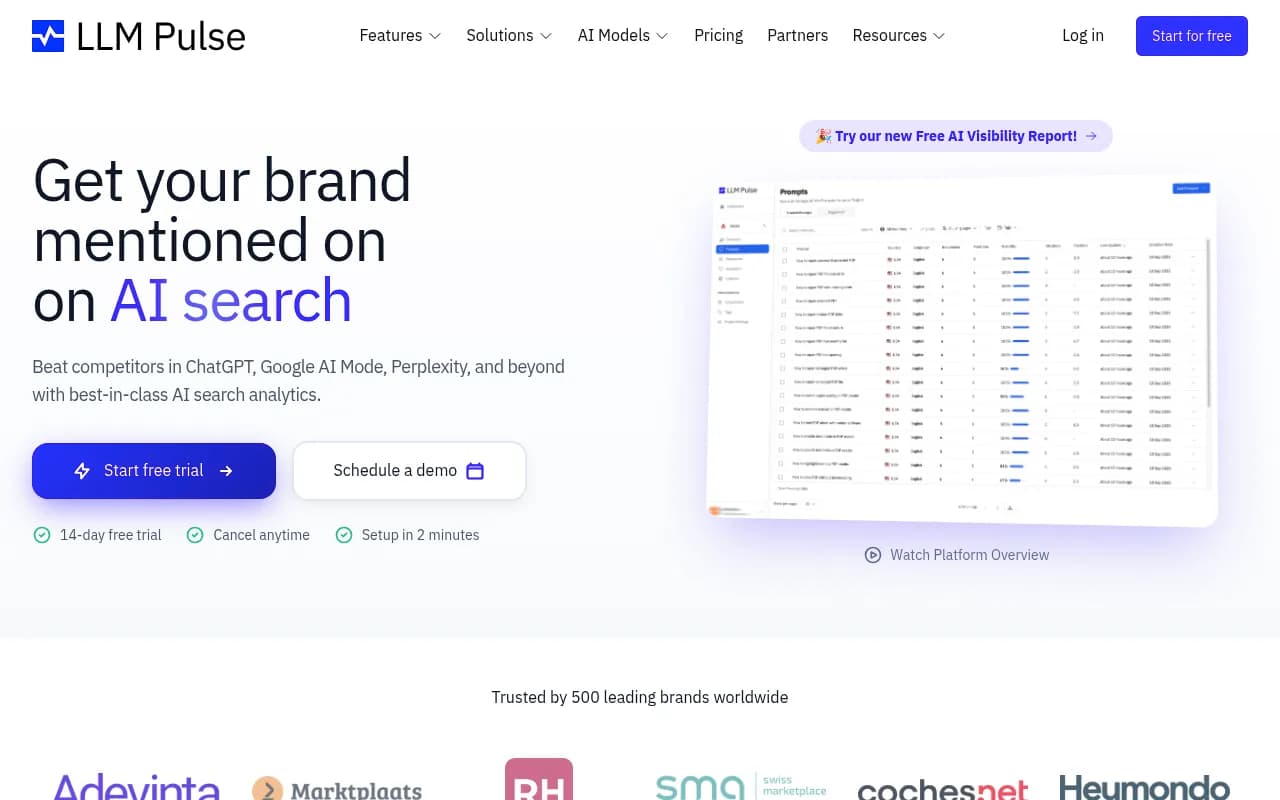
LLM Pulse offers multi-model tracking with a straightforward dashboard, sitting roughly in the same tier as Rankscale on price.
The honest verdict
Rankscale wins on price and evidence trail quality. If you're starting out and $20/month is your ceiling, it's the most defensible choice in the budget tier. The accuracy of its tracking and the ability to see actual AI response text puts it ahead of many tools that cost more.
Nimt.ai is a reasonable alternative if the reporting interface matters more to you than raw feature depth. It's cleaner, easier to share, and seems designed for teams that need to present data rather than dig into it.
But both tools share the same fundamental limitation: they show you the problem without helping you solve it. For teams where AI search visibility is a serious growth channel rather than a reporting checkbox, that limitation becomes expensive pretty quickly. The gap between knowing you're invisible and actually fixing it is where most of the value in this category lives — and it's where monitoring-only tools run out of road.
If you're ready to move from tracking to optimizing, that's when it's worth looking at what a full-stack platform can do.