Key takeaways
- AI answers are built largely from third-party sources such as listicles, comparisons, reviews and news. That is earned-media territory, so PR can claim a measurable share of AI visibility.
- Report a small set of metrics across a stable prompt set: mention rate, share of voice, citation source mix, accuracy, platform coverage and AI-referred traffic. Single-prompt screenshots are noise.
- Coverage decays. Promptwatch Data shows news pages lose half their ChatGPT citations within 36 days, so use rolling windows instead of one-month snapshots.
- Connect the numbers to business outcomes (branded search, AI-referred visits, pipeline influence) and say clearly what is correlation and what is not.
- Set a baseline now, track monthly, review competitors quarterly, and check after every major launch or model change.
Why PR has a measurement problem, and why AI changes it
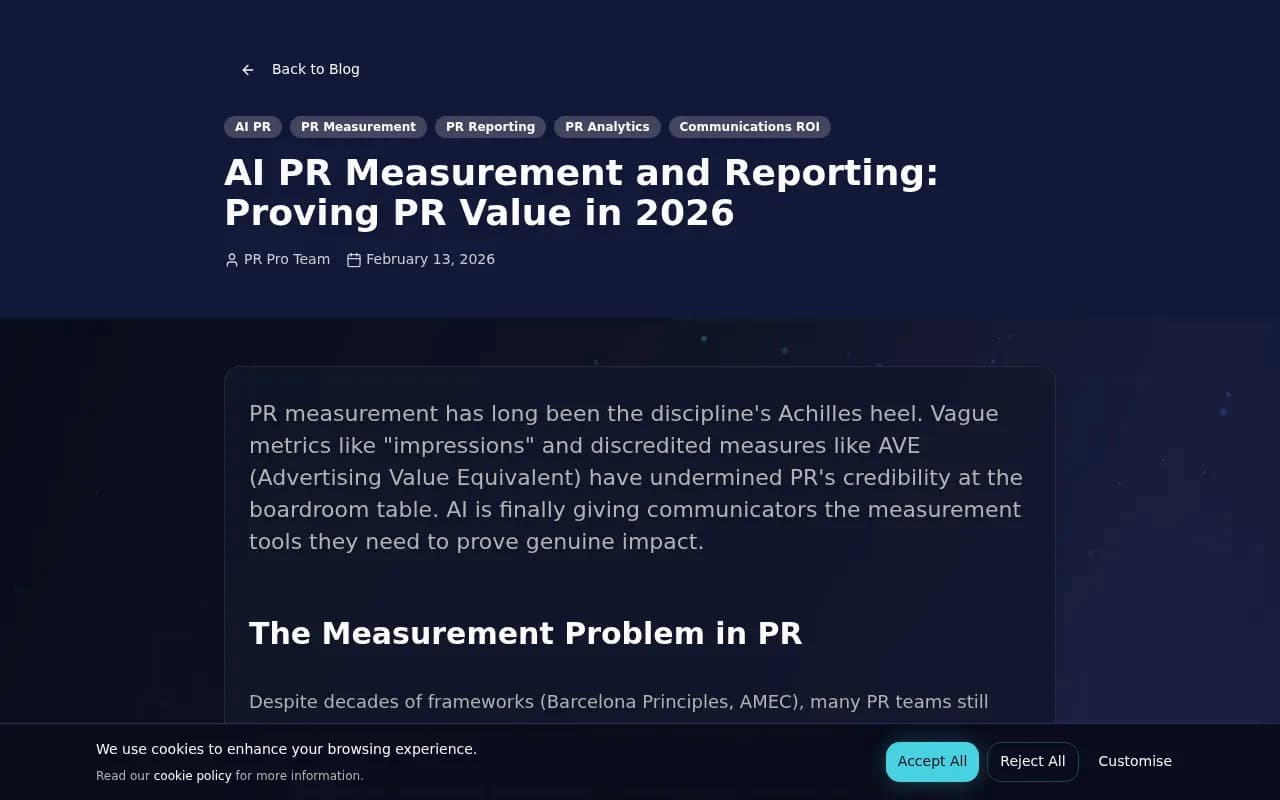
PR measurement has been the weak spot of the discipline for years. Impressions, clip counts and AVE (advertising value equivalent) are easy to produce and easy for a CFO to dismiss. The PR Pro guide to AI PR measurement lists the usual failures: output confused with outcome, attribution gaps, manual clip books and vanity metrics.
AI visibility gives PR something it rarely had: a metric that is close to a buying moment. When someone asks ChatGPT, Gemini or Perplexity "what is the best X for a mid-size team", the answer is a short list of names. Being on that list, described accurately, is a result a CMO understands immediately.
And the sources behind those answers are mostly things PR already works on. Promptwatch Data found that for ChatGPT citations from Sep 28 to Oct 4, 2026, product pages made up 22.4% and landing pages 16.8%, but editorial content added up to about 43%: listicles at 13.6%, how-tos 8.7%, general articles 6.1%, comparisons 5.9%, news 5.7% and reviews 1.7%. Third-party listicles, comparisons and reviews are the surface where earned media works. Press releases are small even for branded prompts (2.1%), so do not build the story around them.
Agility PR makes the same argument from the PR side. Its AI visibility guide says authority, trust and consistency of portrayal matter more than keyword density, which makes AI visibility more of a PR function than a marketing one.
The six metrics worth putting in front of a CMO
Vendors and agencies publish lists of six, nine or fifteen KPIs. 5W's framework uses six, including Query Coverage Rate, Recommendation Share, Source Citation Rate and Accuracy Rate. Meltwater makes a point I agree with: you do not need every KPI for every campaign. Pick what matches the result you are chasing.
Here is the compact set I would use. It borrows from several of those sources and keeps each metric tied to a question an executive would ask.
| Metric | What it measures | The CMO question it answers |
|---|---|---|
| Mention rate (query coverage) | Share of priority prompts where the brand appears at all | Which customer questions do we show up for? |
| Share of voice and position | Your mentions versus competitors in the same prompt set, and where you land in the answer | Are we winning or losing against named rivals? |
| Citation and source mix | Which outlets and content types AI cites next to your brand | Which earned-media channels are actually feeding AI? |
| Accuracy and sentiment | Whether AI claims about you are correct and how they read | Is AI saying the right things to buyers? |
| Platform coverage | Presence by engine (ChatGPT, Gemini, Perplexity, Claude, AI Overviews) | Are there blind spots where our audience looks? |
| AI-referred traffic and conversions | Visits and conversions arriving from AI engines | Does any of this reach the website and the pipeline? |
Mention rate and query coverage
Start here. Build a list of the prompts that matter: category questions, comparisons, "best for" queries, and a few branded ones. Then count how many produce at least one brand appearance. This is your baseline, and it is the number that moves most visibly when a campaign works.
Share of voice and position
Agility's research says AI engines name an average of 7.5 brands per answer, so every answer is a crowded, closed list. Relative standing matters more than raw counts. Track your slice of all brand mentions against competitors, and track where you sit in the list. Being named fifth in a list of seven is a different result from being named first.
One caveat on numbers. The 7.5 brands figure is Agility's, measured as brands named per answer. Promptwatch Data measures something else: unique domains cited per response, and found 47.6% of cited ChatGPT responses cite 10 or more domains (Sep 28 to Oct 4, 2026). Brands named and domains cited are different units, so the two figures do not conflict. Do not mix them in one chart.
Citation and source mix
This is the metric PR can act on most directly, because it names the outlets to pitch. If competitors are being recommended because AI keeps citing a particular review site or a listicle series, that is a media target list. Break citations down by content type and source type, not just domain.
For brand-specific prompts, Promptwatch Data found only 21.3% of responses cite 10 or more domains, and the most common count was 5 (14.9%). Branded answers lean on fewer sources, with reviews at 5.6% of citations (more than 3x their overall share) and social posts at 3.0%. If your review profile is thin, branded answers will show it.
Accuracy and sentiment
Visibility without accuracy can hurt. If an AI engine says your product lacks a feature it has, or quotes last year's pricing, that is a reputation issue PR owns. Log individual claims, mark them accurate or inaccurate, and track the count over time. Agility's survey data shows the gap: respondents rate their brand's AI visibility at 5.5 out of 10 and the accuracy of its AI portrayal at 5.6 out of 10, while 46% call AI visibility and reputation management a critical or high priority.
Platform coverage
A healthy aggregate can hide a hole. You might be strong in Perplexity and absent in ChatGPT, which may be where your buyers actually are. Report by engine, and weight by where your audience searches.
AI-referred traffic and conversions
This closes the loop to the website. Mentions are an intermediate result; visits and conversions are what finance recognizes. Be aware that referrer data from AI engines is patchy, and ChatGPT stopped sending a referrer on October 8, 2026, so tagged links (utm_source=chatgpt.com) and server-side analysis matter. Promptwatch's guide to attributing AI traffic walks through the setup.
Build the baseline before you promise anything
The most common mistake is reporting a change without a starting point. Do this first:
- Write 50 to 150 prompts that mirror how buyers ask, grouped by topic and by buyer persona. Include category, comparison, problem-based and branded prompts.
- Fix the set. Add prompts deliberately and note the date, otherwise your trend line is meaningless.
- Run the set across the engines your audience uses, in the countries and languages you sell in.
- Record mention rate, position, sentiment, cited sources and the list of competitors named alongside you.
- Read the answers yourself. Numbers hide odd things, like a competitor description that quietly borrows your positioning.
One prompt tells you almost nothing. Promptwatch's own advice from the unique-domains report is to measure across many prompts and report share across a stable set, because citation counts from a single prompt are noisy.
Account for decay, volatility and model changes
Two things will wreck a naive report.
Coverage decays at different speeds
Promptwatch Data on content half-life tracked every page ChatGPT cited on July 6, 2026 for 90 days. News decays fastest: almost a quarter of news pages were never cited again after day 0, half were gone after 36 days, and 41% were still cited at day 60. Landing pages and docs last longest, with 78% and 76% still cited at 30 days. Comparisons held at 72% after 30 days and 63% after 60. Product pages, reviews and how-tos had half-lives of 74 to 77 days.
The reporting consequence is simple. A launch story gives a short burst. A strong comparison or review placement keeps working for months. If you report a single month's mention count, you will undersell the durable placements and oversell the spikes. Use rolling 60 or 90 day windows, and label content types in the report.
Platforms change overnight
AI engines change behavior without notice. Average citations per ChatGPT response fell around the GPT-5.3 rollout on March 4, 2026 (Promptwatch Data). Reddit's share of ChatGPT citations fell from about 4% to 0.5% on August 14, 2026 (Promptwatch Data). If your visibility dropped the same week, the cause may be the platform and not your team. Annotate your charts with known model changes so nobody blames, or credits, PR for something it did not cause.
The practical cadence, echoing Agility's guidance: monthly tracking for trends, a deeper competitive review every quarter, and an ad hoc check after a major announcement or model update.
Connect the numbers to business outcomes
CMOs will accept AI visibility metrics faster if you show where they sit between activity and revenue. A simple chain works:
- Activity: placements in the outlets AI cites (listicles, comparisons, reviews, trade press).
- AI visibility: mention rate, share of voice, position, accuracy.
- Behavior: AI-referred visits, branded search, direct traffic changes.
- Outcome: leads, demo requests, sales conversations that mention AI tools as a source.
The Gabriel Marketing contribution framework frames PR as influencing business conditions (AI visibility, category authority, branded search, lead quality, sales friction, competitive risk) rather than owning last-touch revenue. I think that is the honest position. PR rarely causes a deal on its own, but it can show that it moved the conditions under which deals happen.
Three attribution habits worth adopting:
- Add "how did you hear about us" fields that include AI assistants, and ask sales to log it.
- Compare branded search volume in Google Search Console before and after major coverage, with a note on other activity in the same window.
- Tag AI-referred sessions and track their conversion rate separately. Crisp reported 2x higher conversion rates from AI traffic than from traditional channels in its Promptwatch case study, which is the kind of result that gets budget attention, though your numbers will differ.
The 2026 Marketing Leadership Report from the B2B CMO Project points the same direction. It recommends building an AI citation share metric into the brand index and investing in an AEO product for prompt and citation visibility. It also argues that AI visibility requires genuine brand presence, which is a useful line to quote when asking for earned-media budget.
Tools for tracking it
You can start with a spreadsheet and manual prompts, but it stops scaling quickly. Traditional media monitoring tools such as Meltwater still cover news and social coverage well, yet they do not show what an AI answer says about you. For that you need purpose-built monitoring.
Promptwatch is the one I would put first for PR teams that want to go beyond a dashboard. It tracks mentions, position, sentiment and citations across ChatGPT, Gemini, Claude, Perplexity, Google AI Overviews and others, collects them from the real interfaces, and its Brand Narrative and Fact Check features cover the accuracy side. It also shows which Reddit threads, YouTube videos and third-party pages AI cites, ties in crawler logs and visitor analytics for AI traffic, and has an Action Board for next steps. Pricing starts at $95/mo, so confirm current plans at promptwatch.com/pricing.

For a quick first look before committing, the free AI visibility report scans how ChatGPT, Gemini and Perplexity describe your brand.
Other options depending on need:
| Tool | Where it fits for PR teams |
|---|---|
| Promptwatch | Monitoring plus citation tracing, accuracy checks, AI traffic attribution and content actions |
| Meltwater | Traditional earned-media monitoring, sentiment and share of voice in news and social |
| Profound | Enterprise AI visibility monitoring |
| Otterly.AI | Lightweight, affordable prompt tracking |
| Peec AI | Monitoring without the optimization layer |
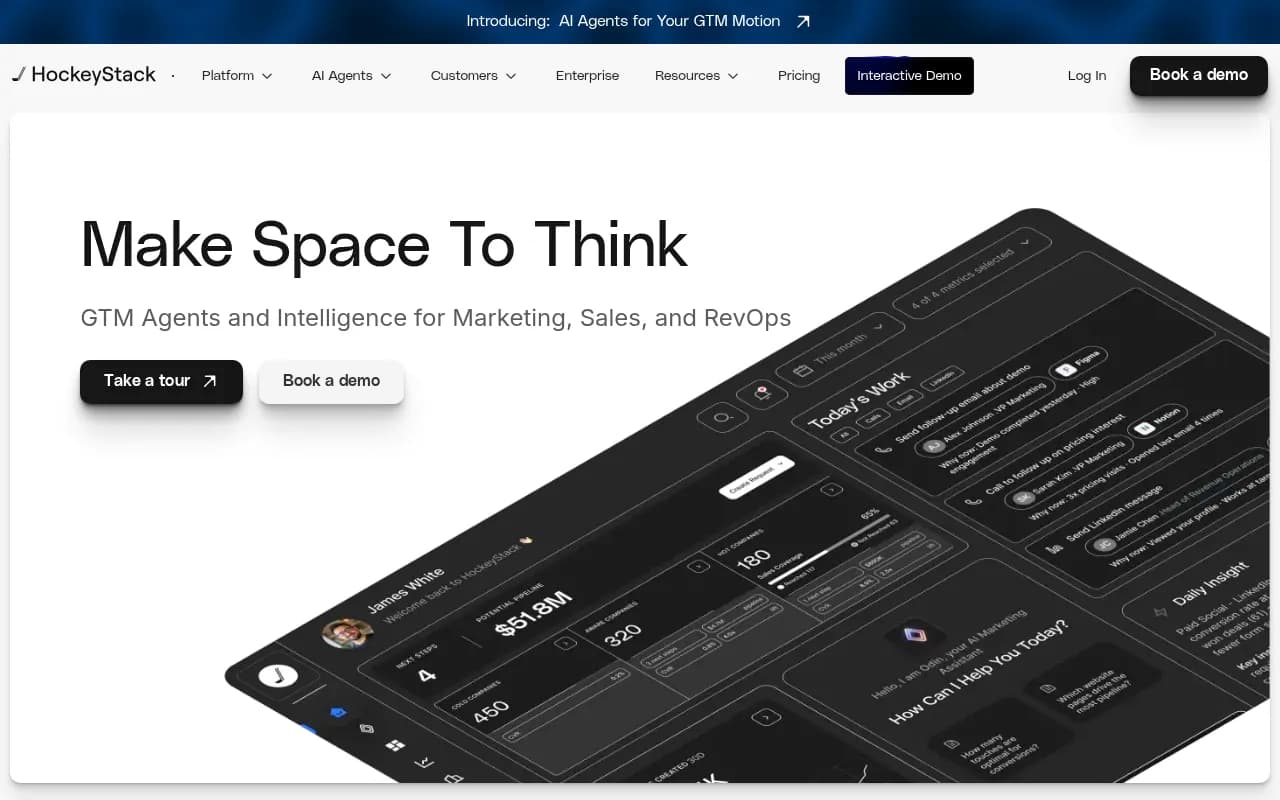
| HockeyStack | Marketing attribution when you need to connect traffic to pipeline |



If you want to compare more options, the GEO software directory lists dozens of them.
A one-page report template for the executive meeting
Keep it short. Here is a layout that has worked for this kind of reporting:
- Headline: one sentence on share of voice versus your top three competitors, with the 90-day trend.
- Scorecard: the six metrics, current value, change from the previous period, and from baseline.
- What moved it: the two or three placements or events (a review series, a comparison inclusion, a launch) that coincide with the change, plus any platform changes that might explain movement.
- Risks: inaccurate claims AI is repeating, with the page or source that seems to be feeding them.
- Next quarter: target outlets and content types, based on the citation source analysis.
- Business link: AI-referred visits, branded search change and any sales feedback.
Two habits keep this credible. Label everything as correlation unless you ran a controlled test. And show the prompt set and its date range, so nobody wonders whether you cherry-picked.
Common mistakes
- Reporting a single prompt screenshot as proof of a win.
- Counting mentions without checking accuracy or position.
- Comparing months without noting model updates.
- Treating press releases as the main lever. They are a small slice of citations; third-party listicles, comparisons and reviews carry more weight.
- Ignoring that news decays fast while landing pages and comparisons last. Report by content type.
- Claiming revenue credit that sales and marketing will dispute. Claim influence on conditions, show the evidence, and let the numbers speak.
Where to start this month
Pick your 50 to 100 prompts, run a baseline across the engines your buyers use, and set a monthly review date. Within one quarter you will have a trend line, a competitor comparison and a list of the outlets feeding AI answers in your category. That is a more concrete story than most PR reports tell today, and it gives the CMO something to fund. If you would rather have specialists run the program, an agency such as 1001 SEO Media can handle the GEO and digital PR side alongside your comms team.