Key takeaways
- Gemini pulls from sources it trusts, not just sources that rank well in traditional search -- so your content needs to be structured for extraction, not just discovery.
- E-E-A-T signals (experience, expertise, authoritativeness, trustworthiness) are the single biggest factor in whether Gemini cites your brand.
- Answer Gap Analysis -- finding the specific prompts where competitors appear but you don't -- is the most efficient way to prioritize your optimization effort.
- Tracking your Gemini visibility requires dedicated AI monitoring tools; standard SEO platforms like Semrush and Ahrefs don't capture this data reliably.
- The brands winning in Gemini right now are publishing content that directly answers questions, not content optimized for keyword density.
Getting mentioned in Google Gemini is not the same problem as ranking on page one. The old playbook -- target a keyword, build backlinks, optimize title tags -- gets you somewhere in traditional search. In Gemini, it barely moves the needle.
Gemini is an AI model. When someone asks it a question, it synthesizes an answer from sources it deems credible and well-structured. It doesn't serve up a list of links and let the user decide. It makes a recommendation. And if your brand isn't part of that recommendation, you're invisible to that user -- even if you rank #3 on Google for the same query.
This guide covers what Gemini actually looks for, how to structure your content and brand presence to get cited, and how to track whether it's working.
How Gemini decides what to cite
Before optimizing anything, it helps to understand what Gemini is actually doing when it generates a response.
Gemini (and AI models generally) are trained on large datasets and then grounded with real-time retrieval. When a user asks a question, the model retrieves relevant content from the web, synthesizes it, and generates a response. The sources it retrieves -- and cites -- tend to share a few characteristics:
- They're clearly written and easy to extract specific claims from
- They come from domains with established authority in the topic area
- They match the intent of the query closely, not just the keywords
- They're consistent with what other credible sources say
One stat worth keeping in mind: according to Digital Bloom's 2025 organic traffic analysis, 60% of Google searches now end without a click. Users get their answer directly on the results page. Gemini is accelerating this. If your brand isn't the answer Gemini gives, you're not getting seen.
The implication is that traditional SEO metrics -- rankings, impressions, click-through rates -- don't tell you whether you're winning in AI search. You need a different measurement framework entirely.
The foundation: E-E-A-T and why it matters more now
Google's E-E-A-T framework (Experience, Expertise, Authoritativeness, Trustworthiness) has been around for years, but it's become the central signal for Gemini citations. The model is essentially asking: "Do I trust this source enough to recommend it to a real person?"
Here's what that looks like in practice:
Experience means your content reflects real-world knowledge, not just aggregated information. First-person accounts, case studies, original data, and specific examples all signal experience. Generic "here are 5 tips" articles don't.
Expertise means the author or organization has demonstrated knowledge in the specific domain. Author bios with credentials, consistent publishing in a niche, and content that goes deeper than surface-level all contribute.
Authoritativeness is largely about what others say about you. Backlinks from credible sources, brand mentions in industry publications, and citations from other authoritative content all matter.
Trustworthiness comes from technical signals (HTTPS, accurate business information, clear contact details) and content signals (no misleading claims, consistent information across sources, transparent sourcing).
None of this is new. What's changed is how much weight it carries. In traditional SEO, a mediocre site with strong backlinks could outrank a better source. Gemini is harder to game that way -- it's looking for genuine authority signals, not just link counts.
Content structure: writing for extraction, not just ranking
Gemini doesn't read your page the way a human does. It scans for extractable information -- clear answers to specific questions, structured data it can pull into a response, and claims it can verify against other sources.
Write direct answers to direct questions
The single most effective structural change you can make is to answer questions directly and early. If your page is about "best project management tools for remote teams," the first paragraph should contain a clear, direct answer to that question. Don't bury the lead.
This is sometimes called "inverted pyramid" structure -- lead with the conclusion, then support it. It's how journalists write. It's also how Gemini-friendly content reads.
Use headers that mirror real questions
Your H2s and H3s should reflect how people actually phrase questions. "How does X work?" beats "Overview of X." "What's the difference between X and Y?" beats "Comparison." Gemini uses headers to understand what each section is about and whether it answers a specific query.
Add structured data (schema markup)
Schema markup doesn't directly make Gemini cite you, but it helps the model understand what your content is about. FAQ schema, HowTo schema, and Article schema are particularly useful. They make your content machine-readable in a way that aligns with how AI models process information.
Keep sentences and paragraphs short
This isn't just a readability tip. Dense paragraphs are harder for AI models to extract clean answers from. Short, declarative sentences that make one clear claim are easier to pull into a synthesized response.
Building brand authority outside your website
Gemini doesn't just look at your website. It looks at the entire information ecosystem around your brand. This is where a lot of companies underinvest.
Third-party mentions and citations
If credible sources -- industry publications, review sites, news outlets -- mention your brand in the context of your category, Gemini is more likely to include you when answering questions about that category. This is essentially digital PR, but with AI visibility as the goal rather than just traffic.
Forbes Agency Council's 2026 analysis noted that there's less than a 1% chance of appearing in AI responses without existing third-party citations. That's a stark number. It means you can't optimize your way into Gemini purely through on-site changes -- you need external validation.
Reviews and reputation signals
Reviews on Google, G2, Capterra, Trustpilot, and similar platforms contribute to how Gemini perceives your brand's trustworthiness. This is especially true for local businesses and SaaS products. Consistent positive reviews across multiple platforms signal that real users have validated your claims.
Reddit and community discussions
This one surprises people. Gemini (like most AI models) draws heavily from Reddit, Quora, and other community platforms when forming opinions about brands and products. If your brand comes up positively in relevant subreddits -- r/entrepreneur, r/marketing, r/SEO, category-specific communities -- that influences AI recommendations.
This isn't about gaming Reddit. It's about genuinely participating in communities where your customers are, and ensuring your brand is part of the conversation.
Consistent NAP data (for local businesses)
For local businesses, Name/Address/Phone consistency across Google Business Profile, directories, and your website is a basic trust signal. Inconsistent data creates doubt. Gemini won't recommend a business it can't verify exists.
The prompt gap problem: where most brands are losing
Here's the thing most brands miss: they're not losing in Gemini because their content is bad. They're losing because they're not targeting the right prompts.
Gemini responds to how people actually phrase questions -- conversational, specific, often long-tail. "Best CRM for a 10-person sales team" is a different prompt from "CRM software." Your competitor might be appearing for the first and you might not even know it.
The most efficient way to fix this is to identify the specific prompts where competitors appear but you don't. This is called Answer Gap Analysis. You find the gaps, then create content that directly addresses those prompts.
Promptwatch does this systematically -- it shows you which prompts your competitors are visible for, what content is getting cited, and then helps you generate content engineered to fill those gaps. It's the difference between guessing what to write and knowing exactly what's missing.

Most monitoring tools stop at showing you the data. Promptwatch goes further by helping you act on it -- the built-in AI writing agent generates articles grounded in real citation data, not generic SEO filler.
Tracking your Gemini visibility
You can't improve what you can't measure. And measuring Gemini visibility is genuinely harder than tracking traditional rankings.
Standard SEO tools weren't built for this. Google Search Console shows you clicks and impressions from traditional search, but it doesn't tell you whether Gemini is citing your brand. Semrush and Ahrefs have added some AI visibility features, but they use fixed prompt sets that don't reflect the full range of queries your customers are actually asking.
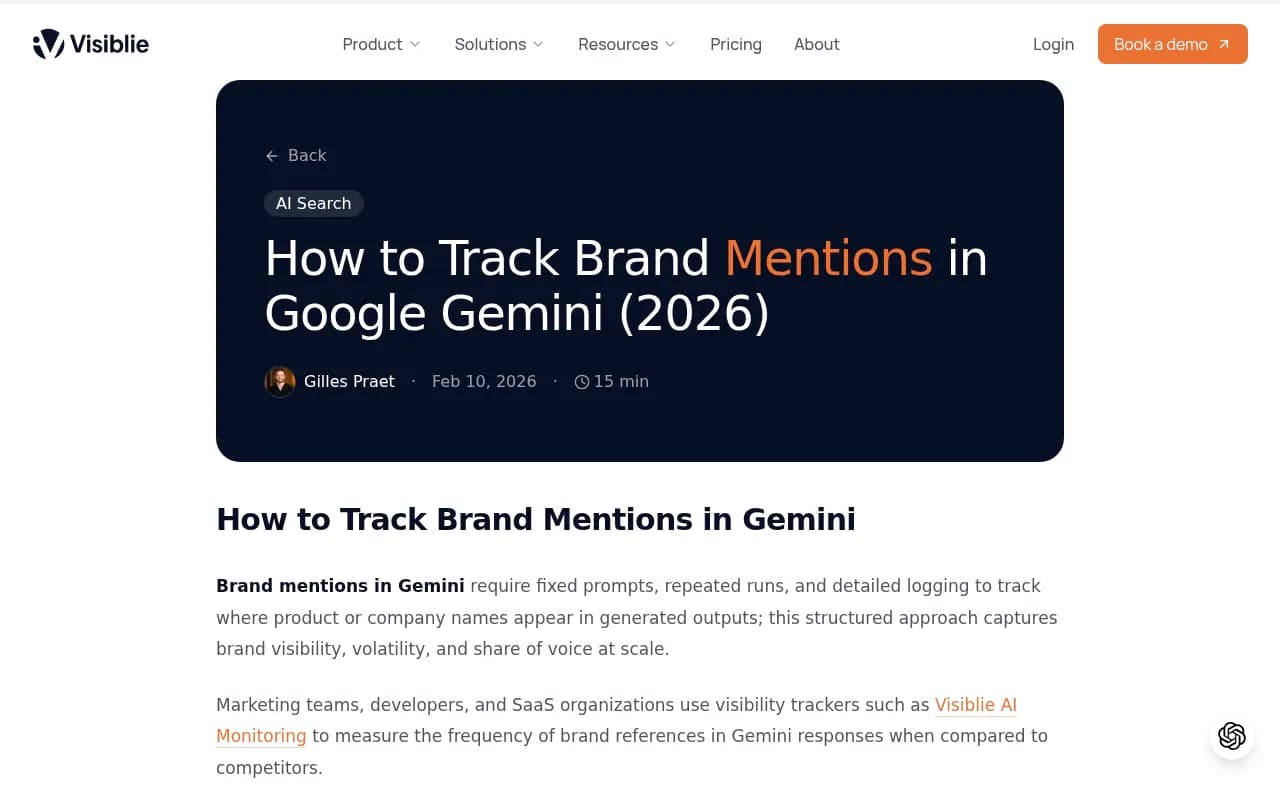
What you actually need to track:
- Mention frequency: How often does your brand appear in Gemini responses for your target prompts?
- Share of voice: How does your mention rate compare to competitors for the same prompts?
- Sentiment: When Gemini mentions your brand, is it positive, neutral, or negative?
- Prompt coverage: Which of your target prompts are you appearing for, and which are you missing?
- Volatility: How consistent is your visibility across different times, locations, and query phrasings?
Response variability in Gemini is real -- the same prompt can produce different results based on user location, account context, and timing. This means you need automated, repeated tracking rather than manual spot checks.
Several tools are built specifically for this:
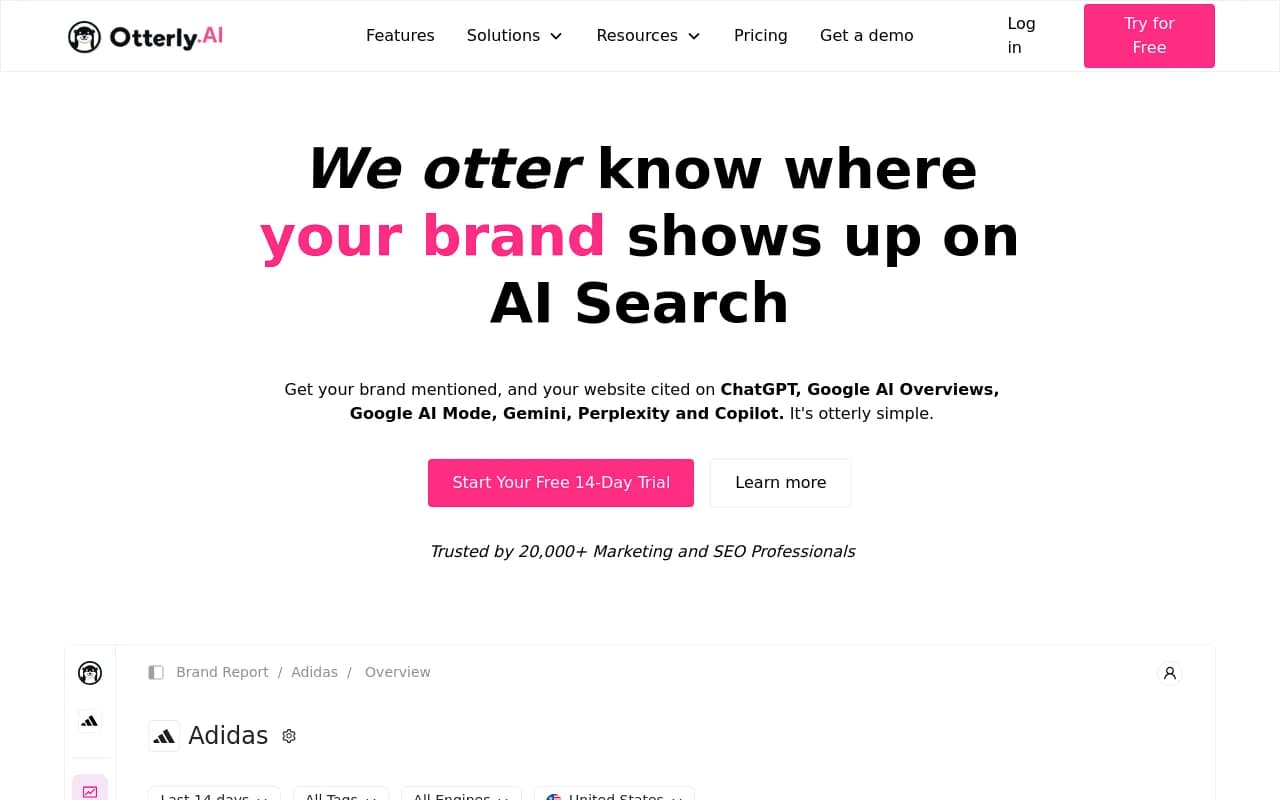
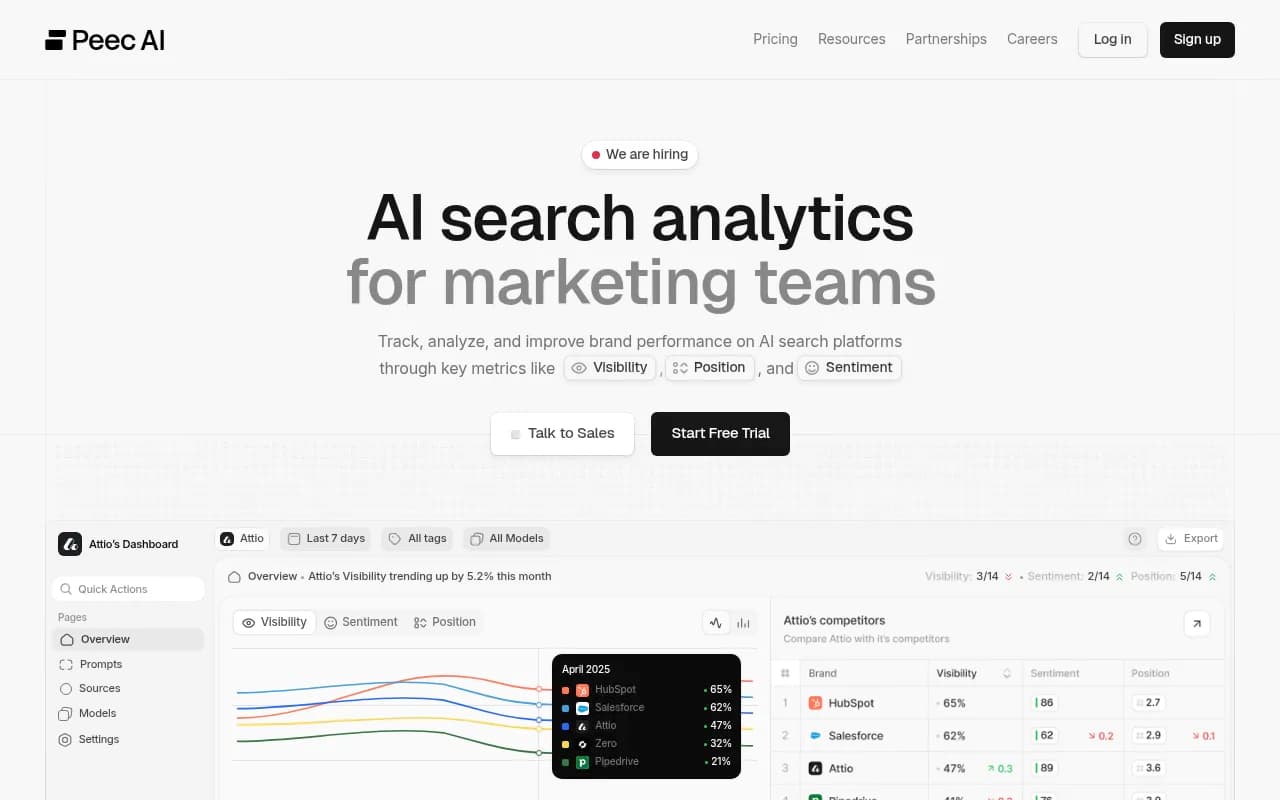
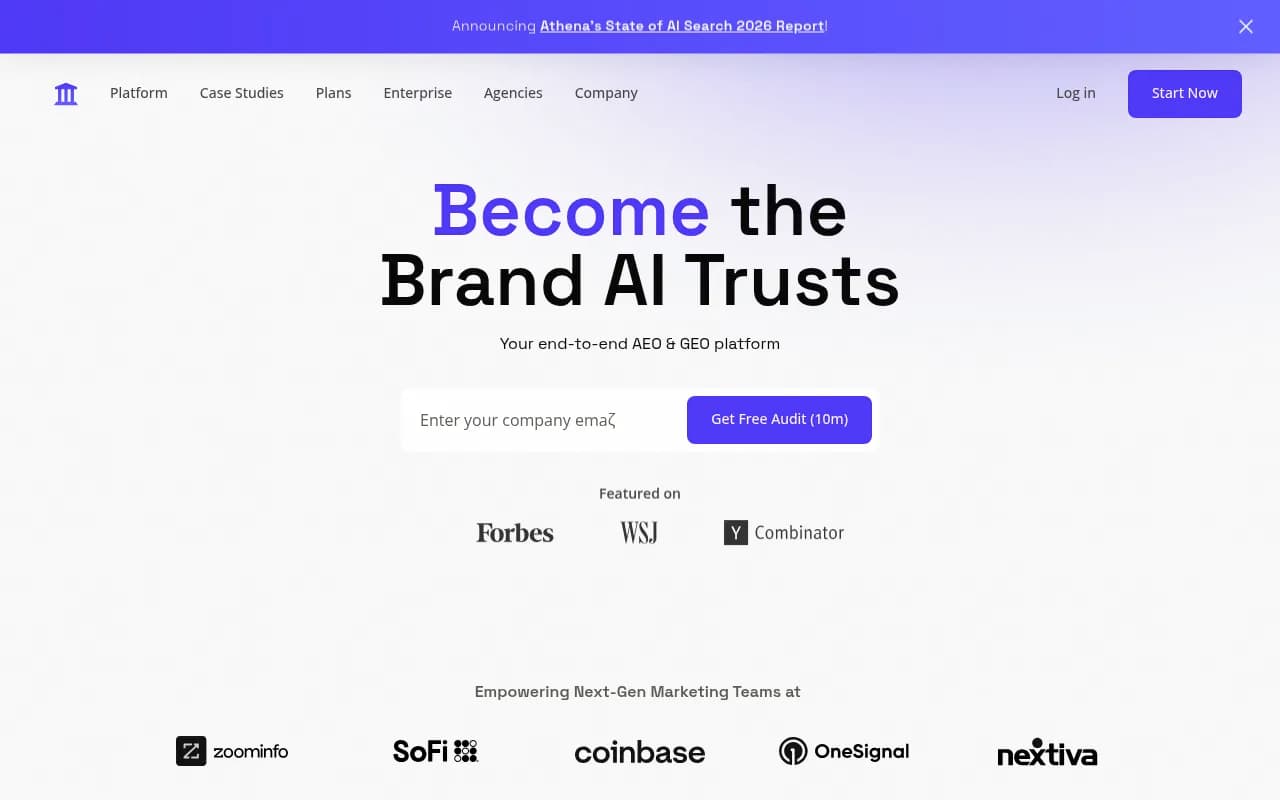
Here's a quick comparison of how they stack up for Gemini tracking specifically:
| Tool | Gemini tracking | Content generation | Crawler logs | Reddit/YouTube insights | Pricing from |
|---|---|---|---|---|---|
| Promptwatch | Yes | Yes (AI writing agent) | Yes | Yes | $99/mo |
| Otterly.AI | Yes | No | No | No | ~$49/mo |
| Peec AI | Yes | No | No | No | ~$49/mo |
| AthenaHQ | Yes | No | No | No | Custom |
The monitoring-only tools are fine for visibility reporting. If you want to actually improve your Gemini presence -- not just watch it -- you need something that connects the tracking to content creation.
A practical optimization checklist
If you're starting from scratch or doing an audit, here's a concrete sequence to follow:
Step 1: Audit your current Gemini presence
Run 20-30 prompts relevant to your category and document where you appear, where competitors appear, and what sources Gemini is citing. Do this manually first to get a feel for the landscape, then set up automated tracking.
Step 2: Identify your highest-value prompt gaps
Which prompts are your competitors appearing for that you're not? Prioritize by search intent and commercial value. "Best [category] for [use case]" prompts tend to be high-value because they're close to purchase decisions.
Step 3: Audit your E-E-A-T signals
Check your author bios, your about page, your third-party citations, and your review profiles. Where are the gaps? A brand with no author information, no external mentions, and no reviews is a hard sell for Gemini.
Step 4: Create content for specific prompts
Write content that directly answers your target prompts. Use the question as the headline or a prominent subheading. Answer it in the first paragraph. Then support the answer with evidence, examples, and data.
Step 5: Build external validation
Pursue placements in industry publications, contribute to relevant Reddit discussions, and actively manage your review profiles. These external signals take time to build but they're what separates brands that appear in Gemini from those that don't.
Step 6: Track and iterate
Set up monitoring for your target prompts and check visibility weekly. When you publish new content, watch whether it gets cited. Adjust based on what's working.
Common mistakes that keep brands out of Gemini
A few patterns show up repeatedly in brands that are invisible in AI search:
Writing for keywords instead of questions. Content optimized for "project management software" doesn't answer the question "what's the best project management software for a small agency?" These are different things. Gemini responds to the latter.
No author or brand authority signals. Anonymous content with no author bio, no company history, and no external mentions looks untrustworthy to an AI model. Even a basic author page with credentials helps.
Inconsistent brand information. If your website says one thing about your product and your G2 profile says another, that inconsistency erodes trust. Gemini cross-references sources.
Ignoring the competition. If you don't know which prompts your competitors are appearing for, you're optimizing blind. Competitor analysis is table stakes now.
Treating this as a one-time project. Gemini's behavior changes as the model updates, as competitors publish new content, and as user query patterns shift. This is ongoing work, not a one-time fix.
The bottom line
Getting your brand cited in Gemini comes down to one thing: being a source that an AI model trusts enough to recommend to a real person. That means genuine expertise, clear and structured content, consistent external validation, and a systematic approach to identifying and filling the gaps where competitors are winning.
The brands that are doing this well in 2026 aren't necessarily the biggest or the best-funded. They're the ones that took AI visibility seriously early, built content around real questions, and tracked their results closely enough to know what was working.
The gap between those brands and everyone else is widening every month.