Key takeaways
- AI search queries average 15 words, not 2-3. Your research process needs to match that reality.
- The goal isn't to rank — it's to get cited. That changes what you track and how you structure content.
- Prompt research means mapping full questions, follow-up sub-queries, and the entities that connect them.
- 95% of AI citations come from third-party sources, so your strategy has to extend beyond your own site.
- Tools like Promptwatch can show you which prompts competitors are being cited for that you're not -- that gap is where your content roadmap starts.
Why "keyword research" doesn't quite cover it anymore
For the past decade, keyword research meant finding short phrases with decent search volume and acceptable competition. You'd plug them into a tool, get a list, sort by difficulty, and start writing.
That process still works for traditional Google search. But it doesn't translate cleanly to AI search engines -- and if you're trying to show up in ChatGPT, Perplexity, Google AI Overviews, or Gemini, you need a different approach.
Here's the core difference: AI engines don't return a list of links. They synthesize an answer. To do that, they pull from multiple sources and stitch together a response. Your content either gets cited in that answer, or it doesn't. There's no position 4 or position 7. You're in or you're out.
That changes everything about how you research, what you target, and how you measure success.
Real user prompts now average 15.1 words according to Otterly.AI's January 2026 analysis -- compared to 8.8 words for estimated prompts. They're conversational, problem-led, and use personal pronouns 52% of the time. "Best CRM for small business" becomes "what's the best CRM for a 5-person SaaS startup that doesn't want to pay for Salesforce."
So the first mindset shift: stop thinking in keywords. Start thinking in questions.
Step 1: Build your seed prompt list
Traditional keyword research starts with seed keywords. Prompt research starts with seed questions -- the real things your target audience types into ChatGPT or Perplexity when they're trying to solve a problem your product addresses.
Where to find seed prompts
Ask your customers directly. This sounds obvious but almost nobody does it. Ask your sales team what questions prospects ask before they buy. Ask support what questions new users have in their first week. These are real prompts.
Use AI engines themselves. Open ChatGPT or Perplexity and start typing a question related to your topic. Watch the autocomplete suggestions and related questions. These are derived from actual user behavior.
Mine Reddit and forums. Reddit is a goldmine for this. Search your topic on Reddit and look at the titles of popular threads -- they're almost always phrased as questions. AI engines heavily cite Reddit, so there's a direct connection between what people ask there and what gets surfaced in AI answers.
Look at "People Also Ask" in Google. Still useful. These question clusters often map directly to the sub-questions AI engines use when assembling answers.
Check your own site search logs. If you have internal search on your site, what are people typing? These are high-intent, real-world prompts from people who already found you.
The goal at this stage is quantity. Aim for 50-100 seed prompts before you start filtering. Don't judge them yet.
Step 2: Expand into sub-questions and query fan-outs
One of the things that makes AI search different is query fan-out. When someone asks a question, the AI engine doesn't just answer that one question -- it breaks it down into sub-queries and pulls from multiple sources to answer each one.
For example, "what's the best project management tool for remote teams" might fan out into:
- What features matter most for remote project management?
- How does Asana compare to Monday.com for distributed teams?
- What do users say about Notion for project management?
- Is there a free project management tool good enough for small remote teams?
Each of those sub-questions is a citation opportunity. If your content answers one of them clearly, you have a chance of being pulled in.
How to map sub-questions
Take each seed prompt and ask: what does someone need to know to fully answer this? What assumptions does the question make? What follow-up questions would naturally come next?
You can do this manually with a simple branching diagram, or use an AI tool to help generate the fan-out. Paste your seed prompt into ChatGPT and ask: "What sub-questions would someone need answered to fully understand this topic?" You'll get a useful starting list.
Tools like Promptwatch have a built-in query fan-out feature that shows how prompts branch into sub-queries based on real data -- which is more reliable than guessing.

Step 3: Map entities, not just questions
AI engines don't just match text -- they understand entities. An entity is a specific, named thing: a person, company, product, concept, or place. When an AI engine processes a query, it identifies the entities involved and looks for content that clearly addresses those entities in context.
This means your prompt research needs to include entity mapping. For each cluster of prompts, ask:
- What companies, products, or brands are mentioned?
- What concepts or categories are central to this topic?
- What people or roles are relevant?
- What locations or industries apply?
If you're a B2B SaaS company selling HR software, your entity map might include: HR software, HRIS, payroll, onboarding, Workday, BambooHR, small business, mid-market, HR manager, People Ops.
When you create content, you need to address these entities explicitly -- not just use the words, but provide clear, factual context about how they relate to your topic. That's what makes your content retrievable.
Step 4: Prioritize by prompt volume and difficulty
Not all prompts are worth targeting. Some are asked by thousands of people every day; others are so niche that even ranking for them won't move the needle. And some prompts are already dominated by authoritative sources that are nearly impossible to displace.
The traditional SEO metrics of search volume and keyword difficulty have rough equivalents in the AI search world:
| Traditional SEO metric | AI search equivalent |
|---|---|
| Search volume | Prompt volume (how often a prompt is asked) |
| Keyword difficulty | Citation difficulty (how entrenched are current cited sources?) |
| Click-through rate | Citation share (what % of answers cite you?) |
| Ranking position | Answer inclusion (are you cited at all?) |
| SERP features | AI model coverage (which models surface this prompt?) |
When prioritizing, look for prompts that have meaningful volume but where the current cited sources are weak -- thin content, outdated information, or no direct answer to the specific question. Those are your best opportunities.
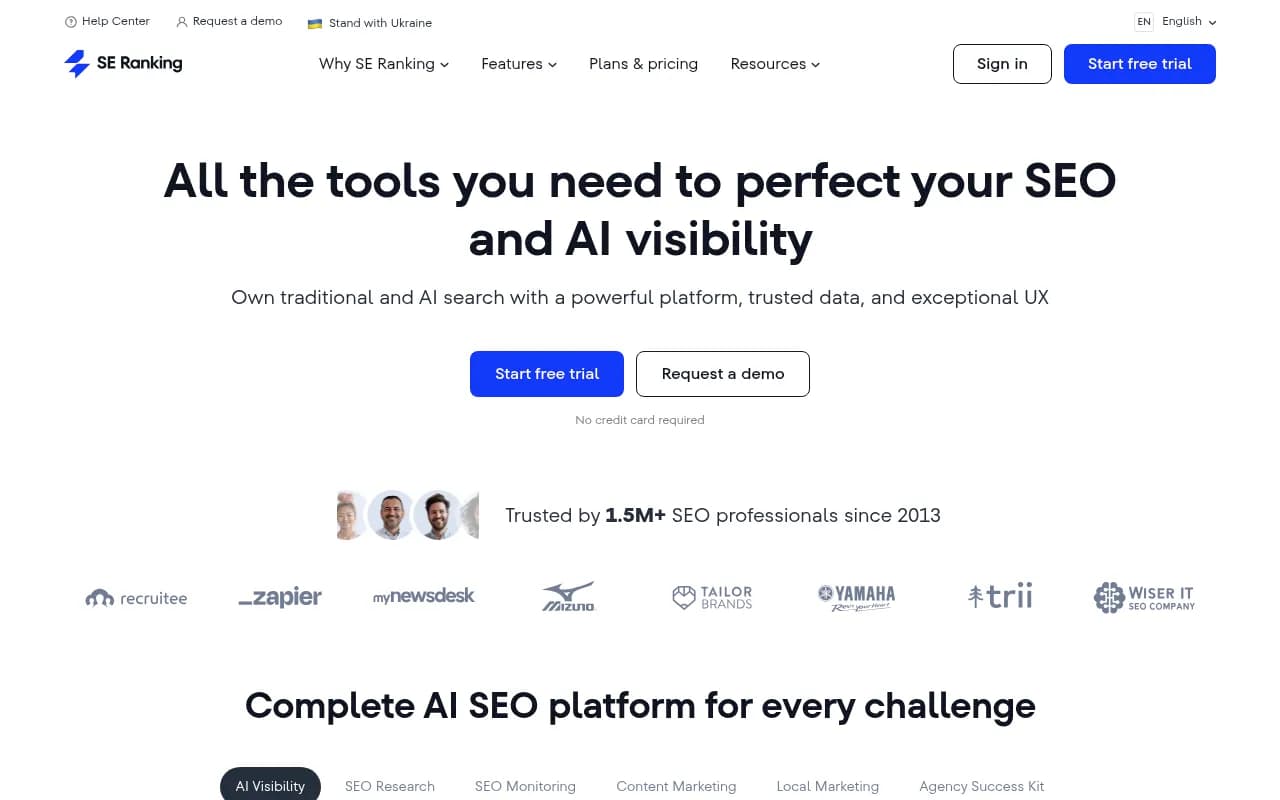
Promptwatch assigns difficulty scores to prompts based on how competitive the current citation landscape is. SE Ranking's AI visibility tools do something similar. Both are worth exploring if you're doing this at scale.
Step 5: Analyze what's currently being cited
Before you write anything, understand what's already winning. For each priority prompt, actually run it in ChatGPT, Perplexity, and Google AI Overviews. Look at:
- Which sources are cited?
- What format are those sources in? (Listicle, FAQ, comparison, definition?)
- How long and detailed are the cited passages?
- Are the citations from brand sites, Reddit, Wikipedia, or news?
This tells you two things: what content format works for this prompt, and how hard it will be to displace the current sources.
One pattern that consistently shows up in the data: FAQs and listicles drive the most AI citations. Otterly.AI found that adding FAQ content to a homepage drove a 350% lift in citations (2,379 vs. 529 in their 2025 experiments). That's not a small effect.
Also worth noting: 95% of AI citations come from third-party sources, not brand websites. ChatGPT in particular leans heavily on Reddit, Wikipedia, and news sites. So if you're only optimizing your own site, you're missing most of the citation surface area.
Step 6: Identify your gaps vs. competitors
This is where prompt research gets genuinely useful for strategy. The question isn't just "what prompts should I target?" -- it's "what prompts are my competitors being cited for that I'm not?"
That gap is your content roadmap.
Manual gap analysis is possible but slow. You pick a competitor, run 20-30 prompts in ChatGPT, note which ones cite them and not you, and build a list. Repeat for each competitor. It works, but it doesn't scale.
Dedicated tools handle this much faster. Promptwatch's Answer Gap Analysis shows exactly which prompts competitors are visible for that you're missing -- with prompt volumes and difficulty scores attached, so you can prioritize intelligently rather than just chasing everything.
Otterly.AI also has prompt tracking that lets you compare your citation share against competitors across multiple AI engines.

Step 7: Organize prompts into clusters
Once you have a list of priority prompts, don't treat them as individual targets. Group them into topical clusters -- sets of related prompts that can be addressed by a single piece of content or a tightly linked set of pages.
This matters because AI engines reward topical authority. If you have deep, well-structured content on a topic -- not just one page but a cluster of related pages that link to each other -- you're more likely to be cited across multiple related prompts.
A simple clustering approach:
- Group prompts by the core entity or concept they address
- Within each group, separate navigational prompts (what is X?) from comparison prompts (X vs Y?) from decision prompts (best X for Y?)
- Map each cluster to a content type: definition page, comparison article, FAQ section, listicle, or guide
Each cluster becomes a content brief. The prompts in that cluster are the questions your content needs to answer -- explicitly, with clear structure, so AI engines can extract and cite the relevant passage.
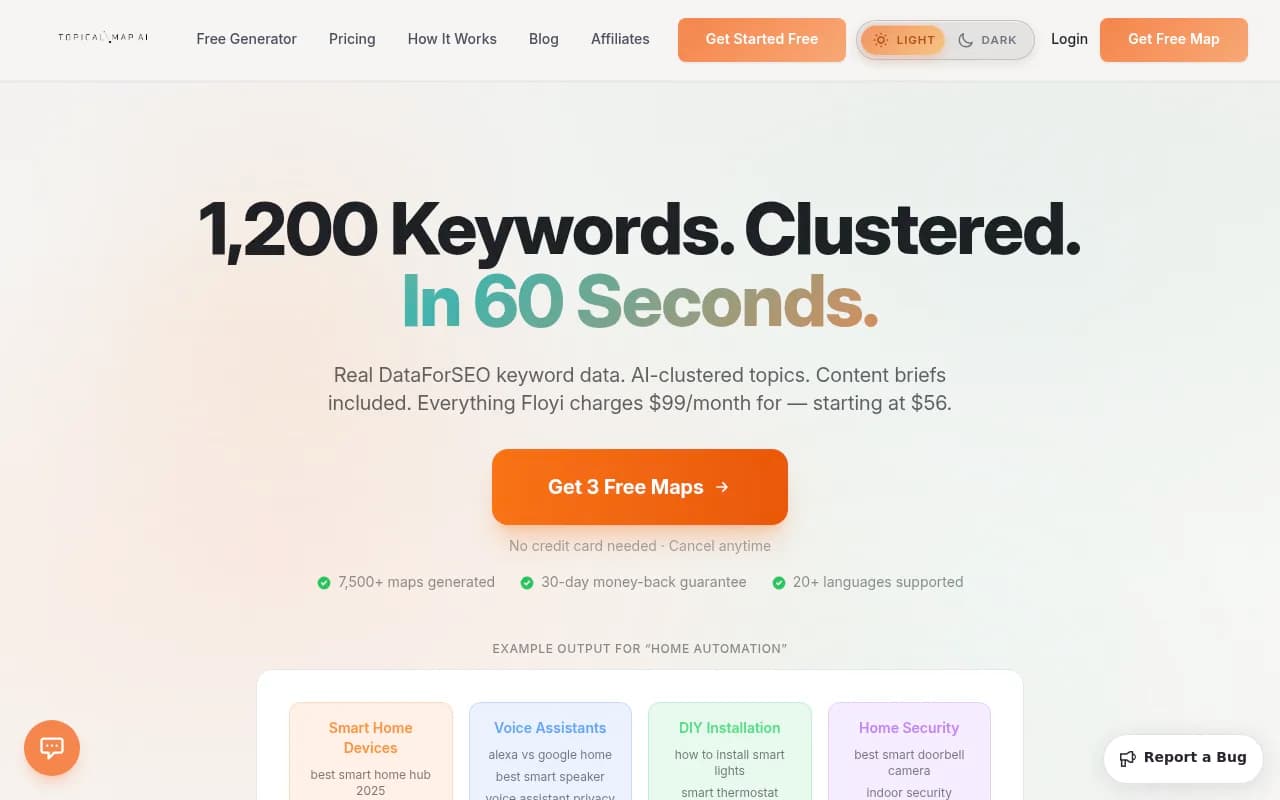
Tools like Topical Map AI can help you visualize these clusters and identify gaps in your topical coverage.
Step 8: Structure content for retrieval
Prompt research is only half the job. The other half is making sure your content is actually structured in a way that AI engines can retrieve and cite.
A few things that consistently improve citation rates:
Use explicit question-and-answer formatting. Don't just write about a topic -- answer specific questions directly. Use the question as a subheading, then answer it in the first 1-2 sentences of that section. AI engines are good at extracting these.
Write clear, standalone passages. Each section of your content should make sense on its own, without requiring the reader to have read the previous section. AI engines often pull a single passage, not the whole article.
Include definitions. When you introduce a concept, define it clearly. "X is Y" sentences are highly retrievable.
Use lists and tables. Structured data is easier for AI engines to parse and cite than dense prose.
Be specific. Vague content gets skipped. If you're writing about the best project management tools for remote teams, name the tools, give specific reasons, and include concrete details.
Measuring success: what to track
Classic rank tracking doesn't capture AI search performance. You need different metrics.
| Metric | What it measures | How to track it |
|---|---|---|
| Citation share | % of AI answers that cite your site for a given prompt | Promptwatch, Otterly.AI, SE Ranking |
| Prompt coverage | How many of your target prompts you're cited for | Promptwatch, Peec AI |
| Answer inclusion rate | Whether you appear in the answer at all (vs. just being linked) | Manual checks or dedicated tools |
| AI traffic | Actual visits from AI engines | Google Search Console, Promptwatch attribution |
| Competitor gap | Prompts competitors rank for that you don't | Promptwatch Answer Gap Analysis |
The most important thing is to track the same prompts consistently over time. AI engine behavior changes as models update, as your content gets crawled, and as competitors publish new content. A snapshot is useful; a trend line is what tells you if your strategy is working.
Tools worth knowing
Here's a quick overview of the tools most relevant to AI prompt research in 2026:
| Tool | Best for | Prompt research features |
|---|---|---|
| Promptwatch | End-to-end AI visibility + content | Answer gap analysis, prompt volumes, query fan-outs, content generation |
| SE Ranking | Mid-market teams | Prompt tracking, AI visibility scoring |
| Otterly.AI | Budget-conscious monitoring | Citation tracking, competitor comparison |
| Semrush | Traditional + AI hybrid research | Keyword research + some AI visibility features |
| Perplexity | Manual prompt testing | Real-time AI answer research |
| Topical Map AI | Content cluster planning | Topical authority mapping |
Perplexity
A note on which AI engines to prioritize
Not all AI engines behave the same way, and your prompt research should reflect that.
Google AI Overviews processes roughly 15 billion queries per day and tends to cite brand websites heavily (59.8% of citations). If you're in a commercial category, Google AI Overviews is probably your highest-volume opportunity.
ChatGPT (2.5 billion queries per day) leans more on Reddit, Wikipedia, and news sources (39.5% combined). That means your off-site presence -- Reddit threads, press coverage, Wikipedia mentions -- matters more for ChatGPT visibility than for Google.
Perplexity tends to cite recent, authoritative sources and is particularly active in research-heavy queries. If your audience is doing research before a purchase decision, Perplexity is worth prioritizing.
The practical implication: your prompt research should note which engine you're targeting for each cluster, because the content strategy and citation surfaces differ.
Putting it together: a simple workflow
If you're starting from scratch, here's a practical sequence:
- Collect 50-100 seed prompts from customers, sales, Reddit, and AI autocomplete
- Expand each into 3-5 sub-questions using query fan-out analysis
- Map the entities relevant to each prompt cluster
- Run priority prompts manually in ChatGPT, Perplexity, and Google AI Overviews -- note what's being cited
- Use a tool like Promptwatch or Otterly.AI to identify competitor citation gaps at scale
- Cluster prompts by topic and content type
- Create or update content to explicitly answer each prompt cluster, with retrieval-friendly structure
- Track citation share and prompt coverage monthly, adjust based on what's moving
The research part of this process is genuinely different from traditional keyword research -- but it's not harder. It's just asking different questions. Instead of "what do people search for?", you're asking "what do people ask, and what does a good answer look like?"
That shift in framing is most of the work.