Key takeaways
- ChatGPT and other LLMs decide which brands to mention based heavily on off-site signals -- Reddit discussions, YouTube mentions, press coverage, and "best of" listicles all feed into what AI models say.
- Domains with significant brand mentions on Reddit and Quora have roughly 4x higher chances of being cited by ChatGPT, according to research cited by marketingagent.blog.
- Consistent positioning across multiple external sources matters more than any single piece of content on your own website.
- Getting included in existing "best of" and comparison pages is one of the fastest ways to start appearing in AI-generated answers.
- Tracking which external sources AI models actually cite -- and then targeting those sources -- is the most efficient path to improving your AI visibility.
There's a question that comes up constantly in marketing circles right now: why does ChatGPT recommend my competitor but not me, even though my website is better?
The answer, frustratingly, usually has nothing to do with your website.
AI models like ChatGPT don't crawl and rank pages the way Google does. They form opinions about brands based on patterns across the entire web -- what gets said about you on Reddit, which YouTube channels mention you, whether journalists have written about you, and whether you show up in the "top tools for X" articles that SEO writers publish by the hundreds. If those signals point to your competitor more than you, your competitor gets the mention. It's that simple, and that unfair-feeling.
This guide breaks down exactly how each of these external channels influences ChatGPT brand mentions, what the research actually shows, and how to build a strategy around it.
Why ChatGPT cares about off-site signals at all
ChatGPT was trained on a massive corpus of text from across the internet. That training data included forum discussions, YouTube transcripts, news articles, blog posts, and comparison pages. The model learned which brands were associated with which topics by seeing those associations repeated across many different sources.
When someone asks ChatGPT "what's the best tool for X," the model isn't running a live search (unless you're using a browsing-enabled version). It's drawing on patterns from training. Brands that appeared frequently, in consistent contexts, across multiple source types are the ones that get surfaced.
Brian Dean, in a recent Semrush video breaking down off-site brand mention strategies, put it plainly: "You just need to show up in the right places with the same positioning over and over again." He pointed to his own companies, Backlinko and Exploding Topics, as examples -- both now appear in AI overviews and ChatGPT responses for high-intent prompts, not because of technical SEO tricks, but because the same descriptions kept appearing across multiple external sources.
The implication is significant: your AI visibility strategy needs to extend well beyond your own domain.
Reddit: the channel with outsized influence
Reddit has a complicated relationship with AI citations. Fleishman Hillard noted in early 2026 that ChatGPT has shown a significant reduction in citations to Reddit compared to earlier periods -- but that doesn't mean Reddit stopped mattering. It means the relationship changed.
What Reddit still does, powerfully, is shape the training signal. Research highlighted by marketingagent.blog found that domains with millions of brand mentions on Quora and Reddit have roughly 4x higher chances of being cited by ChatGPT. The mechanism isn't just direct citation -- it's that Reddit discussions create a web of associations between your brand and specific topics, use cases, and problems.
When someone on r/b2bmarketing asks "what tools are people using for AI search visibility in 2026?" and your brand gets mentioned positively in multiple replies, that pattern gets baked into how AI models understand your brand's relevance to that topic. The same goes for niche subreddits in your industry.
What actually works on Reddit
A few practical approaches:
- Participate genuinely in relevant subreddits. Answering questions, sharing real experiences, and contributing to discussions builds organic mentions over time. Spammy self-promotion gets downvoted and creates negative signals.
- Get your brand mentioned by others. This is harder to engineer directly, but creating genuinely useful tools, writing content people want to share, and building relationships with active community members all contribute.
- Monitor where your brand is already being discussed. You might find threads where you're not mentioned but competitors are -- those are gaps worth addressing through better product visibility or community engagement.
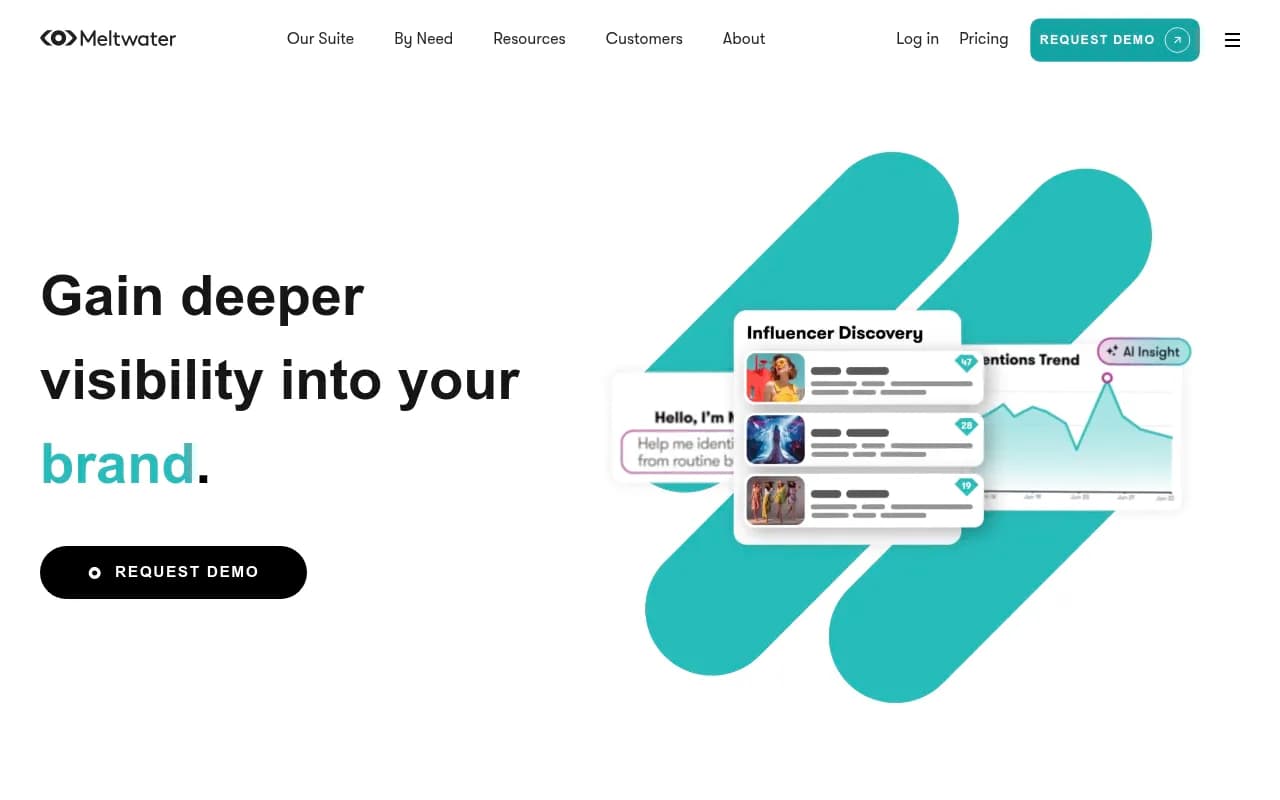
Tools like Brand24 can help you track where your brand is being mentioned across Reddit and other platforms in real time.
YouTube: transcripts, descriptions, and the authority signal
YouTube is another channel that feeds directly into AI training data. Video transcripts, descriptions, and the metadata around YouTube content all end up in the corpus that LLMs learn from.
If a well-known creator in your industry makes a video recommending your tool -- or even just mentioning it in a comparison -- that transcript becomes a data point. Multiply that across several creators and several videos, and you've built a meaningful signal.
The Semrush video from Brian Dean is a good example of this dynamic in action. It's a video about brand mention strategy, but it's also itself a brand mention -- Backlinko and Exploding Topics get named in the transcript, which gets indexed and potentially feeds back into training data.
How to build YouTube presence without making videos yourself
Most brands don't have the resources to run a serious YouTube channel. That's fine -- you don't need to. What matters is getting mentioned in other people's videos:
- Reach out to creators who make "best tools for X" or "top alternatives to Y" videos in your category. Offer a free account, a demo, or just a clear explanation of what makes your product different.
- Create genuinely shareable resources -- data reports, original research, free tools -- that creators want to reference.
- If you do create video content, optimize transcripts carefully. The words in your transcript are what get indexed.
BuzzSumo can help you identify which YouTube creators and topics are generating the most engagement in your niche, so you can prioritize outreach.
Press coverage and "best of" articles: the fastest path to AI mentions
This is probably the highest-leverage channel for most brands. Brian Dean called it out as "one of the fastest ways to get your brand picked up by AI systems" -- getting included in existing best-of and comparison content pages.
The logic is straightforward. Articles like "best project management tools," "top CRMs for small business," or "X vs Y comparison" tend to rank well in Google, get significant traffic, and are exactly the kind of structured, authoritative content that AI models cite. If your brand appears in ten of these articles with consistent positioning, ChatGPT starts associating you with that category.
Getting into existing roundups
The most direct approach: find the articles that already rank for your target queries and reach out to the authors or publishers to be included. This is essentially digital PR, but with a specific AI visibility goal in mind.
A few things that help:
- Have a clear, consistent one-line description of what your product does and who it's for. When writers include you, they'll often use your own language -- which means that language gets repeated across multiple sources.
- Build relationships with journalists and bloggers who cover your category. A warm outreach converts far better than cold email.
- Create your own comparison content that includes competitors honestly. These pages rank, get cited, and establish your brand as a credible voice in the category.
The SEO principle of "brand trust signals" has evolved in 2026 to include external mentions and brand consensus as explicit components, alongside topical coverage and authorship. Getting mentioned consistently across external sources isn't just good for AI visibility -- it feeds back into traditional search performance too.
The "brand consensus" effect
One concept worth understanding is what some practitioners call brand consensus -- the idea that AI models weight brands more heavily when multiple independent sources agree on the same positioning.
If one Reddit thread says your tool is great for enterprise use cases, that's a weak signal. If ten different articles, three YouTube videos, and a dozen Reddit comments all describe your tool the same way, that's a strong signal. The consistency across sources is what builds the model's confidence in the association.
This has a practical implication: your messaging needs to be consistent across every channel where you have a presence. The same core value proposition, the same use case framing, the same target audience description. Not because it sounds good in a brand guidelines document, but because repetition across sources is literally how AI models form opinions about brands.
How different external sources compare
| Source type | Influence on AI training | Ease of building | Speed of impact |
|---|---|---|---|
| Reddit / Quora mentions | High (4x citation lift cited) | Medium | Slow (organic) |
| YouTube transcripts | Medium-High | Medium | Medium |
| Press coverage | High | Hard | Medium-Fast |
| "Best of" listicles | Very High | Medium | Fast |
| Industry forums | Medium | Easy | Slow |
| Comparison articles | High | Medium | Fast |
| Podcast transcripts | Medium | Easy | Slow |
The table makes it clear why "best of" listicles and press coverage tend to be the priority for most brands: high influence, achievable with focused effort, and faster to show results than building organic community presence.
Tracking which sources actually matter
Here's the thing about all of this: you can spend a lot of time and money building Reddit presence or pitching journalists, and if you're not measuring what's actually working, you're guessing.
The smarter approach is to track which external sources AI models are actually citing when they mention brands in your category, then prioritize getting into those specific sources.
Promptwatch does this directly -- its citation and source analysis shows exactly which pages, Reddit threads, YouTube videos, and domains AI models cite in their responses. Instead of guessing which roundup articles matter, you can see which ones ChatGPT, Perplexity, and other models are actually pulling from, then focus your outreach there.

This kind of data changes the economics of the whole strategy. Rather than a broad "be everywhere" approach, you can identify the 10-15 sources that actually drive AI citations in your category and concentrate your energy on getting into those.
The practical workflow: from gap to mention
Putting this all together, here's a workflow that makes sense for most brands:
Step 1: Identify where competitors are mentioned but you're not. Run your key prompts through ChatGPT and note which brands come up. Look at the sources cited. This tells you both which competitors have better off-site presence and which sources are worth targeting.
Step 2: Audit your current external presence. Search Reddit, YouTube, and Google for your brand name alongside your category keywords. How many mentions exist? What's the sentiment? How does it compare to competitors?
Step 3: Prioritize the highest-leverage sources. Based on what you find, identify 5-10 specific articles, subreddits, or YouTube channels that are generating AI citations in your category. These become your targets.
Step 4: Build consistent positioning. Before you do outreach, make sure your messaging is tight. One clear sentence about what you do, who it's for, and what makes you different. This is what will get repeated across sources.
Step 5: Execute outreach systematically. Pitch writers for inclusion in roundups, engage genuinely in Reddit communities, reach out to YouTube creators. Track which efforts result in new mentions.
Step 6: Monitor your AI visibility over time. As new mentions accumulate, watch whether your brand starts appearing more frequently in AI-generated answers. This feedback loop tells you what's working.
What doesn't work (and wastes time)
A few things that get talked about a lot but have limited impact on AI brand mentions:
- Schema markup and structured data: useful for traditional SEO, but doesn't directly influence which brands LLMs mention.
- LLM.txt files: interesting experiment, but no evidence it meaningfully affects brand mention frequency.
- Publishing more content on your own website: helps with traditional SEO and can contribute to AI visibility, but without off-site signals, it's not enough on its own.
- Buying mentions: paid placements that look like organic mentions can backfire if they're low-quality or inconsistent with your positioning.
The research consistently points back to the same thing: genuine presence across multiple credible external sources, with consistent messaging, over time.
Tools worth knowing
A few tools that can support different parts of this strategy:
For tracking brand mentions and social listening:
For identifying content opportunities and competitor gaps:
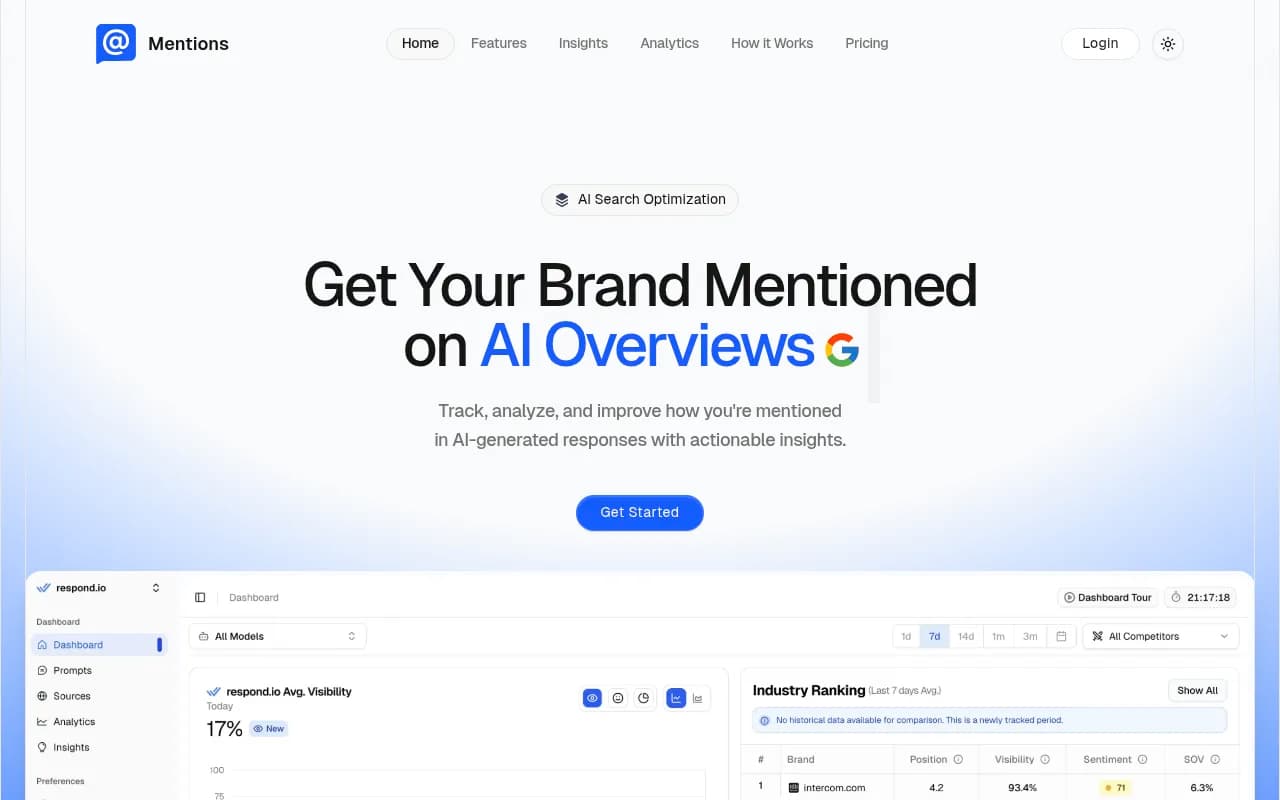
For monitoring your actual AI search visibility:
The bottom line
ChatGPT brand mentions in 2026 are largely determined by what the internet says about you, not what your website says about itself. Reddit discussions, YouTube transcripts, press coverage, and comparison articles are the raw material that AI models use to form opinions about which brands belong in which categories.
The brands winning in AI search right now aren't necessarily the ones with the best websites or the most technical SEO. They're the ones that have built consistent, positive presence across the external sources that AI models trust. That's a content and PR problem as much as a technical one -- and it's solvable with focused effort and the right data to guide where you spend that effort.