Summary
- Otterly.AI ($29-189/mo) is a monitoring-only tool that shows where your brand appears in AI search but provides no content gap analysis, optimization features, or traffic attribution
- Promptwatch ($99-579/mo) closes the action loop: it identifies missing content with Answer Gap Analysis, generates AI-optimized articles, and tracks results with page-level citation data and traffic attribution
- Free tools like Hall and AI Peekaboo exist but offer extremely limited prompt tracking (5-10 prompts) with no optimization capabilities
- The real question isn't "free vs paid"—it's "monitoring vs optimization." Most tools under $200/mo only tell you what's happening; platforms like Promptwatch help you fix it
- AI referral traffic converts at 4.4x traditional organic rates despite representing only 1.08% of total traffic, making optimization tools increasingly critical
The monitoring trap: Why most AI visibility tools leave you stuck
You sign up for an AI visibility tool. The dashboard loads. You see your brand mentioned in 12% of ChatGPT responses for your target prompts. Your competitor appears in 34%. The tool shows you a chart. Maybe some sentiment analysis. Then... nothing.
This is the monitoring trap. Most AI visibility platforms—including Otterly.AI, Peec.ai, and AthenaHQ—stop at showing you data. They tell you where you're invisible but provide zero guidance on how to fix it. You're left staring at a problem with no solution.
The question "Is Otterly.AI good enough?" misses the point. Good enough for what? If you want to track mentions and feel informed, sure. If you want to actually improve your AI visibility and drive traffic, monitoring-only tools are fundamentally insufficient.
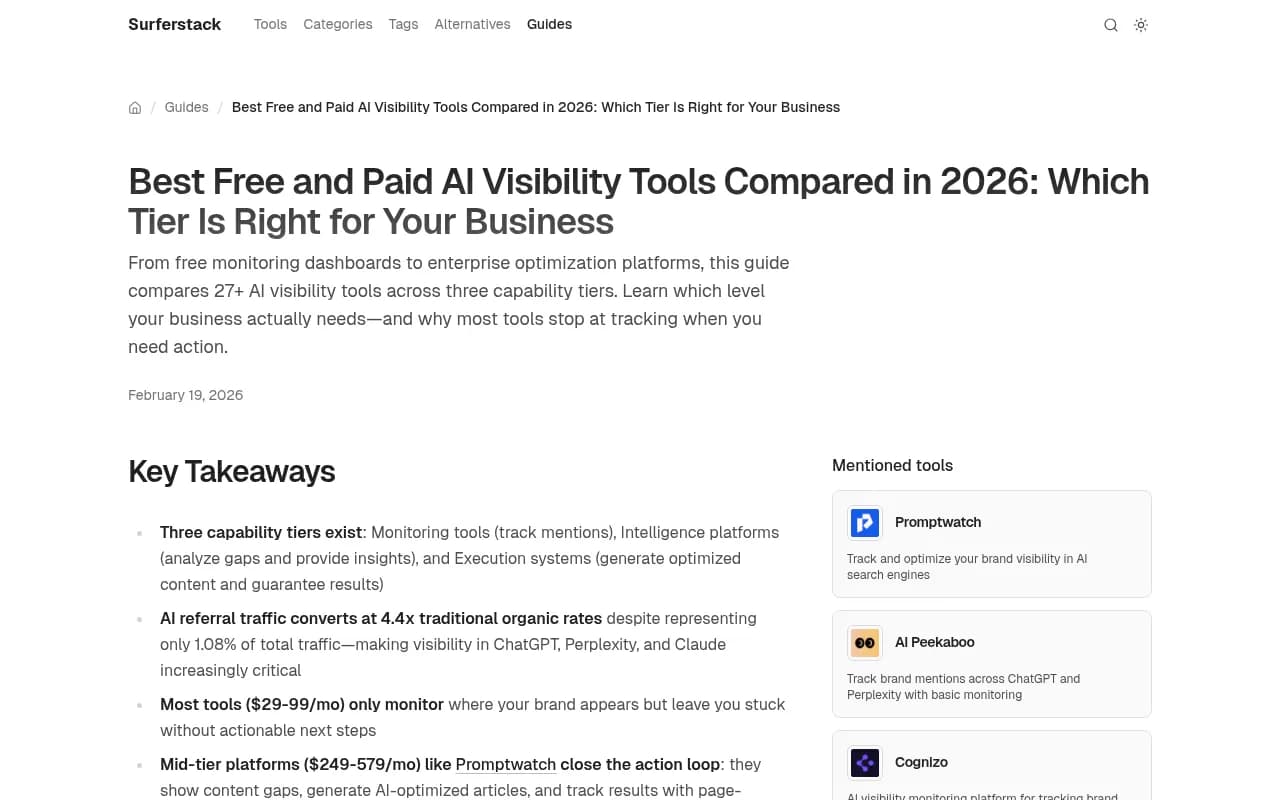
Let's break down what each tier of AI visibility tool actually delivers—and where the gaps become deal-breakers.
What Otterly.AI actually does (and doesn't do)
Otterly.AI positions itself as an affordable entry point into AI visibility tracking. At $29/month for 15 tracked prompts, it's one of the cheapest options on the market. The standard plan runs $189/month for 100 prompts.

What Otterly.AI provides:
- Basic mention tracking: Shows when your brand appears in responses from ChatGPT, Perplexity, Claude, and Google AI Overviews
- Competitor monitoring: Tracks which competitors appear for the same prompts
- Sentiment analysis: Categorizes mentions as positive, neutral, or negative
- Historical data: Charts visibility trends over time
- Prompt library: Pre-built prompt sets for common industries
What Otterly.AI doesn't provide:
- No content gap analysis: You can't see which specific prompts competitors rank for but you don't
- No optimization recommendations: The tool won't tell you what content to create or how to improve existing pages
- No AI crawler logs: You can't see if AI models are even accessing your website or encountering errors
- No traffic attribution: Zero ability to connect AI visibility to actual website visits or revenue
- No content generation: You're on your own for creating content that might improve visibility
- No page-level tracking: Can't see which specific pages are being cited by AI models
According to a detailed review on GenerateMore.ai, "Otterly does not provide direct website traffic estimation from AI search engines; it cannot correlate citations to actual website visits." This is the core limitation: you get data but no path to improvement.
For small teams with limited budgets who just want to start monitoring, Otterly.AI serves that purpose. But if your goal is to actually rank higher in AI search results, you're missing the tools that matter.
The free tier reality: What you get for $0
Several platforms offer free plans, but the limitations are severe enough that calling them "tools" feels generous.
Hall (Free plan available)
Hall is one of the only truly free AI visibility trackers. The free tier includes:
- 5 tracked prompts
- Basic mention monitoring
- Weekly email reports
Five prompts. That's enough to get a taste of AI visibility tracking but nowhere near enough to understand your competitive landscape or identify optimization opportunities. If you're a solopreneur testing the waters, fine. For any business with actual visibility goals, this is a demo, not a solution.
AI Peekaboo (Free tier)
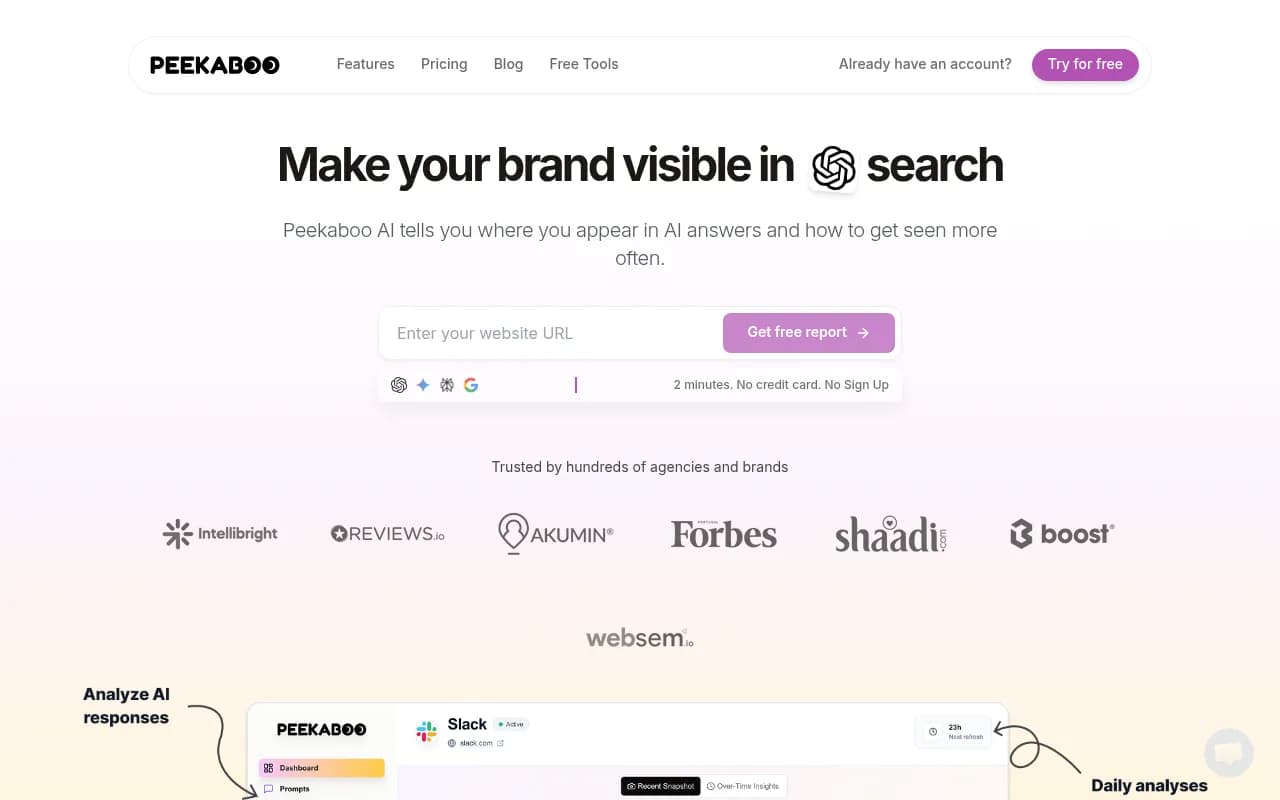
AI Peekaboo offers a free tier with 10 tracked prompts and basic monitoring. Same story: you can see some data, but the prompt limit is so restrictive that you're essentially flying blind. You might track your brand name and a handful of product category prompts, but you won't discover the long-tail queries where competitors are stealing citations.
The hidden cost of "free"
Free tools aren't just limited by features—they're limited by what you can learn. With 5-10 prompts, you can't:
- Map the full competitive landscape
- Identify content gaps across your category
- Test different prompt variations to understand AI model behavior
- Track visibility across different personas or use cases
You save money upfront but waste time operating with incomplete information. For most businesses, this is a false economy.
The mid-tier gap: Monitoring vs optimization platforms
The real dividing line in AI visibility tools isn't price—it's whether the platform helps you take action. Most tools in the $29-249/month range are monitoring dashboards. A smaller set of platforms at $99-579/month are optimization systems.
Monitoring-only platforms ($29-189/mo)
These tools show you data but leave you stuck:
- Otterly.AI ($29-189/mo): Tracks mentions, competitors, sentiment. No gap analysis or optimization features.
- Peec.ai (€89/mo): Daily prompt monitoring with rankings and citations. No content generation or traffic attribution.
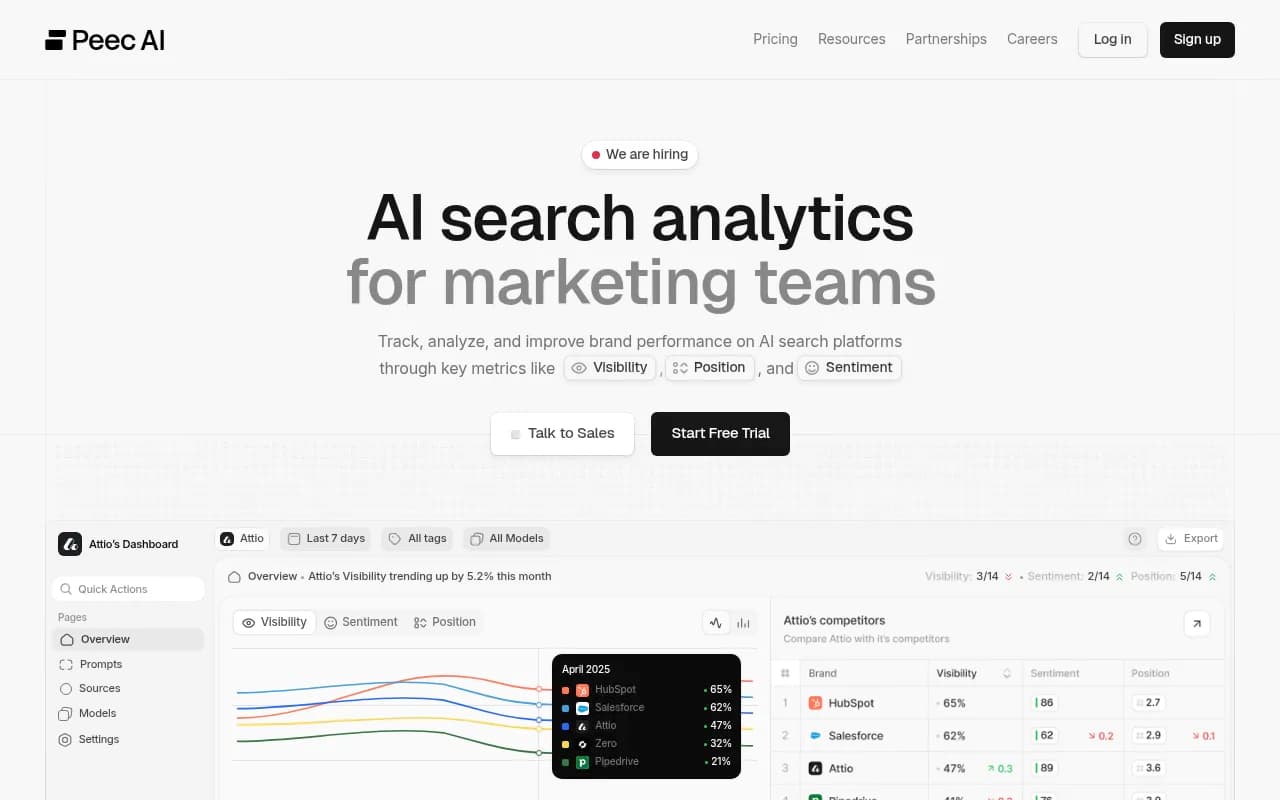
- AthenaHQ ($99-299/mo): Monitoring across 8+ AI search engines. Limited optimization capabilities.
- Mentions.so (pricing varies): Brand mention tracking in AI search. Basic monitoring only.
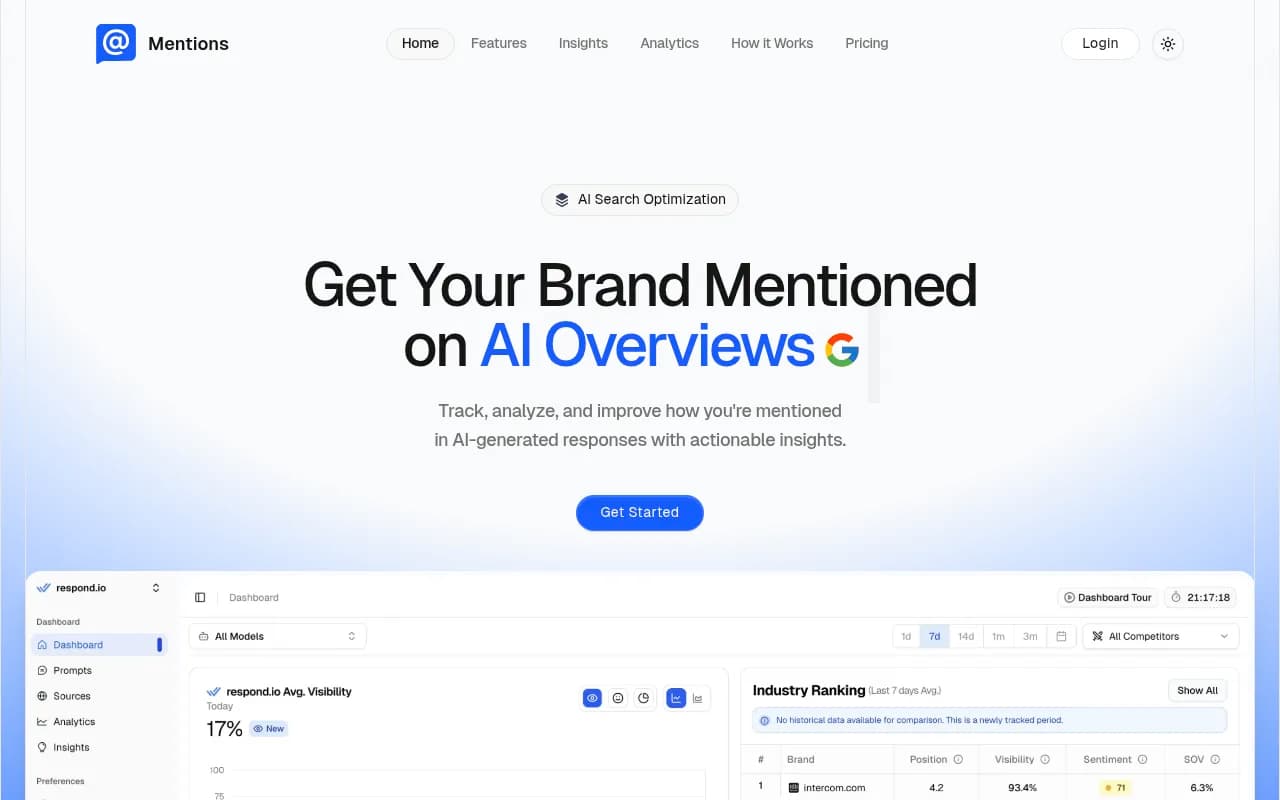
These platforms answer "Where do I appear?" but not "What should I do about it?" You're paying for information, not improvement.
Optimization platforms ($99-579/mo)
These tools close the action loop by showing gaps, generating content, and tracking results:
- Promptwatch ($99-579/mo): Answer Gap Analysis shows exactly which prompts competitors rank for but you don't. Built-in AI writing agent generates articles grounded in 880M+ citations analyzed. Page-level tracking shows which pages are being cited. Traffic attribution connects visibility to revenue.

- Profound ($299-999/mo): Enterprise-focused with strong analytics but higher price point and less emphasis on content generation.
- Scrunch ($249-699/mo): Solid feature set including optimization recommendations, but no built-in content generation.
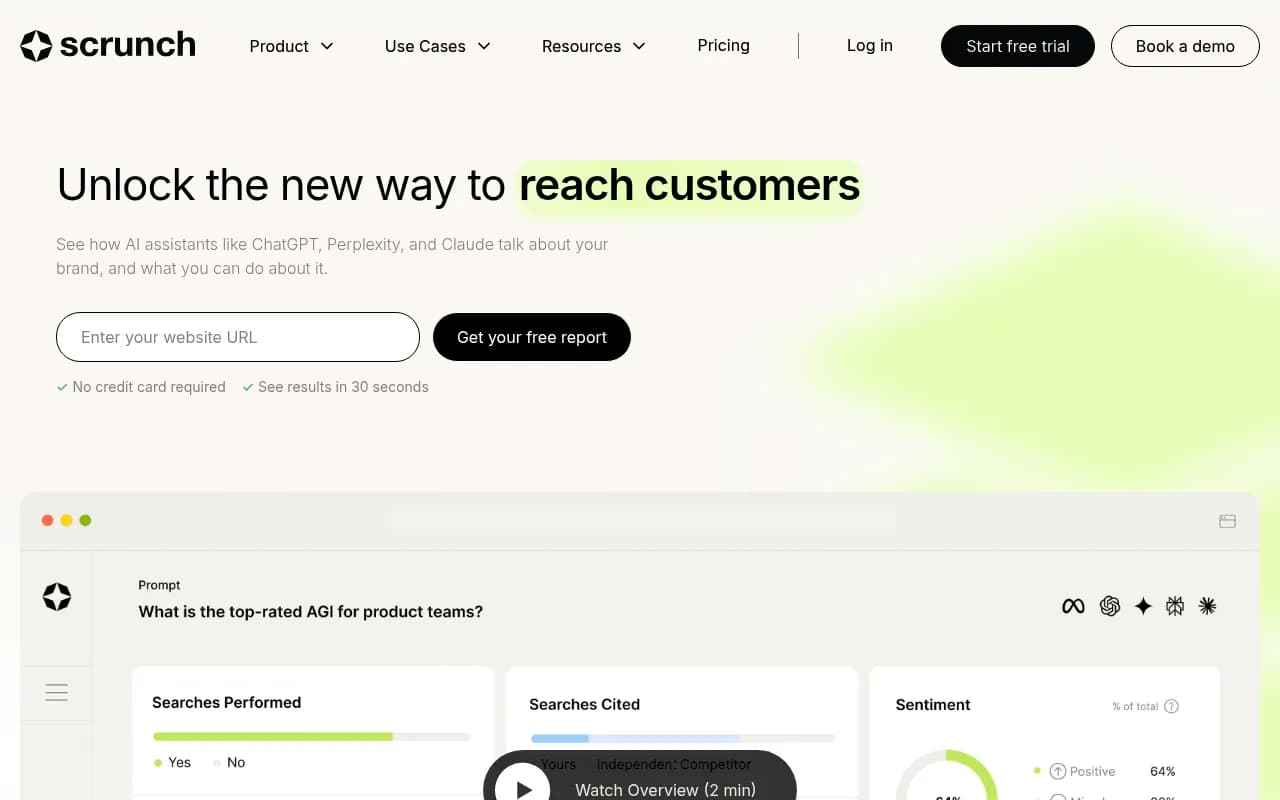
The difference is stark. With a monitoring tool, you discover you're invisible for "best project management software for remote teams." With an optimization platform, you get a content brief showing exactly what to write, an AI agent that drafts the article, and tracking that shows when ChatGPT starts citing it.
What Promptwatch does differently
Promptwatch is built around the action loop: find gaps, create content, track results. This is fundamentally different from monitoring-only tools.
1. Answer Gap Analysis: Find exactly what's missing
Most tools show you where you appear. Promptwatch shows you where you don't—and why that matters.
Answer Gap Analysis identifies prompts where competitors are visible but you're not. You see:
- The specific prompts triggering competitor citations
- Estimated search volumes for each prompt
- Difficulty scores showing which gaps are winnable
- Query fan-outs revealing how one prompt branches into sub-queries
This isn't vague "you should create more content" advice. It's a ranked list of exactly which topics and angles your website is missing—the content AI models want but can't find on your site.
2. AI content generation grounded in citation data
Once you know what's missing, Promptwatch's built-in AI writing agent creates it. This isn't generic SEO filler—it's content engineered to get cited by AI models.
The agent analyzes:
- 880M+ citations from ChatGPT, Claude, Perplexity, and other AI models
- Competitor content that's currently being cited
- Prompt volumes and persona targeting
- Source patterns showing which content types AI models prefer
You get articles, listicles, and comparison pages optimized for AI visibility, not just Google rankings. The content addresses the specific questions AI models are trying to answer.
3. Page-level tracking and traffic attribution
Monitoring tools show brand-level visibility. Promptwatch shows which specific pages are being cited, how often, and by which AI models.
You can:
- See exactly which URLs ChatGPT, Claude, and Perplexity are citing
- Track citation frequency over time for each page
- Compare page performance across different AI models
- Identify pages that are indexed but not being cited (optimization opportunities)
Then connect visibility to revenue with traffic attribution. Install a code snippet, integrate Google Search Console, or analyze server logs to see how many visitors arrive from AI search engines. Close the loop from content creation to actual business results.
4. AI crawler logs: Understand how AI models see your site
Most tools assume AI models can access your content. Promptwatch shows you what's actually happening.
AI Crawler Logs track:
- Which pages ChatGPT, Claude, and Perplexity crawlers are reading
- Errors they encounter (404s, access restrictions, slow load times)
- Crawl frequency for each page
- Indexing status across different AI models
If AI models can't read your content, you can't get cited. Crawler logs surface these issues before they cost you visibility.
5. Additional capabilities most competitors lack
- Reddit & YouTube insights: Surface discussions and videos that influence AI recommendations—a channel most competitors ignore entirely
- ChatGPT Shopping tracking: Monitor when your brand appears in ChatGPT's product recommendations and shopping carousels
- Multi-language & multi-region: Track AI responses in any language, from any country, with customizable personas
- Competitor heatmaps: Visual comparison of your AI visibility vs competitors across all tracked prompts
- Looker Studio integration & API: Export data for custom reporting or build automated workflows
Feature comparison: Otterly.AI vs Promptwatch vs free tools
| Feature | Free tools (Hall, AI Peekaboo) | Otterly.AI ($29-189/mo) | Promptwatch ($99-579/mo) |
|---|---|---|---|
| Tracked prompts | 5-10 | 15-100 | 50-350 |
| AI models monitored | 2-3 | 4-6 | 10+ (ChatGPT, Perplexity, Claude, Gemini, AI Overviews, Meta AI, DeepSeek, Grok, Mistral, Copilot) |
| Competitor tracking | Limited | Yes | Yes |
| Sentiment analysis | No | Yes | Yes |
| Answer Gap Analysis | No | No | Yes |
| Content generation | No | No | Yes (AI writing agent) |
| AI crawler logs | No | No | Yes |
| Page-level tracking | No | No | Yes |
| Traffic attribution | No | No | Yes (code snippet, GSC, server logs) |
| Reddit/YouTube insights | No | No | Yes |
| ChatGPT Shopping tracking | No | No | Yes |
| Prompt volumes & difficulty | No | No | Yes |
| Multi-language support | Limited | Limited | Yes (any language) |
| API access | No | No | Yes |
The table makes the capability gap obvious. Free tools give you a taste. Otterly.AI shows you the problem. Promptwatch helps you solve it.
Pricing breakdown: What you actually get at each tier
Free tier ($0/mo)
Best for: Testing AI visibility tracking before committing to a paid plan
What you get:
- 5-10 tracked prompts
- Basic mention monitoring
- Weekly or monthly reports
What you don't get: Enough data to make decisions, any optimization features, traffic attribution
Verdict: Fine for a week-long experiment. Not viable for ongoing visibility management.
Budget monitoring ($29-99/mo)
Example: Otterly.AI Starter ($29/mo, 15 prompts)
Best for: Small businesses that want basic awareness of AI visibility but have no budget for optimization
What you get:
- Limited prompt tracking (15-50 prompts)
- Competitor monitoring
- Historical trends
- Sentiment analysis
What you don't get: Content gap analysis, optimization recommendations, traffic attribution, AI crawler logs, content generation
Verdict: You'll know you have a problem but won't have tools to fix it. Useful if you're just starting to think about AI visibility and need to build internal buy-in for a larger investment.
Standard monitoring ($99-249/mo)
Examples: Otterly.AI Standard ($189/mo, 100 prompts), Peec.ai (€89/mo), AthenaHQ ($99-299/mo)
Best for: Mid-sized companies that want comprehensive monitoring but plan to handle optimization manually
What you get:
- 50-150 tracked prompts
- Multi-model monitoring (4-8 AI engines)
- Competitor benchmarking
- Historical data and reporting
What you don't get: Answer Gap Analysis, content generation, AI crawler logs, traffic attribution
Verdict: Solid monitoring but you're still on your own for optimization. Works if you have a content team that can interpret the data and create optimized content without tool assistance.
Optimization platforms ($99-579/mo)
Example: Promptwatch Essential ($99/mo), Professional ($249/mo), Business ($579/mo)
Best for: Companies that want to actively improve AI visibility, not just monitor it
What you get:
- 50-350 tracked prompts (depending on tier)
- 10+ AI models monitored
- Answer Gap Analysis showing exactly what content is missing
- AI writing agent that generates optimized articles
- AI crawler logs showing indexing status
- Page-level citation tracking
- Traffic attribution connecting visibility to revenue
- Reddit/YouTube insights
- ChatGPT Shopping tracking
- Multi-language and multi-region support
What you don't get: White-glove service (that's enterprise tier)
Verdict: The first tier where you can actually improve visibility instead of just watching it. Essential ($99/mo) works for single-site businesses; Professional ($249/mo) adds crawler logs and state/city tracking; Business ($579/mo) scales to 5 sites and 350 prompts.
Enterprise ($1,000+/mo)
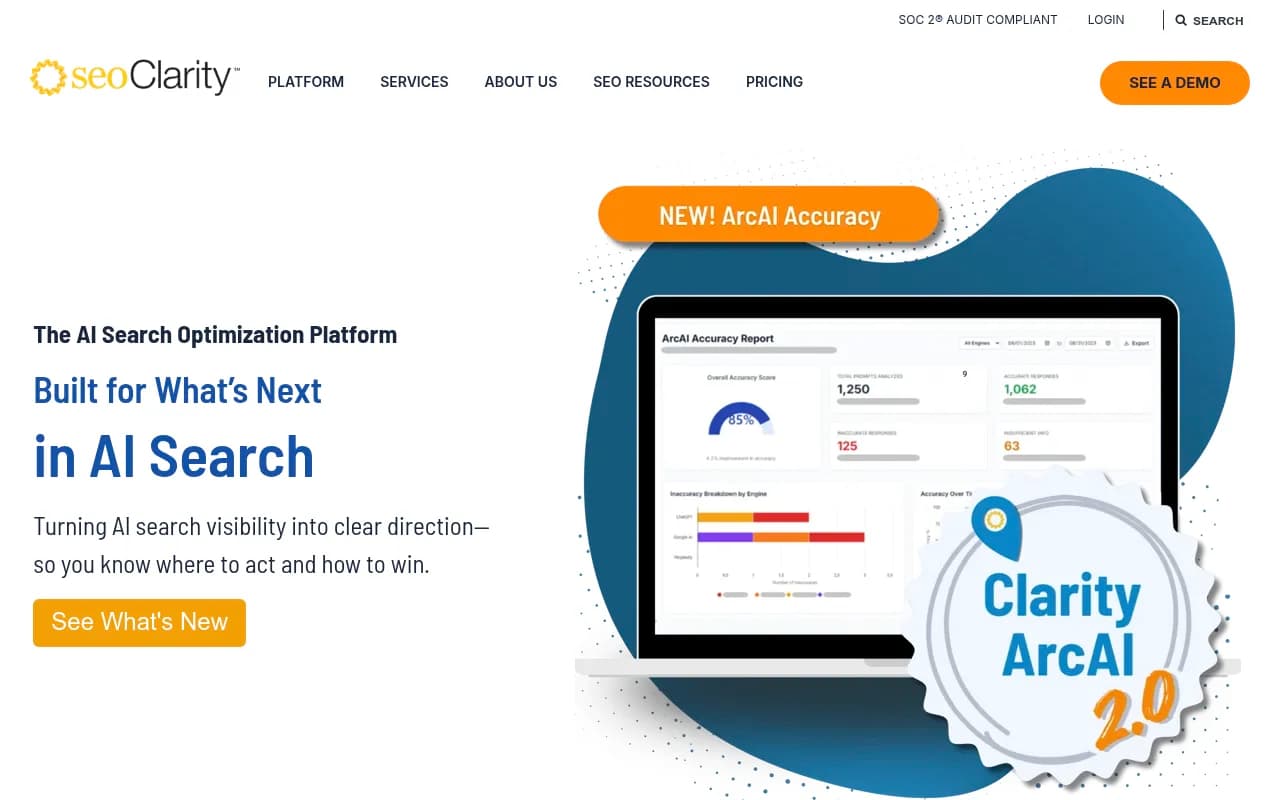
Examples: Profound (custom pricing), BrightEdge (custom pricing), seoClarity (custom pricing)
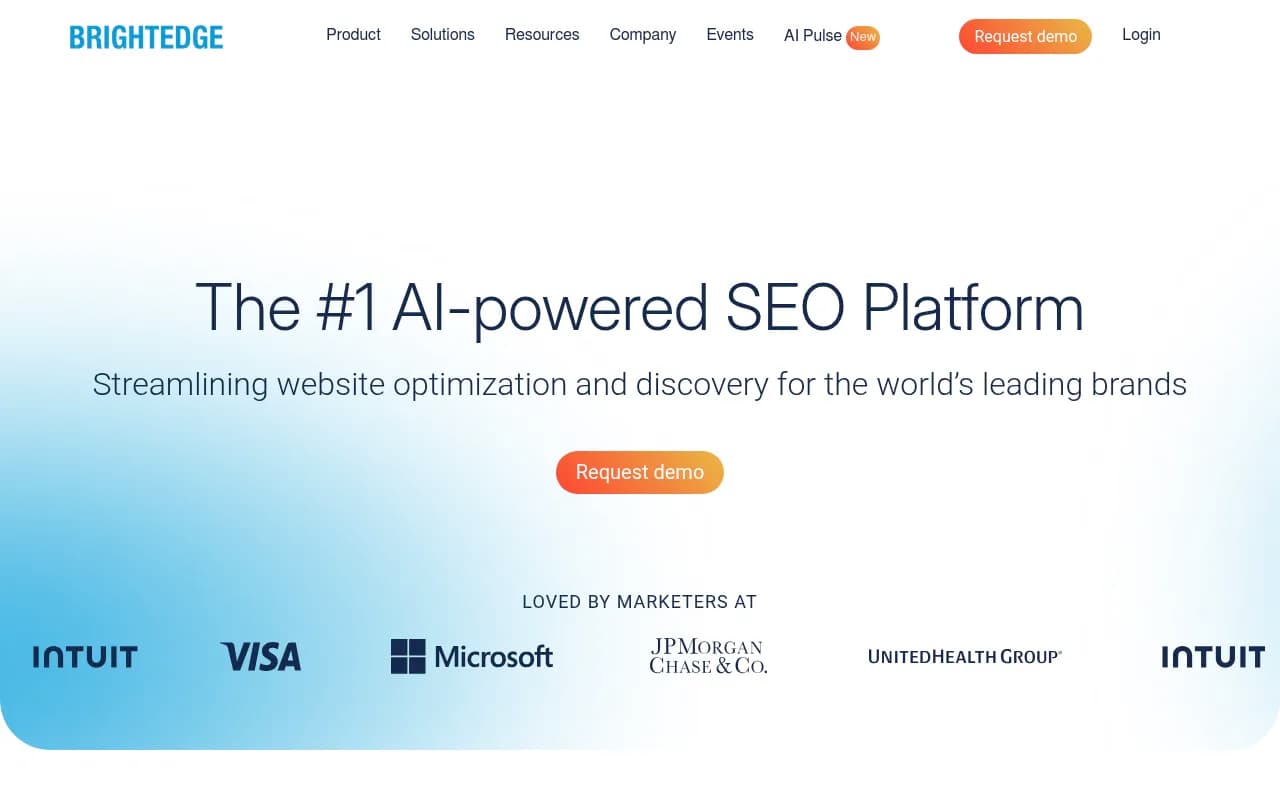
Best for: Large brands managing 50+ locations or requiring custom integrations and dedicated support
What you get:
- Unlimited or very high prompt limits
- Custom integrations
- Dedicated account management
- White-glove onboarding and training
- Advanced API access
- Custom reporting
What you don't get: Necessarily better features than mid-tier optimization platforms—you're paying for scale and service
Verdict: Overkill for most businesses. If you're managing a national brand with hundreds of locations or need custom integrations with enterprise marketing stacks, this tier makes sense. Otherwise, you're paying for capabilities you won't use.
The real question: What do you need AI visibility tools to do?
The "free vs paid" framing is wrong. The right question is: What outcome are you trying to achieve?
If you just want awareness:
Free tools or budget monitoring ($0-99/mo) will show you where your brand appears in AI search. You'll know if you have a visibility problem. You won't be able to fix it, but you'll know it exists.
Use case: Building internal buy-in for AI visibility investment, satisfying curiosity, basic competitive intelligence.
If you want comprehensive monitoring:
Standard monitoring tools ($99-249/mo) give you detailed visibility data across multiple AI models, competitor benchmarking, and historical trends. You'll understand the problem in depth.
Use case: You have a content team that can interpret visibility data and create optimized content without tool assistance. You need the intelligence but can handle execution internally.
If you want to improve visibility:
Optimization platforms ($99-579/mo) close the action loop. They show you what's missing, help you create content that fills the gaps, and track whether it works.
Use case: You want to actively rank higher in AI search results, not just monitor where you currently appear. You need tools that identify opportunities and help you execute on them.
If you're managing enterprise scale:
Enterprise solutions ($1,000+/mo) provide unlimited scale, custom integrations, and white-glove service.
Use case: You're managing 50+ locations, need custom integrations with enterprise marketing platforms, or require dedicated support and training.
Why monitoring-only tools fail: The content gap problem
Here's the core issue with platforms like Otterly.AI: they show you the symptom but not the disease.
You see your competitor cited in 34% of responses for "best CRM for small businesses." You're cited in 12%. Otterly.AI shows you this gap. Then what?
You don't know:
- Which specific content your competitor has that you don't
- What topics, angles, or questions AI models are looking for
- Which pages on your site could be optimized vs which need to be created from scratch
- Whether AI models can even access your existing content
- If the gap is winnable or if your competitor has such strong content that closing it would require massive investment
Without Answer Gap Analysis, you're guessing. You might create content that doesn't address the actual gaps. You might optimize pages that AI models can't even crawl. You might chase prompts that are too competitive to win.
This is why monitoring-only tools have limited value. They tell you there's a problem but provide zero guidance on solving it. You're paying for anxiety without action.
When Otterly.AI makes sense (and when it doesn't)
Otterly.AI works if:
- You have a $29-189/month budget and need basic monitoring
- You're just starting to explore AI visibility and want to understand the landscape
- You have a content team that can interpret visibility data and create optimized content without tool assistance
- You're primarily interested in competitive intelligence rather than optimization
- You're building a business case for larger AI visibility investment and need baseline data
Otterly.AI doesn't work if:
- You want to actively improve your AI visibility, not just track it
- You need to identify specific content gaps and opportunities
- You want traffic attribution showing how AI visibility connects to revenue
- You need to understand whether AI models can access your content (crawler logs)
- You want page-level tracking showing which URLs are being cited
- You need content generation tools to help create AI-optimized articles
For most businesses with serious AI visibility goals, Otterly.AI is a stepping stone, not a destination. You start there to understand the problem, then graduate to an optimization platform when you're ready to fix it.
The Promptwatch advantage: Optimization, not just monitoring
Promptwatch is the only platform rated as a "Leader" across all categories in a 2026 comparison of 12 GEO platforms (Search Party, Otterly.AI, Peec.ai, Profound, AthenaHQ, Scrunch, Brandlight.ai, Bluefish, Searchable, Semrush, Ahrefs Brand Radar).
The difference: most competitors are monitoring-only dashboards that show you data but leave you stuck. Promptwatch is built around taking action.
The action loop:
-
Find the gaps: Answer Gap Analysis shows exactly which prompts competitors are visible for but you're not. You see the specific content your website is missing—the topics, angles, and questions AI models want answers to but can't find on your site.
-
Create content that ranks: The built-in AI writing agent generates articles, listicles, and comparisons grounded in real citation data (880M+ citations analyzed), prompt volumes, persona targeting, and competitor analysis. This isn't generic SEO filler—it's content engineered to get cited by ChatGPT, Claude, Perplexity, and other AI models.
-
Track the results: See your visibility scores improve as AI models start citing your new content. Page-level tracking shows exactly which pages are being cited, how often, and by which models. Close the loop with traffic attribution (code snippet, GSC integration, or server log analysis) to connect visibility to actual revenue.
This cycle—find gaps, generate content, track results—is what makes Promptwatch an optimization platform, not just another tracker.
Capabilities most competitors lack:
-
AI Crawler Logs: Real-time logs of AI crawlers (ChatGPT, Claude, Perplexity, etc.) hitting your website—which pages they read, errors they encounter, how often they return. Understand how AI engines discover your content and fix indexing issues. Most competitors lack this entirely.
-
Prompt Intelligence: Volume estimates and difficulty scores for each prompt, plus query fan-outs that show how one prompt branches into sub-queries. Prioritize high-value, winnable prompts instead of guessing.
-
Citation & Source Analysis: See exactly which pages, Reddit threads, YouTube videos, and domains AI models cite in their responses. Know where to publish and what to optimize.
-
Reddit & YouTube Insights: Surface discussions that directly influence AI recommendations—a channel most competitors ignore entirely.
-
ChatGPT Shopping Tracking: Monitor when your brand appears in ChatGPT's product recommendations and shopping carousels.
Making the decision: A practical framework
Here's how to choose the right AI visibility tool for your business:
Step 1: Define your goal
Awareness: "I want to know where my brand appears in AI search." → Free tools or budget monitoring ($0-99/mo)
Intelligence: "I want comprehensive data on my AI visibility and competitors." → Standard monitoring ($99-249/mo)
Improvement: "I want to rank higher in AI search results." → Optimization platforms ($99-579/mo)
Enterprise scale: "I need to manage 50+ locations with custom integrations." → Enterprise solutions ($1,000+/mo)
Step 2: Assess your content capabilities
If you have a strong content team that can:
- Interpret visibility data without tool assistance
- Research content gaps manually
- Create AI-optimized content based on competitive analysis
- Track results and iterate
→ Monitoring tools may be sufficient
If you need tools to:
- Identify specific content gaps
- Generate optimized content
- Track page-level performance
- Attribute traffic to visibility improvements
→ Optimization platforms are necessary
Step 3: Calculate the opportunity cost
AI referral traffic converts at 4.4x traditional organic rates. If you're invisible in AI search, you're missing high-intent, high-conversion visitors.
Example calculation:
- Your website gets 50,000 organic visits/month
- Industry average: 1.08% of traffic comes from AI search (540 visits)
- Your current AI visibility: 20% of potential (108 visits)
- Gap: 432 visits/month from AI search
- Conversion rate: 5% (industry average)
- Average order value: $500
- Monthly opportunity cost: 432 × 0.05 × $500 = $10,800
If improving AI visibility could capture even 25% of that gap (108 additional visits), you'd generate $2,700/month in additional revenue. A $249/month optimization platform pays for itself 10x over.
The question isn't "Can I afford Promptwatch?" It's "Can I afford to stay invisible in AI search?"
Step 4: Start with a trial
Most platforms offer free trials:
- Promptwatch: Free trial available
- Otterly.AI: Free trial available
- Peec.ai: Free trial available
Test the platform with your actual prompts and competitors. See which tool provides insights you can act on.
Conclusion: Monitoring tells you the problem, optimization solves it
Otterly.AI is a solid monitoring tool. For $29-189/month, you get visibility data across multiple AI models, competitor tracking, and historical trends. If your goal is awareness and you have a content team that can handle optimization manually, it works.
But for most businesses, monitoring-only tools are insufficient. You discover you're invisible for high-value prompts, then you're stuck. No content gap analysis. No optimization recommendations. No traffic attribution. You're paying for anxiety without action.
Promptwatch closes the action loop. It shows you exactly what content is missing, generates AI-optimized articles grounded in 880M+ citations, and tracks results with page-level attribution and traffic analytics. You don't just see the problem—you fix it.
The price difference ($99-579/mo vs $29-189/mo) reflects a capability difference. Monitoring tools show you data. Optimization platforms help you improve. If your goal is to actually rank higher in AI search results and drive revenue from AI referral traffic, the choice is clear.
Start with a free trial. Test both platforms with your actual prompts and competitors. See which one gives you insights you can act on. The right tool isn't the cheapest one—it's the one that helps you win in AI search.