Key takeaways
- Ranking on page one still matters, but it is now the qualifying round, not the finish line. Crawlability, authority, and relevance get you into the candidate pool.
- Citation and ranking are decoupling. Ahrefs data reported by Digital Applied found only 38% of pages cited in AI Overviews also rank in the top 10, down from 76% seven months earlier.
- Click loss is real but the numbers vary a lot by study, from roughly 15% (a Wikipedia-specific causal study) to over 50% at position one in some industry data.
- Google increasingly cites itself. Promptwatch Data shows google.com's share of AI Overview citations rose from 0.37% in January to 2.30% in June 2026.
- The metric to add is share of citation: how often you are named and linked inside the answer, not just where you sit below it.
The short answer
Yes, page one still matters. But the sentence "rank well and you win" stopped being true somewhere around the time AI Overviews started covering a large share of informational queries.
The honest version is this. Ranking gets your page considered. Whether it gets used depends on whether the page contains a clean, extractable answer, whether other trusted sources back you up, and whether Google decides to cite someone else (or itself) instead. Plenty of sources in the 2026 research disagree on the exact numbers, so I'll be careful about which claims are strong and which are shaky.
What the traffic evidence actually shows
The causal study (and its limits)
The most rigorous piece of evidence comes from researchers at NJIT and NTU, posted to arXiv in 2026. Using a difference-in-differences design over 161,382 matched article-language pairs and 46.5 million observations, they found AI Overview exposure cut daily traffic to English Wikipedia articles by about 15%.
Two caveats matter here. First, this is a Wikipedia study. It is good causal evidence, but Wikipedia is a particular kind of site, and you should not read 15% as the number for every publisher. Second, the effect was uneven: cultural and informational content dropped the most, while STEM content dropped less, presumably because people still need the full technical source.
Industry click-through studies
The CTR studies are messier. Digital Applied's roundup lists several, all measuring different things on different query samples:
| Study | Sample | Finding |
|---|---|---|
| Pew Research | 68K queries | About 46.7% relative CTR decline |
| Ahrefs | 300K keywords | About 34.5% drop at position 1 |
| Amsive Digital | 700K keywords | About 15.5% decline |
| Ahrefs (cited by 321 Web Marketing) | 2025 study | 58% fewer clicks to top-ranking results when an AI Overview appears |
The spread, from roughly 15% to nearly 60%, is the real finding. Nobody agrees on a single number because the effect depends on query type, industry, and how you count. What they agree on is direction: informational queries lose the most clicks, navigational ones barely move.
If you want to know your own exposure, skip the headline figures. Pull Google Search Console data, filter to queries you know trigger an AI Overview, and look for falling CTR alongside stable or rising impressions. That pattern points to compression from the overview rather than a ranking problem.
The conversion side
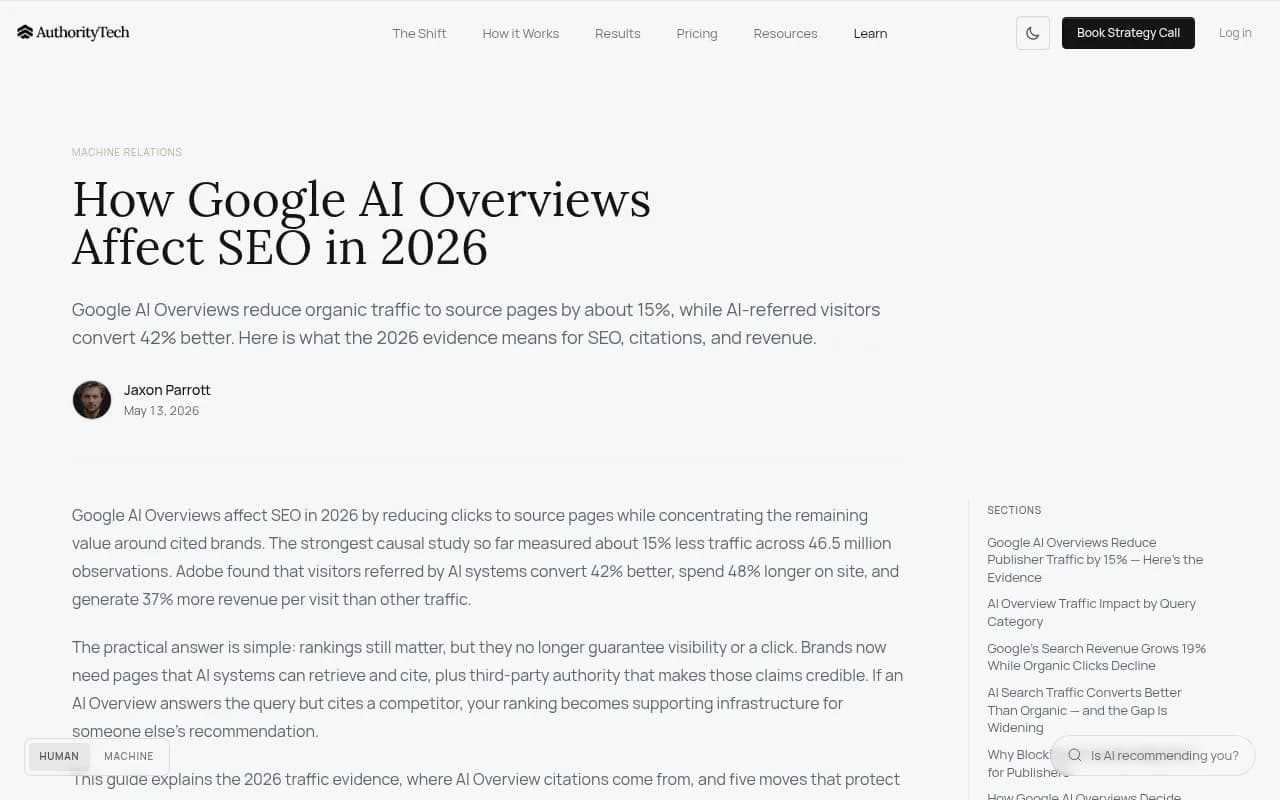
There is a counterweight. AuthorityTech, citing Adobe, reports that AI-referred visitors converted 42% better than other traffic in March 2026, stayed 48% longer, and produced 37% more revenue per visit. That is a reversal from March 2025, when the same traffic converted worse. I would treat this as promising rather than settled. These are third-party figures I could not independently verify, and AI-referred traffic is still a small slice for most sites. But it does suggest that a smaller number of clicks can be worth more per click.
Do you need page one to be cited?
This is where the sources genuinely contradict each other, and it is worth sitting with that rather than picking a side.
One camp says page one is more important than ever. 321 Web Marketing argues pages ranking on the first page are significantly more likely to be cited, so traditional SEO is foundational rather than optional. A LinkedIn post from Chris Donnelly puts top-10 rankings as explaining somewhere between 17% and 38% of AI citations, which is a modest-to-moderate relationship.
The other camp says citation has decoupled from ranking. The Ahrefs study of 863,000 keywords, reported by Digital Applied in February 2026, found only 38% of cited pages also ranked in the top 10, down from 76% about seven months earlier. Logic Inbound goes further and says AI Overviews often feature pages that are not in the top position.
Both can be true at once. Here is how I reconcile them:
- A page-one ranking is a strong signal that Google trusts a page enough to consider it. It is a good qualifying round.
- AI Overviews run fan-out searches and re-rank by how cleanly a page answers a specific sub-question. A page at position 14 with a crisp, self-contained answer can beat a page at position 2 that buries its answer.
- So ranking raises your odds without deciding the outcome. You can be cited without a top-10 spot, and you can rank first and still be skipped.
The practical read: treat ranking as necessary groundwork on most queries, and stop assuming it is sufficient.
Google is citing itself more
Here is something the ranking-focused advice tends to miss. Promptwatch Data tracked Google AI Overview citation share across May 31 to June 26, 2026, and the top three sources were YouTube (4.16%), Reddit (2.72%), and google.com (2.30%). Together they hold over 9% of citations, roughly double their combined share in January. See the June 2026 AI Overview citation share report.
The notable part is google.com. Its share doubled from 1.15% in May to 2.30% in June, and was 0.37% in January. Add YouTube and Google cites its own properties for about 6.5% of AI Overview sources. A second large study of 14,212 queries, covered by AuthorityTech, reached a similar conclusion: generative search shifts visibility toward Google-owned properties and away from popular and institutional domains.
If your target queries now trigger overviews that cite Google Business Profile, Merchant Center data, or YouTube, a page-one organic ranking competes with an answer that never sends anyone to organic results. Promptwatch's own advice from that report is to audit which target queries now cite google.com surfaces and make sure you are represented inside them. You can also see the longer-running top Google AI Overviews sources view for the 30-day picture.
What gets a page cited
Across the sources, the same handful of traits keep coming up.
Extractable answers
Pages that state a clear, self-contained claim near the top of a section get reused more than pages where the answer is spread across paragraphs. One Quora answerer put it bluntly: it is the pages that answer the question in the first two sentences, not the most backlinked ones, that are gaining ground. That is anecdotal, but it matches what Logic Inbound and AuthorityTech both describe.
In practice that means labeled definitions, comparison tables, short Q&A blocks, and headings that match the actual question.
Third-party corroboration
AuthorityTech argues that being named by sources AI systems already trust is a stronger signal than your own authority claims. That is the vendor's thesis (they sell earned media), so weigh it accordingly, but it is consistent with how citation data looks: reference, review, and community sources show up a lot. Promptwatch's report suggests YouTube and Reddit are core channels for Google, and that G2 is the review platform to prioritize for B2B software.
Freshness
A stale "2024 guide" loses to a "2026 comparison" on time-sensitive queries. Updating a page with new data and a visible date is one of the cheaper moves available.
Original information
AI Overviews synthesize consensus. Pages with proprietary data, first-hand testing, or a distinct angle give the system something it cannot assemble from ten other pages, which is the best argument for why a human-written page can still earn a click after the overview.
Crawl access
Blocking Google's AI crawler does not protect you. The 14,212-query study found overviews retrieve fewer sources from sites that block it, and AuthorityTech frames blocking as accelerating the loss. Check that you are not accidentally shutting the door.
A practical way to respond
1. Sort your queries by exposure
Split your target keywords into those that trigger an AI Overview and those that do not. Informational and how-to queries are hit hardest. Navigational and technical queries are mostly safe. Spend your defensive effort on the first group.
2. Keep the page-one work going
Crawlability, speed, internal linking, and backlinks still decide who enters the candidate pool. Do not abandon them because of the AI Overview panic.
3. Rewrite for extraction
On pages that rank but are not getting cited, move the direct answer up, add a short definition block, add a comparison table where it fits, and use FAQ markup only for questions actually answered on the page.
4. Build presence off your own site
That means YouTube, Reddit threads worth mining for briefs, review sites, and editorial mentions. These are the sources overviews keep citing.
5. Measure citations, not just positions
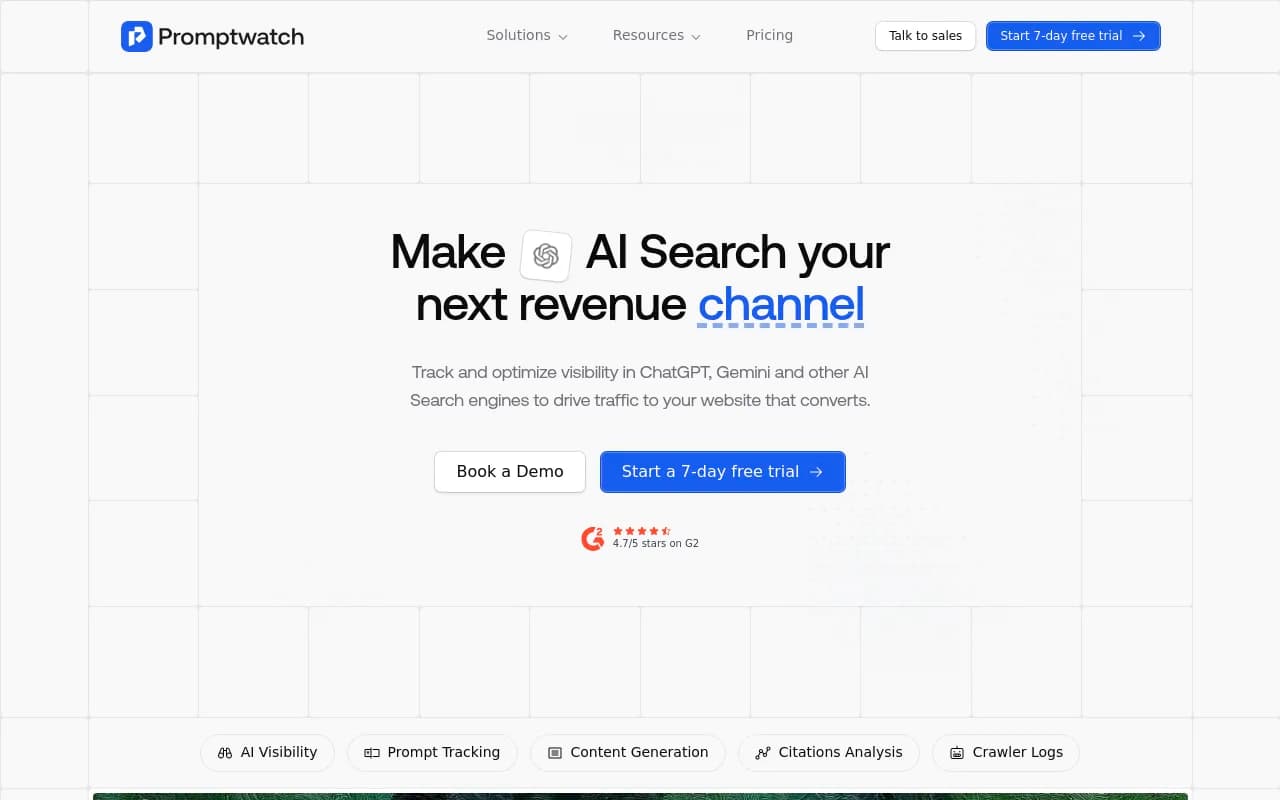
Position 3 means little if the overview answers the query before anyone reaches it. You need to know how often your brand is cited, in which answers, and against whom. Tools like Promptwatch track AI Overview and ChatGPT citations on real interfaces, and its crawler logs and page-level views help you see which pages get read versus cited.
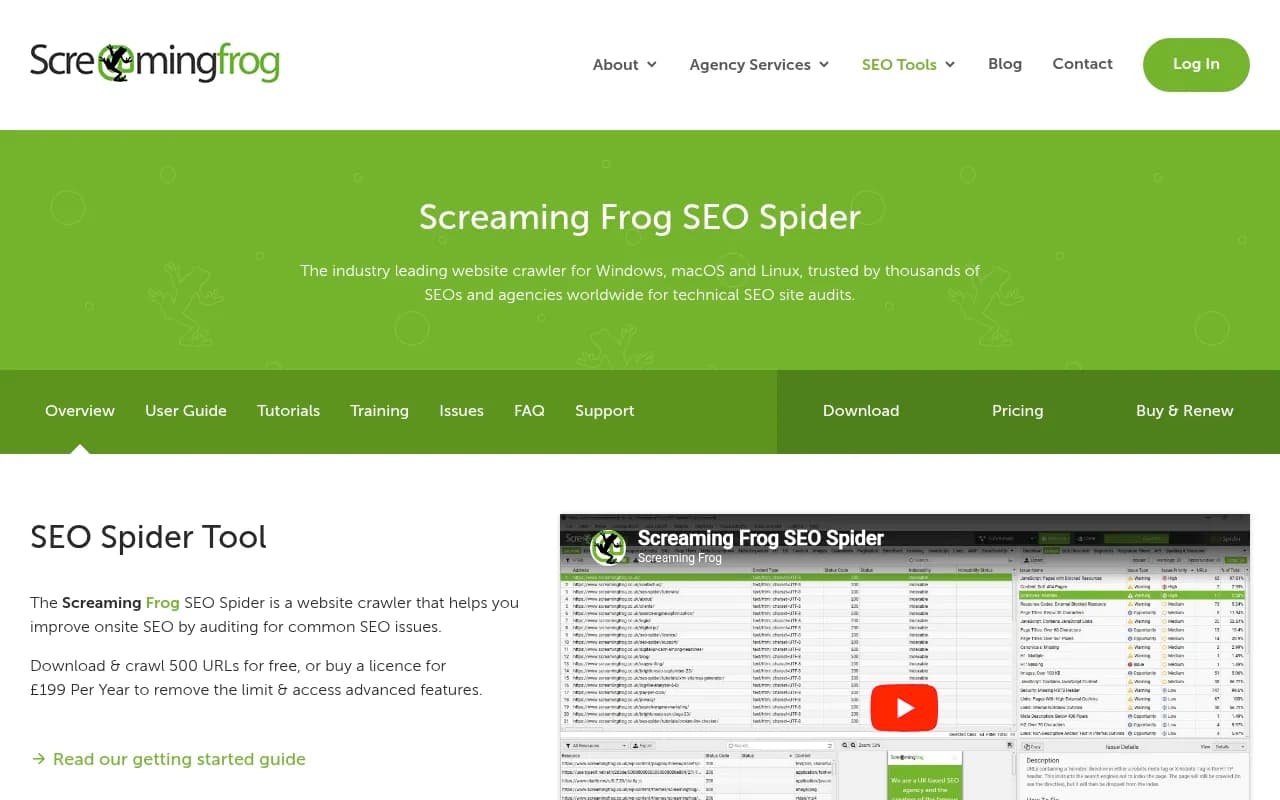
If you want to compare other options, the GEO software directory at bestgeosoftware.com lists most of them. For the traditional side of the stack, a crawler like Screaming Frog helps you catch technical issues that keep pages out of the candidate pool.
What I would not trust
A few claims floating around deserve skepticism.
- Single headline numbers. "AI Overviews cut clicks by X%" depends entirely on the sample. Anything from 15% to 61% can be defended with the right study.
- The 23x conversion figure for visitors who do click through. Digital Applied says it is "reportedly" the case, with no clear methodology. I would not build a business case on it.
- Coverage numbers. Estimates of how many searches show an AI Overview range from about 13% worldwide to about 48% depending on source and date. Check your own query set.
- Anyone claiming there is a clean split between SEO and GEO. Based on the evidence above, they overlap heavily.
I also could not find a first-party Promptwatch report that measures the overlap between page-one rankings and AI Overview citations directly, so the 38% and 17-38% figures here come from third parties. Treat them as directional.
So, does page one still matter?
Yes, as groundwork. A weak site will not get cited, and most citations still come from pages Google already trusts. But a page-one ranking on an informational query is worth less than it was two years ago, and it no longer guarantees you appear in the answer. The sites doing well are the ones that rank, answer the question in the first two sentences, show up on YouTube and Reddit, and check their citation share instead of just their position.
If you want expert help with the technical, content, and AI search side together, 1001 SEO Media works across all of it. Otherwise, start with the exposure sort in step one. It takes an afternoon and tells you where to focus.