Key takeaways
- Buffer charges per channel (from $6/channel/month), Hootsuite charges per seat (from $99/user/month). For a solo marketer, Buffer costs a fraction of what Hootsuite does.
- Buffer's AI assistant is unlimited and included on every plan, including the free one. Hootsuite's AI (OwlyWriter, now part of "Wisdom") is gated behind paid plans with token limits.
- Hootsuite reorganized its entire product in 2026 into five named products: Perch, Nest, Parliament, Wisdom, and Lumen. Most comparisons you'll find online describe the old product.
- Bulk scheduling on Hootsuite only exists on the $399/month Advanced plan. Buffer's queue-based scheduling works on every plan.
- If you need an engagement inbox, social listening, or ad reporting, Hootsuite is the only real option of the two. If you just need to publish consistently, Buffer wins on speed and price.
The short answer
I've read a lot of Buffer vs Hootsuite comparisons, and most of them answer a question nobody asked, like which tool has more integrations. Here's the question that actually matters: which one gives you back hours every week without creating new work?
For most people reading this, that's Buffer. It's faster to set up, faster to schedule in, and dramatically cheaper if you're a solo operator or small team. Hootsuite makes sense when social media is a bigger operation than one person, when you need to answer DMs and comments from inside the tool, or when you need listening data about what people say about your brand.
But the details matter, and 2026 changed some things. Let's get into it.

How the pricing actually works (this is the part that surprises people)
The sticker prices tell you almost nothing. What matters is what each company counts when it bills you.
Buffer counts channels. Hootsuite counts users. That single difference explains most of the cost gap you'll experience.
Buffer's pricing
Buffer's free plan covers 3 channels with 10 scheduled posts per channel, which is genuinely usable for testing. Paid plans are priced per channel:
- Essentials: $6/channel/month billed monthly, or $5/channel/month billed annually
- Team: $12/channel/month monthly, or $10/channel/month annually, with unlimited users and approval workflows
- Volume discounts kick in after 10 channels, dropping to $4, then $3, then $1 per channel as you add more
So a solo marketer running 5 channels on Buffer Essentials pays $30/month. A 3-person team running those same 5 channels on Buffer Team pays $60/month total, because Buffer doesn't charge for extra users on the Team plan.
Hootsuite's pricing
Hootsuite has no free plan, just a 14-day trial (no credit card required, which is an improvement over the old model). All prices are per user, per month, billed annually:
- Standard: $99/user, 10 social accounts, unified inbox, basic AI
- Professional: $199/user, unlimited accounts, automated inbox workflows, trend forecasting
- Advanced: $399/user, approval workflows, bulk scheduling, saved replies, deeper listening history
- Enterprise: custom pricing, with third-party estimates around $16,000-18,000/year for small teams
That 3-person team on Hootsuite Advanced pays $1,197/month, even though the account limits are unlimited. The seats are the cost, not the channels.
| Scenario | Buffer (Essentials) | Hootsuite (Standard) |
|---|---|---|
| Solo, 5 channels, 1 user | $30/mo | $99/mo |
| 3-person team, 8 channels | $96/mo (Team plan) | $297/mo |
| 3-person team needing bulk scheduling | $96/mo | $1,197/mo (Advanced, required for bulk) |
| Solo, 15 channels | $60/mo (volume discounts) | $99/mo |
One caveat on Buffer's side: if you manage a lot of channels, per-channel pricing adds up too, and Reddit users consistently call it a pain point that "scales faster than expected." The volume discounts soften this, but check the math for your specific channel count before committing.
Scheduling speed: where Buffer earns its reputation
Efficient App's head-to-head testing put it bluntly: if you care about scheduling speed, Buffer is the clear pick, because it saves you time instead of creating more work.
The reasons are concrete:
- Buffer's composer is minimal. You write, you pick channels, you schedule. There's very little UI between you and a published post.
- The queue system lets you set posting times per channel once, then drop posts into the queue without thinking about timestamps again.
- Buffer supports niche channels Hootsuite doesn't, including Mastodon, Google Business Profile, Shopify, YouTube Shorts, and a link-in-bio tool called Start Page.
Hootsuite's composer is heavier. That's not automatically bad, it reflects everything else the tool does, but if your job is mostly "get 20 posts scheduled before lunch," the extra chrome gets in the way.
The bulk scheduling gotcha deserves its own mention. Hootsuite's Bulk Composer (CSV upload, up to 350 posts) only exists on the Advanced plan at $399/user/month. On Standard, despite the $99 price tag, you're scheduling posts one at a time. Buffer's queue approach works on every plan, including free. If bulk scheduling is why you're comparing these two, this single fact might decide it.
AI features: unlimited and rough vs rationed and polished
Both tools shipped AI, and the philosophies diverge in an interesting way.
Buffer's AI Assistant runs on an OpenAI model and is unlimited on every plan, including the free one. The catch is quality: reviewers describe the output as robotic and dated, with no centralized brand-voice settings. It's fine for first drafts and repurposing, not for finished copy.
Hootsuite's AI, OwlyWriter, is now folded into a platform-wide layer called Wisdom. Wisdom is trained on 150M+ data sources and can do genuinely useful things: draft a week's worth of posts in bulk, spot trends from listening data, and adapt strategy from performance data. One reviewer's framing stuck with me: Hootsuite's AI is better at explaining a number, Buffer's is better at writing a caption.
But OwlyWriter has token limits on paid plans, so you ration usage. And Wisdom is only on paid plans, which, to be fair, is every Hootsuite plan since there's no free tier.
A 2026 wrinkle worth knowing: Buffer now offers a full developer API with a hosted MCP server, plus native integrations for ChatGPT, Claude, Cursor, and Perplexity. You can literally ask ChatGPT to draft and schedule your posts into Buffer. Buffer also lets you export analytics as Markdown, designed to be dropped straight into an AI chat for analysis. For AI-native workflows, Buffer is quietly ahead of its reputation here.
Engagement and inbox: Hootsuite's strongest argument
If your social job includes replying to people, the comparison stops being close.
Hootsuite's inbox product (Nest) pulls DMs, comments, mentions, and reviews from every connected network into one queue, with routing and assignment. It works like a lightweight customer service desk. Buffer only handles comment replies, no DMs at all.
Hootsuite also tracks ad performance across Facebook, Instagram, LinkedIn, and X. Buffer has no paid-ads features whatsoever.
And then there's listening. Hootsuite includes social listening on every plan, drawing from 150M+ websites and 30+ social channels. Buffer has none. Not "a weaker version," none.
One warning from YouScan's updated 2026 breakdown: Hootsuite's listening is now called Lumen, and it ships in two versions. Lumen Lite is what's in the app on standard plans, with mentions, sentiment, and trend analysis. Full Lumen is the enterprise product, with 24+ months of historical data and AI detection of brand mentions in images, video, and audio. If a sales demo shows you two years of sentiment history, you're looking at full Lumen. If you buy the $99 seat, you're getting Lite. Ask which one you're being shown before you sign anything.
Analytics and reporting
Hootsuite goes deeper here, and it's not close. It offers competitive benchmarking (5 competitors on Standard, 20 on Advanced), industry benchmarking, and customizable reports on higher tiers. Buffer's analytics are serviceable for a solo operator, but reviewers consistently flag the depth as limited, and free-plan analytics only go back 30 days.
Buffer's counterpunch is the Markdown export mentioned above, plus simplicity. If your reporting needs are "which posts worked this month," Buffer covers it. If your reporting needs are "prove ROI to a VP," Hootsuite is built for that conversation.
Reliability: the uncomfortable data
Both tools have reliability complaints, and the numbers from Capterra reviews are worth facing directly.
For Buffer, 78% of reviewers who mentioned bugs report platform disconnections and interface glitches, and 55% of reviewers discussing notifications say failed-post alerts are unreliable. One quote: "There was no alert capability letting you know about failed posts." For a scheduling tool, silent failures are the worst possible failure mode, so set up external notifications if you go with Buffer.
For Hootsuite, 80% of bug-citing reviewers report glitches, posting errors, and slowdowns requiring manual intervention. And 61% of cost-focused reviewers call the pricing expensive for what essential functions are locked behind higher tiers.
The Trustpilot gap is more dramatic. Buffer sits at a mixed 3.3/5. Hootsuite sits between 1.3 and 2.1/5 across 540+ reviews, with dominant complaints about billing surprises, auto-renewal charges, and difficulty canceling. If you trial Hootsuite, calendar your cancellation decision before the renewal date, not after.
| Rating source | Buffer | Hootsuite |
|---|---|---|
| Capterra | 4.5/5 (~1,491 reviews) | 4.4/5 (~3,796 reviews) |
| G2 | 4.3/5 (1,000+ reviews) | 4.3/5 (7,100+ reviews) |
| Trustpilot | 3.3/5 (mixed) | 1.3-2.1/5 (overwhelmingly negative) |
The pattern across all of it: people like both products when they work, and both have reliability issues that surface at the worst times. Hootsuite's billing practices are the bigger reputational problem.
Gotchas to check before you buy
- Hootsuite's "unlimited posts" on Standard doesn't include bulk scheduling. That's Advanced-only.
- Hootsuite trials have daily posting limits (10-20 posts depending on plan) and bulk scheduling is disabled during trials, so you can't fully test the feature you might be buying for.
- Buffer's free plan caps you at 10 scheduled posts per channel, which sounds fine until a holiday campaign eats the whole queue.
- Hootsuite charges per seat even when accounts are unlimited. Adding a summer intern doubles a Standard-team's cost.
- Buffer supports WhatsApp nowhere; Hootsuite supports it. If WhatsApp is a core channel for you, that's decisive.
- Hootsuite has 100+ integrations to Buffer's 20ish, including Salesforce and Google Analytics. If your stack matters, audit the integration lists before choosing.
So which one saves you time?
Here's my honest framing after sitting with the 2026 data:
Choose Buffer if you're a solo marketer, freelancer, or small team whose job is publishing. It's faster in daily use, the AI is unlimited, the free tier is real, and the per-channel pricing keeps a 5-channel operation under $50/month. Accept that analytics are shallow, there's no listening, and you should double-check that posts actually went out.
Choose Hootsuite if social media is a team function with replies, DMs, and reputation management attached. The unified inbox, listening, ad reporting, and benchmarking are things Buffer simply doesn't do, and the $99+ per-seat cost is justifiable when the tool is doing customer-service work, not just publishing.
| Your situation | Pick |
|---|---|
| Solo creator or freelancer | Buffer |
| Small team, publishing-focused | Buffer (Team plan) |
| Team that answers DMs and comments daily | Hootsuite |
| Brand monitoring and listening are required | Hootsuite (ask about Lumen Lite vs full Lumen) |
| Heavy bulk scheduling on a budget | Buffer |
| Enterprise with compliance and Salesforce needs | Hootsuite Enterprise |
Alternatives if neither feels right
The honest truth is that this comparison often ends with "both are flawed," and plenty of people land on a third tool instead. A few worth a look, and you can browse a wider set of options in the social media tools directory at surferstack.com:
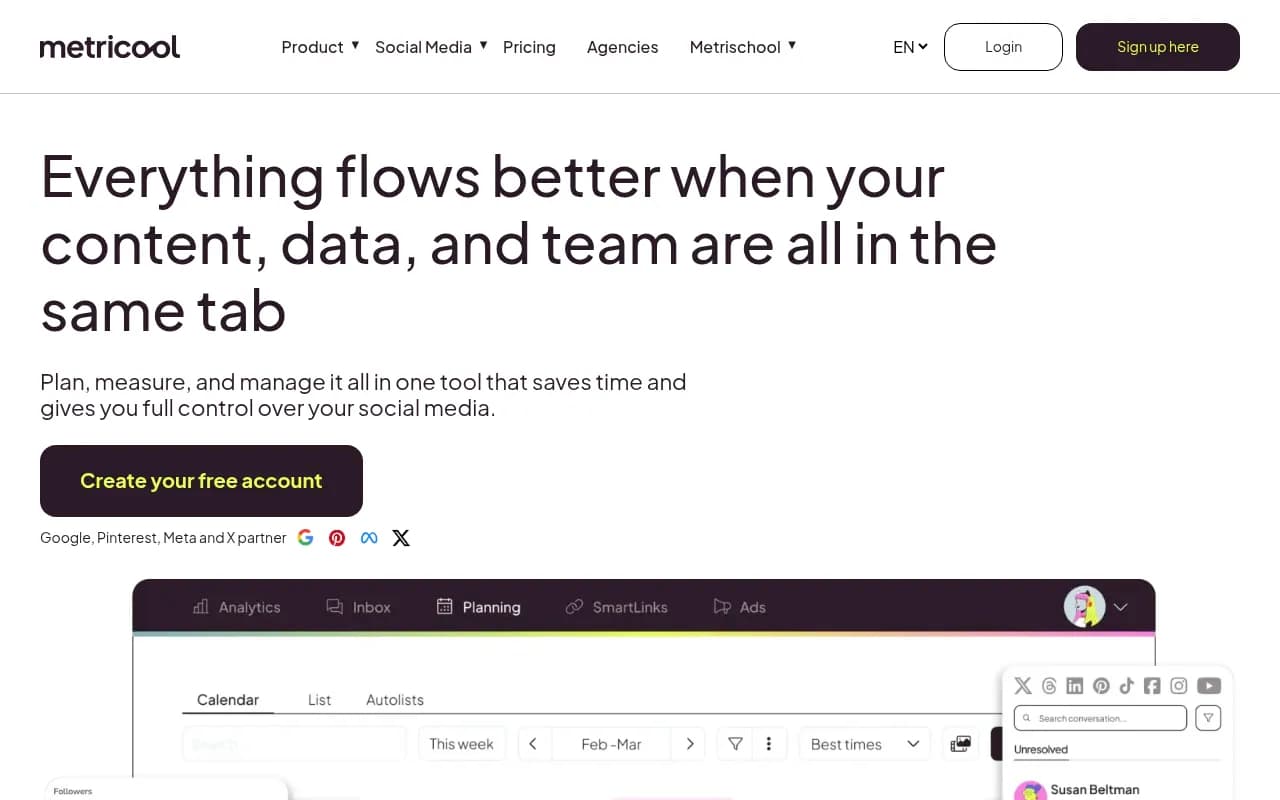
Metricool hits a sweet spot between the two: strong scheduling, solid analytics, and pricing that undercuts Hootsuite badly. It shows up in almost every "which tool do you actually use" Reddit thread for a reason.
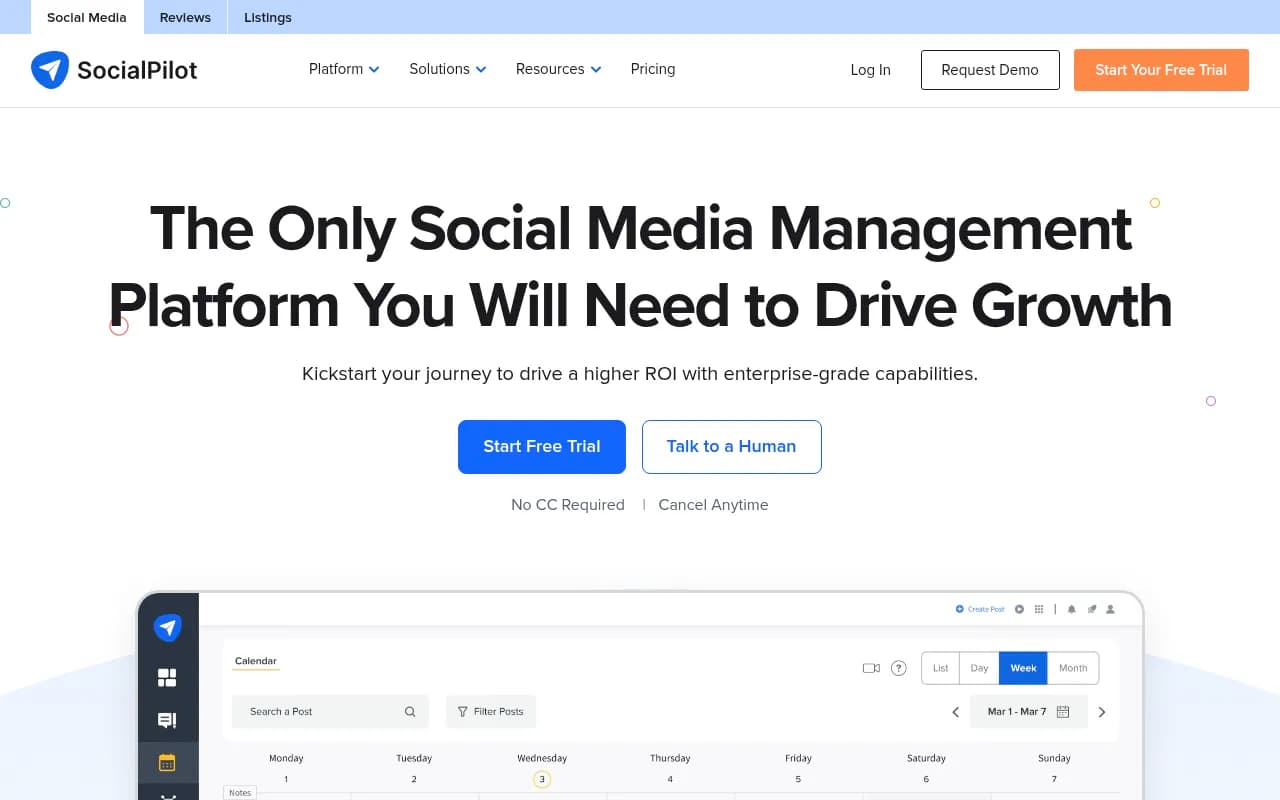
SocialPilot is the budget-conscious pick for agencies managing many client accounts, with bulk scheduling at price points where Hootsuite doesn't even have a product.

Agorapulse competes directly with Hootsuite on the inbox and engagement side, with a reputation for better support, which is exactly where Hootsuite's Trustpilot score hurts.
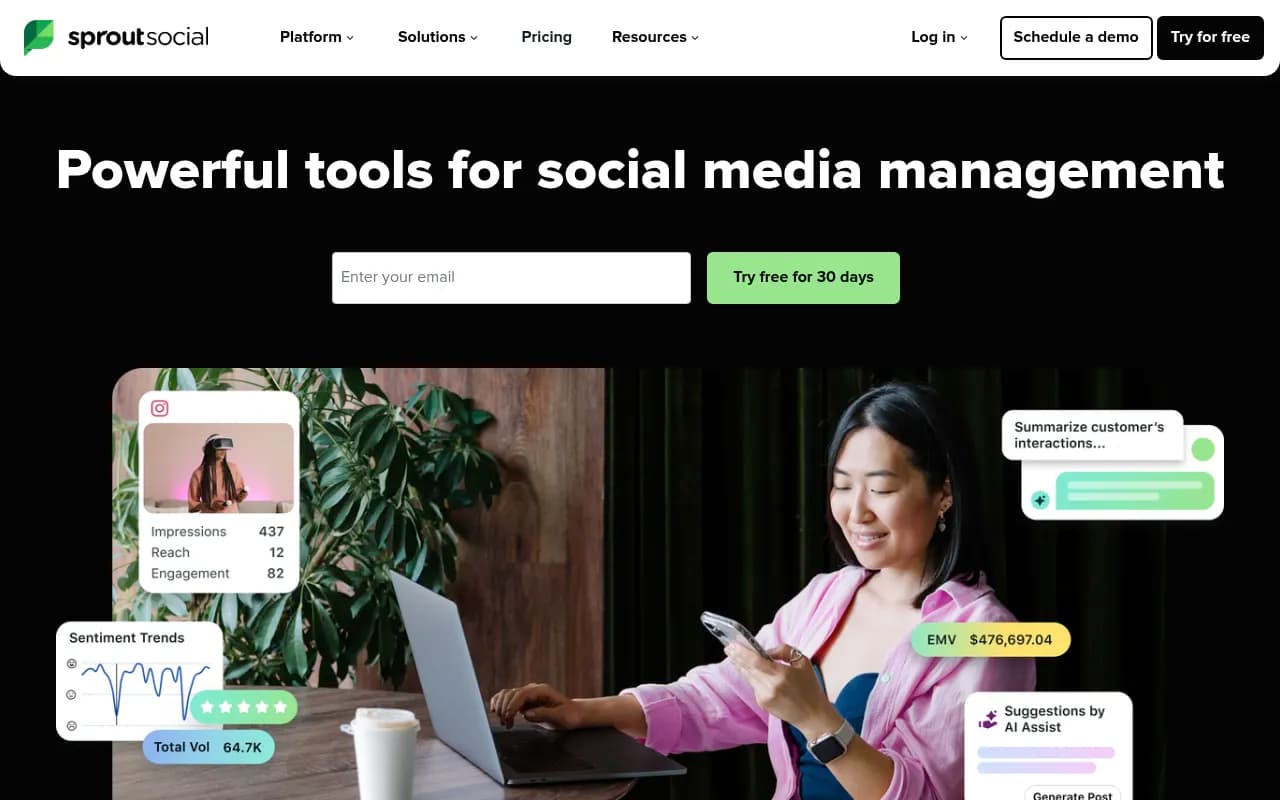
Sprout Social is the premium option if Hootsuite's feature set appeals but the billing horror stories don't. Expect to pay for the privilege.
The verdict
For the question in the title, which tool actually saves you time, Buffer wins for most people. Scheduling is the thing you do every day, and Buffer is faster at it while costing a quarter of what Hootsuite charges a solo operator. Hootsuite earns its price only when your social media work extends beyond publishing into engagement, listening, and reporting to stakeholders. Buy it for that job, not for scheduling, and read the Lumen tier details carefully before you sign.