Key takeaways
- Birdeye Search AI tracks how each individual location appears in ChatGPT, Gemini, Perplexity, Google AI Overviews, AI Mode, Claude and Grok. That per-location view is its main selling point.
- Pricing is custom and tied to location count, products and activated agents. Birdeye publishes no numbers, so budget questions need a sales call.
- The headline claims (61% visibility gain in 2 months, "best tool" rankings) come from Birdeye's own marketing. I found no independent hands-on reviews or G2 data for Search AI specifically.
- It makes sense for brands with roughly 100 to 10,000+ locations that already want reviews, listings and AI visibility in one platform. For single-site brands or pure GEO teams, it is probably overbuilt.
What Birdeye Search AI actually is
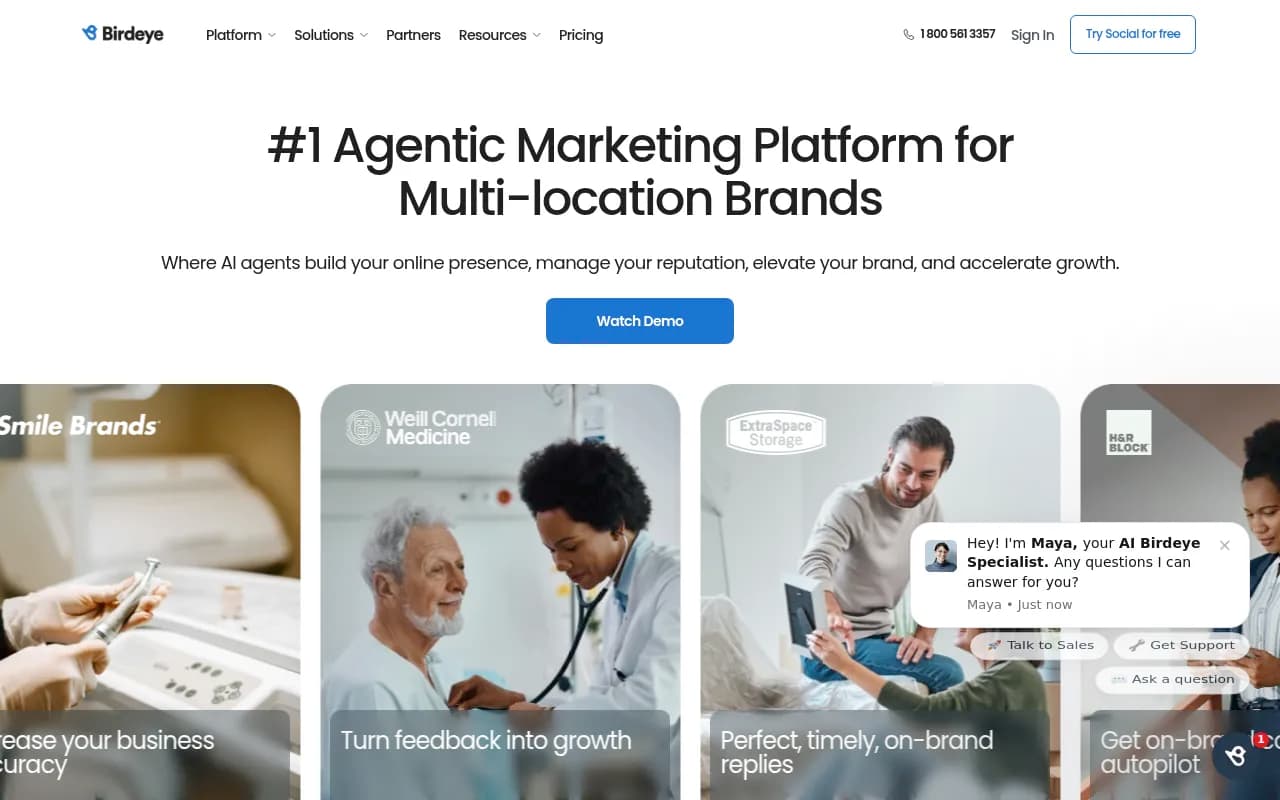
Birdeye has been a reputation and local marketing platform for years: reviews, listings, messaging, social. Search AI is its newer module for AI answer engines. The idea is simple. AI engines don't evaluate a brand as one blob. They evaluate each location independently, so a franchise with 400 sites can be well represented in one city and invisible in another.
According to Birdeye's own materials, Search AI does three things:
- Tracks how often each location is mentioned across AI platforms and how that compares to competitors.
- Analyzes which sources AI engines rely on (listings, reviews, owned pages, third-party citations).
- Executes fixes through what Birdeye calls AI Coworkers. The AI Search page says "Jay diagnoses and fixes AI visibility, by location", with approval controls so changes are governed rather than fully automatic.
That last part is what separates it from a plain tracker. The monitoring tells you where a location is missing. The execution layer updates the listings, reviews, local pages and business information AI engines pull from.
Who it is built for
Birdeye's own comparison table lists the pricing basis for AI Search as queries to track, locations and LLMs, and targets brands with 100 to 10,000+ locations. The pricing page uses location tiers: 1-3, 4-9, 10-39, 40-249, 250-999 and 1000+.
So the realistic buyer is one of these:
- A franchise or retail chain where local pages, listings and review profiles are managed centrally.
- A healthcare, home services or financial services network with dozens to thousands of branches.
- A brand already using Birdeye for reviews and listings that wants AI visibility from the same data.
A BrandArmor review (a competitor, so read it with that in mind) reaches a similar conclusion: Birdeye suits multi-location businesses that want reviews, listings, messaging and social in one platform, and they should expect a sales call to learn the real price.
Why location-level tracking matters
This is the strongest part of Birdeye's argument. Birdeye ran a webinar arguing that brand-level AI visibility scores can be misleading for multi-location brands. I think that is right. A single blended score of 40% could hide one city at 80% and another at zero.

Birdeye's State of AI Search 2026 report adds some context: 80% of brands are cited at least once, but only 15% secure the top citation position with their own domain. Those are Birdeye's numbers, from its own study, so treat them as directional.
A caution on per-location scores
Per-location measurement has a statistical problem. Promptwatch Data shows that almost half of ChatGPT responses with citations (47.6%) cite 10 or more unique domains between Sep 28 and Oct 4, 2026, and only 6% cite three or fewer (unique domains per response). Your location is always sharing the answer with many other sources, and one prompt tells you very little. A score for a single location is only trustworthy if the tool runs enough prompts per location. Ask Birdeye how many queries sit behind each location score.
What the data says about what to fix
Birdeye's approach (listings, reviews, local pages) lines up reasonably well with what ChatGPT cites. In Promptwatch's data for Sep 28 to Oct 4, 2026, product pages were the most cited content type at 22.4% of classified citations, and landing pages followed at 16.8%. Together that is 39% of citations going to pages describing what a company sells (content type report).
Reviews matter more when the prompt names a brand. For branded prompts, reviews rose to 5.6% of citations, more than three times their overall share of 1.7%. So for a prompt like "is [your brand] in [city] any good?", review profiles are part of the answer. For a generic "best dentist near me" prompt, your own location pages carry more weight.
The practical read: owned location pages first, reviews second, listings as the supporting layer. A platform that manages all three has a logical case.
Pricing: what we know and don't
Birdeye does not publish a price. The pricing page is a "Get pricing" form, and the company says pricing is "built around outcomes, not seat counts". Its blog says cost depends on location count, selected products and the agents you activate.
A third-party estimate (Emitrr) puts the broader Birdeye platform at roughly $299 to $449 per month per location. That figure may be stale and covers the platform generally, not Search AI. Multiply it by 200 locations and you see why this is an enterprise decision.
| Question | What we know |
|---|---|
| Public price for Search AI | None |
| Pricing basis | Locations, queries tracked, LLMs, agents activated |
| Location tiers | 1-3, 4-9, 10-39, 40-249, 250-999, 1000+ |
| Third-party platform estimate | About $299-$449 per month per location (unverified, platform-wide) |
| Free tier | Not listed |
| Contract length | Not confirmed |
Questions to ask on the sales call
- Is Search AI priced separately from the core reviews and listings platform, and can I buy it alone?
- How many prompts are run per location per week, and how are scores calculated?
- Which AI engines use real user interfaces and which use APIs? Answers can differ.
- What does the execution layer actually change, and what needs human approval?
- Can I see crawler-level data or AI referral traffic, or only mentions?
- What is the minimum contract and what happens to my data if I leave?
Treat the vendor claims carefully
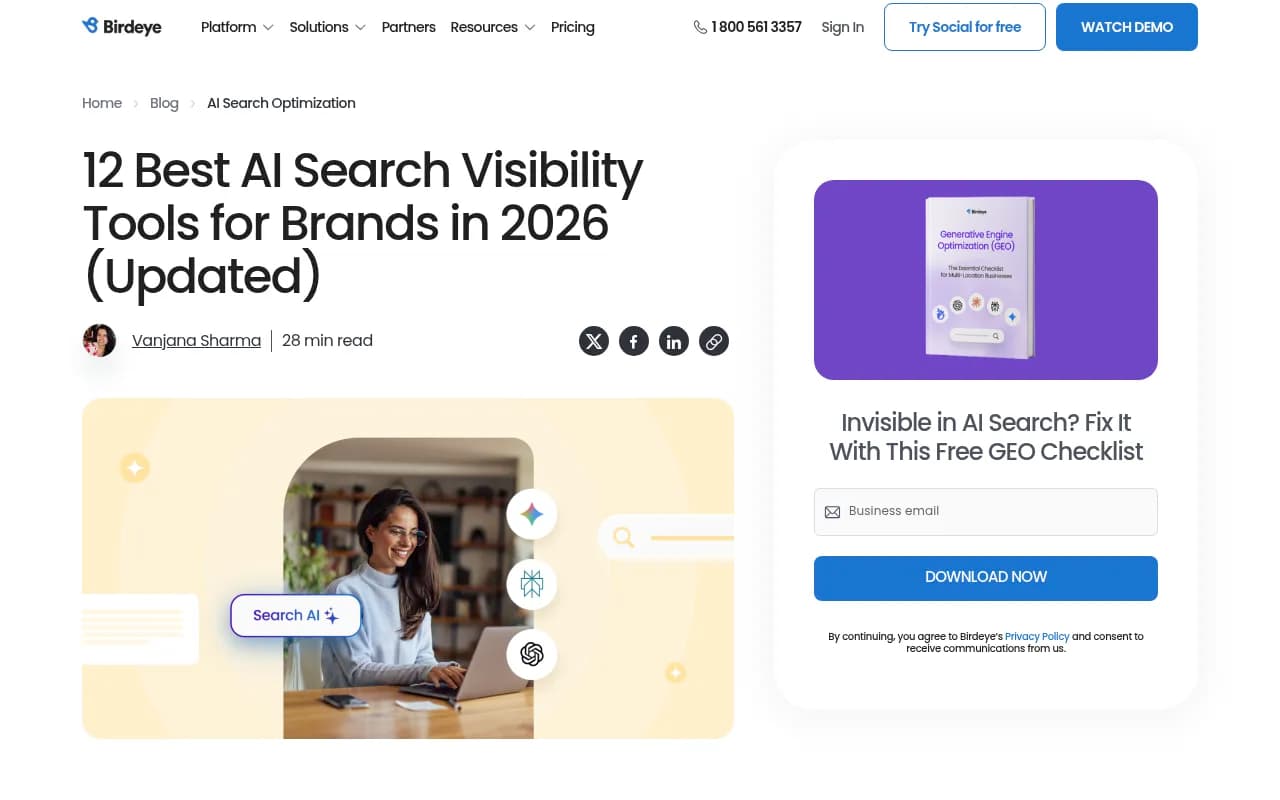
Two things in the research deserve a flag. First, Birdeye's "12 best AI search visibility tools" article ranks Birdeye number one. It is a vendor listicle, last updated Sep 9, 2026, and it calls Birdeye the only solution combining per-location monitoring with AI-powered execution. That may be true of its narrow definition, but it is a marketing statement.
Second, the claim that multi-location brands boosted AI visibility by 61% in two months is unverified. No baseline, sample size or methodology came with it. Ask for customer references in your vertical and a pilot with a defined metric.
I also couldn't find independent hands-on reviews or G2 ratings for Search AI specifically. That is a real gap, and it makes a pilot more important than usual.
Alternatives to compare
The right comparison depends on what you need.
| Tool | Best for | Strength | Watch out for |
|---|---|---|---|
| Birdeye Search AI | Large multi-location brands | Per-location tracking plus execution | Custom pricing, vendor-sourced proof |
| Promptwatch | Brands and agencies wanting end-to-end GEO | Crawler logs, AI traffic, content agent, public pricing | Not built around per-location listings management |
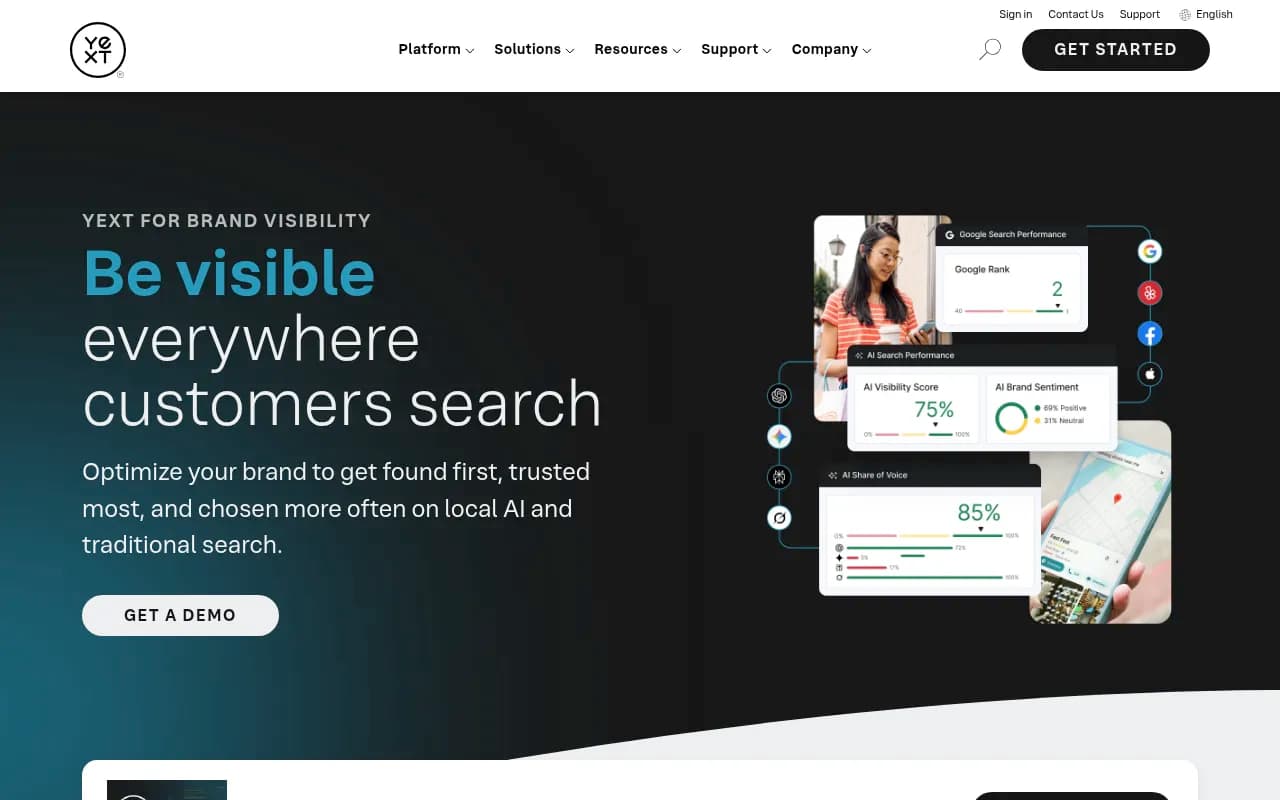
| Yext | Listings and local data at scale | Location data syndication | Different focus from GEO analytics |
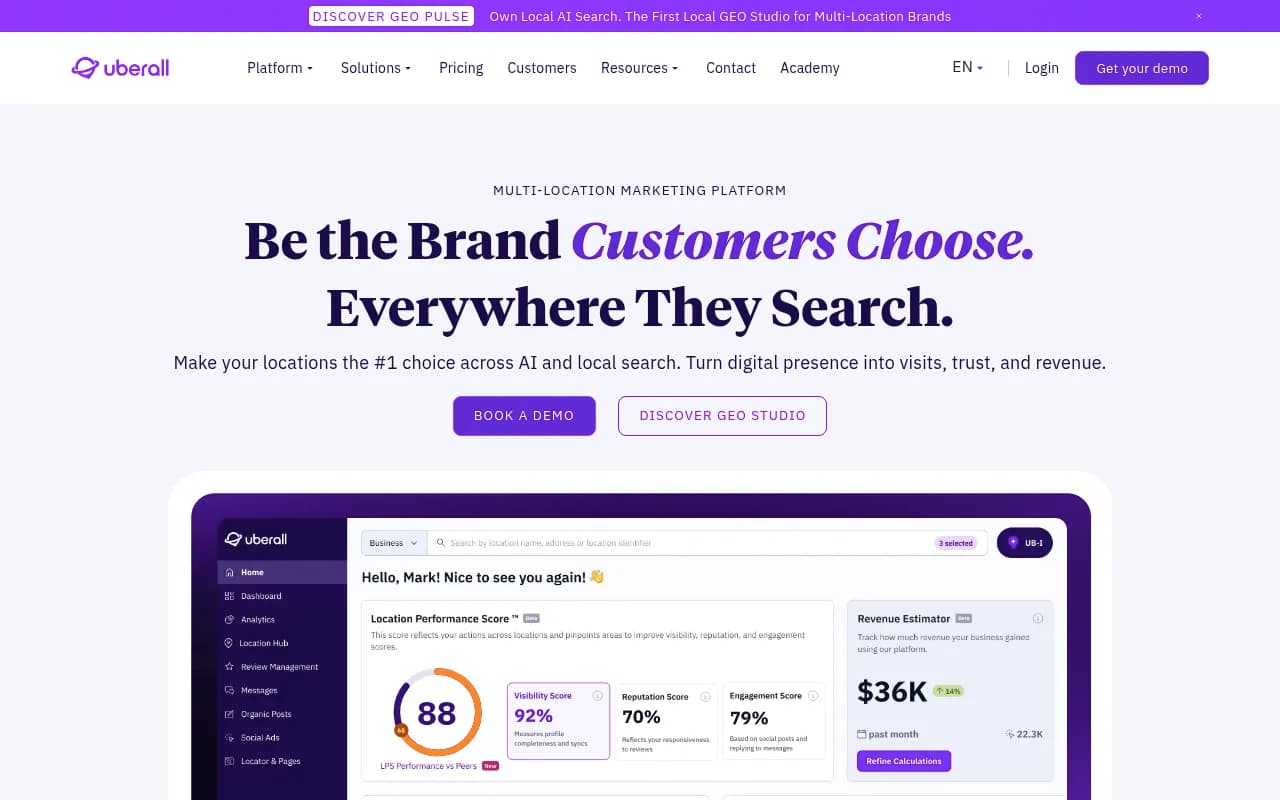
| Uberall | Multi-location presence management | Listings and local visibility | Less AI-search depth |
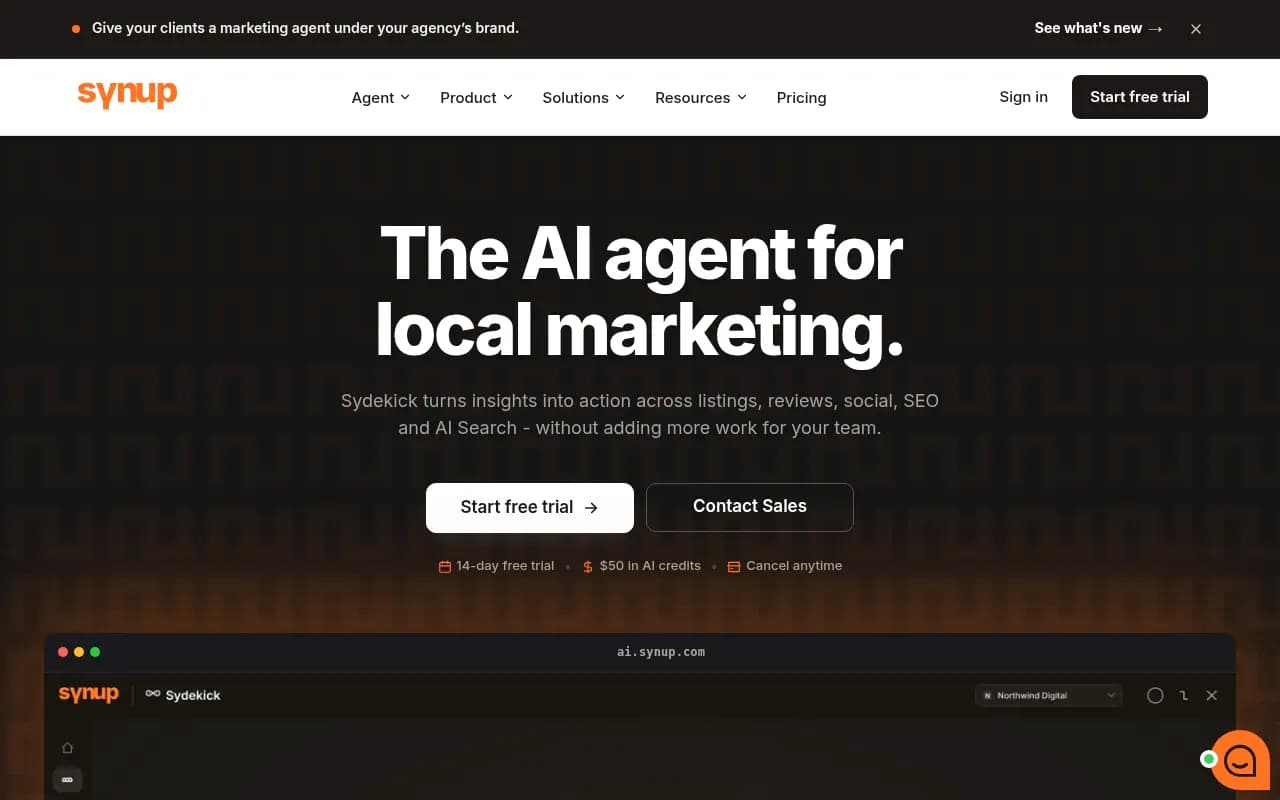
| Synup | Listings, reviews and local visibility | AI agent for local workflows | Smaller scale |
| Profound | Enterprise AI visibility | Monitoring depth | Higher price, enterprise focus |
Promptwatch
If your goal is AI search as a revenue channel rather than local listings hygiene, Promptwatch is the closest functional alternative. It tracks real ChatGPT, AI Overviews, AI Mode, Gemini, Perplexity and Copilot interfaces, shows IP-verified AI crawler logs and AI-driven traffic, and its Content Agent writes and publishes fixes. Plans are public, starting at $95/month, with state and city tracking on Business ($579/month). Confirm current pricing at promptwatch.com/pricing. It won't replace a listings manager, but it covers the measurement and content side with far more transparency.

Yext, Uberall and Synup
These are the natural comparisons if your pain is local data accuracy across hundreds of sites.
Profound
A monitoring-heavy enterprise option if you don't need local listings management.

For wider lists, the GEO software directory at bestgeosoftware.com is a good place to browse.
Is it worth the price?
It depends on how much of Birdeye you already use.
It is probably worth a serious look if you run 100+ locations, already pay for Birdeye reviews or listings, and your real problem is that individual branches are missing from AI answers. The per-location view and governed execution address that directly, and consolidating vendors can offset the cost.
It is probably not worth it if you have one site or a handful, if you only need to know whether your brand gets mentioned, or if you want to see crawler activity and AI referral traffic. A dedicated GEO platform will be cheaper and more transparent.
My suggestion: run a 60 to 90 day pilot on a sample of 10 to 20 locations, agree on a metric up front (citation rate per location across a fixed prompt set), and keep a control group of locations you don't touch. That tests the 61% claim against your own data instead of Birdeye's.