Key takeaways
- Vismore is a solid entry point for AI search insights, but it stops short of helping you act on what it finds.
- The best alternatives in 2026 combine monitoring with content gap analysis, AI writing, and traffic attribution.
- Promptwatch is the only platform rated "Leader" across all GEO categories in 2026, covering the full loop from gap discovery to content creation to results tracking.
- Tools like Otterly.AI and Peec AI are good budget-friendly monitors; Profound and Scrunch AI suit larger teams with deeper reporting needs.
- If you're serious about AI search visibility, you need a platform that tells you what to fix and helps you fix it -- not just a dashboard showing you where you're invisible.
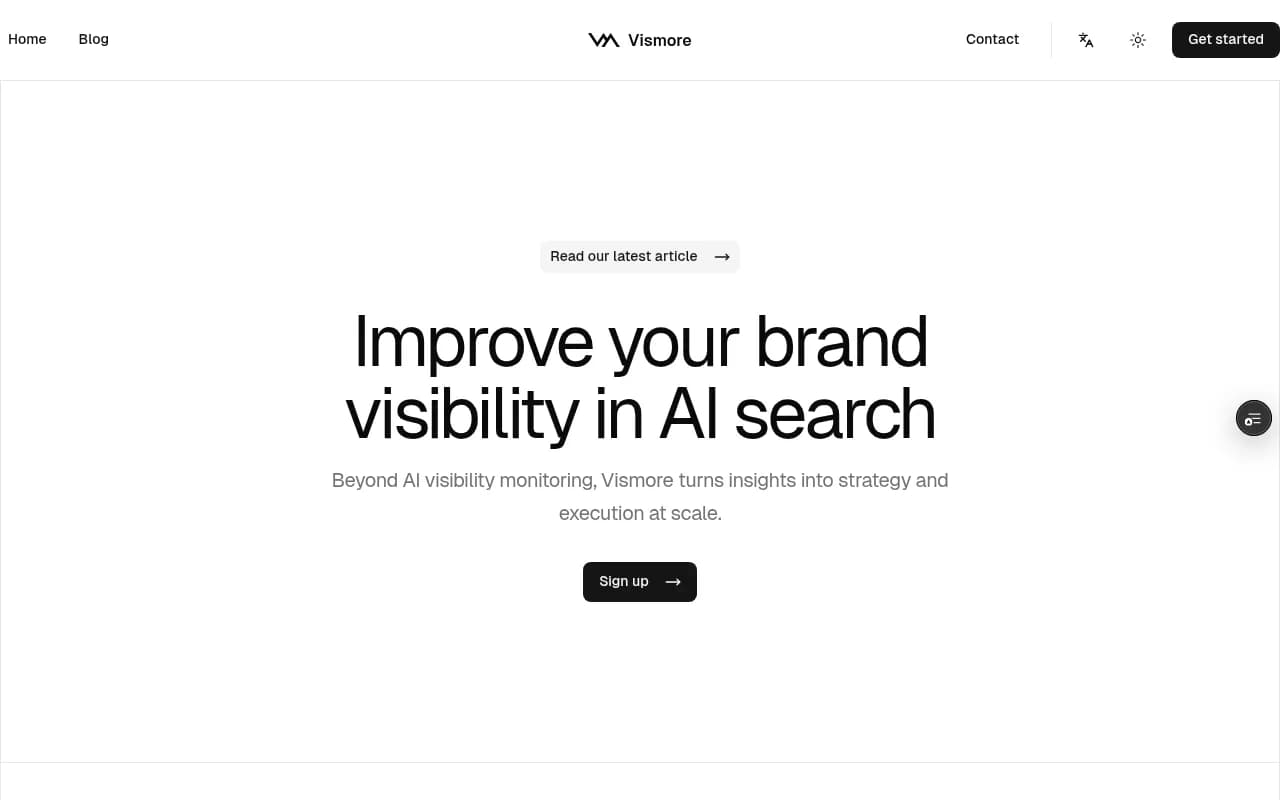
Vismore markets itself around turning AI search insights into action. The pitch is appealing: strategy and execution, not just data. But in practice, a lot of users find themselves staring at dashboards full of interesting numbers with no clear path to actually improving their visibility in ChatGPT, Perplexity, or Google AI Overviews.
That gap between "here's what's happening" and "here's what to do about it" is the defining problem in the GEO tools market right now. Most platforms are monitoring tools dressed up as optimization platforms. They show you where competitors are winning. They don't help you win.
This guide covers the best Vismore alternatives in 2026 -- tools that go beyond tracking and actually help you close the gap.
Why people look for Vismore alternatives
Vismore isn't a bad tool. For teams just getting started with AI search visibility, it provides a reasonable overview of how brands appear across LLMs. But a few recurring complaints push people to look elsewhere:
- Limited coverage of AI models (some users want DeepSeek, Grok, and Meta AI alongside the usual suspects)
- No built-in content generation or optimization workflow
- Prompt intelligence is surface-level -- you see mentions, but not why competitors are winning or what content is driving their citations
- No crawler log visibility to understand how AI bots are actually reading your site
- Traffic attribution is weak or absent, making it hard to connect AI visibility to revenue
If any of those sound familiar, you're in the right place.
The best Vismore alternatives in 2026
Promptwatch -- best for the full optimization loop
Promptwatch is the most complete GEO platform available right now. Where most tools (including Vismore) show you data and leave you to figure out the rest, Promptwatch is built around a specific cycle: find the gaps, create content that fills them, track the results.
The Answer Gap Analysis is the standout feature. It shows you exactly which prompts your competitors are appearing in that you're not -- not as a vague "you're missing coverage here" warning, but as a specific list of prompts, with the content angles AI models are looking for. From there, the built-in AI writing agent generates articles, listicles, and comparison pages grounded in real citation data from over 880 million citations analyzed. This isn't generic content -- it's engineered to get cited.
On the tracking side, Promptwatch monitors 10 AI models: ChatGPT, Perplexity, Claude, Gemini, Google AI Overviews, Google AI Mode, DeepSeek, Grok, Meta/Llama, Copilot, and Mistral. Page-level tracking shows which specific pages are being cited, how often, and by which models. Traffic attribution closes the loop via a code snippet, Google Search Console integration, or server log analysis.
A few things Vismore doesn't have that Promptwatch does: real-time AI crawler logs (so you can see when ChatGPT or Perplexity's bots visit your site and what errors they hit), Reddit and YouTube citation tracking, ChatGPT Shopping monitoring, and query fan-outs that show how a single prompt branches into sub-queries.
Pricing starts at $99/month for the Essential plan (1 site, 50 prompts, 5 articles). Professional is $249/month, Business $579/month. A free trial is available.

Otterly.AI -- best for budget-conscious teams
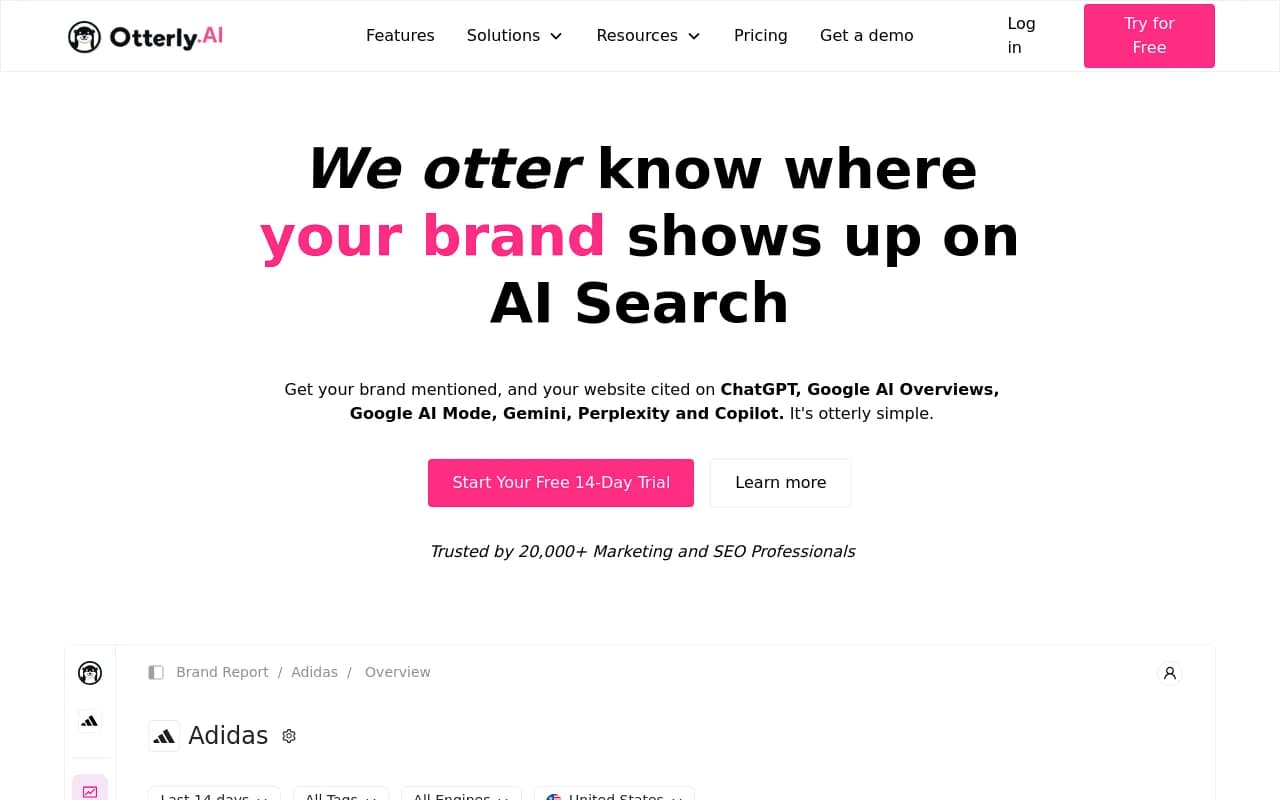
Otterly.AI is consistently recommended as the most affordable entry point in this market. It tracks ChatGPT, Google AI Overviews, Perplexity, Google AI Mode, Gemini, and Microsoft Copilot via API-based queries, which means faster and more consistent results than browser-simulation approaches.
The interface is clean and the setup is quick. For teams that just need to monitor brand mentions and get a baseline sense of AI visibility without committing to a large budget, Otterly.AI does the job well.
The limitation is that it's a monitoring tool. There's no content generation, no crawler logs, no traffic attribution. You'll know where you're invisible -- you won't get much help becoming visible.
Profound -- best for enterprise monitoring with some recommendations
Profound is one of the more feature-rich enterprise options. It covers a wide range of AI models, provides detailed citation analysis, and has a reporting layer that suits larger marketing teams and agencies.
One Reddit user in the r/webmarketing community noted that Profound does give concrete recommendations, though in a limited way -- "only a few recommendations per week." That's honest. Profound leans toward monitoring and reporting rather than active optimization. For a brand that needs executive-level dashboards and stakeholder reporting, it's strong. For a team that wants to act fast on content gaps, the pace of recommendations may feel slow.
Peec AI -- best for multi-language tracking with smart suggestions
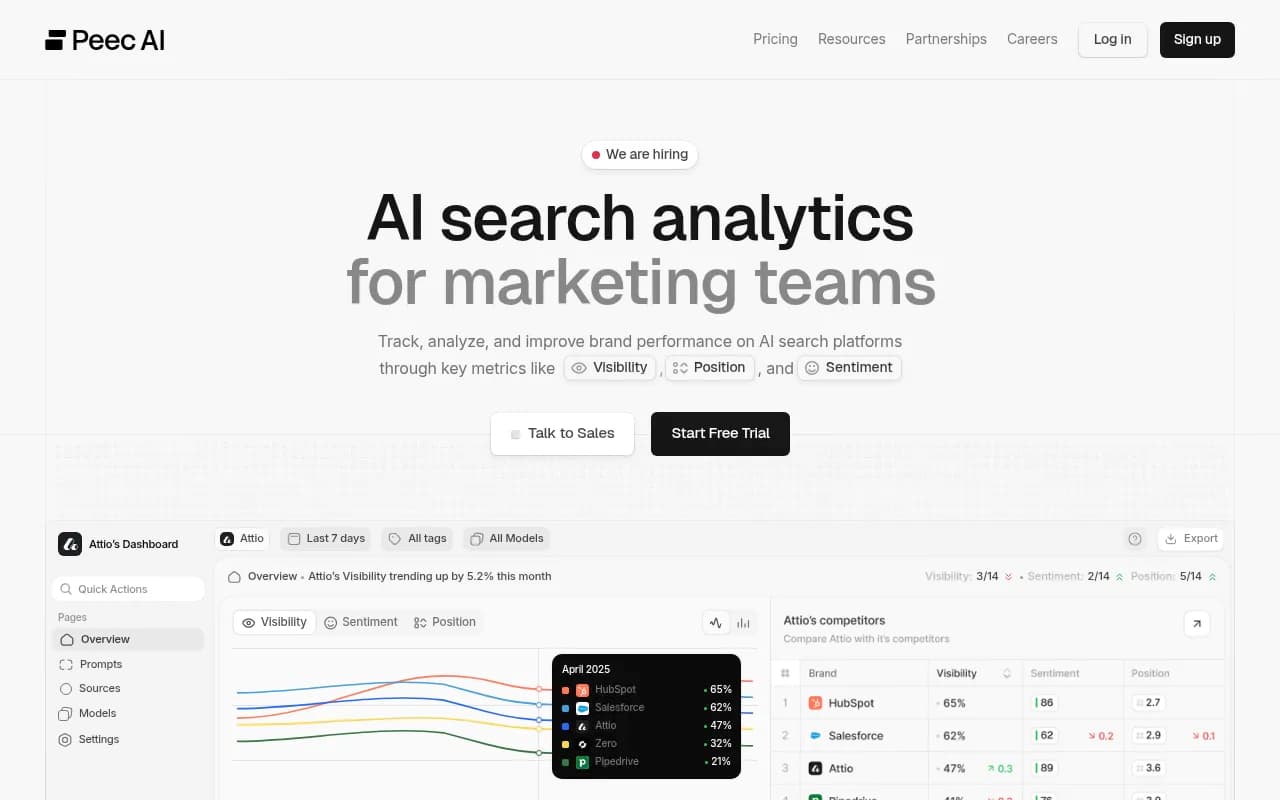
Peec AI gets credit for two things: solid multi-language support and a suggestions layer that goes a step beyond pure monitoring. The same Reddit thread that called out Profound's limited recommendations specifically highlighted Peec AI as giving "concrete recommendations" -- which puts it ahead of most monitoring-only tools.
If your brand operates across multiple languages and regions, Peec AI's international coverage is genuinely useful. The UI is straightforward, and the pricing is reasonable for what you get.
The gap, compared to Promptwatch, is that suggestions don't come with a built-in execution path. You get the recommendation; you still have to go write the content yourself.
Scrunch AI -- best for teams that want structured AI content guidance
Scrunch AI sits in an interesting middle ground. It monitors how AI assistants like ChatGPT and Claude represent your brand, and it provides structured recommendations for making your content more AI-friendly. Several roundups in 2026 highlight it as one of the better tools for content optimization guidance.
It's not a full execution platform -- you won't find an AI writing agent built in -- but the recommendations are more actionable than what you get from pure monitoring tools. For teams with strong in-house writers who just need better direction, Scrunch AI is worth a look.
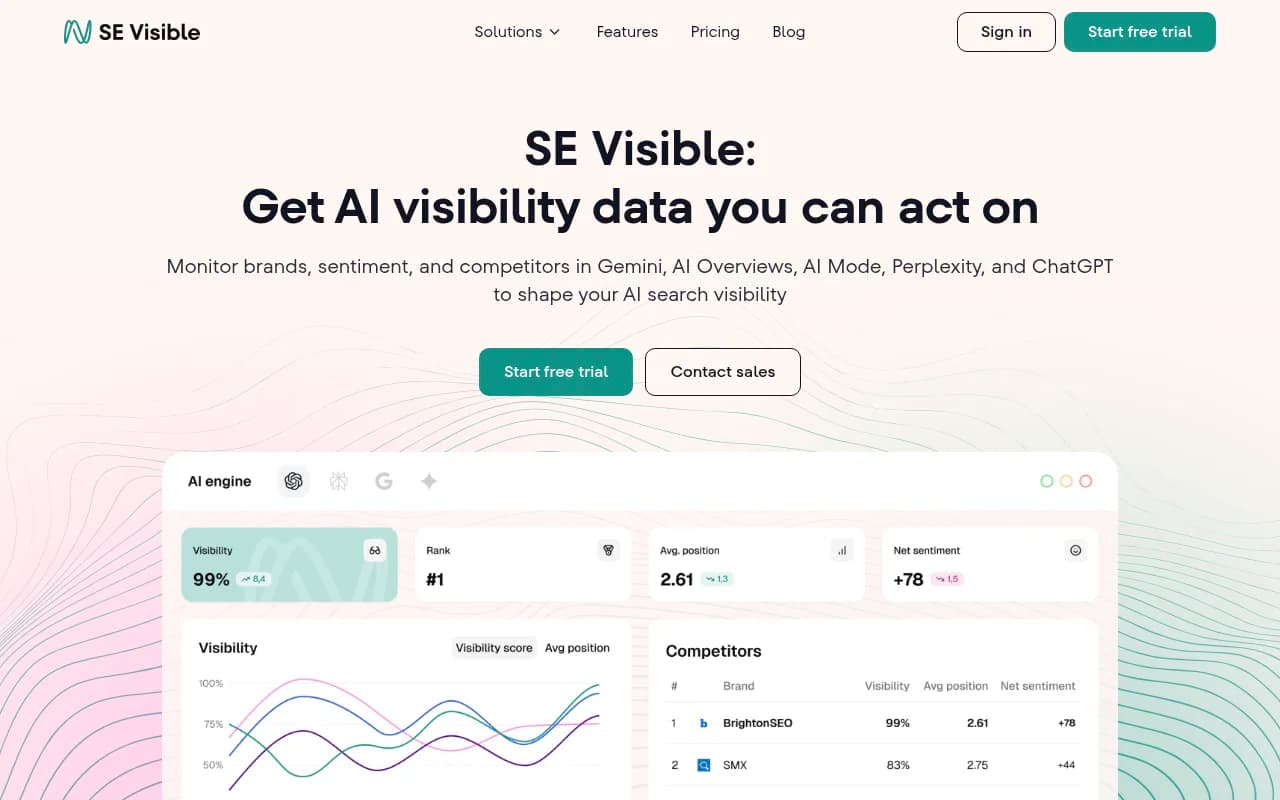
SE Visible -- best for strategic clarity
SE Visible, built on SE Ranking's infrastructure, is described in multiple 2026 comparisons as one of the most accurate and user-friendly AI visibility tools available. It gives a clear strategic view of where your brand stands across AI search engines, with sentiment tracking and competitive benchmarking.
The strategic framing is genuinely useful -- it's not just "you appeared X times," it's context about what those appearances mean and where the biggest opportunities are. That said, like most tools in this list, it's primarily a monitoring and analysis platform rather than an optimization one.
Writesonic -- best for teams that want AI visibility + content creation in one tool
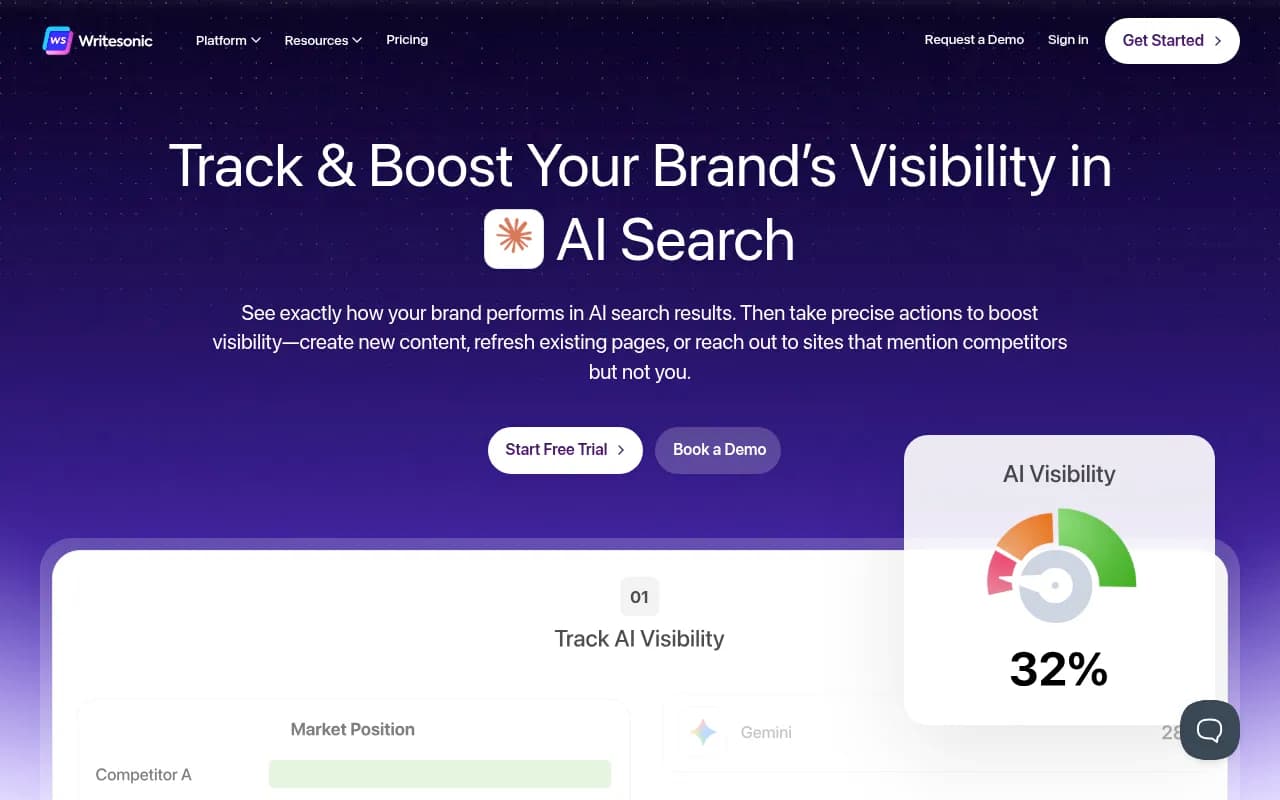
Writesonic has evolved from a pure AI writing tool into something that touches AI search visibility. It tracks, optimizes, and helps you create content aimed at AI search results -- which puts it in a similar conceptual space to Promptwatch, though with a different emphasis.
The content creation side is Writesonic's strength. The AI visibility tracking is newer and less mature than dedicated GEO platforms. For teams that are already using Writesonic for content and want to layer in some AI visibility awareness without switching tools, it's a reasonable option. For teams where GEO is the primary concern, a dedicated platform will go deeper.
ZipTie -- best for deep analysis and reporting
ZipTie is built for teams that want to go deep on analysis. Zapier's 2026 roundup highlights it specifically for "deep analysis and reporting," and that's accurate -- it's a research-heavy tool that surfaces detailed insights about AI search behavior, citation patterns, and competitive positioning.
The tradeoff is that ZipTie is more of an analyst's tool than a marketer's tool. The depth is real, but so is the learning curve. If your team has dedicated SEO or research capacity, ZipTie is worth exploring. If you need something that moves fast from insight to action, it may slow you down.
Athena HQ -- best for tracking across 8+ AI search engines
Athena HQ covers a wide range of AI models -- 8+ by their own count -- and provides solid brand visibility tracking with competitive benchmarking. It's a monitoring-focused platform that does its core job well.
The limitation is the same one that applies to most monitoring tools: it shows you the problem but doesn't help you solve it. No content generation, no crawler logs, no traffic attribution.
Feature comparison table
| Tool | AI models covered | Content generation | Crawler logs | Traffic attribution | Prompt intelligence | Best for |
|---|---|---|---|---|---|---|
| Promptwatch | 10+ | Yes (built-in AI writer) | Yes | Yes (GSC, snippet, logs) | Volume + difficulty + fan-outs | Full optimization loop |
| Vismore | Limited | No | No | Limited | Basic | Entry-level insights |
| Otterly.AI | 6 | No | No | No | Basic | Budget monitoring |
| Profound | Multiple | Limited recommendations | No | No | Moderate | Enterprise reporting |
| Peec AI | Multiple | Recommendations only | No | No | Moderate | Multi-language tracking |
| Scrunch AI | Multiple | Guidance only | No | No | Moderate | Content guidance |
| SE Visible | Multiple | No | No | No | Moderate | Strategic clarity |
| Writesonic | Multiple | Yes (writing tool) | No | No | Basic | Content + visibility combo |
| ZipTie | Multiple | No | No | No | Deep | Analysis and research |
| Athena HQ | 8+ | No | No | No | Basic | Broad model coverage |
How to choose the right alternative
The right tool depends on where you are in your GEO journey.
If you're just starting out and want to understand the basics without spending much, Otterly.AI is a reasonable first step. It's affordable, covers the major platforms, and gives you a baseline.
If you're at the stage where you understand your visibility gaps but don't know how to close them, that's where most tools fall short. Monitoring tools can tell you that competitors are winning for "best project management software for remote teams" -- they can't tell you what content to write or help you write it. That's the gap Promptwatch was built to fill.
If you're running an agency or managing multiple brands, the multi-site plans from Promptwatch or the agency-focused features in tools like Search Party may be worth evaluating.
If your primary need is deep competitive research rather than ongoing optimization, ZipTie or Profound's reporting layer may suit you better than an action-oriented platform.
One thing worth being honest about: the GEO tools market is still maturing fast. Tools that were monitoring-only a year ago are adding optimization features. Features that were enterprise-only are trickling down to mid-market plans. The comparison above reflects the state of things in early 2026, but it's worth re-evaluating every few months.
The monitoring-only trap
There's a pattern worth naming directly. A lot of teams buy an AI visibility tool, spend a few weeks looking at dashboards, and then... nothing changes. Visibility scores stay flat. The tool gets used less and less. Eventually someone asks whether it's worth renewing.
This usually isn't because the tool is bad. It's because monitoring without a clear action path doesn't change anything. Knowing you're invisible in ChatGPT for 40 prompts your competitors own is useful information. But if the tool doesn't help you figure out what content to create, or help you create it, or show you whether it worked -- you're stuck.
The tools that break this pattern are the ones built around execution, not just observation. That's a short list right now. Promptwatch is the most complete version of it. A few others (Writesonic, Scrunch AI, Peec AI) have pieces of it. Most of the market is still in the monitoring phase.
If you're evaluating Vismore alternatives, the most important question to ask isn't "which tool tracks the most AI models?" It's "which tool will actually help me improve my visibility?" Those are different questions, and they lead to different answers.
Bottom line
Vismore is a reasonable starting point, but it's not where you want to stay if AI search visibility is a real priority for your business. The alternatives above range from affordable monitors (Otterly.AI, Peec AI) to deep-analysis tools (ZipTie, Profound) to full optimization platforms (Promptwatch).
For most marketing teams in 2026, the right move is a platform that closes the loop: finds the gaps, helps you create content that fills them, and tracks whether it worked. That's what separates a tool you use once a week from one that actually drives results.