Key takeaways
- Vaylis is a solid entry-level AI visibility tracker, but it's primarily a monitoring tool -- it shows you data without helping you act on it
- The biggest gap most brands hit with monitoring-only tools: knowing you're invisible in AI search but having no clear path to fix it
- Promptwatch is the only platform in this space rated as a "Leader" across all GEO categories -- it combines tracking, content gap analysis, AI writing, and traffic attribution in one loop
- Other strong alternatives include Profound for enterprise depth, Otterly.AI for budget-conscious teams, and Scrunch AI for mid-market brands
- The right tool depends on whether you need monitoring only, or a full optimization workflow
Why look beyond Vaylis?
Vaylis does what it says on the tin: it tracks your brand's mentions across AI search engines like ChatGPT, Perplexity, and Google AI Overviews. For teams just getting started with AI visibility, that's genuinely useful.
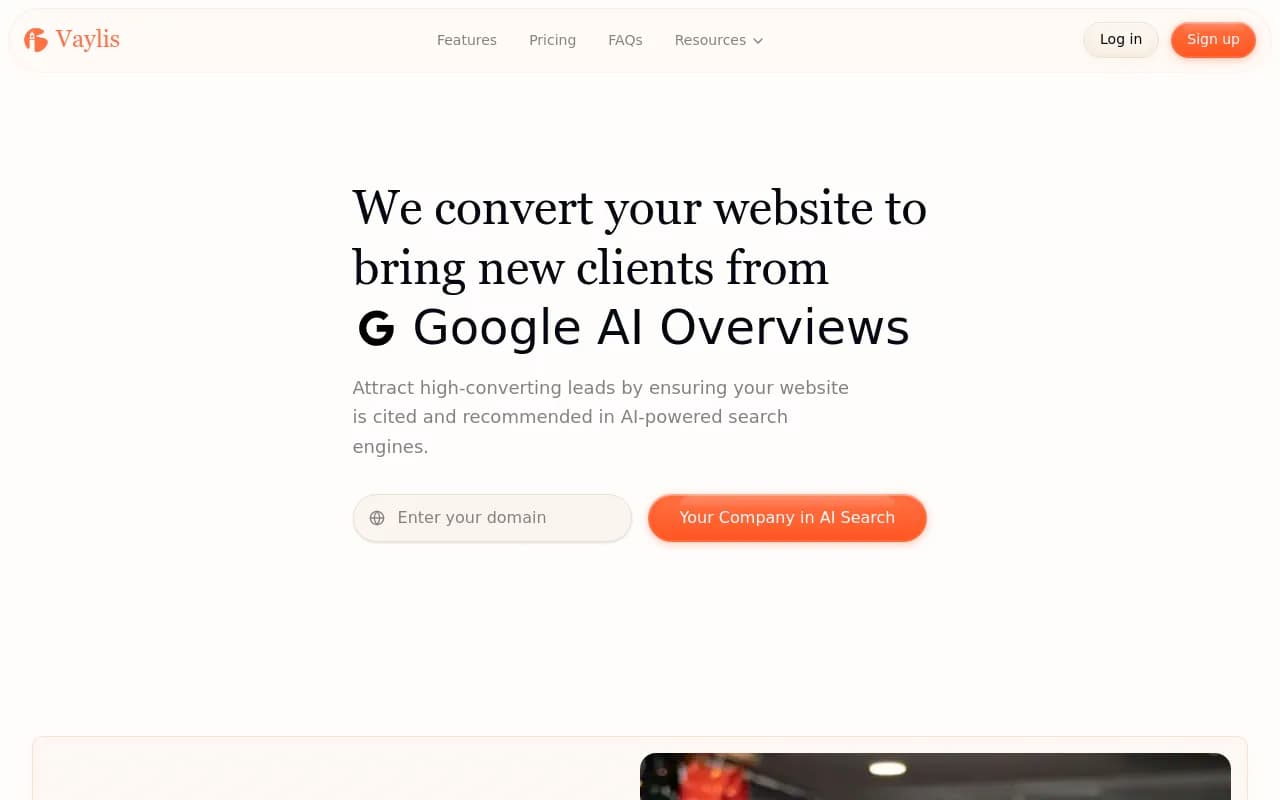
But here's the problem most teams run into after a few weeks: you can see that you're invisible for certain prompts, you can see competitors getting cited instead of you, and then... you're stuck. The data is there. The action isn't.
That's the core limitation of monitoring-only platforms. They're dashboards, not optimization tools. And in 2026, with AI search handling billions of daily queries, "knowing you have a problem" isn't enough.
The alternatives below were chosen because they go further -- some with deeper data, some with content generation, some with traffic attribution that connects AI visibility to actual revenue. A few do all three.
What to look for in a Vaylis alternative
Before jumping into the list, it's worth being clear about what separates a good AI visibility tool from a great one.
Monitoring breadth: How many AI models does it cover? ChatGPT and Perplexity are table stakes. Claude, Gemini, Grok, DeepSeek, Copilot, and Google AI Mode matter too.
Prompt intelligence: Can it tell you which prompts drive the most traffic? Which ones are winnable vs. dominated by big brands? Volume estimates and difficulty scores change how you prioritize.
Content gap analysis: Does it show you what your competitors are being cited for that you're not? This is the difference between "you're invisible" and "here's exactly what to write."
Content generation: Can it help you create the content that will get cited? Not generic AI writing -- content grounded in real citation data.
Traffic attribution: Can you connect AI visibility to actual website visits and revenue? Without this, you're optimizing in the dark.
Crawler logs: Do you know which AI crawlers are hitting your site, which pages they're reading, and what errors they're encountering?
Vaylis covers the first point reasonably well. The alternatives below cover more of the list.
The 8 best Vaylis alternatives in 2026
1. Promptwatch -- best overall for optimization, not just tracking
If Vaylis's main limitation is that it monitors without helping you act, Promptwatch is the direct answer to that problem. It's built around a three-step loop: find the gaps, create content that fills them, track the results.
Promptwatch covers 10 AI models (ChatGPT, Perplexity, Claude, Gemini, Grok, DeepSeek, Copilot, Mistral, Meta AI, and Google AI Overviews). That's already broader than most competitors. But the monitoring is just the starting point.
The Answer Gap Analysis shows you exactly which prompts your competitors are visible for that you're not -- not as a vague category, but as specific questions and topics your site is missing. From there, the built-in AI writing agent generates articles grounded in 880M+ real citations analyzed, prompt volumes, and competitor data. It's not generic content; it's content engineered to get cited.
A few things that genuinely set it apart from the field: real-time AI crawler logs (so you can see which pages ChatGPT or Perplexity are actually reading, and fix indexing issues), ChatGPT Shopping tracking, Reddit and YouTube citation analysis, and traffic attribution via a code snippet, GSC integration, or server log analysis. That last one is rare -- most tools can't tell you whether your AI visibility is actually driving clicks.
Used by 6,700+ brands including Booking.com and Center Parcs. Pricing starts at $99/month.

2. Profound -- best for enterprise teams with complex needs
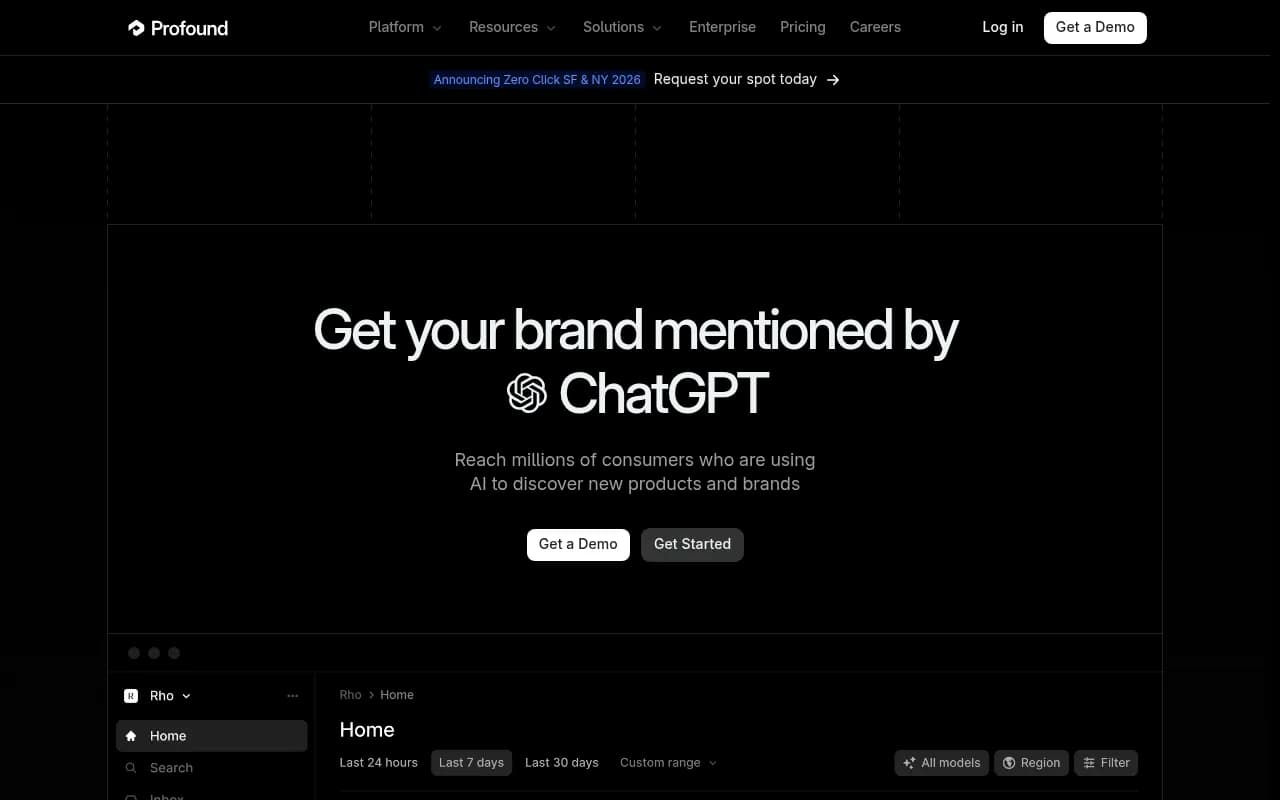
Profound is one of the more mature platforms in the space. It's built for larger organizations that need deep data across multiple brands, markets, and AI models. The interface is clean, the data is detailed, and it handles multi-region and multi-language monitoring well.
Where it falls short relative to Promptwatch: no Reddit or YouTube tracking, no ChatGPT Shopping monitoring, and the content optimization features are less developed. It's also priced at the higher end of the market, which makes it harder to justify for mid-size teams.
That said, if you're an enterprise brand with a dedicated SEO team and you need serious depth on brand sentiment and share-of-voice across AI models, Profound is worth evaluating.
3. Otterly.AI -- best for budget-conscious teams getting started
Otterly.AI comes up constantly in SEO communities as the go-to entry point for AI visibility tracking. It's affordable, easy to set up, and covers the core use case: monitoring brand mentions across ChatGPT, Perplexity, and a handful of other models.
The tradeoff is that it's firmly in the monitoring-only camp. No content gap analysis, no AI writing, no crawler logs, no traffic attribution. It's a good tool for teams that want to start tracking without committing to a larger platform, but you'll likely outgrow it once you want to actually improve your visibility rather than just measure it.

4. Scrunch AI -- best for mid-market brands wanting more than a dashboard
Scrunch AI sits between the lightweight trackers and the full enterprise platforms. It monitors AI responses across multiple models and gives you some competitive context, which is more than tools like Otterly.AI offer.
The platform has been adding optimization features, though it's not as far along as Promptwatch on that front. If you're a mid-market brand that wants solid monitoring with some competitive intelligence and doesn't need the full content generation workflow, Scrunch is worth a look.
5. Peec AI -- best for multi-language monitoring
Peec AI is a solid choice if your brand operates across multiple languages and regions. It handles multi-language AI visibility tracking better than most tools in this price range, and the interface is clean and easy to navigate.
Like Otterly.AI, it's primarily a monitoring tool. The competitive analysis features are decent, but there's no content generation or traffic attribution. For international brands that just need reliable tracking across languages, it's a strong option.

6. Athena HQ -- best for teams focused on share-of-voice analysis
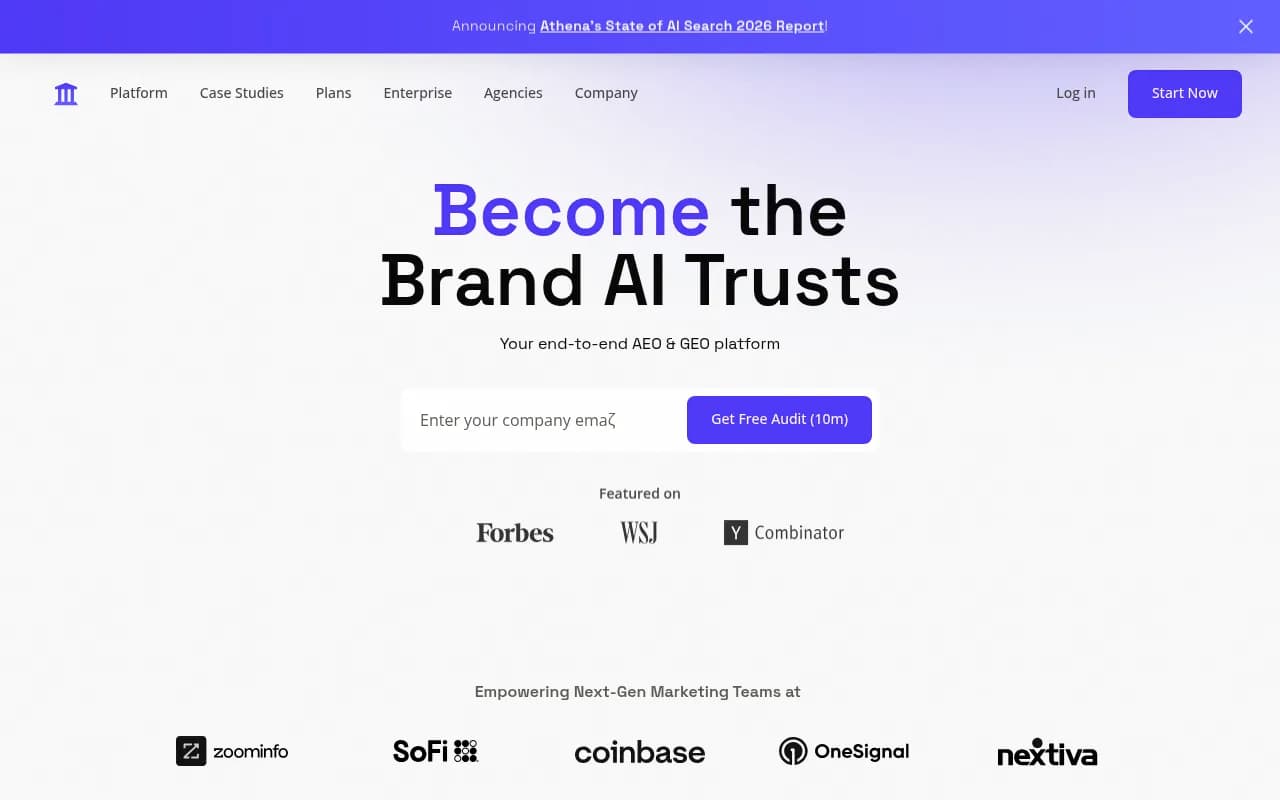
AthenaHQ has a strong focus on share-of-voice metrics -- how often your brand appears relative to competitors across AI models. The visualizations are good, and it's reasonably easy to set up prompt tracking.
It's monitoring-focused, which is the recurring theme with most Vaylis alternatives. No content optimization, no crawler logs, no writing tools. But if share-of-voice analysis is your primary need and you want a clean interface for reporting to stakeholders, AthenaHQ is a reasonable choice.
7. SE Ranking -- best for teams that want AI visibility alongside traditional SEO
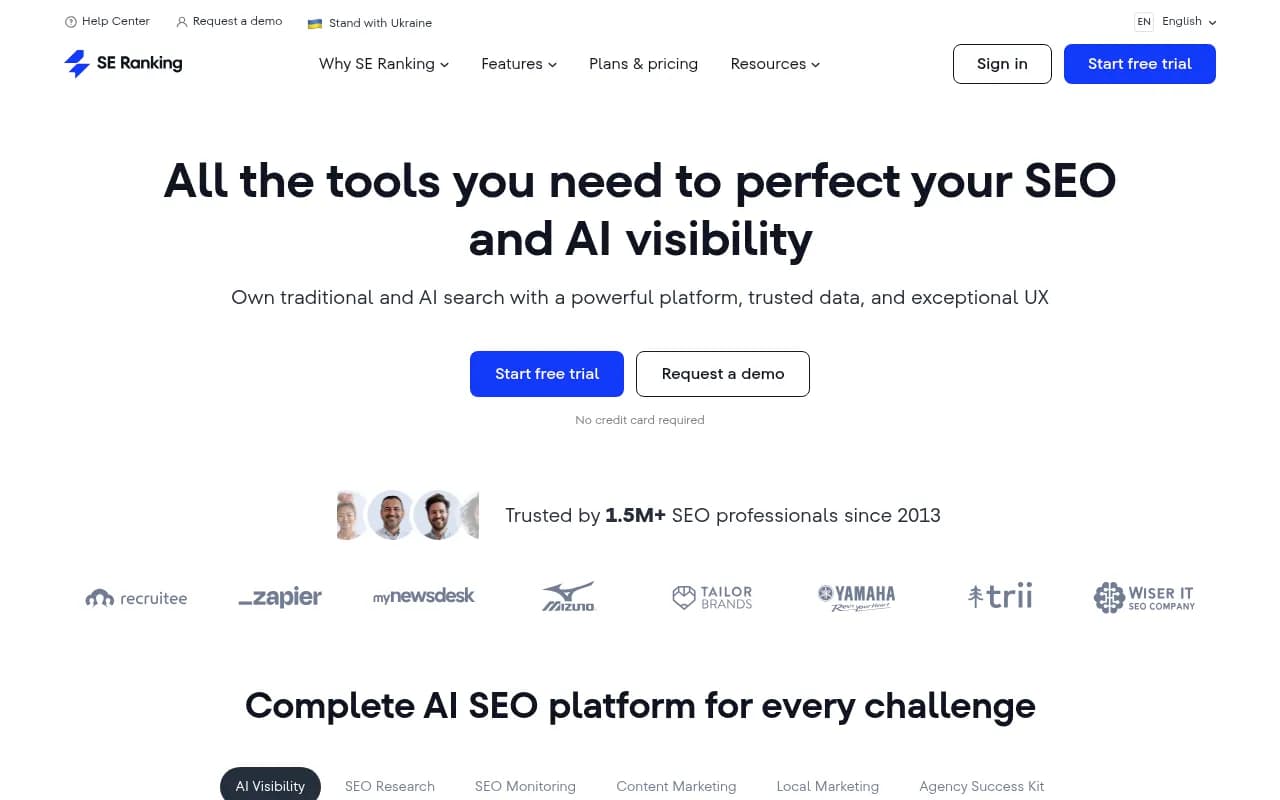
SE Ranking has been a traditional rank tracking tool for years, and it's added AI visibility features as the market has shifted. The advantage here is integration: if your team already uses SE Ranking for keyword tracking and site audits, adding AI visibility monitoring to the same platform reduces tool sprawl.
The AI visibility features are less deep than dedicated platforms -- fewer models covered, less granular prompt intelligence -- but for teams that want "good enough" AI tracking without adding another subscription, it's a practical option.
8. ZipTie -- best for deep analysis on a smaller prompt set
ZipTie takes a different approach: rather than broad monitoring across hundreds of prompts, it focuses on deep analysis for a targeted set of queries. You get more detail per prompt, including how AI models construct their answers and which sources they're drawing from.
It's a niche choice, but useful for brands that want to understand the mechanics of why they're being cited (or not) for specific high-value prompts. Not a replacement for a full platform, but a useful complement.
Feature comparison: Vaylis vs. the alternatives
| Tool | AI models covered | Content gap analysis | AI content generation | Crawler logs | Traffic attribution | Reddit/YouTube tracking | Starting price |
|---|---|---|---|---|---|---|---|
| Promptwatch | 10 | Yes | Yes | Yes | Yes | Yes | $99/mo |
| Profound | 6+ | Limited | No | No | No | No | Higher |
| Otterly.AI | 4-5 | No | No | No | No | No | Low |
| Scrunch AI | 5+ | Partial | No | No | No | No | Mid |
| Peec AI | 5+ | No | No | No | No | No | Low-mid |
| AthenaHQ | 8+ | No | No | No | No | No | Mid |
| SE Ranking | 4-5 | No | No | No | No | No | Low-mid |
| ZipTie | 4-5 | Partial | No | No | No | No | Mid |
| Vaylis | 4-5 | No | No | No | No | No | Low-mid |
The pattern is clear: most tools in this space, including Vaylis, stop at monitoring. Promptwatch is the outlier that actually helps you close the loop.
The monitoring trap -- and how to escape it
Here's something worth saying directly: most AI visibility tools are solving the wrong problem.
Knowing that you appear in 12% of relevant AI responses while your top competitor appears in 34% is useful information. But it doesn't tell you what to do next. And "publish more content" isn't an answer -- it's a direction without a destination.
The teams getting real results from GEO in 2026 are the ones treating AI visibility as an optimization problem, not a monitoring problem. That means:
- Identifying the specific prompts where competitors are cited and you're not
- Understanding what content those citations are pointing to
- Creating content that addresses those gaps, grounded in what AI models actually want to cite
- Tracking whether that content starts getting cited, and whether those citations drive traffic
That's a workflow, not a dashboard. And it's why the choice of tool matters more than most teams realize when they're first getting started.
Which tool should you choose?
The honest answer depends on where you are and what you need.
If you're just starting out and want to understand your current AI visibility before committing to a larger platform, Otterly.AI or Peec AI give you a low-cost entry point. You'll hit their limits quickly, but they're fine for initial exploration.
If you're a large enterprise with a dedicated team and complex multi-brand, multi-region needs, Profound is worth evaluating alongside Promptwatch.
If you want to actually improve your AI visibility -- not just measure it -- Promptwatch is the clearest choice. The content gap analysis, AI writing tools, crawler logs, and traffic attribution work together in a way that none of the monitoring-only tools can match. It's the difference between knowing you have a problem and having a system for fixing it.
For most marketing and SEO teams in 2026, that's the distinction that matters.