Key takeaways
- Qwairy covers the basics of AI search monitoring, but most teams outgrow it once they need content optimization, crawler insights, or multi-model tracking at scale.
- The GEO platform market has matured fast in 2026 -- there are now clear differences between monitoring-only tools and full optimization platforms.
- The best alternative depends on your budget, team size, and whether you need to just track AI visibility or actually improve it.
- Tools like Promptwatch go beyond dashboards by combining gap analysis, AI content generation, and traffic attribution in one workflow.
- Most competitors stop at step one (showing you data). The ones worth paying for help you act on it.
Why people look for Qwairy alternatives
Qwairy does what it says on the tin: it tracks how your brand appears in AI-generated search results. For teams just getting started with GEO, that's often enough. But as AI search becomes a more serious channel, "enough" stops being good enough.
The gaps people typically hit with Qwairy -- and with many monitoring-only tools in this category -- tend to fall into a few buckets:
- You can see you're invisible for certain prompts, but the tool doesn't tell you why or what to do about it
- Competitor comparison is shallow -- you see who's winning but not what content is driving their citations
- No content generation or optimization features, so you're left exporting data and figuring out the fix yourself
- Limited model coverage, especially for newer AI engines like Grok, DeepSeek, or Google AI Mode
- No crawler log visibility, so you can't tell if AI bots are even reading your pages
If any of those sound familiar, you're in the right place. Below are the best Qwairy alternatives in 2026, organized by what they're actually good at.
The GEO platform landscape in 2026
The market has split into two camps. On one side: monitoring dashboards that show you citation data, share-of-answer metrics, and competitor comparisons. On the other: optimization platforms that close the loop between "here's what's wrong" and "here's the content that fixes it."
Most tools launched in 2024-2025 sit firmly in the first camp. They're useful for awareness but leave the hard work to you. The second camp is smaller but growing -- and if you're serious about AI search as a revenue channel, that's where you want to be.
Here's a quick comparison of the main alternatives:
| Tool | AI models tracked | Content generation | Crawler logs | Prompt gap analysis | Best for |
|---|---|---|---|---|---|
| Promptwatch | 10+ (ChatGPT, Claude, Perplexity, Gemini, Grok, DeepSeek, etc.) | Yes (built-in AI writer) | Yes | Yes | Full optimization loop |
| Profound | ChatGPT, Perplexity, Gemini, Claude | Limited | No | Partial | Enterprise monitoring |
| Otterly.AI | ChatGPT, Perplexity, Gemini | No | No | No | Budget monitoring |
| Peec AI | ChatGPT, Perplexity, Claude, Gemini | Smart suggestions | No | Partial | Mid-market teams |
| ZipTie | ChatGPT, Perplexity, Claude | No | No | No | Deep reporting |
| Scrunch | ChatGPT, Claude, Perplexity | No | No | No | Brand monitoring |
| Athena HQ | 8+ AI search engines | No | No | No | Monitoring-focused |
| LLMrefs | ChatGPT, Perplexity, Claude | No | No | No | Affordable tracking |
The best Qwairy alternatives in 2026
Promptwatch -- best for teams that want to actually fix their AI visibility
Promptwatch is the most complete option in this list. Where most tools show you a dashboard and leave you to figure out the rest, Promptwatch is built around a three-step loop: find the gaps, create content that fills them, and track whether it worked.

The Answer Gap Analysis is genuinely useful -- it shows you the specific prompts where competitors are getting cited but you aren't, and what content your site is missing to change that. From there, the built-in AI writing agent generates articles, listicles, and comparison pages grounded in real citation data (880M+ citations analyzed). This isn't generic content; it's engineered to get cited by ChatGPT, Claude, Perplexity, and other models.
A few things that stand out compared to Qwairy and most other alternatives:
- AI crawler logs that show exactly which pages ChatGPT, Claude, and Perplexity are reading (and which ones they're ignoring or hitting errors on)
- Prompt volume estimates and difficulty scores, so you can prioritize winnable prompts instead of chasing everything
- Reddit and YouTube tracking, which surfaces the third-party discussions that actually influence AI recommendations
- ChatGPT Shopping tracking for e-commerce brands
- Traffic attribution via code snippet, GSC integration, or server log analysis -- so you can connect AI visibility to actual revenue
Pricing starts at $99/month for the Essential plan (1 site, 50 prompts, 5 articles), with Professional at $249/month and Business at $579/month. A free trial is available.
It's the only platform in a 2026 comparison of 12 GEO tools rated as a "Leader" across all categories -- largely because it's the only one that completes the full optimization loop rather than stopping at monitoring.
Profound -- best for enterprise teams with dedicated analysts
Profound is one of the more established names in this space and has built a solid reputation for depth of data. It covers the major AI models (ChatGPT, Perplexity, Gemini, Claude) and offers answer engine insights, agent analytics, and prompt volume data.
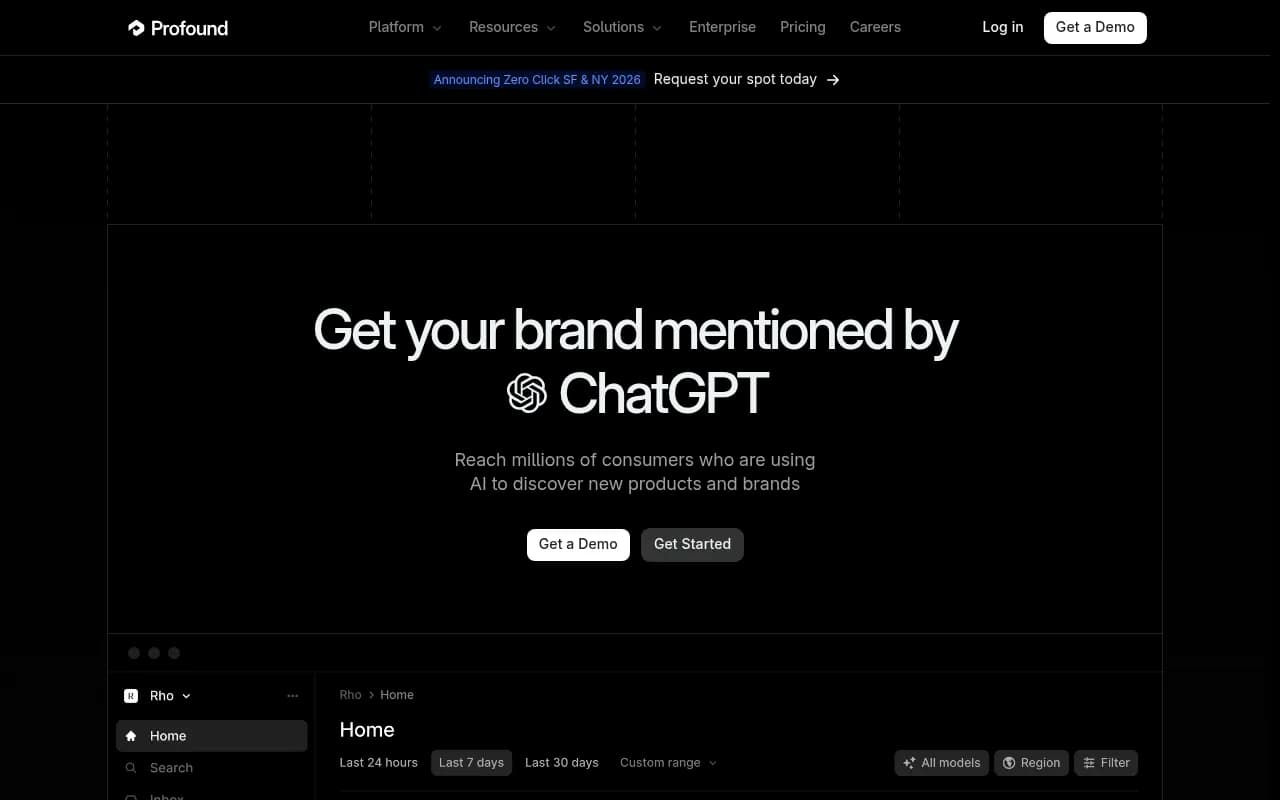
Where Profound shines is in enterprise reporting -- if you have a dedicated analyst or a large team that needs to slice data in multiple ways, it's well-suited. The tradeoff is price (it's on the higher end) and the fact that it's still primarily a monitoring tool. Content optimization and generation aren't core to the product, and there's no Reddit tracking or ChatGPT Shopping visibility.
Worth considering if your main need is comprehensive monitoring with strong reporting, and budget isn't a constraint.
Otterly.AI -- best for teams on a tight budget
Otterly.AI is the most affordable option that still covers the basics. It tracks brand mentions across ChatGPT, Perplexity, and Gemini, and the interface is clean enough that non-technical marketers can use it without much onboarding.
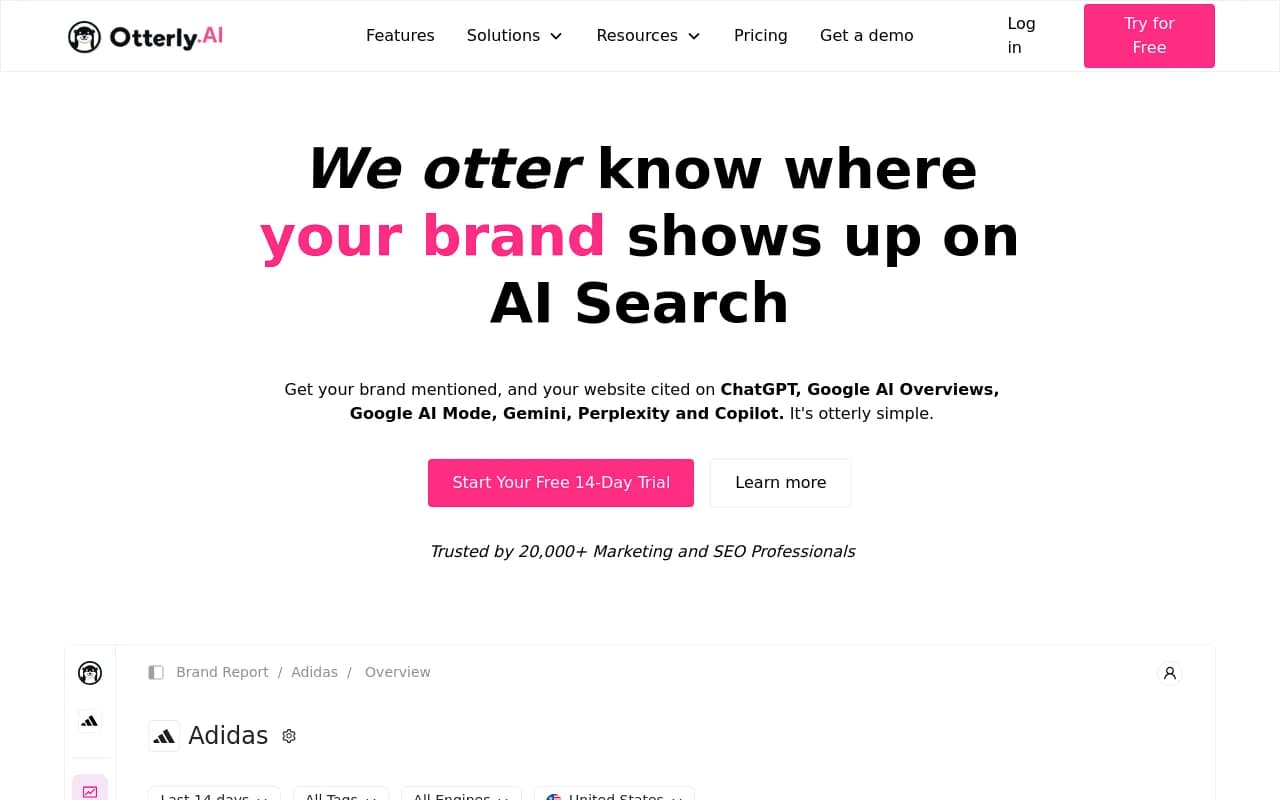
The limitations are real though. No crawler logs, no content generation, no visitor analytics, and no prompt gap analysis. It's a monitoring dashboard -- useful for knowing whether you're visible, but not much help when you want to improve. If you're a small team or solo marketer just starting to pay attention to AI search, Otterly is a reasonable starting point. If you're trying to grow your AI visibility systematically, you'll hit its ceiling quickly.
Peec AI -- best for multi-language teams
Peec AI has carved out a niche with its multi-language support, which is genuinely useful for brands operating across multiple markets. It covers ChatGPT, Perplexity, Claude, and Gemini, and offers some smart suggestions for improving visibility based on what it finds.
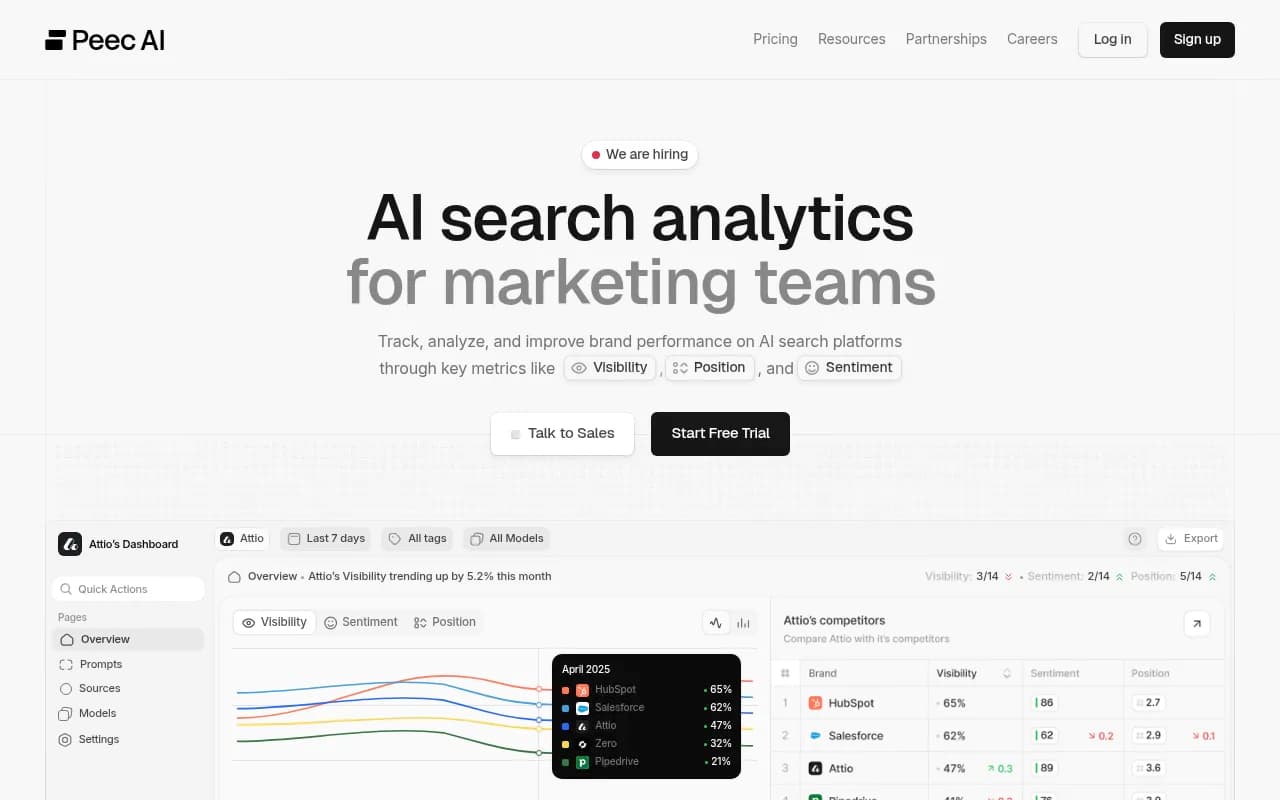
The suggestions are a step up from pure monitoring, but they stop short of actual content generation. Think of it as a tool that points you in the right direction rather than one that helps you execute. For international teams tracking AI visibility across languages, it's one of the better options in the mid-market range.
ZipTie -- best for deep reporting and analysis
ZipTie focuses on depth over breadth. Its reporting capabilities are strong, and it's built for teams that want to dig into the data rather than just see a top-line visibility score.
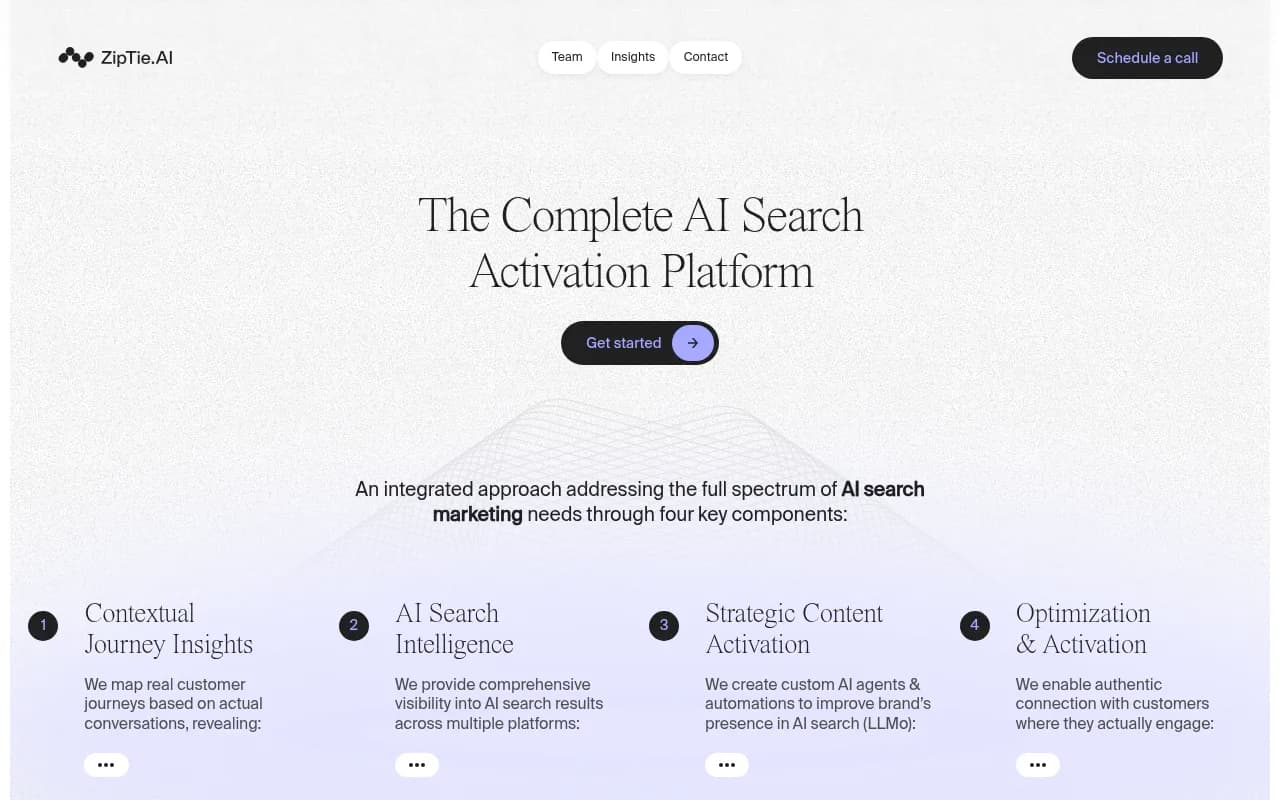
It covers ChatGPT, Perplexity, and Claude, and the analysis features are genuinely detailed. The gap is on the action side -- like most tools in this category, ZipTie shows you what's happening but doesn't help you change it. If your team has the capacity to turn detailed reports into content strategy and execution, it's worth a look. If you need the platform to do more of that work, look elsewhere.
Scrunch -- best for brand sentiment monitoring
Scrunch sits closer to the brand monitoring end of the spectrum than the SEO/GEO end. It tracks how AI assistants like ChatGPT and Claude describe your brand, which is useful for PR and communications teams who care about perception as much as visibility.
It's a narrower use case than most of the tools on this list, but it does that specific job well. If your primary concern is whether AI models are saying accurate, favorable things about your brand (rather than whether you're appearing in the right searches), Scrunch is worth considering.
Athena HQ -- best for teams that need broad model coverage
Athena HQ tracks visibility across 8+ AI search engines, which is more than most tools in this price range. The coverage is a genuine differentiator if you're trying to monitor a wide range of AI models rather than just the top three or four.
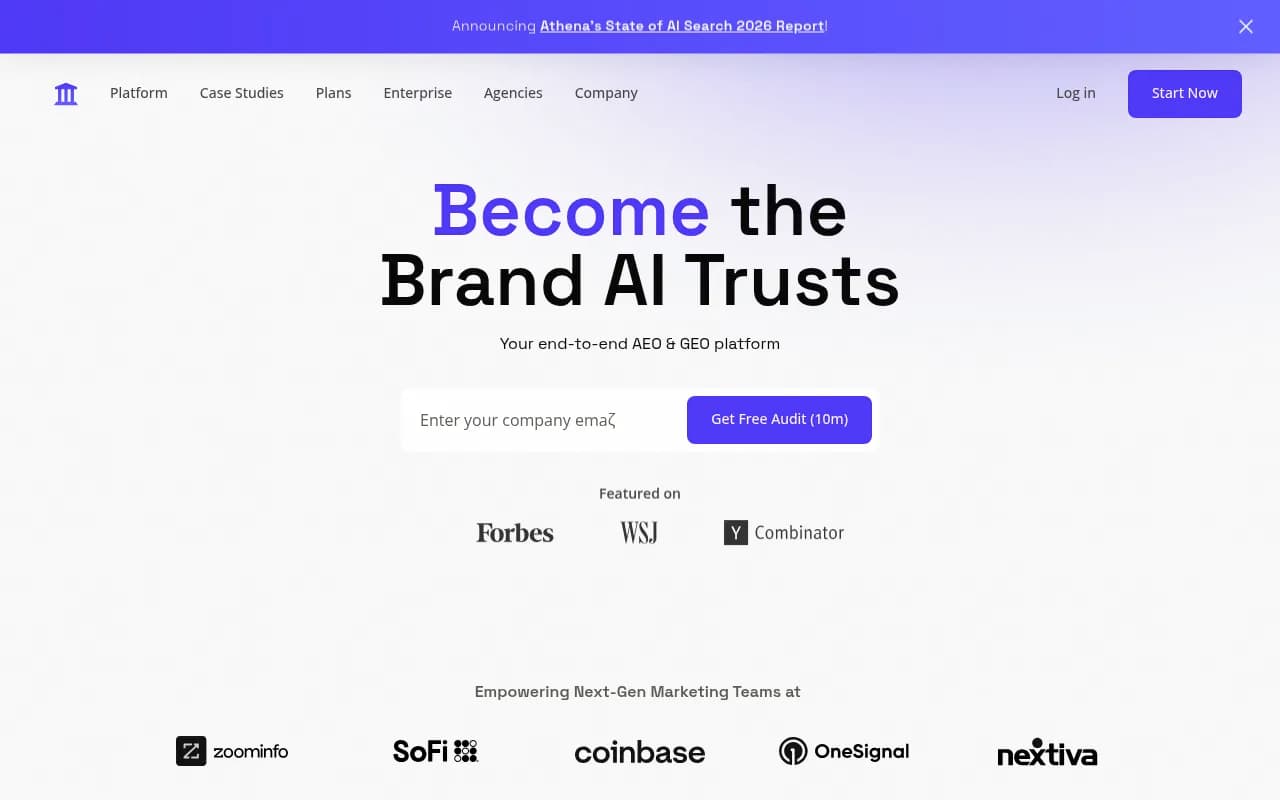
That said, it's monitoring-focused. There's no content optimization, no gap analysis that tells you what to create, and no crawler logs. Useful for awareness and competitive benchmarking, but you'll need other tools to act on what you find.
LLMrefs -- best for affordable multi-model tracking
LLMrefs tracks brand visibility and rankings across ChatGPT, Perplexity, Claude, and others at a price point that's accessible for smaller teams. It's positioned as a GEO platform rather than just a monitoring tool, though in practice the optimization features are limited.
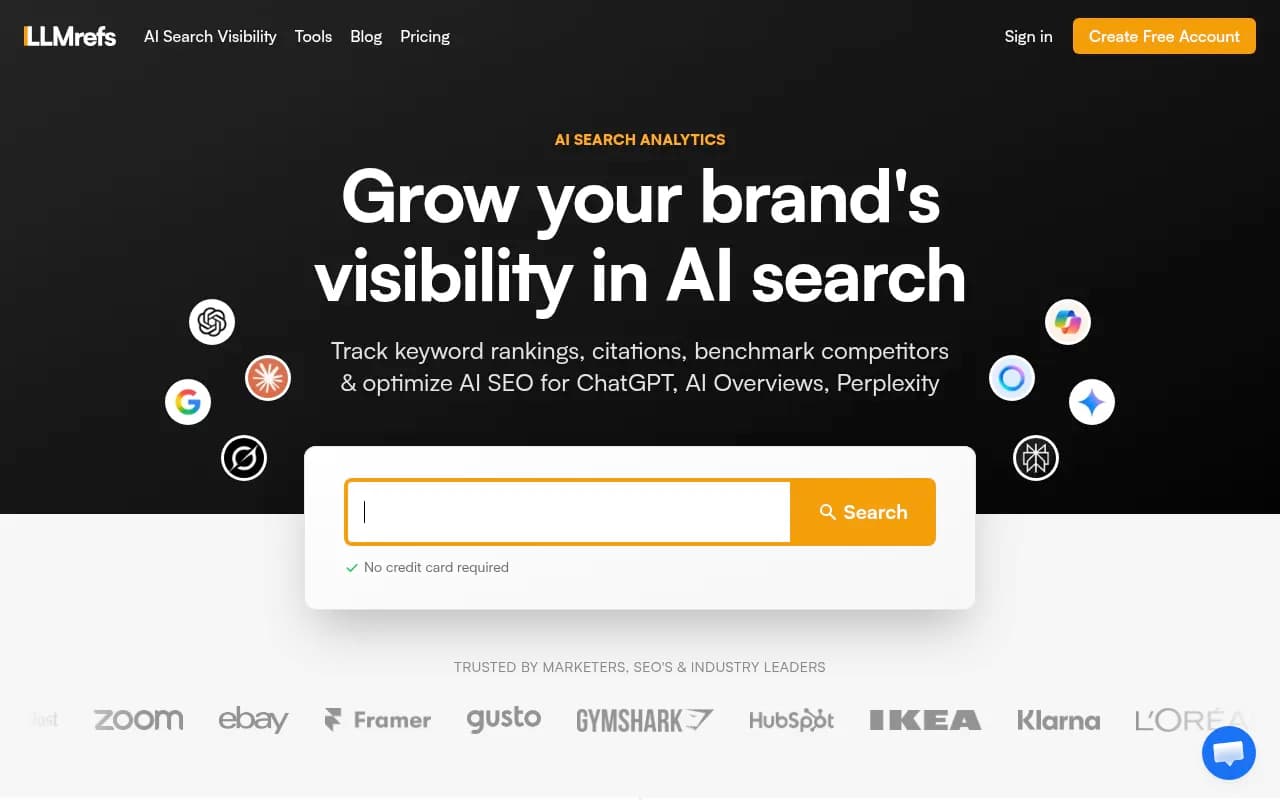
Where it earns its place on this list is value for money. If you're tracking multiple brands (agencies, for instance) and need broad coverage without enterprise pricing, LLMrefs is a reasonable option.
SE Visible -- best for teams already using SE Ranking
If your team is already in the SE Ranking ecosystem, SE Visible is the natural extension for AI search visibility. It tracks brand visibility and sentiment across AI search engines and integrates with SE Ranking's existing keyword and rank tracking data.
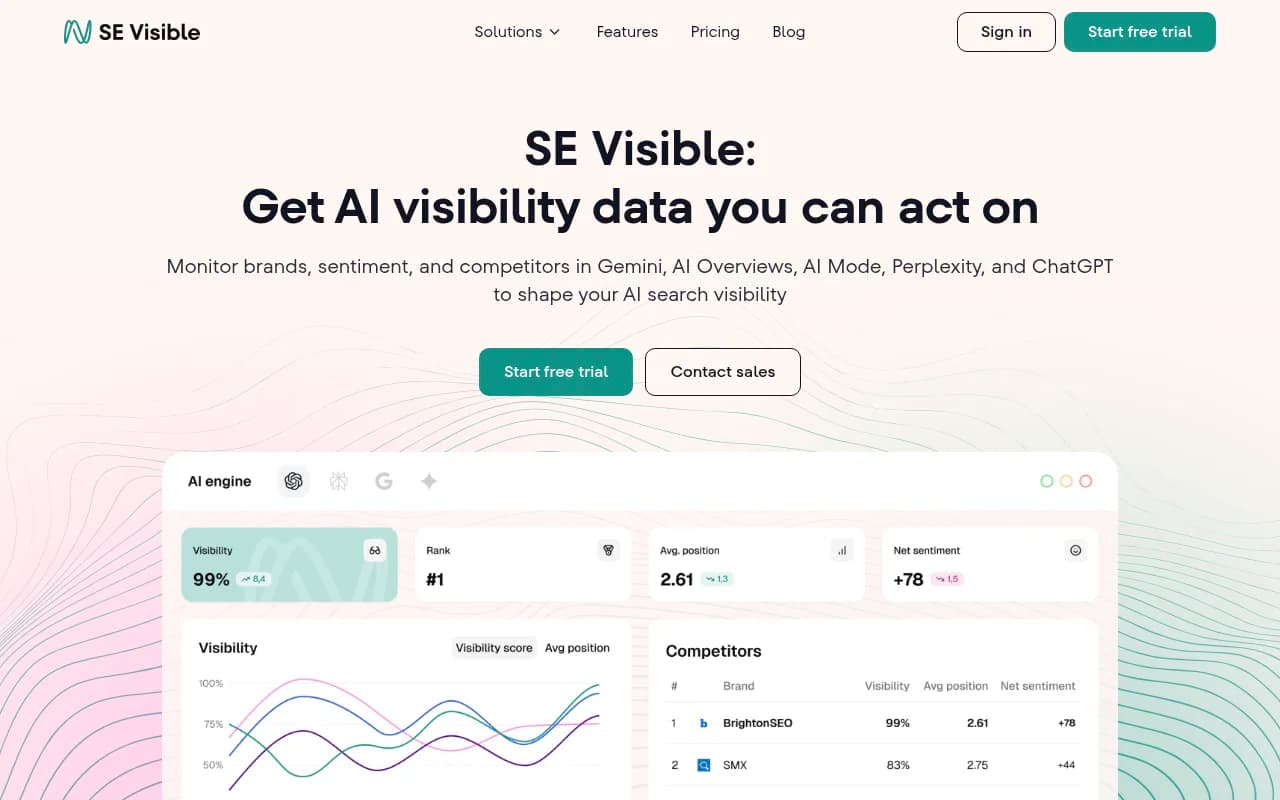
The integration story is the main draw here. Standalone, it's a capable monitoring tool but not exceptional. As part of a broader SE Ranking workflow, it adds AI visibility data without requiring a separate platform.
How to choose the right alternative
The honest answer is that it depends on what you're actually trying to do.
If you're just starting to pay attention to AI search and want to know whether your brand is showing up, Otterly.AI or LLMrefs will get you there without a big investment.
If you're at the stage where you know you have gaps and want to close them systematically -- creating content that earns citations, tracking which pages AI models are reading, and connecting visibility to revenue -- you need a platform that goes beyond monitoring. Promptwatch is the clearest option for that, and the only one in this comparison that covers the full loop from gap analysis to content generation to traffic attribution.
If you're an enterprise team with dedicated analysts and a need for deep reporting, Profound is worth evaluating despite the higher price.
One thing worth noting: the GEO space is moving fast. Tools that were monitoring-only a year ago are adding optimization features, and new entrants are launching regularly. The comparison table above reflects the state of the market in early 2026, but it's worth re-evaluating your stack every six months as the category matures.
What to look for in any GEO platform
Before signing up for any of these tools, it's worth being clear on what you actually need. A few questions worth asking:
Which AI models matter most for your audience? If your customers are primarily using ChatGPT and Perplexity, you don't necessarily need a tool that tracks 10+ models. But if you're in a market where Google AI Overviews drive significant traffic, that coverage matters.
Do you need to act on the data, or just report on it? Monitoring tools are fine for reporting to leadership or tracking trends over time. If you need to improve your visibility, you need a tool with content gap analysis and optimization features.
Can you see what AI crawlers are doing on your site? This is underrated. Knowing that you're invisible in AI search is one thing. Knowing that AI crawlers are hitting 404 errors on your key pages, or never crawling your most important content, is actionable in a way that citation data alone isn't.
How does the tool handle traffic attribution? AI visibility is only valuable if it translates to traffic and revenue. Tools that can connect citations to actual visits (via GSC integration, server logs, or a tracking snippet) give you a much clearer picture of ROI.
The GEO category has grown up a lot in the past 18 months. There are now real differences between the tools, and the choice you make will have a meaningful impact on whether AI search becomes a real channel for your business or just a metric you track.