Key takeaways
- AI-referred traffic to e-commerce sites grew 393% year-over-year in Q1 2026, and those visitors convert 42% better than paid search traffic -- making AI visibility a real revenue lever, not just a vanity metric.
- Qwairy covers the basics of GEO tracking, but e-commerce brands need more: SKU-level citation tracking, ChatGPT Shopping carousel monitoring, product sentiment analysis, and content tools to fix gaps.
- Most alternatives fall into two camps: monitoring-only dashboards (useful for data, limited for action) and full-cycle platforms that also help you create content to improve visibility.
- Promptwatch is the only platform in this comparison rated as a "Leader" across all categories in a 2026 review of 12 GEO platforms -- and the only one with AI crawler logs, ChatGPT Shopping tracking, and built-in content generation.
- The right tool depends on your catalog size, team structure, and whether you need to just track AI visibility or actually improve it.
If you sell products online and you're not showing up in ChatGPT's shopping recommendations or Perplexity's product carousels, you're invisible to a fast-growing segment of high-intent buyers. That's not a hypothetical concern anymore. Adobe reported that AI-referred traffic to retail sites grew 393% year-over-year in Q1 2026. Visitors arriving from AI search engines convert at 12.3% versus 3.1% for typical traffic. They also spend 37% more per visit.
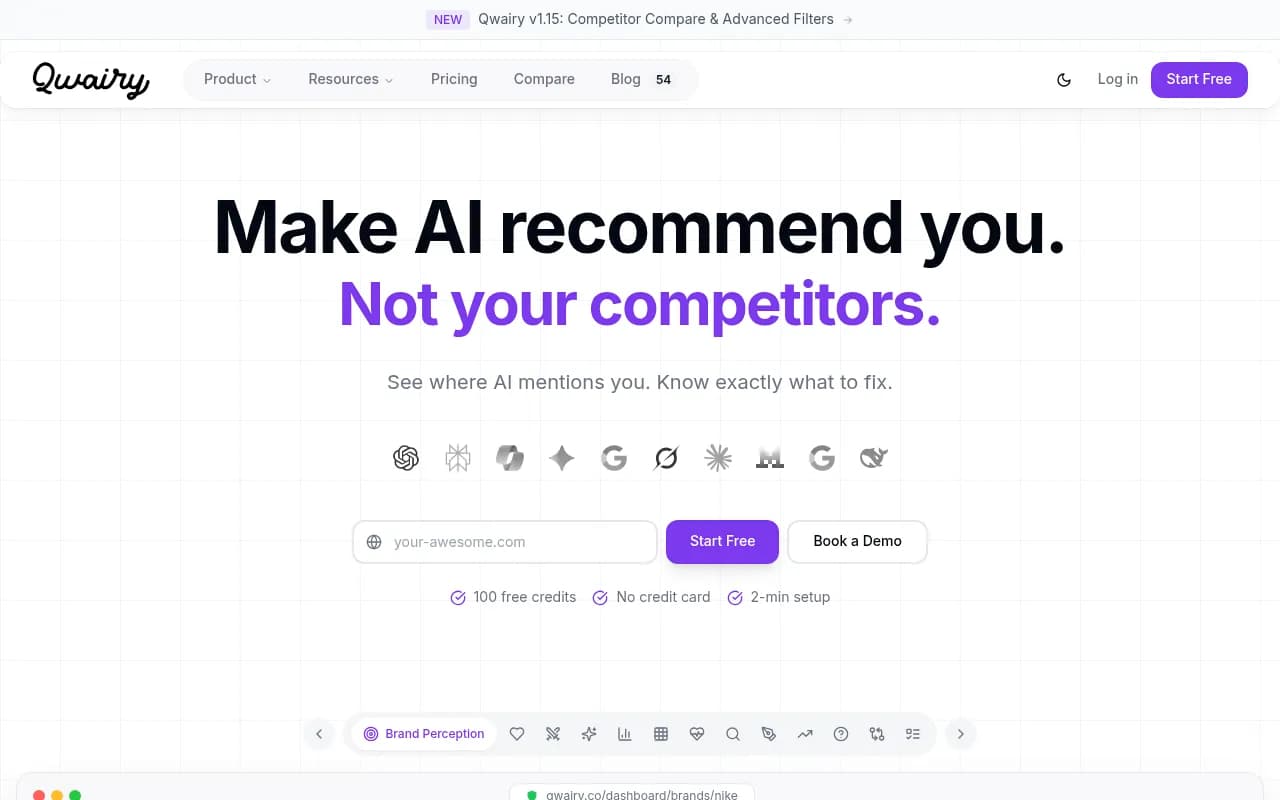
Qwairy is a GEO platform that helps brands track and optimize their AI search visibility. It's a reasonable starting point. But e-commerce brands have specific needs that generic GEO tools often don't fully address: tracking individual product citations, monitoring ChatGPT Shopping carousels, analyzing which product pages AI models actually read, and generating content that fills the gaps. If you've hit those walls with Qwairy, this guide covers the alternatives worth considering.
What e-commerce brands actually need from an AI visibility tool
Before comparing tools, it's worth being specific about what "AI visibility" means for a product-focused brand versus a B2B SaaS company or a publisher.
For e-commerce, the stakes are different. You're not just asking "does my brand appear in AI answers?" You're asking:
- Does my specific product appear when someone asks ChatGPT for the best moisturizer under $40?
- Am I showing up in ChatGPT's shopping carousel with the right image, price, and rating?
- Which product pages is Perplexity actually citing, and which ones is it ignoring?
- When a competitor's product gets recommended over mine, what's the content gap I need to close?
Generic brand monitoring tools track mentions. E-commerce brands need citation tracking at the product level, shopping carousel monitoring, and ideally some mechanism to act on what they find. Keep that distinction in mind as you read through the options below.
 A 2026 roundup of AI visibility tools for e-commerce, comparing SKU tracking, revenue attribution, and pricing.
The best Qwairy alternatives for e-commerce in 2026
Promptwatch -- best overall for e-commerce brands that want to act, not just monitor
Most AI visibility tools show you a dashboard. Promptwatch shows you a dashboard and then helps you do something about what you see.
The core difference for e-commerce teams is the action loop. Answer Gap Analysis identifies exactly which prompts competitors are visible for that you're not -- including product-level queries like "best protein bar for athletes" or "affordable running shoes for wide feet." You see the specific content your site is missing. Content Agents then generate articles, product comparisons, and category pages grounded in real prompt data, citation data, and competitor analysis. Page-level tracking shows which pages are being cited, how often, and by which AI model. Agent analytics shows the timeline from publish to crawl to citation.
The ChatGPT Shopping tracking is particularly relevant for e-commerce. Promptwatch monitors when your brand appears in ChatGPT's product recommendations and shopping carousels -- a surface most other tools don't cover at all. It also tracks AI crawler logs in real time, so you can see which product pages ChatGPT, Perplexity, and Claude are actually reading, and which ones they're skipping.
It monitors 10 AI models: ChatGPT, Perplexity, Google AI Overviews, Google AI Mode, Claude, Gemini, Meta/Llama, DeepSeek, Grok, and Copilot. Multi-language and multi-region support means it works for brands selling internationally.
Pricing starts at $99/month for the Essential plan (1 site, 50 prompts, 5 articles), $249/month for Professional (2 sites, 150 prompts, 15 articles, crawler logs), and $579/month for Business (5 sites, 350 prompts, 30 articles). A free trial is available.
Promptwatch is used by 1,480+ brands including Booking.com and Center Parcs, and its data has been cited in the Wall Street Journal.

Profound -- strong analytics, enterprise-focused
Profound has built a solid reputation for AI shopping analytics. It tracks how AI platforms surface products, categories, and offers during shopping journeys, and its reporting is detailed enough for enterprise teams that need to justify spend.
Where it falls short for most e-commerce brands is price and scope. It's positioned at the enterprise end of the market, and it doesn't have the content generation capabilities that close the loop from "we found a gap" to "we fixed it." You'll still need a separate workflow to act on the data.
That said, if you're a large retailer with a dedicated analytics team and you need deep AI shopping data, Profound is worth evaluating.
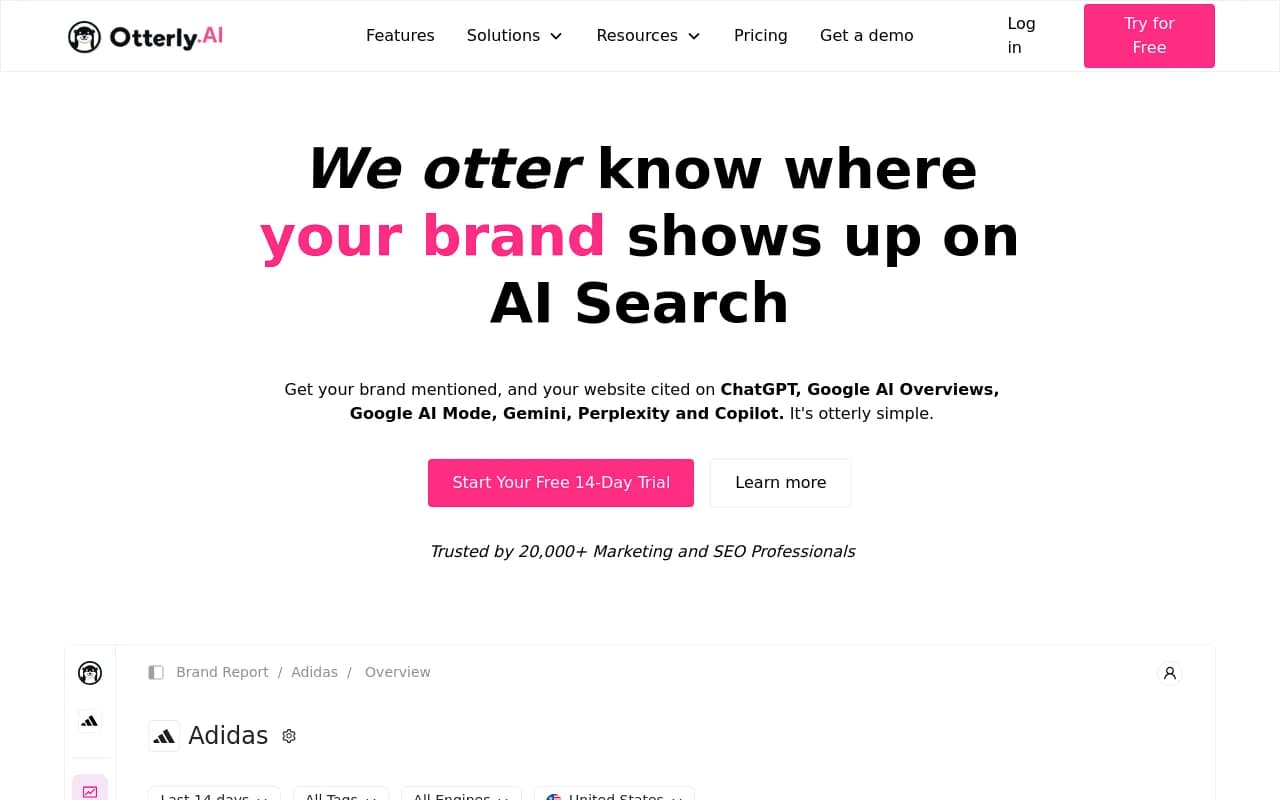
Otterly.AI -- affordable monitoring for smaller brands
Otterly.AI tracks brand citations across six AI platforms: ChatGPT, Perplexity, Google AI Overviews, AI Mode, Gemini, and Microsoft Copilot. It's one of the more affordable options in the category and has a clean interface that doesn't require a lot of onboarding.
The limitation is that it's monitoring-only. There's no content generation, no crawler logs, no ChatGPT Shopping tracking, and no prompt volume data to help you prioritize which gaps matter most. For a small e-commerce brand that just wants to know whether it's showing up in AI answers, it's a reasonable starting point. For brands that want to grow their AI visibility, you'll hit the ceiling quickly.
Scrunch AI -- good for brand-level tracking
Scrunch monitors how AI assistants like ChatGPT and Claude represent your brand, and it has decent sentiment analysis for understanding whether AI models are describing your products positively or negatively. That sentiment angle is genuinely useful for e-commerce brands managing reputation across multiple product lines.
It's less strong on the product-level citation tracking and shopping carousel monitoring that e-commerce teams specifically need. Think of it as a brand health tool that happens to cover AI search, rather than an e-commerce AI visibility platform.
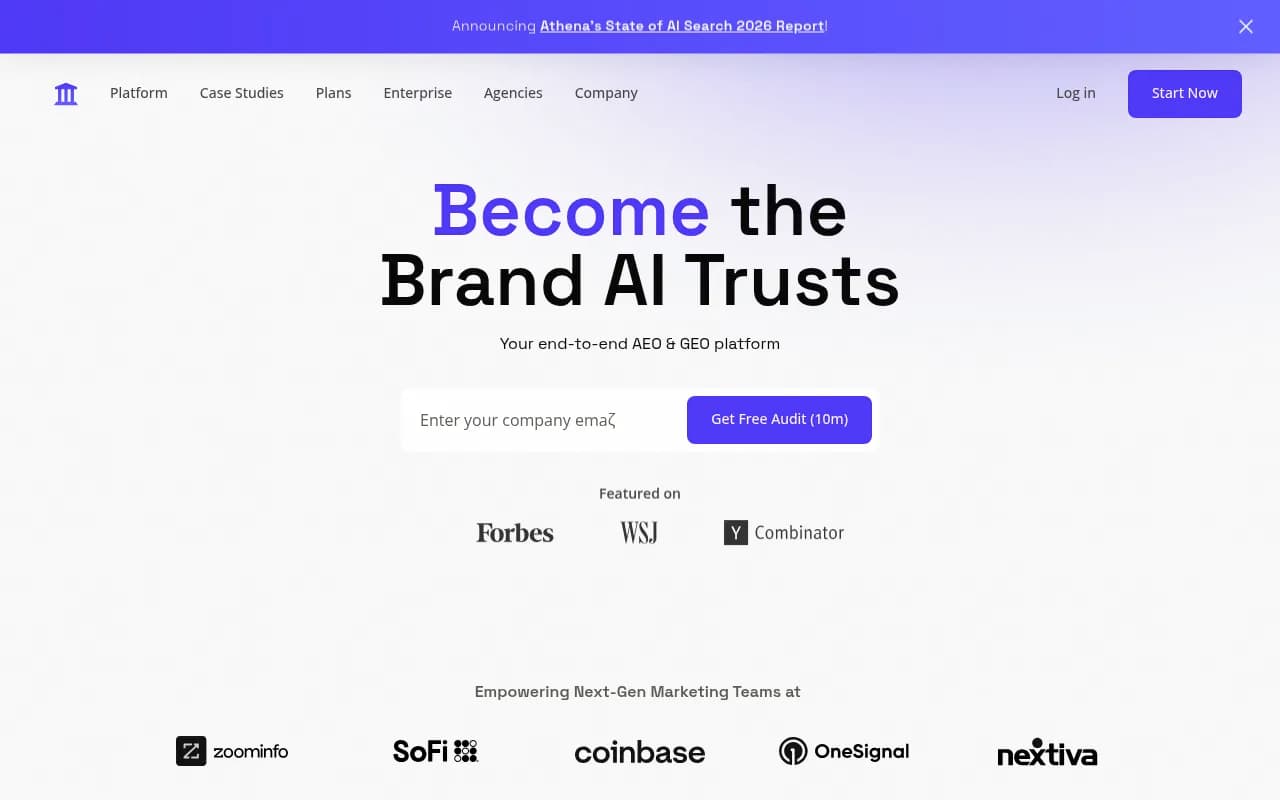
AthenaHQ -- solid monitoring, limited optimization
AthenaHQ tracks brand visibility across 8+ AI search engines and has a clean competitive benchmarking interface. It's a monitoring-focused platform, which means it's good at telling you where you stand but doesn't help you improve.
For e-commerce teams that already have strong content operations and just need the data layer, AthenaHQ is worth a look. If you need the tool to help you close the gaps it finds, you'll need to supplement it with other tools.
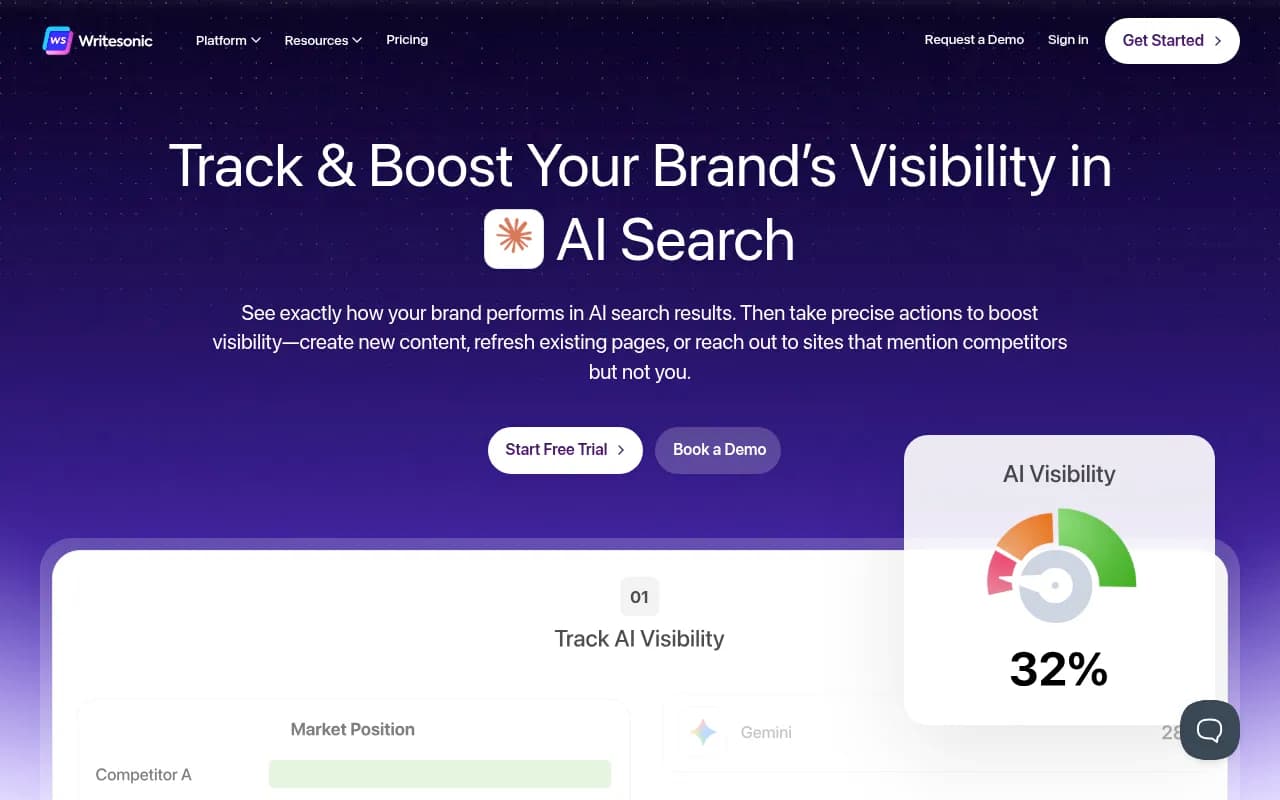
Writesonic -- AI visibility with content creation
Writesonic has expanded beyond its roots as an AI writing tool into an AI search visibility platform. It tracks, optimizes, and helps you rank in AI search results, which makes it more useful than pure monitoring tools for brands that need to produce content at scale.
The trade-off is depth. Its AI visibility tracking isn't as granular as dedicated GEO platforms, and it doesn't have the crawler log data or ChatGPT Shopping monitoring that e-commerce brands need for product-level insights. It's a reasonable option if you're already using Writesonic for content and want to add some AI visibility tracking without switching tools.
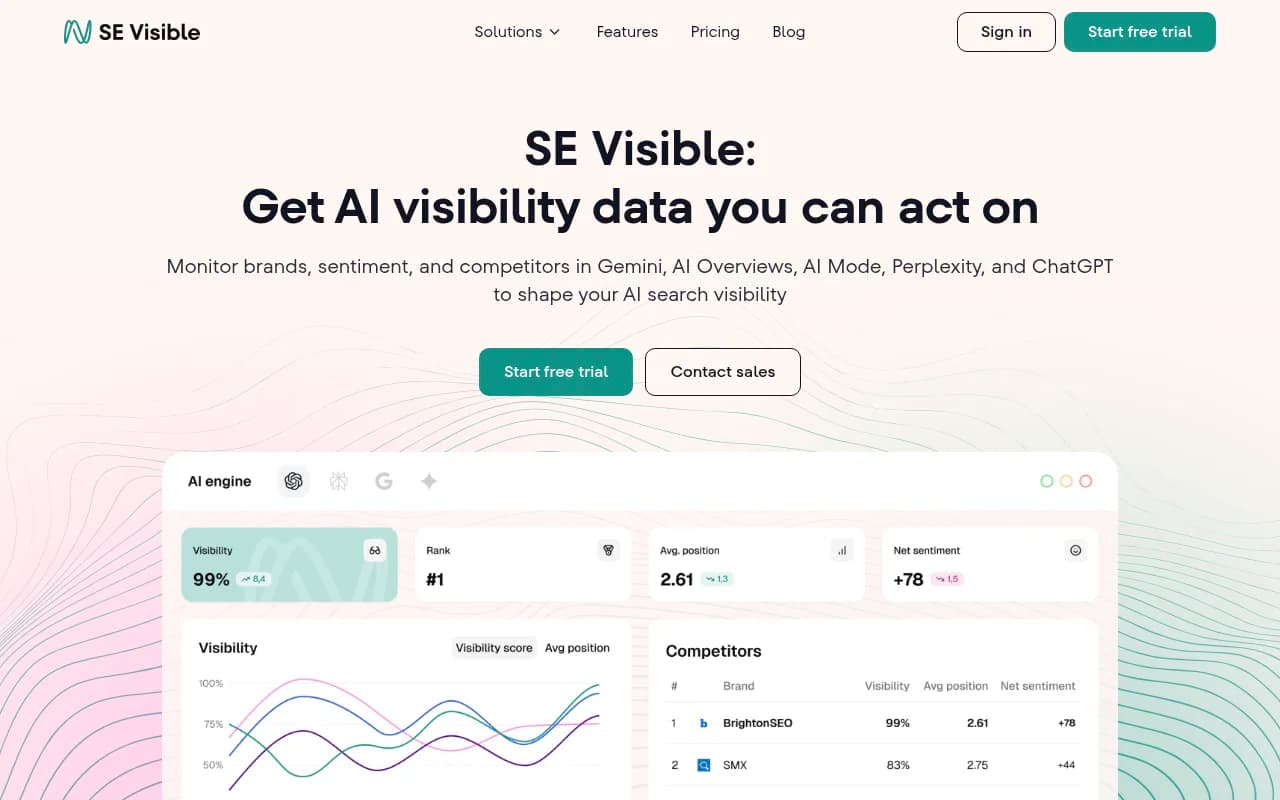
SE Ranking / SE Visible -- traditional SEO with AI visibility added
SE Ranking has added AI visibility tracking through its SE Visible product. It tracks brand visibility and sentiment across AI search engines and integrates with the broader SE Ranking SEO platform, which is useful if you're already using it for keyword tracking and site audits.
The AI visibility layer is newer and less mature than dedicated GEO platforms. It's a sensible add-on for existing SE Ranking customers, but probably not the right primary tool if AI visibility is your main focus.
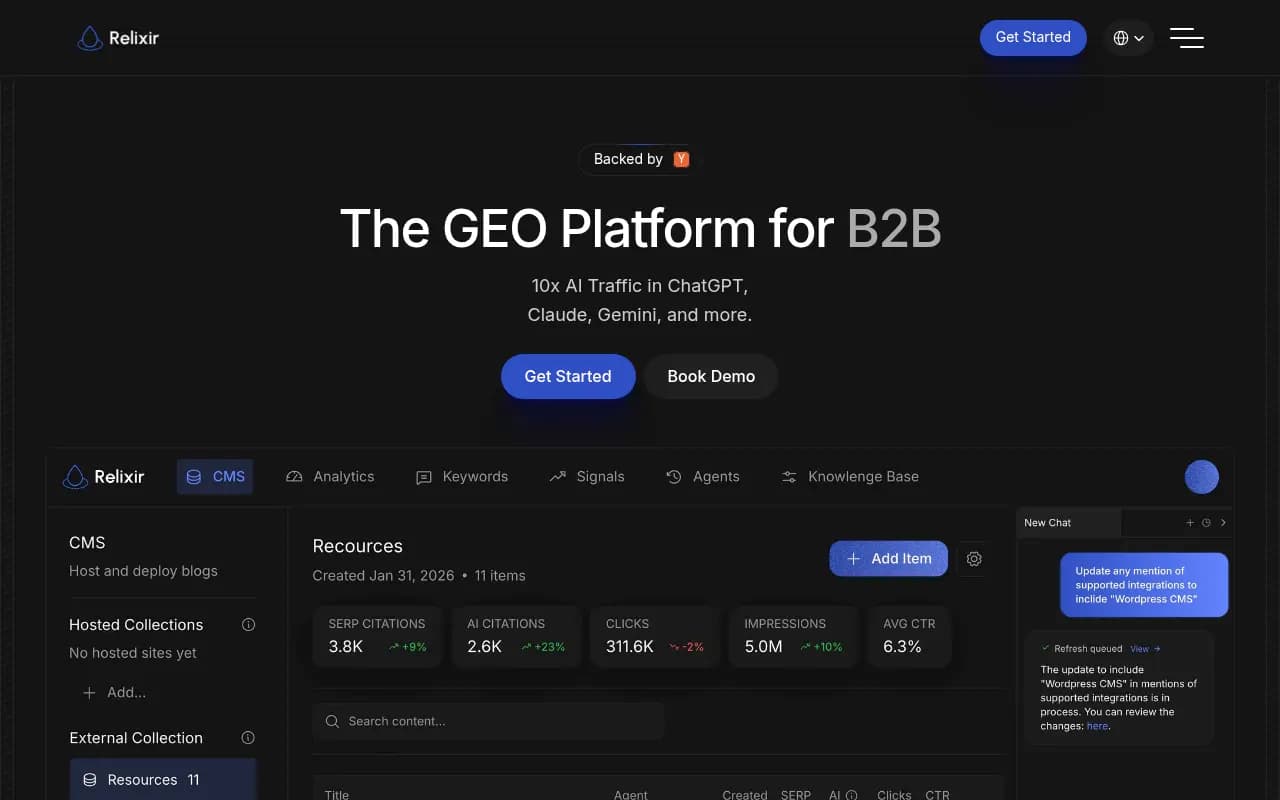
Relixir -- all-in-one GEO with content generation
Relixir is an all-in-one GEO platform with AI content generation and analysis built in. It's positioned similarly to Promptwatch in that it tries to close the loop from tracking to optimization. Worth evaluating if you want a platform that generates content to improve AI visibility, though it has less of a track record and a smaller customer base than some of the more established options.
Side-by-side comparison
| Tool | ChatGPT Shopping tracking | Crawler logs | Content generation | SKU-level tracking | Pricing (starting) |
|---|---|---|---|---|---|
| Promptwatch | Yes | Yes | Yes (Content Agents) | Yes (page-level) | $99/mo |
| Profound | Partial | No | No | Yes | Enterprise |
| Otterly.AI | No | No | No | No | ~$29/mo |
| Scrunch AI | No | No | No | No | Custom |
| AthenaHQ | No | No | No | No | Custom |
| Writesonic | No | No | Yes | No | ~$49/mo |
| SE Visible | No | No | No | No | Bundled with SE Ranking |
| Relixir | No | No | Yes | Partial | Custom |
| Qwairy | No | No | No | No | Custom |
What to look for when choosing a tool
ChatGPT Shopping and product carousel coverage
This is the most e-commerce-specific capability in the category, and most tools don't have it. ChatGPT's shopping recommendations and product carousels are a distinct surface from text-based AI answers. A tool that only tracks whether your brand name appears in a text response won't tell you whether your products are showing up with images, pricing, and ratings in the shopping interface. That's a meaningful gap.
SKU-level and page-level citation tracking
Brand-level visibility data tells you whether your company is mentioned. Product-level data tells you which specific products are being recommended and which pages AI models are citing to support those recommendations. For a brand with hundreds or thousands of SKUs, the difference matters enormously. You need to know whether it's your hero products or your long-tail catalog that's getting cited.
Crawler log access
AI crawler logs show you which pages ChatGPT, Perplexity, and Claude are actually reading, how often they return, and whether they're encountering errors. This is the diagnostic layer that tells you why certain products aren't being cited. Without it, you're guessing. Very few platforms offer this -- Promptwatch is one of the only ones that does.
Content generation and gap analysis
Knowing you have a gap is only useful if you can close it. The most valuable tools in this category don't just show you where competitors are visible and you're not -- they help you create the content that fills those gaps. For e-commerce brands, that means product comparison pages, category guides, and FAQ content engineered around the specific prompts AI models are already answering.
Prompt volume and difficulty scoring
Not all AI search prompts are equal. "Best laptop" is a different challenge than "best laptop for video editing under $1,500." Tools that give you volume estimates and difficulty scores for each prompt let you prioritize the gaps that are actually winnable and worth pursuing.
Who should consider switching from Qwairy
Qwairy is a functional GEO platform for tracking AI search visibility. If you're an e-commerce brand and you're finding that it doesn't cover ChatGPT Shopping carousels, doesn't give you product-level citation data, or doesn't help you act on the gaps it finds, those are legitimate reasons to look elsewhere.
The clearest signal that you've outgrown a monitoring-only tool: you're looking at your visibility data every week, you can see that competitors are getting cited for prompts you should own, and you have no clear path to doing anything about it inside the tool. That's when you need a platform with content generation and gap analysis built in.
For most e-commerce brands in 2026, Promptwatch covers the most ground: it tracks the right surfaces (including ChatGPT Shopping), gives you the diagnostic data (crawler logs, page-level citations), and helps you close the gaps (Content Agents, Answer Gap Analysis). Smaller brands with tighter budgets might start with Otterly.AI for basic monitoring and layer in content tools separately, but that patchwork approach gets expensive and fragmented quickly.
 A 2026 comparison of AI search analytics tools for e-commerce, showing how different platforms address product-level tracking and reporting needs.
The bottom line
AI search visibility for e-commerce isn't the same problem as brand monitoring or traditional SEO. The surfaces are different (shopping carousels, product recommendations, synthesized answers), the data you need is different (SKU-level citations, crawler logs, prompt volumes), and the action you need to take is different (content engineered for specific AI prompts, not just keyword-optimized pages).
Qwairy is a starting point. For brands that need to go further -- tracking ChatGPT Shopping, understanding which product pages AI models are actually reading, and creating content that closes the gaps -- the tools above are worth evaluating. Promptwatch covers the most ground in one platform. The others each have specific strengths depending on your team size, budget, and whether you need monitoring, optimization, or both.