Key takeaways
- Profound is a well-funded, capable platform, but its enterprise pricing and monitoring-first design create friction for mid-market teams who need to act on data, not just read it.
- Most alternatives fall into two camps: monitoring dashboards (cheaper but passive) and full optimization platforms (more expensive but actually move the needle).
- The strongest Profound alternatives for mid-market teams combine visibility tracking, content gap analysis, and content generation in one workflow.
- Pricing across the alternatives ranges from €89/month to several hundred dollars, making the cost gap vs. Profound significant for teams managing 1-5 sites.
- The right choice depends on whether your bottleneck is tracking, content creation, technical SEO, or all three.
Profound raised $35 million in a Sequoia-led Series B in 2025. That's a signal the AI visibility category is real and growing fast. It's also a signal that Profound is building for a specific customer: large enterprises with dedicated teams, big budgets, and the patience to coordinate multiple tools around a central dashboard.
If that's not you, you're in good company. Mid-market marketing teams, agencies, and growth-focused brands have been quietly hunting for Profound alternatives that don't require a procurement process to get started. The question isn't whether Profound is good (it is), it's whether it's the right fit for teams that need to move quickly and can't afford to pay enterprise rates for a monitoring-only workflow.
This guide covers 8 platforms worth serious consideration in 2026, what each one actually does well, where it falls short, and who it's best suited for.
Why mid-market teams hit a wall with Profound
Profound's core strength is diagnosis. Its Agent Analytics module reads server logs to detect AI crawlers. Its Answer Engine Insights module tracks how your brand appears across ChatGPT, Perplexity, Gemini, and others. The data is genuinely good.
The friction shows up when you try to act on it. Profound pairs its dashboards with AI Agents that can draft content, but the workflow still requires significant manual coordination across separate tools for publishing, local SEO, and traffic attribution. For a Fortune 500 brand with a 10-person content team, that's manageable. For a 3-person marketing team at a $50M SaaS company, it's a bottleneck.
Three specific pain points come up repeatedly in community discussions:
- Pricing is opaque and typically enterprise-tier, making it hard to justify for teams tracking fewer than 5 sites
- The platform is strong at showing you what's wrong but requires external tools to fix it
- Onboarding and support are calibrated for large accounts, not fast-moving mid-market teams
That's the gap the alternatives below are trying to fill.
The 8 best Profound alternatives for mid-market teams in 2026
1. Promptwatch — best for teams that want to close the loop
Promptwatch is the most direct answer to the "monitoring-only" problem. Where most platforms show you that competitors are appearing in AI responses you're missing, Promptwatch shows you the specific prompts, then helps you create content engineered to win them.

The workflow is built around three steps: find the gaps (Answer Gap Analysis shows exactly which prompts competitors rank for that you don't), create content to fill them (a built-in AI writing agent generates articles grounded in 880M+ analyzed citations), and track the results at the page level to see which content is actually getting cited by which AI models.
A few things stand out versus Profound specifically. Promptwatch includes AI Crawler Logs, which show in real time which AI crawlers (ChatGPT, Claude, Perplexity, etc.) are hitting your site, which pages they're reading, and what errors they're encountering. It also tracks Reddit and YouTube discussions that directly influence AI recommendations, monitors ChatGPT Shopping carousels, and provides prompt volume estimates and difficulty scores so you can prioritize high-value, winnable prompts instead of guessing.
Pricing starts at $99/month for one site and 50 prompts, with the Professional plan at $249/month covering two sites, 150 prompts, 15 articles, and crawler logs. That's a meaningful step down from Profound's enterprise pricing for comparable or broader capabilities.
For mid-market teams that need the full loop (find gaps, fix them, measure results), Promptwatch is the strongest option in this category right now.
2. Otterly.AI — best for simple, affordable monitoring
Otterly.AI sits at the lighter end of the spectrum. It tracks brand mentions and citations across AI models without the complexity of a full optimization suite. Setup is fast, the interface is clean, and the pricing is accessible for small teams.
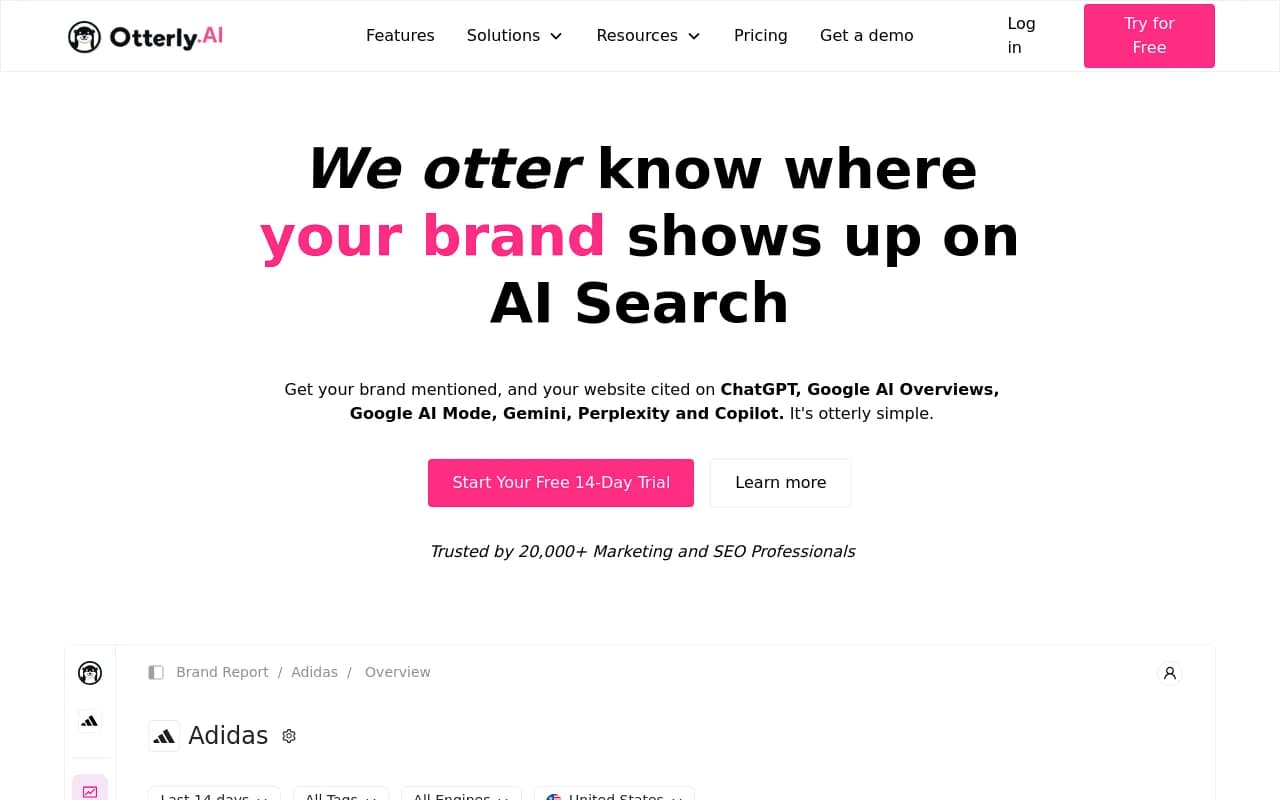
The honest limitation: Otterly is a monitoring tool. It shows you what's happening but doesn't help you change it. There's no content generation, no gap analysis, no crawler logs. For teams that already have a content workflow and just need visibility data piped into it, that's fine. For teams looking to actually improve their AI search presence, they'll need additional tools alongside it.
Best for: startups and small teams that want basic AI visibility tracking without a large monthly commitment.
3. Scrunch AI — best for technically-oriented marketers
Scrunch AI takes a different angle. Its AXP "Shadow Site" technology creates an AI-optimized version of your content that AI crawlers can read more easily, without touching your main site. It's a genuinely interesting technical approach that addresses a real problem: AI models often struggle to parse JavaScript-heavy or poorly structured pages.
The platform also tracks visibility across AI models and provides citation analysis. Where it falls short for most mid-market teams is the learning curve. The technical setup requires more involvement than plug-and-play alternatives, and the pricing model is monthly with features that assume some technical SEO knowledge.
Best for: CTOs, technical SEO leads, and growth teams comfortable with infrastructure-level changes.
4. Peec AI — best for global brands on a mid-market budget
Peec AI's main differentiator is language and geography coverage. It supports 115+ languages and tracks AI visibility across multiple platforms, making it one of the few options that works well for brands operating across multiple markets.
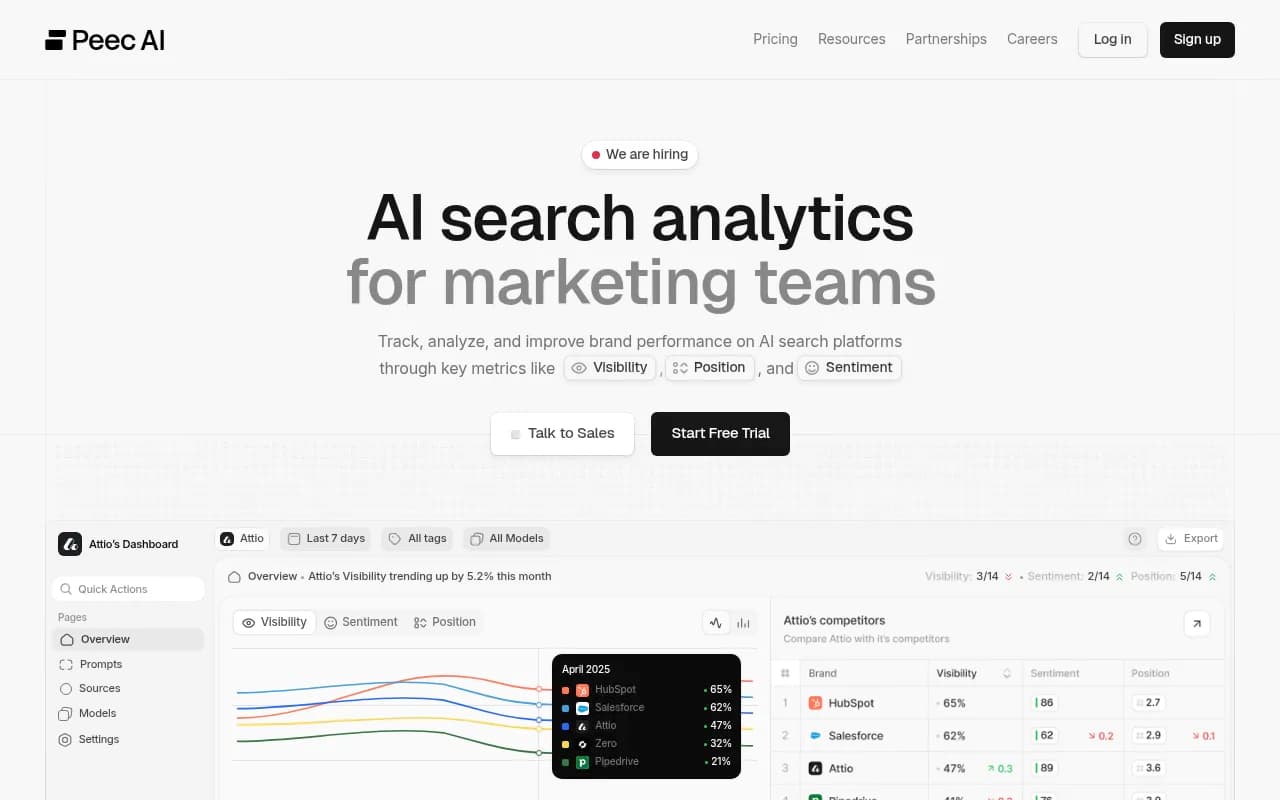
At €89/month entry pricing, it's one of the more affordable options in this list. The tradeoff is depth: Peec is primarily a monitoring and tracking tool, so teams will still need a separate content workflow to act on what they find. But for international brands that need multi-language visibility data without paying enterprise rates, it fills a real gap.
Best for: mid-market brands with international presence who need multi-language AI visibility tracking.
5. SE Visible — best for SEO agencies transitioning to GEO
SE Visible is built on top of SE Ranking's existing SEO infrastructure, which means it fuses traditional search data with AI visibility tracking in a single interface. For agencies that already live in SE Ranking, this is a natural extension rather than a new tool to learn.
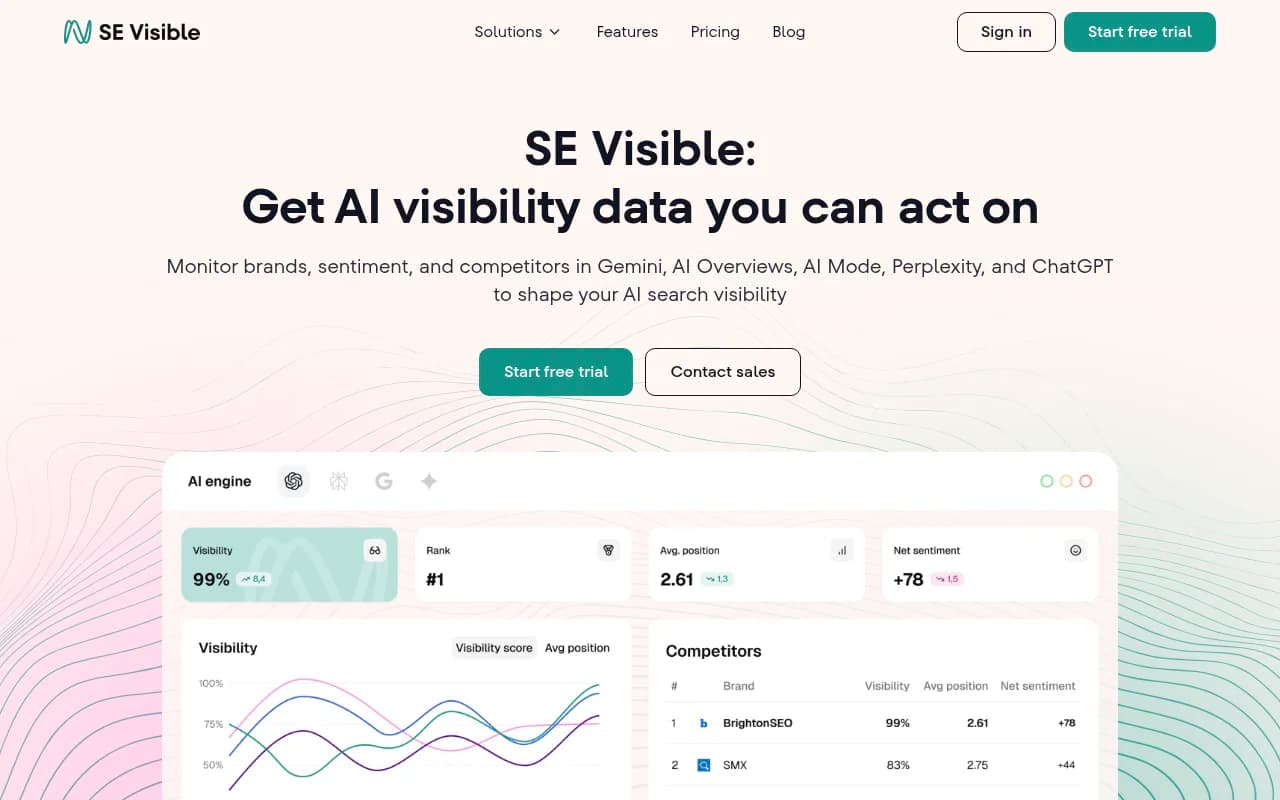
The source detection features are particularly useful: SE Visible shows which sources AI models are pulling from when they generate responses about your clients' categories. That's actionable data for agencies building content strategies. The pricing is add-on subscription-based, which keeps costs manageable for agencies running multiple client accounts.
Best for: SEO agencies that want to add GEO capabilities without switching platforms.
6. Writesonic — best for content-heavy teams
Writesonic has evolved from an AI writing tool into something closer to a GEO platform with guided optimization workflows. It tracks AI visibility and provides content recommendations, but its real strength is the writing side: generating content at scale that's optimized for AI citation.
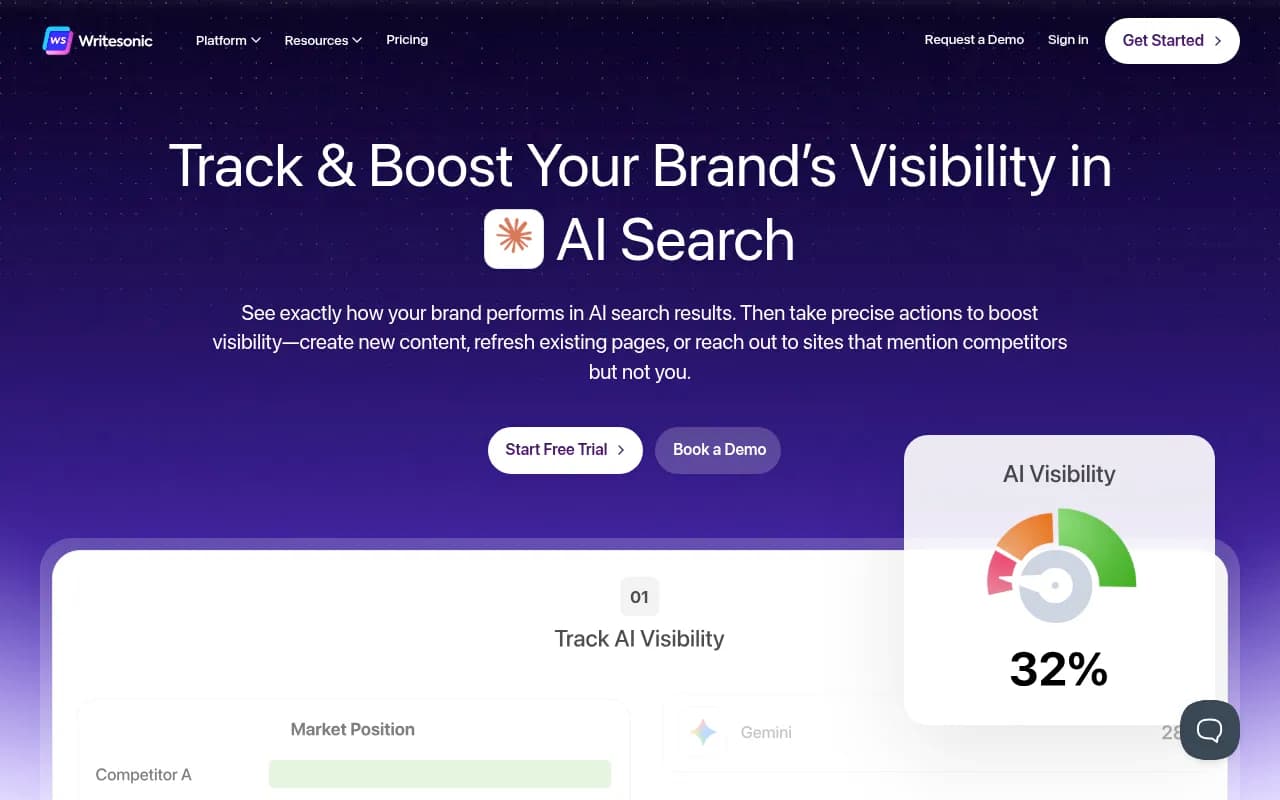
For teams whose primary bottleneck is content production rather than visibility tracking, Writesonic makes sense. The GEO features are less deep than dedicated platforms (no crawler logs, limited prompt intelligence), but the content output quality is high and the workflow is fast.
Best for: content-heavy marketing teams that need to produce AI-optimized content quickly and want basic visibility tracking included.
7. AIclicks — best for combining SEO and AI visibility
AIclicks positions itself at the intersection of traditional SEO and AI search visibility. It tracks prompt-level insights, monitors citations, and provides competitor analysis across AI models, with a workflow designed to connect those insights to content decisions.
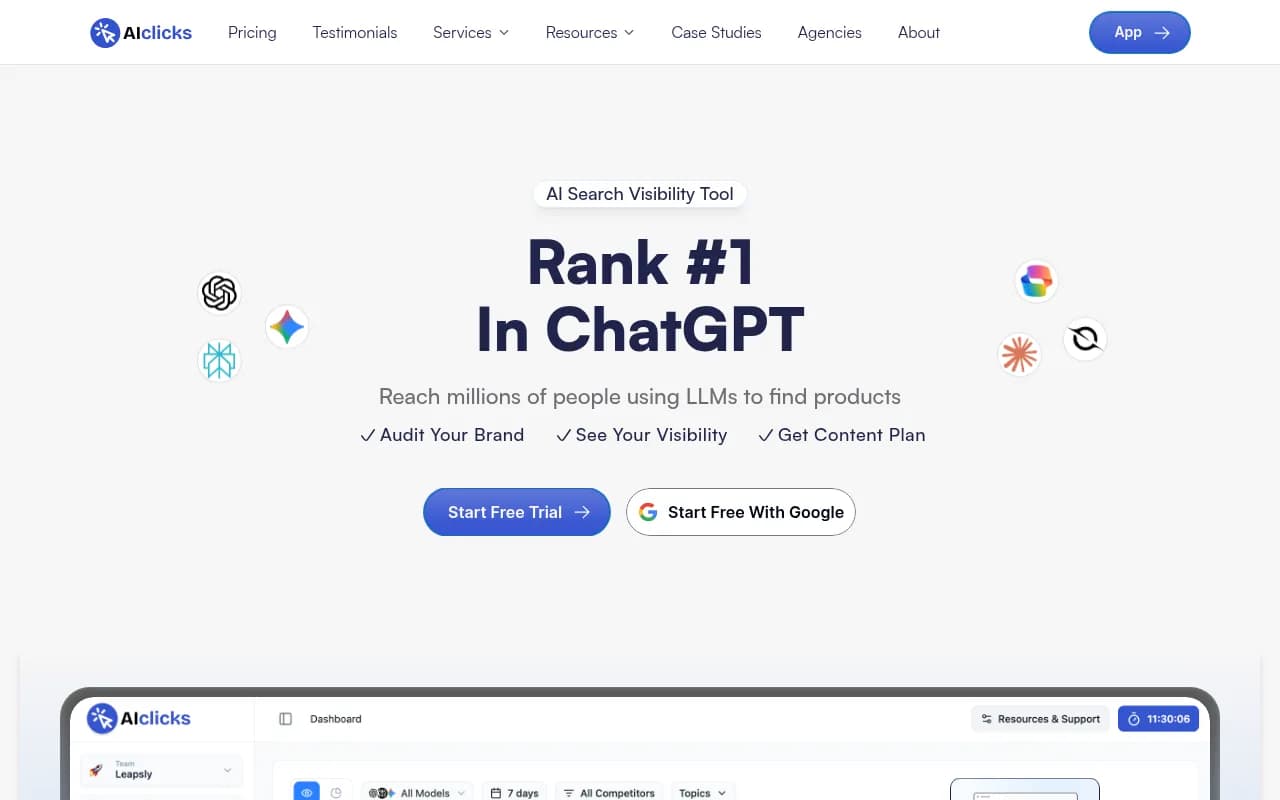
The platform has been adding features quickly in 2026, and the prompt-level data is genuinely useful for identifying where to focus content efforts. It doesn't have the depth of crawler log analysis or the content generation capabilities of Promptwatch, but it's a solid mid-tier option for teams that want more than basic monitoring without jumping to enterprise pricing.
Best for: marketing teams that want prompt-level AI visibility data with some SEO integration.
8. Advanced Web Ranking — best for reporting-heavy agencies
Advanced Web Ranking has been a rank tracking staple for years, and its AI visibility features are a natural extension of its core reporting infrastructure. The white-label flexibility is the main draw for agencies: client reports are polished, customizable, and can be automated at scale.
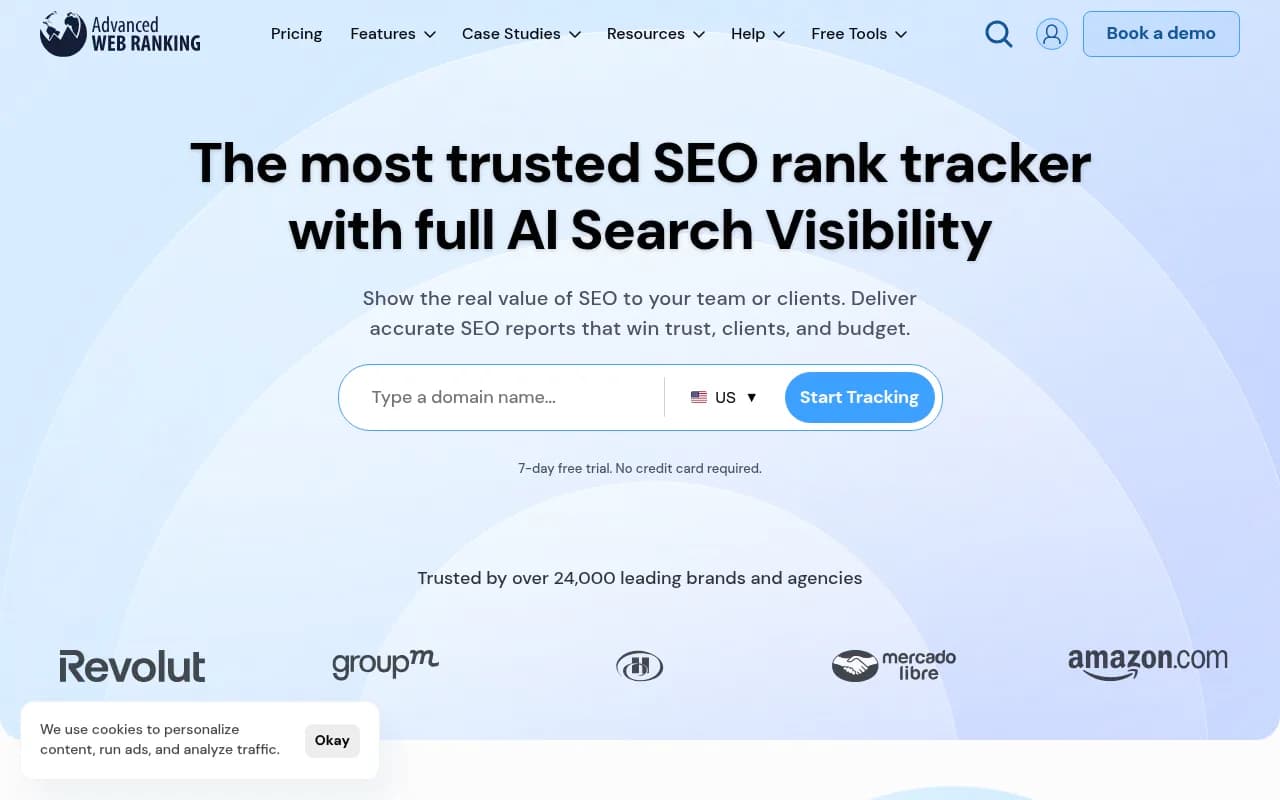
The AI visibility features are less cutting-edge than dedicated GEO platforms, and there's no content generation or gap analysis. But for agencies whose primary deliverable is reporting, and who need to add AI visibility metrics to existing client dashboards without rebuilding their entire workflow, it's a practical choice.
Best for: reporting-heavy agencies that need white-label AI visibility metrics added to existing rank tracking workflows.
How these platforms compare at a glance
| Platform | AI model coverage | Content generation | Crawler logs | Prompt gap analysis | Entry pricing |
|---|---|---|---|---|---|
| Promptwatch | 10+ models | Yes (built-in) | Yes | Yes | $99/mo |
| Otterly.AI | Multiple | No | No | No | Low |
| Scrunch AI | Multiple | No | Partial | No | Monthly |
| Peec AI | Multiple | No | No | No | €89/mo |
| SE Visible | Multiple | No | No | Partial | Add-on |
| Writesonic | Multiple | Yes | No | Partial | Mid-tier |
| AIclicks | Multiple | Partial | No | Partial | Mid-tier |
| Advanced Web Ranking | Multiple | No | No | No | Volume-based |
| Profound | Multiple | Yes (Agents) | Yes | Yes | Enterprise |
The table makes the tradeoffs visible. Profound and Promptwatch are the only two platforms in this list that cover the full loop: tracking, gap analysis, and content generation. The difference is pricing and target customer. Profound is built for Fortune 500 teams. Promptwatch is built for brands and agencies that want the same capabilities without the enterprise overhead.
How to choose the right alternative for your team
The decision comes down to where your actual bottleneck is.
If you're primarily stuck on visibility data (you don't know how you're appearing in AI responses), almost any tool in this list will help. Otterly.AI or Peec AI will get you started quickly and cheaply.
If you're stuck on content (you know you're missing from AI responses but don't know what to write or don't have the bandwidth to write it), you need a platform with content generation built in. That narrows the list to Writesonic and Promptwatch, with Promptwatch having the edge because its content is grounded in actual citation data rather than generic SEO signals.
If you're stuck on the technical side (AI crawlers aren't reading your site correctly, or you're not sure which pages are being indexed), Scrunch AI's shadow site approach or Promptwatch's crawler logs are the most direct solutions.
If you're an agency managing multiple clients, SE Visible or Advanced Web Ranking will integrate more cleanly with existing reporting workflows, though neither will help you actually fix visibility problems.
One question worth asking before you commit to any platform: does it show you what's wrong, or does it also help you fix it? Most tools in this category are still primarily monitoring dashboards. That's useful, but it's not optimization. The teams that will pull ahead in AI search in 2026 are the ones that can close the loop between data and content, not just the ones with the best dashboards.
A note on the broader GEO landscape
The AI visibility category is moving fast. Platforms that were monitoring-only six months ago are adding content features. Platforms that started as content tools are adding tracking. The lines are blurring, which makes it harder to evaluate tools based on feature lists alone.
The more useful question is: what does the platform's core design assume about how you'll work? Profound assumes you have a team that can coordinate across multiple tools and workflows. Otterly.AI assumes you just need data. Promptwatch assumes you need to go from data to published content in one place.
Pick the platform whose assumptions match how your team actually operates, not the one with the longest feature list.
The GEO category will look different again by the end of 2026. But the teams that invest in understanding and improving their AI search visibility now, rather than waiting for the category to mature, will have a compounding advantage that's hard to close later.