Key takeaways
- Profound's advertised $99/month Starter plan tracks ChatGPT only, with no exports, no API, and no multi-engine coverage. The plan most teams actually need (Growth) costs $399/month, and Claude, Gemini, and Copilot tracking require an Enterprise sales call.
- Bootstrapped SaaS companies run lean by necessity. SaaS Capital's 2026 survey puts median growth at 15% and NRR at 103% for bootstrapped companies between $3M and $20M ARR, so every tool dollar has to pull its weight.
- Otterly.AI ($29/month) is the cheapest credible multi-engine entry point. Promptwatch ($95/month with all engines included) is the strongest option if you want a platform that fixes visibility gaps, not just reports them.
- Watch cost per prompt, not sticker price. A $99 plan with 50 prompts costs $2 per prompt; a $29 plan with 15 prompts costs under $2, and some tools include unlimited seats, which matters when your whole team is three people.
- ChatGPT's citation behavior changed structurally in August 2026 (the site: operator rollout), so whatever tool you pick needs to track real UI output across engines, not a single model's API.
Why bootstrapped SaaS teams look beyond Profound
Profound is a good product. It raised $155 million in VC funding, closed a Series C at a $1B valuation in February 2026, and built something Fortune 500 procurement departments can sign off on. That's exactly the problem if you're bootstrapped.
The pricing page shows a $99/month Starter plan, which sounds reasonable until you read the fine print. Starter tracks ChatGPT only, caps you at 50 prompts and 1,500 responses per month, includes a single seat, and omits exports and API access entirely. The features Profound is actually known for, multi-engine tracking, the Opportunities dashboard, and data exports, live in the Growth tier at $399/month. And if you want Claude, Gemini, or Copilot tracking, there is no self-serve path at any price. That's an Enterprise conversation.
For a funded company, this is a rounding error. For a bootstrapped one, it's a different calculation. SaaS Capital's 2026 benchmarking survey of over 1,000 private B2B SaaS companies found that bootstrapped companies in the $3M to $20M ARR range grow at a median of 15% annually with 103% NRR, and they get there by being profitable and disciplined about spending. A $399/month tool that only monitors (you still have to write and publish the fixes yourself) is a hard sell against a $95/month tool that does both.
There's also a data problem worth knowing about before you commit to any single-engine tracker. On August 8, 2026, ChatGPT Search started using the site: operator at scale, jumping from roughly 0.4% to 17% of all fanout queries overnight, and average searches per response nearly doubled, per Promptwatch's query fanout data. Around the same time, Reddit's share of ChatGPT citations collapsed from about 3.8% to 0.5% in a matter of days, according to Promptwatch's Reddit citation tracking. If your visibility tool only watches one engine, or only watches one channel within that engine, you're optimizing against a snapshot that may already be stale.
What a bootstrapped team should actually look for
Before the tool list, the criteria. These are the four questions I'd ask on any demo call:
How many engines are included at the entry tier? Some tools advertise five models at €49; others give you ChatGPT alone at $99. Multi-engine coverage matters because citation behavior varies wildly between engines. ChatGPT cites about 5 sources per response on average, while Google AI Overviews and Perplexity both cite around 10, which makes them far more forgiving for newer domains, according to Promptwatch's sources-per-response research.
Does it stop at monitoring, or does it help you execute? Most cheap trackers show you a visibility score and a list of prompts you're missing. That's useful for about a week. Then you need content briefs, gap analysis, and ideally automated publishing, or the insights just pile up in a dashboard nobody acts on.
What's the real cost per prompt? A bootstrapped team typically tracks 30 to 100 prompts. Divide the plan price by the prompt count and compare honestly. Also check whether seats are limited, since Profound's Starter includes exactly one.
Does it monitor real UI output? User-facing answers in ChatGPT, Gemini, and AI Overviews can differ from what the APIs return. A tool that only queries APIs will misreport what actual users see.
The alternatives at a glance
| Tool | Entry price | Engines at entry | Prompts | Execution features | Best for |
|---|---|---|---|---|---|
| Otterly.AI | $29/mo | 4 (ChatGPT, AI Overviews, Perplexity, Copilot) | 15 | GEO audits, URL audits | Absolute cheapest credible start |
| Promptwatch | $95/mo (free tier available) | All major engines | 50 | Content Agents, CMS publishing, Unified Actions | Best end-to-end value |
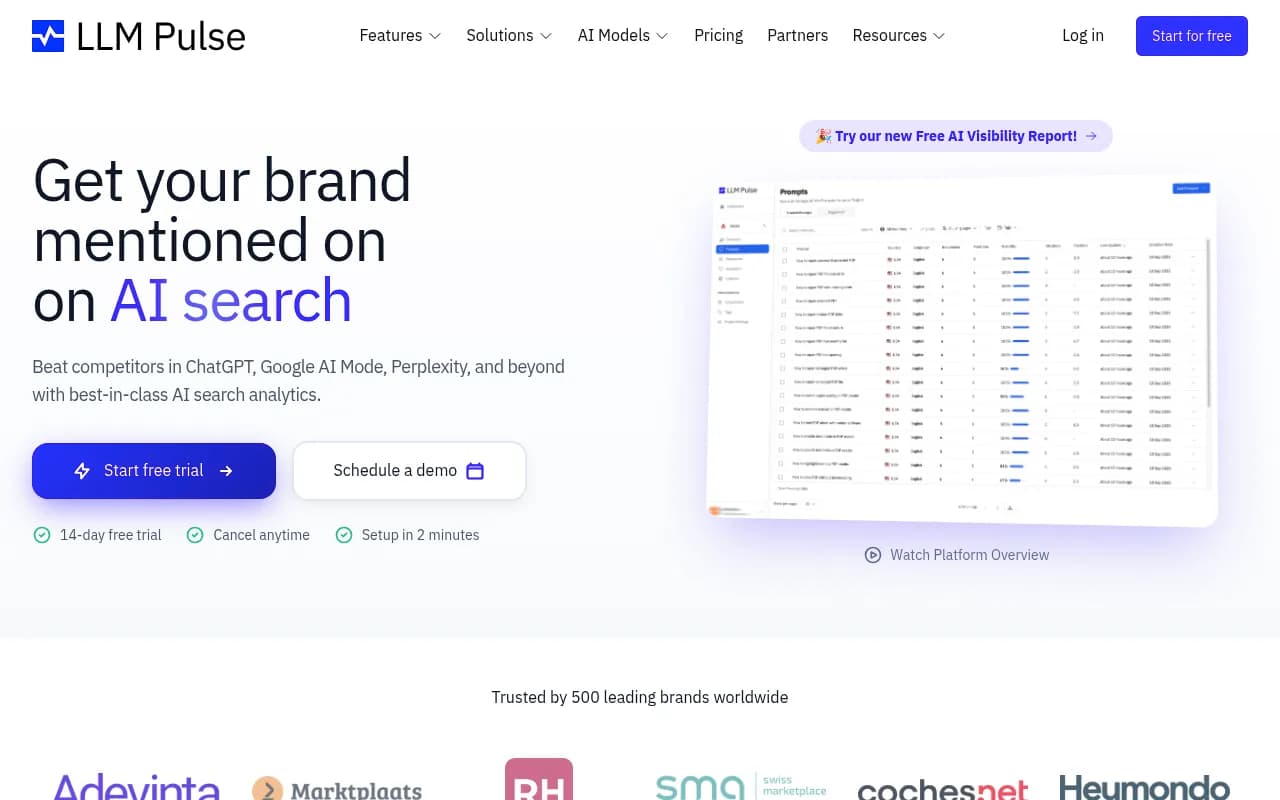
| LLM Pulse | €49/mo | 5 models | 50 | Sentiment, traffic analytics | Multi-engine coverage on a budget |
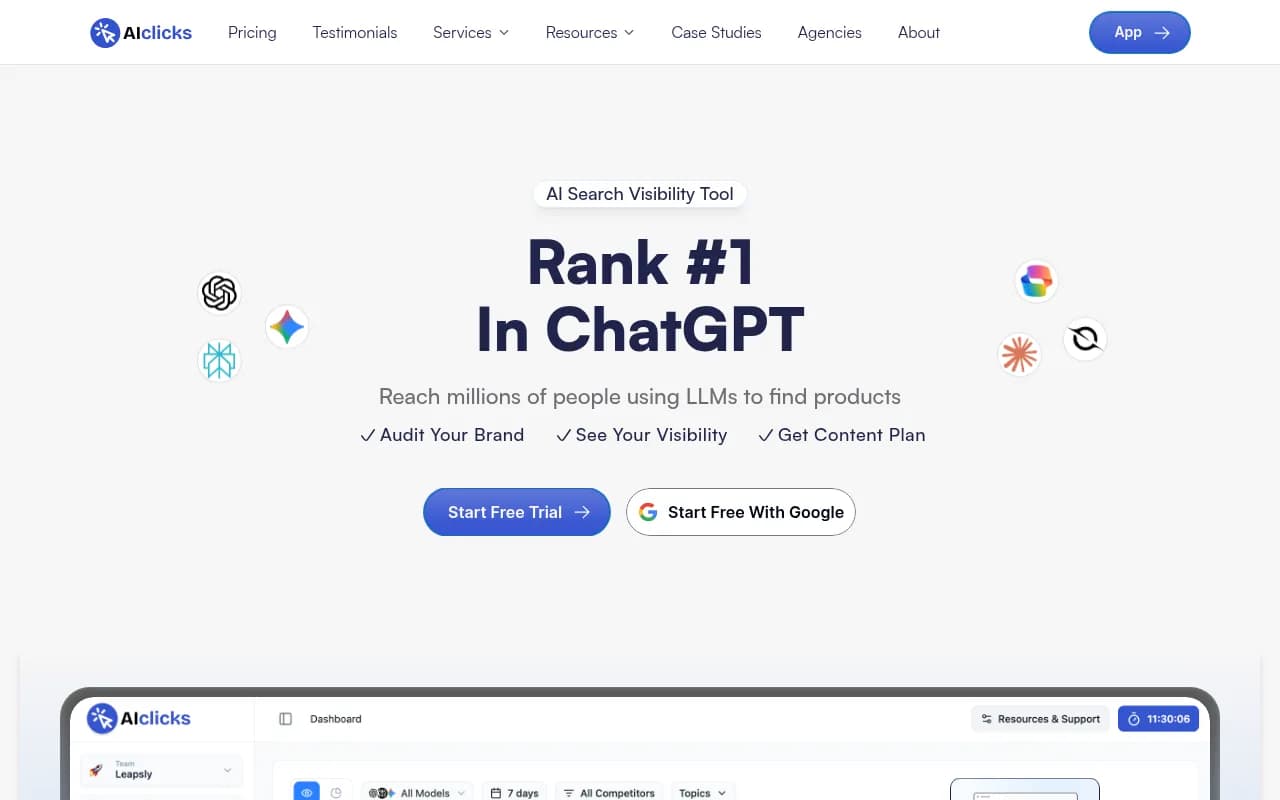
| AIclicks | $59/mo | 3 platforms | 30 | Basic optimization | Simple tracking, 3-day trial |
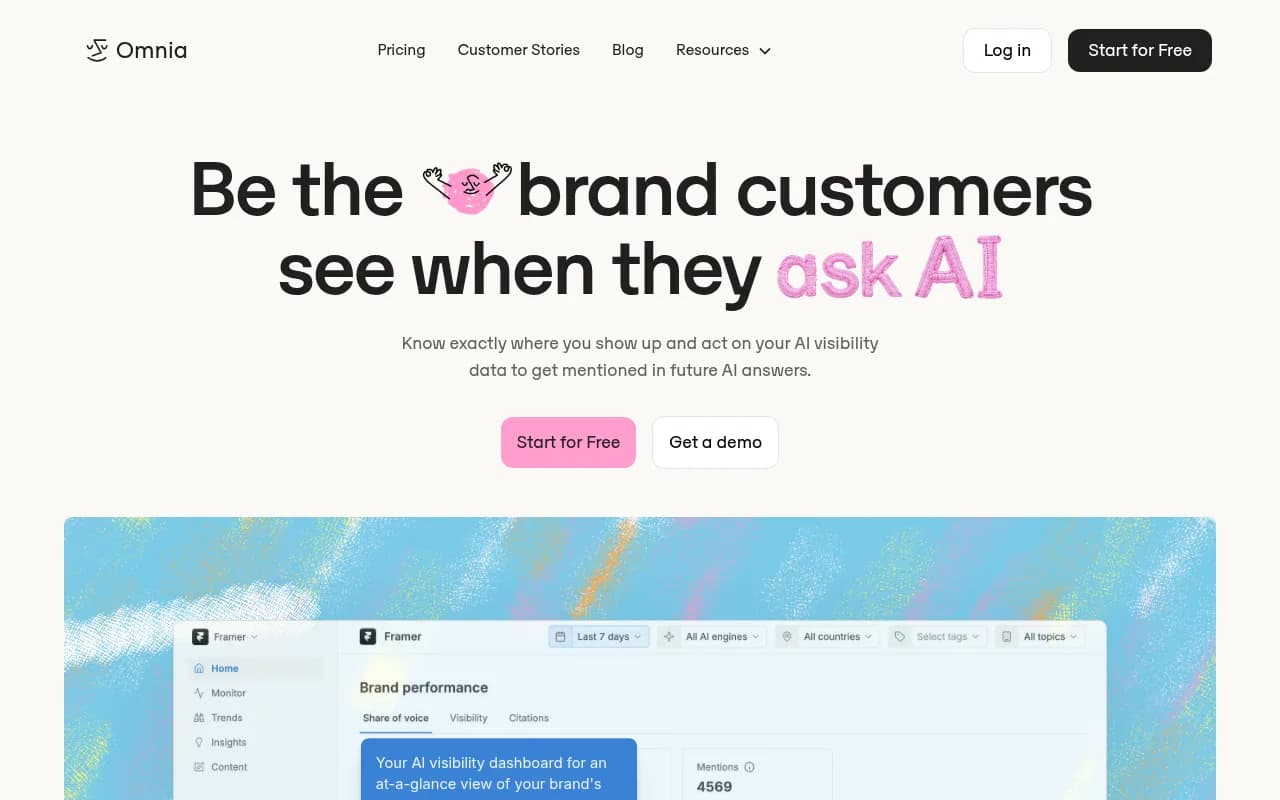
| Omnia | €79/mo | Multi-engine | Tiered | Content tools | Small marketing teams |
| AthenaHQ | $295/mo | 10 models | Credit-based | Content optimization agent | Post-PMF teams with real budget |
The six best Profound alternatives for bootstrapped SaaS
1. Otterly.AI: the cheapest credible entry point
Otterly's Lite plan is $29/month for 15 tracked prompts across ChatGPT, Google AI Overviews, Perplexity, and Microsoft Copilot, with unlimited team members. That last part matters more than people think. When your marketing team is two founders and a contractor, seat-based pricing from enterprise tools is insulting.
The tradeoffs are real: 15 prompts is tight, and you'll burn through the 1,000 monthly GEO audits quickly if you're auditing aggressively. Engine add-ons are priced per tier (Gemini and AI Mode cost $9/month on Lite, Claude $29/month). The Standard plan at $189/month gets you 100 prompts, Agent Analytics, and API/MCP access, which is the tier where Otterly starts feeling like a real platform.
Multiple independent roundups land on Otterly as the cheapest multi-engine option worth using, and I agree. If your monthly GEO budget is under $100 and you mainly need to know whether AI engines mention you at all, start here.

2. Promptwatch: the best value if you want monitoring and execution in one
Here's the thing I kept running into while comparing these tools: almost every affordable tracker stops at the dashboard. It tells you that ChatGPT doesn't mention you for "best invoicing software for freelancers," and then you go do something about it yourself, or more realistically, you don't.
Promptwatch takes a different approach. Its Essential plan is $95/month and includes 50 prompts, all major engine tracking (ChatGPT, Claude, Gemini, Perplexity, Grok, AI Overviews, AI Mode, and others), and 5 automated AEO articles. The part that matters for a bootstrapped team is the Content Agent: it plans, writes, and publishes GEO-optimized content directly to WordPress, Webflow, or Framer on a schedule you control. Unified Actions gives you a prioritized to-do list generated from your visibility, citation, and crawler data, so you're not guessing what to fix first.
It also has AI crawler logs, which almost no competitor at this price offers. You can see when ChatGPTBot or ClaudeBot actually visited your pages, what they read, and whether they hit errors. That answers the "why am I invisible" question that pure prompt trackers can't touch. There's a free tier (10 prompts, ChatGPT only) if you want to kick the tires first, and a 7-day free trial on Essential.
This is relevant to bootstrapped teams for a concrete reason: Promptwatch's own citation research shows product pages made up roughly a third of ChatGPT citations in July 2026, nearly double their March share, while comparison pages and how-tos are still under-cited formats with room to break in. A tool that both identifies those gaps and produces the content to fill them saves you from hiring a content freelancer or buying a separate writing tool.

3. LLM Pulse: five models for €49
LLM Pulse's pitch is straightforward: Profound charges $99 for one engine, we charge €49 for five. The Starter plan includes 50 prompts across ChatGPT, Perplexity, Google AI Overviews, Gemini, and AI Mode, with unlimited seats. Growth at €99/month adds 150 prompts plus brand sentiment and AI traffic analytics.
The catch is freshness. LLM Pulse works with weekly data snapshots rather than daily refreshes, which is fine if your workflow is a Monday check-in and a content plan built around it. If you're watching a product launch in real time or reacting to a retrieval change like the August site: operator rollout, weekly data will feel slow. For a bootstrapped team that treats GEO as one channel among five, that trade is usually acceptable.
4. AIclicks: simple tracking with a trial
AIclicks starts at $59/month for 30 prompts across 3 AI platforms, with a 3-day free trial on every plan. The Pro tier at $189/month covers 150 prompts and 4 platforms. It's a lighter tool than the others on this list, closer to a straightforward rank tracker for AI answers than a full GEO platform.
I'd position it for teams that already have a content engine and just need visibility data to feed it. If you're using a separate tool for content briefs and publishing, AIclicks fills the monitoring slot without much overhead.
5. Omnia: built for small marketing teams
Omnia's Growth plan runs €79/month (displayed as €63/month equivalent billed annually) with a 14-day free trial, and its whole positioning is "small marketing teams replacing complex GEO platforms." The Pro tier at €279/month adds depth for growing teams. It covers visibility tracking plus content tooling, and it's one of the few options that seems genuinely designed for the 2-5 person marketing team rather than grudgingly serving it.
The main limitation is scale: once you're tracking hundreds of prompts across many markets, you'll likely outgrow it, at which point the upgrade path is to the more expensive tools on this list anyway.
6. AthenaHQ: when you've outgrown the cheap tier
AthenaHQ is the odd one out here because it's not cheap. Self-serve starts at $295/month ($245 billed annually), credit-based with 3,600 credits monthly, covering 10 models but a single country. That's above Profound's Growth tier in price.
So why include it? Because there's a stage between "bootstrapped and scrappy" and "Enterprise procurement" where it fits: you have real revenue, you need multi-model coverage, and you want a content optimization agent included rather than bolted on. AthenaHQ often runs a heavy first-month discount (around 67% off in recent promos), which makes it worth a trial month if you're evaluating. Just don't start here if you're pre-revenue.

How to choose without overspending
A practical budget framework, based on where your company actually is:
- Pre-PMF, under $5K MRR: Don't pay anything yet. Run Promptwatch's free AI Brand Visibility Report or Otterly's free tools monthly, and spend your time on product pages and comparison content. Promptwatch's citation data shows no single domain holds more than 4% of ChatGPT citations, so smaller sites genuinely can break in, but content quality does the work, not the tracker.
- Early traction, $5K-$50K MRR: $29-$95/month. Otterly Lite or Promptwatch Essential. This is the range where third-party reviewers consistently say self-serve tools beat agency retainers.
- Growth stage, $50K+ MRR: $95-$300/month. Promptwatch Professional ($245/month, 150 prompts, automated content generation) or LLM Pulse Scale (€299/month, 450 prompts). At this point, multi-site tracking and state/city-level data start to matter.
- Post-$20M ARR or agency serving clients: Now Profound's Enterprise tier, AthenaHQ, or Scrunch AI ($250+/month per brand) make sense. You're paying for compliance checkboxes, workspaces, and support SLAs, which you finally need.
One more thing worth checking before you sign up anywhere: how the tool handles content type analysis. The highest-opportunity formats in AI search right now are structured product pages, comparison pages, and how-tos, and their relative weight shifts month to month. A tool that classifies citations by content type (Promptwatch does this across 22 content types) will tell you which format to invest in next; a tool that only reports share of voice won't.
A quick word on the "free" alternatives
Semrush and Ahrefs both bolt AI visibility onto their existing SEO suites. Semrush's AI Visibility Toolkit starts at $99/month as an add-on for a single domain with 25 prompts, on top of your Semrush subscription. Ahrefs Brand Radar is similar. If you already pay for one of these suites, the add-on is cheaper than a dedicated tool, but the prompt sets are fixed, the AI-specific data is shallow, and neither includes crawler logs or AI traffic attribution. For a bootstrapped team whose core question is "which AI engine should I build content for this month," a dedicated platform answers it better.
If you want to browse the full field rather than take my word for it, the GEO software directory at bestgeosoftware.com lists most of the platforms mentioned here plus dozens more, and ai-rank-tools.com covers the rank-tracking side specifically.
FAQs
Is Profound ever the right choice for a bootstrapped company?
Rarely. Its differentiated feature, Prompt Volumes (estimated AI search demand by topic and region), is genuinely valuable, but the full dataset is Enterprise-only. If you're bootstrapped and an Enterprise buyer, you're probably not bootstrapped anymore.
What's the minimum viable AI visibility stack?
A tracker covering at least ChatGPT, Perplexity, and Google AI Overviews (the three engines with the most stable citation behavior), plus a way to publish content. That can be a $29 tracker plus your existing CMS, or a $95 platform that does both.
How many prompts should a bootstrapped SaaS track?
Start with 30 to 50: your brand name, your category ("best [your category]"), your top competitors' names, and your highest-intent use cases. That fits inside every entry tier on this list except Otterly Lite.
Do I need daily monitoring?
Not at first. Weekly snapshots are fine for planning purposes. Daily data becomes valuable when something breaks, like the August 2026 Reddit citation collapse, where a week of delayed data meant a week of misallocated content effort.