Key takeaways
- Peasy is a real-time AI search performance tracker, but it lacks content optimization, crawler logs, and multi-LLM depth that growing teams need
- Most alternatives fall into two camps: monitoring-only dashboards (useful but limited) and full optimization platforms that help you fix visibility gaps
- Promptwatch is the only platform in 2026 rated as a "Leader" across all GEO categories -- it goes beyond tracking to help you create content that actually gets cited
- If budget is tight, tools like Otterly.AI and Airefs cover the basics at lower price points
- The right choice depends on whether you need data, action, or both -- this guide breaks down which tools deliver which
Peasy does one thing well: it shows you how your brand is performing in AI search, in real time. For teams just getting started with AI visibility, that's genuinely useful. You can see which prompts surface your brand, how often you're cited, and where competitors are showing up instead of you.
But real-time tracking is only the first step. Once you know you're invisible in a particular AI model or for a specific set of prompts, what do you do next? That's where Peasy -- and a lot of tools like it -- leaves you on your own.
The AI search visibility space has grown fast. In 2026, there are dozens of platforms claiming to solve this problem, and the differences between them matter a lot. Some are dashboards dressed up as strategy tools. Others have genuinely built the infrastructure to help you improve, not just observe.
This guide covers the best Peasy alternatives available right now, what each one actually does well, and who each is suited for.
What to look for in a Peasy alternative
Before jumping into the list, it's worth being clear about what "better than Peasy" actually means for different teams.
If you're a solo marketer or small agency, you probably want affordable monitoring across the major LLMs -- ChatGPT, Perplexity, Google AI Overviews, Claude, Gemini -- with some kind of reporting you can share with clients or stakeholders.
If you're running a larger brand or agency with serious AI search goals, you need more: content gap analysis, prompt intelligence, competitor benchmarking, and ideally some way to generate and test content that closes those gaps.
A few specific things worth checking in any alternative:
- How many AI models does it monitor? (Some tools only cover 2-3)
- Does it show prompt-level data, or just aggregate brand scores?
- Can it help you create content, or just show you what's missing?
- Does it track AI crawler activity on your site?
- Is there traffic attribution -- can you connect AI visibility to actual revenue?
With that in mind, here's how the main alternatives stack up.
The best Peasy alternatives in 2026
Promptwatch -- best for teams that want to act, not just monitor
Promptwatch is the most complete AI search visibility platform available right now. Where Peasy shows you data, Promptwatch shows you data and then helps you do something about it.

The core workflow is built around three steps: find the gaps, create content that fills them, then track whether it worked. The Answer Gap Analysis shows you exactly which prompts competitors are visible for that you're not -- not vague category-level insights, but specific questions and topics your site is missing. The built-in AI writing agent then generates articles, listicles, and comparisons grounded in real citation data from over 880 million citations analyzed. After publishing, page-level tracking shows which pages are being cited, by which models, and how often.
It monitors 10 AI models: ChatGPT, Perplexity, Google AI Overviews, Google AI Mode, Claude, Gemini, Meta/Llama, DeepSeek, Grok, and Mistral. That's broader coverage than most competitors.
A few things that genuinely set it apart: AI Crawler Logs show you in real time which AI bots are visiting your site, which pages they're reading, and what errors they're hitting. Reddit and YouTube tracking surfaces discussions that directly influence AI recommendations -- a channel most tools ignore. And ChatGPT Shopping tracking monitors when your brand appears in product recommendation carousels.
Pricing starts at $99/month for the Essential plan (1 site, 50 prompts, 5 articles), with Professional at $249/month and Business at $579/month. A free trial is available.
For teams serious about AI search, this is the platform that closes the loop between visibility data and actual results.
Otterly.AI -- best for affordable multi-LLM monitoring
Otterly.AI is one of the more accessible options in this space. It covers six major platforms -- ChatGPT, Google AI Overviews, Perplexity, Google AI Mode, Gemini, and Microsoft Copilot -- and the interface is clean enough that non-technical marketers can get up to speed quickly.

It's a monitoring tool, not an optimization platform. You won't get content generation, crawler logs, or deep prompt intelligence. But if you're primarily trying to track brand mentions and citation frequency across LLMs without a large budget, it gets the job done.
Good for: small teams, agencies doing basic AI visibility reporting, brands just starting to measure LLM presence.
Scrunch AI -- best for brand narrative analysis
Scrunch AI takes a slightly different angle. Rather than just tracking whether you're cited, it focuses on how your brand is described in AI responses -- the language, sentiment, and framing AI models use when they mention you.
That's a genuinely useful dimension that most monitoring tools skip. If AI models are citing you but describing your product inaccurately, or associating your brand with the wrong category, you need to know that. Scrunch surfaces those narrative issues.
It's stronger on the analysis side than the action side -- content generation isn't a core feature. But for brand-conscious teams who care about perception, not just presence, it's worth a look.
Profound AI -- best for enterprise AI visibility
Profound AI is built for larger organizations that need precise tracking across AI Overviews, entity extraction, and attribution mapping. It's one of the more technically rigorous platforms in the space.
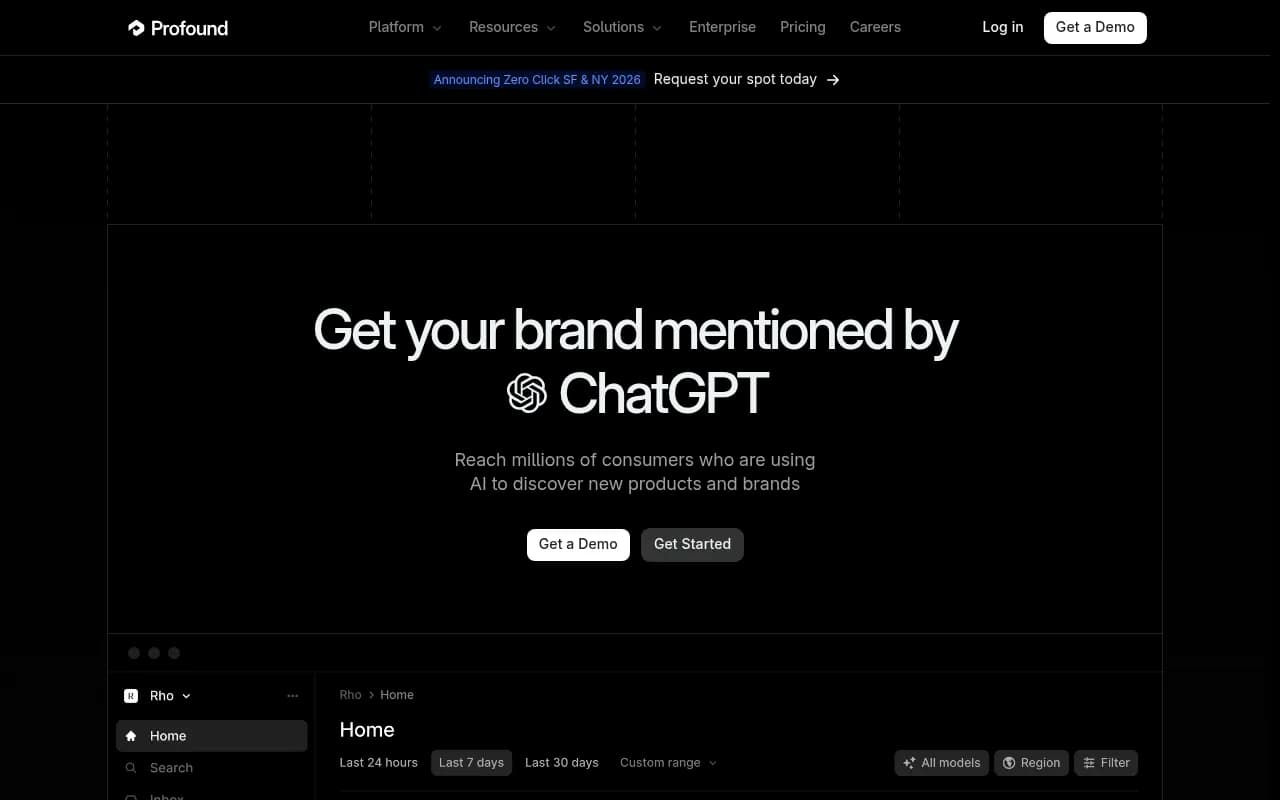
The entity-level analysis is particularly strong -- you can see how AI models understand your brand's relationships, categories, and attributes, which matters a lot for how you get cited. The pricing reflects the enterprise focus, so it's not the right fit for smaller teams.
Good for: enterprise brands, AIO-focused SEO teams, organizations with dedicated AI search budgets.
AthenaHQ -- best for multi-engine competitive analysis
AthenaHQ covers Google AIO, Perplexity, ChatGPT, and Claude, with a focus on competitive benchmarking. The competitor heatmaps are useful -- you can see which brands are winning for specific prompts and understand the gap you're trying to close.
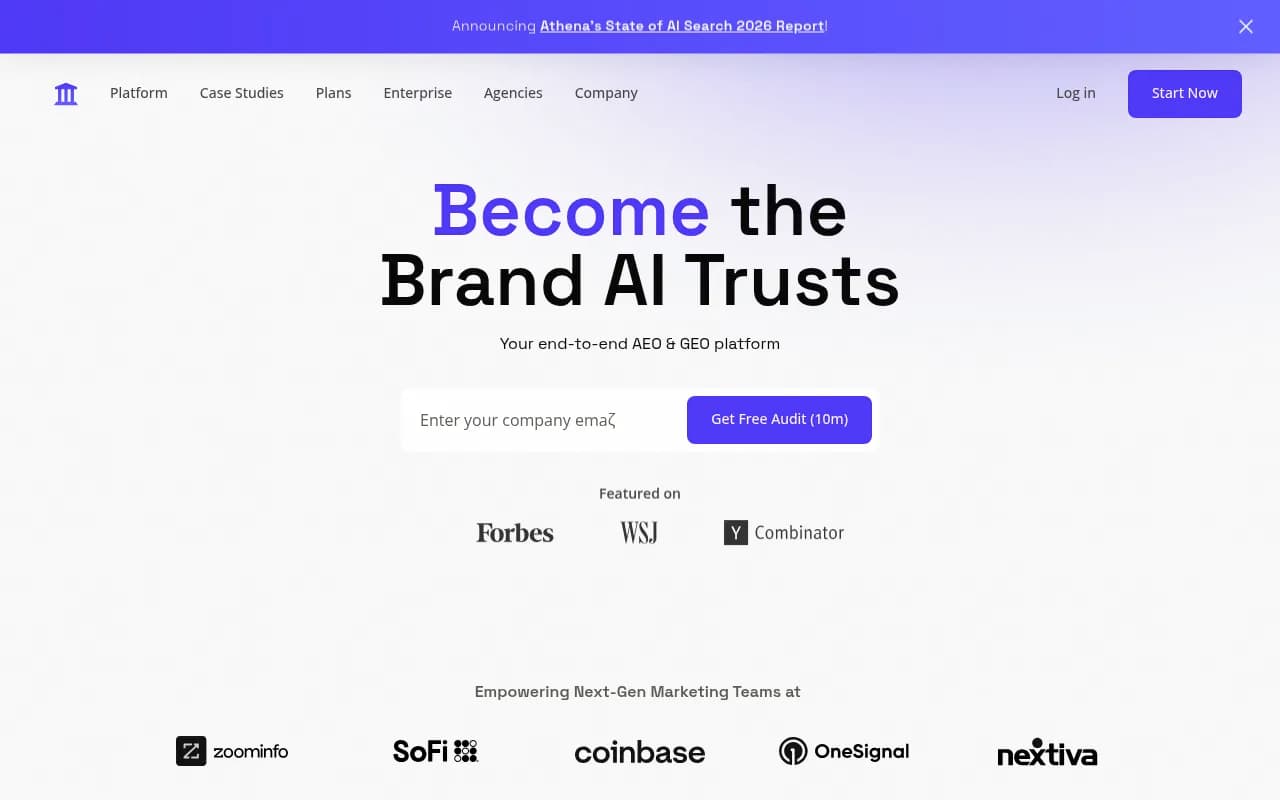
It's a monitoring and analysis tool. Like most competitors in this space, it doesn't help you create content or fix the gaps it identifies. But the competitive intelligence layer is solid, and it's a reasonable choice for teams that have a separate content production workflow.
Starts at $295/month, which puts it in the mid-to-upper tier.
SE Visible -- best for marketing leaders who need strategic context
SE Visible (part of SE Ranking) is positioned toward CMOs and marketing leaders rather than technical SEO practitioners. It combines AI visibility tracking with sentiment analysis and competitor benchmarking in a way that's designed to inform strategy rather than just report numbers.
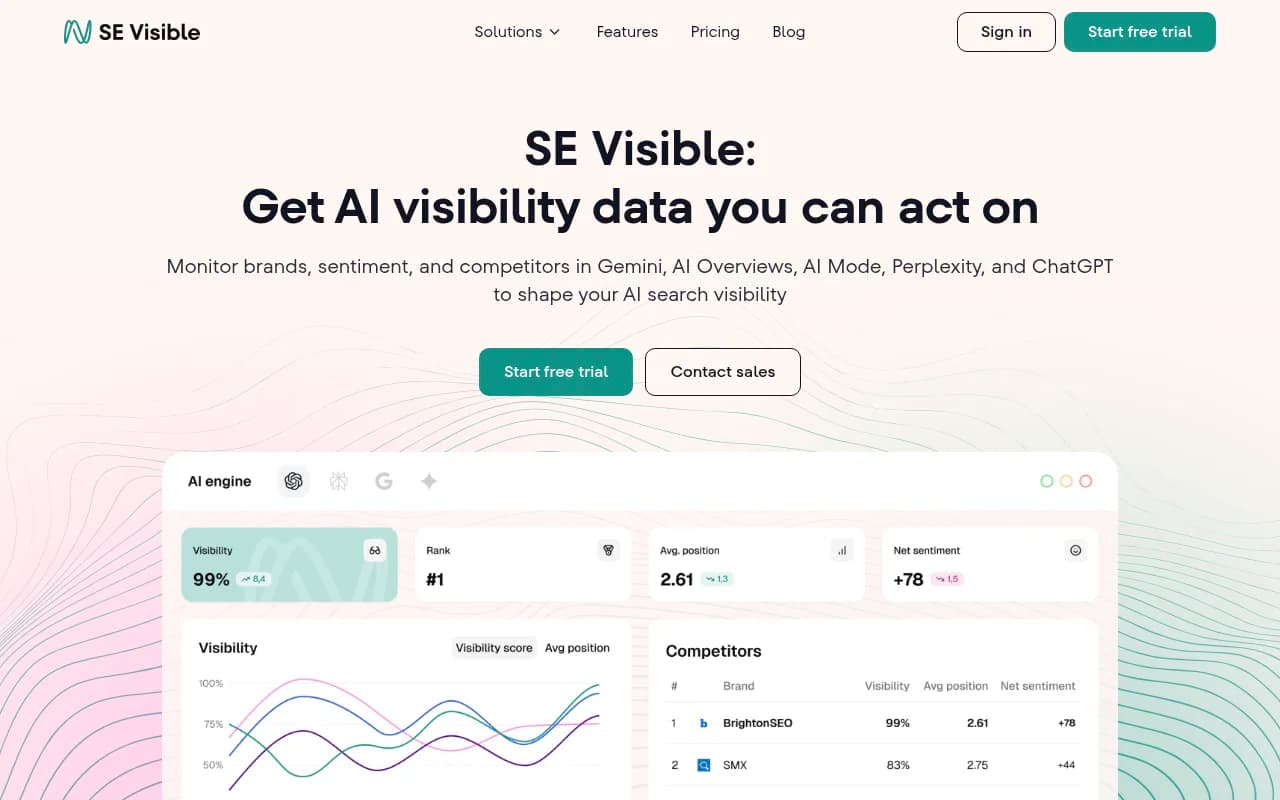
The strategic framing is useful if you're presenting AI visibility data to leadership or making budget decisions. It's less useful if you need granular prompt-level data or technical crawler insights.
Starting price is around $189/month.
Writesonic -- best for GEO-focused content teams
Writesonic has evolved from a general AI writing tool into a more focused GEO platform. It tracks AI visibility across ChatGPT, Google AI Mode, Gemini, Perplexity, and Claude, and combines that monitoring with content optimization workflows.
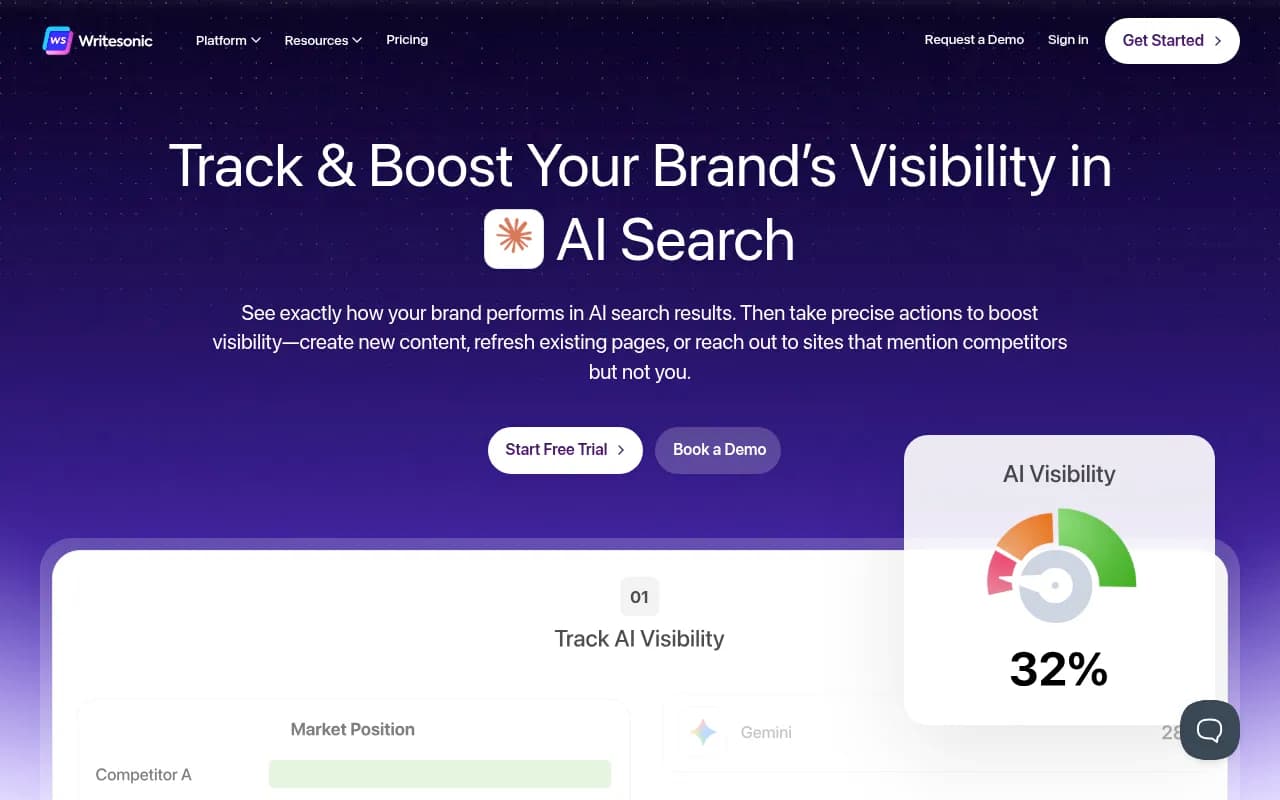
The content angle is the differentiator here. If your team is already using Writesonic for content production, the AI visibility layer integrates reasonably well. It's not as deep as Promptwatch on the data side -- no crawler logs, no Reddit tracking, no ChatGPT Shopping -- but it's a solid option for content-first teams.
Airefs -- best budget option
Airefs is one of the more affordable AI search monitoring tools available. It covers the core LLMs and gives you brand mention tracking without a large monthly commitment.
The feature set is basic by design. You're not getting content generation, deep competitor analysis, or crawler data. But for freelancers, small businesses, or teams that just want a sanity check on their AI visibility without a significant budget, it's a reasonable starting point.
Peec AI -- best for multi-language enterprise monitoring
Peec AI gained traction in 2025 as one of the first platforms to offer serious multi-LLM coverage. In 2026, it's still a strong option for enterprises that need multi-language monitoring and broad engine coverage.

The main limitations that have driven teams to look for alternatives: cost scales up quickly for large prompt sets, and the platform is primarily a monitoring tool. Teams that need to act on the data -- not just collect it -- tend to outgrow it.
Ranksmith -- best for actionable AI search insights
Ranksmith focuses on turning AI search data into specific, actionable recommendations. It's lighter than the enterprise platforms but more opinionated than pure monitoring tools.
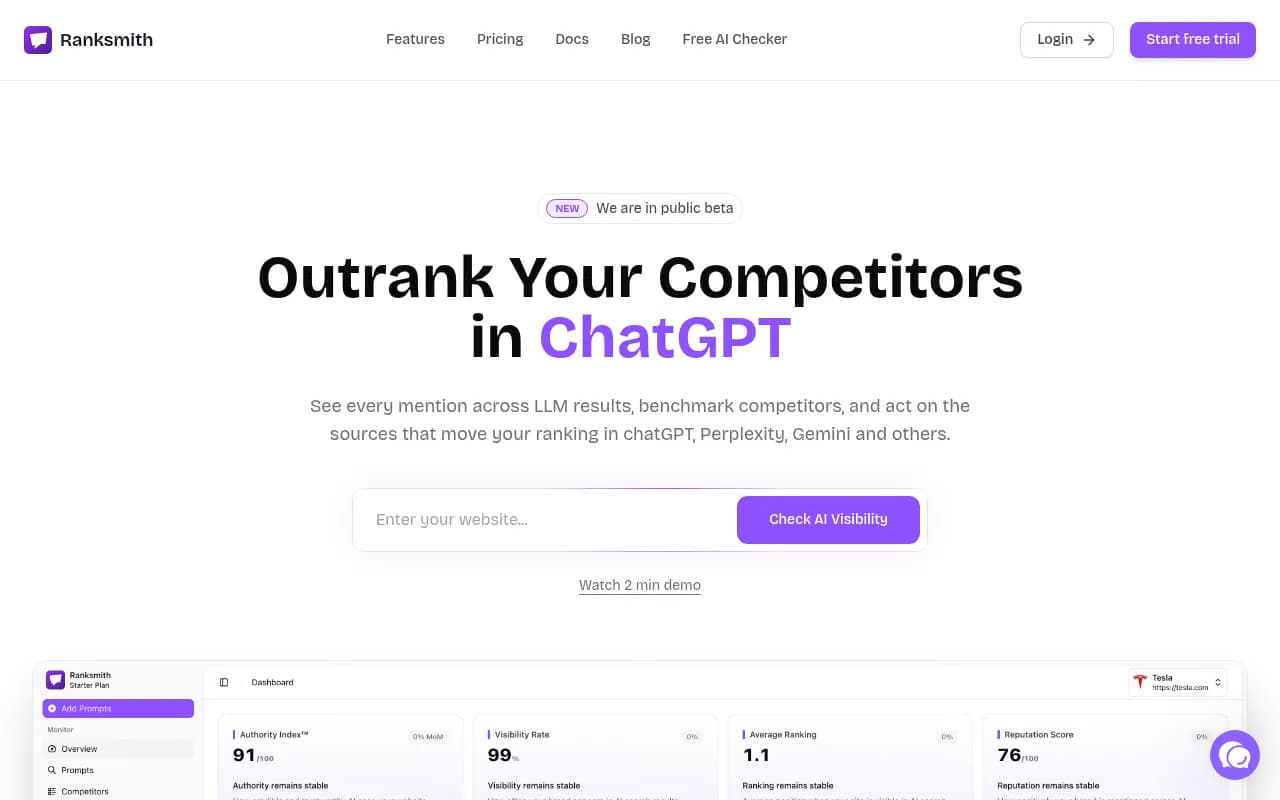
If you want a tool that tells you what to do next rather than just showing you a dashboard, Ranksmith is worth evaluating. It won't replace a full optimization platform, but it's a step up from passive monitoring.
ZipTie -- best for deep AI search analysis
ZipTie is built around detailed analysis of AI search responses -- understanding not just whether you're cited but the structure and context of those citations.
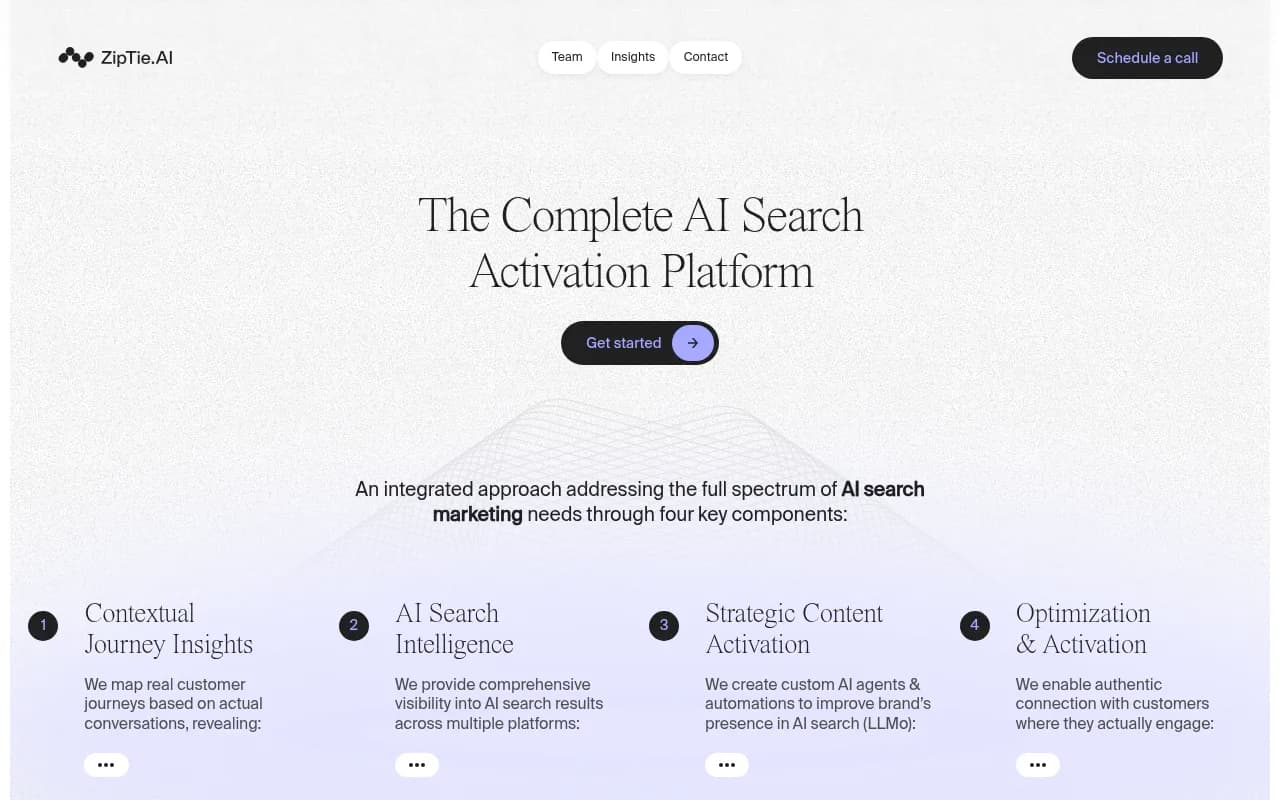
It's a more technical tool, suited to teams that want to dig into the mechanics of how AI models are constructing answers and where your content fits (or doesn't). Less suited to teams that need a quick dashboard or content generation capabilities.
Comparison table
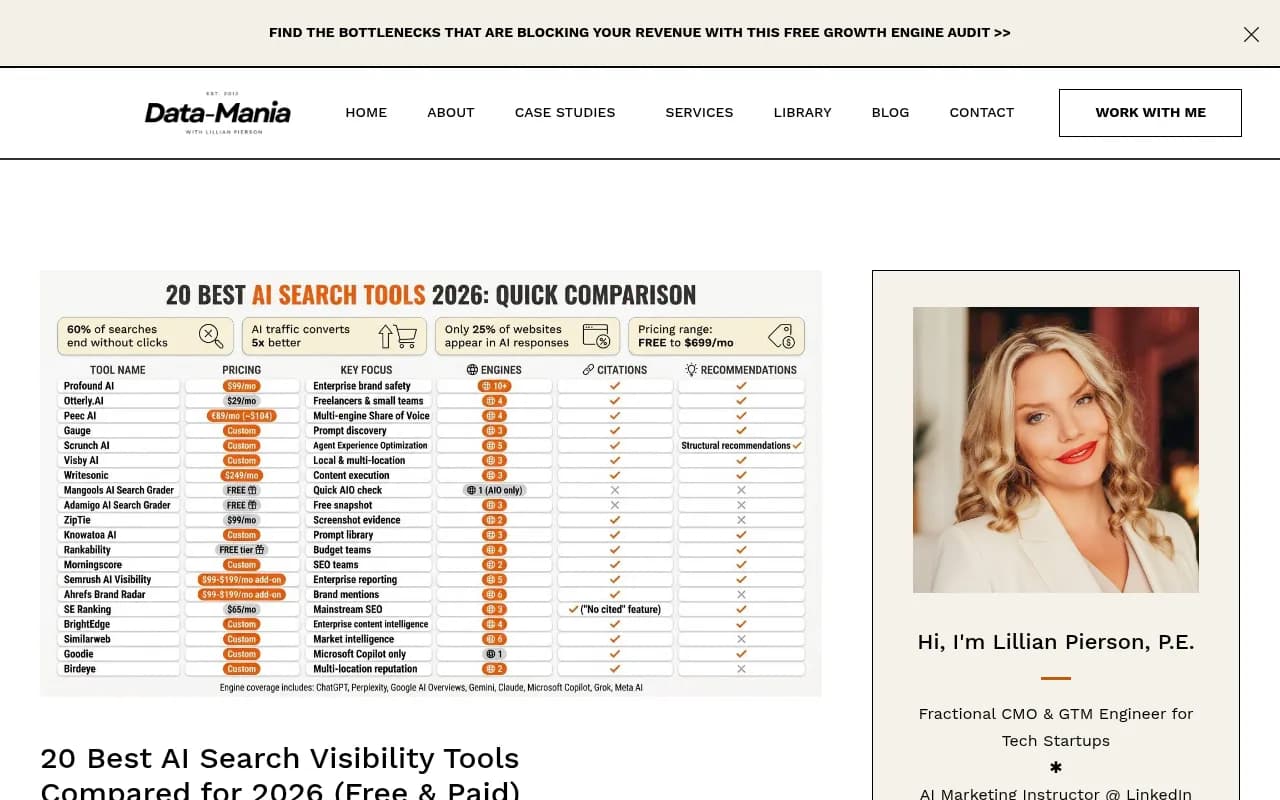
| Tool | AI models covered | Content generation | Crawler logs | Reddit/YouTube tracking | Starting price |
|---|---|---|---|---|---|
| Promptwatch | 10 | Yes | Yes | Yes | $99/mo |
| Otterly.AI | 6 | No | No | No | Lower tier |
| Scrunch AI | Multiple | No | No | No | Mid tier |
| Profound AI | Multiple | No | No | No | $99/mo |
| AthenaHQ | 4 | No | No | No | $295/mo |
| SE Visible | Multiple | No | No | No | $189/mo |
| Writesonic | 5 | Yes (content) | No | No | $199/mo |
| Airefs | Core LLMs | No | No | No | Low |
| Peec AI | Multiple | No | No | No | Enterprise |
| Ranksmith | Multiple | Partial | No | No | Mid tier |
| ZipTie | Multiple | No | No | No | Mid tier |
How to choose
The honest answer is that most teams are underserved by monitoring-only tools. Knowing you're invisible in Perplexity for a set of high-value prompts is useful information -- but only if you can do something with it. Most platforms in this space stop at the data.
If you're just getting started and need basic visibility data without a big budget, Otterly.AI or Airefs will cover the fundamentals. If you're at a larger brand and need enterprise-grade tracking with entity analysis, Profound AI is worth evaluating.
But if you want a platform that actually helps you improve your AI search visibility -- not just measure it -- Promptwatch is the only tool in 2026 that closes the full loop from gap identification to content creation to results tracking. The crawler logs alone are something most competitors don't offer at all, and the combination of prompt intelligence, citation data, and built-in content generation is genuinely different from what the monitoring-only tools provide.
The AI search landscape is moving fast. Brands that are only tracking their visibility right now will find themselves behind the ones that are actively optimizing for it.
Frequently asked questions
What does Peasy actually do?
Peasy tracks how your brand appears in AI search results in real time. It monitors citation frequency and brand mentions across AI models, giving you a live view of your AI search performance.
Why would someone switch from Peasy?
The most common reasons: limited model coverage, no content optimization features, no crawler logs, and no way to act on the data the platform surfaces. Teams that want to improve their AI visibility -- not just measure it -- tend to need more than Peasy offers.
Is there a free alternative to Peasy?
Airefs has a lower price point and covers the basics. Some tools like Mangools also offer free-tier AI search graders for initial diagnostics, though they're not full monitoring platforms.
What's the difference between monitoring and optimization?
Monitoring tells you where you stand. Optimization helps you change it. Most tools in this space are monitoring tools. Promptwatch is one of the few that combines both -- it identifies gaps and then helps you create content to fill them, with tracking to confirm the results.