Key takeaways
- Event management software (Cvent, Whova, OnePlan) is not GEO software. It runs your events. GEO tools show whether AI engines recommend your venue or company when planners ask.
- ChatGPT cites pages that describe what you sell. In Promptwatch Data for Sep 28 to Oct 4, 2026, product pages (22.4%) and landing pages (16.8%) together earned about 39% of citations. For a venue, that means capacity, pricing and FAQ pages.
- Pick a tool by the job: monitoring only, monitoring plus content fixes, or local listings and reviews for multi-venue groups.
- Listings and reviews matter as much as your own site. Travel citations in ChatGPT skew toward booking, review and guide sites.
- Start with a free visibility check before paying for anything.
Why event companies and venues need GEO now
A planner used to search "wedding venues near Austin" and click through ten blue links. Now many of them ask ChatGPT, Gemini or Google AI Mode for "three venues in Austin for 150 guests under $15,000" and read one answer. If your venue is not named in that answer, you never see the lead. You also never see the lost lead in analytics, which is the annoying part.
Event businesses are a good fit for this shift and a hard one. Good fit, because the questions are specific and answerable: capacity, catering rules, accessibility, parking, price ranges. Hard, because the facts that answer them are often buried in PDFs, gated behind "request a quote" forms, or scattered across WeddingWire, The Knot, Tripadvisor, Eventbrite and Google Business Profile.
GEO (generative engine optimization) is the practice of getting named and cited in those answers. The tools in this guide track that, explain it, or help you fix it.
Do not confuse event software with GEO tools
Most "best tools for events in 2026" articles are about event management platforms. Cvent's list of AI tools covers venue sourcing and session content. OnePlan, Whova and Social Tables handle floor plans, registration and attendee apps. Useful, but they do nothing for whether AI recommends you.
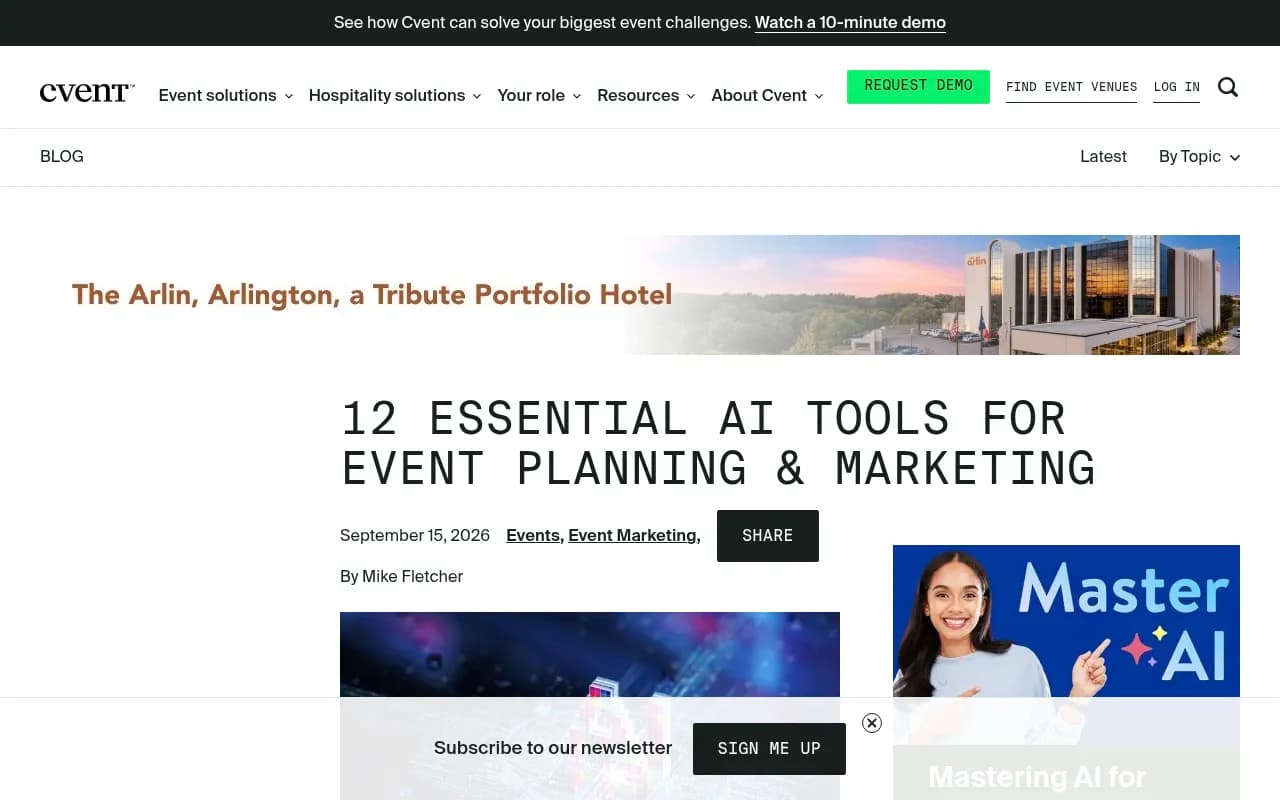
Keep both stacks. Just budget for them separately.
What the data says about how AI picks event sources
I could not find event-specific citation research, so here is the closest evidence, with the inference labelled.
Promptwatch Data on ChatGPT content types (Sep 28 to Oct 4, 2026) found product pages at 22.4% of citations, landing pages at 16.8%, listicles at 13.6%, how-tos at 8.7% and FAQ pages at 3.3%. For commercial prompts, where someone compares options, product and landing pages rose to 26.0% and 20.6%. For branded prompts (someone names your venue), reviews hit 5.6%, more than three times their overall share. My read: your venue and service pages with capacity, pricing and FAQs are the main citation surface, and reviews decide what AI says once someone already knows your name.
The travel citation report for the same week is the nearest industry proxy. Skyscanner (0.78%), Going (0.52%) and Tripadvisor (0.49%) led, with Reddit at 0.27%. Booking and search sites earned 2.42% of the 4.18% captured by the listed domains. Venues should therefore check their listings on review and marketplace sites, not only their own site.
Two more facts shape the plan:
- Almost half of ChatGPT responses cite 10 or more unique domains, per Promptwatch's unique-domains report. You are competing for one slot among many, so being on several trusted sources helps.
- Social is a weak lever in ChatGPT. Social media citations by AI model shows ChatGPT drew just 0.46% of citations from social platforms that week, while Google AI Overviews drew 12.2%. Instagram-heavy venues should care about AI Overviews more than ChatGPT. See also the Reddit decline in ChatGPT, where reddit.com fell from about 4% to 0.5% of citations on August 14, 2026.
News-style pages also decay fast. The content half-life report shows news losing half its cited pages within 36 days, while landing pages and docs last far longer. A seasonal blog post is a weak bet. An evergreen venue page is a strong one.
What to look for in a GEO tool for events
A short checklist, in rough order of importance:
- Real AI interface tracking, ideally by location. Event searches are local. "Near me" answers change by city.
- Citation data. Knowing you were not mentioned is less useful than knowing which pages and directories AI used instead.
- Crawler visibility. If AI bots cannot read your venue pages (PDF brochures, JavaScript galleries, quote forms), nothing else matters.
- A path to action: content gaps, drafts, publishing.
- Review and listing coverage for multi-venue groups.
- Pricing that fits. A single venue does not need an enterprise contract.
Best GEO tools for event companies and venues
Promptwatch: monitoring plus fixing
Promptwatch is the option I would put first for event companies that want more than a score. It tracks ChatGPT, Gemini, Perplexity, Google AI Overviews, AI Mode, Copilot and others from the real interfaces, then traces which of your pages (and which third-party pages) get cited. For venues, the local GEO targeting is the standout: you can pin a monitor to exact coordinates so ChatGPT and Google's AI surfaces answer as if asked from your neighborhood. That feature is on the Business plan and above.

The action side matters for small teams. Content gap analysis shows which planner questions AI answers without you, the Content Agent can draft and publish pages to WordPress, Webflow or Framer, and IP-verified AI crawler logs show whether bots can read your site at all. Plans run from Essential at $95/month (50 prompts, no crawler logs) to Business at $579/month (local targeting, Content Agent). Confirm current pricing at promptwatch.com/pricing. Agencies serving venue clients should look at the agency plans, which start at $199/month. Start with the 7-day free trial or the free AI visibility report.
Birdeye, Yext, Uberall and Synup: listings and reviews
GEO for a venue is partly a listings problem. If your capacity, address or hours differ between Google, The Knot and Tripadvisor, AI repeats the wrong version. Multi-location tools fix that at scale.
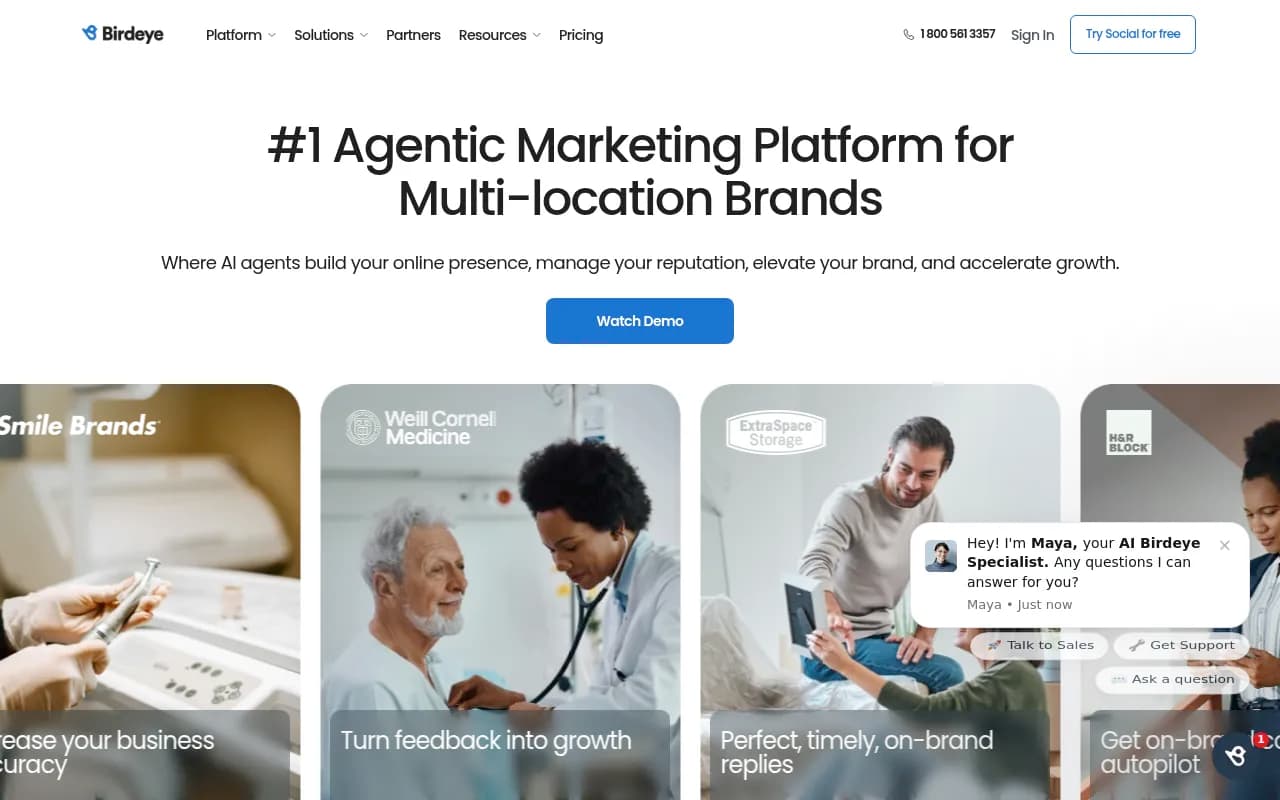
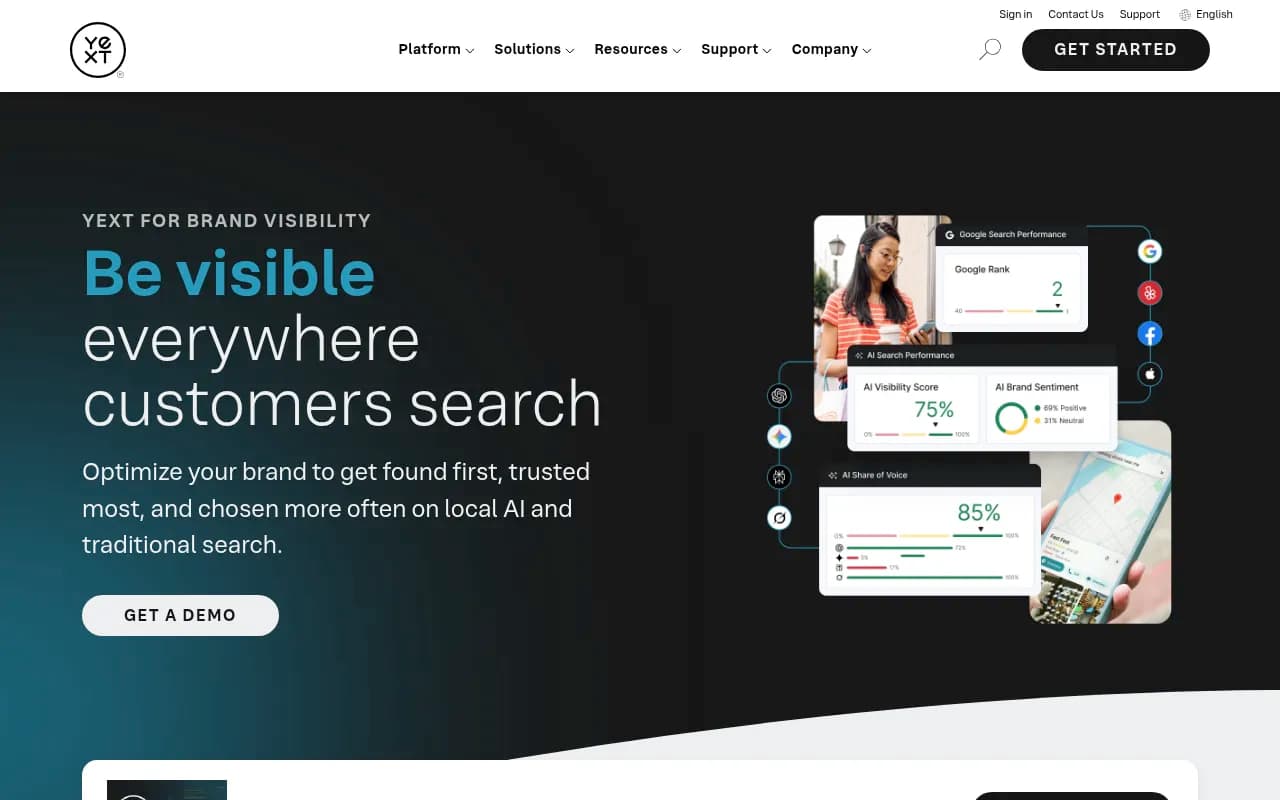
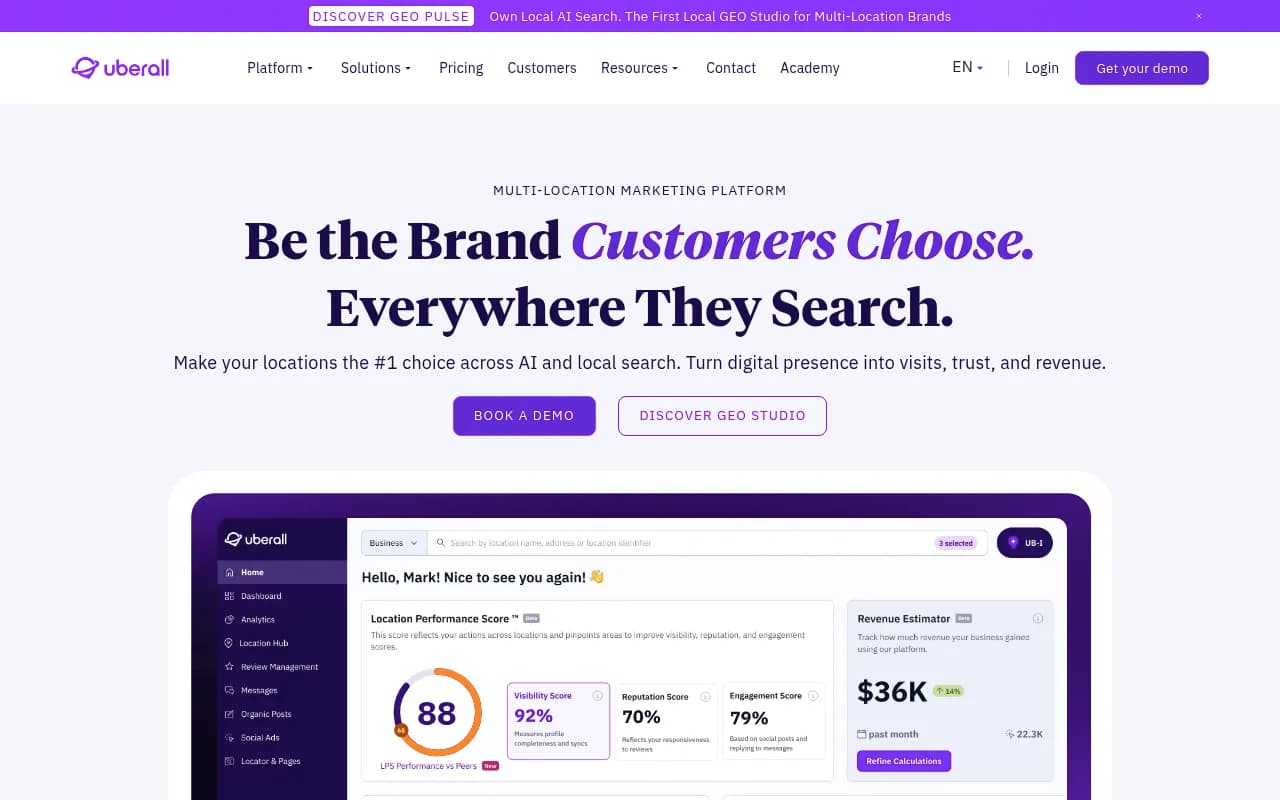
These are not GEO trackers. Pair one with a monitoring tool if you run several venues. For one or two locations, Moz Local or BrightLocal is usually enough.
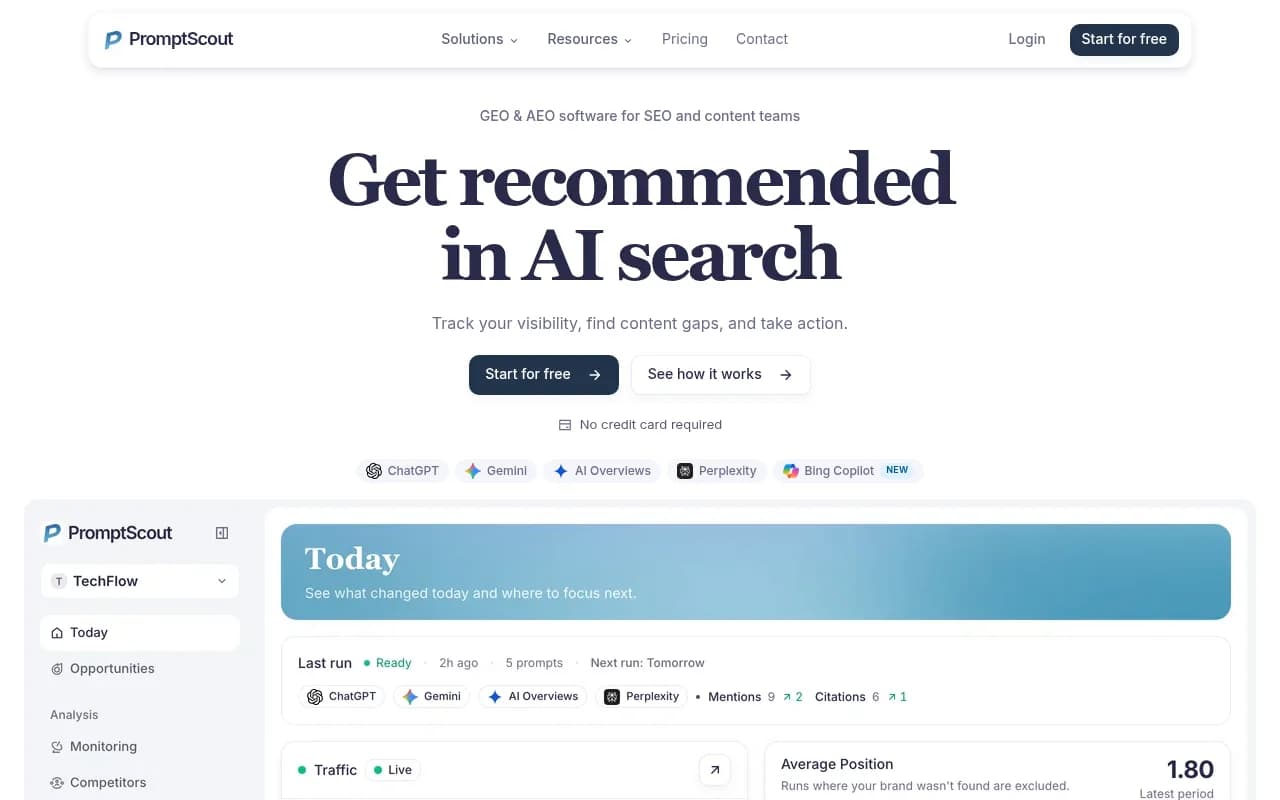
Otterly.AI, Peec AI and PromptScout: budget monitoring
If you only want to know whether you are mentioned, lighter trackers work. They typically lack crawler logs, visitor analytics and content creation, so you will fix problems by hand.


Profound and Scrunch: enterprise monitoring
For hotel groups and large venue operators with procurement teams, Profound and Scrunch are the usual names. Both are strong at monitoring, but cost more. See Promptwatch vs Profound and Promptwatch vs Scrunch for a straight comparison.


Semrush and Ahrefs Brand Radar: if you already pay for them
Both bolt AI tracking onto an SEO suite. Fixed prompt sets and thinner AI-specific data are the trade-off. Fine as a supplement, weaker as your main GEO source.

Free checkers for a first look
Before buying, run one of the free options: Prismic's free GEO audit, HubSpot AI Search Grader, or Promptwatch's Agentic Readiness Check to see which AI crawlers can read your site.
A word on catering-focused roundups
One popular article ranks eight "SEO and GEO tools for catering companies" and puts its own product first, with no pricing or data. Treat vendor-written rankings like that as marketing. I have not tested Frizerly, so I will not rank it either way.
Comparison table
| Tool | Best for | Tracks AI answers | Helps fix gaps | Local or listings |
|---|---|---|---|---|
| Promptwatch | Venues and event firms wanting monitoring plus action | Yes, real interfaces | Content Agent, Action Board, crawler logs | Exact-coordinate targeting (Business+) |
| Birdeye | Multi-venue reputation | Limited | Review workflows | Strong |
| Yext / Uberall / Synup | Listings accuracy at scale | Limited | Listing sync | Strong |
| Otterly.AI / Peec AI | Cheap mention tracking | Yes | No | Basic |
| Profound / Scrunch | Enterprise hotel and venue groups | Yes | Limited | Varies |
| Semrush / Ahrefs | Teams already on the suite | Fixed prompt sets | Partial | No |
What to fix first on a venue or event site
Tooling only helps if the pages are citable. A practical order:
- Make every space its own page with capacity by layout (banquet, theater, cocktail), starting price or price range, and what is included. Product and landing pages are what ChatGPT cites most.
- Add an FAQ block to each. Parking, accessibility, outside catering, noise curfews, deposit terms. These are the exact questions planners type.
- Move brochures out of PDFs and into HTML. Crawlers read HTML reliably.
- Check robots.txt. Use the robots.txt generator for AI and the AI crawler URL inspector to confirm AI bots are not blocked.
- Clean up listings on Google Business Profile, Tripadvisor, The Knot, WeddingWire, Eventbrite and local guide sites. Same capacity, same address, same photos.
- Collect reviews where your category lives. Branded prompts lean on reviews.
- Refresh seasonal content on a schedule, since news-style pages fade quickly.
AI Overviews cites about 10 sources per answer and ChatGPT about 5 on web-search responses, per Promptwatch's sources-per-response data, so mid-sized venues have an easier time breaking into Google's surfaces than into a handful of ChatGPT slots.
Which tool for which situation
- Single venue, small budget: free checkers first, then Essential-level tracking, and spend the rest of your time on page fixes.
- Event planning agency or production company: a monitoring and content tool such as Promptwatch, so the pages that win planner searches actually get written.
- Venue group with 10+ locations: a listings platform (Yext, Uberall, Birdeye) plus a GEO tracker with local targeting.
- Agency serving venues: an agency plan with unlimited projects and client reporting.
For more options, browse the GEO software directory at bestgeosoftware.com.
Measuring whether it works
Track three things monthly: share of AI answers that name you for your top 20 planner questions, which of your pages are cited, and AI-referred visits and inquiries. Then compare against two or three direct competitors in your city. If mentions rise but inquiries do not, your pages are cited but not converting. That is a page problem, not a GEO problem.
If you would rather hand this off, 1001 SEO Media runs GEO programs for brands and uses Promptwatch for the tracking side.