Key takeaways
- Most AI visibility platforms stop at monitoring -- they show you data but leave you to figure out what to do with it. Only a few help you close the loop from insight to content to results.
- Promptwatch is the only platform in this comparison rated as a "Leader" across all evaluation categories, largely because it combines tracking with built-in content generation and gap analysis.
- Profound is the strongest pure monitoring alternative for enterprise teams that already have content resources and just need reliable data.
- BrightEdge suits organizations already invested in enterprise SEO that want AI visibility layered on top of existing workflows.
- Evertune is worth evaluating if your brand needs deep narrative and sentiment analysis alongside visibility tracking, particularly at Fortune 500 scale.
The question used to be simple: are you ranking on page one? Now it's more complicated. When someone asks ChatGPT "what's the best project management software for remote teams," does your product get mentioned? When Perplexity answers a question about your category, does it cite your site or a competitor's? When Google's AI Overview summarizes the options in your space, are you in the summary?
These aren't hypothetical concerns. AI search is already shaping purchase decisions at scale, and the brands that figure out how to appear in those answers early will have a structural advantage that compounds over time.
That's what AI visibility platforms are for. But not all of them are built the same way. Some are monitoring dashboards that show you where you stand. Others go further and help you actually improve. This guide covers four of the most-discussed enterprise options in 2026, what they're genuinely good at, and where each one falls short.
What to look for in an enterprise AI visibility platform
Before getting into the tools, it's worth being clear about what actually matters at the enterprise level. A lot of platforms look similar on a feature comparison table but diverge significantly in practice.
The things that separate good platforms from great ones:
- Coverage: How many AI models does it track? ChatGPT and Perplexity are obvious, but what about Claude, Gemini, Grok, DeepSeek, Copilot, and Google AI Overviews? Enterprise brands need broad coverage, not just the top two.
- Prompt depth: Can you track hundreds of prompts, or are you capped at a handful? And do you get volume and difficulty data to prioritize which prompts actually matter?
- Content gap analysis: Does the platform show you what content you're missing, or just where you're invisible?
- Content generation: Can it help you create content that's likely to get cited, or do you have to take the data elsewhere?
- Traffic attribution: Can you connect AI visibility to actual website traffic and revenue? This is where most platforms fail.
- Crawler logs: Do you get visibility into which AI crawlers are hitting your site, how often, and which pages they're reading?
- Multi-region and multi-language: Enterprise brands operate globally. Does the platform support that?
With those criteria in mind, here's how the four platforms stack up.
Platform-by-platform breakdown
Promptwatch
Promptwatch is a Dutch-built platform used by 6,700+ brands and agencies, including Booking.com and Center Parcs. It monitors 10 AI models: ChatGPT, Perplexity, Claude, Gemini, Grok, DeepSeek, Copilot, Mistral, Meta AI, and Google AI Overviews.
What makes it different from most tools in this space is that it's built around a full action loop rather than just a monitoring dashboard. The workflow goes like this: you identify which prompts competitors are visible for but you're not (Answer Gap Analysis), you generate content designed to get cited using the built-in AI writing agent, and then you track whether your visibility scores actually improve. Page-level tracking shows which specific pages are being cited by which models.
The traffic attribution piece is more developed than most competitors offer. You can connect AI visibility to actual traffic through a code snippet, Google Search Console integration, or server log analysis. That matters for enterprise teams who need to justify the investment.
A few features worth calling out specifically:
- AI Crawler Logs give you real-time visibility into which AI bots are crawling your site, which pages they're reading, and any errors they're hitting. Most platforms don't offer this at all.
- Prompt Intelligence includes volume estimates and difficulty scores, plus query fan-outs that show how a single prompt branches into related sub-queries. This helps prioritize where to focus.
- Reddit and YouTube tracking surfaces discussions that directly influence AI recommendations -- a channel most platforms ignore entirely.
- ChatGPT Shopping tracking monitors when your brand appears in product recommendation carousels.
Pricing runs from $99/month (Essential: 1 site, 50 prompts, 5 articles) to $579/month (Business: 5 sites, 350 prompts, 30 articles). Agency and enterprise pricing is custom. A free trial is available.

The honest limitation: if you're a very large enterprise with highly custom reporting needs, you'll likely end up on a custom plan, and the self-serve tiers may feel constrained for teams tracking hundreds of brands or thousands of prompts.
Profound
Profound is one of the more established dedicated AI visibility platforms, founded in 2024 and built specifically for enterprise-grade monitoring. It tracks visibility across ChatGPT, Google AI Mode, Google AI Overviews, Google Gemini, and Microsoft Copilot, with executive dashboards designed for reporting up the chain.
The platform's strength is in the depth and reliability of its monitoring data. Enterprise teams that need to present AI visibility metrics to leadership tend to find Profound's dashboards clean and credible. The prompt coverage is broad, and the platform handles multi-model comparison reasonably well.
Where Profound falls short is in the action layer. It's primarily a monitoring platform. It shows you where you stand and how you compare to competitors, but it doesn't have the content generation capabilities or the gap analysis workflow that Promptwatch offers. Teams using Profound still need to take that data elsewhere to actually do something about it.
Pricing starts at $99/month for basic plans, with enterprise tiers available. The company has 11-50 employees, which means support and product development are more limited than larger platforms.
BrightEdge
BrightEdge is one of the oldest names in enterprise SEO, and it has been adding AI visibility features to its existing platform. For organizations already using BrightEdge for traditional SEO, the AI visibility layer is a natural extension.
The platform's main advantage is integration. If your team is already running keyword tracking, content optimization, and SEO reporting through BrightEdge, adding AI visibility monitoring to the same workflow has obvious operational appeal. The reporting infrastructure is mature, and enterprise procurement teams are familiar with the vendor.
The trade-off is that BrightEdge's AI visibility features feel like additions to an SEO platform rather than a purpose-built solution. The depth of AI model coverage, prompt intelligence, and gap analysis doesn't match what dedicated GEO platforms offer. It also lacks crawler logs, Reddit/YouTube tracking, and the content generation capabilities that newer platforms have built from scratch.
BrightEdge is best suited for enterprise organizations where SEO and AI visibility need to live in the same platform for operational reasons, and where the team doesn't need the most advanced GEO capabilities available.
Evertune
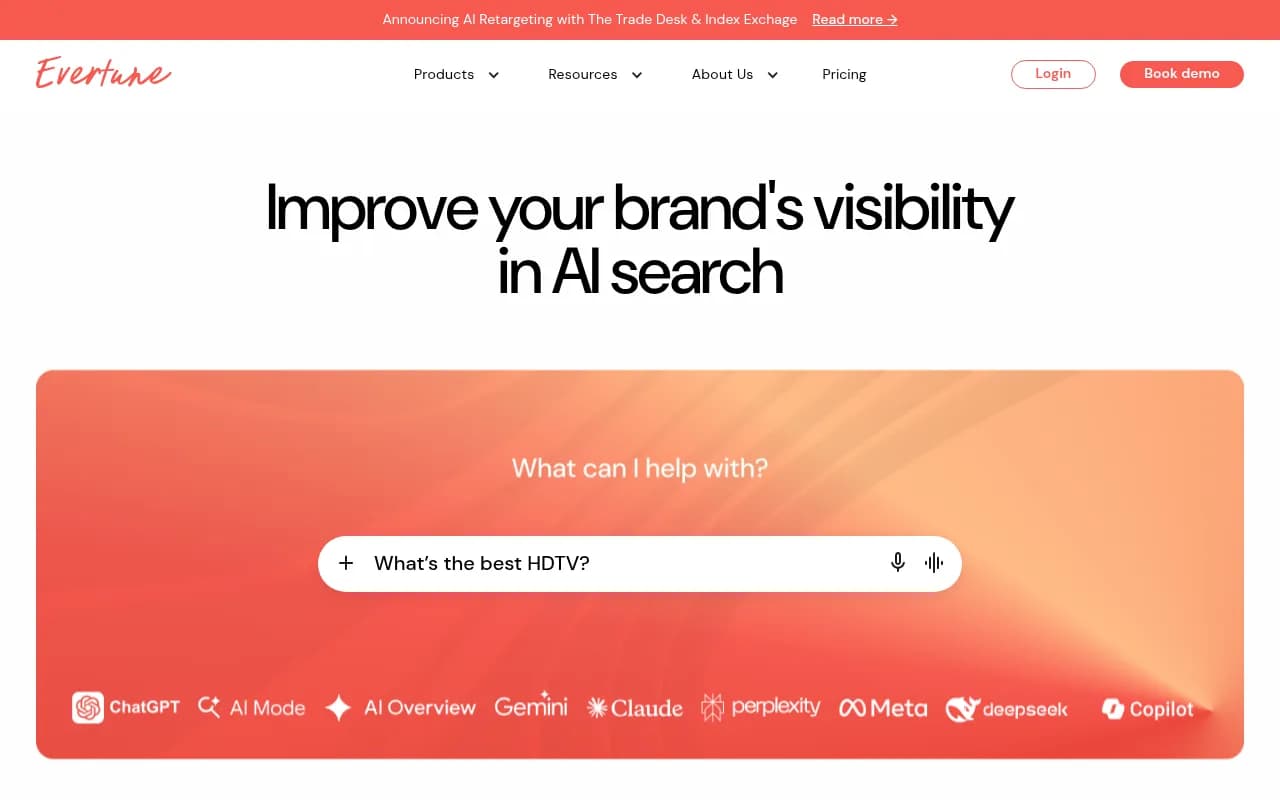
Evertune is a New York-based platform founded by early team members of The Trade Desk, with $19M in funding from adtech and martech investors. It positions itself as an end-to-end GEO platform and analyzes over 1 million AI responses monthly per brand.
The platform's differentiation is in narrative and sentiment analysis. Evertune goes deeper than most tools on understanding how AI models are portraying your brand, not just whether they mention you. For brands where perception and messaging consistency matter as much as raw visibility (think consumer brands, financial services, healthcare), that's a meaningful capability.
Evertune also has strong enterprise credentials and is used by Fortune 500 brands. The platform handles large-scale monitoring well and has the infrastructure for complex, multi-brand deployments.
The gap is similar to Profound: Evertune is strong on the monitoring and analysis side but lighter on the content optimization and generation side. The platform tells you what's happening and why, but the path from insight to action requires more manual work than Promptwatch's integrated workflow.
Side-by-side comparison
| Feature | Promptwatch | Profound | BrightEdge | Evertune |
|---|---|---|---|---|
| AI models tracked | 10 | 5 | ~4-5 | Multiple |
| Content gap analysis | Yes | Limited | No | Limited |
| Built-in content generation | Yes | No | No | No |
| AI crawler logs | Yes | No | No | No |
| Traffic attribution | Yes (3 methods) | No | Partial (SEO-focused) | No |
| Reddit/YouTube tracking | Yes | No | No | No |
| ChatGPT Shopping tracking | Yes | No | No | No |
| Prompt volume + difficulty | Yes | No | No | No |
| Multi-language/region | Yes | Partial | Yes | Yes |
| Sentiment/narrative analysis | Basic | Basic | No | Strong |
| Entry-level pricing | $99/mo | $99/mo | Enterprise only | Enterprise only |
| Free trial | Yes | Yes | No | No |
| Best for | Full GEO action loop | Enterprise monitoring | Existing BrightEdge users | Fortune 500 narrative tracking |
How these platforms handle the "so what" problem
The most common complaint I hear from marketing teams using AI visibility tools is that they get a dashboard full of data and then... nothing. They can see they're invisible for certain prompts. They can see competitors are getting cited. But the platform doesn't tell them what to do about it.
This is the core problem with monitoring-only tools. Data without a path to action is just anxiety with better charts.
Promptwatch is the most explicit about solving this. The Answer Gap Analysis doesn't just show you where you're missing -- it shows you the specific content your site is lacking, the topics AI models want to answer but can't find on your pages. The built-in writing agent then generates articles, listicles, and comparisons grounded in citation data from 880M+ analyzed citations. You can see which content formats and angles actually get cited by ChatGPT or Perplexity, then create content that matches those patterns.
Profound and Evertune are better positioned as intelligence platforms. They give you the data to make decisions, but the execution happens outside the tool. That's a valid model if your team has the content resources to act on the insights independently. For teams without that capacity, or teams that want to close the loop faster, it's a meaningful gap.
BrightEdge sits somewhere in between -- it has content optimization features from its SEO heritage, but they're not specifically designed for AI citation optimization.
Which platform is right for your team?
The honest answer depends on what you actually need.
If you want a complete workflow from visibility tracking to content creation to traffic attribution, Promptwatch is the strongest option. It's the only platform here that handles all three stages, and the pricing is accessible enough that you don't need an enterprise contract to get started.
If your primary need is reliable monitoring data for executive reporting, and you have a content team that can act on insights independently, Profound is a solid choice. The dashboards are clean, the data is credible, and the pricing is reasonable.
If your organization is already running BrightEdge for SEO and you need AI visibility to live in the same platform for operational reasons, the BrightEdge AI features are a reasonable extension. Just don't expect the same depth as a dedicated GEO platform.
If you're a large consumer brand or Fortune 500 company where brand narrative and sentiment analysis matter as much as raw visibility, Evertune's depth on the perception side is worth evaluating. The trade-off is that you'll need to invest more in the content execution side separately.
The broader context
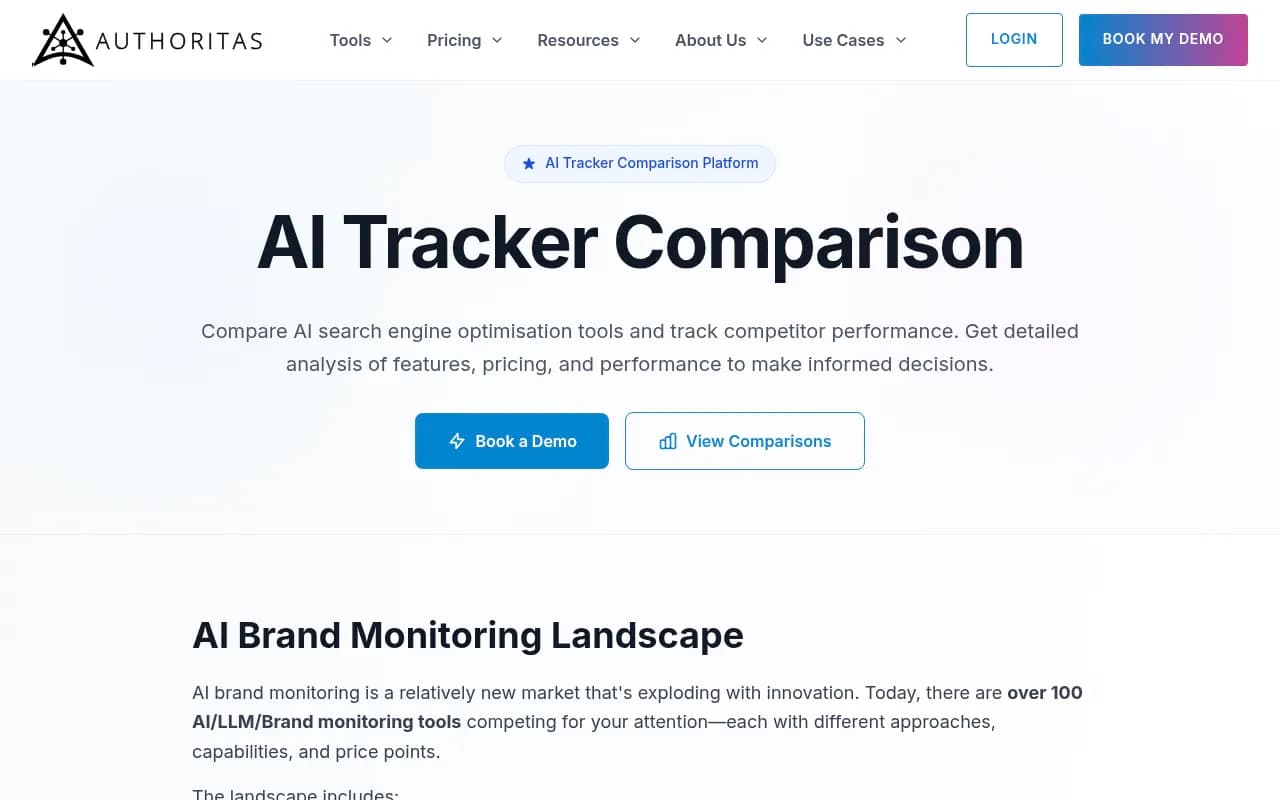
It's worth noting that this is a fast-moving space. The Authoritas AI Tracker comparison database lists over 100 tools competing in this category, and new platforms are launching regularly. The platforms reviewed here are among the most discussed and most feature-complete options available in 2026, but the landscape will keep shifting.
What won't change is the underlying dynamic: AI search is already influencing how customers discover brands, and that influence is growing. The brands that invest in understanding and optimizing their AI visibility now will have a compounding advantage over those that wait until it becomes obvious.
The question isn't whether to pay attention to AI visibility. It's which platform gives your team the best chance of actually doing something about it.
For most marketing and SEO teams, that means looking for a platform that goes beyond monitoring -- one that shows you the gaps and helps you fill them. That's a shorter list than the 100+ tools competing for your attention might suggest.