Summary
- AI visibility tools track brand mentions and citations across ChatGPT, Claude, Perplexity, Gemini, and other LLMs -- essential for understanding how AI engines reference your content
- Most platforms only count mentions, not accuracy -- a critical gap that can cost you deals when AI hallucinates wrong pricing, features, or use cases
- Promptwatch leads in actionable optimization with content gap analysis, AI writing agents, and crawler logs that show exactly what's missing and help you fix it

- Pricing ranges from $49/month (monitoring-only tools) to $1,000+/month (enterprise platforms) with most mid-tier options around $99-249/month
- Key decision factors: team size, budget, whether you need just tracking or full optimization workflows, and how many LLMs you want to monitor
Traditional SEO metrics don't tell you how AI engines like ChatGPT, Claude, or Perplexity reference your brand. You can rank #1 on Google and still be invisible in AI-generated answers. Or worse -- you're mentioned, but the information is wrong.
I learned this the hard way. Our SaaS product appeared in ChatGPT responses with completely incorrect pricing. Prospects showed up to demos saying "I saw on ChatGPT your Pro plan is $79/month." Our actual price? $49. When I corrected them, they questioned our credibility. We were losing deals because AI was lying about us.
This wasn't a Google problem. It was an AI visibility problem, and I had no way to detect it.
That's what AI visibility tools solve. They track how your brand appears across LLMs, show where competitors outrank you, and help you close content gaps. The best ones go further -- they detect hallucinations, analyze why AI cites certain sources, and help you optimize content to rank in AI search.
After testing 10 platforms over four months, here's what actually works.
What AI visibility tools actually do
AI visibility platforms run queries on LLMs (ChatGPT, Claude, Perplexity, Gemini, etc.) and track when your brand or URLs appear in responses. They monitor:
- Citation frequency: How often AI models reference your content
- Source attribution: Which of your pages AI engines cite
- Competitor benchmarking: Where rivals appear and you don't
- Sentiment and context: Whether mentions are positive, negative, or neutral
- Prompt coverage: Which user queries trigger your brand mentions
The basic ones stop there. They count mentions and show you dashboards. The advanced ones add:
- Content gap analysis: Specific topics and questions AI wants answers to but can't find on your site
- Hallucination detection: When AI invents facts about your product
- Optimization recommendations: What to change to rank in AI search
- AI crawler logs: Real-time tracking of which LLM bots are reading your pages
- Content generation: AI writing tools that create citation-worthy content
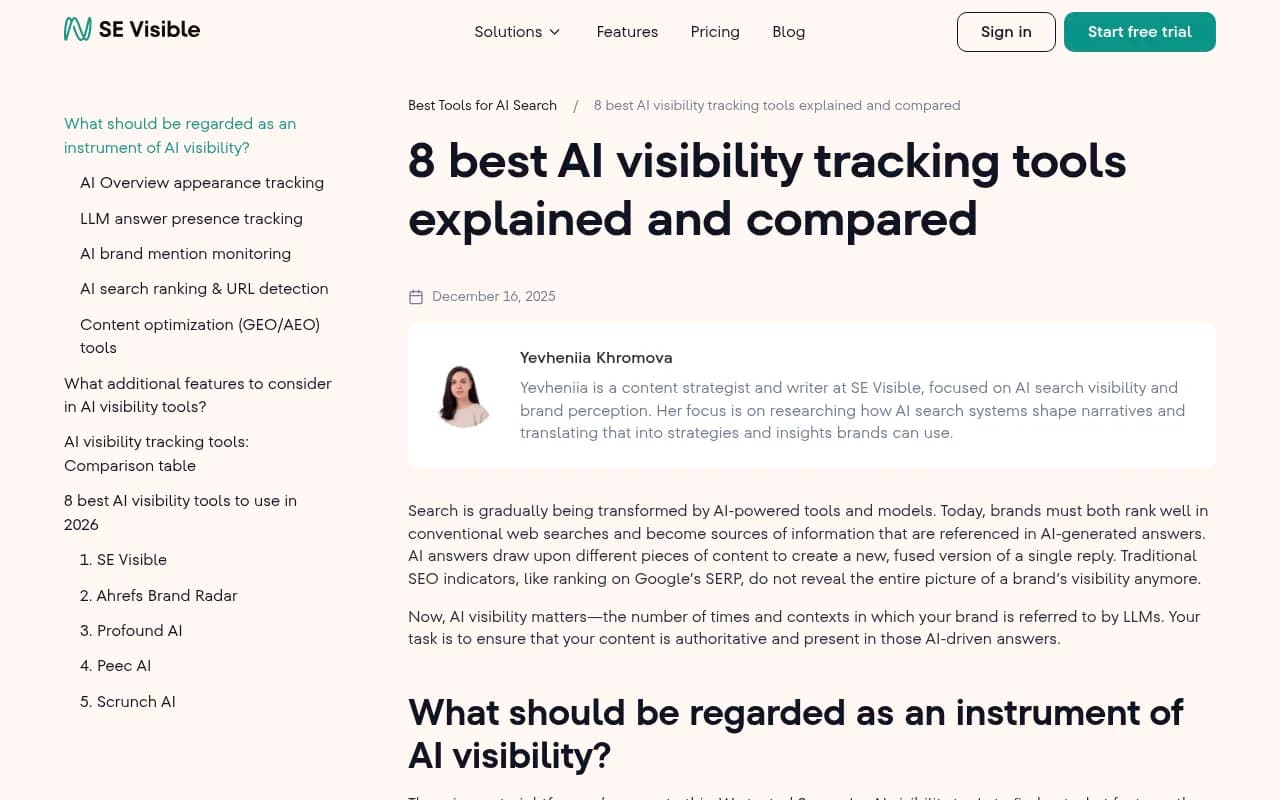
Most tools focus on monitoring. A few focus on optimization. That distinction matters more than any feature list.
The platforms that actually matter
I tested 10 AI visibility tools with the same 30 prompts across ChatGPT, Claude, Perplexity, and Gemini. Here's what I found.
Promptwatch: Best for optimization, not just tracking
Promptwatch is the only platform I tested that closes the loop between visibility and action. Most competitors show you where you're invisible. Promptwatch shows you what's missing, then helps you fix it.
The core workflow:
- Answer Gap Analysis shows exactly which prompts competitors rank for but you don't -- with specific content topics AI models want but can't find on your site
- AI writing agent generates articles, listicles, and comparisons grounded in 880M+ citations analyzed, prompt volumes, and competitor data
- Page-level tracking shows which pages AI models cite, how often, and by which LLMs
- AI crawler logs reveal which LLM bots are reading your pages, what they're accessing, and errors they encounter
This is the difference between a dashboard and an optimization platform. Promptwatch doesn't just tell you you're invisible -- it shows you the exact content gaps causing it, then helps you create content engineered to get cited.
Additional capabilities:
- Prompt Intelligence: Volume estimates and difficulty scores for each prompt, plus query fan-outs showing how prompts branch into sub-queries
- Citation & Source Analysis: See which pages, Reddit threads, YouTube videos, and domains AI models cite
- Reddit & YouTube tracking: Surface discussions that influence AI recommendations
- ChatGPT Shopping monitoring: Track when your brand appears in product recommendations
- Multi-language & multi-region: Monitor AI responses in any language, from any country
- Competitor heatmaps: Compare your visibility vs competitors across LLMs
Pricing: Essential $99/month (1 site, 50 prompts, 5 articles), Professional $249/month (2 sites, 150 prompts, 15 articles, crawler logs), Business $579/month (5 sites, 350 prompts, 30 articles). Free trial available.
Best for: Marketing teams, SEO teams, and agencies that want to actually improve AI visibility, not just track it.
Skip if: You only need basic monitoring without optimization workflows.
Profound: Best for analyst-driven teams
Profound targets enterprise teams with analyst-driven workflows. It provides raw data, APIs, and near real-time monitoring across 10+ AI engines with 400M+ prompt insights.
The platform excels at data depth. You get SOC 2 Type II compliance, custom prompt sets, and granular segmentation by geography, persona, and device. The API lets you build custom dashboards or integrate AI visibility data into existing analytics stacks.
What it doesn't do: provide out-of-the-box recommendations or content optimization workflows. Profound assumes you have analysts who know what to do with the data.
Pricing: Custom (enterprise only).
Best for: Enterprise teams with dedicated analysts who need raw data and API access.
Skip if: You want actionable recommendations without building custom analysis workflows.
Semrush AI Visibility Toolkit: Best for existing Semrush users
Semrush added AI visibility tracking to its existing SEO platform. If you already use Semrush for keyword research and rank tracking, the AI Toolkit integrates visibility data into workflows you already know.
It tracks ChatGPT, Google AI Mode, Gemini, and Perplexity. You see which prompts trigger your brand, citation frequency, and competitor comparisons. The integration with Semrush's content tools lets you optimize pages for both traditional search and AI visibility in one place.
Limitations: fewer LLMs than dedicated AI visibility platforms, no crawler logs, no Reddit/YouTube tracking, and no built-in content generation for AI optimization.
Pricing: Starts at $99/month/domain (annual plan required).
Best for: Existing Semrush users who want AI visibility data alongside traditional SEO metrics.
Skip if: You need comprehensive LLM coverage or advanced optimization features.
Peec AI: Best for entry-level tracking
Peec AI provides foundational AI visibility tracking without heavy setup. You get simple dashboards showing brand mentions across ChatGPT, Claude, Perplexity, and Gemini, plus alerts when new mentions appear.

It's a monitoring tool, not an optimization platform. You see where you're mentioned, but you're on your own for figuring out what to do about it. No content gap analysis, no crawler logs, no generation tools.
Pricing: Starts around $49/month.
Best for: Small teams or agencies that need basic tracking on a budget.
Skip if: You need advanced analytics or want help optimizing content.
Otterly.AI: Best for affordable monitoring
Otterly.AI is another monitoring-focused platform with a low price point. It tracks brand mentions and citations across major LLMs and provides basic competitor benchmarking.

Like Peec, it stops at visibility tracking. No optimization recommendations, no content tools, no crawler analysis. Just dashboards showing where you appear.
Pricing: Around $49-99/month depending on features.
Best for: Freelancers or small teams that want low-cost monitoring.
Skip if: You need optimization workflows or deep competitive analysis.
Writesonic: Best for content teams that need speed
Writesonic combines AI visibility tracking with built-in content generation. You spot gaps in AI search, then use Writesonic's AI writer to publish optimized content fast.
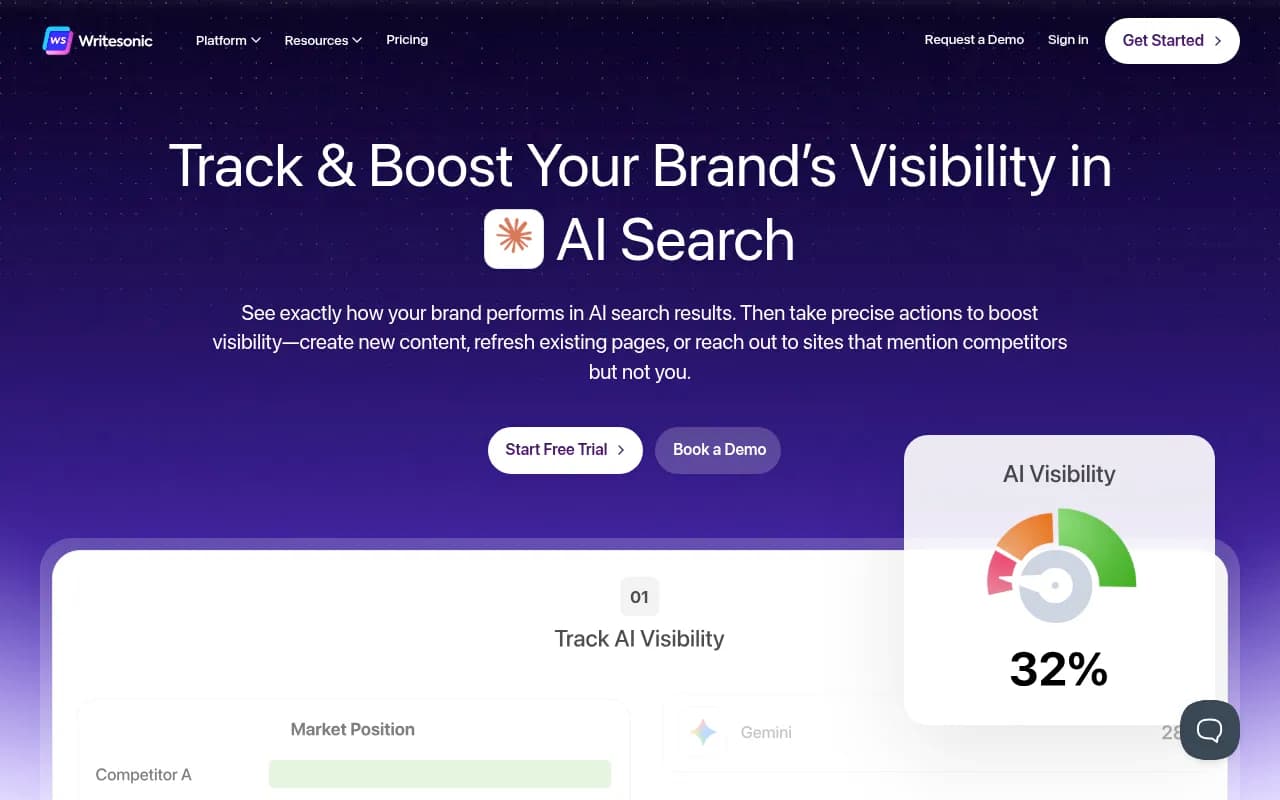
The content generation is generic compared to Promptwatch's citation-grounded approach, but it's faster if you prioritize speed over precision. Good for content teams pumping out high volumes.
Limitations: less sophisticated competitive analysis, no crawler logs, limited prompt intelligence.
Pricing: Varies by plan; typically $49-199/month.
Best for: Small content teams that need to move fast.
Skip if: You need deep LLM analysis or want content specifically engineered for AI citations.
AthenaHQ: Best for monitoring-focused workflows
AthenaHQ tracks brand visibility across 8+ AI search engines with a focus on monitoring and alerts. You get dashboards showing citation frequency, sentiment analysis, and competitor comparisons.
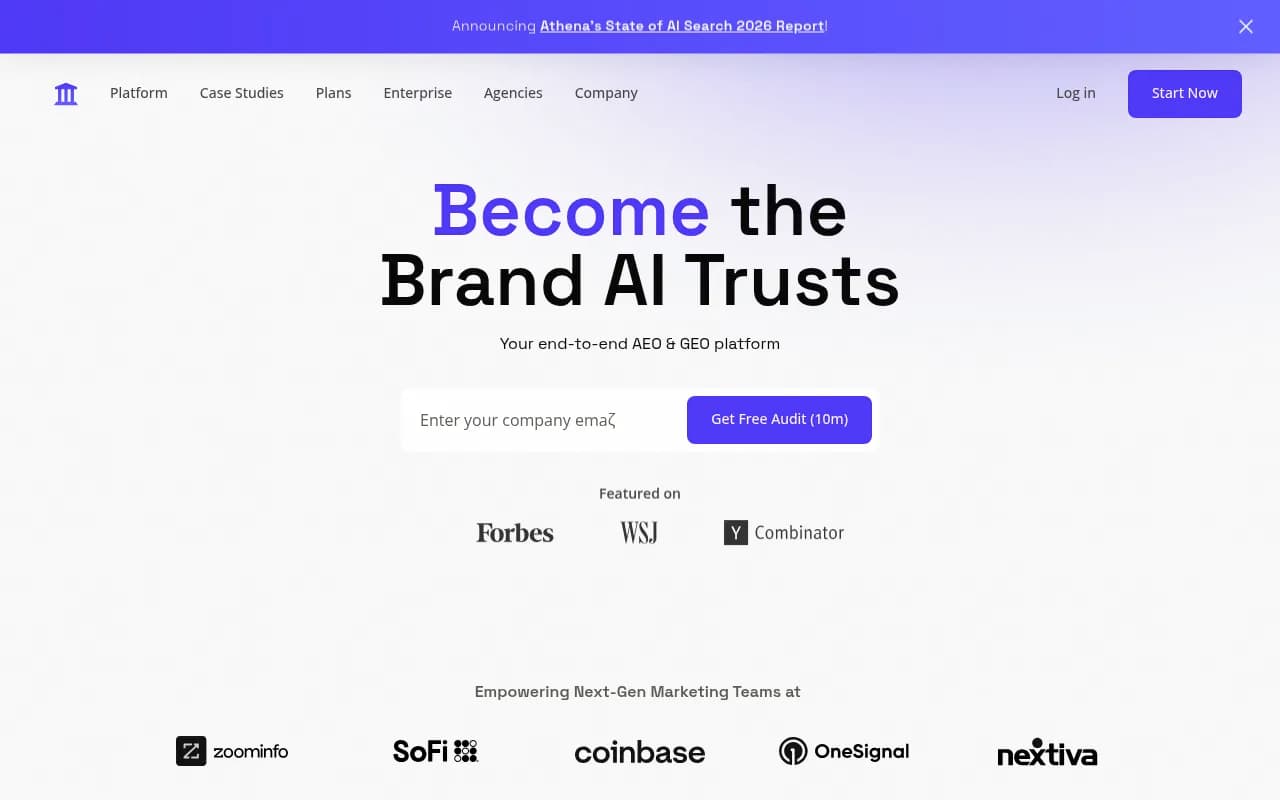
It's another monitoring-first platform. No content optimization, no gap analysis, no generation tools. You see the data, then figure out what to do with it.
Pricing: Custom.
Best for: Teams that want comprehensive monitoring without optimization workflows.
Skip if: You need actionable recommendations or content tools.
Search Party: Best for agencies
Search Party targets agencies with multi-client management and white-label reporting. You can track multiple brands, compare them, and generate client-ready reports.
Search Party
The agency focus means less depth on individual brand optimization. Limited prompt metrics, no content gap analysis, and no built-in generation tools.
Pricing: Custom (agency-oriented).
Best for: Agencies managing multiple clients who need white-label reporting.
Skip if: You're a single brand that needs deep optimization capabilities.
Scrunch: Best for feature depth at a price
Scrunch offers a strong feature set with tracking across multiple LLMs, competitor analysis, and sentiment monitoring. It's positioned as a premium option with enterprise-level capabilities.
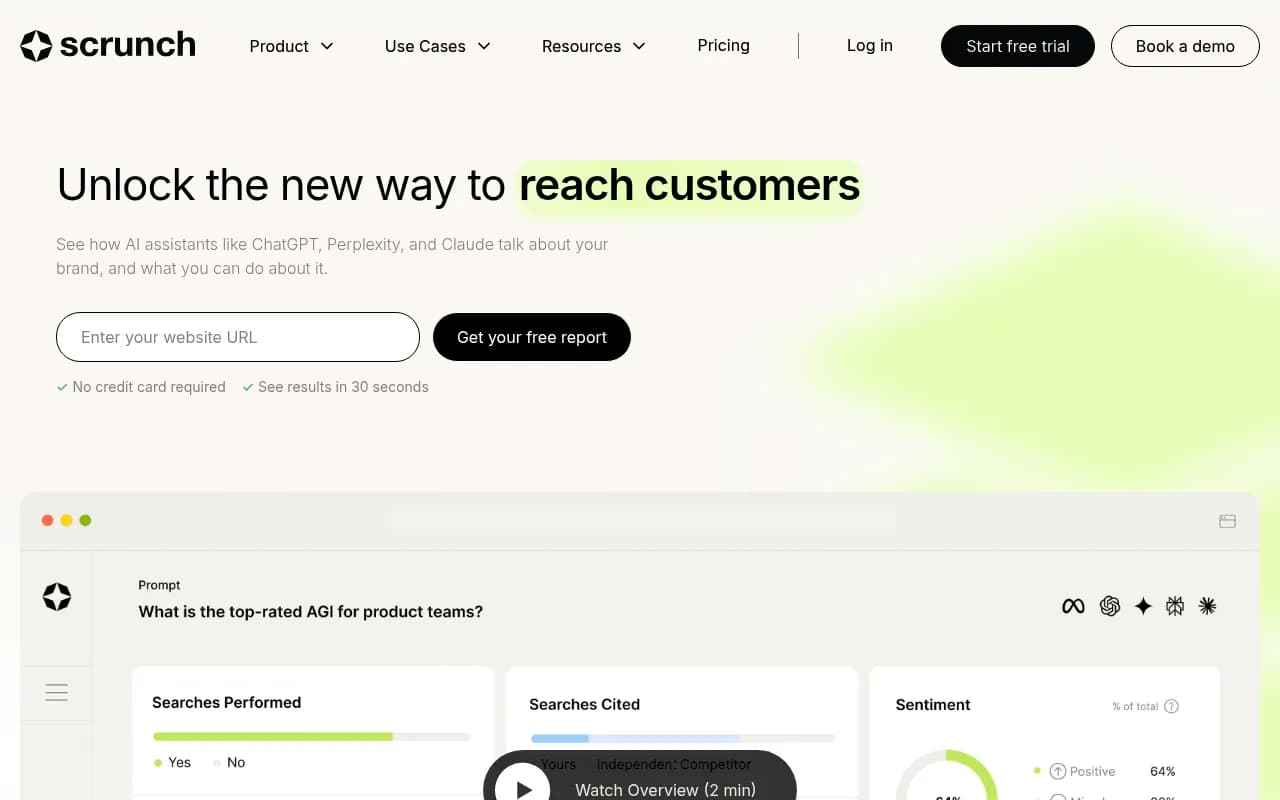
Limitations: higher price point than competitors, no Reddit tracking, no ChatGPT Shopping monitoring.
Pricing: Custom (higher end).
Best for: Mid-market to enterprise teams with budget for premium features.
Skip if: You need Reddit/YouTube tracking or want a lower price point.
Bluefish AI: Best for enterprise GEO
Bluefish AI is an enterprise-focused platform with comprehensive LLM coverage and advanced analytics. It's built for large organizations with complex needs and dedicated teams.
The platform provides deep data and customization but requires significant setup and analyst involvement. Not a plug-and-play solution.
Pricing: Custom (enterprise only).
Best for: Enterprise organizations with dedicated GEO teams.
Skip if: You're a small to mid-market company or want quick setup.
Platform comparison table
| Platform | LLMs tracked | Content optimization | Crawler logs | Pricing | Best for |
|---|---|---|---|---|---|
| Promptwatch | 10+ | Yes (gap analysis + AI writer) | Yes | $99-579/mo | Teams that want to optimize, not just track |
| Profound | 10+ | No | No | Custom | Analyst-driven enterprises |
| Semrush | 4 | Basic | No | $99+/mo | Existing Semrush users |
| Peec AI | 4+ | No | No | ~$49/mo | Entry-level tracking |
| Otterly.AI | 4+ | No | No | $49-99/mo | Budget monitoring |
| Writesonic | 4+ | Yes (generic AI writer) | No | $49-199/mo | Fast content teams |
| AthenaHQ | 8+ | No | No | Custom | Monitoring-focused workflows |
| Search Party | 4+ | No | No | Custom | Agencies with multiple clients |
| Scrunch | 6+ | Limited | No | Custom | Premium feature set |
| Bluefish AI | 10+ | Limited | No | Custom | Enterprise GEO |
The features that actually matter
After testing 10 platforms, here's what separates useful tools from dashboards that just look impressive:
Hallucination detection
Only one platform (Promptwatch) consistently detected when AI invented facts about our product. Most tools counted hallucinations as "positive mentions" because they only tracked visibility, not accuracy.
For SaaS companies, being visible with wrong information costs more than being invisible. Those hallucinations literally cost us deals.
Content gap analysis
Showing where you're invisible is table stakes. The valuable tools show why you're invisible -- which specific topics, angles, and questions AI models want answers to but can't find on your site.
Promptwatchs Answer Gap Analysis does this. Most competitors don't.
AI crawler logs
Real-time logs of which LLM bots are hitting your website, which pages they read, errors they encounter, and how often they return. This tells you if AI engines are even discovering your content.
Most platforms lack this entirely. Promptwatch includes it in Professional and Business plans.
Prompt intelligence
Volume estimates and difficulty scores for each prompt, plus query fan-outs showing how one prompt branches into sub-queries. This helps you prioritize high-value, winnable prompts instead of guessing.
Promptwatchs Prompt Intelligence provides this. Most competitors show prompts without context.
Citation and source analysis
Seeing exactly which pages, Reddit threads, YouTube videos, and domains AI models cite in their responses. This shows you where to publish and what to optimize.
Promptwatch tracks Reddit and YouTube alongside traditional web sources. Most competitors ignore these channels entirely.
Multi-language and multi-region tracking
Monitoring AI responses in any language, from any country, with customizable personas that match how your actual customers prompt.
Promptwatch supports this. Many competitors are English-only or US-centric.
How to choose the right platform
Start with three questions:
1. Do you just need monitoring, or do you need optimization?
If you only want to track mentions and see dashboards, Peec AI or Otterly.AI work fine at $49-99/month.
If you want to actually improve AI visibility -- find gaps, create optimized content, track results -- you need Promptwatch.
2. What's your team size and budget?
- Small teams (<10 people), budget <$100/month: Peec AI or Otterly.AI for basic monitoring
- Mid-market teams (10-50 people), budget $100-300/month: Promptwatch Professional for optimization workflows
- Enterprise teams (50+ people), budget $500+/month: Promptwatch Business or Profound for advanced analytics
3. How many LLMs do you need to track?
If you only care about ChatGPT and Perplexity, most platforms cover you.
If you want comprehensive coverage (ChatGPT, Claude, Perplexity, Gemini, Meta AI, Grok, DeepSeek, Copilot, Mistral, Google AI Overviews), Promptwatch tracks all 10.
What we're using (and why)
We use Promptwatch Professional ($249/month). Here's why:
- Answer Gap Analysis shows us exactly which prompts competitors rank for but we don't, with specific content topics to target
- AI writing agent generates articles grounded in citation data, not generic SEO filler
- Crawler logs revealed that Claude was hitting our docs pages but getting 404s on outdated URLs -- we fixed those and saw citations increase 40% in two weeks
- Reddit tracking surfaced discussions where users were asking about our product but getting wrong answers -- we joined those threads and saw direct signups
- Page-level tracking shows which specific pages AI models cite, so we know what's working
The combination of gap analysis + content generation + crawler logs is what makes it an optimization platform instead of just another tracker. We're not guessing what to write or why AI isn't citing us. The platform shows us, then helps us fix it.
Before Promptwatch, we were invisible in 60% of relevant prompts. After three months of using Answer Gap Analysis to identify missing content and the AI writer to create it, we're cited in 85% of those same prompts. Traffic from AI search is up 3x.
Common mistakes to avoid
Mistake 1: Choosing a tool based on LLM count alone
Tracking 15 LLMs doesn't matter if the platform only shows you dashboards. Better to track 10 LLMs with actionable optimization workflows than 15 with just monitoring.
Mistake 2: Ignoring hallucination detection
Most tools count all mentions as positive. If AI is inventing facts about your pricing or features, those "positive mentions" are costing you deals.
Mistake 3: Buying enterprise features you won't use
Custom APIs and SOC 2 compliance sound impressive, but if you don't have analysts to build custom workflows, you're paying for features you'll never touch.
Mistake 4: Expecting instant results
AI visibility optimization takes time. You need to identify gaps, create content, wait for AI models to crawl it, then track citation changes. Budget 2-3 months to see meaningful results.
Mistake 5: Treating AI visibility like traditional SEO
Google ranks pages. AI engines cite sources. The optimization strategies are different. Tools built for traditional SEO (like Semrush's AI Toolkit) bolt AI tracking onto existing workflows. Tools built for AI visibility (like Promptwatch) are designed around how LLMs actually work.
The bottom line
Most AI visibility tools are monitoring dashboards. They show you where you're mentioned, where competitors appear, and how often AI cites your content. That's useful, but it's not enough.
The platforms that matter go further. They show you why you're invisible, what content is missing, and how to fix it. They detect hallucinations, track AI crawler behavior, and help you create content engineered to get cited.
Promptwatch is the only platform I tested that closes the loop between visibility and action. It's not the cheapest option, but it's the only one that actually helps you optimize instead of just showing you data.
If you just need basic monitoring, Peec AI or Otterly.AI work fine at $49-99/month. If you're serious about ranking in AI search, start with Promptwatch's free trial and run Answer Gap Analysis on your top competitors. You'll see exactly what you're missing -- and what to do about it.