Key takeaways
- ChatGPT names a median of only 6 agents per city when homebuyers ask for recommendations, and 98.1% of those citations come from two owned surfaces: Google Business Profile and the agent's own website, not Zillow, Redfin, or Realtor.com.
- 91.6% of practicing US agents are invisible in AI-generated responses to high-intent local searches, per a FlyDragon study of 12,400 AI responses across 192 metros.
- AI-sourced leads close at roughly 4x the rate of Zillow Premier Agent leads (9.6% vs 2.4% within 90 days), with average GCI of $1,180 vs $240.
- Portal profiles don't transfer to AI visibility. A polished Zillow listing with hundreds of reviews can generate zero ChatGPT citations.
- General-purpose AI visibility platforms like Promptwatch and real-estate-specific tools like Rankfender both have a role here, but the fix also requires Google Business Profile hygiene, schema markup, and third-party citations most agents never touch.
Why real estate AI visibility is a different game
I'll be upfront about something: most "best AI visibility tools" lists treat every industry the same, as if a SaaS company and a solo real estate agent face the same problem. They don't. Real estate has a citation pattern unlike almost any other vertical I've looked into.
A study by Omni Eclipse analyzed 334 ChatGPT answers across 253 buying queries in 197 markets (US, UK, UAE) and found something that should worry every agent relying on portal presence: Zillow, Realtor.com, Redfin, Trulia, and Homes.com were cited zero times across 1,567 total citations. Not low. Zero. Portals showed up occasionally inside the prose ("a 5.0 rating on Zillow"), but never as the actual source ChatGPT pulled from.
Instead, 98.1% of citations came from two places: Google Business Profile/Maps (57.6%) and the agent's own website (40.5%). That's the whole game right there. If your AI visibility strategy is "keep my Zillow profile updated," you're optimizing for a channel that doesn't feed the model at all.
Compare that to automotive, where marketplaces like Autotrader and Cars.com make up a healthy chunk of ChatGPT's citations in the same month (Promptwatch's automotive citation share data shows marketplaces and research sites together capture over a quarter of citations). Real estate inverted that pattern almost completely. Portals are the default frame models have learned from training data, not the source they cite live.
The shortlist is brutally small
ChatGPT names a median of 6 agents per city when asked for recommendations, with 8 being the most common count. Promptwatch's own research on sources per response backs up why that shortlist is so tight: ChatGPT cites roughly 5 sources per web-search answer on average, compared to about 10 for Google AI Overviews and a very consistent ~10 for Perplexity (average sources per response). With only about 5 citation slots and a median of 6 named agents per market, there's effectively no page two in AI search. You're either in the answer or you don't exist.
That tracks with NAR's own numbers: fewer than 10% of agents appear in AI-generated responses when consumers ask location-based questions, and NAR's 2026 Technology Survey shows 67% of Realtors now use AI tools, up from 59% the year before. Everyone's using AI. Almost nobody shows up in it.

What actually gets agents cited
Before picking a tool, it helps to know what the tool needs to help you fix. A separate FlyDragon study (12,400 AI responses, 8.2M queries, 192 metros) found that 67% of homebuyers now use AI as their primary research step before contacting an agent, up from just 17% eighteen months earlier. The agents who do show up share a consistent pattern:
- An actual website with original neighborhood and local-market content, not just a portal profile
- Reviews spread across four or more platforms (Google, Zillow, Realtor.com, Yelp, Facebook, Nextdoor), since models appear to triangulate trust across independent sources rather than rewarding volume on a single platform
- Consistent name, address, and phone formatting everywhere, since inconsistent NAP data risks being parsed as a separate, weaker entity
- At least one third-party citation, such as a mention in HousingWire or Inman, which reportedly carries more weight than dozens of self-published social posts
- RealEstateAgent schema markup
- Fast documented response times, since leads contacted within 5 minutes are 21x more likely to qualify
That last point matters for revenue, not just visibility: AI-sourced leads close at 9.6% within 90 days against 2.4% for Zillow Premier Agent and 1.8% for Google Ads, with an average time-to-close of 42 days versus 87 for portal leads. If you get this right, the payoff isn't theoretical.
Comparing AI visibility tools for real estate
Here's where it gets interesting, and a little messy. Most general AI visibility platforms track brand mentions across ChatGPT, Gemini, Perplexity, and Claude just fine, but real estate's winning signal (Google Business Profile authority plus owned-site content) means the tool you pick needs either dedicated local tracking or the ability to feed in hyper-local prompts by city and neighborhood, not just brand-name queries.
| Tool | Engines tracked | Real estate fit | Starting price |
|---|---|---|---|
| Rankfender | Up to 10 depending on tier | Purpose-built industry page for real estate, tracks agent/listing mentions by city | $89/mo (promo pricing seen as low as $44/mo) |
| Promptwatch | ChatGPT, Gemini, Claude, Perplexity, Grok, Copilot, DeepSeek, Mistral, AI Overviews, AI Mode, and more | Agent Analytics (crawler logs) show exactly when AI reads your listing pages; Content Agents can publish neighborhood content on a schedule | $95/mo |
| Semrush AI Visibility Toolkit | ChatGPT, Google AI Mode, Gemini, Perplexity (3-4 depending on how counted) | Good if you're already in the Semrush ecosystem for SEO | $99/mo per domain |
| Otterly.AI | ChatGPT, Google AI Overviews, Perplexity, Microsoft Copilot | Cheapest per-prompt cost in the category, good for solo agents on a budget | $29/mo |
| Profound | Up to 9 engines on Enterprise | Enterprise brokerages with multi-market footprints; pricing restructured in Sept 2026, self-serve plans removed | Custom quote (Agency Growth starts around $99/mo + $399/mo per workspace) |

Why I'd lean toward a full-stack platform, not just a tracker
A lot of these tools answer one question: "did my brand get mentioned?" That's useful, but in real estate the harder question is "why does Google Business Profile get cited and my website doesn't," and then "what do I do about it." This is where a platform like Promptwatch separates itself from pure monitoring tools. Its Agent Analytics feature logs when ChatGPTBot, ClaudeBot, PerplexityBot, and other AI crawlers actually visit your pages, what they read, and whether they hit errors, which maps directly onto the real estate problem of "my own website is supposedly 40% of citations, so why isn't AI reading mine?"
Promptwatch's Content Agents can also plan and publish neighborhood and market-specific content to a CMS like WordPress or Webflow on a schedule, which matters because agents who get cited consistently maintain original local content, not recycled listing descriptions. And its citation analytics break down content types and track Reddit and YouTube mentions, both increasingly relevant since real estate decisions involve a lot of informal research on those platforms.
That said, if all you need is a lightweight check of whether your name comes up when someone asks ChatGPT for "best realtor in [city]," a cheaper tracker like Otterly.AI or a free tool is plenty. Not every solo agent needs a full GEO platform.
A note on query behavior that affects how you write content
Promptwatch's own data on ChatGPT query fan-outs shows the average number of searches ChatGPT runs per response dropped from 2.15 in early December to exactly 1.0 by April 2026, and average query length shrank from roughly 117 characters to about 53 (ChatGPT query fan-outs). In plain terms, ChatGPT's internal searches now look like terse Google-style keyword queries, not full questions. For real estate content, that means writing headings that read like short search queries, something like "Best Real Estate Agent in Austin 2026" rather than "Who is the best real estate agent in Austin?" It's a small adjustment but it matches how the retrieval actually works.
Free and low-cost options worth checking first
Before committing to a paid subscription, a few free tools will tell you where you stand:
- Promptwatch's free AI Brand Visibility Report gives a baseline read on whether you show up at all
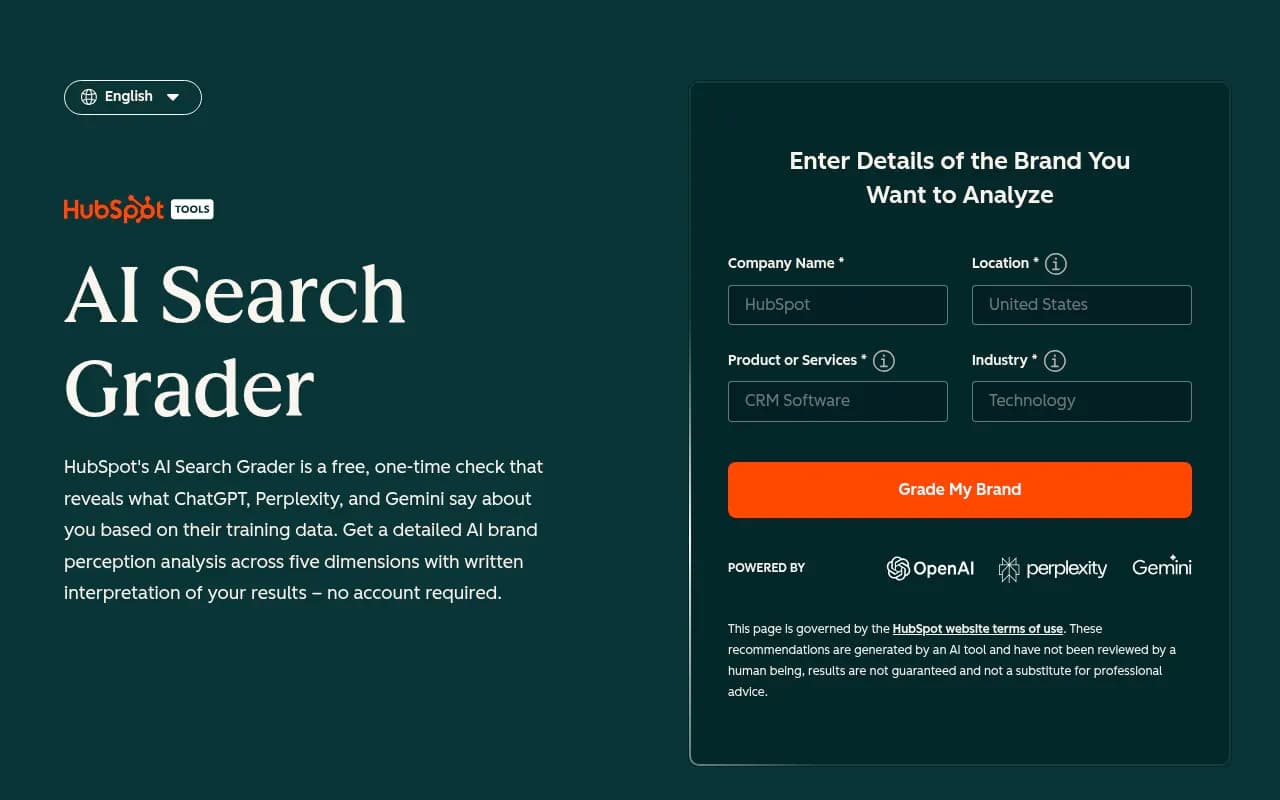
- HubSpot AI Search Grader offers a one-time diagnostic
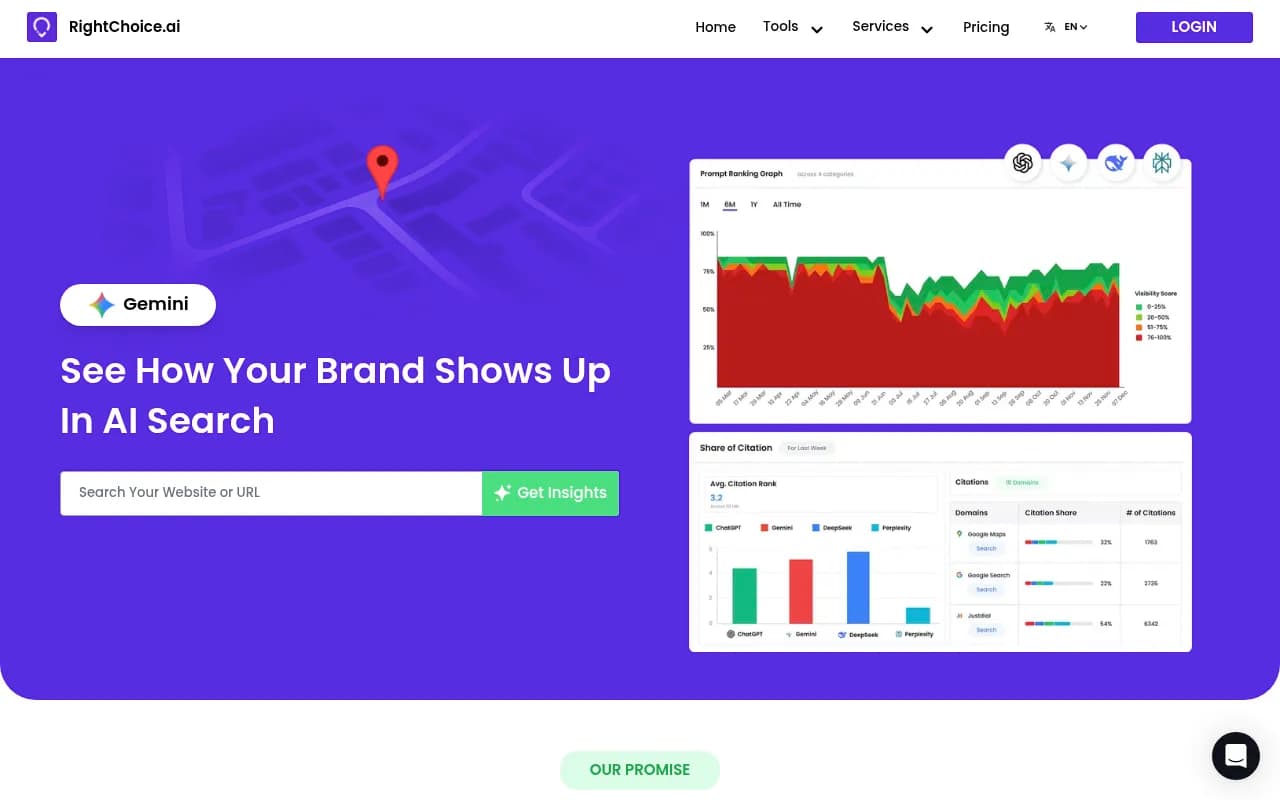
- RightChoice.Ai has a free brand AI visibility and citation checker
For agents and small brokerages specifically, I'd start with one of these free checks before paying for anything. If the result is "you don't show up at all in six major markets," that tells you the fix is foundational (Google Business Profile, schema, local content) before any tracking subscription will show meaningful movement.
Fixing the local-SEO mistakes that block AI visibility
Tooling only gets you half the way. Luxury Presence's 2026 audit findings call out an incomplete or outdated Google Business Profile as the single most common local SEO mistake real estate agents make, and it directly controls whether you show up in the local 3-pack that feeds AI Overviews, Gemini, and ChatGPT's local answers. A few other patterns worth fixing before you lean on any dashboard:
- Don't spread yourself thin asking for reviews on Google and Zillow in the same breath. People tend to do neither. Lead with Google first, then diversify.
- Isolated blog posts and listing pages don't build the interlinked neighborhood content clusters that establish topical authority. Group content by market and link it together.
- Generic market commentary without firsthand transaction insight gives AI nothing to differentiate you from a hundred other agents writing the same "5 tips for first-time buyers" post.
- Add RealEstateAgent, Person, and FAQ schema markup so AI engines get explicit facts about your service area and credentials instead of guessing from prose.
Seer Interactive's 2026 research found brands cited in AI Overviews earn roughly 35% more organic clicks than uncited competitors on the same query, so this isn't just about looking good in a ChatGPT answer, it drives the traditional search traffic too.
A quick decision guide
- Solo agent on a tight budget: start with a free checker, then Otterly.AI if you want ongoing tracking
- Growing team or small brokerage: Rankfender's real-estate-specific tracking, or Promptwatch if you also want the crawler logs and content generation to actually act on what you find
- Multi-market brokerage or franchise: Promptwatch's Business tier or Profound's enterprise plan, both built for multi-site and multi-market tracking
- Agency managing several agent clients: Promptwatch's agency tiers or Rankfender's custom agency pricing, both support white-label reporting
If you want to browse more options beyond this list, the GEO software directory at bestgeosoftware.com covers a wider set of platforms across industries, and ai-rank-tools.com focuses specifically on rank and citation tracking if that's the narrower problem you're solving.
The bottom line
Real estate's AI visibility problem isn't really a tooling problem first. It's a data-ownership problem. The citations flow to Google Business Profile and owned websites, not to the portals the industry has leaned on for twenty years. Pick a tool that can show you when AI crawlers actually visit your pages and help you fix what they find, then spend real effort on the Google Business Profile completeness, schema markup, and genuinely local content that earns the citation in the first place. The tool tells you where you stand. The content and the profile work are what move the needle.