Key takeaways
- Prompt intent (informational, commercial, navigational) determines which AI models cite you and why -- tracking all three separately gives a much clearer picture than aggregate visibility scores
- Most AI visibility tools treat prompts as a flat list; only a handful let you segment and analyze by intent category
- Commercial and navigational prompts tend to drive the most revenue impact, but informational prompts build the citation authority that makes the other two possible
- Platforms that combine intent-aware tracking with content gap analysis and generation close the loop -- monitoring-only tools leave you with data but no path forward
- Promptwatch is the only platform in 2026 rated as a "Leader" across all categories in a 12-platform comparison, largely because it goes beyond tracking to help you act on what you find
Why prompt intent matters more than raw visibility
Most brands starting out with AI visibility tracking make the same mistake: they pick 20-30 prompts, start monitoring, and look at a single "visibility score." That number goes up or down and they have no idea why.
The problem is that a prompt like "what is generative engine optimization?" and a prompt like "best GEO platform for agencies" are completely different animals. One is informational -- someone learning a concept. The other is commercial -- someone close to making a buying decision. AI models handle them differently, cite different sources, and respond to different optimization strategies. Lumping them together in one score obscures what's actually happening.
There are typically five prompt intent categories worth tracking, but three form the core:
- Informational: "How does AI search work?", "What is a citation in AI responses?" -- educational queries where AI models want authoritative, well-structured content
- Commercial: "Best AI visibility tools 2026", "Promptwatch vs Profound", "top GEO platforms for B2B" -- research and comparison queries where AI models weigh brand reputation, reviews, and third-party mentions
- Navigational: "Promptwatch pricing", "how to set up Promptwatch crawler logs" -- brand-specific queries where someone already knows you exist and wants to find something specific
A fourth category worth adding is transactional ("sign up for AI visibility tool", "buy GEO software"), and a fifth is instructional ("how to optimize content for Perplexity"). SE Ranking's research suggests most brands over-index on informational prompts and neglect commercial ones -- which is exactly backwards if your goal is revenue.
The practical implication: you need a platform that lets you tag, segment, and analyze prompts by intent. Otherwise you're flying blind.
How AI models respond differently by intent
Before comparing tools, it's worth understanding what you're actually measuring.
For informational prompts, models like ChatGPT and Perplexity tend to cite educational content -- blog posts, guides, documentation, research reports. Being cited here builds authority. It's the top of the funnel for AI search.
For commercial prompts, the citation pattern shifts. Models pull from comparison articles, review sites, Reddit discussions, YouTube videos, and listicles. This is where third-party mentions matter enormously. A brand that dominates informational queries but has no presence in comparison content will disappear the moment someone asks "which tool should I use?"
For navigational prompts, models typically either answer directly from your own site or -- more worryingly -- get confused and cite a competitor or incorrect information. Tracking navigational prompts is partly a brand protection exercise.
The implication for tool selection: you want a platform that tracks all three, shows you citation sources by intent type, and ideally helps you identify what content is missing for each category.
The platforms worth considering in 2026
Here's how the main platforms stack up when you specifically need intent-aware prompt tracking.
Promptwatch
Promptwatch is the most complete option for intent-segmented tracking. You can organize prompts into custom categories -- so informational, commercial, and navigational can be tracked as separate groups with their own visibility scores and trend lines. The Answer Gap Analysis then shows you which prompts competitors are visible for but you're not, broken down by the specific content that's missing.
What separates it from monitoring-only tools is the action loop. Once you identify that you're invisible for commercial comparison prompts, the Content Agents generate articles, listicles, and comparison pieces grounded in real prompt data and citation patterns. The crawler logs then show when AI models pick up the new content and start citing it. That full cycle -- find gap, create content, track result -- is what most competitors can't do.
It covers 10 AI models (ChatGPT, Perplexity, Claude, Gemini, Google AI Overviews, Google AI Mode, Grok, DeepSeek, Copilot, Mistral), which matters because commercial prompts in particular behave very differently across models. Pricing starts at $99/month.

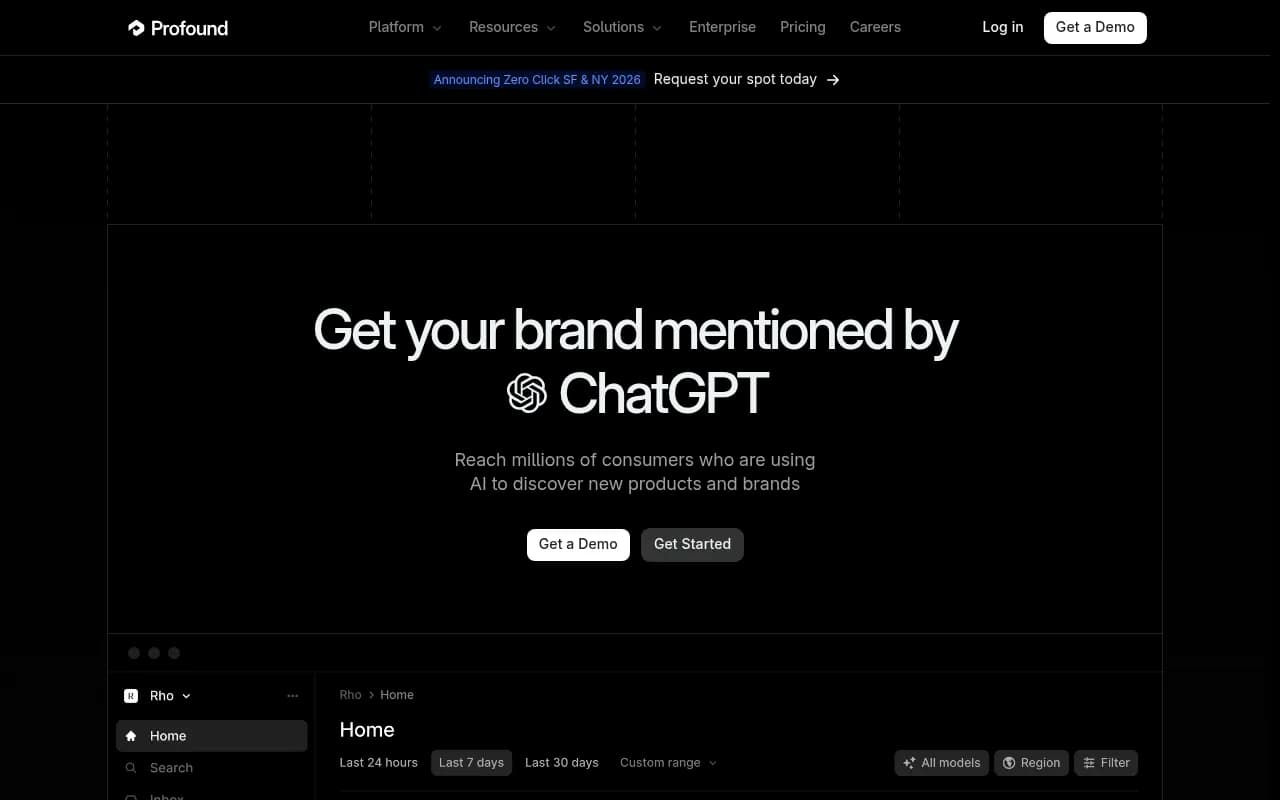
Profound
Profound is strong on the enterprise research side. Its prompt library and research capabilities are genuinely good for discovering what prompts exist in a category before you decide what to track. For large brands running structured prompt research programs, it's a solid choice.
The gap is on the action side. Profound shows you data well but doesn't help you create content to address what you find. For intent-segmented tracking specifically, you'd need to manually organize prompts into intent buckets yourself.
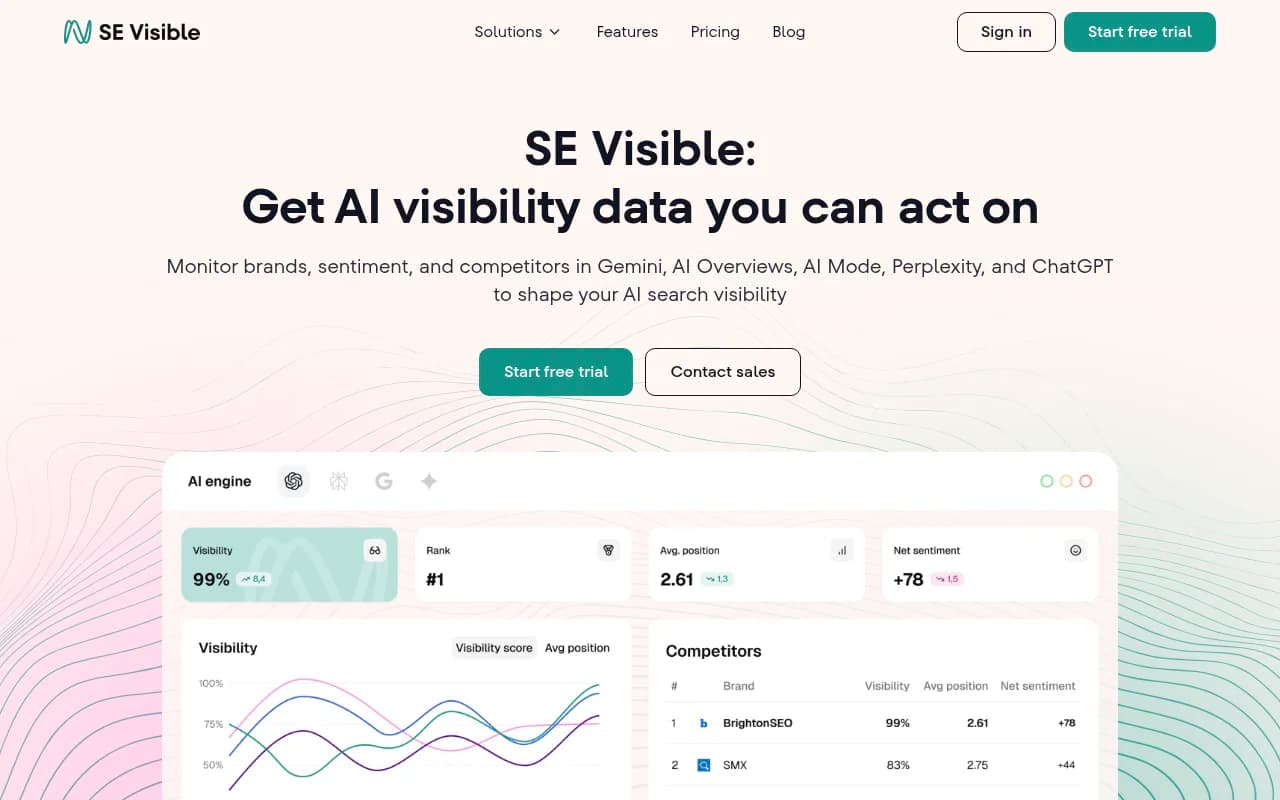
SE Visible (by SE Ranking)
SE Visible has done some of the clearest thinking about prompt intent categories publicly -- their research on the five core prompt types is worth reading. The platform itself supports multi-brand, multi-country tracking across five AI models, and the UI makes it reasonably straightforward to organize prompts by type.
It's a good mid-market option, particularly if you're already in the SE Ranking ecosystem. The limitation is that it stops at monitoring -- no content generation, no crawler logs.
Otterly.AI
Otterly.AI is the lowest-cost entry point in the category at $29/month. For small teams that just need to start tracking a handful of commercial prompts to see if they're appearing in AI recommendations, it does the job. Don't expect intent segmentation features or content optimization -- it's a monitoring dashboard, not an optimization platform.

Peec AI
Peec AI offers flexible model selection (up to 10 models) at a reasonable price point starting around €85/month. It's monitoring-focused but covers more models than most entry-level tools, which is useful if you're tracking commercial prompts across different AI engines and want to see where your brand appears in shopping or recommendation contexts.

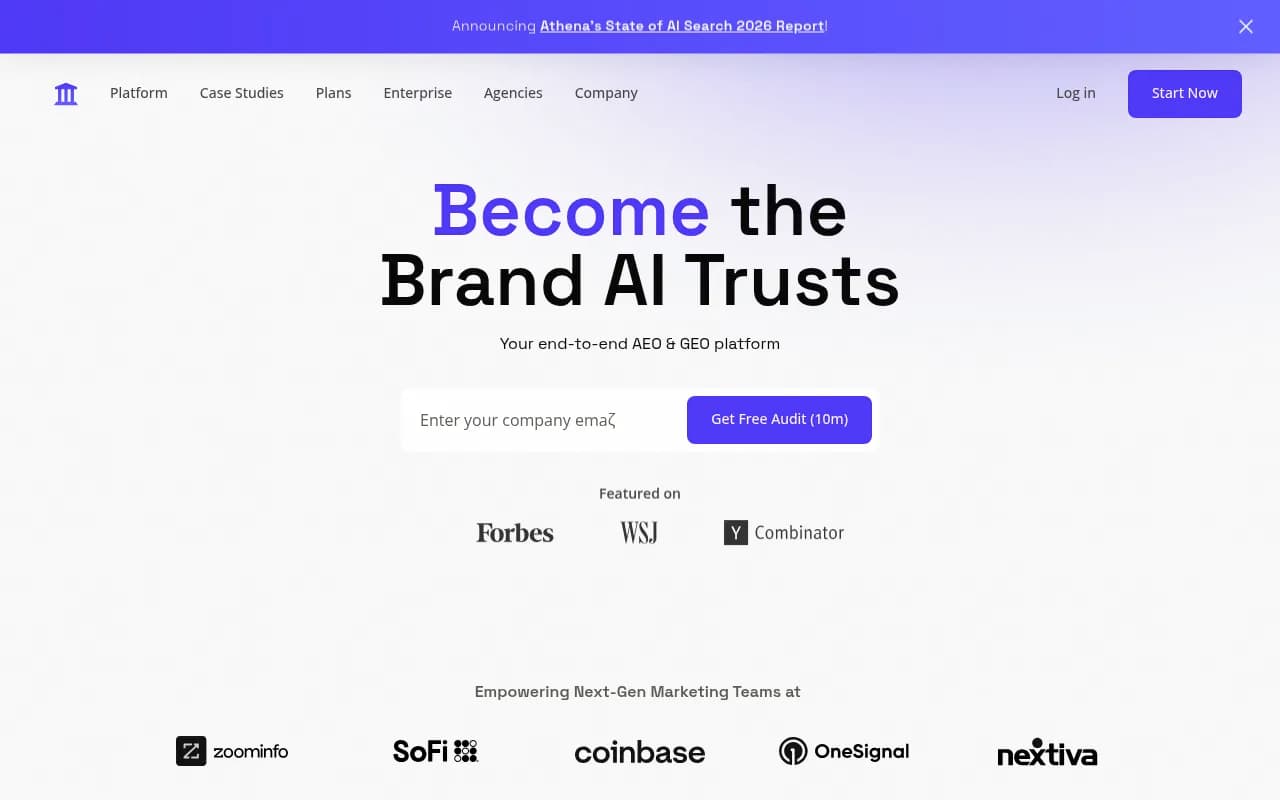
Athena HQ
AthenaHQ covers 8+ AI search engines and has a clean interface for tracking brand visibility. It's monitoring-oriented, which means it's good for understanding where you stand but doesn't help you move the needle. Worth considering if you want broad model coverage without the complexity of a full optimization platform.
Nightwatch
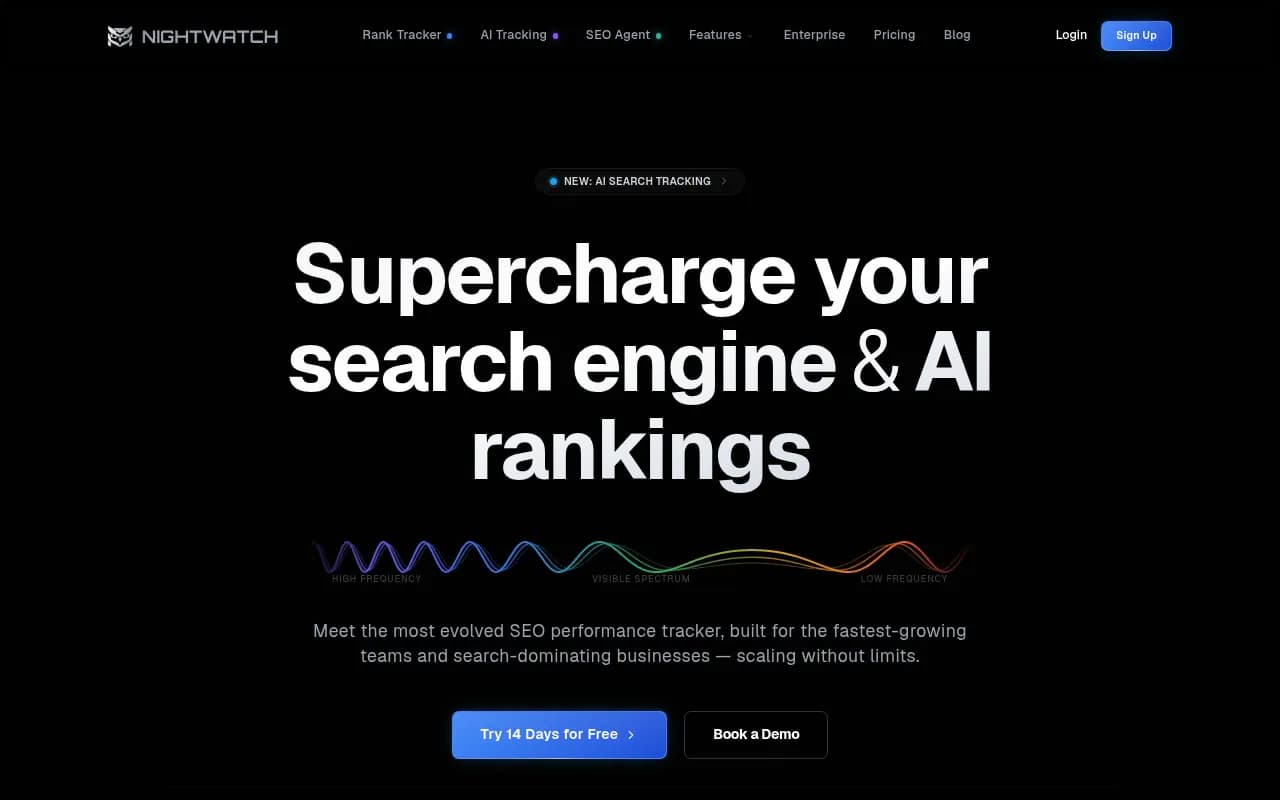
Nightwatch is primarily an SEO rank tracker that added AI visibility as a module ($99/month add-on). If you're already using it for traditional SEO and want basic AI monitoring alongside that, the integration is convenient. For intent-segmented AI tracking as a primary use case, it's not purpose-built for that.
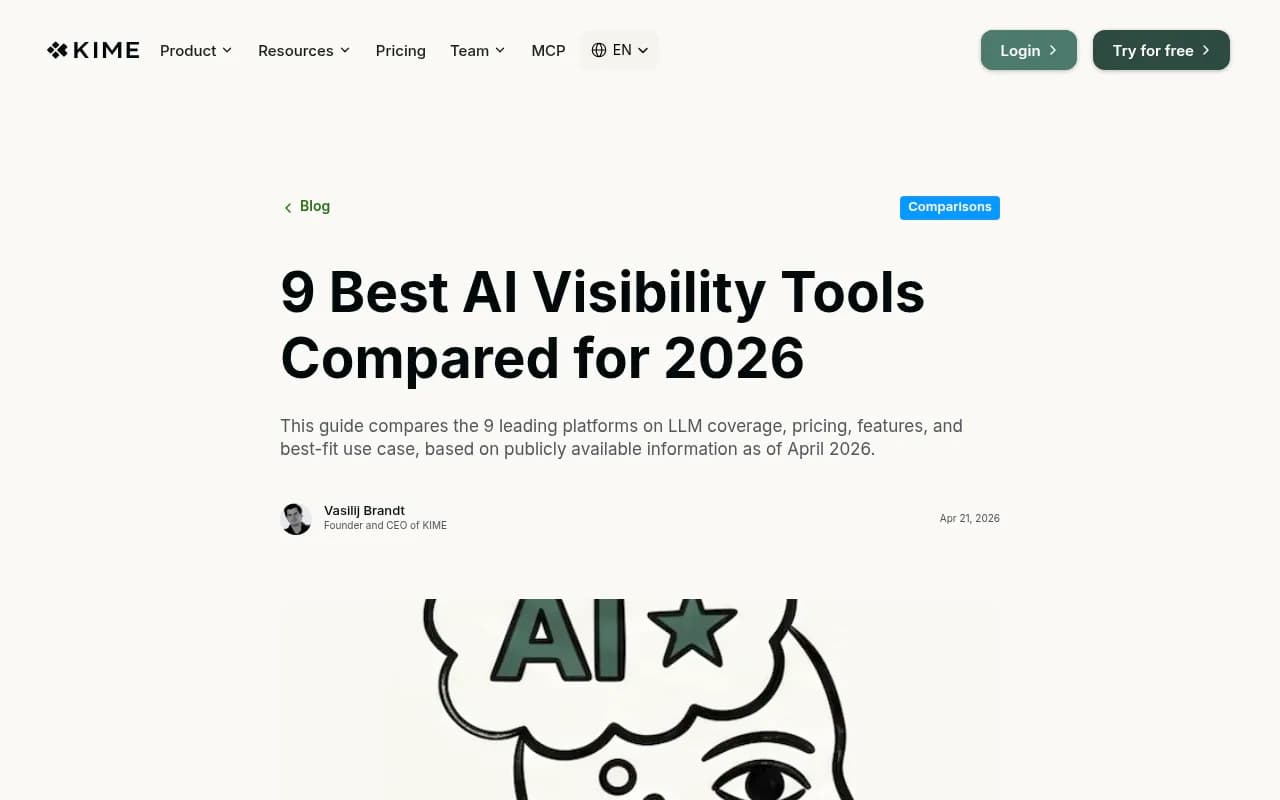
KIME
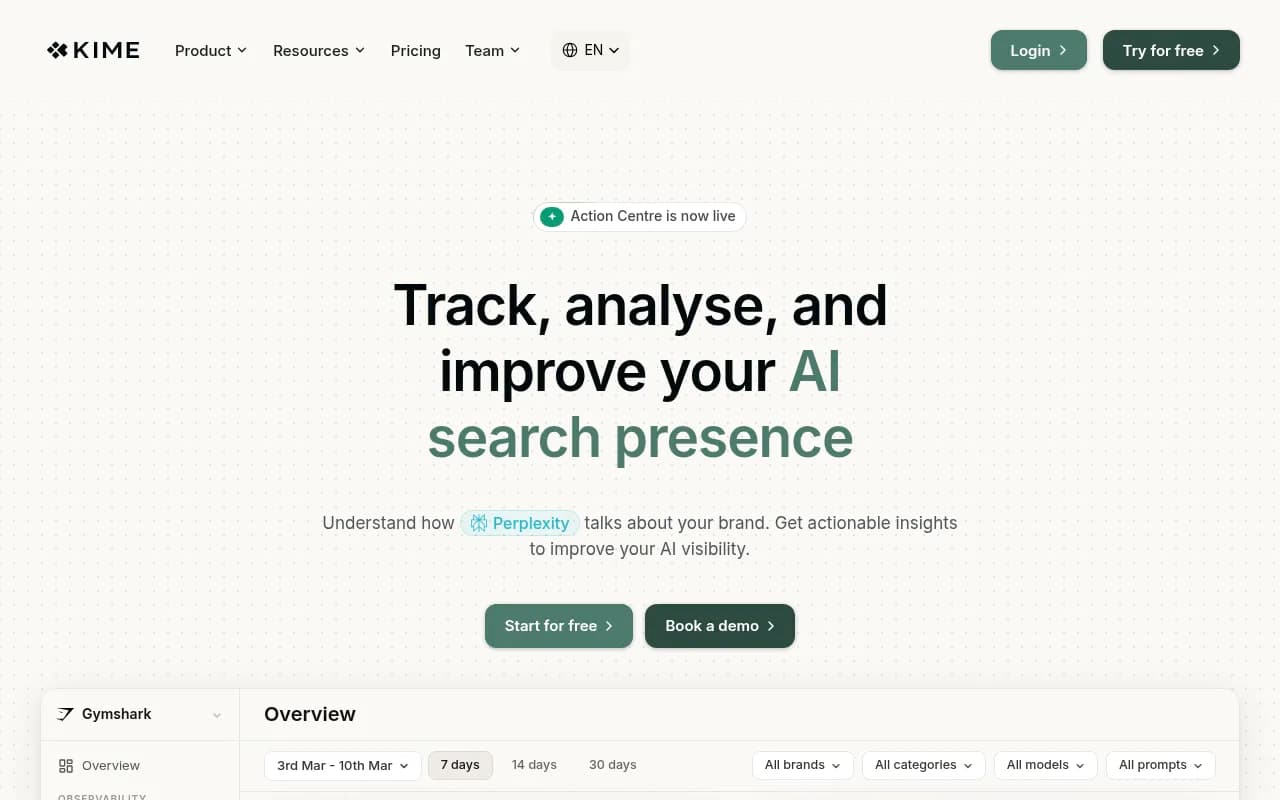
KIME tracks 10 AI models and has an "Action Centre" for optimization, making it one of the few tools that goes beyond pure monitoring. It's positioned as an end-to-end platform and is worth evaluating if you're in Europe (it's priced in euros, starting at €149/month). The multi-brand, multi-country support is a genuine strength for agencies.
Feature comparison by intent tracking capability
| Platform | Intent segmentation | Models tracked | Content generation | Crawler logs | Starting price |
|---|---|---|---|---|---|
| Promptwatch | Yes (custom groups) | 10 | Yes (Content Agents) | Yes | $99/mo |
| Profound | Manual only | Up to 10 | No | No | $99/mo |
| SE Visible | Partial | 5 | No | No | $99/mo |
| KIME | Partial | 10 | Action Centre | No | €149/mo |
| Peec AI | Manual only | Up to 10 | No | No | €85/mo |
| Otterly.AI | No | 4 | No | No | $29/mo |
| Nightwatch | No | 4 | No | No | $32/mo + $99 add-on |
| AthenaHQ | No | 8+ | No | No | Custom |
How to structure your prompt tracking by intent
The mechanics of setting this up matter as much as the tool you choose. Here's a practical approach.
Start with commercial prompts
If you're tracking AI visibility to drive revenue, commercial prompts are where to start. These are the queries where someone is actively evaluating options. Think "best [category] tools", "[your brand] vs [competitor]", "top [category] for [use case]".
Run these prompts manually across ChatGPT, Perplexity, and Google AI Mode first to see what's actually happening. Who gets cited? What sources do the models pull from? That tells you what content you need to create or get mentioned in.
Add informational prompts for authority building
Informational prompts build the citation foundation that commercial prompts draw on. If AI models don't know you're authoritative on a topic, they won't recommend you when someone asks for the best option.
Map your informational prompts to your content. For each key concept in your category, you should have a piece of content that could plausibly be the best answer to that question. Tools with content gap analysis (like Promptwatch's Answer Gap Analysis) make this mapping systematic rather than guesswork.
Track navigational prompts for brand protection
Navigational prompts are easy to neglect because they feel like a given -- of course AI models know who you are. But they frequently get things wrong: outdated pricing, incorrect feature descriptions, confused brand positioning. Tracking a set of navigational prompts (your brand name, your brand + key features, your brand + pricing) catches these errors before they cost you customers.
Assign prompt difficulty and volume
Not all prompts in each intent category are worth the same effort. A tool with prompt volume estimates and difficulty scoring (Promptwatch has both) lets you prioritize. A high-volume commercial prompt where you're currently invisible is worth more than a low-volume informational prompt where you're already cited.
The citation source question
One thing that gets overlooked in intent-based tracking: the citation sources differ by intent, and that changes your optimization strategy.
For informational prompts, AI models tend to cite your own website content. Optimizing here means improving your own pages -- structure, depth, authority signals.
For commercial prompts, the citation sources are often third-party: comparison sites, Reddit threads, YouTube reviews, industry listicles. You can't optimize your way into these citations by improving your website alone. You need to be present in the external content AI models are reading.
This is why offsite citation analysis matters. Knowing that Perplexity is citing a specific Reddit thread or a competitor comparison article when answering commercial prompts tells you exactly where to focus your off-site efforts. Most monitoring-only tools don't surface this. Promptwatch's offsite citation analysis and Reddit/YouTube tracking are specifically designed to expose this layer.
Picking the right tool for your situation
The honest answer is that the right tool depends on what you're trying to do.
If you're a small team that just wants to know whether you're appearing in AI recommendations at all, Otterly.AI or Peec AI will get you started without a big investment. You'll need to organize prompts by intent manually, but the data is there.
If you're a mid-market brand that wants to systematically track commercial and informational prompts, understand citation sources, and actually improve your visibility rather than just measure it, Promptwatch is the strongest option. The combination of intent-aware tracking, Answer Gap Analysis, Content Agents, and crawler logs gives you the full picture and a path to act on it.
If you're an enterprise with complex multi-brand, multi-region requirements and a dedicated research function, Profound is worth evaluating alongside Promptwatch -- though you'll want to factor in that Profound's action capabilities are limited compared to what Promptwatch offers.
For agencies managing multiple clients, Promptwatch's agency/enterprise tier and Promptwatch's multi-site tracking make it the most practical choice. KIME is also worth a look for European agencies.
The category is moving fast. Tools that were monitoring-only a year ago are adding optimization features, and the gap between leaders and laggards is widening. The brands that treat AI visibility as a measurement exercise will keep losing ground to the ones that use it to drive content strategy.
Prompt intent is the framework that makes the measurement meaningful. Without it, you're watching a number. With it, you're running a program.