Key takeaways
- Query language, not geography, is the biggest factor reshaping AI citations. A Spanish prompt from Mexico and a Spanish prompt from Spain produce nearly identical citation patterns, even though the countries are different, per Profound's analysis of 3.25 billion citations.
- Most "multilingual" AI visibility tools just translate your English prompts and run them against the same US-trained model. That measures translation quality, not what real buyers in that market actually ask.
- ChatGPT quietly switches to English mid-answer: 78% of non-English prompt sessions trigger at least one English-language fan-out query, according to Peec AI's analysis of 20M+ fan-out queries, which can bury local brands behind global ones.
- Only a handful of tools (Renown, Peec AI, and a few regional specialists) track actual local-language models or break citation data out by language rather than blending it into one global score.
- Before buying any multilingual tracker, run the same question in two languages during the demo. If the brand list comes back identical, the tool is translating prompts into one model, not measuring real local behavior.
If you sell outside English-speaking markets, you've probably noticed something strange when you check your AI visibility: the numbers look fine in your dashboard, but your Spanish, German, or Arabic site basically doesn't exist in those markets' AI answers. That's not a bug in your content. It's usually a bug in your tracking.
I spent a while digging into why this happens, and the answer is more structural than most GEO guides let on. AI models don't just translate a query and hand it to the same engine. They change which sources they trust, which platforms they lean on, and even which competitors they consider, depending on the language you typed the question in. A tool that doesn't account for that will hand you clean-looking reports that are quietly wrong.
Why non-English AI visibility is a different problem, not just a translation problem
Profound ran the most rigorous study on this I've seen: 3.25 billion AI citations across 7 models and 14 countries, filtering prompts strictly by the language actually used (Portuguese prompts for Brazil, not English prompts about Brazil). The finding that should worry anyone running global brand monitoring: for ChatGPT, social citation rates drop in every single non-English market studied, compared to the English baseline of around 9.1%. Google's models, by contrast, swing both up and down depending on language, not down uniformly.
The platform mix shifts are even more dramatic. In Google AI Overviews, YouTube makes up 38% of social citations in English, climbs to 65% in Portuguese, but falls to just 26% in Arabic, where Instagram takes the top spot at 29%. TikTok jumps to nearly 16% of citations in Spanish, five times its English-language share. If your tracking tool reports a single blended "social citation score" across all languages, you're missing all of this. You'd never know that your Portuguese audience is watching YouTube recommendations while your Arabic audience is scrolling Instagram.
ChatGPT's behavior is a little different and honestly more frustrating. Its social layer leans overwhelmingly on Reddit everywhere, from 51% to 76% of social citations regardless of country. It's not localizing which platform it trusts. It's just running out of Reddit content in languages other than English, so the whole social citation slice shrinks from roughly 10% down to 3-5% outside English markets. That's a content gap, not a platform preference gap, and the fix looks completely different depending on which explanation is true.
The hidden English fan-out problem
Here's the part that actually made me angry on behalf of non-English brands. Peec AI analyzed more than 10 million prompts and 20 million background "fan-out" queries, the searches a model runs behind the scenes before composing an answer. Even when the user's original prompt was in German, Polish, or Spanish, and the IP location matched the language, 43% of all fan-out searches still ran in English. Worse, 78% of non-English prompt sessions included at least one English-language fan-out query somewhere in the chain.
The real-world examples from that research are the kind of thing you'd want to show a skeptical CMO. A Polish query about auction portals buried Allegro.pl, the dominant marketplace in Poland, in favor of eBay. A German query asking about German software companies came back with zero German companies. A Spanish cosmetics query returned no Spanish brands at all, and the model's own Spanish-language fan-out quietly added the word "globales" (global) that the user never typed.
The pattern: ChatGPT tends to start fan-out queries in the prompt's original language, then slides into English queries as it keeps researching. Which means your local brand isn't just competing against other local brands anymore. It's competing against the entire English-speaking internet, every single time, even when nobody asked in English.
What translation actually buys you (and what it doesn't)
There's a decent case for having good translations at all, separate from the tracking question. A Weglot-cited study of 1.3 million AI citation examples found Spanish-only sites appeared about 4x more often in Spanish-language AI answers than other content, and adding quality English translations of the same pages boosted visibility by over 327% in some cases, because it gave the model a path into both language pools instead of one.
But there's a trap here too. If you don't publish in a market's language at all, Google will sometimes auto-translate your English page into the local-language AI Overview, which means Google gets the attribution and the implied traffic credit instead of your own domain. And Google's own John Mueller has flagged that low-quality, literal machine translations create bad user experiences that search systems penalize, so throwing a page through Google Translate and calling it done can backfire.
The buyer's test that separates real tools from fake ones
Before you sign up for anything that claims multilingual coverage, do this during the demo: run the exact same question in two languages and compare the brand list that comes back. If the two lists are nearly identical, the tool is translating your prompt and sending it to one US-trained model. It's not measuring how that market's AI behavior actually differs, because as the data above shows, it genuinely does differ.
Also ask, directly and by name, which models the tool queries per language, and whether its reporting is per-language or blended into a single average. A blended score hides exactly the variation you're paying to detect. If a vendor can't answer either question specifically, that tells you something.
Comparing the tools that actually handle language depth
| Tool | Language/model approach | Regional LLM coverage | Pricing starting point | Best for |
|---|---|---|---|---|
| Renown | Prompts 150+ languages against both global and local models | Yes: Falcon-H1, ALLaM, Jais 2, Fanar (Arabic); Sarvam, Krutrim (India); Poro, Viking (Nordic) | Not publicly listed | Brands that need to see how a regional model actually differs from a global one |
| [tool:peec-ai] | 14+ languages, country-level citation breakdowns | No (global models only, prompted multilingually) | $95/mo (50 prompts, 3 engines) | Agencies tracking multiple EU markets without per-language surcharges |
| Profound | Broad language coverage with strong enterprise context | No (global models only) | Custom/enterprise | Large brands that need depth across many markets, not local-model nuance |
| SE Ranking | Free public AI Overviews tracker for Arabic + 5 MENA markets | No | Free tier available | Testing MENA visibility before committing budget |
| Zaher.AI | Arabic-native interface, partial regional-model coverage | Partial | Not publicly listed | Brands where MENA is the only target market |
| Asky | Swedish-market-first, Nordic-localized | No | Not publicly listed | Nordic-only brands wanting a narrow, deep tool |
| Kai Footprint | Prompts global models in Japanese, Korean, Mandarin | No | Free tier, ~$99/mo, ~$500/mo | APAC-focused teams, though it skips Google AI Overviews entirely |
The single biggest line in that table is the "regional LLM coverage" column. Most of the category, including some well-funded names, is still just translating prompts and sending them to ChatGPT, Gemini, or Claude in a different language. That tells you something, but it's not the same as knowing how Falcon-H1 answers an Arabic query, or how Sarvam handles a Hindi one. According to the research behind this comparison, almost none of the mainstream AI visibility tools track those state-backed or regional models at all, which is a real gap if you're trying to understand visibility in markets where those models actually have adoption.
A workflow that doesn't rely on literal translation
The most useful practical guidance I came across treats literal prompt translation as the number one mistake teams make. Translating "best running shoes for flat feet" word for word into German doesn't tell you how a German buyer actually phrases that question, and buyer phrasing varies by culture, not just by grammar.
A better approach, roughly:
- Pick 2-4 markets deliberately instead of trying to cover every country you ship to at once.
- Build a shared core set of 10-15 prompts that apply everywhere, plus 10-20 localized variants per market sourced from actual sales calls, Search Console queries, or competitor pages in that language, not translation.
- Lock the prompt set for a full measurement cycle before changing anything, so you're comparing apples to apples month over month.
- Run the same checks across every platform your customers in that market actually use. ChatGPT dominance in the US doesn't mean it dominates in, say, South Korea.
- Compare mention rate, citation rate, recommendation presence, and source quality by market. A single global score flattens exactly the differences you're trying to find.
Worth asking per market too: are you absent everywhere, or only in specific places? Mentioned but never actually cited? Cited, but from a weak or outdated page? Losing to a local competitor specifically on shortlist-style prompts? Each answer points to a different fix.
Where a broader AI visibility platform fits in
Once you've got the language-specific tracking sorted, you still need the operational side: knowing why your pages aren't getting crawled, which content is actually earning citations, and what to publish next. This is where general-purpose GEO platforms like Promptwatch come in. It tracks country and state/city-level prompts across ChatGPT, Gemini, Claude, Perplexity, Grok, and Google AI Overviews and AI Mode, alongside AI crawler logs, citation trends, and automated content generation that publishes straight to your CMS.

It's not a language-specialist tool in the way Renown is, but if your non-English visibility problem turns out to be a content or crawler problem rather than a model-behavior problem, the Content Agents and Agent Chat features can help you act on what you find rather than just watching the gap persist month after month.
Other tools worth a look
A few more names came up in the research that are worth knowing about even if they're not the first pick for language depth specifically:
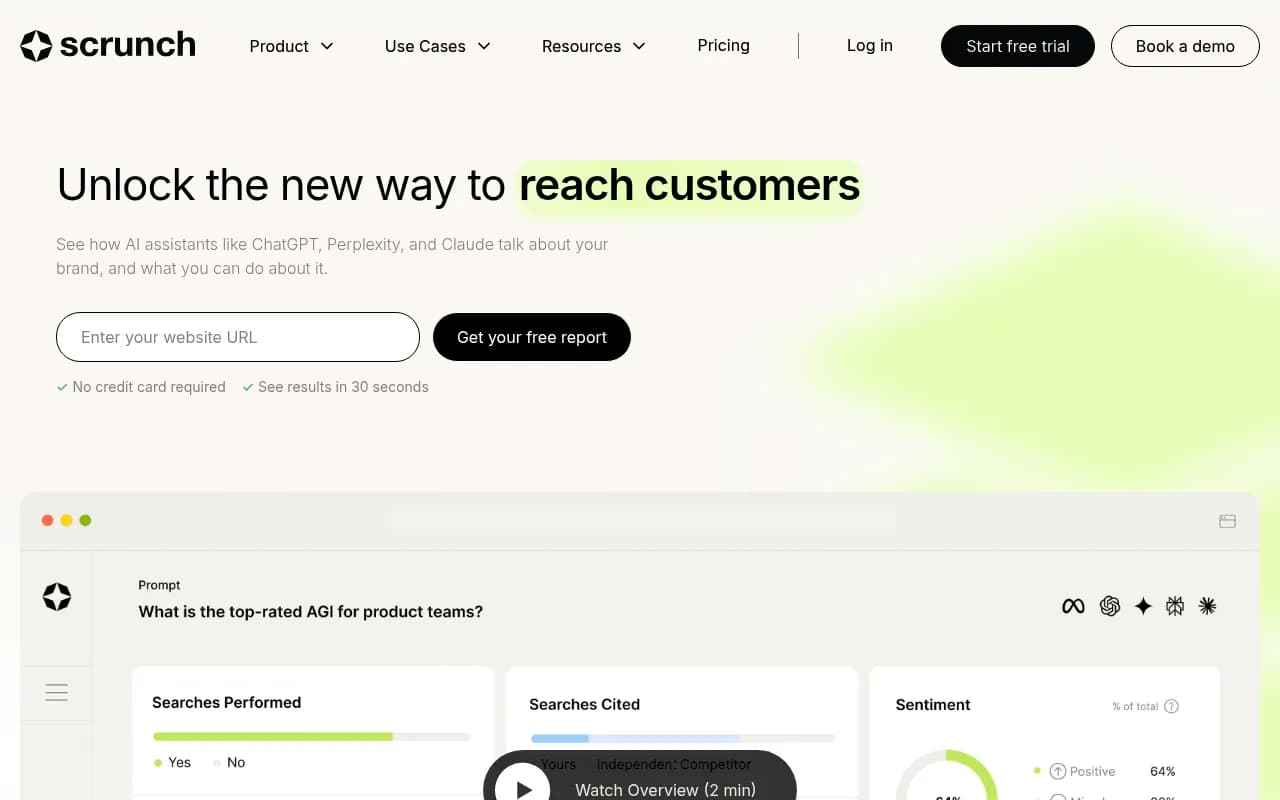
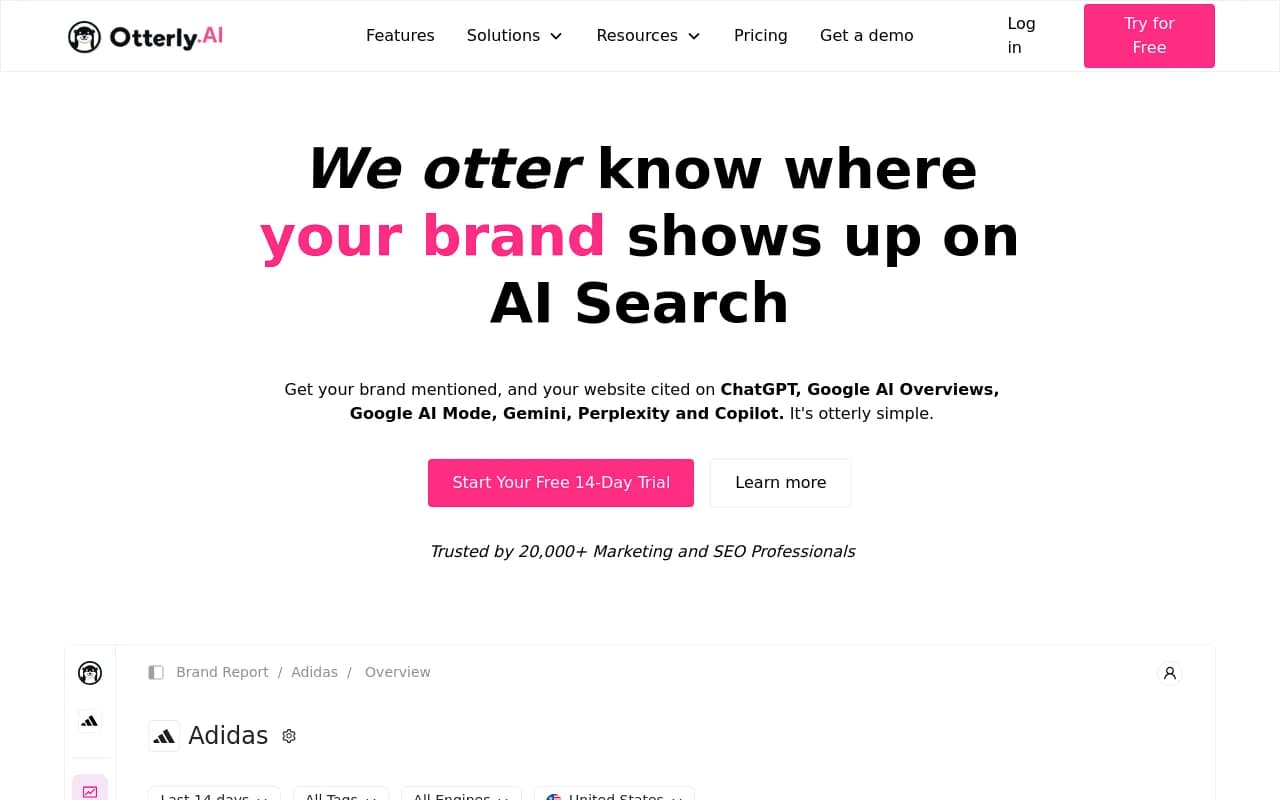
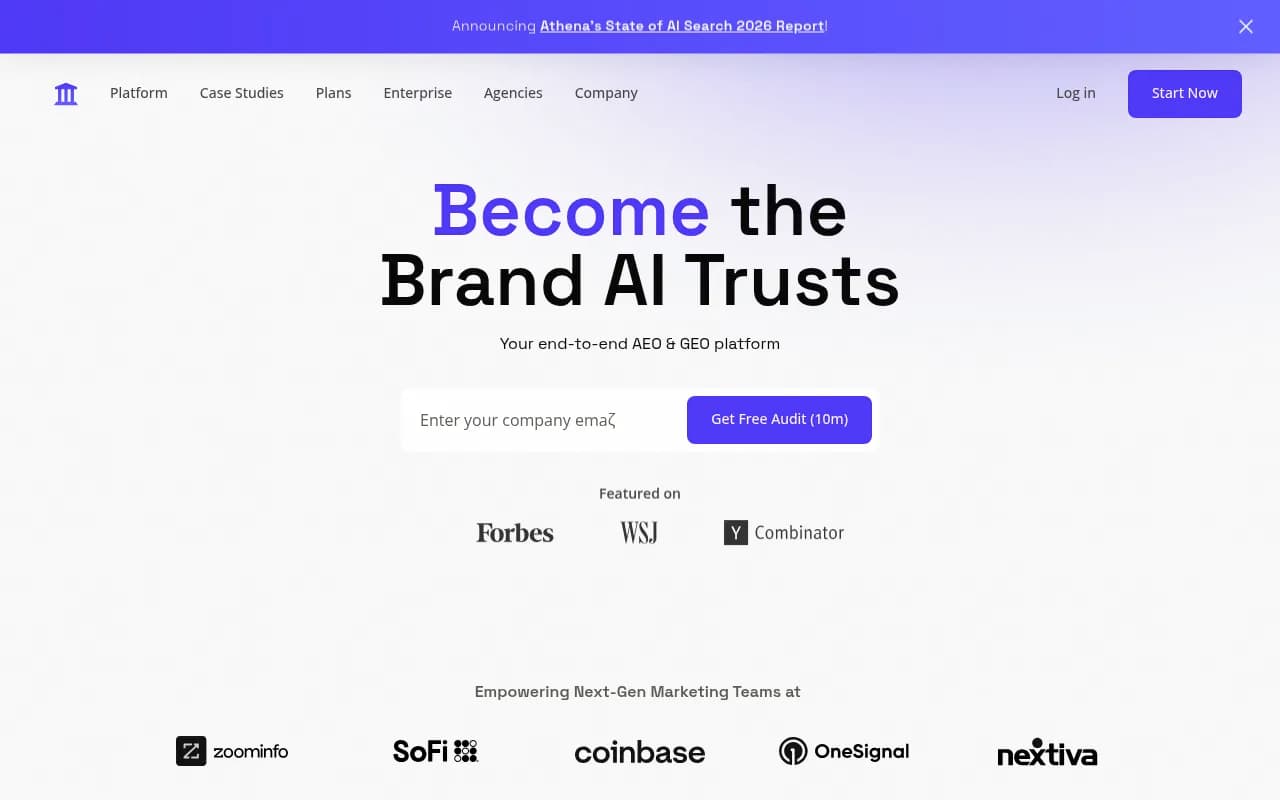
None of these three lead with regional-model tracking, but they're reasonable options if your non-English need is lighter, say, one or two extra European markets rather than full MENA or APAC coverage.
Bottom line
If you operate in markets where the local language genuinely differs from how your competitors and content are indexed, i.e. basically anywhere outside the US, UK, and Australia, don't settle for a tool that just swaps the prompt language and calls it multilingual. Run the two-language test. Ask which models it actually queries by name. Check whether the report is per-language or blended. The gap between a real multilingual tool and a translated one isn't subtle once you know what to look for, and it's the difference between data you can act on and data that just feels reassuring.
For a wider view of the GEO software category beyond the language-specific angle, the directory at bestgeosoftware.com is a reasonable place to keep browsing options.