Key takeaways
- AI hallucinations about brands -- wrong pricing, false product claims, invented partnerships -- are a real and growing problem in 2026, not just a theoretical one.
- Most AI visibility tools focus on whether you're mentioned, not whether what's said is accurate. Hallucination detection requires a specific set of capabilities.
- The best tools for this use case combine citation tracking, sentiment analysis, response monitoring across multiple LLMs, and some form of accuracy or anomaly flagging.
- Fixing hallucinations requires more than monitoring -- you need to publish authoritative, structured content that gives AI models better source material to work from.
- Promptwatch is one of the few platforms that closes the full loop: it finds where AI models are saying the wrong things, helps you create corrective content, and tracks whether that content changes what models say.
Why hallucinations about your brand actually matter
Here's a scenario that's becoming more common than most marketing teams realize: a potential customer asks ChatGPT about your pricing, and ChatGPT confidently states a number that's wrong by 40%. Or Perplexity describes your product as serving a market segment you exited two years ago. Or Gemini lists a competitor's feature under your brand name.
These aren't edge cases anymore. As AI search engines handle a growing share of initial brand research -- Search Engine Journal put the figure at 37% of users starting searches in AI rather than traditional engines -- the accuracy of what AI says about you has real commercial consequences.
The problem is structural. AI models are trained on snapshots of the web, and they fill gaps with plausible-sounding completions. Your brand is a target for this. Old press releases, outdated review sites, and competitor comparisons all feed into what models "know" about you. When the training data is stale or contradictory, hallucinations happen.
Tracking this is genuinely hard. You can't just Google yourself. You need to systematically prompt multiple AI models, capture their responses, compare them against ground truth, and do it repeatedly over time. That's what the tools in this guide are built to help with.
What to look for in a hallucination-tracking tool
Not every AI visibility tool is useful here. Many are designed purely to measure share-of-voice -- how often your brand appears versus competitors. That's valuable, but it doesn't tell you whether what's being said is accurate.
For hallucination and accuracy monitoring specifically, look for:
- Response capture across multiple LLMs (ChatGPT, Perplexity, Gemini, Claude, Grok at minimum)
- Sentiment and accuracy analysis on the captured responses -- not just presence/absence
- Alerts or anomaly detection when responses change or contain unusual claims
- Citation tracking so you can see what sources the model is drawing from
- Historical response logging so you can spot when a hallucination appeared and whether it's been corrected
- Content recommendations so you can actually fix the problem, not just document it
The last point is where most tools fall short. Monitoring a hallucination without a path to correction is frustrating. The best platforms connect the detection to the fix.
The best tools for tracking hallucinations and inaccurate brand mentions
Promptwatch
Promptwatch is the most complete option for teams that want to both detect inaccurate AI mentions and do something about them. It monitors 10 AI models in real user-facing interfaces (not just API outputs, which can differ), captures citations, and tracks sentiment on brand mentions. The Answer Gap Analysis shows you exactly which prompts are producing responses that don't include your brand -- or worse, include inaccurate information about it.
What sets it apart for hallucination work is the content generation side. Once you've identified a gap or inaccuracy, Promptwatch's Content Agents can generate articles, FAQs, and structured content grounded in real prompt data and your own brand guidance. The idea is that you give AI models better, more authoritative source material -- which is the most reliable way to correct hallucinations over time. Agent Analytics then tracks when AI crawlers pick up your new content and when it starts influencing responses.

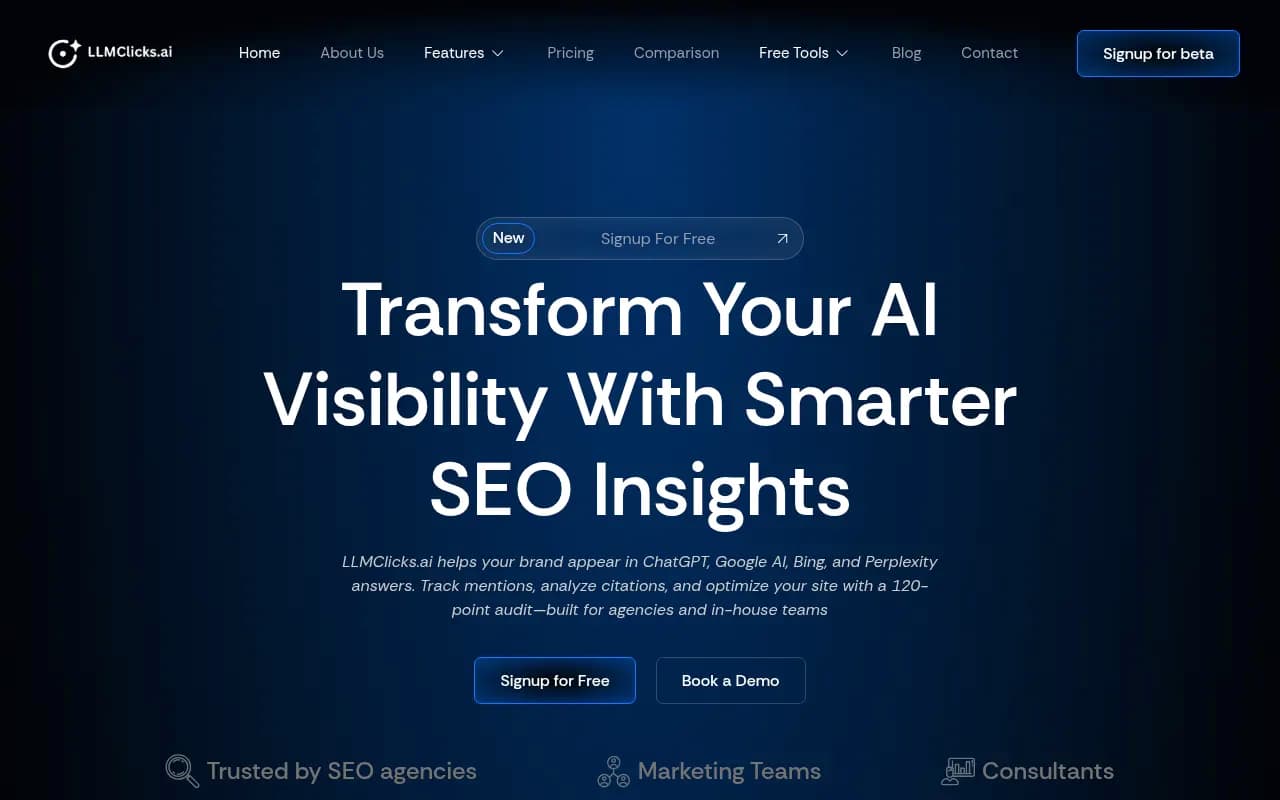
LLMClicks
LLMClicks is one of the few tools that explicitly calls out hallucination detection as a core feature. It tracks brand visibility across AI search engines and flags responses where the content about your brand looks anomalous or inconsistent with your actual positioning. Worth evaluating if hallucination monitoring is your primary concern rather than broader GEO optimization.
Scrunch AI
Scrunch AI focuses on citation intelligence -- tracking which sources AI models are actually pulling from when they mention your brand. This is directly useful for hallucination investigation. If a model is citing an outdated review or a competitor's comparison page as its source for claims about your product, Scrunch surfaces that. You can then work to get better sources indexed and cited.
Otterly.AI
Otterly.AI is a solid entry-level option for teams that want broad coverage across ChatGPT, Perplexity, and Google AI Overviews without a large budget. It tracks brand mentions and provides sentiment analysis on responses. The hallucination detection is less sophisticated than Promptwatch or LLMClicks, but for smaller brands that just want to know what AI is saying about them, it's a reasonable starting point.

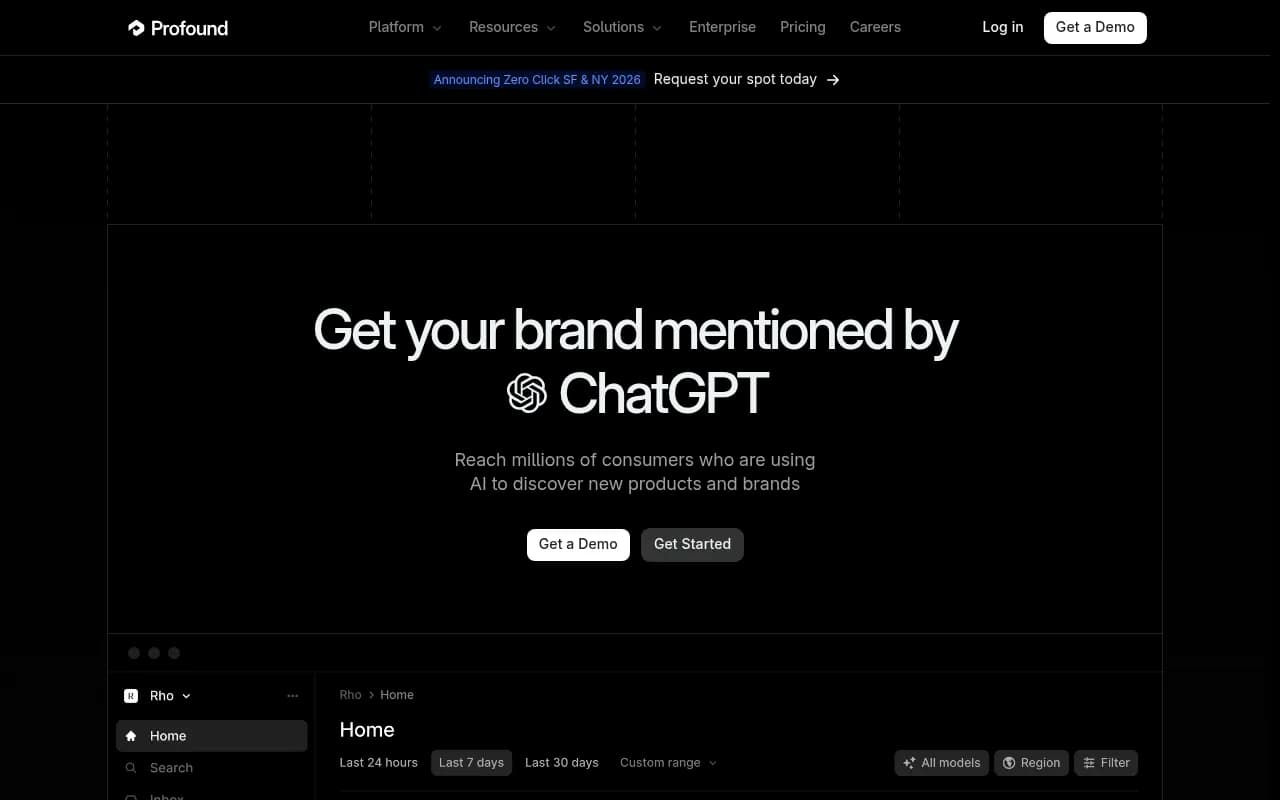
Profound AI
Profound is an enterprise-grade platform with strong answer engine analytics and prompt volume data. It captures AI responses at scale and provides detailed citation and sentiment analysis. The Agent Analytics feature tracks AI crawler behavior, which helps you understand why certain inaccurate sources are being picked up. It's one of the more capable platforms for large brands running systematic accuracy audits.
Peec AI
Peec AI is a monitoring-focused tool that tracks brand mentions across AI search engines and provides basic sentiment scoring. It's lighter on the optimization and correction side, but the monitoring itself is clean and covers the major models. Good for teams that want a simple dashboard showing what AI is saying about them without a lot of complexity.

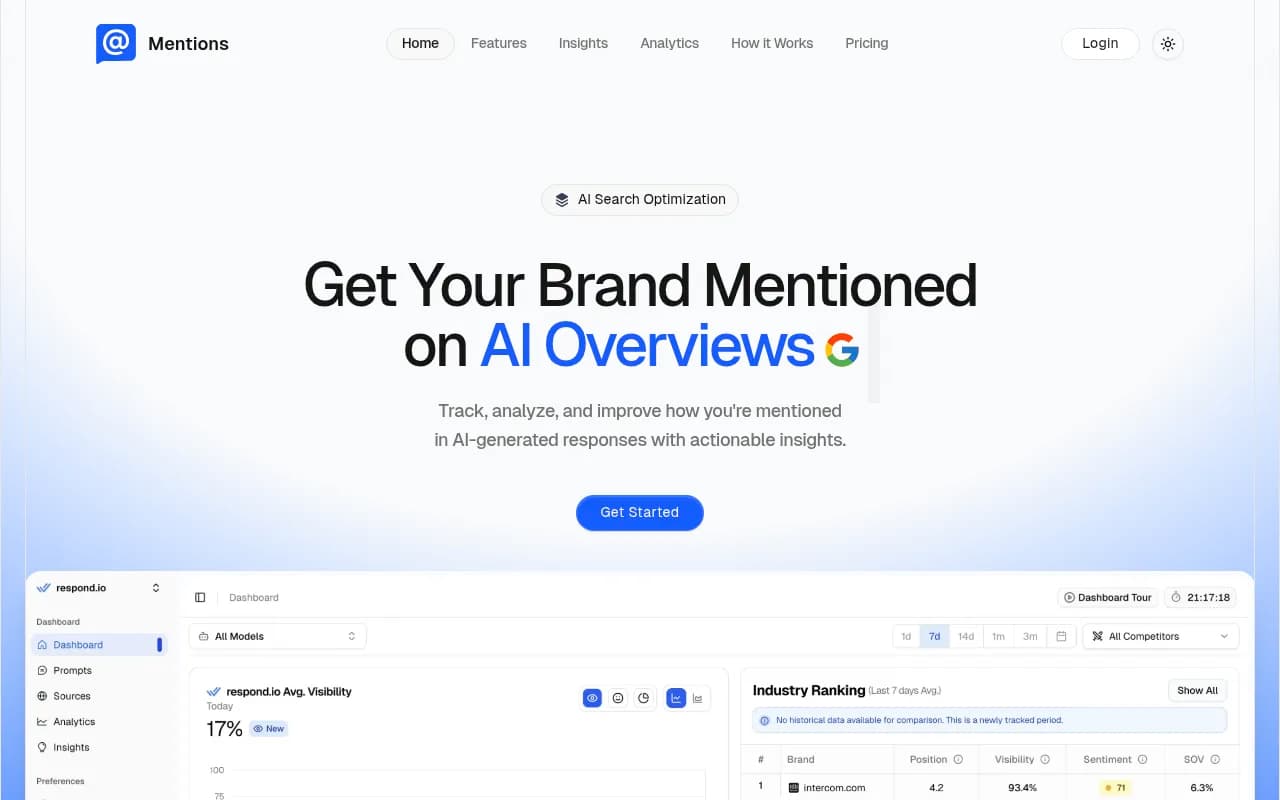
Mentions.so
Mentions.so is specifically built around brand mention tracking in AI search. It captures what AI models say about your brand across multiple engines and flags changes over time. The change-detection capability is particularly useful for hallucination monitoring -- if a model suddenly starts describing your product differently, you want to know.
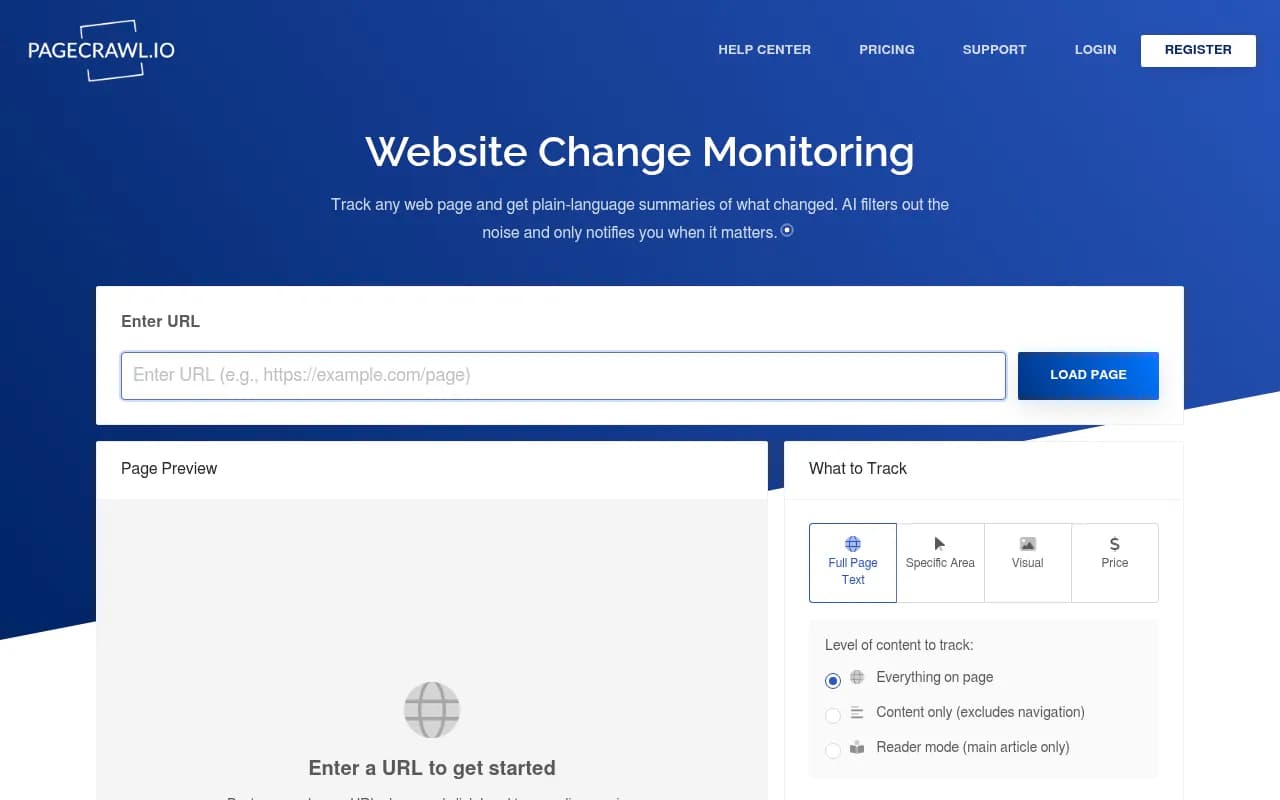
PageCrawl.io
PageCrawl.io takes a slightly different angle. It monitors web pages for changes and can alert you when pages that AI models cite about your brand change their content. If a third-party review site updates its description of your product to something inaccurate, and that page is a known citation source for AI responses, PageCrawl catches it. It's a useful complement to direct AI response monitoring.
SE Visible
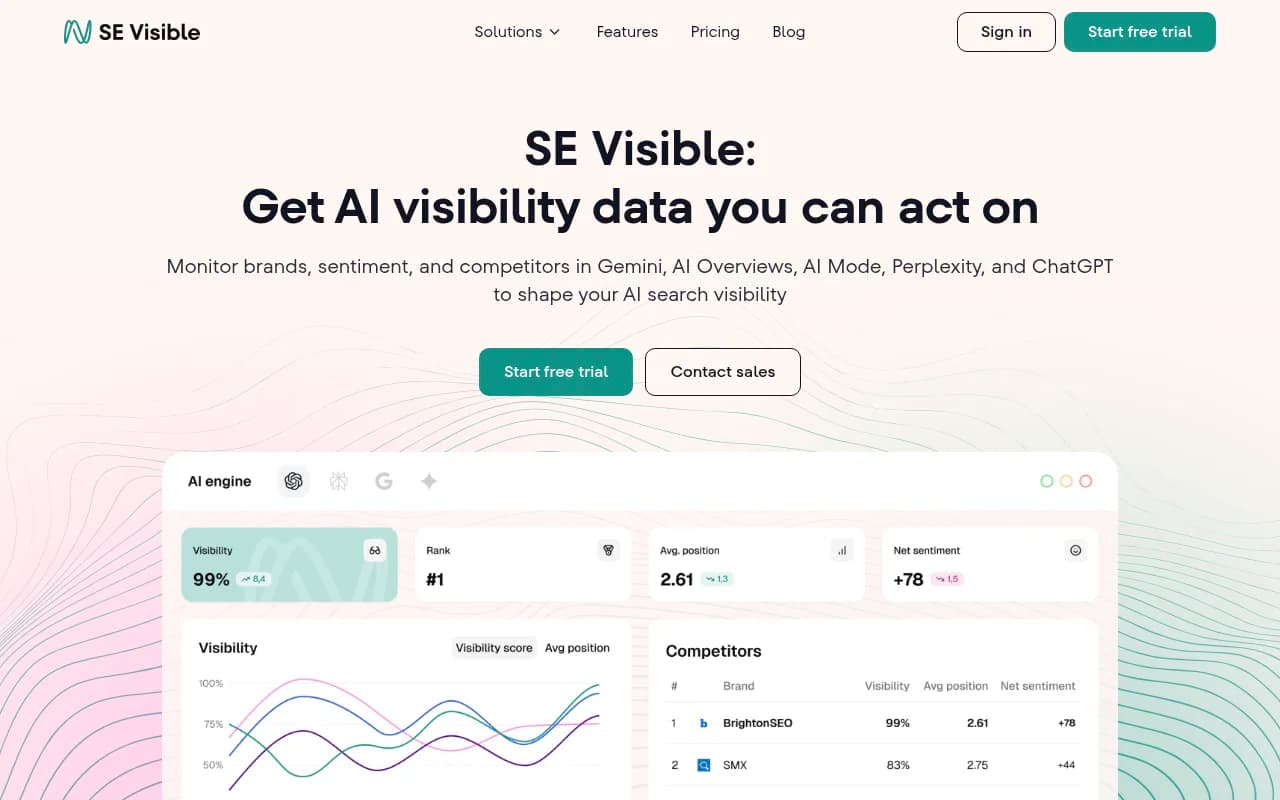
SE Visible (from SE Ranking) tracks brand visibility and sentiment across AI search engines with a focus on giving marketers a strategic view of how their brand is portrayed. The sentiment analysis covers tone and accuracy signals, making it useful for catching responses where your brand is described in ways that don't match your actual positioning.
Brandlight.ai
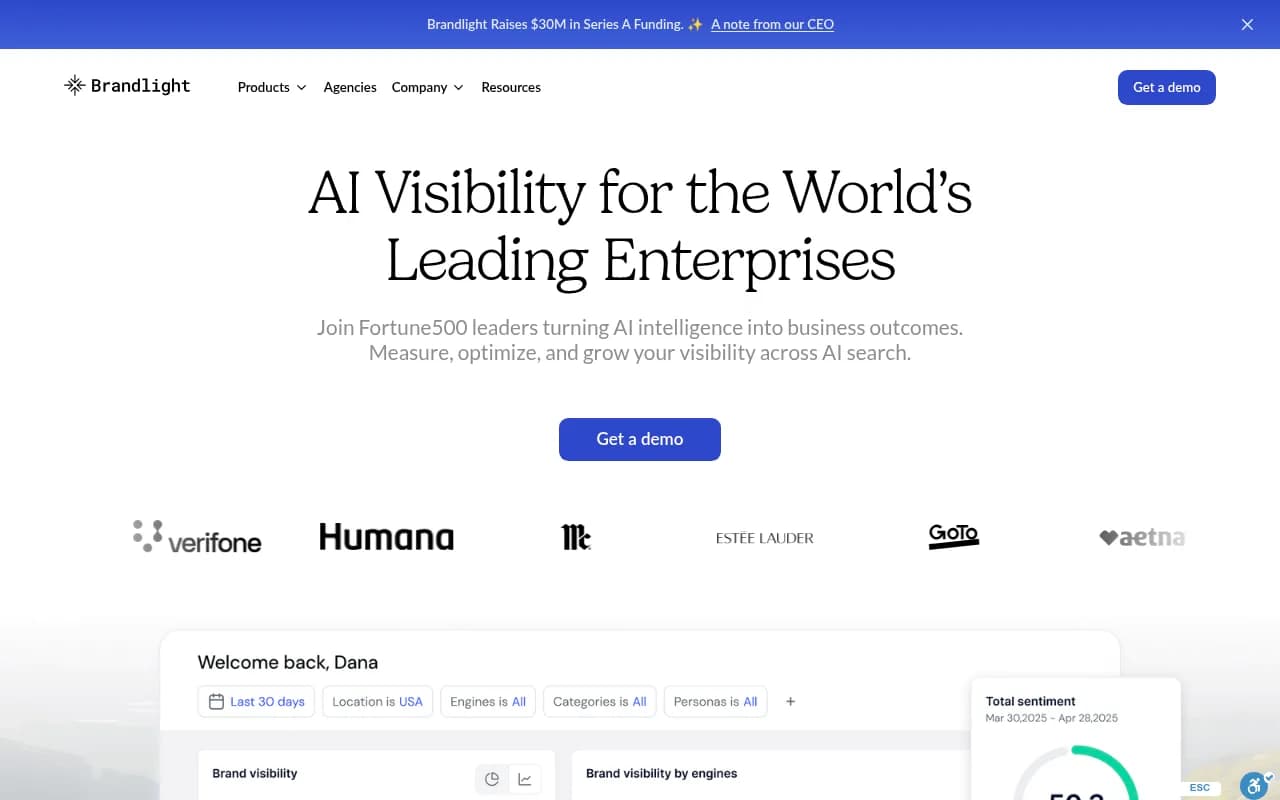
Brandlight.ai monitors brand mentions across AI platforms and provides analysis of how your brand is being portrayed. It covers the major LLMs and gives you a view of sentiment trends over time. Useful for teams that want ongoing monitoring without a heavy setup process.
Tool comparison: hallucination and accuracy monitoring features
| Tool | Models covered | Hallucination/accuracy detection | Citation tracking | Content fix tools | Best for |
|---|---|---|---|---|---|
| Promptwatch | 10 (incl. ChatGPT, Perplexity, Gemini, Claude, Grok) | Yes, with content gap analysis | Yes | Yes (Content Agents) | Full-loop detection + correction |
| LLMClicks | Major LLMs | Yes (explicit feature) | Basic | No | Hallucination-focused monitoring |
| Scrunch AI | Major LLMs | Via citation analysis | Yes (deep) | No | Source/citation investigation |
| Profound AI | Major LLMs | Via sentiment + response analysis | Yes | No | Enterprise accuracy auditing |
| Otterly.AI | ChatGPT, Perplexity, Google AI Overviews | Basic sentiment | Limited | No | Budget monitoring |
| Peec AI | Major LLMs | Basic sentiment | No | No | Simple brand mention tracking |
| Mentions.so | Major LLMs | Change detection | No | No | Alert-based monitoring |
| SE Visible | Major LLMs | Sentiment + tone | Limited | No | Strategic brand portrayal view |
| Brandlight.ai | Major LLMs | Sentiment trends | No | No | Ongoing brand monitoring |
| PageCrawl.io | N/A (web pages) | Via page change detection | Indirect | No | Third-party source monitoring |
How hallucinations actually get corrected
Detecting a hallucination is step one. Fixing it is harder, and it's worth being honest about what's possible.
AI models update their training data on irregular schedules, and you can't directly edit what a model "knows." What you can do is influence the sources it draws from. Models like ChatGPT, Perplexity, and Google AI Overviews pull from web content when generating responses -- so if you publish clear, authoritative, well-structured content that directly addresses the inaccurate claim, there's a reasonable chance the model will start citing that instead.
The practical steps look like this:
- Identify the specific inaccurate claim and which model is making it
- Find what source the model is citing (citation tracking tools help here)
- Publish content that directly and clearly states the accurate information -- product pages, FAQs, structured data, press releases
- Monitor whether the model's response changes after your content gets crawled
This process takes time -- typically weeks to months depending on how frequently the model updates its retrieval index. But it works, and it's the only reliable path to correction.
Promptwatch's Content Agents are designed specifically for step 3. They generate content based on the actual prompts where inaccuracies are appearing, grounded in your brand guidance and real citation data. The Agent Analytics feature then tracks the timeline from publish to crawl to citation change, so you can see whether your correction is working.
Specific hallucination types to watch for
Not all AI inaccuracies are the same. Some are more damaging than others, and some are more common.
Pricing and feature hallucinations are probably the most commercially damaging. A model that states your product costs $X when it costs $Y is actively misleading potential buyers. These tend to happen when pricing pages aren't well-structured for AI crawlers or when old pricing appears in cached content.
Competitor conflation happens when a model attributes a competitor's feature or positioning to your brand, or vice versa. This is especially common in crowded categories where multiple products have similar names or overlapping feature sets.
Outdated information is the most common type. A model might describe your company as being in a market you've pivoted away from, or list a product you discontinued. This reflects stale training data rather than a fundamental error in the model's reasoning.
Invented partnerships or integrations occasionally appear, especially for brands in the software space. A model might claim you integrate with a tool you don't, or that you're partnered with a company you've never worked with.
Wrong founding dates, team members, or company facts are less commercially damaging but can undermine trust if a prospect notices them.
Each type requires a slightly different correction strategy. Pricing hallucinations need well-structured, crawlable pricing pages. Outdated information needs fresh content that explicitly supersedes the old. Invented partnerships need clear, authoritative statements about your actual integrations.
Setting up a systematic monitoring workflow
Ad hoc checks aren't enough. If you're serious about hallucination monitoring, you need a repeatable process.
A basic workflow looks like this:
- Define a set of 20-50 prompts that a real customer might use to research your brand. Include product-specific questions, comparison queries ("X vs Y"), and category queries where you want to appear.
- Run these prompts across at least 4-5 major AI models weekly or bi-weekly.
- Capture the full response text, not just whether your brand was mentioned.
- Compare responses against a "ground truth" document that lists accurate information about your brand -- pricing, features, team, founding date, integrations.
- Flag any discrepancy for investigation and correction.
- Track changes over time so you can see whether hallucinations are persisting or resolving.
Tools like Promptwatch automate most of this. The prompt tracking, response capture, and citation analysis happen automatically. What you still need to provide is the ground truth -- a clear, internal document of what's accurate about your brand that you can use to evaluate what AI models are saying.
A note on monitoring vs. optimization
Most of the tools in this guide are primarily monitoring tools. They show you what's happening. A smaller number -- Promptwatch being the clearest example -- are optimization platforms that also help you change what's happening.
For hallucination tracking specifically, monitoring is necessary but not sufficient. You need to know what AI models are saying, but you also need a path to correcting it. If your team has the capacity to create corrective content independently, a monitoring-only tool might be enough. If you want the detection and the fix in one workflow, look at platforms that include content generation capabilities.
The market is moving fast here. Several tools that were monitoring-only a year ago are adding optimization features. Check current capabilities before committing to any platform.
Final thoughts
AI hallucinations about brands aren't going away. If anything, as more users rely on AI for initial research, the stakes of inaccurate AI responses are going up. The good news is that the tooling to track and address this has improved significantly in 2026.
The most important thing is to start monitoring systematically. Even a basic setup -- running a set of prompts across ChatGPT and Perplexity weekly and comparing responses to your ground truth -- will surface problems you didn't know existed. From there, you can decide how much tooling you need to manage the correction process at scale.