Key takeaways
- Most AI visibility tools are built for reporting cadences, not sprint cadences -- the best ones for agile teams close the loop between data and content creation in the same workflow.
- For teams that need to ship content every sprint, platforms with built-in content generation (not just monitoring) are worth the extra cost.
- Weekly sprints demand prompt-level data, not just brand mention counts -- you need to know which specific questions AI engines are answering without citing you.
- Promptwatch is the only platform in 2026 rated as a leader across monitoring, content generation, and optimization -- making it the strongest fit for teams that need to act on data, not just collect it.
- Lighter tools like Otterly.AI or Peec AI work fine for teams that just need a weekly visibility pulse with minimal setup.
Why agile marketing teams have a different problem than everyone else
Most AI visibility tools were designed for quarterly reporting. You set up a dashboard, watch your brand mention score tick up or down, and present it to leadership once a month. That's fine if your marketing org runs on long planning cycles.
Agile marketing teams don't work that way. A weekly sprint means you're deciding on Monday what to build, shipping it by Friday, and measuring it the following Monday. That cadence creates a very specific set of requirements for any tool you bring into the workflow:
- Data needs to be fresh enough to inform sprint planning, not just retrospectives.
- Gaps need to be specific enough to turn into a content brief in the same session.
- Output needs to be trackable at the page level so you can close the loop in the next sprint review.
The problem is that most AI visibility tools stop at step one. They tell you your brand appeared in 14% of relevant AI responses this week, down from 17% last week. That's a data point, not a sprint task. Your team leaves the standup with no clear action.
This guide is specifically about which platforms fit the way agile marketing teams actually work -- fast cycles, clear ownership, and a bias toward shipping over analyzing.
What agile marketing teams actually need from an AI visibility tool
Before comparing platforms, it's worth being precise about the requirements. A tool that works for a quarterly SEO review might be completely wrong for a team running two-week or one-week sprints.
Fresh data, not stale snapshots
Some platforms run their AI model queries on weekly or even monthly cycles. For a sprint team, that's too slow. You need data that reflects what ChatGPT, Perplexity, and Google AI Overviews are saying right now -- not what they said two weeks ago when your last sprint started.
Prompt-level specificity
Brand mention scores are too coarse for sprint planning. What you actually need is a list of specific prompts -- real questions users are asking AI engines -- where competitors appear and you don't. That's a content brief waiting to happen. Without that specificity, you can't assign a sprint task.
Built-in content creation or clear export paths
If your tool surfaces a gap and then stops, your team has to manually carry that insight into a separate writing tool, brief template, and publishing workflow. That's friction. For sprint teams, the best tools either generate the content brief directly or have clean integrations with the tools you're already using.
Page-level tracking
When you publish a new article in sprint 4, you want to know by sprint 6 whether AI engines are citing it. Page-level citation tracking closes the feedback loop that makes sprints meaningful. Without it, you're shipping into a black box.
Lightweight enough to actually use weekly
Some enterprise platforms require a 30-minute setup session just to pull a report. That's fine once a quarter. It's a dealbreaker if you're doing it every Monday morning before standup.
The platforms worth considering in 2026
Here's an honest look at the tools that come up most often for AI search visibility, evaluated specifically through the lens of agile marketing workflows.
Promptwatch -- best for teams that need the full loop
Promptwatch is the clearest fit for agile teams that want to close the gap between "we're invisible here" and "we published something to fix it." The core workflow maps almost directly onto a sprint cycle: find gaps on Monday, generate content mid-week, track results the following sprint.
The Answer Gap Analysis shows exactly which prompts competitors are visible for and you're not -- specific questions, not vague category scores. That's the kind of output you can drop straight into a sprint backlog as a content task. The Content Agents then generate articles, listicles, and briefs grounded in real prompt data and competitor analysis, so your writers aren't starting from scratch. And page-level tracking shows when a published page moves from crawled to cited, which is exactly the sprint retrospective data you need.
For teams that care about where AI engines are actually discovering their content, the AI Crawler Logs are genuinely useful -- you can see which pages ChatGPT and Perplexity are reading, how often, and whether they're hitting errors. Most competitors don't have this at all.
Pricing starts at $99/month for the Essential plan (1 site, 50 prompts, 5 articles) and $249/month for Professional (2 sites, 150 prompts, 15 articles, crawler logs). For a sprint team producing content weekly, the Professional plan is the practical minimum.

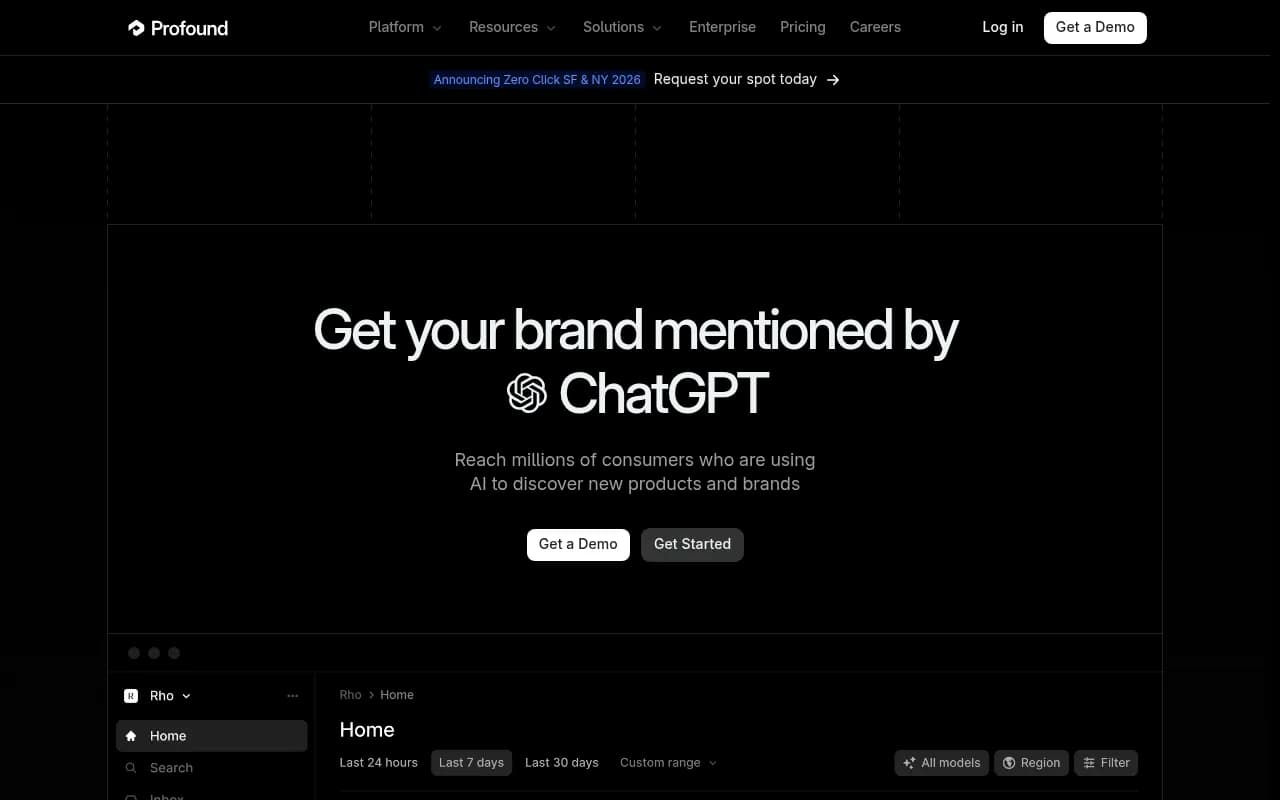
Profound -- best for enterprise teams with dedicated AEO resources
Profound is a strong monitoring platform with serious depth. It covers prompt volumes, answer engine insights, and agent analytics, and it has an agency mode that works well for teams managing multiple clients.
The honest limitation for agile teams is that Profound leans toward analysis over action. It's excellent at telling you what's happening across AI engines, but the content creation side is less developed than Promptwatch's. If your sprint team has a separate content function that just needs clear briefs and data, Profound can feed that workflow. If you need the tool to help generate the content too, it falls short.
It's also priced for enterprise budgets, which matters if you're a mid-market team trying to justify a weekly tool cost.
Otterly.AI -- best for small teams that just need a weekly pulse
Otterly.AI is a lightweight monitoring tool that tracks brand mentions across AI engines without a lot of setup overhead. For a small agile team that just wants to check in on visibility once a week and flag big changes, it's a reasonable starting point.
The limitation is that it stops at monitoring. There's no content gap analysis, no brief generation, no crawler logs. You'll see your visibility score, but you won't get the specific prompts or page-level data that sprint planning requires. Think of it as a smoke detector, not a fire suppression system.

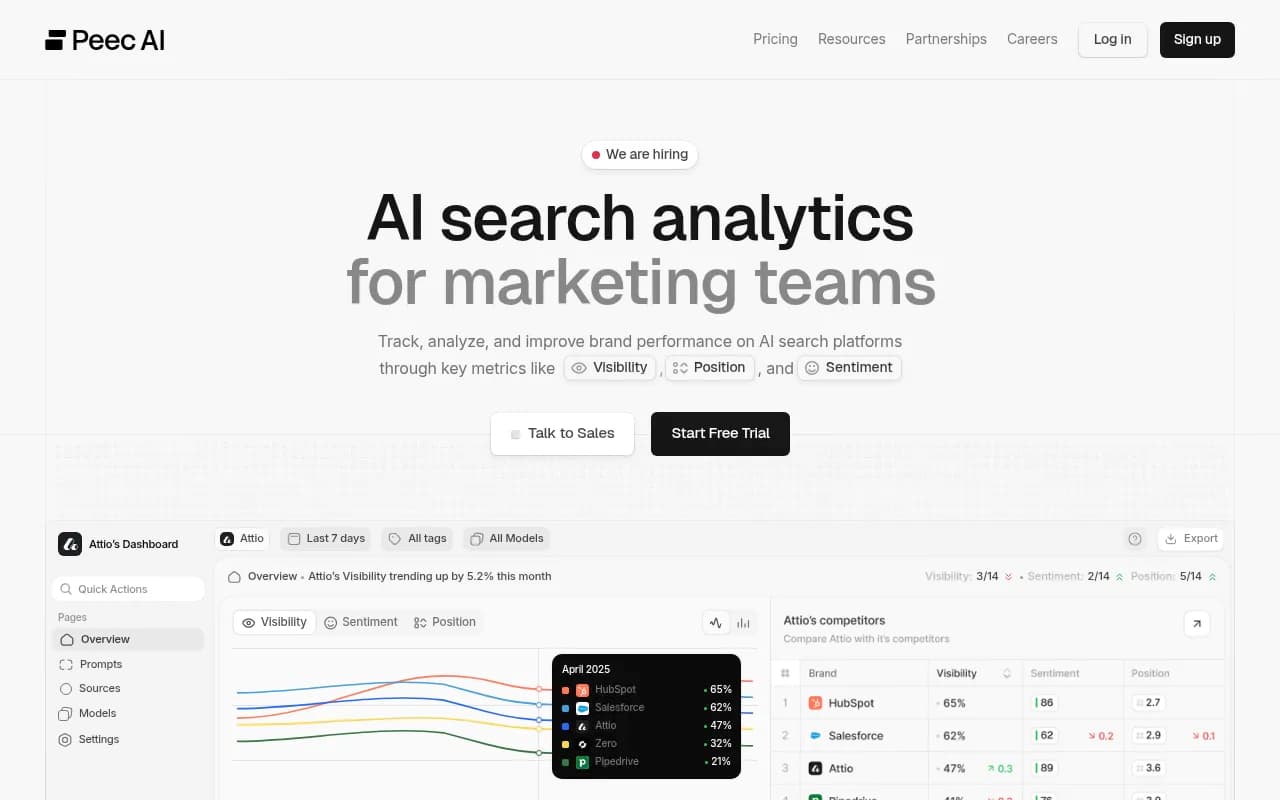
Peec AI -- best for prompt discovery on a budget
Peec AI stands out specifically for prompt discovery -- surfacing the questions users are actually asking AI engines in your category. For a sprint team trying to build a content backlog from real AI search behavior, that's genuinely useful.
Like Otterly.AI, it doesn't extend into content creation or page-level tracking. But if your workflow is "find the prompts, hand them to writers, track results elsewhere," Peec AI handles the first step well at a lower price point than the full-stack platforms.
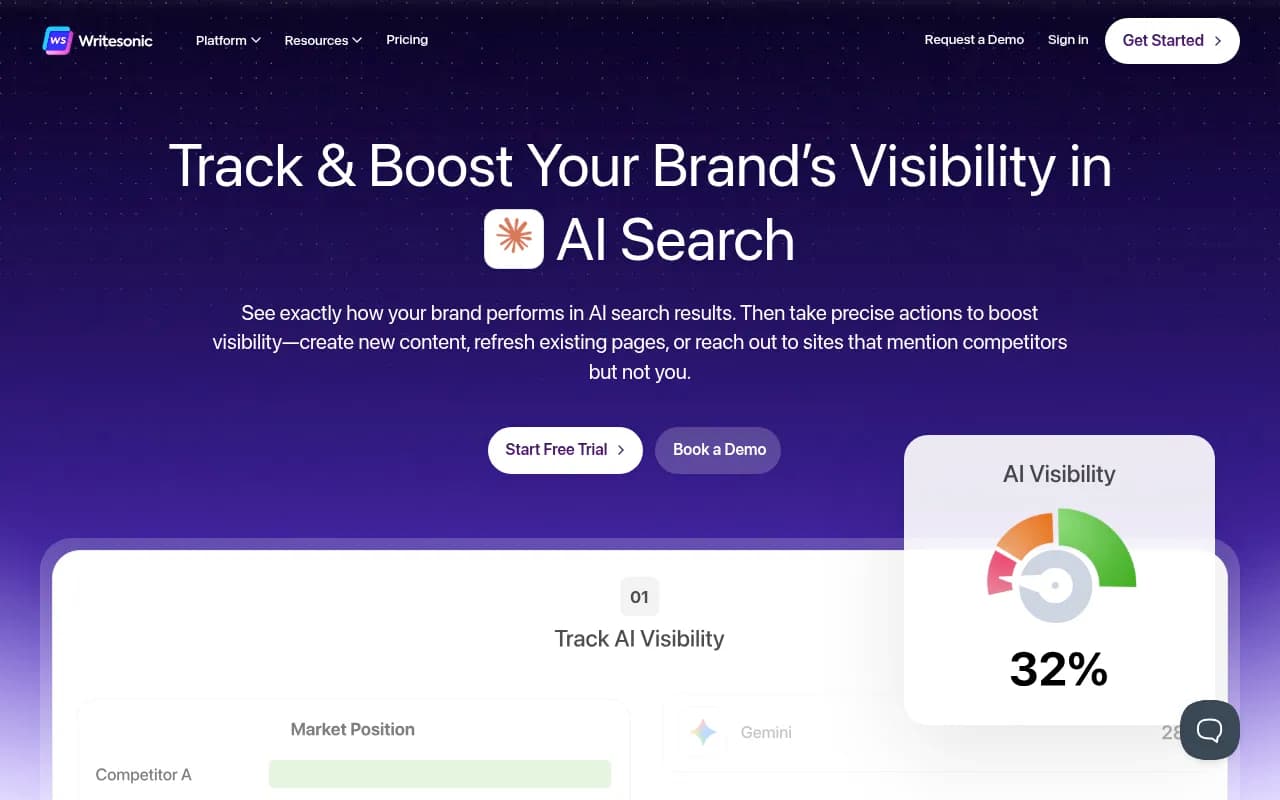
Writesonic -- best for teams that want monitoring and writing in one subscription
Writesonic has expanded beyond AI writing into AI search visibility tracking. It now tracks brand mentions across major AI engines and connects that data to its content creation tools. For a team already using Writesonic for content, adding visibility tracking without switching platforms is a reasonable choice.
The monitoring depth isn't as strong as Promptwatch or Profound -- fewer models tracked, less granular prompt data -- but the integrated writing workflow is genuinely convenient for sprint teams that prioritize speed over precision.
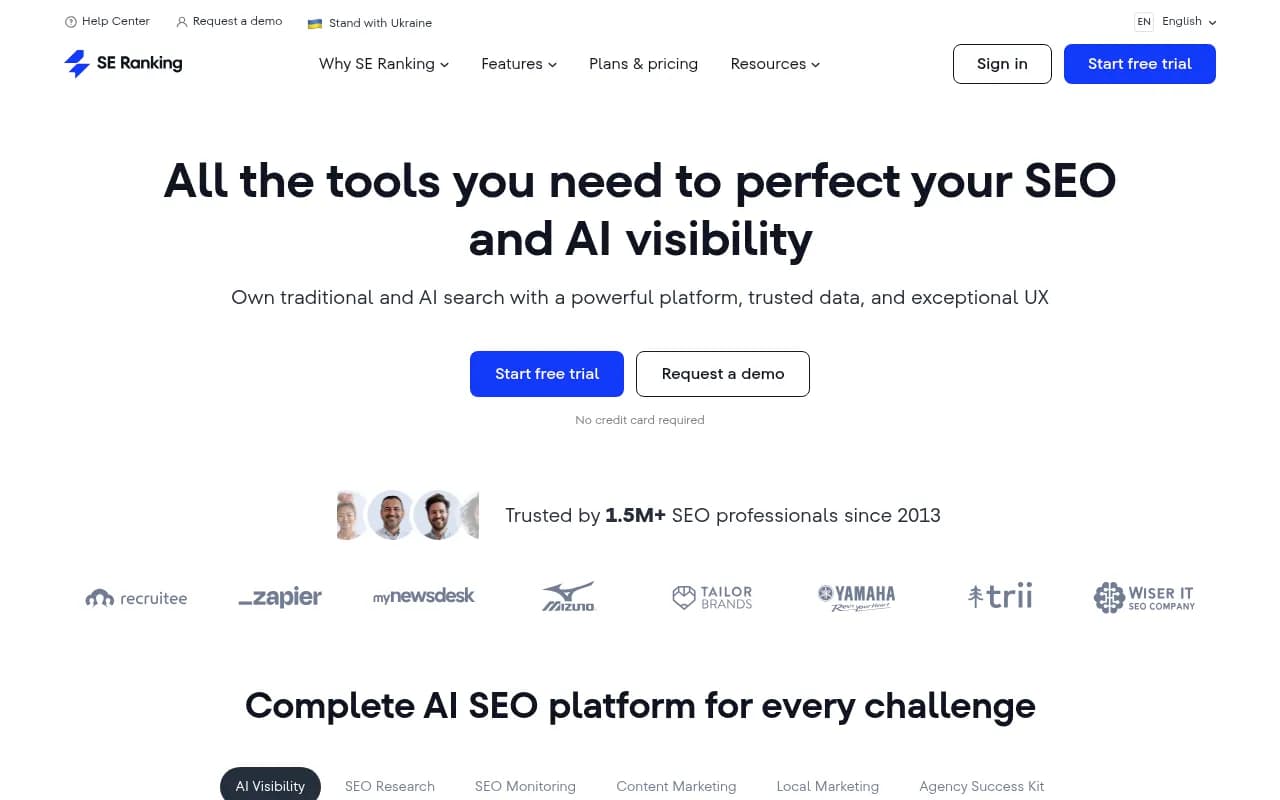
SE Ranking -- best for teams that want traditional SEO and AI visibility in one tool
SE Ranking has added AI visibility features to its existing SEO platform. If your team is already using SE Ranking for rank tracking and keyword research, the AI visibility layer adds useful context without requiring a new tool in the stack.
The AI visibility features are less mature than the dedicated platforms, but for a sprint team that needs "good enough" AI monitoring alongside solid traditional SEO data, it's a practical consolidation.
Nightwatch -- worth watching for AI search monitoring
Nightwatch has been building out AI search monitoring capabilities alongside its rank tracking core. It's a cleaner interface than some of the older SEO tools, and the AI monitoring features are improving. For teams that want a modern tool with room to grow, it's worth evaluating.
How these tools compare for agile workflows
| Tool | Prompt-level gap analysis | Content generation | Page-level tracking | AI crawler logs | Sprint-friendly pricing |
|---|---|---|---|---|---|
| Promptwatch | Yes | Yes (Content Agents) | Yes | Yes | From $99/mo |
| Profound | Yes | Limited | Yes | Yes | Enterprise |
| Otterly.AI | No | No | No | No | Budget |
| Peec AI | Yes | No | No | No | Budget |
| Writesonic | Partial | Yes | No | No | Mid-range |
| SE Ranking | Partial | No | No | No | Mid-range |
| Nightwatch | Partial | No | No | No | Mid-range |
The table makes the gap obvious. If your sprint workflow requires closing the loop from gap to content to citation, only Promptwatch covers all four columns. The others are useful for specific parts of the workflow but require you to stitch together multiple tools to get the same result.
How to structure AI visibility work inside a weekly sprint
The tools are only useful if the workflow around them is clear. Here's a sprint structure that actually works for agile marketing teams.
Monday: sprint planning (30 minutes)
Pull your AI visibility report at the start of the week. Look specifically at:
- Which prompts moved (up or down) since last sprint
- Which competitor gaps are new or widening
- Which pages you published in the last 2-3 sprints are now being cited (or not)
From this review, pick 1-3 content tasks for the sprint. These should be specific: "Write a comparison article targeting the prompt 'best [category] tools for [use case]'" is a sprint task. "Improve AI visibility" is not.
Tuesday-Wednesday: content creation
Use whatever writing tools your team prefers, but ground the brief in the prompt data from your visibility tool. The specific questions AI engines are asking -- and not finding answers to on your site -- are your brief. If your platform generates briefs directly (as Promptwatch does), use them. If not, export the prompt data and build the brief manually.
Thursday: publish and submit
Get the content live. If your platform has website integrations (Cloudflare, Vercel, Google Search Console, or a tracking snippet), make sure new pages are being picked up. Some platforms let you trigger a re-crawl or at least confirm the page is indexed.
Friday: sprint review
Check whether anything published in previous sprints has moved from "crawled" to "cited." This is your leading indicator that the workflow is working. It typically takes 1-3 weeks from publish to first citation, so you're reviewing the results of sprints 2-4 back, not the current one.
This lag is actually fine in an agile context -- it's the same as any other sprint metric with a delayed feedback loop. The key is tracking it consistently so you can see the trend.
Common mistakes agile teams make with AI visibility tools
Tracking too many prompts at once
It's tempting to monitor 200 prompts across every AI engine. In practice, a sprint team can act on maybe 5-10 gaps per week. Start narrow, track the prompts that matter most to your pipeline, and expand as you build capacity.
Treating the visibility score as the goal
Your brand mention rate going from 14% to 18% is a lagging indicator. The leading indicators are: how many gaps did we identify, how many content pieces did we publish against those gaps, and how many of those pieces are now being cited. Focus the sprint review on those numbers.
Ignoring the crawler logs
If AI engines are hitting your site but not citing your pages, there's usually a technical reason -- thin content, slow load times, crawl errors, or pages that aren't being indexed properly. The crawler logs in platforms like Promptwatch surface these issues directly. Most teams skip this and wonder why their content isn't getting picked up.
Switching tools every quarter
AI visibility is a new enough category that new tools launch constantly. The temptation to chase the newest platform is real, but switching costs are high -- you lose historical data, your team has to relearn the interface, and you reset your prompt tracking baseline. Pick a platform that covers your core workflow and stick with it for at least two quarters before evaluating alternatives.
Which tool should you actually start with?
For most agile marketing teams, the decision comes down to two questions: how much do you need the content generation side, and what's your budget?
If you need the full loop -- gaps, briefs, content, tracking -- and you're running weekly sprints where content output is the primary deliverable, Promptwatch is the right choice. The action loop it's built around (find gaps, generate content, track results) maps directly onto sprint planning, execution, and retrospective.
If you're a smaller team or just starting out and want to validate whether AI visibility work is worth the investment before committing to a full platform, Otterly.AI or Peec AI let you start cheap and get a feel for the data. Just know that you'll hit the ceiling quickly once you want to act on what you find.
If you're already on SE Ranking or Writesonic and don't want to add another tool to the stack, their AI visibility features are good enough to get started -- but plan to revisit the decision in 6 months as the category matures.
The one thing that's clear across all of these: monitoring without action is just reporting. Agile teams don't run sprints to produce reports. They run sprints to ship things. The tool that fits best is the one that makes it easy to go from "we're invisible here" to "we published something about it" in the same week.