Key takeaways
- Most AI visibility platforms show you monitoring data but leave report-building to you -- only a handful generate client-ready outputs automatically.
- The biggest differentiator in 2026 is not what a tool tracks, but whether it can explain why visibility changed and suggest what to do next.
- White-label reporting, scheduled delivery, and multi-model breakdowns are now table stakes for agency-focused tools.
- Platforms with built-in content generation (not just monitoring) let you close the loop from "you're invisible here" to "here's the content that fixes it."
- Promptwatch is the only platform in this comparison rated as a Leader across monitoring, reporting, and optimization -- the others tend to excel in one area and fall short in another.
Reporting is where most AI visibility platforms quietly fall apart.
The pitch sounds clean: track your brand across ChatGPT, Perplexity, Gemini, and the rest, then show clients how visible they are. But when it's time to actually send something to a client, you're staring at a raw data export, a half-finished dashboard, and a blank slide deck. The tool tracked everything. It just didn't help you do anything with it.
That gap -- between data and a deliverable -- is the real test of an AI visibility platform in 2026. This guide breaks down how the leading tools handle reporting: what they automate, what they leave to you, and which ones are genuinely built for client-facing work.
What "client-ready reporting" actually means
Before comparing tools, it's worth being specific about what agencies and marketing teams actually need from a report.
A useful client report on AI visibility should answer four questions:
- Where does the brand appear in AI responses, and how often?
- How does that compare to competitors?
- What changed since last month, and why?
- What should we do about it?
Most platforms answer questions 1 and 2 reasonably well. Question 3 is where things get patchy -- trend data exists, but narrative context is rare. Question 4 is where almost everyone stops. They show you the gap; they don't help you close it.
The tools that come closest to answering all four questions are the ones worth paying for.
The reporting features that actually matter
Automated scheduling and delivery
The baseline expectation for any agency tool is that reports go out without someone manually triggering them. Scheduled PDF or email delivery, white-label branding, and custom domains are now standard asks. If a platform requires you to log in, export a CSV, and paste it into a slide deck every month, it's not really an agency tool -- it's a research tool with a billing page.
Multi-model visibility breakdowns
Clients want to know: "Are we showing up in ChatGPT? What about Perplexity? Google AI Overviews?" A single aggregate visibility score is almost useless for this. Good reporting separates performance by model so you can explain why visibility is strong on one platform and weak on another.
Competitor benchmarking in the report itself
Visibility data without context is hard to sell. A score of 34% means nothing unless the client knows their closest competitor is at 61%. The best platforms embed competitor comparisons directly into the report view rather than requiring you to build a separate comparison manually.
Trend data with narrative context
Numbers going up or down is table stakes. What clients actually want is a sentence that says: "Your visibility on Perplexity dropped 12% this month, likely because a competitor published a detailed comparison article that now appears in 40% of relevant responses." That kind of narrative context is rare, but it's what separates a report from a dashboard screenshot.
Content gap visibility in the report
This is the feature that separates optimization platforms from monitoring platforms. If the report shows not just where you're invisible but which specific prompts you're missing -- and ideally links to content briefs that would fix them -- it becomes a sales tool, not just a status update.
How the major platforms compare
Here's how the leading AI visibility tools stack up on reporting features that matter for client work:
| Platform | Scheduled reports | White-label | Multi-model breakdown | Competitor benchmarking | Content gap in report | Content generation |
|---|---|---|---|---|---|---|
| Promptwatch | Yes | Yes | Yes (10 models) | Yes | Yes | Yes |
| Profound AI | Yes | Yes (Agency mode) | Yes | Yes | Partial | No |
| Otterly.AI | Limited | No | Partial | Limited | No | No |
| Peec AI | No | No | Partial | No | No | No |
| AthenaHQ | Yes | Partial | Yes | Yes | No | No |
| Search Party | Yes | Yes | Partial | Partial | No | No |
| AgencyAnalytics | Yes | Yes | No (not AI-specific) | Yes | No | No |
| Scrunch AI | Yes | Partial | Yes | Yes | No | No |
| Ahrefs Brand Radar | No | No | No | Partial | No | No |
| Semrush | Limited | No | No | Partial | No | No |
A few things stand out immediately. AgencyAnalytics is excellent for traditional marketing reporting but has no native AI visibility tracking -- you'd be building that layer yourself. Ahrefs Brand Radar and Semrush are traditional SEO tools that have added some AI monitoring, but their reporting infrastructure wasn't designed for this use case. The tools built specifically for AI visibility -- Promptwatch, Profound AI, AthenaHQ, Otterly.AI -- are the ones worth evaluating seriously.
Platform-by-platform breakdown
Promptwatch
Promptwatch is the most complete option for agencies that need to both report on AI visibility and actually improve it. The reporting layer covers all 10 major AI models (ChatGPT, Perplexity, Google AI Overviews, Google AI Mode, Claude, Gemini, Meta/Llama, DeepSeek, Grok, Mistral, Copilot), with page-level citation tracking that shows exactly which pages are being cited, how often, and by which model.

What makes Promptwatch's reporting different is that it doesn't stop at the dashboard. The Answer Gap Analysis -- which shows exactly which prompts competitors rank for but you don't -- is built into the reporting flow. A client report can include not just "here's your visibility score" but "here are the 12 prompts your competitors are winning that you're not, and here's the content we're building to close those gaps." That's a fundamentally different conversation than a monthly screenshot of a visibility chart.
The platform also includes AI Crawler Logs, which track when ChatGPT, Claude, Perplexity, and other AI crawlers visit your site, which pages they read, and when those pages move from crawl to citation. This is the kind of technical detail that enterprise clients and sophisticated agencies want -- and it's almost entirely absent from competing platforms.
Pricing starts at $99/month for the Essential plan (1 site, 50 prompts), with the Professional plan at $249/month adding crawler logs, multi-location tracking, and 15 content articles per month.
Profound AI
Profound AI has a well-designed Agency mode that includes brand configurations and pitch environments -- useful for client onboarding and presenting initial visibility audits. The reporting is polished and the competitor benchmarking is strong.
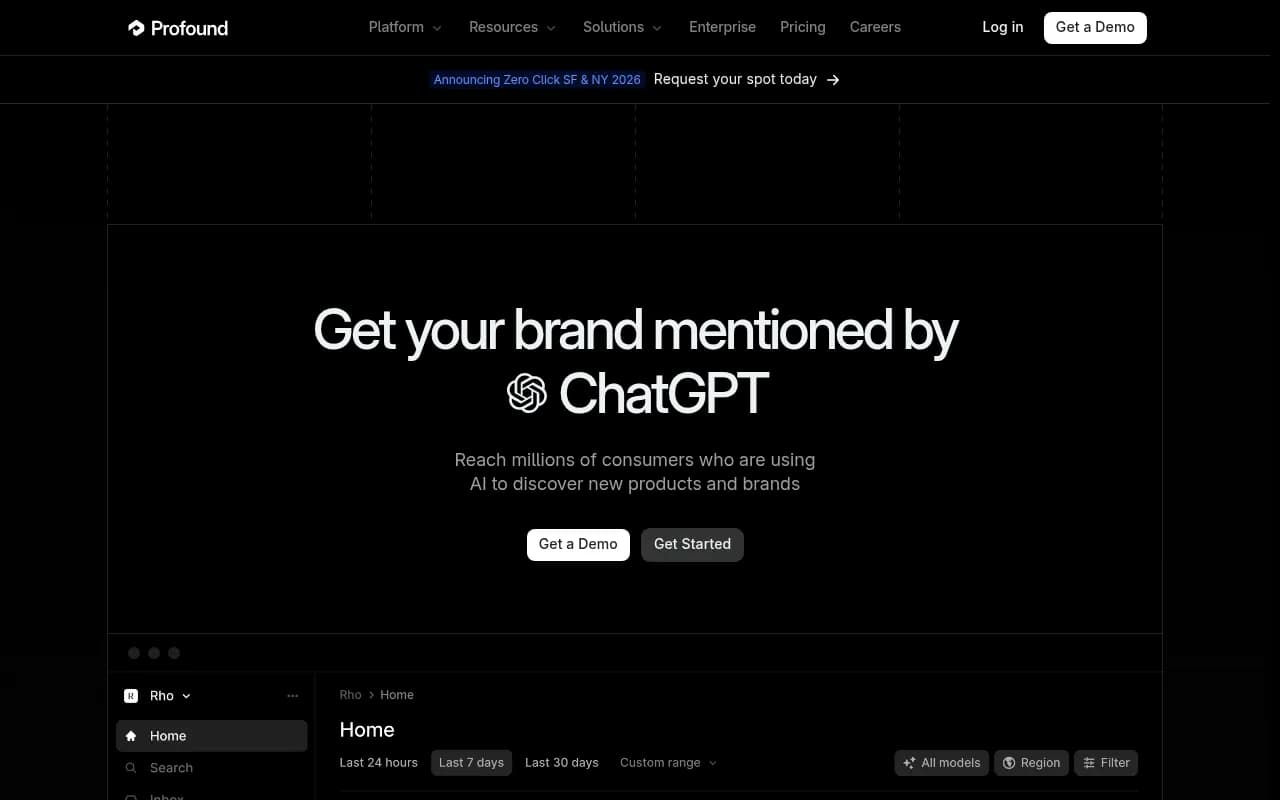
Where Profound falls short is in the action layer. It's a strong monitoring and reporting platform, but there's no content generation built in. You can identify gaps; you can't close them from within the platform. For agencies that have their own content production workflow, that's fine. For teams that want everything in one place, it's a gap.
Otterly.AI
Otterly.AI is a lightweight, affordable option for teams that want basic AI visibility monitoring without a large investment. The reporting is simple -- visibility scores by model, basic trend data -- and it works well enough for early-stage tracking.

The limitations show up quickly when clients start asking harder questions. There's no white-label reporting, no content gap analysis, and no content generation. It's a monitoring tool, not a reporting platform. Fine for internal use; harder to justify as a client deliverable.
AthenaHQ
AthenaHQ has built a solid monitoring platform with good multi-model coverage and decent competitor benchmarking. The reporting interface is cleaner than many competitors, and scheduled delivery is available.
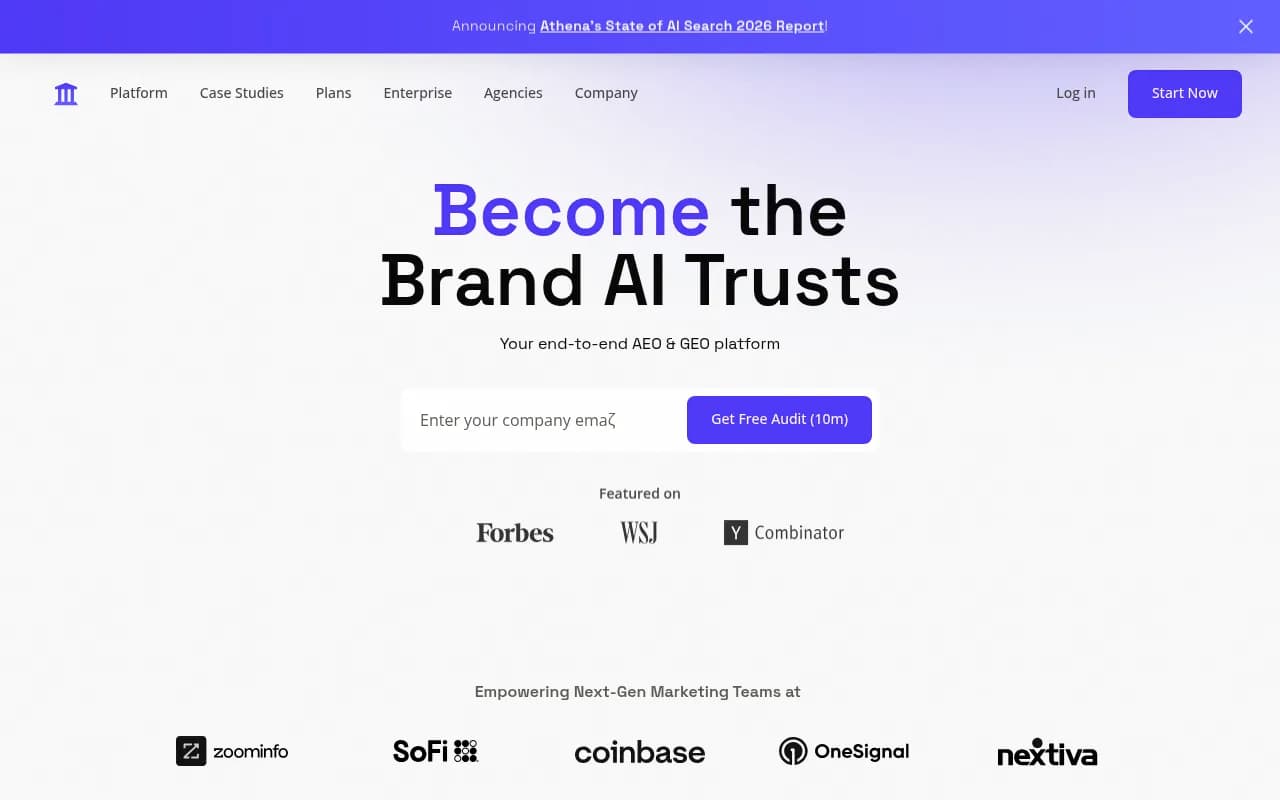
The gap is on the optimization side. AthenaHQ shows you what's happening but doesn't help you change it. For agencies whose value proposition is "we'll improve your AI visibility," that means the platform handles the measurement but the strategy and execution have to come from somewhere else.
Search Party
Search Party is positioned as an agency-oriented platform with a focus on client management features. White-label reporting is available, and the multi-client dashboard is well-designed.
Search Party
The reporting depth is thinner than Promptwatch or Profound -- prompt metrics are limited and there's no content gap analysis. It works well as a client-facing reporting layer if you're comfortable with the shallower data underneath.
AgencyAnalytics
AgencyAnalytics is worth mentioning because many agencies already use it for traditional marketing reporting (SEO, PPC, social). The white-label reporting and client portal features are genuinely excellent.
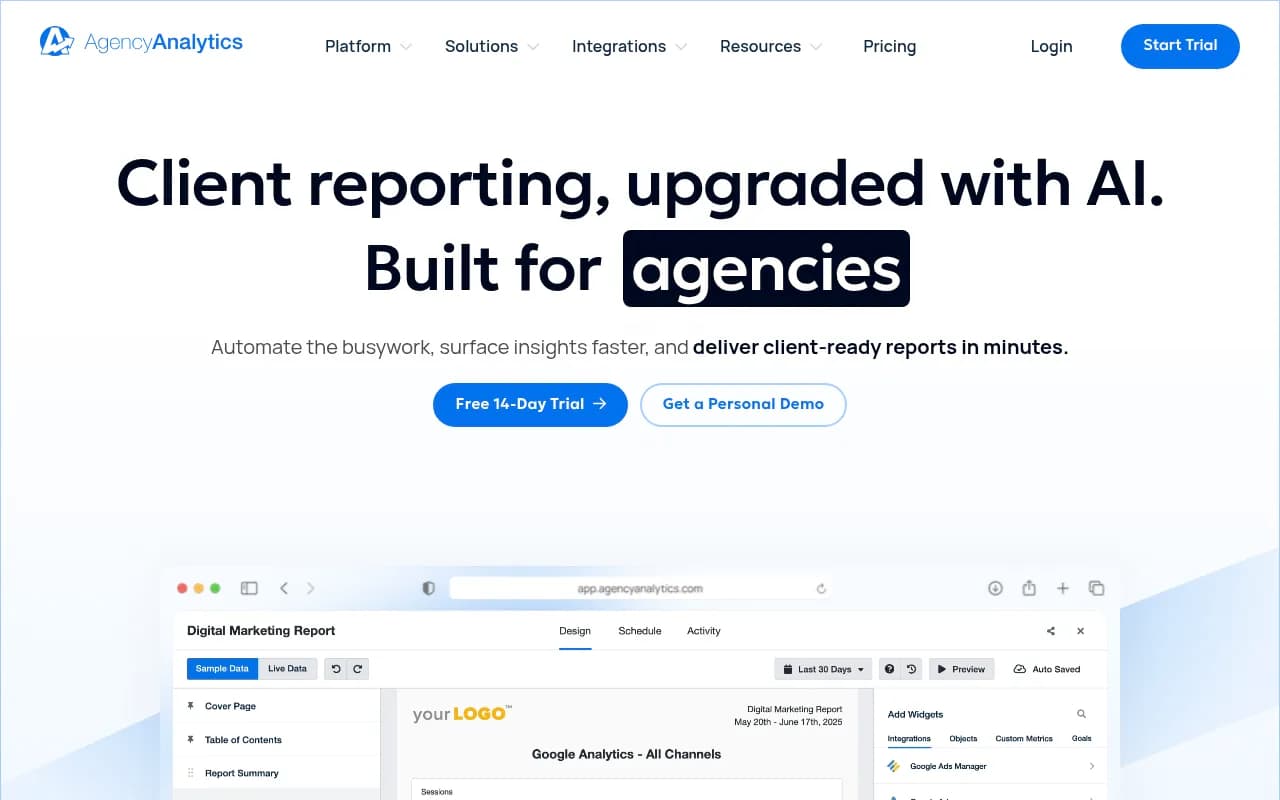
But it's not an AI visibility platform. There's no native tracking of ChatGPT citations, Perplexity mentions, or Google AI Overviews performance. If you're trying to report on AI visibility specifically, you'd need to pipe data in from another source -- which defeats the purpose of an integrated platform.
Scrunch AI
Scrunch AI covers the monitoring basics well and has reasonable reporting features for mid-market use cases. Multi-model breakdowns are available, and competitor comparisons are included.
Like most monitoring-focused platforms, it stops before the optimization layer. Reports show where you stand; they don't suggest what to build or generate the content to fix gaps.
The reporting gap nobody talks about: traffic attribution
One thing that's almost entirely absent from most AI visibility reports is the connection between visibility and revenue. You can show a client that their brand appears in 34% of relevant ChatGPT responses, but if you can't connect that to website traffic or conversions, the number is hard to act on.
Promptwatch's traffic attribution connects AI visibility data to actual site visits, which means you can show a client not just "you're being cited more" but "that citation increase drove 2,400 additional visits last month." That's the kind of number that justifies a retainer.
Most other platforms in this space don't have this. They track citations; they don't track what those citations do.
What agencies should actually look for
If you're evaluating AI visibility platforms for client reporting, here's a practical checklist:
- Can reports be scheduled and delivered automatically, without someone logging in each month?
- Is white-label branding available, including custom domains?
- Does the report break down visibility by individual AI model, not just an aggregate score?
- Are competitor comparisons embedded in the report, or do you have to build them manually?
- Does the platform show which specific prompts you're missing (not just a generic "visibility score")?
- Is there a content generation layer, or do you have to take the gap analysis somewhere else to act on it?
- Can you connect visibility data to traffic or revenue, even roughly?
No platform checks every box perfectly. But the gap between "checks 3 of 7" and "checks 6 of 7" is significant when you're trying to build a scalable agency reporting workflow.
The monitoring-only trap
There's a pattern worth naming explicitly. A lot of AI visibility platforms launched in 2024 and 2025 as monitoring tools -- they track citations, score visibility, and show dashboards. That was genuinely useful when the category was new and clients just wanted to understand what was happening.
In 2026, clients want more. They want to know what to do. An agency that delivers a monthly report showing visibility scores without a plan to improve them is going to lose that client to an agency that can say: "Here are the gaps, here's the content we're building, and here's how visibility improved last quarter."
That shift -- from monitoring to optimization -- is the defining story of the AI visibility category right now. The platforms that have built the optimization layer (content gap analysis, content generation, crawler log analysis) are pulling ahead. The ones that stayed monitoring-only are competing on price.
Recommendations by use case
For agencies managing multiple clients
Promptwatch is the strongest option. The multi-client infrastructure, white-label reporting, scheduled delivery, and built-in content generation mean you can run a full AI visibility service without stitching together multiple tools. The Agency/Enterprise plan includes custom pricing for larger portfolios.
For in-house marketing teams
Profound AI or Promptwatch both work well here. Profound has a clean interface and strong monitoring; Promptwatch adds the content generation layer if your team wants to act on what it finds.
For teams just starting to track AI visibility
Otterly.AI or Peec AI are reasonable starting points -- lower cost, simpler setup, enough data to understand the basics. You'll likely outgrow them once clients start asking harder questions.

For enterprise brands with complex reporting needs
Promptwatch's Business plan ($579/month for 5 sites) or the Enterprise tier covers the depth needed: crawler logs, multi-region tracking, Looker Studio integration, API access, and traffic attribution. Profound AI is also worth evaluating at this level.
A note on general reporting tools
It's worth briefly addressing platforms like Power BI, Tableau, Whatagraph, and Looker Studio, which come up in broader "best reporting tools" conversations. These are powerful data visualization and reporting platforms, but they don't natively track AI visibility. You could theoretically pipe data from an AI visibility platform into one of these tools via API, but that's a significant technical lift -- and you'd lose the context-aware features (content gap analysis, crawler logs, prompt intelligence) that make AI visibility data actionable.
For most agencies, the right answer is a purpose-built AI visibility platform with strong reporting features, not a general BI tool trying to do a specialized job.
Bottom line
The AI visibility reporting category has matured fast. In 2024, any tool that could show you a citation count felt impressive. In 2026, the bar is higher: clients expect scheduled reports, competitor benchmarks, model-level breakdowns, and -- increasingly -- a clear answer to "what are we doing about this?"
The platforms that have built toward that answer are the ones worth investing in. The ones that stopped at the dashboard are going to feel thin by the end of the year.
If you're building an agency practice around AI visibility, or trying to justify AI search investment to a skeptical CMO, the reporting layer is where you win or lose that conversation. Choose a platform that helps you win it.