Key takeaways
- Otterly.AI is the cheapest entry point at $29/month, but its feature set is limited to basic monitoring with no content generation or crawler logs
- Peec AI sits in the mid-market at around €89/month with solid competitive analysis, but still monitoring-only
- Profound starts at $499/month and targets enterprise teams, but costs 48% more than comparable platforms and won't help you create content to close visibility gaps
- Promptwatch starts at $99/month and is the only platform in this group that combines monitoring, content gap analysis, and AI content generation in one loop
- Price alone doesn't tell the full story -- what matters is whether the platform helps you act on what it finds
Pricing pages for AI visibility tools are a mess. Some show you a number and hide the limits. Others list features without telling you which tier they're actually on. And a few just say "contact sales" and leave you guessing.
This guide cuts through that. I've pulled together the real pricing for the four platforms most people are comparing right now -- Promptwatch, Profound, Peec AI, and Otterly.AI -- and laid out what you actually get at each tier. Not the marketing copy. The actual numbers.
But pricing is only half the story. A $29/month tool that shows you a problem without helping you fix it might cost you more in the long run than a $249/month platform that closes the loop. So I'll cover that too.
Why AI visibility pricing is hard to compare
Before getting into the numbers, it's worth understanding why these tools are priced so differently. They're not all doing the same thing.
Some platforms are pure monitoring dashboards. They track how often your brand appears in AI responses, show you a visibility score, and let you compare against competitors. That's useful, but it's a starting point, not a solution.
Other platforms go further. They tell you which prompts you're missing, why competitors are getting cited instead of you, and what content you'd need to create to change that. A few even generate that content for you.
The price gap between a $29/month tracker and a $499/month enterprise platform often reflects this difference. The question is whether the more expensive tool is actually doing more, or just charging more for the same thing in a nicer interface.
Otterly.AI pricing
Otterly.AI is the most affordable option in this comparison. Plans start at $29/month for 15 prompts, with a Standard tier at $189/month for 100 prompts. There's a Premium tier with higher limits, but pricing isn't listed publicly -- you'd need to contact them.
Otterly.AI covers the basics: brand mention tracking across ChatGPT, Perplexity, and a handful of other AI models. It's clean, fast to set up, and genuinely useful if you just want to know whether your brand is showing up.
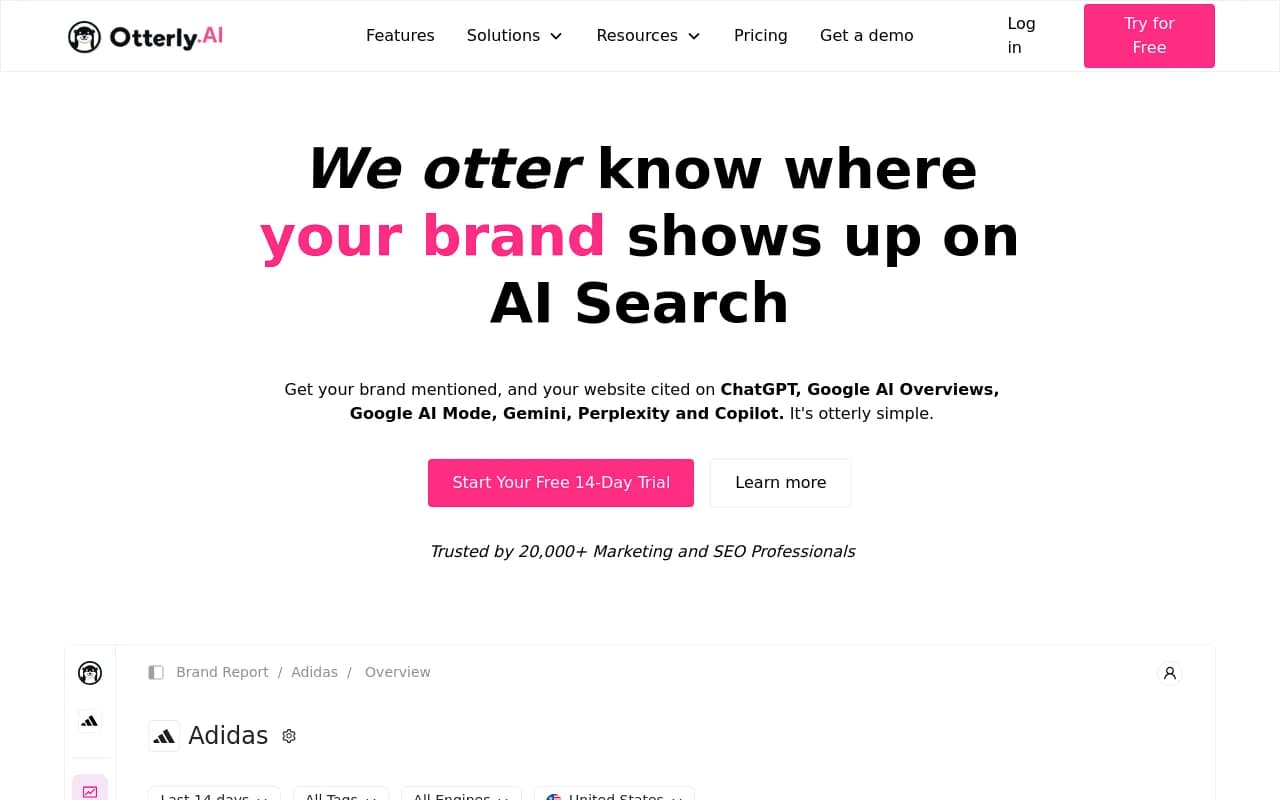
What it doesn't do: there's no content generation, no crawler logs, no prompt volume data, no traffic attribution. If Otterly tells you that a competitor is appearing for a prompt you're missing, you're on your own figuring out what to do about it.
For small teams or individuals who want a quick pulse check on AI visibility without a big budget commitment, Otterly is a reasonable starting point. But it's a monitoring tool, not an optimization platform.
Peec AI pricing
Peec AI sits in the mid-market. The main plan runs around €89/month (roughly $95-100 depending on exchange rates), which gets you competitive analysis, multi-language support, and direct Slack support -- a nice touch for teams that want responsive help.
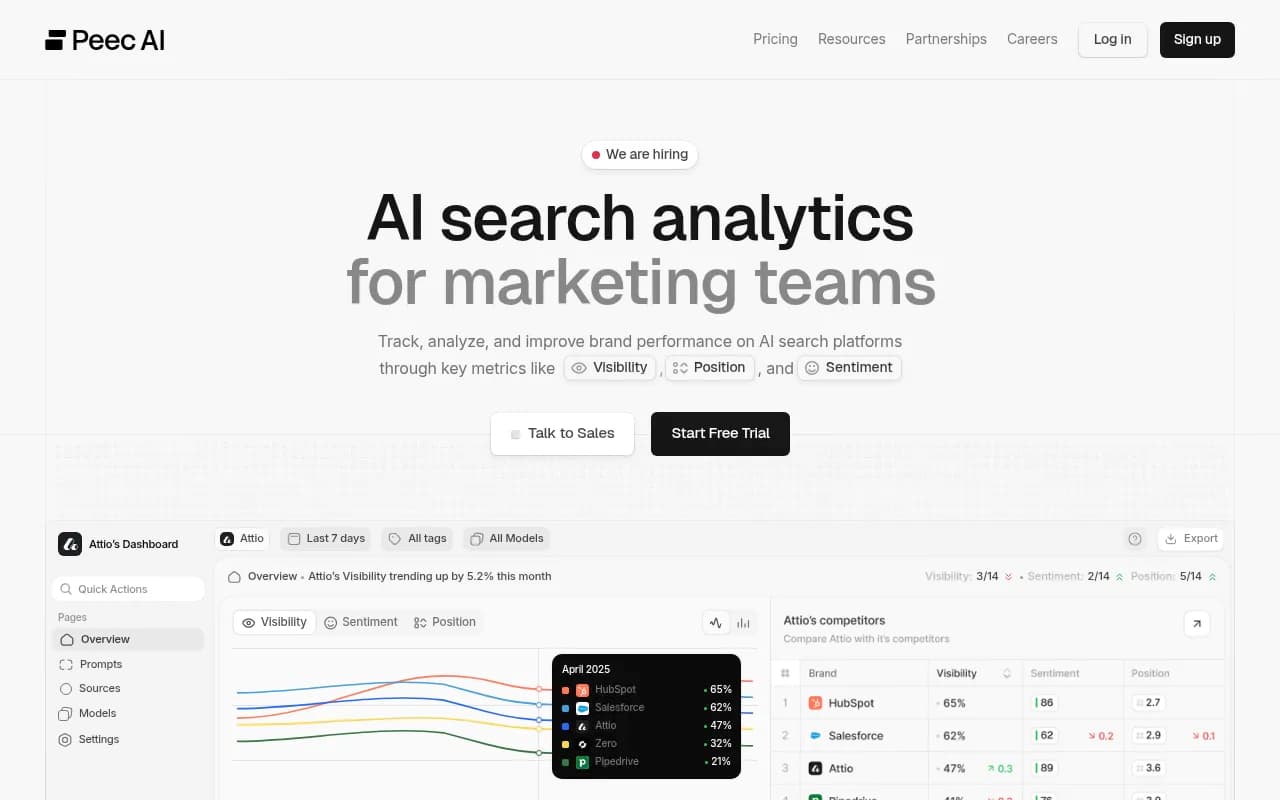
Peec AI's strength is its competitive analysis layer. You can see how your brand compares to competitors across different AI models, which is more actionable than a raw visibility score. The interface is clean and the reporting is solid.
The limitation is the same as Otterly's: it's a reporting tool. Peec AI shows you where you stand and how competitors are doing, but it doesn't help you create the content that would improve your position. For mid-market teams with a content team ready to act on the data, that's fine. For teams that need the full loop, it's a gap.
Profound pricing
Profound is the enterprise option here. Plans start at $499/month, and meaningful features sit behind higher tiers. Some sources put the effective cost for a full enterprise deployment significantly higher once you factor in the tiers needed for real depth.
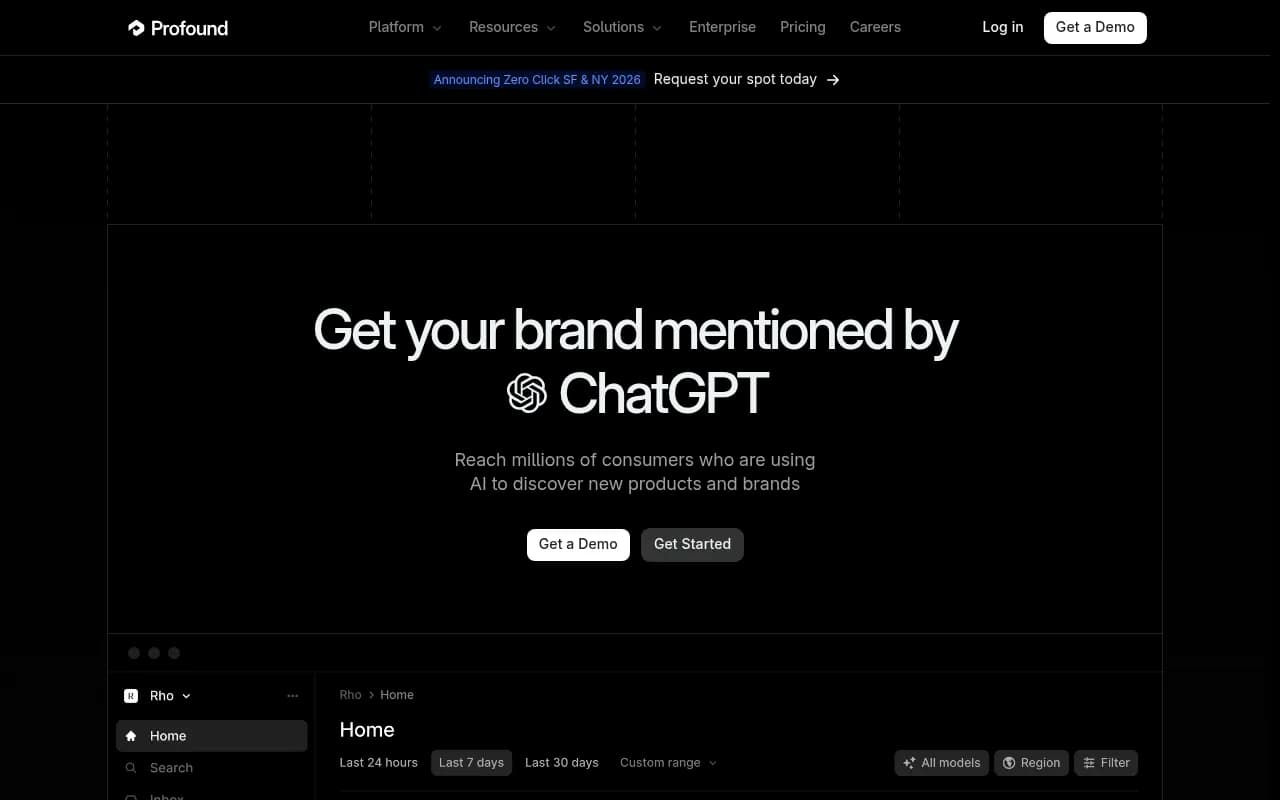
Profound's analytics are genuinely strong. It covers a wide range of AI models, provides detailed citation analysis, and gives enterprise teams the kind of depth they need for serious competitive intelligence. If you're a large brand with a dedicated SEO or AI visibility team, Profound has the data.
The criticism that comes up consistently: Profound costs around 48% more than comparable platforms, and like Peec AI and Otterly, it diagnoses the problem without fixing it. There's no built-in content generation, no crawler logs, and no direct path from "here's your visibility gap" to "here's the content that closes it." At $499/month, that's a meaningful limitation.
Promptwatch pricing
Promptwatch takes a different approach to pricing and to the product itself. There are three public tiers:
- Essential: $99/month -- 1 site, 50 prompts, 5 articles
- Professional: $249/month -- 2 sites, 150 prompts, 15 articles, crawler logs, state/city tracking
- Business: $579/month -- 5 sites, 350 prompts, 30 articles
Agency and enterprise plans are available with custom pricing. Annual billing brings the cost down.

The pricing is competitive at every tier compared to the alternatives above. But the more important difference is what you get for that price.
Promptwatch is built around what it calls an action loop: find gaps, create content, track results. The Answer Gap Analysis shows you exactly which prompts competitors rank for that you don't. The built-in AI writing agent then generates content -- articles, listicles, comparisons -- grounded in citation data from over 880 million citations analyzed. Then page-level tracking shows whether that new content is actually getting cited by ChatGPT, Claude, Perplexity, and other models.
That's a materially different product from a monitoring dashboard. It's the difference between a diagnostic tool and a treatment plan.
The Professional tier adds AI crawler logs, which show you in real time which pages ChatGPT, Claude, and Perplexity are crawling on your site, how often they return, and what errors they hit. Most competitors don't offer this at all.
Side-by-side pricing comparison
| Platform | Entry price | Prompts (entry) | Content generation | Crawler logs | Traffic attribution | AI models covered |
|---|---|---|---|---|---|---|
| Otterly.AI | $29/month | 15 | No | No | No | ~5 |
| Peec AI | ~€89/month | Not specified | No | No | No | Multiple |
| Profound | $499/month | Not specified | No | No | Limited | 10+ |
| Promptwatch | $99/month | 50 | Yes (5 articles) | Pro+ | Yes | 10+ |
A few things stand out from this table. Promptwatch is cheaper than Profound at entry level by a factor of five, and it includes content generation that none of the others offer. Otterly is cheaper than Promptwatch, but the gap in capability is significant -- 15 prompts and no path to action versus 50 prompts and a built-in content workflow.
What you're actually paying for
The pricing tiers above are easy to compare. The harder question is what you're actually buying.
If you're paying $29/month for Otterly, you're buying awareness. You'll know whether your brand is showing up in AI responses. That's genuinely useful if you're just starting to think about AI visibility and want a low-risk way to get a sense of the landscape.
If you're paying €89/month for Peec AI, you're buying competitive context. You'll see how you compare to competitors across AI models, which is a step up from raw monitoring. For teams with content capacity who just need the intelligence layer, this works.
If you're paying $499/month for Profound, you're buying depth. The analytics are more detailed, the coverage is broader, and the enterprise features are real. But you're still paying a premium for a tool that tells you what's wrong without helping you fix it.
If you're paying $99-$579/month for Promptwatch, you're buying the loop. The monitoring is there, but so is the content gap analysis, the AI writing agent, the crawler logs, and the traffic attribution. For teams that want to actually improve their AI visibility rather than just measure it, that's a different value proposition.
Feature depth comparison
Beyond pricing, here's how the platforms stack up on specific capabilities that matter for AI visibility work:
| Feature | Otterly.AI | Peec AI | Profound | Promptwatch |
|---|---|---|---|---|
| Brand mention tracking | Yes | Yes | Yes | Yes |
| Competitor visibility comparison | Basic | Yes | Yes | Yes |
| Prompt volume / difficulty scores | No | No | Limited | Yes |
| Answer gap analysis | No | No | No | Yes |
| AI content generation | No | No | No | Yes |
| AI crawler logs | No | No | No | Yes (Pro+) |
| Reddit / YouTube tracking | No | No | No | Yes |
| ChatGPT Shopping tracking | No | No | No | Yes |
| Traffic attribution | No | No | No | Yes |
| Multi-language / multi-region | Limited | Yes | Yes | Yes |
| Free trial | Yes | Yes | No | Yes |
The Reddit and YouTube tracking is worth calling out specifically. AI models like ChatGPT and Perplexity frequently cite Reddit threads and YouTube videos in their responses. If you're not tracking which discussions are influencing AI recommendations, you're missing a significant part of the picture. Promptwatch surfaces these; the others don't.
Who should use which platform
There's no single right answer here, and I'd be skeptical of anyone who tells you otherwise. The right platform depends on your team size, budget, and what you actually need to do with the data.
If you're an individual or very small team with a tight budget and you just want to know whether your brand is appearing in AI responses, Otterly at $29/month is a reasonable starting point. Don't expect it to tell you what to do, but it'll tell you where you stand.
If you're a mid-market team with a content team already in place and you need competitive intelligence to direct their work, Peec AI at €89/month gives you solid data at a reasonable price. The Slack support is a nice bonus.
If you're a large enterprise with a dedicated SEO or AI visibility team and you need the deepest possible analytics, Profound's $499/month entry point is justified by the depth. Just know you're buying a diagnostic tool, not a solution.
If you're a marketing team, SEO team, or agency that wants to actually move the needle on AI visibility rather than just measure it, Promptwatch's $99-$579/month range covers the full workflow. The Essential tier at $99/month is particularly good value -- you get monitoring, gap analysis, and content generation in one place for less than most competitors charge for monitoring alone.
A note on "monitoring-only" platforms
There's a pattern worth naming directly. Most AI visibility platforms -- including Otterly, Peec AI, and Profound -- are monitoring tools. They show you data. They don't help you act on it.
This isn't a fatal flaw. Data is valuable. Knowing you're invisible for a high-value prompt is the first step toward fixing it. But if your team doesn't have the bandwidth or expertise to translate visibility data into content strategy and execution, a monitoring-only tool has a ceiling on its usefulness.
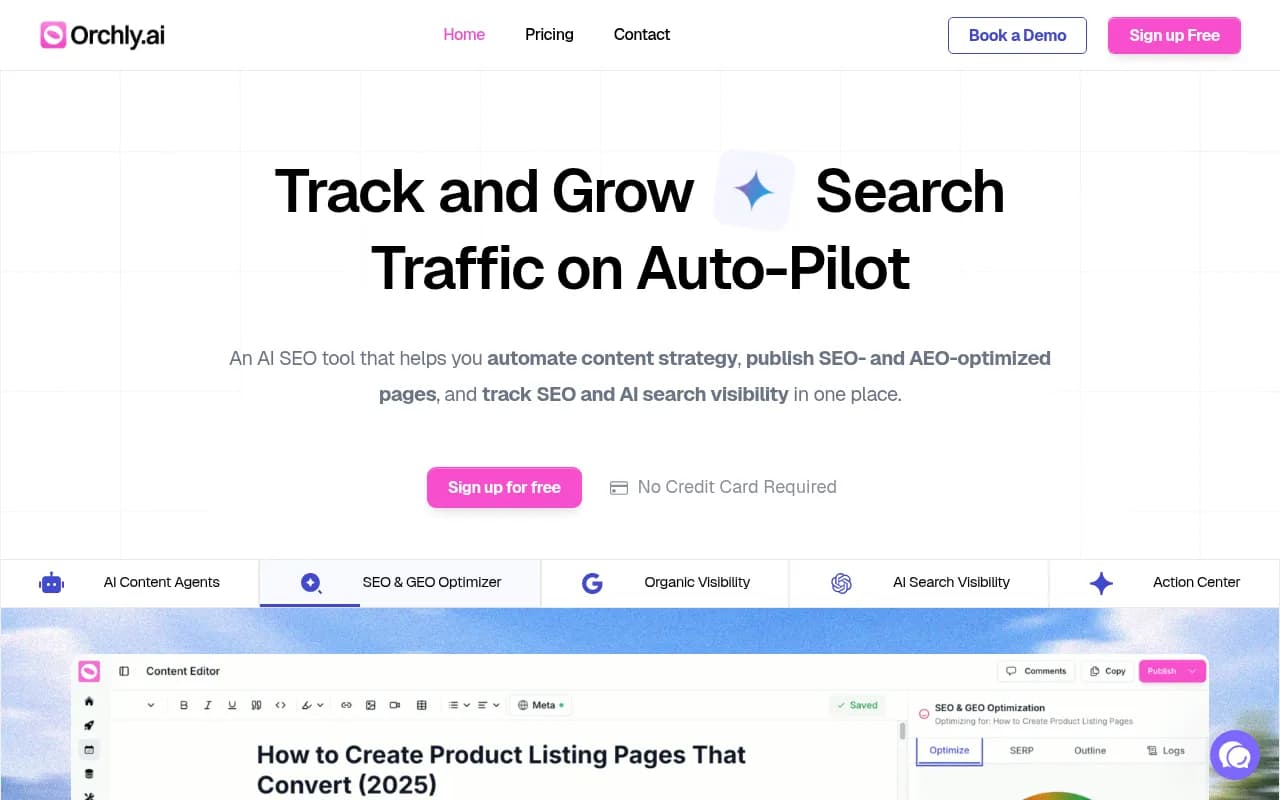
The platforms that are starting to close this gap -- by adding content generation, gap analysis, and optimization workflows -- are doing something genuinely different. Promptwatch is the most complete version of this in the current market. Tools like Orchly.ai are also moving in this direction.
Hidden costs to watch for
A few things that don't always show up in the headline pricing:
Prompt limits are real constraints. A plan with 15 prompts (Otterly's entry tier) sounds fine until you realize that a mid-sized brand might have 50-100 relevant prompts worth tracking. You'll hit the ceiling fast and face an upgrade decision.
Model coverage matters. Some platforms track 3-4 AI models; others track 10+. If you care about visibility in Google AI Overviews, Grok, DeepSeek, or Mistral, check the coverage list before committing.
Annual vs monthly billing. Most platforms offer meaningful discounts for annual billing -- typically 20-30%. If you're confident in a platform, the annual commitment usually pays off.
Setup time isn't free. Some platforms require significant configuration to get useful data. Factor in the time cost of setup, especially for enterprise tools.
The bottom line
Pricing in this space ranges from $29/month to $499/month and beyond, but the more useful question is what you're getting for that money. A cheap monitoring tool that leaves you stuck is worse value than a more expensive platform that actually helps you improve.
For most marketing and SEO teams in 2026, the calculus is straightforward: if you're serious about AI visibility, you need a platform that does more than track. Promptwatch at $99/month is the most accessible entry point for a full-loop platform. Profound at $499/month makes sense for enterprise teams with dedicated resources. Otterly and Peec AI are reasonable for teams that just need the data layer and have the internal capacity to act on it.
All four offer free trials or demos. Run them in parallel if you can -- the difference in what they show you (and what they help you do) is clearer when you're looking at your own brand's data.