Key takeaways
- Peec.ai is a solid monitoring tool but it only shows you where you're invisible -- it doesn't help you fix it
- Most Peec.ai alternatives have the same limitation: they're dashboards, not optimization platforms
- The critical differentiator in 2026 is whether a tool tracks user-facing AI outputs (what real users actually see) vs. API outputs, which can differ significantly
- A handful of platforms -- including Promptwatch, Profound, and Scrunch -- go beyond monitoring into content gap analysis and optimization
- If you're evaluating alternatives, the questions that matter most are: Does it track real UI responses? Does it have crawler logs? Can it help you generate content to close the gaps?
Why people are looking for Peec.ai alternatives
Peec.ai built one of the first dedicated tools for tracking brand visibility in AI search. For teams who just needed to answer "are we showing up in ChatGPT?" it was a reasonable starting point. The UI scraping approach, transparent pricing around $100/month, and coverage of ChatGPT, Perplexity, and Google AI Overviews made it accessible.
But the market has moved fast. According to Similarweb's 2025 Generative AI Report, AI platforms generated over 1.1 billion referral visits in June 2025 -- up 357% year-over-year. That kind of growth means the stakes are higher, and "we're not showing up" is no longer enough information. Marketing teams need to know why they're not showing up and what to do about it.
That's where Peec.ai runs into friction. It tracks mentions, shows citation frequency, and gives you a share-of-voice number. But it doesn't write content, identify specific prompt gaps, analyze AI crawler behavior on your site, or tell you which pages are being cited and why. For teams that want to move from observation to action, that's a real ceiling.
There's also the question of data fidelity. Not all AI visibility tools are equal in how they collect data. Some query AI models through APIs. Others simulate real user sessions in actual browser interfaces. The difference matters because ChatGPT's user-facing responses, shopping recommendations, and citations can look quite different from what the API returns.
The real-time data problem: API vs. user-facing outputs
This is worth spending a moment on because it's the most underappreciated distinction in the GEO tool market right now.
When a tool queries an AI model via API, it gets a programmatic response. When a real user types the same prompt into ChatGPT's interface, they might see a different answer -- with different citations, different product recommendations, and different formatting. Google AI Overviews in particular behave differently depending on the user's location, device, and search history.
Tools that only use API calls are measuring something real, but it's not exactly what your customers are seeing. Tools that simulate or capture actual UI-level responses are closer to ground truth.
Peec.ai uses UI scraping to simulate real user interactions, which is a point in its favor. But several alternatives have gone further -- tracking real user sessions, logging actual AI crawler visits to your website, and connecting visibility data to traffic attribution.
The best Peec.ai alternatives in 2026
Promptwatch
Promptwatch is the most complete platform in this space right now, and the one that most directly addresses the "monitoring-only" limitation of Peec.ai.

The core difference is what happens after you find a gap. Promptwatch's Answer Gap Analysis shows you exactly which prompts competitors are visible for that you're not -- and then Content Agents help you generate articles, listicles, and briefs grounded in that prompt data to close those gaps. Most tools stop at step one. Promptwatch runs the full loop: find gaps, create content, track results.
On the real-time data question specifically, Promptwatch tracks how AI search engines behave in actual user interfaces, not just through API calls. It also has AI Crawler Logs -- real-time logs of when ChatGPT, Claude, Perplexity, and other AI crawlers visit your pages, what they read, and when a crawled page moves to an actual citation. That's a level of transparency into AI indexing behavior that most competitors don't offer at all.
Coverage spans 10 models: ChatGPT, Perplexity, Google AI Overviews, Google AI Mode, Claude, Gemini, Meta/Llama, DeepSeek, Grok, and Copilot. It also tracks Reddit and YouTube as citation sources, which matters because AI models frequently pull from those channels and most tools ignore them entirely.
Pricing starts at $99/month (Essential: 1 site, 50 prompts), $249/month (Professional: crawler logs, 150 prompts, state/city tracking), and $579/month (Business: 5 sites, 350 prompts). Used by 1,480+ brands including Booking.com and Center Parcs.
Profound
Profound is the other platform that gets taken seriously at the enterprise end of the market. It has strong feature depth -- competitive heatmaps, share-of-voice tracking, and solid multi-model coverage. The data quality is generally regarded as reliable.
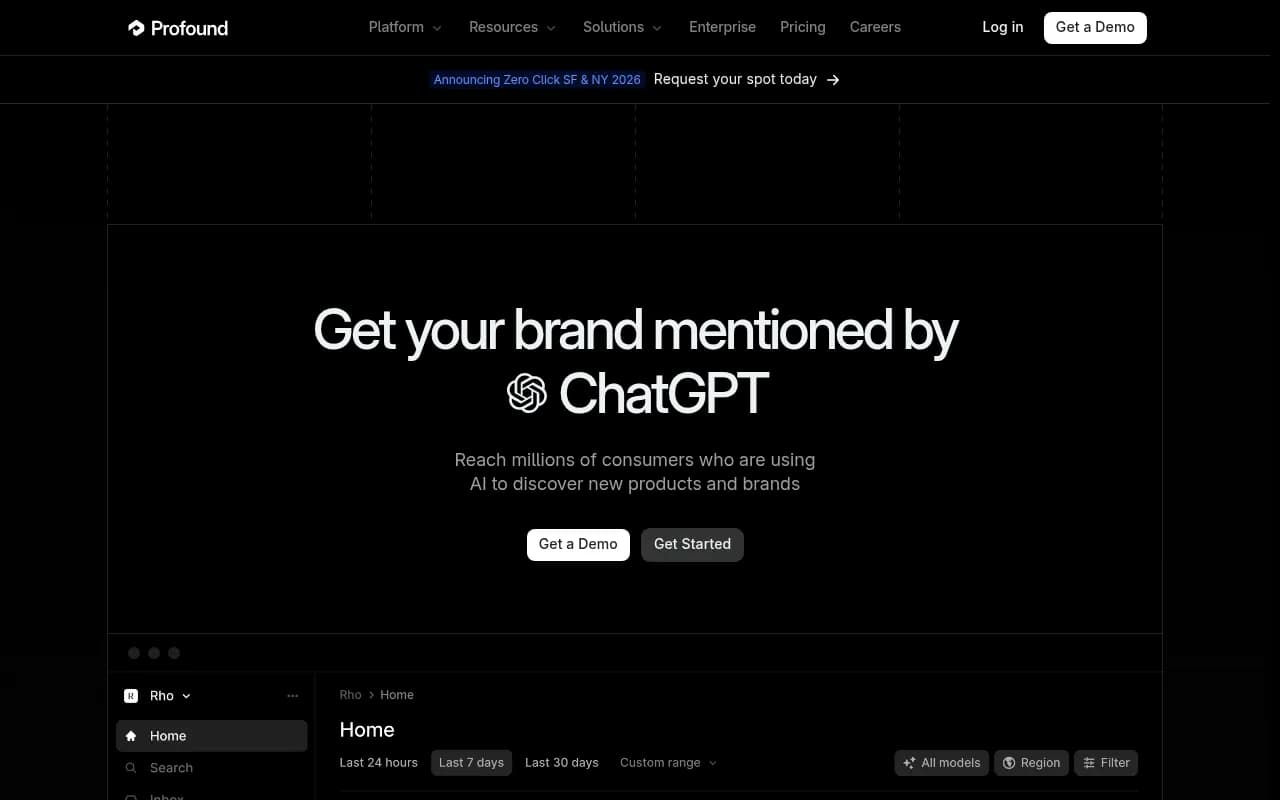
The main friction points are price (higher than most alternatives) and the absence of Reddit tracking and ChatGPT Shopping monitoring. For large brands with dedicated GEO teams, Profound is a legitimate option. For teams that also need content generation baked in, it's still primarily a monitoring tool.
Scrunch AI
Scrunch positions itself toward enterprise-wide AI monitoring, with particular strength in tracking AI responses at scale across large prompt sets.
It covers the major models and offers competitive analysis, but like Profound, it's weighted toward observation rather than optimization. If your primary need is comprehensive monitoring across a large brand portfolio, Scrunch is worth evaluating. If you need to generate content to close gaps, you'll be doing that work elsewhere.
Otterly.AI
Otterly.AI is one of the more accessible options in the market -- simpler setup, lower price point, and a cleaner interface than some of the enterprise tools.
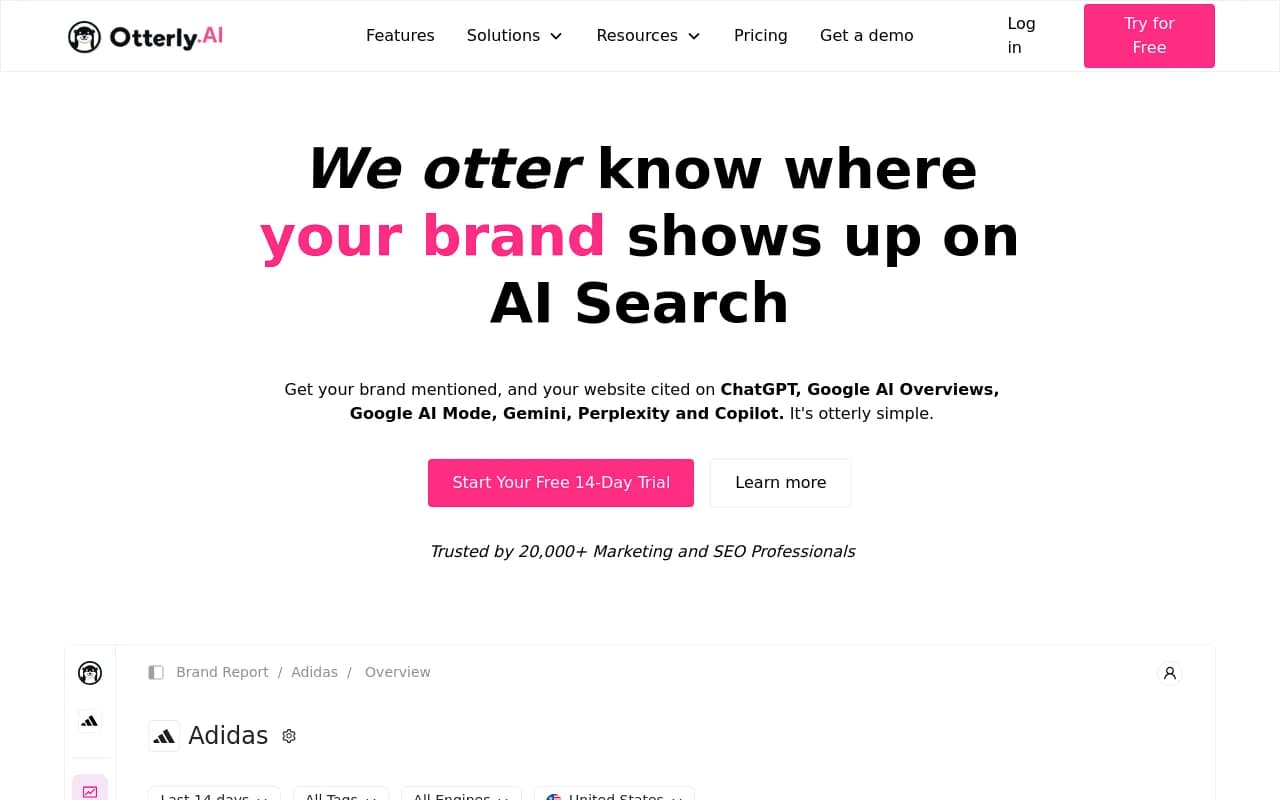
The tradeoff is capability depth. It doesn't have crawler logs, visitor analytics, or content generation. For small teams or agencies that just need basic citation tracking across a handful of prompts, it's a reasonable starting point. For teams that have outgrown Peec.ai's limitations, Otterly.AI probably won't solve the problem -- it has similar constraints.
AthenaHQ
AthenaHQ covers 8+ AI search engines and has a clean interface for tracking brand visibility and competitive positioning.
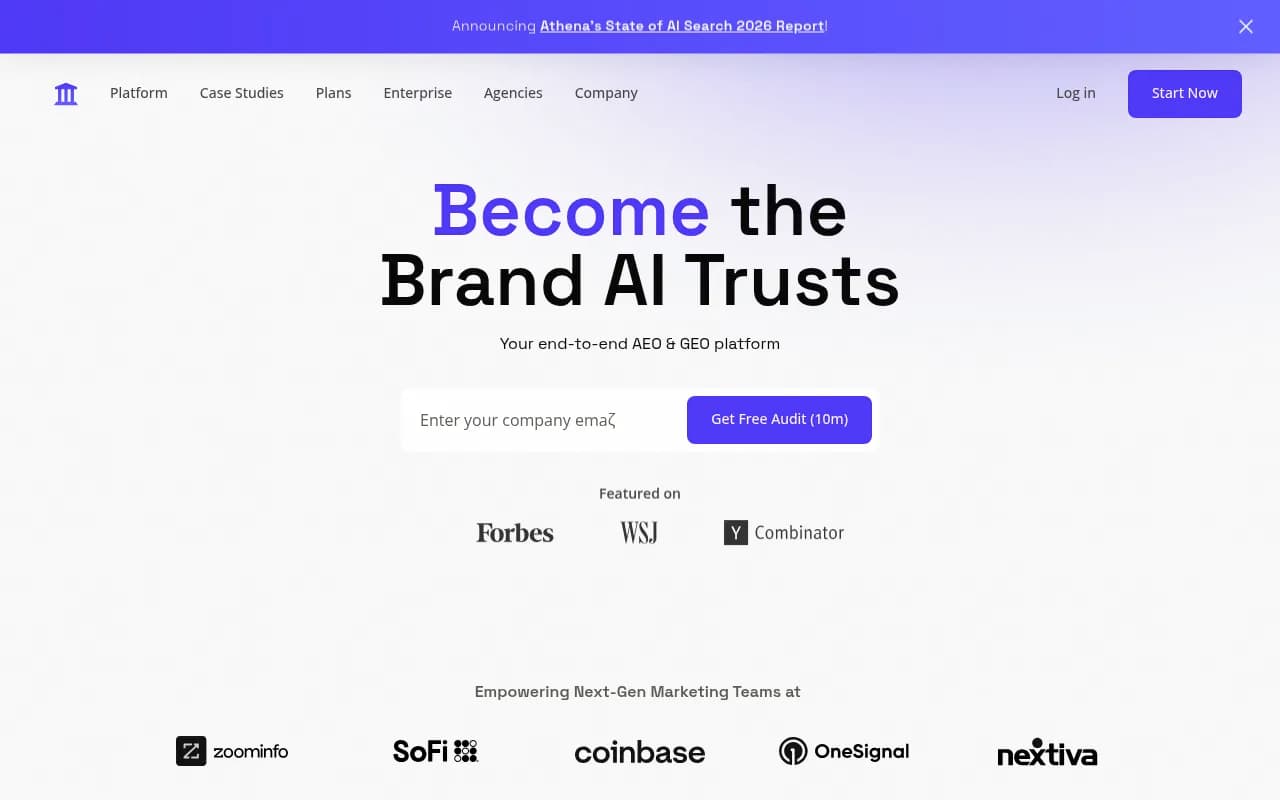
It's monitoring-focused. The platform doesn't have content optimization or generation capabilities, which puts it in the same category as Peec.ai in terms of what you can actually do with the data. That said, the coverage breadth and UI are solid for teams that primarily need a visibility dashboard.
SE Visible
SE Visible is SE Ranking's dedicated AI visibility product. If you're already in the SE Ranking ecosystem, it integrates naturally.
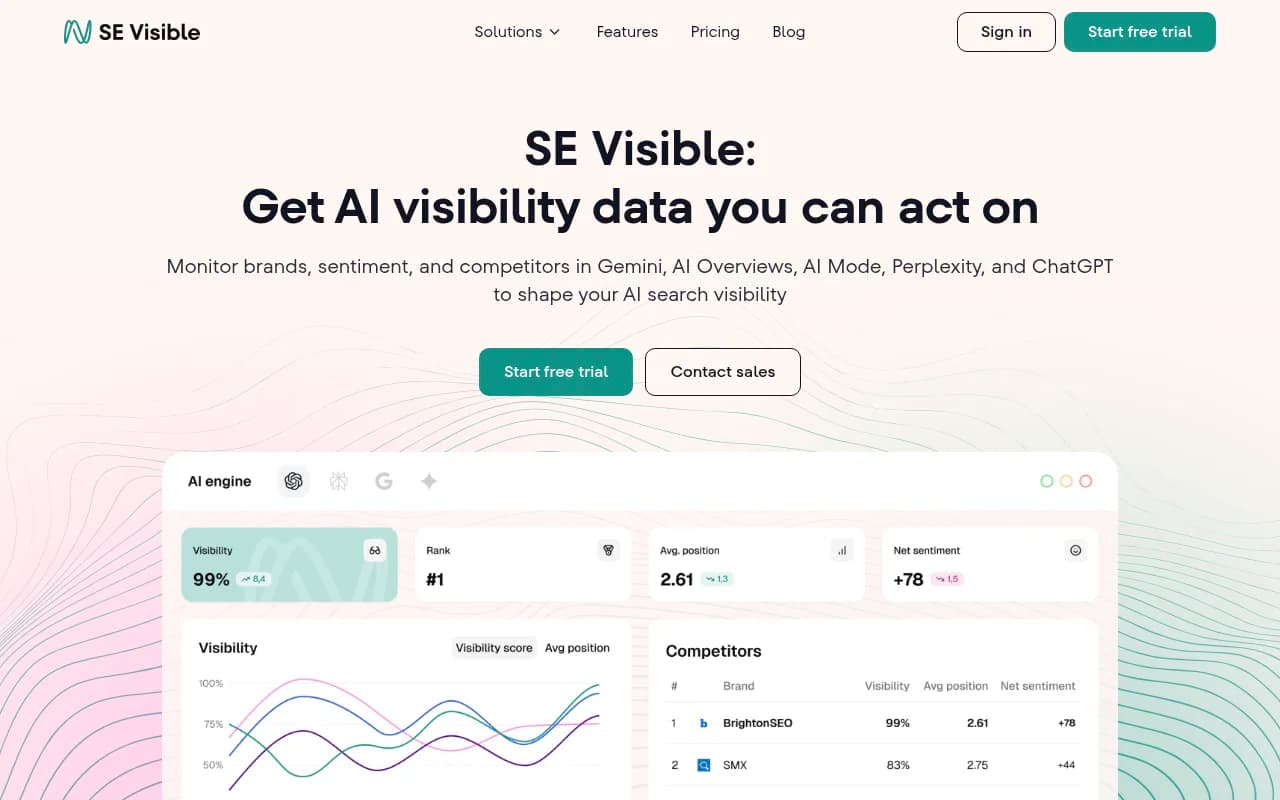
It tracks brand visibility and sentiment across AI search engines and has reasonable coverage of the major models. The advantage here is consolidation -- one platform for traditional rank tracking and AI visibility. The limitation is that it's still primarily a monitoring layer without deep content gap analysis or crawler log capabilities.
Rankscale
Rankscale focuses on AI visibility scaling, with features oriented toward tracking and improving citation rates over time.
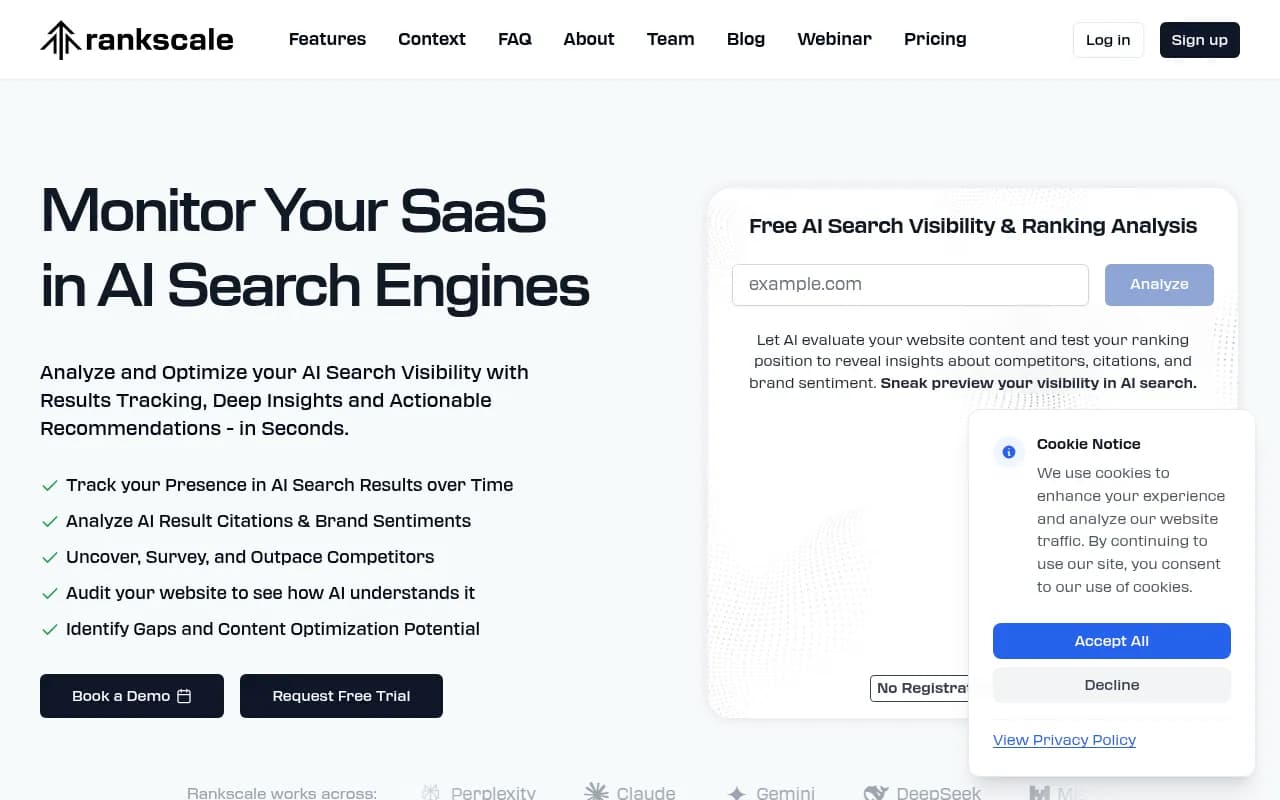
It's a newer entrant compared to some of the others on this list, but worth watching. The platform has been building out its prompt intelligence features and competitive analysis. Currently sits more in the monitoring category than the optimization category.
Nightwatch
Nightwatch has added AI search monitoring to its existing rank tracking capabilities, making it an option for teams that want both traditional SEO tracking and AI visibility in one place.
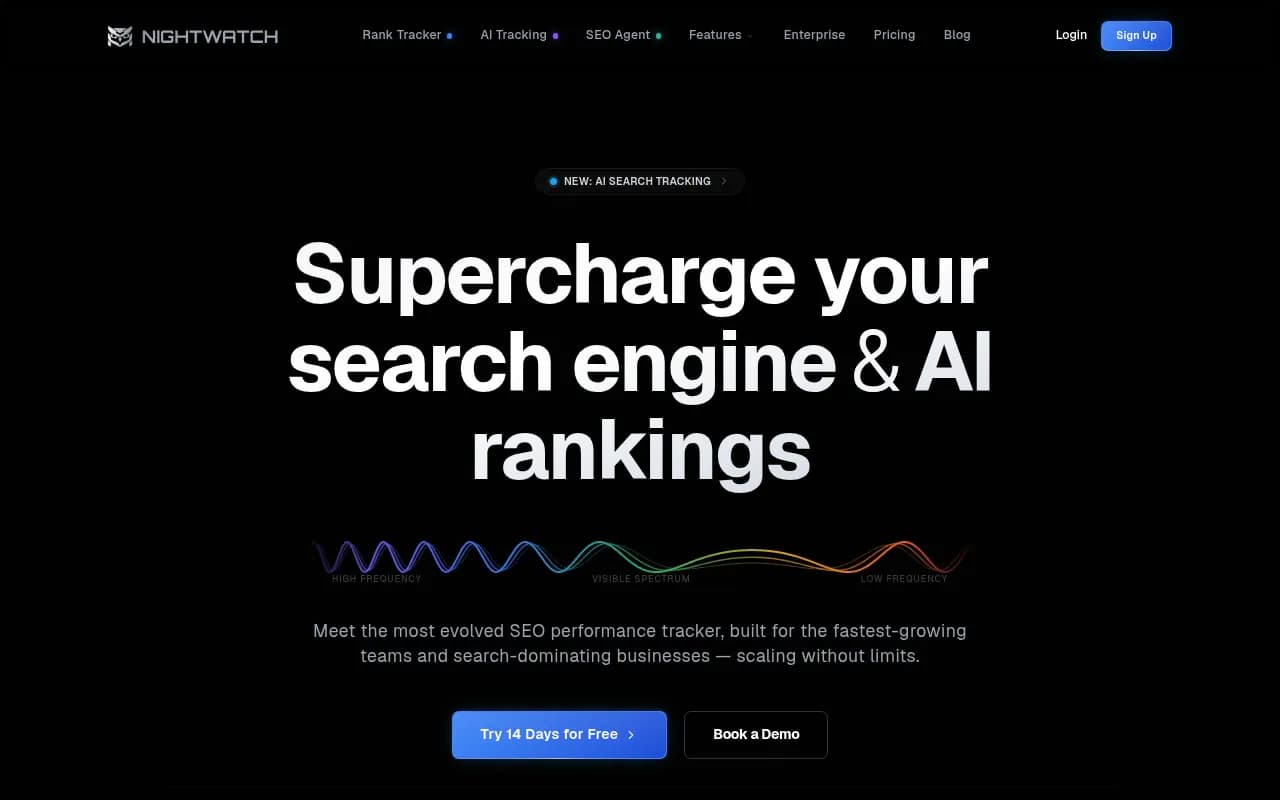
The AI monitoring features are less deep than dedicated GEO platforms, but the integration with traditional rank tracking data can be useful for teams that want to see both signals side by side.
Semrush (AI Overviews tracking)
Semrush has added AI visibility features, including tracking for Google AI Overviews. For teams already paying for Semrush, it's worth knowing what's available.
The limitation is that Semrush uses fixed prompts rather than custom prompt tracking, and there's no AI traffic attribution. It's a supplement to a GEO-specific tool rather than a replacement for one.
Ahrefs Brand Radar
Ahrefs Brand Radar monitors brand mentions across AI search engines including ChatGPT, Perplexity, Gemini, Copilot, Google AI Overviews, and Google AI Mode.
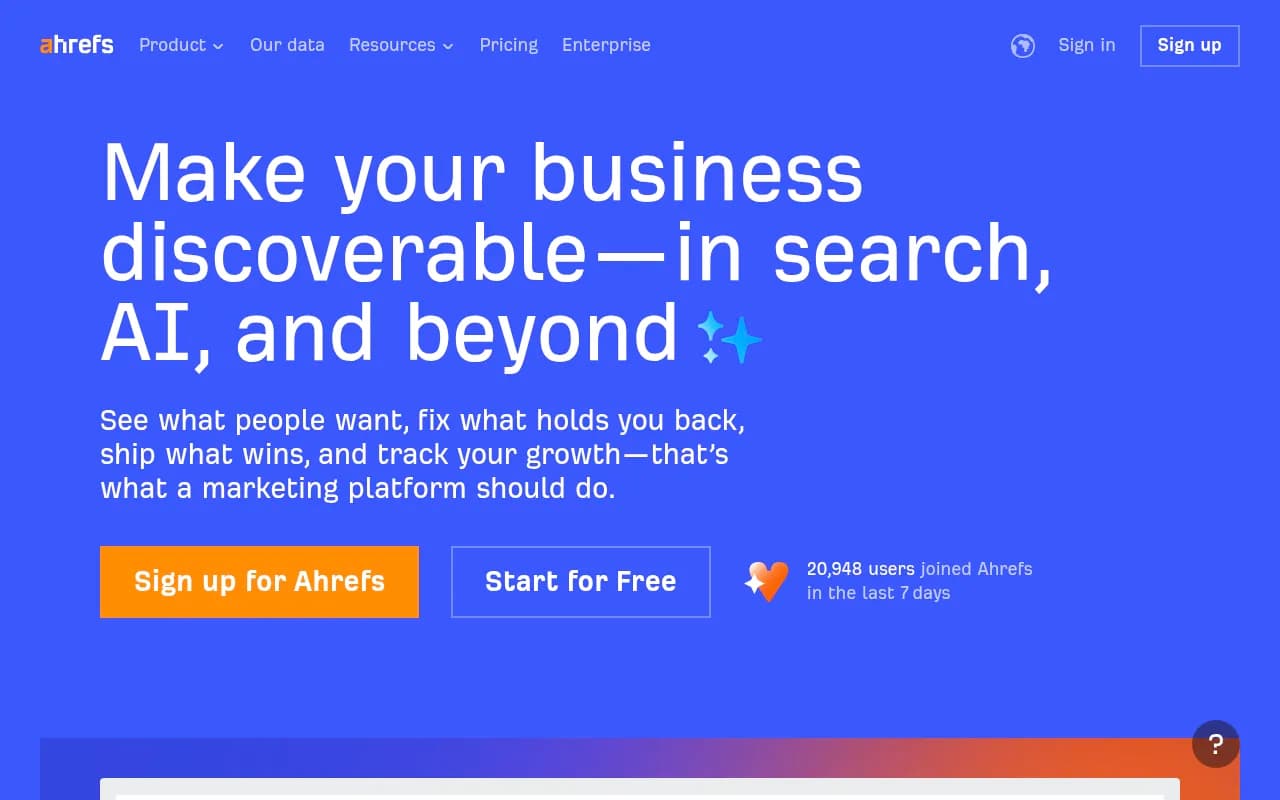
Like Semrush, it uses fixed prompts and doesn't have AI traffic attribution. Useful as a starting point or for teams already in the Ahrefs ecosystem, but not a substitute for a dedicated GEO platform if you're serious about optimization.
How these tools compare on the metrics that matter
The table below cuts through the marketing language and focuses on the capabilities that actually differentiate these tools for teams that care about real-time, user-facing data.
| Platform | UI-level tracking (not just API) | AI crawler logs | Content gap analysis | Content generation | Reddit/YouTube tracking | ChatGPT Shopping | Pricing from |
|---|---|---|---|---|---|---|---|
| Promptwatch | Yes | Yes | Yes | Yes (Content Agents) | Yes | Yes | $99/mo |
| Profound | Yes | No | Partial | No | No | No | Higher |
| Scrunch AI | Yes | No | Partial | No | No | No | Enterprise |
| Otterly.AI | Partial | No | No | No | No | No | ~$49/mo |
| AthenaHQ | Yes | No | No | No | No | No | Custom |
| SE Visible | Partial | No | No | No | No | No | Bundled |
| Peec.ai | Yes (UI scraping) | No | No | No | No | No | ~$100/mo |
| Semrush | Partial (fixed prompts) | No | No | No | No | No | $139/mo+ |
| Ahrefs Brand Radar | Partial (fixed prompts) | No | No | No | No | No | Bundled |
What to actually look for when evaluating alternatives
Does it track user-facing outputs or just API responses?
Ask vendors directly: "How do you collect AI response data?" If the answer is purely API-based, you're getting a proxy for what users see, not the real thing. UI-level scraping or browser simulation is closer to ground truth. Promptwatch and Peec.ai both use UI-level approaches; several cheaper tools do not.
Does it have AI crawler logs?
This is a feature most tools don't have at all. AI crawler logs tell you when ChatGPT, Claude, or Perplexity's crawlers visited your pages, what they read, any errors they encountered, and when a crawled page actually started generating citations. Without this, you're flying blind on the technical side of AI indexing. Promptwatch is one of the few platforms that offers this.
Can it tell you why you're not showing up?
Citation tracking tells you where you're invisible. Prompt gap analysis tells you which specific questions AI models are answering for your competitors but not for you. Those are different things, and the second one is far more actionable. Look for platforms that surface specific missing prompts with volume estimates, not just aggregate share-of-voice numbers.
Does it help you fix the problem?
This is the question that separates monitoring tools from optimization platforms. Most tools -- including Peec.ai, Otterly.AI, and AthenaHQ -- stop at diagnosis. A smaller number, led by Promptwatch, actually help you generate content to close the gaps. If your team has the capacity to take monitoring data and independently create content, a monitoring-only tool might be fine. If you want the platform to do more of the heavy lifting, that narrows the field considerably.
Multi-model coverage
The AI search landscape in 2026 isn't just ChatGPT and Google. Perplexity, Claude, Gemini, Grok, DeepSeek, Copilot, and Meta AI all have meaningful user bases. Make sure any tool you evaluate covers the models your customers are actually using, not just the two or three biggest ones.
The bottom line
Peec.ai is a reasonable starting point for AI visibility monitoring. But "reasonable starting point" describes a lot of tools in this category, and most of them share the same ceiling: they show you data and leave you to figure out what to do with it.
The tools worth upgrading to are the ones that close that loop. Profound and Scrunch are solid for enterprise monitoring at scale. Otterly.AI works for teams with simple needs and tight budgets. But if you want a platform that tracks real user-facing AI outputs, logs AI crawler behavior on your site, identifies specific content gaps, and helps you generate content to close them -- Promptwatch is the only option in 2026 that does all of that in one place.
The question isn't really "which monitoring tool should I use." It's "do I want to keep watching competitors get cited, or do I want to do something about it?"