Key takeaways
- YouTube now appears roughly 40% more often than Reddit as a cited social source across major AI chatbots, according to Adweek's analysis of data from four sources. Both platforms are now critical to AI visibility strategy.
- Goodie AI is a capable GEO monitoring tool, but several alternatives go further by tracking Reddit and YouTube citations specifically, or by combining monitoring with content optimization.
- The biggest gap between tools isn't features on a spec sheet -- it's whether the platform helps you do something with what it finds.
- Platforms like Promptwatch close that loop by pairing citation tracking (including Reddit and YouTube insights) with content gap analysis and AI-native content generation.
Why Reddit and YouTube citations suddenly matter so much
For most of 2024, Reddit dominated AI citation data. It was the go-to source for community opinions, product comparisons, and "real person" takes that LLMs love to surface. Then something shifted.
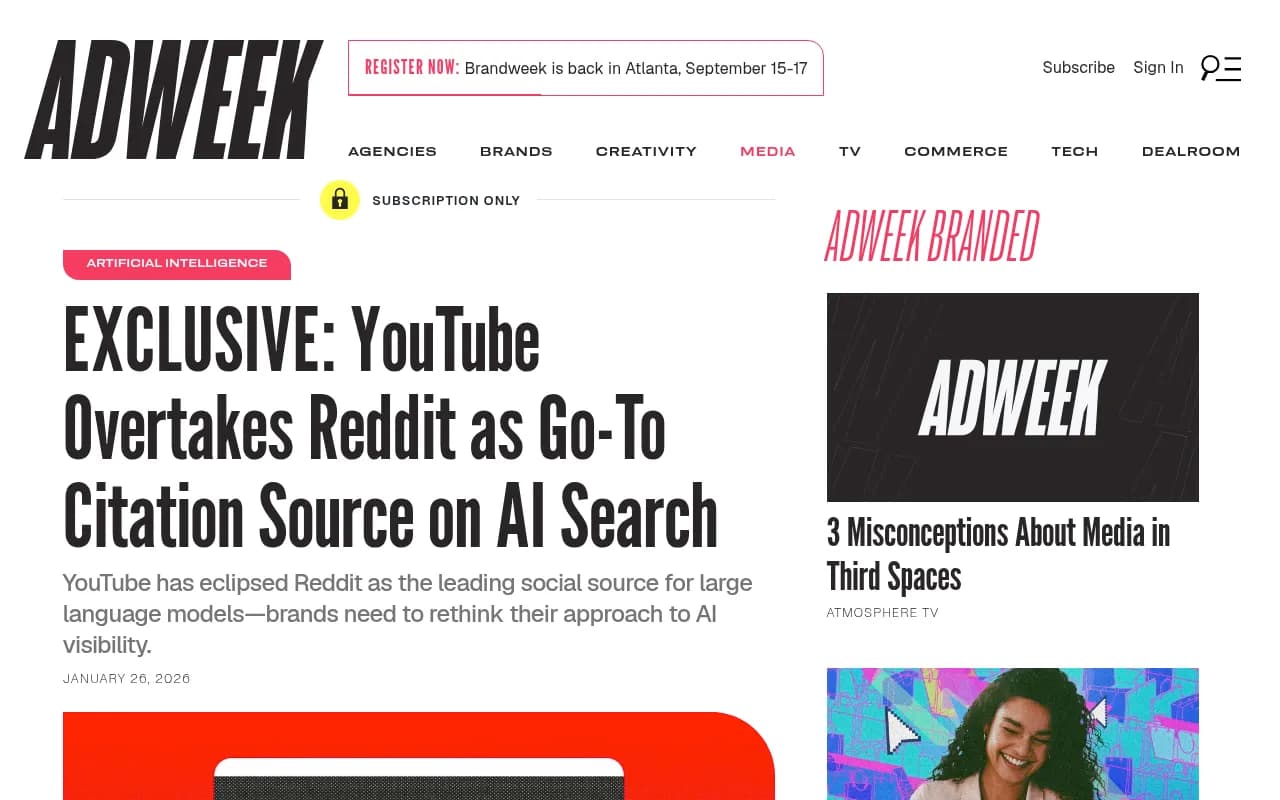
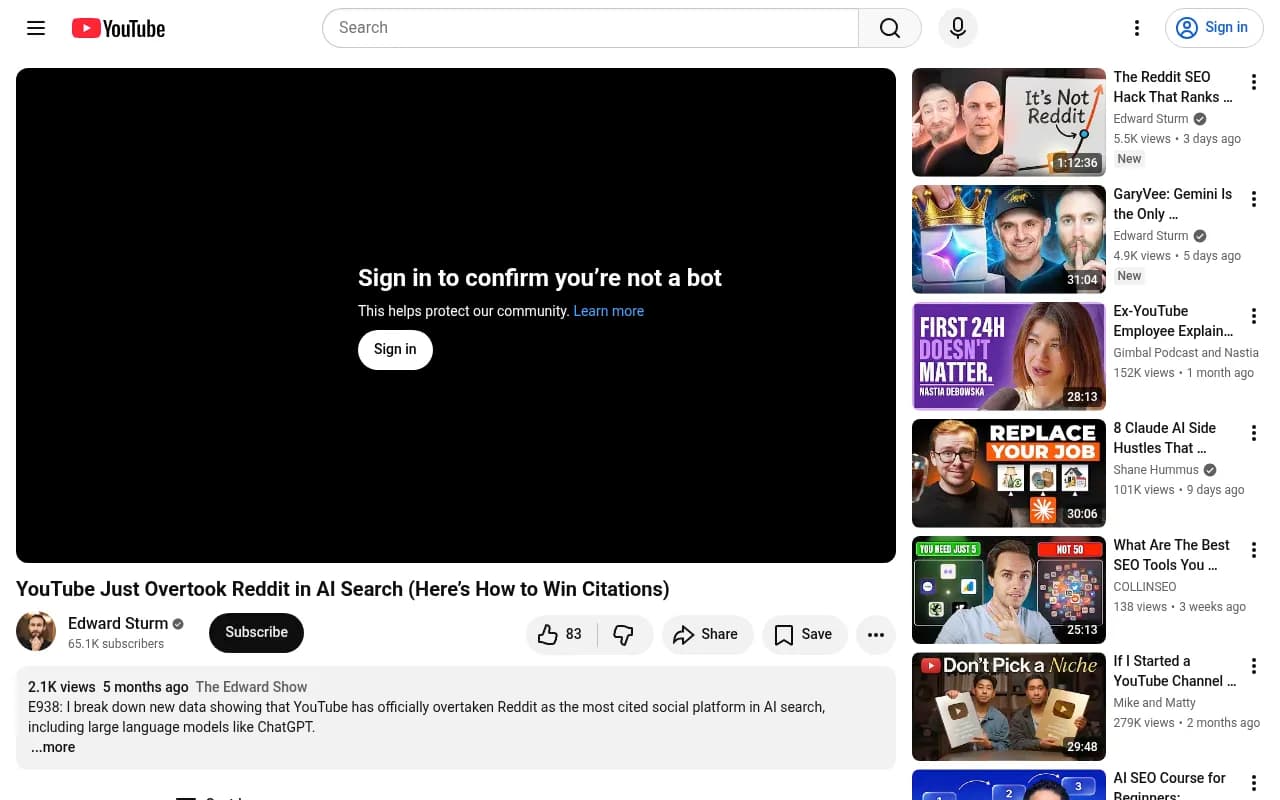
Goodie AI's own research, tracking 6.1 million citations across 10 AI platforms, found that YouTube has overtaken Reddit as the number one social source in AI-generated answers. Adweek reported the same finding: YouTube now appears about 40% more often than Reddit as a cited social platform across ChatGPT, Gemini, and other major AI chatbots.
The reason makes sense once you think about it. LLMs struggled with video content for a long time -- they couldn't "watch" a video. But transcripts, descriptions, titles, and metadata give AI models plenty of readable text to work with. A well-optimized YouTube video is, from an LLM's perspective, basically a structured article with a domain authority boost.
Reddit still matters. In Google AI Overviews specifically, Reddit accounts for 21% of top citations, making it the top social/UGC source in that environment. YouTube follows at 18.8%. The two platforms together represent a significant chunk of where AI models go when they want "what real people think."
If your GEO tool isn't tracking citations from these two platforms, you're flying partially blind. That's the core problem with some monitoring tools -- they track your brand mentions in AI answers, but they don't tell you which Reddit threads or YouTube videos are driving those answers, or what you're missing because competitors have better coverage there.
Here's what to look for in a Goodie AI alternative, and six options worth considering in 2026.
What to look for in a Goodie AI alternative
Before jumping into the list, it's worth being clear about what actually matters here:
- Does it track which Reddit threads and YouTube videos AI models are citing?
- Does it show you competitor visibility across those channels?
- Does it go beyond monitoring to help you create content that fills the gaps?
- Does it track real user-facing AI responses, not just API outputs (which can differ)?
- Does it cover multiple AI models, not just one or two?
Goodie AI does solid monitoring work. But if you want to move from "knowing you're invisible" to "fixing it," you need a platform that closes that loop.
The 6 best Goodie AI alternatives in 2026
1. Promptwatch
Promptwatch is the most complete option on this list for teams that want to track Reddit and YouTube citations and then actually do something about what they find.

The Reddit and YouTube Insights feature surfaces discussions and videos that are directly influencing AI recommendations -- not just what's being cited, but why, and what you'd need to publish to compete. That's paired with Answer Gap Analysis, which shows you the specific prompts where competitors are getting cited and you're not. From there, Content Agents generate articles, comparisons, and briefs grounded in that real citation data.
The crawler logs are also worth mentioning here. Promptwatch tracks when AI crawlers (ChatGPT, Perplexity, Claude, etc.) visit your pages, which pages they read, and when those pages move from "crawled" to "cited." Most tools don't have this at all. For YouTube and Reddit strategy, knowing which content AI models are actually reading versus ignoring is genuinely useful.
Pricing starts at $99/month for the Essential plan (1 site, 50 prompts). Professional is $249/month and adds crawler logs, multi-location tracking, and 15 AI-generated articles per month.
Used by Booking.com, Center Parcs, and 1,480+ other brands and agencies. Covers 10 AI models including ChatGPT, Perplexity, Gemini, Claude, Grok, and Google AI Overviews.
2. Profound
Profound is a strong enterprise-grade option with deep citation analysis. It tracks which sources AI models are pulling from, including social platforms, and gives you a clear picture of competitor visibility across different LLMs.
Where Profound shines is in its data depth for large organizations -- it's built for teams that need granular reporting and can handle a higher price point. The tradeoff is that it's more monitoring-focused than action-oriented. You'll get excellent data on what's happening, but the content optimization side is thinner than Promptwatch's.
Good fit for: Enterprise marketing teams that already have content resources and need better citation intelligence to direct them.
3. Scrunch AI
Scrunch AI monitors how AI assistants like ChatGPT and Claude represent your brand, with source-level citation tracking that includes social platforms.
It's a cleaner, more focused tool than some of the enterprise options -- easier to set up, faster to get value from. The citation analysis is solid, and it covers the major AI models. Like Profound, it leans toward monitoring rather than optimization, but it's a reasonable choice for teams that want clear visibility data without a complex onboarding process.
Good fit for: Mid-market brands that want straightforward citation monitoring without a lot of setup overhead.
4. Otterly.AI
Otterly.AI is one of the more affordable options in the GEO space, and it does a decent job of tracking brand mentions across AI search results.

The honest assessment: it's a monitoring tool, not an optimization platform. You'll see where you're appearing and where you're not, but Otterly doesn't have the Reddit/YouTube-specific insights or content generation capabilities that make the difference for teams trying to improve their citation rate from social sources. It's worth considering if budget is the primary constraint and you just need basic visibility tracking.
Good fit for: Small teams or solo marketers who want a low-cost entry point into AI visibility monitoring.
5. Bluefish AI
Bluefish AI positions itself as an enterprise GEO platform with strong citation tracking across multiple AI models.
It covers source-level analysis and gives you a view of which domains and content types are driving AI citations in your category. The platform is more mature than some newer entrants, and the enterprise focus means it handles complex multi-brand or multi-region setups reasonably well.
The gap, compared to Promptwatch, is on the content side. Bluefish tracks well but doesn't generate content or provide the kind of structured gap analysis that tells you exactly what to write next.
Good fit for: Enterprise teams that need solid citation tracking across regions and brands, and have separate content teams to act on the data.
6. SE Ranking (AI Visibility)
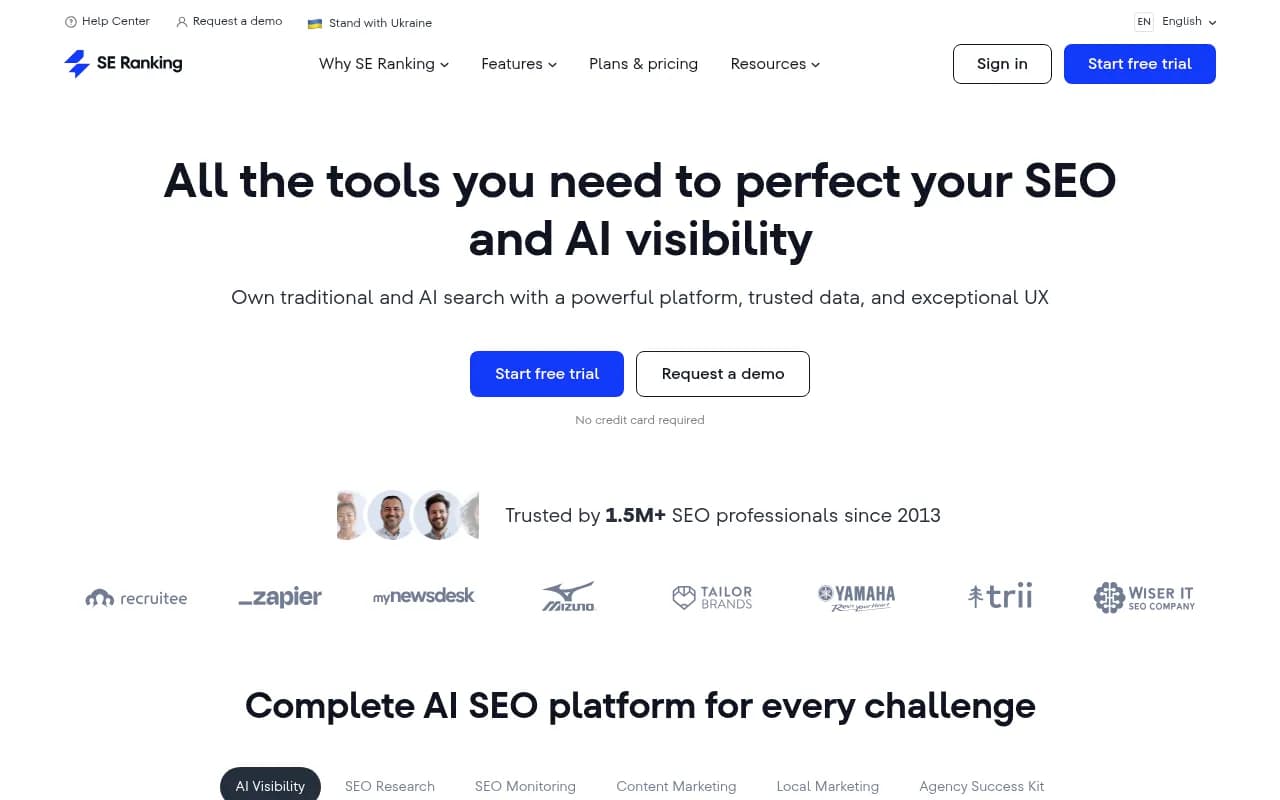
SE Ranking has been a traditional SEO platform for years, and its AI visibility module has matured into a legitimate GEO tracking option.
It tracks brand mentions and citations across AI search results, and the integration with SE Ranking's broader SEO data is genuinely useful -- you can see how your traditional search performance and AI visibility correlate. The Reddit and YouTube citation tracking is less specialized than dedicated GEO platforms, but the overall package is strong for teams already using SE Ranking for SEO.
Good fit for: SEO teams that want to add AI visibility tracking without switching to a new platform entirely.
How these tools compare
| Tool | Reddit/YouTube tracking | Content generation | Crawler logs | AI models covered | Starting price |
|---|---|---|---|---|---|
| Promptwatch | Yes (dedicated insights) | Yes (AI Content Agents) | Yes | 10 | $99/mo |
| Profound | Partial (citation sources) | No | No | 6+ | Custom |
| Scrunch AI | Partial | No | No | 5+ | Custom |
| Otterly.AI | Basic | No | No | 4 | ~$49/mo |
| Bluefish AI | Yes (citation sources) | No | No | 6+ | Custom |
| SE Ranking | Basic | No | No | 5 | $65/mo |
| Goodie AI | Yes | No | No | 5+ | Custom |
The pattern is pretty clear. Most tools in this space -- including Goodie AI -- are monitoring platforms. They show you what's happening. Promptwatch is the outlier that also helps you change what's happening.
The Reddit and YouTube strategy question
Knowing that YouTube and Reddit are the top social citation sources in AI answers is useful. But the more important question is: what do you do with that information?
A few things that actually move the needle:
For YouTube, the mechanism is transcripts and descriptions. LLMs can't watch your video, but they can read everything attached to it. Putting the full answer to a question in your video description -- not just a summary, but the actual answer -- makes it dramatically easier for AI models to cite your video. Targeting one clear keyword per video, putting it in the title and at the start of the description, and structuring the description with headings all help.
For Reddit, the play is harder to control directly, but you can monitor which threads are driving citations in your category and make sure your brand is present in those conversations. You can also identify the questions Reddit users are asking that AI models are picking up, and create content on your own site that answers those questions more authoritatively.
The tools that help you do this well are the ones that show you which specific Reddit threads and YouTube videos are being cited for your target prompts -- not just that social platforms matter in general.
Which alternative should you choose?
If you're running a serious GEO program and want to track Reddit and YouTube citations while also having a way to act on what you find, Promptwatch is the strongest option. The combination of Reddit/YouTube insights, Answer Gap Analysis, AI content generation, and crawler logs is hard to match elsewhere.
If you're at an enterprise with a dedicated content team and mainly need better citation intelligence to direct their work, Profound or Bluefish AI are worth evaluating.
If budget is the main constraint and you just need basic monitoring, Otterly.AI gets you started.
If you're already using SE Ranking for traditional SEO, the AI visibility module is a natural extension rather than a full platform switch.
The one thing to avoid: picking a tool based on its monitoring features alone, then discovering six months later that you have great data and no clear path to improving your numbers. The monitoring is table stakes. What matters is what you do next.