Key takeaways
- Most AI visibility tools only monitor — they show you where you're invisible but don't help you fix it. The best alternatives go further.
- AI model coverage varies wildly: some tools track 4 models, others track 10+. If you care about Claude, Grok, or DeepSeek, check the coverage list carefully.
- Pricing ranges from $29/month for basic monitoring to $579/month and up for full optimization platforms with content generation.
- The tools that deliver the most ROI combine tracking, content gap analysis, and actual content creation in one workflow.
- Promptwatch is the only platform in this comparison rated as a "Leader" across all GEO categories in 2026, covering 10 AI models with built-in content generation.
If you've been using Meteoria.ai and found yourself wanting more — more model coverage, more actionable insights, or just a clearer path from "you're invisible here" to "here's how to fix it" — you're not alone. The GEO (Generative Engine Optimization) space has exploded in 2026, and there are now real alternatives worth considering.
This guide ranks 10 of them honestly, based on what they actually do, what they cost, and which AI models they cover.
Why people look for Meteoria.ai alternatives
Meteoria.ai sits in the monitoring-first camp of AI visibility tools. It tracks brand mentions across a handful of LLMs and gives you share-of-voice data. That's useful, but it leaves a gap: you know you're not showing up in ChatGPT's answers, but you don't know what content to create to change that.
The tools below range from "also monitoring-only but better at it" to "full optimization platforms that close the loop." Knowing which category you need is half the battle.
The 10 best Meteoria.ai alternatives in 2026
1. Promptwatch
Promptwatch is the most complete option on this list, and the one most worth considering if you're serious about AI search visibility rather than just tracking it.

It monitors 10 AI models — ChatGPT, Perplexity, Claude, Gemini, Google AI Overviews, Google AI Mode, Grok, DeepSeek, Copilot, and Mistral — and goes well beyond dashboards. The core workflow is: find the prompts where competitors appear but you don't (Answer Gap Analysis), generate content engineered to get cited (built-in AI writing agent trained on 880M+ citation data points), then track whether your visibility scores actually improve.
A few things that genuinely set it apart: AI Crawler Logs show you which pages ChatGPT and Perplexity are actually reading on your site and which ones they're ignoring. Prompt Intelligence gives volume estimates and difficulty scores so you can prioritize. Reddit and YouTube tracking surfaces the third-party content that influences AI recommendations — a channel most tools miss entirely.
Pricing starts at $99/month (Essential: 1 site, 50 prompts, 5 articles), $249/month (Professional: 2 sites, 150 prompts, crawler logs), and $579/month (Business: 5 sites, 350 prompts, 30 articles). Free trial available.
Best for: Marketing and SEO teams that want to move from "we know we're invisible" to "we fixed it."
2. Profound
Profound is a strong enterprise-grade option with solid prompt research capabilities and up to 10 AI models at the higher tiers. It's well-built and has a clean interface, but it skews toward analysis rather than action — there's no built-in content generation to help you act on what you find.
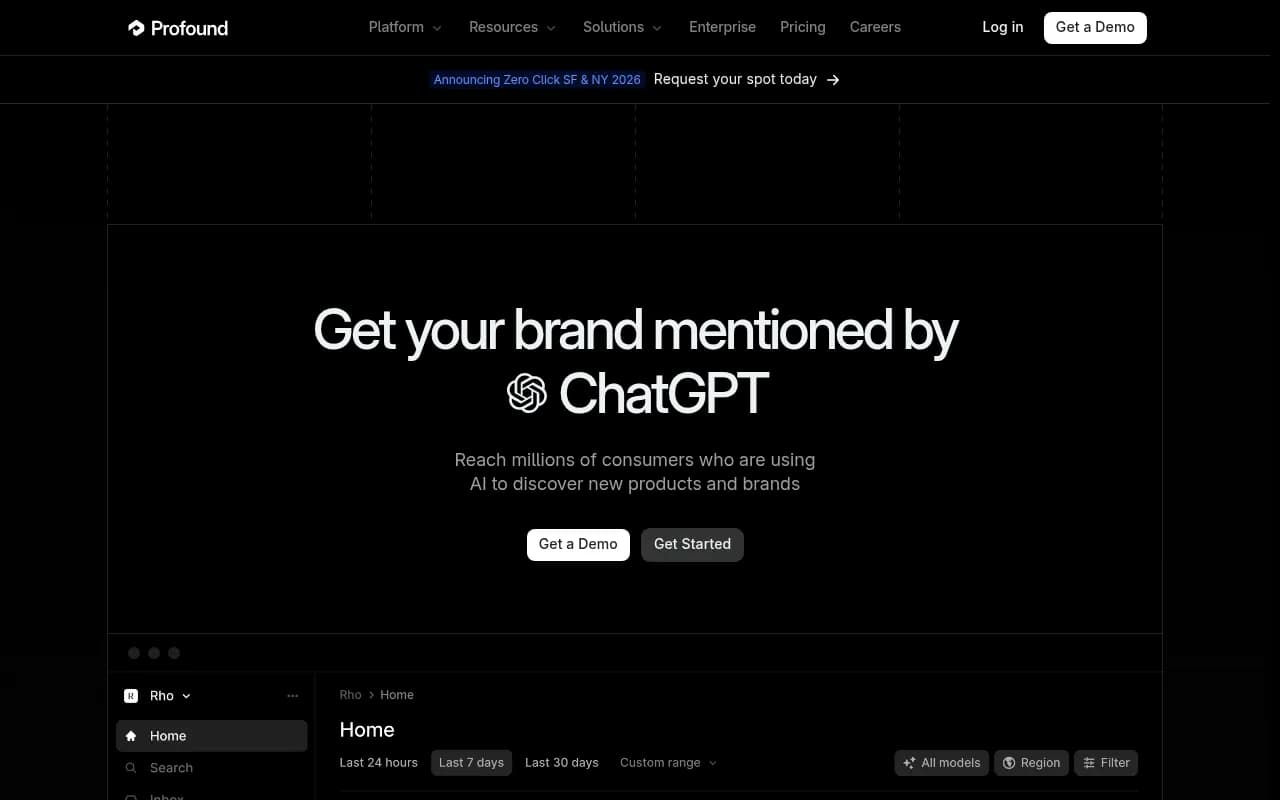
Starting price is $99/month, but the full model coverage requires an Enterprise plan. If your team has a separate content workflow and just needs deep prompt intelligence, Profound is worth a look.
Best for: Enterprise teams with dedicated content resources who need research-grade prompt data.
3. Otterly.AI
Otterly.AI is the most affordable entry point in the category at $29/month. It covers 4 AI models at the base tier and is genuinely easy to set up. The trade-off is that it's monitoring-only — no content gap analysis, no writing tools, no crawler logs.
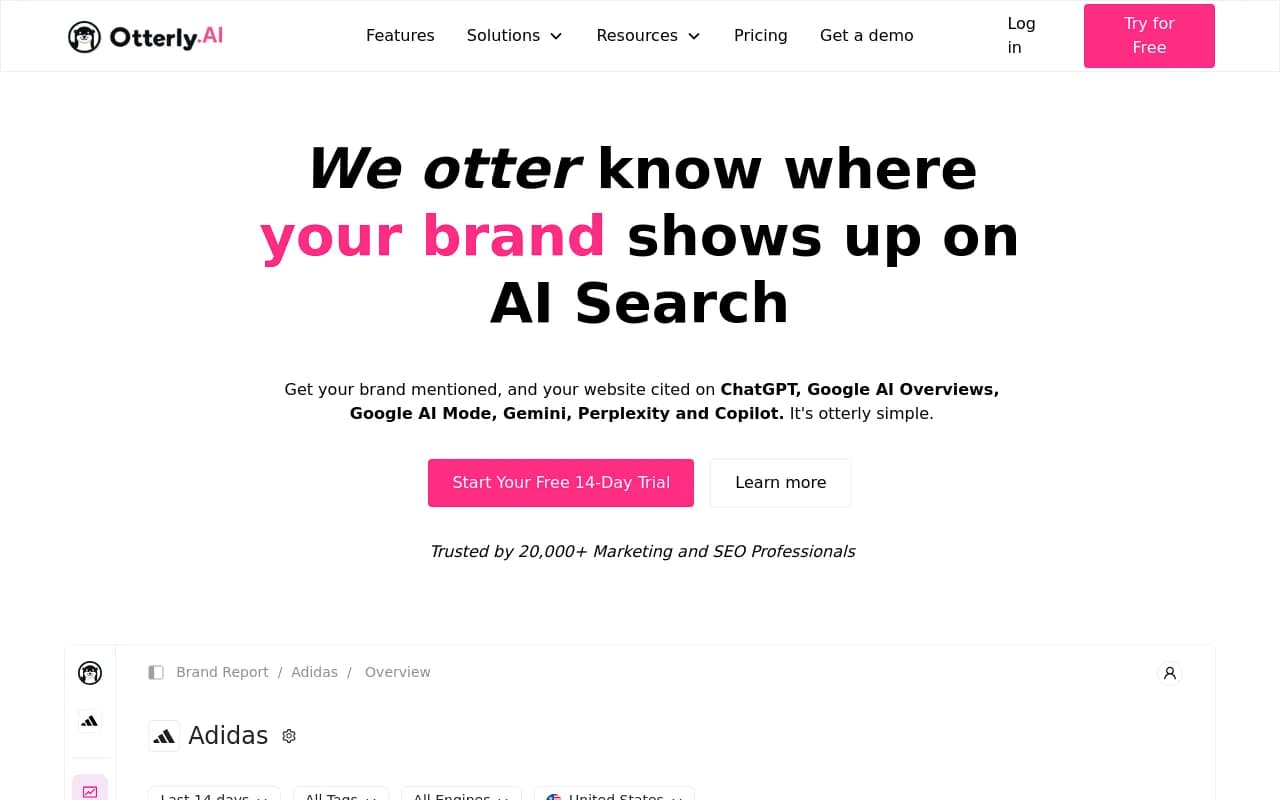
If you're a small brand just getting started with AI visibility tracking and don't need optimization features yet, Otterly.AI makes sense. If you're already past the "what is GEO?" stage, you'll probably outgrow it quickly.
Best for: Small businesses or solo marketers who want basic AI mention tracking without complexity.
4. Peec AI
Peec AI offers flexible model selection — you can pick which LLMs you want to monitor rather than being locked into a preset bundle. Coverage goes up to 10 models. Starting at €85/month, it's reasonably priced for what you get.
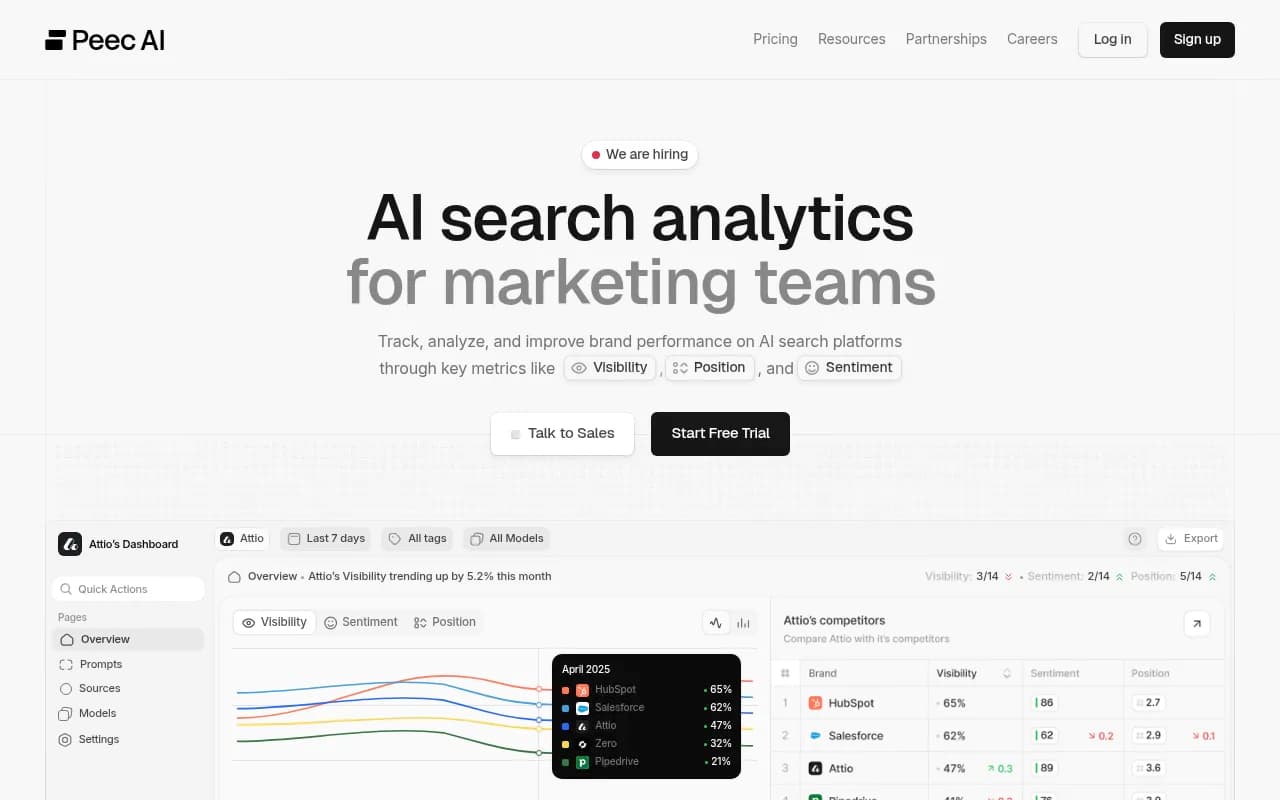
The flexibility is genuinely useful if you operate in a niche where, say, Perplexity and Grok matter more than Gemini. The downside: like most tools in this space, it's primarily a monitoring platform. You get the data; you figure out what to do with it.
Best for: Teams that want custom model selection and don't need built-in optimization.
5. SE Visible
SE Visible (from SE Ranking) is a solid mid-market option covering 5 AI models with good multi-brand and multi-country support. Starting at $99/month, it fits naturally into teams already using SE Ranking for traditional SEO.
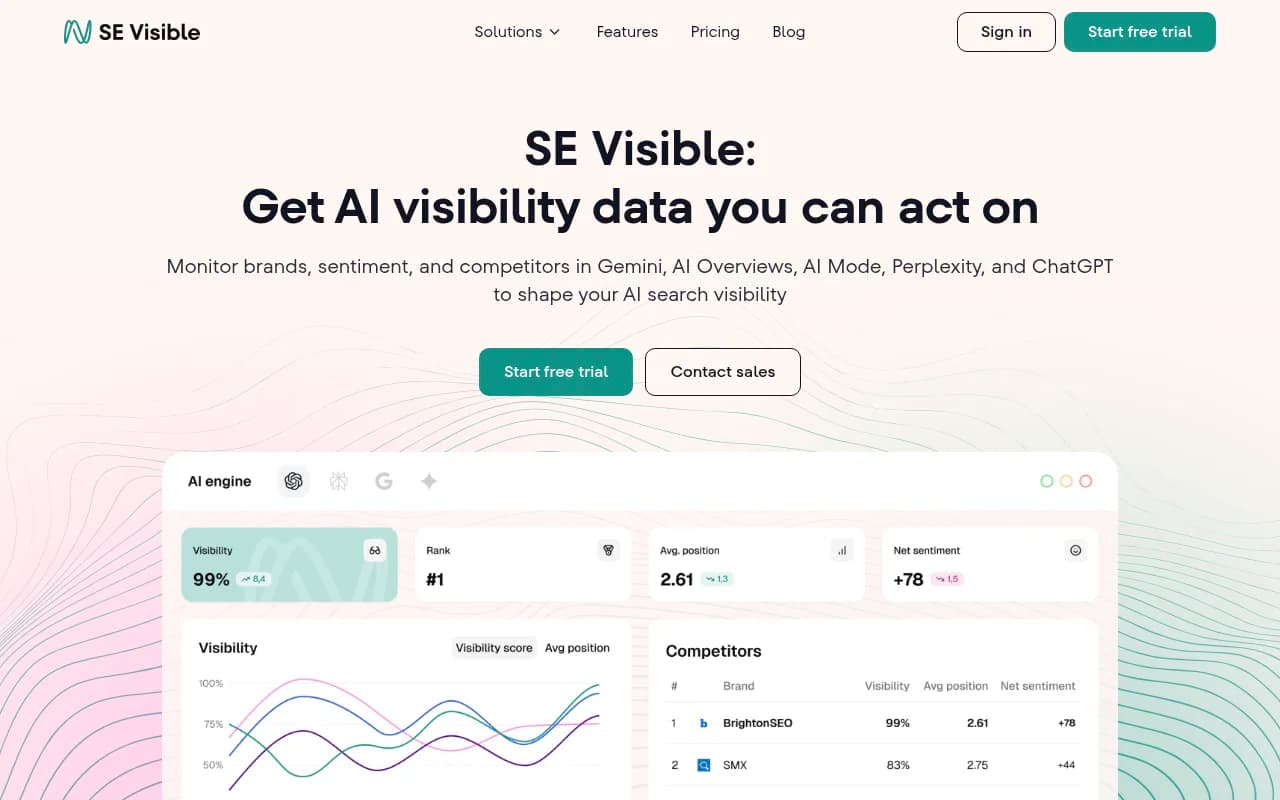
The integration with SE Ranking's broader SEO data is a real advantage if you want to see AI visibility and organic rankings in one place. It won't replace a dedicated GEO platform for serious optimization work, but it's a practical choice for SEO teams that want AI monitoring without switching tools.
Best for: SE Ranking users who want to add AI visibility tracking to their existing workflow.
6. Nightwatch
Nightwatch is primarily an SEO rank tracker that added AI visibility as a module. It covers 4 AI models and costs $32/month base plus a $99/month AI add-on, which makes it $131/month for the combined product.
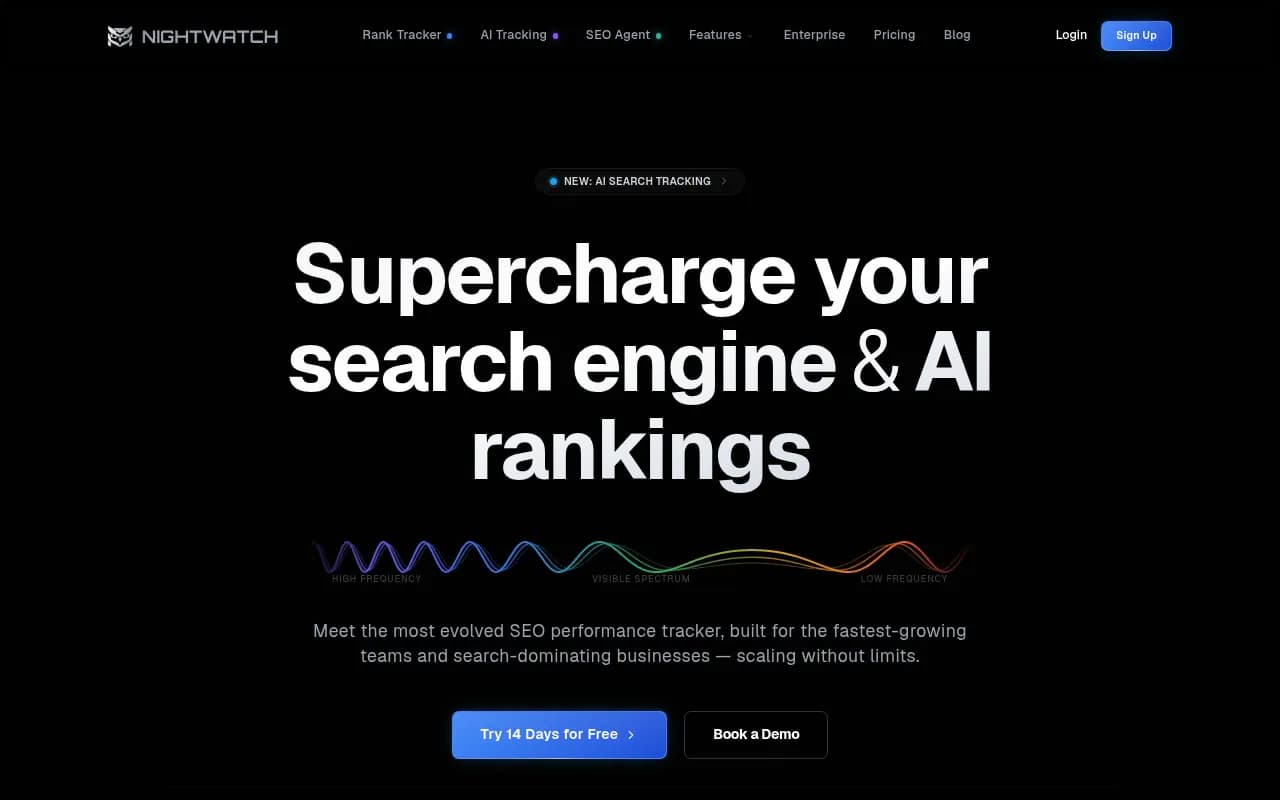
The SEO + AI combination is useful if you genuinely need both in one place and don't want to manage two subscriptions. But if AI visibility is your primary concern, paying a premium for SEO features you may not use doesn't make much sense.
Best for: SEO-first teams that want AI visibility as a secondary capability.
7. AthenaHQ
AthenaHQ tracks 8+ AI search engines and has a clean interface for monitoring brand visibility and sentiment. It's monitoring-focused — the platform shows you where you stand but doesn't have content generation or gap analysis built in.

It's a reasonable step up from basic tools if you need broader model coverage than Otterly.AI offers, but you'll still need external tools to act on what you find.
Best for: Teams that want broader model coverage than entry-level tools without enterprise pricing.
8. Scrunch AI
Scrunch AI monitors how AI assistants like ChatGPT and Claude represent your brand, with a focus on brand accuracy and sentiment alongside visibility metrics. It's a niche-ish product that does this monitoring job well.
If brand accuracy — whether AI models are describing your product correctly — is a bigger concern than share-of-voice, Scrunch AI is worth evaluating. It's less focused on the "how do I rank for more prompts" question.
Best for: Brands with brand accuracy concerns (AI models saying wrong things about them).
9. Brandlight.ai
Brandlight.ai covers monitoring and optimization across AI search platforms, with a focus on making brand data actionable. It's a newer entrant with a growing feature set.
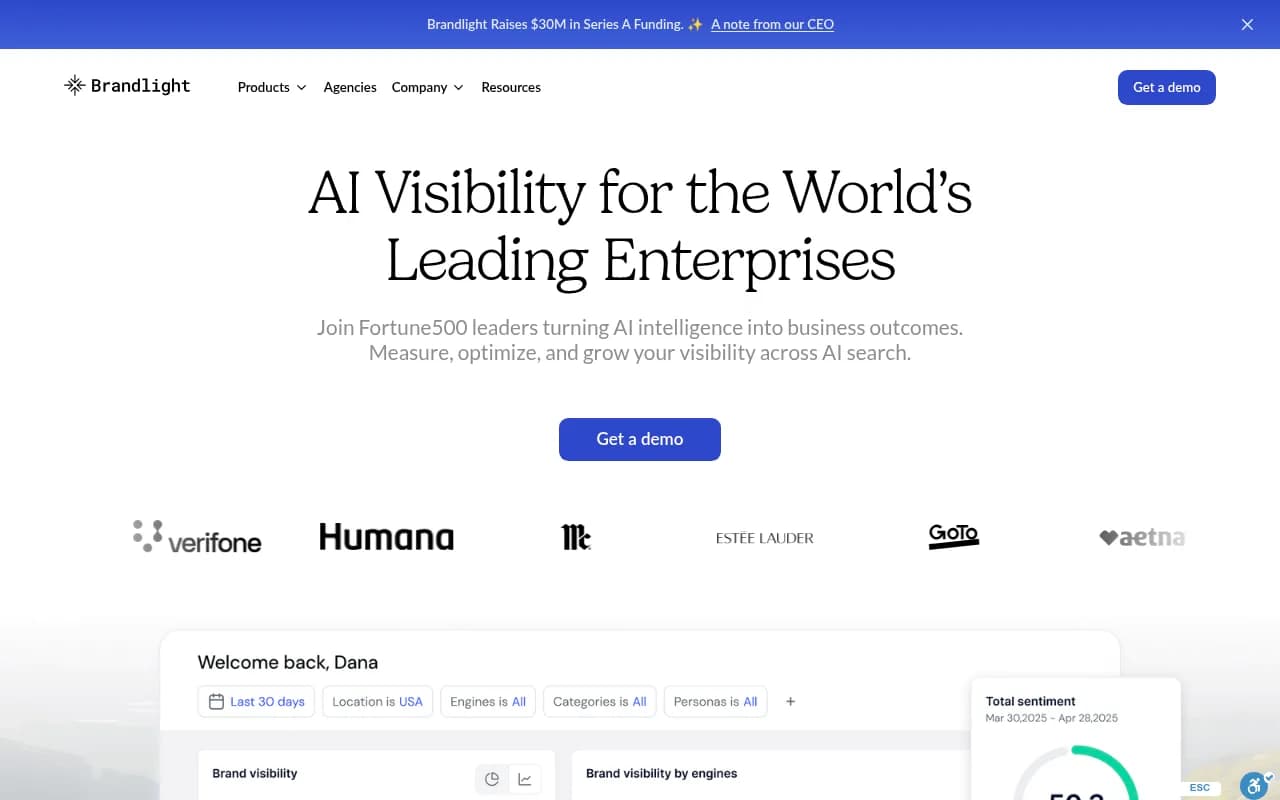
It's worth watching, but the platform is still maturing compared to more established options. Feature parity with leaders like Promptwatch isn't there yet, particularly around content generation and crawler log analysis.
Best for: Teams that want a growing platform and are comfortable being early adopters.
10. Search Party
Search Party takes a different angle — it's more of an AI implementation partner than a pure monitoring tool, helping teams build custom automation systems around AI search. That makes it useful for agencies with specific workflow needs.
Search Party
The trade-off is that it's less of a self-serve platform and more of a service-oriented product. If you need a dashboard you can log into daily to track metrics, this probably isn't the right fit.
Best for: Agencies that want custom AI search automation built around their specific workflows.
Feature and pricing comparison
| Tool | AI models tracked | Starting price | Content generation | Crawler logs | Best for |
|---|---|---|---|---|---|
| Promptwatch | 10 | $99/mo | Yes (built-in) | Yes | Full optimization loop |
| Profound | Up to 10 | $99/mo | No | No | Enterprise prompt research |
| Otterly.AI | 4 (base) | $29/mo | No | No | Budget monitoring |
| Peec AI | Up to 10 | €85/mo | No | No | Flexible model selection |
| SE Visible | 5 | $99/mo | No | No | SE Ranking users |
| Nightwatch | 4 | $131/mo (with AI add-on) | No | No | SEO + AI combo |
| AthenaHQ | 8+ | Custom | No | No | Broader model coverage |
| Scrunch AI | Varies | Custom | No | No | Brand accuracy monitoring |
| Brandlight.ai | Varies | Custom | Partial | No | Growing platform |
| Search Party | Varies | Custom | No | No | Agency automation |
How to pick the right alternative
The most important question isn't "which tool has the best dashboard" — it's "what do I actually need to do with this data?"
If you're at the stage where you just need to know whether your brand appears in AI responses at all, something like Otterly.AI or Peec AI will get you there cheaply. If you're past that and want to understand why competitors are appearing for prompts you're missing, and then do something about it, you need a platform with content gap analysis and generation built in.
A few other things worth checking before you commit:
- Model coverage: If your audience uses Grok or DeepSeek, confirm the tool actually monitors those. Many platforms quietly only cover ChatGPT and Perplexity.
- Traffic attribution: Can the tool connect AI visibility to actual website traffic and revenue? Most can't. Promptwatch does this via a code snippet, Google Search Console integration, or server log analysis.
- Reddit and YouTube tracking: AI models frequently cite Reddit threads and YouTube videos. If a tool ignores these, it's missing a significant part of how AI recommendations get formed.
- Prompt volume data: Knowing you're invisible for a prompt is one thing. Knowing whether that prompt gets asked 500 times a month or 5 times a month changes whether it's worth pursuing.
The bottom line
Most Meteoria.ai alternatives fall into two camps: monitoring-only tools that give you data without direction, and optimization platforms that help you act on what you find. The monitoring-only tools are cheaper and easier to set up. The optimization platforms cost more but are the ones that actually move the needle.
If you're running a serious brand or agency and AI search is becoming a meaningful traffic channel for you, the math on a full optimization platform tends to work out. The content gap analysis alone usually surfaces enough quick wins to justify the cost within the first month.
For most teams, Promptwatch is where that conversation starts — it's the only platform in this space that covers all 10 major AI models, generates content engineered to get cited, and closes the loop with traffic attribution. The others are worth knowing about, but they're solving a smaller version of the problem.