Kontent.ai Review 2026
Manage and create content with AI-powered writing tools and workflow automation. Helps teams collaborate and maintain consistency across content.
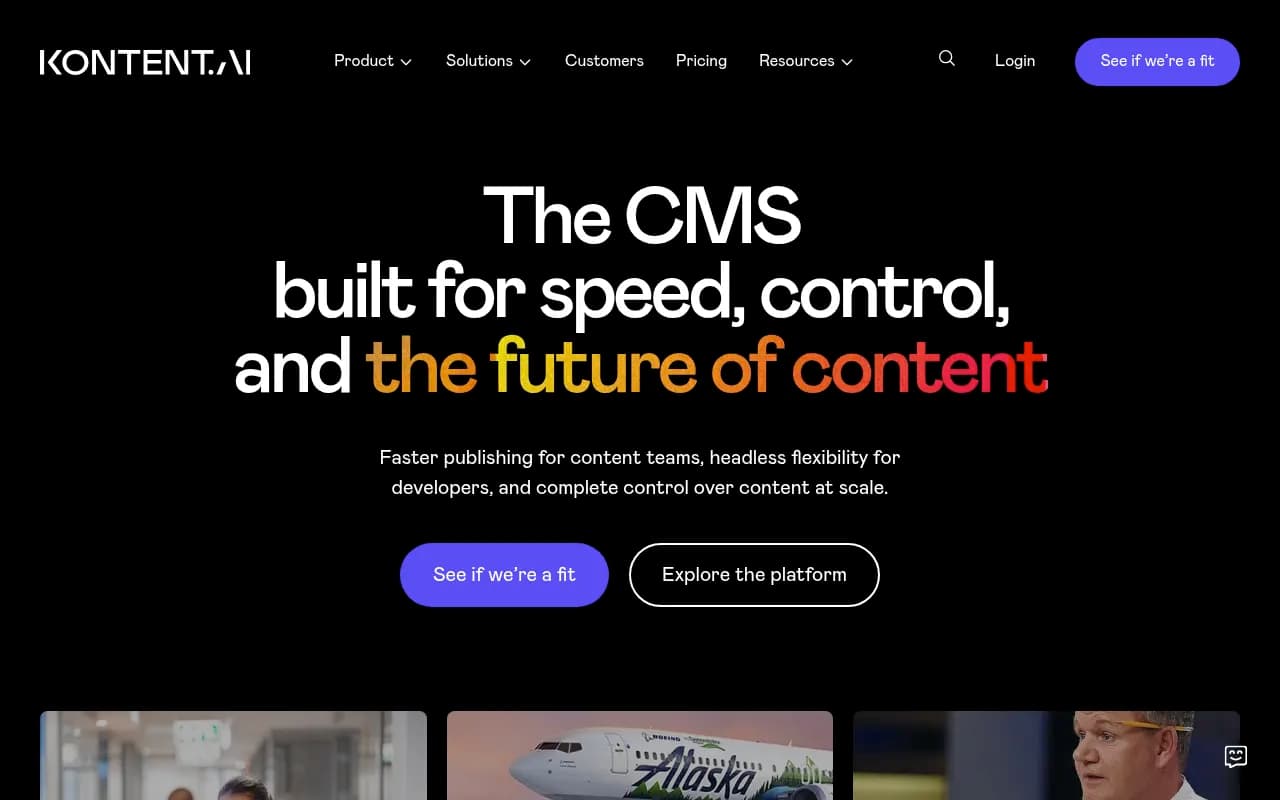
Summary: What you need to know about Kontent.ai
- Best for enterprise content operations -- teams managing 50+ content types across web, mobile, and digital experiences who need governance without slowing down publishing
- The "Agentic CMS" pitch is real -- AI agents handle content audits, localization, and compliance checks in minutes instead of weeks, giving teams time back for strategic work
- Missing content generation -- unlike competitors adding AI writing assistants, Kontent.ai focuses on workflow automation rather than drafting content from scratch
- Developer-first architecture -- true headless with GraphQL/REST APIs, webhooks, and SDKs for JavaScript, .NET, PHP, Java, Swift, and more
- Premium pricing -- starts around $1,500-2,000/month for serious usage, not a budget option for small teams
Kontent.ai is a headless CMS built for organizations that have outgrown WordPress or traditional platforms but need more control than what Contentful or Sanity offer out of the box. The company (formerly Kentico Kontent, rebranded in 2022) targets enterprise marketing and content teams managing complex multi-channel publishing -- think airlines updating flight info across web and mobile, healthcare companies maintaining HIPAA-compliant content libraries, or restaurant chains coordinating menus across hundreds of locations.
The core pitch is "Agentic CMS" -- a term Kontent.ai coined in 2025 to describe AI agents that automate the tedious parts of content operations. Instead of manually auditing 10,000 pages for broken links or outdated product info, you set rules and let the AI handle it. Instead of coordinating with translators across 15 languages, the system flags what needs localization and routes it automatically. This is workflow automation, not content generation -- Kontent.ai doesn't write your blog posts, but it does make sure they follow brand guidelines and get published to the right channels without human bottlenecks.
Customers include WebMD Ignite (cut publishing time from months to minutes), Alaska Airlines (35% faster content creation), and Gordon Ramsay Restaurants (70% increase in web traffic after migrating). These aren't small wins -- they're the kind of results that justify enterprise pricing.
Content modeling and structure
Kontent.ai's content modeling is its strongest feature. You define content types (articles, product pages, landing pages, etc.) with custom fields, validation rules, and relationships between content items. The modeling UI is visual and intuitive -- non-technical users can create new content types without developer help, but developers can also define models via API or CLI for version control.
Content types support rich text, modular content (nested components), taxonomies, asset libraries, and custom elements. You can enforce required fields, character limits, regex patterns, and conditional logic (show field X only if field Y equals Z). This level of control prevents content chaos at scale -- no more rogue formatting or missing metadata.
The system supports content variants for localization and personalization. One content item can have 20 language variants, each with its own workflow state. You can also create variants for different audiences (B2B vs B2C messaging) or channels (web vs mobile app). Variants share the same structure but allow different values, so you're not duplicating entire content items.
AI-powered workflow automation
This is where Kontent.ai differentiates from Contentful, Sanity, and Strapi. The AI agents (launched in 2025) automate three main areas:
-
Content audits: The system scans your entire content library for issues -- broken links, outdated info, missing alt text, non-compliant language. It flags problems and suggests fixes, or auto-corrects simple issues like broken internal links. One customer reported cutting quarterly audits from 3 weeks to 2 days.
-
Governance and compliance: Set brand guidelines (tone, terminology, legal disclaimers) and the AI enforces them. If someone tries to publish content that violates guidelines, the system blocks it or routes it for review. This is critical for regulated industries (healthcare, finance) where non-compliant content creates legal risk.
-
Localization routing: When you publish content in English, the AI detects which parts need translation, estimates cost and timeline, and routes work to the right translators or translation management system (Smartling, Phrase, etc.). It also checks translated content for consistency with source material.
The automation isn't perfect -- you still need human review for nuanced decisions -- but it eliminates 70-80% of manual busywork. The AI learns from your corrections over time, so accuracy improves.
Developer experience
Kontent.ai is truly headless -- no front-end templates or themes, just APIs. You fetch content via REST or GraphQL, render it however you want (React, Vue, Next.js, Gatsby, .NET, PHP, etc.), and deploy to any hosting provider. The GraphQL API is well-documented and supports filtering, sorting, pagination, and linked content resolution.
SDKs are available for JavaScript, TypeScript, .NET, PHP, Java, Swift, and Android. The JavaScript SDK includes a delivery client (fetch content), management client (create/update content via API), and webhook handlers. Type generation from content models is built-in, so your IDE autocompletes field names and catches errors at compile time.
Webhooks fire on content publish, unpublish, archive, and workflow state changes. You can trigger builds in Netlify/Vercel, sync content to Algolia for search, or send notifications to Slack. The webhook payload includes full content data, so you don't need a second API call.
The CLI (kontent-ai-cli) lets you export/import content models, migrate content between environments, and script repetitive tasks. This is essential for version control and CI/CD pipelines -- you can define content models in code, commit them to Git, and deploy changes via GitHub Actions.
One limitation: no built-in preview server. You need to build your own preview environment (usually a staging site that fetches draft content). Contentful and Sanity have better preview experiences out of the box.
Content editing and collaboration
The editing UI is clean and fast. Rich text editing supports inline images, tables, components (reusable content blocks), and custom elements (embeds, code snippets, etc.). You can switch between visual and markdown modes. The editor auto-saves every few seconds, so you won't lose work.
Workflow is customizable -- you define stages (draft, review, approved, published) and who can move content between stages. Notifications alert reviewers when content is ready. Comments and suggestions let teams collaborate without email threads. Version history tracks every change with timestamps and author names, and you can roll back to any previous version.
Scheduled publishing works reliably. Set a publish date/time and the content goes live automatically. You can also schedule unpublishing (useful for time-sensitive promotions).
The asset library supports images, videos, PDFs, and other files up to 100MB. Auto-tagging uses AI to suggest tags based on image content (e.g., "beach", "sunset", "people"). Image transformations (resize, crop, format conversion) happen on-the-fly via URL parameters -- no need for separate image processing tools.
Integrations and ecosystem
Kontent.ai integrates with major translation management systems (Smartling, Phrase, Lokalise), DAMs (Bynder, Cloudinary), analytics (Google Analytics, Adobe Analytics), and marketing automation (HubSpot, Marketo). The Zapier integration connects to 5,000+ apps for no-code workflows.
The marketplace includes pre-built integrations for e-commerce (Shopify, BigCommerce), search (Algolia, Elasticsearch), and personalization (Optimizely, Dynamic Yield). Most integrations are maintained by Kontent.ai or verified partners, so they're reliable.
No native Figma or Sketch integration for design handoff, which is a gap compared to Sanity's visual editing tools.
Multi-environment setup
Kontent.ai supports multiple environments (dev, staging, production) within a single project. You can clone content models and content between environments, test changes in staging, then promote to production. This is standard for enterprise CMS but missing from cheaper alternatives like Strapi Cloud.
Environment-specific API keys and webhooks let you isolate development work from live content. Role-based access control (RBAC) restricts who can access each environment.
Performance and reliability
Kontent.ai's CDN (powered by Fastly) delivers content globally with sub-100ms response times in most regions. The delivery API is read-only and heavily cached, so it scales to millions of requests without performance degradation.
Uptime is consistently above 99.9% (per their status page). The company is SOC 2 Type II certified, ISO 27001 certified, GDPR compliant, and HIPAA compliant -- critical for enterprise buyers.
API rate limits are generous (10,000 requests/minute on Scale plan) but can be a bottleneck for high-traffic sites. You'll need to implement your own caching layer (Redis, Varnish) for peak traffic.
Who is Kontent.ai for?
Kontent.ai is built for mid-market to enterprise organizations with complex content operations:
- Marketing teams at B2B SaaS companies managing 500+ pages across web, docs, and help centers -- need governance to maintain brand consistency without slowing down publishing
- Digital agencies building sites for 10-20 clients -- need multi-project management, white-label options, and client-friendly editing UI
- Healthcare and financial services companies with strict compliance requirements -- need audit trails, role-based access, and automated compliance checks
- Multi-brand enterprises (restaurant chains, retail, hospitality) coordinating content across hundreds of locations -- need localization, workflow automation, and centralized asset management
- Media and publishing companies producing high volumes of content daily -- need fast editing, scheduled publishing, and multi-channel distribution
Team size: 5-50 content creators, 2-10 developers. Smaller teams will find the pricing hard to justify. Larger enterprises (500+ employees) might need Sitecore or Adobe Experience Manager for deeper personalization and customer data integration.
Kontent.ai is NOT for:
- Solo developers or small startups -- the pricing and feature set are overkill. Use Sanity, Strapi, or Contentful's free tier instead.
- Teams that need AI content generation -- Kontent.ai automates workflows but doesn't write content. If you want AI drafting, look at Jasper, Copy.ai, or WordPress with AI plugins.
- E-commerce-first businesses -- Kontent.ai can manage product content, but it's not a full e-commerce platform. Shopify or BigCommerce are better primary systems.
Pricing and value
Kontent.ai doesn't publish pricing publicly, but based on customer reports and sales conversations:
- Developer plan: Free tier for testing -- 2 users, 1 project, 1,000 content items, 50GB bandwidth. Good for prototyping but not production.
- Scale plan: Starts around $1,500-2,000/month for 10 users, 5 projects, 10,000 content items, 500GB bandwidth. Volume discounts kick in at higher usage.
- Enterprise plan: Custom pricing for 50+ users, unlimited projects, dedicated support, SLA guarantees, and advanced security features.
Pricing is usage-based (content items, API calls, bandwidth) with volume discounts. No per-user fees beyond the base user count, which is better than Contentful's per-seat pricing.
Compared to competitors:
- vs Contentful: Kontent.ai is 20-30% cheaper at similar usage levels and includes workflow automation that Contentful charges extra for. Contentful has a larger ecosystem and better preview tools.
- vs Sanity: Sanity is cheaper for small teams ($99-500/month) but lacks enterprise features like multi-environment setup and compliance certifications. Kontent.ai is better for regulated industries.
- vs Strapi: Strapi is open-source and free to self-host, but you'll spend $50-200/month on hosting and devops. Kontent.ai's managed service is worth the premium if you value uptime and support.
ROI: A Forrester TEI study (commissioned by Kontent.ai, so take with a grain of salt) found a composite customer achieved 320% ROI over 3 years by reducing content production time by 90% and consolidating 5 tools into one platform. The payback period was under 6 months.
Strengths
- Content modeling is best-in-class -- flexible, visual, and powerful enough for complex use cases without requiring developer intervention for every change
- AI workflow automation is a real differentiator -- cuts audit and governance time by 70-80%, which is a huge win for teams managing thousands of content items
- Developer experience is solid -- true headless, well-documented APIs, good SDKs, and CLI for automation
- Enterprise-grade security and compliance -- SOC 2, ISO 27001, HIPAA, GDPR -- critical for regulated industries
- Multi-environment support -- dev/staging/production workflows are built-in, not an afterthought
- Reliable performance -- 99.9%+ uptime, fast CDN, handles high traffic without issues
Limitations
- No AI content generation -- Kontent.ai automates workflows but doesn't draft content. Competitors like Contentful and Sanity are adding AI writing assistants. If you want AI to write blog posts or product descriptions, you'll need a separate tool.
- Preview experience is DIY -- you have to build your own preview environment. Contentful and Sanity have better out-of-the-box preview tools.
- Pricing is opaque -- no public pricing makes it hard to budget. You have to talk to sales to get a quote.
- Learning curve for non-technical users -- the content modeling UI is intuitive once you understand the concepts, but new users need training. WordPress is easier for non-technical editors.
- Limited e-commerce features -- you can manage product content, but there's no cart, checkout, or inventory management. You'll need Shopify or BigCommerce as your primary e-commerce system.
Bottom line
Kontent.ai is the right choice for mid-market to enterprise teams managing complex, multi-channel content operations where governance, compliance, and workflow automation are critical. The AI agents genuinely save time on audits and localization -- this isn't vaporware. If you're a 10-person marketing team at a B2B SaaS company publishing 50+ pages a month across web, docs, and help centers, and you're tired of manual audits and broken workflows, Kontent.ai will pay for itself in 3-6 months.
Best use case in one sentence: Enterprise content teams (5-50 people) managing 1,000+ content items across multiple channels who need automated governance and localization without sacrificing developer flexibility.
Similar and alternative tools to Kontent.ai