Key takeaways
- Wrong executive names, headquarters, founding years and pricing in AI answers almost always trace to conflicting, stale or thin sources, not to a single bad page.
- Report buttons in ChatGPT, Gemini, Perplexity and Claude flag an answer for review. None of them promise the specific answer gets corrected.
- The durable fix is entity consistency: one canonical set of facts, repeated identically on your own pages, structured data and the third-party profiles AI actually cites.
- Leadership, About, docs and pricing pages are long-lived citation assets, so fixing them pays off for months. Press coverage fades in about five weeks.
- Audit first, then fix, then monitor. Corrections regress when old listings resurface.
Why AI gets executive names and company details wrong
The usual example is painfully familiar. You ask ChatGPT who runs your company and it names the CEO who left two years ago. Or it puts your headquarters in a city you moved out of in 2022. Or it quotes a price from a plan you discontinued.
This is not the model being malicious. It is stitching an answer from whatever it can find, and what it finds is messy. Across the vendor and agency write-ups on this topic, the same four causes keep appearing. The MarGen breakdown from April 2026 is a clear example of the pattern.
The four root causes
- Conflicting sources. Your site says one thing, an old directory says another, and the model picks either one or blends them.
- Stale data. Training data has a cutoff. Even with live search, an outdated listing can outrank your current page.
- Thin entity signals. When little is written about you, the model infers details from similar companies. The result sounds plausible and is wrong.
- Name confusion. Two companies with similar names (or a person with a common name) get merged into one entity.
The Soar Agency write-up frames it in a slightly different but compatible way: stale training data, bad live retrieval, and entity confusion. The practical point is the same. You have to figure out which one you are dealing with, because each takes a different fix.
How big is the problem
A vizibleai piece cites an April 2026 study by Oumi, run at the request of the New York Times, finding only 39% of Google AI Overviews were fully accurate, meaning correct and backed by their own citations. That study covered factual queries in general, not company facts specifically, but it tells you not to treat a wrong answer about your brand as a rare glitch. It is how these systems work.
Common errors and their likely causes
| Error | Typical cause | Where to look first |
|---|---|---|
| Former executive listed as CEO | Old press, outdated Crunchbase or LinkedIn data, stale About page | Leadership page, press releases, data aggregators |
| Wrong headquarters | Old directory listing, thin location signals | Google Business Profile, directories, schema |
| Wrong founding year | Unreliable third-party bio | Wikipedia or Wikidata, Crunchbase, your About page |
| Discontinued product still described | Old reviews, cached docs | Docs, review sites, comparison pages |
| Wrong pricing | Old pricing pages, competitor pages | Pricing page, G2, third-party roundups |
| Mixed up with another company | Similar names | Schema, consistent naming, disambiguation copy |
Step 1: Audit what each engine says
Do not fix anything until you have a written record of the errors. Make a spreadsheet with the prompt, the engine, the date, the wrong claim, and every cited source.
Run the same set of prompts across ChatGPT, Gemini, Perplexity, Claude, Google AI Overviews and Copilot. Use prompts a real person would ask:
- "Who is the CEO of [Company]?"
- "Where is [Company] headquartered?"
- "Who founded [Company] and when?"
- "What does [Company] cost?"
- "[Company] leadership team"
- "[Company] vs [competitor]"
Two things matter here. First, run each prompt more than once, because answers vary between runs. Second, write down the citations, not just the claim. The citation is your lead. If Perplexity names the wrong CEO and cites a 2021 TechCrunch article, you know where to work.
Doing this by hand across six engines gets old quickly. Tools like Promptwatch track the responses from the real interfaces of ChatGPT, Perplexity, Gemini and others, and its Brand Narrative feature pulls out the individual claims AI makes about you, so a wrong executive name shows up as a claim you can count rather than something you stumbled on.

Sort the errors into the four causes
For every wrong claim, ask:
- Does the cited source contain the wrong fact? That is a source problem. Fix or replace the source.
- Does the cited source say the right thing but the answer is wrong? That is a synthesis problem. Make the right fact clearer and more prominent.
- Is there no citation at all? That is probably training data. Slower to fix, and it depends on new sources accumulating.
- Does the answer describe a different company? That is entity confusion. Disambiguate.
Step 2: Fix your own pages first
You control these, so start here. The goal is to make the correct fact easy to find, easy to quote and impossible to misread.
Leadership and About pages
Put the executive name and title in plain text, in a heading or a short sentence near the top. Not in an image. Not inside a carousel. A line like "Jane Smith is CEO of Acme, which she joined in 2024 after John Doe stepped down" does more than a polished team photo grid.
If a former executive's name still appears in old blog posts as the current leader, add a dated note or update the post. Also consider a short "leadership history" section. It gives retrieval systems an explicit statement of who held the role and when, which beats leaving them to infer it.
Consistent naming everywhere
Pick one company name, one set of product names and one category label. Then use them identically across the site, docs, press kit and profiles. Variants like "Acme Inc.", "Acme Software" and "AcmeHQ" give a model three chances to treat you as three entities.
State facts as explicit sentences
Models quote sentences. Write them:
- "Acme is headquartered in Denver, Colorado."
- "Acme was founded in 2018 by Jane Smith and Raj Patel."
- "Acme's Pro plan costs $49 per month, billed annually."
The llms.unusual.ai guide also recommends explicit fit boundaries ("Best for / Not for"), which stops models from assigning you capabilities you do not have.
Structured data
Add Organization schema with name, URL, logo, founding date, address and sameAs links to your official profiles. Add Person schema for executives with jobTitle and worksFor. Here is a minimal example:
{
  "@context": "https://schema.org",
  "@type": "Organization",
  "name": "Acme",
  "url": "https://www.acme.com",
  "foundingDate": "2018",
  "address": {
    "@type": "PostalAddress",
    "addressLocality": "Denver",
    "addressRegion": "CO"
  },
  "founder": [
    {"@type": "Person", "name": "Jane Smith"}
  ],
  "sameAs": [
    "https://www.linkedin.com/company/acme",
    "https://www.crunchbase.com/organization/acme"
  ]
}
Schema is not magic and I would not promise it directly changes any answer. It does remove ambiguity, and it gives you a place to keep facts consistent. Dedicated platforms such as Schema App exist if you manage a lot of markup.
Make sure AI can actually read the pages
A corrected page does nothing if crawlers cannot fetch it. Check robots.txt, JavaScript rendering and server errors. Promptwatch's AI crawler logs show whether bots like GPTBot, ClaudeBot and PerplexityBot actually reached the page, which separates an access problem from a content problem. Its free Agentic Readiness Check is a quick first test.
Step 3: Fix the third-party sources
Your own site is only part of what AI reads. When the audit shows a wrong third-party page being cited, go fix that page.
Where to look
- Knowledge sources: Wikipedia and Wikidata entries, if you have them. Follow each platform's rules on conflicts of interest and cite independent sources.
- Business data: Crunchbase, LinkedIn company page, Google Business Profile, Bing Places.
- Review and software directories: G2, Capterra, Trustpilot.
- Press and bios: executive bios on conference sites, podcast pages, old announcements.
- Aggregators: data brokers and directory sites that scrape each other.
Promptwatch Data's top ChatGPT sources report shows Wikipedia as the most cited reference site, and G2 and Trustpilot as the review sites ChatGPT cites most. That report is dated September 2025, so treat the exact shares as partly stale, but those are sensible places to verify first.
One caution on social platforms. Promptwatch's data shows ChatGPT got 0.46% of its citations from social platforms between Sep 28 and Oct 4, 2026, while Google AI Overviews got 12.2%. So an outdated LinkedIn bio matters more for AI Overviews than for ChatGPT. Fix it anyway, but do not expect it to move ChatGPT.
Listings management
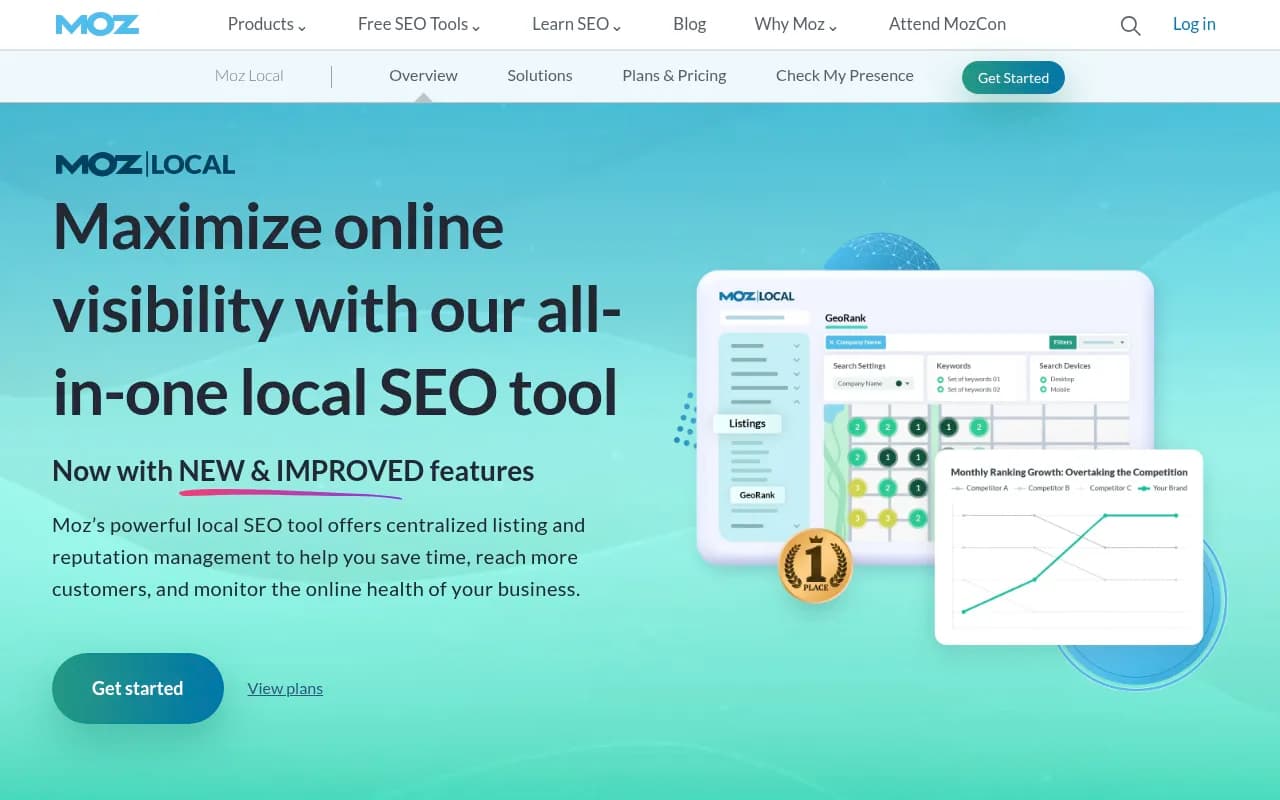
If your wrong details are address, phone or hours across dozens of directories, a listings tool saves time. Yext and Moz Local push consistent data to many directories at once.
Outreach to correct press and bios
Email the editor or site owner. Be brief, give the correct fact, give a link to your canonical page and ask for an update. Old articles often get a correction note when asked politely. It is tedious. It also works better than most people expect.
Step 4: Use the platform reporting tools, with realistic expectations
Each major assistant lets you flag a bad answer. The vizibleai guide walks through them platform by platform.
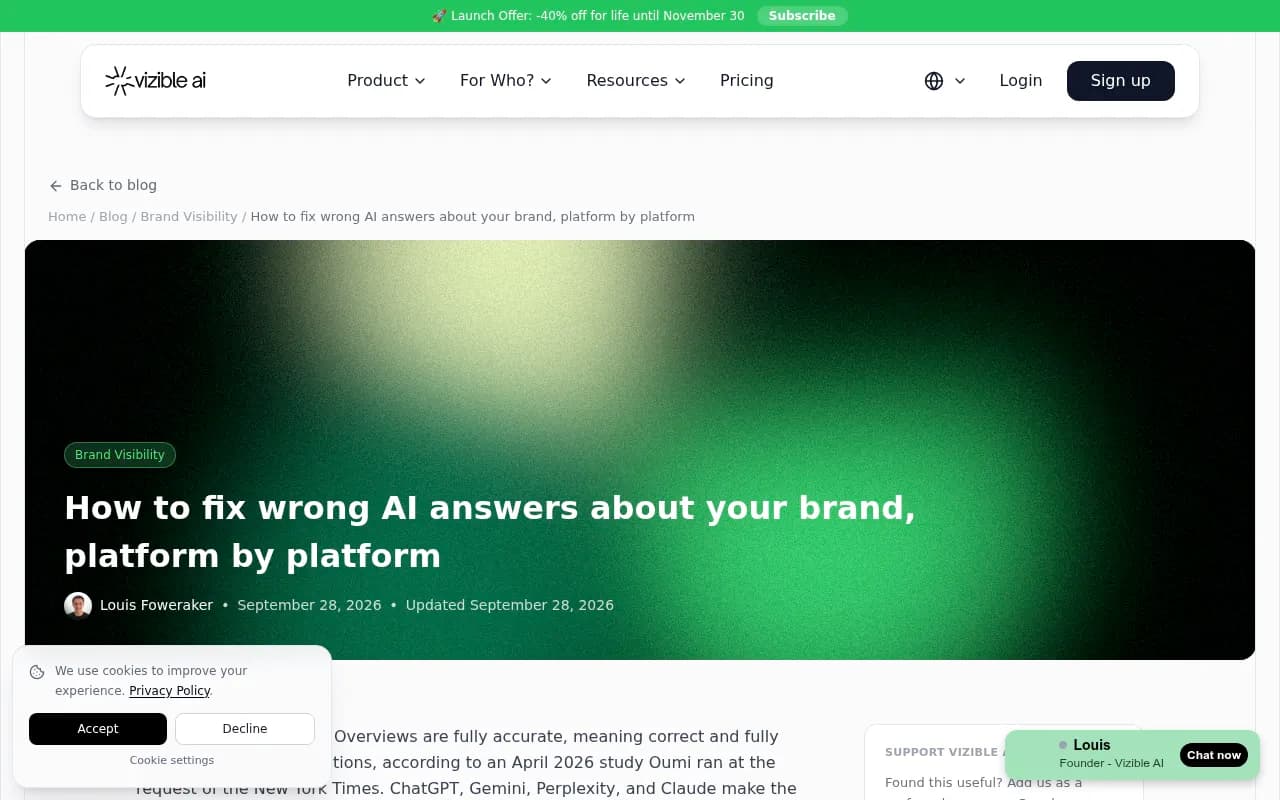
The important detail is what reporting does. OpenAI's help center says reported content may be reviewed by its Model Quality team, which may apply filters or other mitigations to help prevent ChatGPT from relying on unreliable sources in future responses. That is a future prevention step. It is not a promise to rewrite the answer you saw.
My advice: report every wrong answer, because it costs a minute and sometimes helps. Just do not treat it as the fix. The fix is the sources.
For defamatory or legally sensitive errors (a false claim about an executive's conduct, say), use each vendor's legal or safety reporting route and talk to counsel. That is a different process from a factual correction like an outdated title.
Step 5: Know what lasts and what fades
Promptwatch Data's content half-life report tracked every page ChatGPT cited on July 6, 2026 for 90 days. A few numbers matter for this problem:
- After 30 days, ChatGPT still cited 78% of landing pages and 76% of docs.
- After 60 days, 69% of landing pages and 67% of docs were still cited.
- Comparison pages held 72% at 30 days and 63% at 60 days.
- News decayed fastest: half of cited news pages were gone after 36 days.
The takeaway is practical. Your About, leadership, docs and pricing pages are durable citation assets. A wrong fact on one of them can persist for a long time, and a correction there is worth the effort. A corrective press release, by contrast, fades within about five weeks. Use news for awareness, but anchor the truth in evergreen pages.
Step 6: Monitor so corrections stick
Fixes regress. A directory re-syncs from an old data broker, a new article repeats the former CEO's name, or a model update changes retrieval behavior. You need ongoing checks.
What to monitor
- A fixed set of entity prompts (CEO, HQ, founders, pricing, products) per engine
- The claims AI makes about you, grouped and counted
- Which pages get cited for those claims
- Whether crawlers are reaching your corrected pages
Tool options
There are many AI visibility trackers in the catalog. They differ mostly in whether they only report or also help you act.
| Tool | Approach | Good fit |
|---|---|---|
| Promptwatch | Tracks real AI interfaces, extracts claims (Brand Narrative), Fact Check against your crawled pages, crawler logs, content agents | Teams that want to find and fix, not just observe |
| LLMClicks | AI visibility tracking with hallucination detection | Teams focused on flagging inaccuracies |
| Otterly.AI | Affordable prompt and visibility tracking | Small budgets, basic monitoring |
| Peec AI | Monitoring without the optimization layer | Teams that only need tracking |
| Brand24 | Social listening and mentions | Catching old press and social mentions |
Promptwatch's Fact Check feature (Business plan and above) lets you mark a claim Accurate or Inaccurate, then reads pages crawled from your site to find the ones that state it or its opposite, with quotes and a suggested next step. For a wrong executive name, that is often the fastest way to find the stale page still teaching the model the wrong thing. Check promptwatch.com/pricing for current plan details, or start with the free AI visibility report.

If you want to compare more options, the GEO software directory at bestgeosoftware.com lists the wider field.
A practical 30-day plan
Week 1: audit
Run your entity prompts across all engines, record claims and citations, and sort each error into one of the four causes.
Week 2: own pages
Fix leadership, About, pricing and docs pages. Add explicit fact sentences, consistent naming, and Organization and Person schema. Verify crawlers can reach everything.
Week 3: third parties
Update Crunchbase, LinkedIn, Google Business Profile, G2 and any directories. Email editors about wrong bios and articles. File platform reports for every wrong answer.
Week 4: re-test and set up monitoring
Rerun the audit. Expect partial improvement, not a clean sweep. Live-search engines like Perplexity and AI Overviews tend to react faster to updated pages than models answering from training data. Set up scheduled checks so you notice regressions.
When to get help
If the errors are widespread, involve legal exposure, or you simply lack the time to chase down dozens of listings and editors, an SEO and GEO agency can run the process. 1001 SEO Media works on AI search visibility and entity clean-up for brands, and uses Promptwatch to measure results.
What I would do first
If I had one afternoon, I would do three things. Check what Perplexity and ChatGPT cite for "who is the CEO of [company]", because the citation tells you which page to fix. Rewrite the leadership page with plain explicit sentences. Then correct the top two third-party profiles that came up. Everything else is refinement of that loop: find the source, fix the source, confirm the answer changed.
One limit to be honest about: there is no guaranteed removal switch. You are shifting the weight of evidence, and models follow the evidence slowly. The brands that win are the ones that keep the evidence consistent long enough for the old facts to age out.