Key takeaways
- Featured Snippets extract one verbatim passage from a single page. AI Overviews synthesize facts from multiple pages using Gemini, then write new sentences that may not match any source's wording.
- Ranking position still matters for AI Overviews, but it's not decisive: Google's AI frequently cites sources from positions 15-50 while skipping top-3 results, because synthesis rewards completeness over position.
- The two features decay at different speeds and get replaced by different mechanisms. Snippet churn is about passage re-extraction; AI Overview churn is about which sub-queries the fan-out model generates that day.
- Featured Snippet SERP presence has collapsed (one widely cited Ahrefs dataset puts it at a 64% drop; another study tracking Jan-June 2025 found an 83% decline), while AI Overviews now appear on something like 42-48% of queries depending on the tracker and month.
- Standard rank trackers report a single average position per keyword. That number is becoming close to meaningless for queries where an AI Overview is present, because your "rank" can vary by device, session and sub-query, and you need separate tracking logic for snippet presence versus AI citation presence.
Two features, two completely different retrieval systems
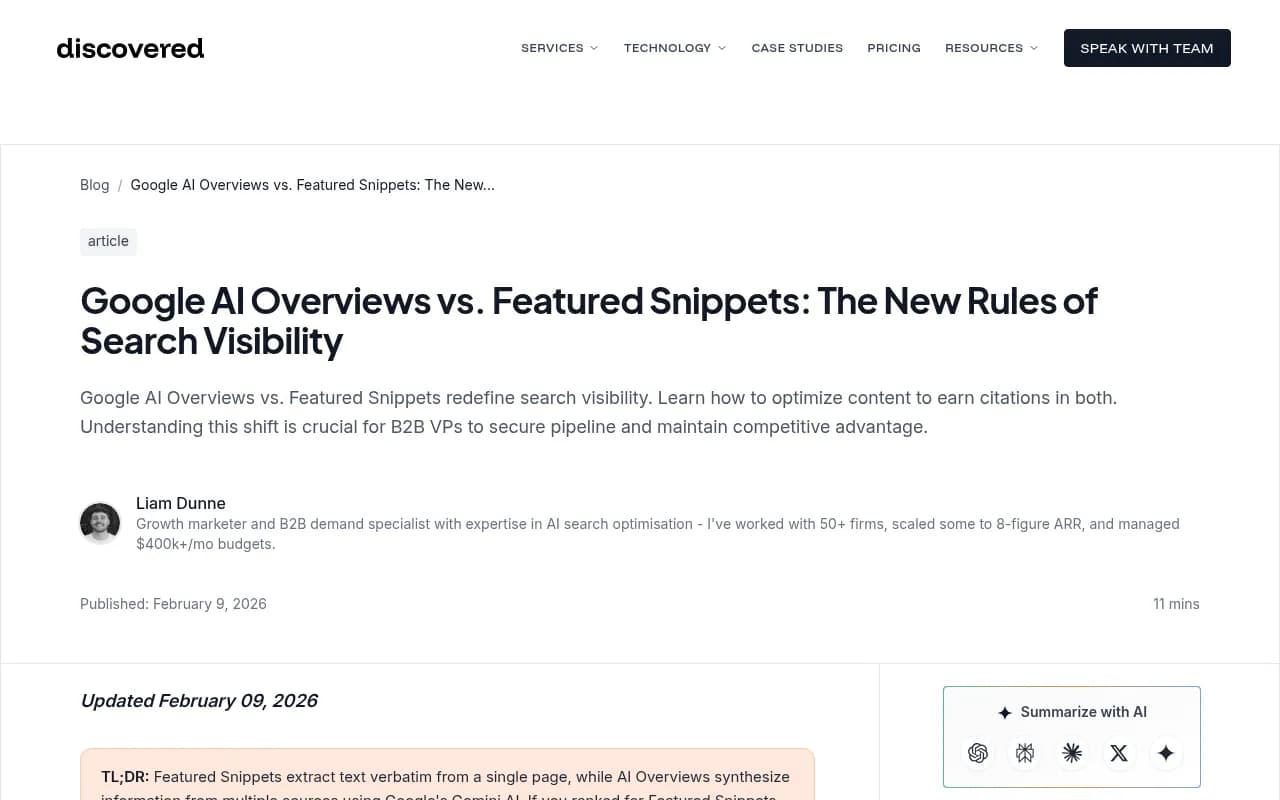
Here's the thing that trips up a lot of SEO teams in 2026: Featured Snippets and AI Overviews look similar sitting at the top of a results page, so it's tempting to treat them as the same ranking signal measured two different ways. They're not. They're built on different retrieval logic entirely, and that's why your keyword tracker can show a page holding a Featured Snippet while getting zero AI Overview citations for the exact same query, in the exact same week.
Featured Snippets use passage indexing. Google identifies a self-contained chunk of text on a single page, usually one that already ranks well for the query, and lifts it verbatim into the snippet box. You get the exact wording, the exact tone, and critically, a single attributed URL. If a user clicks through, they land on your page because the snippet names you as the source.
AI Overviews work differently. Google's Gemini model reads the top results for a query (and whatever Featured Snippet exists for it), pulls facts from several pages at once, and writes a new answer in its own voice. If five sites each have a fragment of the full answer, the AI Overview stitches a summary that cites all five instead of crowning a single winner. That's a fundamentally different task: snippet extraction is retrieval, AI Overview generation is retrieval plus synthesis.
Does holding a Featured Snippet help you get into the AI Overview?
Sometimes. Not reliably enough to plan around.
AI Overviews do read the existing Featured Snippet as part of their source pool, so ranking for one increases your odds of being cited. But it's not a guarantee, and the reason is worth sitting with: Google's AI frequently cites sources from positions 15 through 50 while ignoring top-3 results entirely, because the synthesis process weighs answer completeness and topical authority over raw ranking position. A page sitting at position 3 with a clean, well-optimized snippet can lose the AI Overview citation to a page at position 22 that happens to cover a sub-angle the fan-out model decided it needed.
This matches what we're seeing in Promptwatch's citation data across AI platforms generally. Promptwatch's analysis of domain rank distribution in ChatGPT citations found that DR 46-75 sites capture almost half of all citations with known domain rank, while the very biggest domains (DR 91-100) actually saw their citation share shrink through August 2026, from around 7% down to roughly 3-4%. Authority and rank position still matter, but they're not the dominant variable they were in classic organic SEO.
Why the same keyword behaves differently: the mechanics
Sub-query fan-out changes what gets retrieved
Featured Snippets answer the literal query you typed. AI Overviews often don't. Google's AI expands your query into a fan of related sub-queries behind the scenes, then retrieves passages for each one before assembling the final answer. So "best CRM for small teams" might fan out into sub-queries about pricing, integrations, onboarding time and mobile apps, each pulling from a different page. Your content might rank #1 for the head term and never get retrieved for the sub-query where the AI actually needed a citation. Visibility in AI Overviews, in other words, is a function of how many of those sub-queries you can be retrieved for and how extractable your answer is at each one, not where you sit for the head term.
Different content types win in each surface
The content format that earns a citation shifted meaningfully through 2026. Promptwatch's tracking of AI Overviews citation types in July 2026 found listicles leading the month at roughly 18% of citations, with product pages at 16.3-16.4% and how-to content close behind at 15.1%. But the trend line matters more than the snapshot: from July 28 onward, product pages overtook listicles as the single most-cited format in AI Overviews every single day, ending the month at 17.9% versus 16.2%. That's the same shift Promptwatch sees in ChatGPT, where product and landing pages together already account for 39% of all classified citations. Compare that to earlier in the year: listicles made up roughly 26% of AI Overviews citations in Q1 2026 and fell to 18% by July, while product pages roughly doubled from 9% in January. AI search as a whole is warming to brand-owned commercial pages rather than generic editorial roundups, and that's not something a Featured Snippet tracker will ever show you, because Featured Snippets mostly favor clean, single-paragraph definitional content regardless of page type.
Decay rates are not the same
Featured Snippets churn constantly as Google re-evaluates which passage best answers a static query. AI Overview citations decay on a completely different clock tied to content type, not ranking volatility. Promptwatch tracked every page cited by ChatGPT on a single day in July 2026 for 90 days afterward and found landing pages and documentation hold citations the longest, 78% and 76% of them still cited after 30 days, 69% and 67% after 60. News decays fastest: about a quarter of news citations never reappear after day zero, and half are gone within 36 days. Product pages were a surprise, decaying faster than expected despite their high citation share, down to 55% still cited after 60 days, roughly matching reviews and how-to content. The point for anyone building a tracking dashboard: a drop in your AI Overview citation might mean nothing is wrong with your SEO. It might just mean your content type has a short natural half-life in that system, and you need a refresh cadence built around that, not a panic response.
How many sources actually compete for the slot
The competitive math is also different. Google AI Overviews cite roughly 10 sources per answer on average, which is a wider net than people assume, closer to the old 10-blue-link SERP. ChatGPT, by contrast, cites around 5 sources per web-search response, roughly half that, making each citation slot there more contested. Perplexity sits close to 10 as well and is notably stable. If you're only tracking Featured Snippet position (a single winner-take-all slot), you're measuring a completely different competitive dynamic than the multi-source citation pool that AI Overviews actually run on.
Comparison: Featured Snippets vs AI Overviews
| Dimension | Featured Snippets | Google AI Overviews |
|---|---|---|
| Retrieval model | Passage indexing, single source | Multi-source synthesis via Gemini |
| Attribution | One URL, verbatim text | Multiple cited sources, paraphrased answer |
| Correlation with organic rank | Strong (pulls from top-ranking pages) | Weak-to-moderate; frequently cites positions 15-50 |
| 2026 SERP presence | Down sharply (64-83% decline cited by different studies) | Up to roughly 42-48% of queries depending on tracker |
| Click-through when present | Around 11.4% per FirstPageSage's 2026 data | 5.2% for the first cited source, 3.1% for the second |
| Winning content type (2026 trend) | Short definitional passages, clean HTML structure | Shifted from listicles toward product pages mid-2026 |
| Decay pattern | Frequent re-extraction, hard to predict | Varies by content type: docs/landing pages persist, news decays fast |
| Tracking method needed | Classic rank-based scraping | Timestamped SERP snapshots plus URL-level citation logging |
What this means for how you track rankings
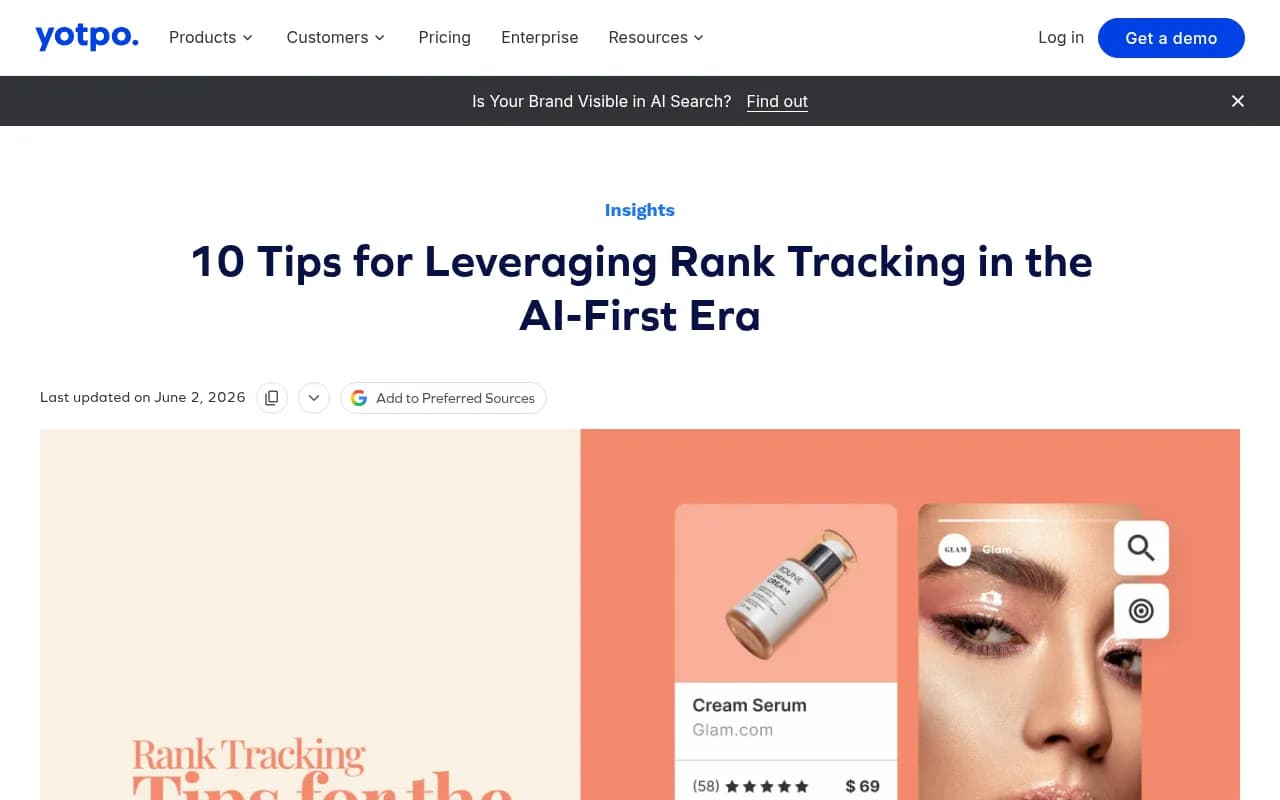
The practical fallout is that a single "average position" number can't tell this story anymore. On mobile, AI Overviews and Featured Snippets combined can occupy more than 75% of the initial screen, so the blue link your tracker is monitoring might not even be visible to the user who triggered the search.
A few things worth building into your tracking setup:
- Track Featured Snippet presence and AI Overview citation presence as two separate metrics per keyword, not one blended "SERP feature" flag. They move independently and sometimes in opposite directions.
- Capture timestamped screenshots of the actual AI Overview text, not just a yes/no flag. Citations and wording change within the same day as Google re-runs the synthesis.
- Log which URL got cited at each position inside the AI Overview, not just whether your domain appeared anywhere in it. First-citation-slot and fifth-citation-slot behave very differently in terms of CTR.
- Segment by query length and intent. AI Overview trigger rates vary hugely: one-word queries trigger them under 10% of the time versus roughly 46% for queries of seven-plus words, and informational intent dominated triggers early in 2026 before commercial and transactional queries started pulling more weight later in the year.
- Don't assume keyword rank and backlink authority from a traditional SEO tool will predict AI citation. They were built for a different retrieval system, and several 2026 vendor comparisons flag this as the most common mistake teams make when reusing old SEO dashboards for AI visibility reporting.
Tools built for this split
Most legacy rank trackers bolted AI Overview monitoring onto their existing keyword-position infrastructure, and it shows. Semrush's AI Search plans start around $165/month for 50 daily AI prompts and 500 tracked keywords, scaling to $455/month at the Advanced tier. Ahrefs gates daily rank updates behind a paid add-on and prices its AI prompt packages separately from the main Rank Tracker product, which can get confusing fast if you're trying to correlate the two data sets.
Purpose-built AI visibility platforms approach this differently because they were designed around citations and prompts from day one rather than keyword positions.
Promptwatch tracks citation trends across ChatGPT, Gemini, Perplexity, Grok, Claude and Google AI Overviews and AI Mode, classifying every citation into content types and source types so you can actually see whether your product pages, how-to guides or landing pages are winning the slot, not just whether you appeared somewhere. It also runs AI crawler log analysis (Agent Analytics) that shows when ChatGPTBot, PerplexityBot or Google-Agent actually visited a page before it got cited, which closes the loop between "Googlebot crawled it" and "the answer engine used it." That's a layer most Featured Snippet trackers never had to build, because passage extraction doesn't require a separate retrieval crawl the way multi-source synthesis does.
Other dedicated options worth knowing about if you want narrower, cheaper monitoring:
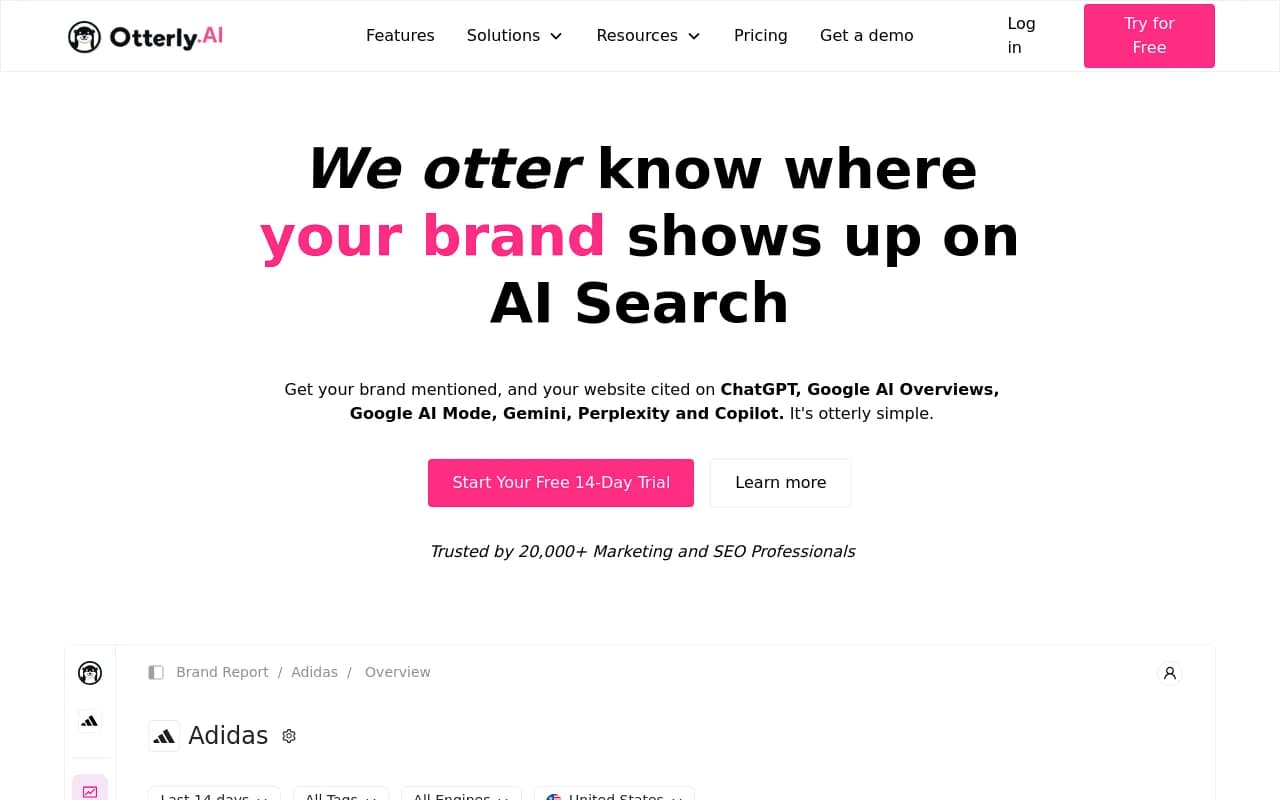
Otterly.AI is the cheapest entry point at $29/month for 15 prompts across four core engines including Google AI Overviews, though Google AI Mode, Gemini and Claude are paid add-ons.
Profound starts at $99/month for ChatGPT-only tracking and scales to enterprise pricing for coverage across nine engines, positioned mostly at mid-market and enterprise AEO teams.
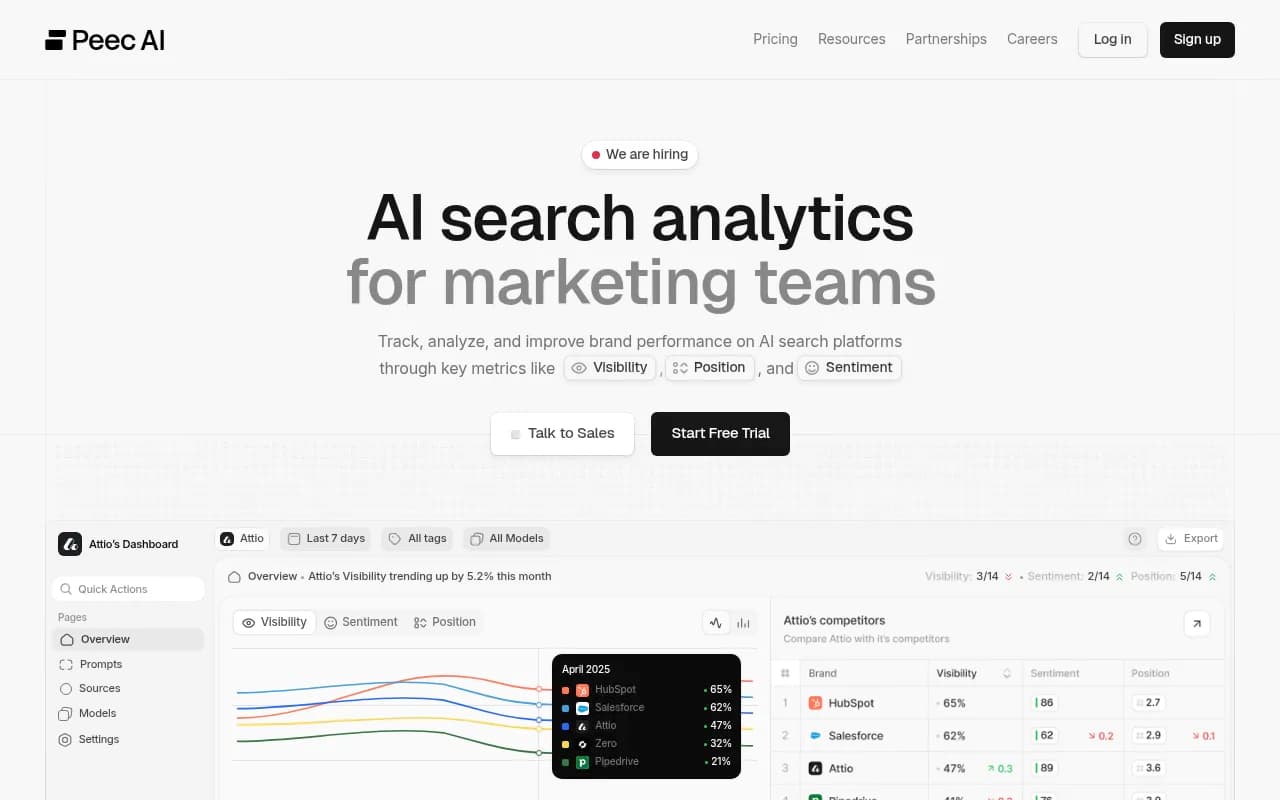
Peec AI starts near €89/month and caps most tiers at three tracked engines you pick from a set that includes ChatGPT, Perplexity, AI Overviews and AI Mode, popular with European agencies.
A practical checklist for 2026
- Stop reporting "average position" as your headline metric for any keyword where an AI Overview triggers at least half the time. Report citation presence and position inside the citation list instead.
- Build (or buy) content type classification into your tracking. If product pages are gaining share in AI Overviews while your content library is mostly how-to posts, that's a structural gap, not a writing-quality problem.
- Expect faster churn on news and product content, slower churn on documentation and landing pages, and schedule refresh work around that half-life rather than reacting to every daily fluctuation.
- Check sub-query coverage, not just head-term rank. If you can't see what sub-queries a fan-out generates for your topic, that's the single biggest blind spot in most 2026 tracking setups.
- Treat Featured Snippet tracking as a legacy signal worth keeping, but not a proxy for AI Overview performance. The correlation is real but weak enough that optimizing for one won't reliably deliver the other.
If you're building out a broader AI visibility stack and want to see how the full range of GEO and AEO platforms stack up against each other, the directory at bestgeosoftware.com is a useful place to compare feature sets side by side before you commit budget to any single tool.