Summary
- GEO went from niche to necessity: In 2025, brands experimented with AI visibility tracking. By early 2026, it's a core marketing function -- 60% of U.S. Google searches now end without a click, and AI engines like ChatGPT and Perplexity are primary discovery channels.
- Tool capabilities evolved dramatically: Early GEO platforms only monitored citations. Today's leaders offer content gap analysis, AI-powered writing agents, crawler log analysis, and traffic attribution -- turning visibility data into actionable optimization.
- The market split into tiers: A clear divide emerged between monitoring-only dashboards (Otterly.AI, Peec.ai, AthenaHQ) and full optimization platforms (Promptwatch, Profound, Bluefish AI) that help you fix what's broken.
- Reddit and YouTube became citation goldmines: Platforms realized AI models heavily cite community discussions and video content -- tools that ignore these sources miss half the picture.
- Pricing and positioning stabilized: After a year of rapid launches and pivots, GEO platforms settled into defined price bands and feature sets, making it easier to compare and choose.
The zero-click search reality hit home
In January 2025, most marketers still treated AI search as a curiosity. By the end of the year, the data was undeniable: nearly 60% of Google searches in the U.S. ended without a click to an external website. Mobile users especially stopped clicking through -- they got their answers directly from AI summaries at the top of search results.
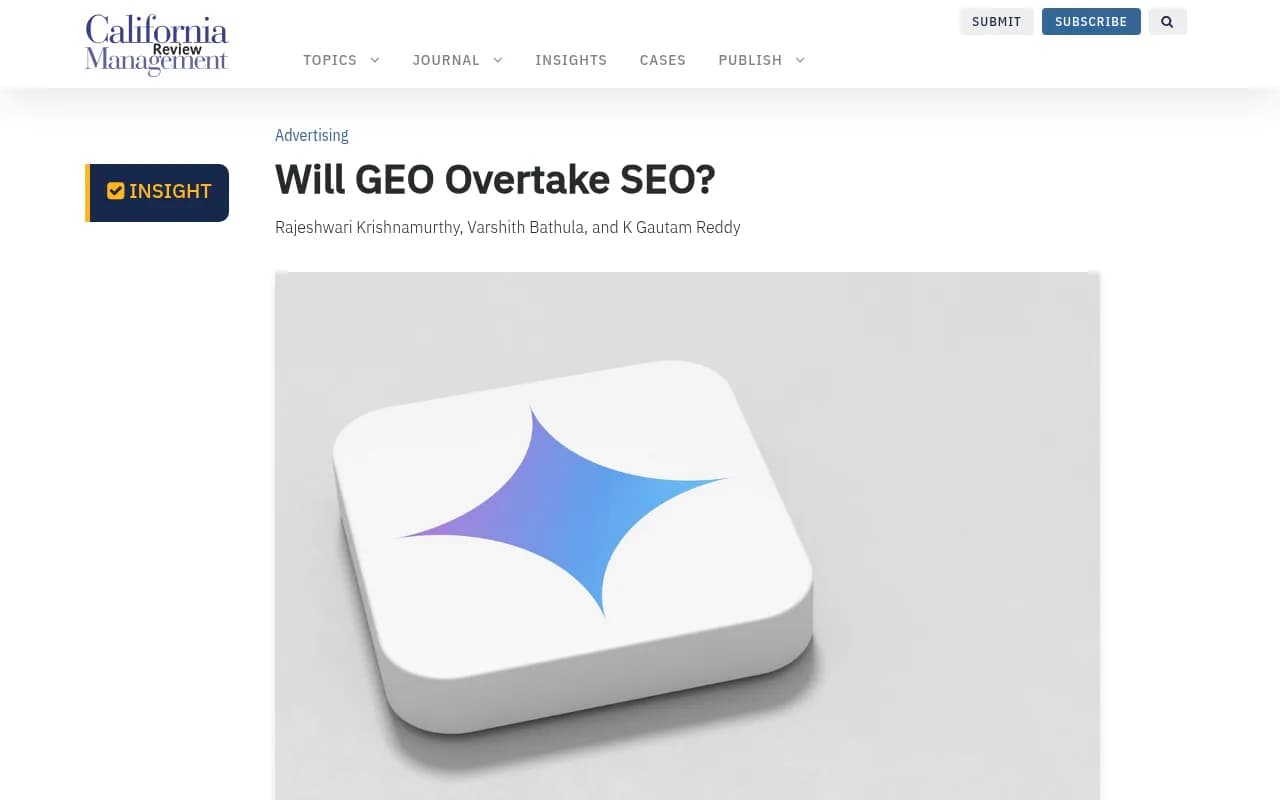
This wasn't a gradual shift. It was a cliff. Brands that relied on traditional SEO traffic saw referrals drop month over month while their competitors -- the ones being cited inside AI responses -- maintained or grew visibility. The question stopped being "Should we care about GEO?" and became "How fast can we catch up?"
ChatGPT, Perplexity, Google AI Overviews, Claude, and Gemini all became primary research tools for consumers. People stopped typing queries into Google and started having conversations with AI assistants. The entire discovery funnel changed.
Early GEO tools were just dashboards
The first wave of GEO platforms launched in late 2024 and early 2025 did one thing: they showed you where your brand appeared (or didn't appear) in AI responses. You'd type in a prompt, the tool would query ChatGPT or Perplexity, and you'd see a list of citations. Useful for awareness, but it left you stuck.
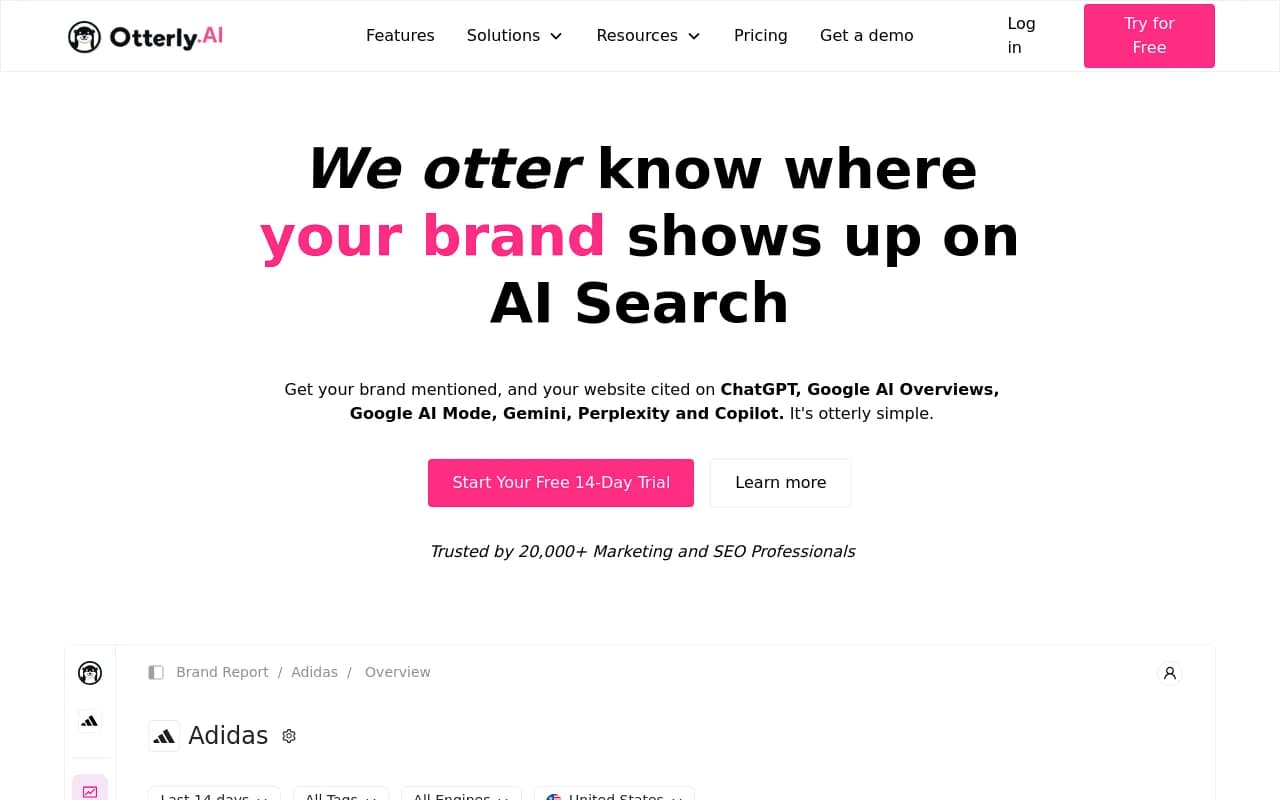
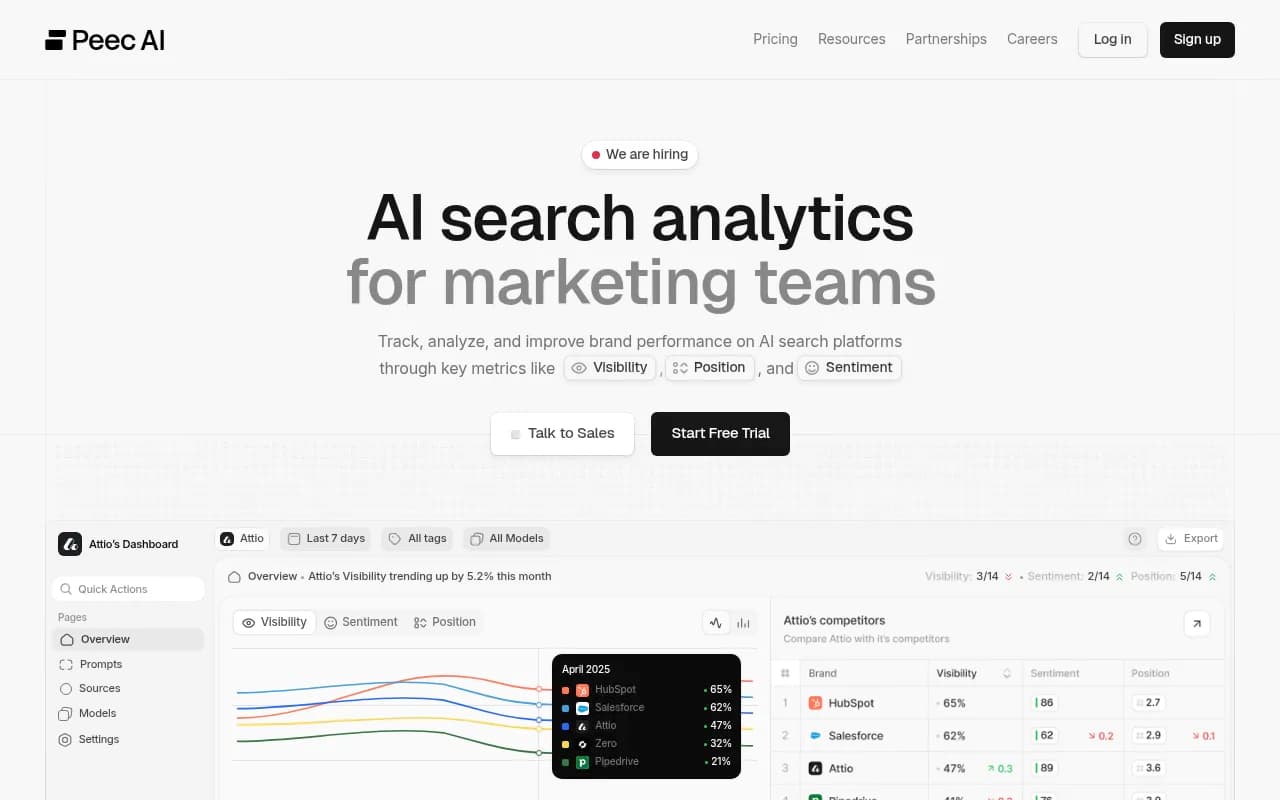
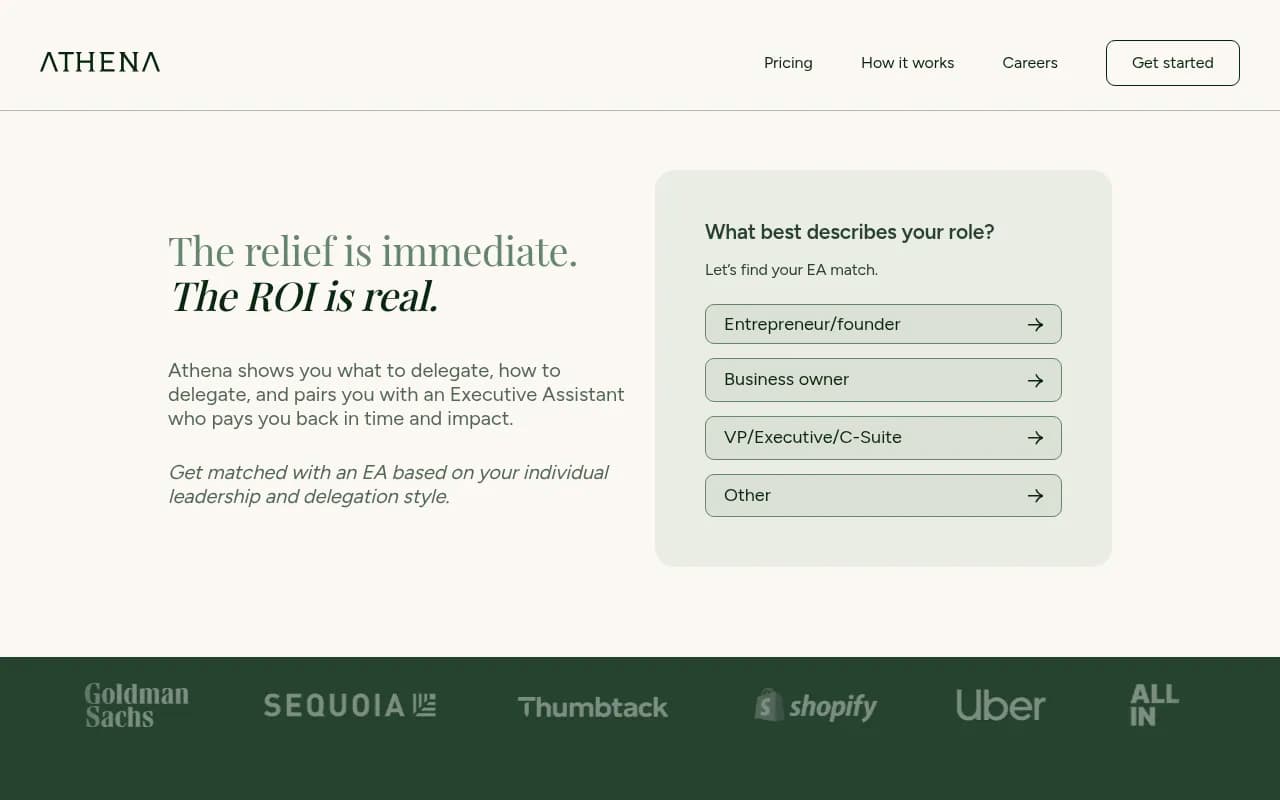
Most of these early tools -- Otterly.AI, Peec.ai, AthenaHQ, Search Party -- stopped at monitoring. They'd tell you "Your competitor is cited 47 times for this topic and you're cited zero times" but gave you no guidance on what to do about it. You were left staring at a dashboard full of red flags with no roadmap to fix them.
Search Party
By mid-2025, brands realized monitoring alone wasn't enough. Knowing you're invisible doesn't help if you don't know why or how to change it.
The action loop emerged as the differentiator
The platforms that pulled ahead in 2025 were the ones that closed the loop: find the gaps, create content that fills them, track the results. Promptwatch built this cycle into the core product from day one.

Here's how the action loop works:
- Answer Gap Analysis shows exactly which prompts competitors rank for but you don't. It's not just "you're missing visibility" -- it's "here are the 47 specific questions AI models want answers to that your website doesn't address."
- AI Writing Agent generates articles, listicles, and comparison pages grounded in real citation data (880M+ citations analyzed), prompt volumes, persona targeting, and competitor research. This isn't generic SEO filler -- it's content engineered to get cited by AI models.
- Page-Level Tracking shows which pages are being cited, how often, and by which models. Close the loop with traffic attribution (code snippet, GSC integration, or server log analysis) to connect visibility to revenue.
This cycle -- find gaps, generate content, track results -- is what separates optimization platforms from monitoring dashboards. Most competitors (Otterly.AI, Peec.ai, AthenaHQ, Search Party) still stop at step one.
AI crawler logs became table stakes
In early 2025, almost no one was tracking AI crawler behavior. By the end of the year, it was obvious: if you don't know which pages AI models are reading, how often they return, and what errors they encounter, you're flying blind.
Promptwatch was one of the first platforms to surface real-time logs of ChatGPT, Claude, Perplexity, and other AI crawlers hitting your website. You could see:
- Which pages they read and how often
- HTTP errors and indexing issues
- Crawl frequency and patterns
- Which content they prioritize
This data turned out to be critical. Brands discovered that AI models were hitting 404 pages, getting blocked by robots.txt rules, or ignoring entire sections of their site because of technical issues. Fixing these problems directly improved citation rates.
Most monitoring-only platforms (Otterly.AI, Peec.ai, AthenaHQ) still lack crawler log analysis entirely. It's a blind spot that costs visibility.
Reddit and YouTube tracking separated leaders from followers
One of the biggest surprises of 2025: AI models cite Reddit threads and YouTube videos constantly. A well-ranked Reddit discussion or a popular YouTube tutorial can generate more AI citations than a polished corporate blog post.
Platforms that ignored these channels missed half the story. Promptwatch added Reddit and YouTube insights specifically to surface the discussions and videos that influence AI recommendations. You can see:
- Which Reddit threads AI models cite for your industry
- YouTube videos that appear in AI responses
- Community sentiment and trending topics
- Opportunities to participate in high-value discussions
This capability is still rare. Most competitors (Otterly.AI, Peec.ai, Profound, Scrunch) don't track Reddit or YouTube at all. It's a massive gap.
ChatGPT Shopping changed the game for e-commerce brands
In late 2025, ChatGPT rolled out shopping features -- product recommendations and shopping carousels directly inside chat responses. For e-commerce brands, this was a new discovery channel with zero traditional SEO signals.
Promptwatch added ChatGPT Shopping tracking to monitor when your brand appears in product recommendations. You can see:
- Which products ChatGPT recommends
- How often your brand appears vs competitors
- Which prompts trigger shopping carousels
- Price and availability data AI models surface
This feature is still uncommon. Most GEO platforms (Otterly.AI, Peec.ai, AthenaHQ, Search Party, Profound, Scrunch) don't track ChatGPT Shopping at all. If you're an e-commerce brand, that's a problem.
Prompt intelligence matured from guesswork to data
Early GEO tools treated all prompts equally. You'd get a list of queries your brand appeared in, but no sense of which ones mattered. By mid-2025, the better platforms started adding prompt intelligence:
- Volume estimates: How many people are asking this question?
- Difficulty scores: How hard is it to rank for this prompt?
- Query fan-outs: How does one prompt branch into sub-queries?
This data helps you prioritize. Instead of chasing every prompt, you focus on high-value, winnable opportunities. Promptwatch built this into the core product -- every prompt comes with volume, difficulty, and fan-out data.
Most monitoring-only platforms (Otterly.AI, Peec.ai, AthenaHQ) still lack prompt intelligence. You're left guessing which prompts to optimize for.
The market split into clear tiers
By early 2026, the GEO tool landscape had stratified into three tiers:
Tier 1: Full optimization platforms
These platforms don't just monitor -- they help you fix what's broken. They include content gap analysis, AI writing agents, crawler logs, prompt intelligence, and traffic attribution.
- Promptwatch: The only platform rated as a "Leader" across all categories in a 2026 comparison of 12 GEO tools. Built around the action loop (find gaps, generate content, track results). Monitors 10 AI models, includes Reddit/YouTube tracking, ChatGPT Shopping, and crawler logs. Pricing: Essential $99/mo, Professional $249/mo, Business $579/mo.
- Profound: Strong feature set, higher price point, no Reddit tracking, no ChatGPT Shopping.
- Bluefish AI: Enterprise-focused, robust monitoring, limited content optimization.
Tier 2: Monitoring-focused platforms
These tools show you where you're visible but don't help you optimize. Good for awareness, limited for action.
- Otterly.AI: Affordable, basic monitoring, no crawler logs, no visitor analytics, no content generation.
- Peec.ai: Multi-language support, monitoring-only, no optimization features.
- AthenaHQ: Monitoring-focused, lacks content gap analysis and generation.
- Search Party: Agency-oriented, limited prompt metrics, no content optimization.
Search Party
Tier 3: Traditional SEO tools with AI add-ons
SEO platforms that bolted on AI visibility tracking as an afterthought. Limited depth, fixed prompts, no optimization.
- Semrush: Fixed prompts, no custom tracking, no AI traffic attribution.
- Ahrefs Brand Radar: Fixed prompts, basic monitoring, no content gap analysis.
Comparison: monitoring vs optimization platforms
| Feature | Monitoring-only (Otterly.AI, Peec.ai) | Optimization platforms (Promptwatch, Profound) |
|---|---|---|
| Citation tracking | Yes | Yes |
| Custom prompts | Yes | Yes |
| Multi-model support | Yes (limited) | Yes (10+ models) |
| Content gap analysis | No | Yes |
| AI writing agent | No | Yes |
| Crawler logs | No | Yes |
| Prompt intelligence | No | Yes |
| Reddit/YouTube tracking | No | Yes (Promptwatch only) |
| ChatGPT Shopping | No | Yes (Promptwatch only) |
| Traffic attribution | No | Yes |
| Pricing (entry tier) | $49-99/mo | $99-249/mo |
What didn't change (and still matters)
Despite all the upheaval, some fundamentals held:
- Content quality still wins: AI models cite authoritative, well-structured content. Thin pages and keyword-stuffed articles get ignored.
- Technical SEO matters: If AI crawlers can't access your pages, you're invisible. Robots.txt, sitemap hygiene, and page speed still matter.
- E-E-A-T signals carry over: Expertise, Experience, Authoritativeness, and Trustworthiness -- the signals Google values -- also influence AI citations.
- Backlinks and domain authority help: AI models consider domain reputation when deciding what to cite. Strong backlink profiles still matter.
GEO didn't replace SEO. It extended it. The brands winning in AI search are the ones that do both.
Pricing and positioning stabilized
After a year of rapid launches, pivots, and price experiments, GEO platforms settled into predictable price bands:
- Entry tier ($49-99/mo): Basic monitoring, limited prompts, 1-2 sites. Examples: Otterly.AI, Peec.ai.
- Professional tier ($199-299/mo): Multi-site tracking, custom prompts, crawler logs, some optimization features. Examples: Promptwatch Professional, Profound.
- Enterprise tier ($500+/mo): High prompt volumes, white-label options, API access, dedicated support. Examples: Promptwatch Business, Bluefish AI, Profound Enterprise.
The market also clarified positioning:
- For agencies: Platforms with white-label options, multi-client dashboards, and API access (Promptwatch Business, Profound, Search Party).
- For e-commerce brands: Tools with ChatGPT Shopping tracking and product-level visibility (Promptwatch).
- For enterprise: Platforms with crawler logs, custom integrations, and dedicated support (Promptwatch Business, Bluefish AI, Profound).
- For budget-conscious teams: Monitoring-only platforms with basic tracking (Otterly.AI, Peec.ai).
What to expect in 2026
The GEO tool landscape will keep evolving, but the core split is set: monitoring-only dashboards vs full optimization platforms. Here's what's likely:
- More AI models to track: As new AI search engines launch (Grok, DeepSeek, Meta AI), platforms will race to add support. Promptwatch already monitors 10 models and will add more.
- Deeper content optimization: Expect more platforms to add AI writing agents and content gap analysis. The ones that don't will fall behind.
- Better traffic attribution: Connecting AI visibility to actual revenue is still hard. Platforms that solve this (Promptwatch already does via code snippet, GSC integration, and server logs) will win enterprise deals.
- Reddit and YouTube tracking becomes standard: As more brands realize these channels drive AI citations, platforms without Reddit/YouTube insights will lose ground.
- Consolidation: The market has too many monitoring-only platforms doing the same thing. Expect acquisitions and shutdowns.
How to choose a GEO platform in 2026
If you're evaluating GEO tools, ask these questions:
- Does it just monitor or does it help me optimize? If the platform only shows you where you're invisible, you'll stay stuck. Look for content gap analysis, AI writing agents, and optimization features.
- Does it track AI crawler behavior? If you can't see which pages AI models are reading and what errors they encounter, you're missing critical data.
- Does it include Reddit and YouTube? AI models cite these channels constantly. If the platform ignores them, you're blind to half the story.
- Does it track ChatGPT Shopping? If you're an e-commerce brand, this is non-negotiable.
- Does it offer prompt intelligence? Volume estimates, difficulty scores, and query fan-outs help you prioritize. Without them, you're guessing.
- Can it attribute traffic? Visibility is great, but revenue is better. Look for platforms that connect AI citations to actual website traffic.
Based on these criteria, Promptwatch is the only platform rated as a "Leader" across all categories in a 2026 comparison of 12 GEO tools. It's the only one that closes the action loop: find gaps, generate content, track results.
The bottom line
The GEO tool landscape went from experimental to essential in 12 months. Zero-click searches now dominate, AI visibility platforms matured from basic trackers to full optimization suites, and brands realized monitoring alone won't save them.
The market split into clear tiers: monitoring-only dashboards (Otterly.AI, Peec.ai, AthenaHQ, Search Party) vs full optimization platforms (Promptwatch, Profound, Bluefish AI). The platforms that help you take action -- not just see the problem -- are the ones winning.
If you're still treating GEO as a nice-to-have, you're already behind. The brands that moved fast in 2025 are the ones being cited in AI responses today. The ones that waited are scrambling to catch up.
The question isn't whether to invest in GEO. It's which platform will help you close the gap fastest.