Key takeaways
- Scrunch is a solid AI visibility monitoring platform covering 7+ LLMs, with a clean UI and useful features like hallucination detection and bot traffic analysis
- Pricing starts at $250/month and jumps to $500/month for growth features -- with no free trial, making it a significant commitment before you've seen results
- The biggest limitation: Scrunch converts keywords into prompts rather than tracking actual user queries, and its insights stop short of telling you what to do about visibility gaps
- The Agent Experience Platform (AXP) -- Scrunch's most distinctive feature -- is still in limited testing as of 2026
- For teams that need to go beyond monitoring and actually fix their AI visibility, platforms with built-in content optimization and gap analysis tools will likely serve better
What Scrunch actually is
Scrunch launched in 2023 with a clear thesis: AI models like ChatGPT, Perplexity, and Gemini are becoming the primary discovery channel for many product categories, and brands need a way to track and influence how they appear in those answers.
The company raised a $15M Series A in 2025 (led by Decibel, with Mayfield and Homebrew participating), which signals real investor conviction. The founding team brought in advisors from WebFlow, Meta AI, and Salesforce -- names that lend credibility to the enterprise positioning.
The platform's core promise: monitor how AI systems represent your brand, find gaps in your visibility, and optimize your content so AI models cite you more often.
On paper, this is exactly what modern marketing teams need. In practice, Scrunch delivers on some of it -- but not all of it.
Core features
AI visibility monitoring
This is where Scrunch is genuinely strong. The platform tracks your brand's presence across ChatGPT, Claude, Perplexity, Gemini, Google AI Overviews, Google AI Mode, and Meta AI -- seven platforms in total. You can see which prompts trigger mentions of your brand, how often you appear versus competitors, and what the AI actually says about you.
The monitoring layer updates every three days, which is frequent enough for strategic decision-making even if it's not truly real-time.
The competitive benchmarking view is clean and useful. You can see your share of voice across different prompt categories and compare it directly against named competitors. For a marketing team trying to make the case internally that AI visibility matters, this kind of data is genuinely valuable.
Hallucination detection
One of Scrunch's more distinctive features is its ability to flag when AI models say something factually incorrect about your brand. If ChatGPT is telling users that your product has a feature it doesn't have, or attributing a quote to your CEO that they never said, Scrunch surfaces that.
This matters more than people initially realize. AI hallucinations about brands aren't just embarrassing -- they can actively mislead potential customers at the exact moment they're making a purchase decision.
Bot traffic analysis
Scrunch shows you which AI crawlers are visiting your site, which pages they're reading, and how often. This is useful for understanding whether your content is actually being indexed by AI systems or just ignored.
Most monitoring tools skip this entirely, so it's a genuine differentiator -- though Promptwatch also offers real-time AI crawler logs with error detection, which goes a step further.

The Agent Experience Platform (AXP)
This is Scrunch's most ambitious feature and the one that gets the most attention in their marketing. The idea: instead of waiting for AI models to scrape your website and interpret it however they like, AXP delivers an AI-optimized version of your content directly to AI agents.
It's a genuinely interesting concept. If it works as described, it would give brands much more control over how AI systems represent them.
The catch: as of 2026, AXP is still in limited testing. It's not available to all customers, and independent validation of its effectiveness is thin. The capability rankings from reviewers put AXP at 4.4/5 -- respectable, but with the caveat that few people have actually used it at scale.
Prompt tracking and the keyword conversion problem
Here's the most significant technical limitation in Scrunch's current architecture: the platform doesn't track actual user queries. Instead, it converts your tracked keywords into prompts, then monitors how your brand performs on those inferred prompts.
This is a meaningful gap. Real user queries in AI search are often conversational, nuanced, and unpredictable. A keyword like "project management software" might generate dozens of different real-world prompts that behave very differently in AI responses. Scrunch's approach gives you a reasonable approximation, but it's not the same as tracking what people actually ask.
Pricing breakdown
Scrunch doesn't publish detailed pricing tiers publicly, but based on multiple independent reviews, the structure looks like this:
| Plan | Price | What you get |
|---|---|---|
| Starter | ~$250/month | Basic monitoring, limited prompts, core LLM coverage |
| Growth | ~$500/month | Full monitoring, AXP access (when available), deeper analytics |
| Enterprise | Custom | Multi-brand, agency workspaces, dedicated support |
No free trial is available. This is a real friction point -- at $250-500/month, most teams want to validate the tool before committing. The absence of even a limited trial period is unusual for a SaaS product at this price point and has come up repeatedly in user reviews.
G2 reviewers rate Scrunch 4.6/5 overall (72 reviews), with pricing and value scoring lower than the feature set. The consensus: the monitoring is good, but the price-to-value ratio is harder to justify for smaller teams.
Who Scrunch works well for
Scrunch is genuinely well-suited for certain use cases:
Mid-market to enterprise brands where AI search is already a meaningful traffic source. If you're a brand in a competitive category where ChatGPT and Perplexity are actively recommending products or services, the monitoring data is worth paying for.
Marketing and SEO teams that need to report on AI visibility internally. Scrunch's dashboards are clean and presentable -- the kind of thing you can put in a board deck without embarrassment.
Agencies managing multiple enterprise clients where the workspace management features justify the higher price point.
Brands worried about hallucinations. If your brand is large enough that AI models are making things up about you, Scrunch's hallucination detection is one of the better implementations available.
Where Scrunch falls short
Insights stop at the observation layer
This is the core criticism that comes up across every independent review. Scrunch is excellent at showing you what's happening -- your visibility score, where competitors outrank you, which prompts you're missing. What it doesn't do particularly well is tell you what to do about it.
There's no built-in content generation. No answer gap analysis that shows you the specific topics and questions you need to address. No workflow for taking monitoring data and turning it into content that actually improves your AI visibility.
For teams that want to act on what they learn, Scrunch becomes the first step in a process that requires additional tools to complete.
The pricing cliff
Going from $250/month to $500/month for growth features is a steep jump. Several reviewers note that the features you actually need to get value -- deeper analytics, AXP access -- are locked behind the higher tier.
Prompt coverage is inferred, not real
As mentioned above, the keyword-to-prompt conversion approach means you're tracking a model of user behavior rather than actual user behavior. For strategic planning this is usually fine, but it's worth knowing the limitation.
Reporting is thin
Multiple reviewers flag that Scrunch's reporting and export capabilities are limited compared to what enterprise teams typically need. Custom reports, scheduled exports, and API access aren't as developed as you'd expect at this price point.
How Scrunch compares to alternatives
The GEO and AI visibility space has gotten crowded fast. Here's how Scrunch stacks up against the main alternatives:
| Tool | Monitoring | Content generation | Crawler logs | Hallucination detection | Starting price |
|---|---|---|---|---|---|
| Scrunch | Strong (7 LLMs) | None | Yes | Yes | ~$250/mo |
| Promptwatch | Strong (10 LLMs) | Yes (built-in) | Yes | No | $99/mo |
| Profound | Strong | Limited | No | No | Higher |
| Otterly.AI | Basic | None | No | No | Lower |
| AthenaHQ | Monitoring-focused | None | No | No | Mid-range |
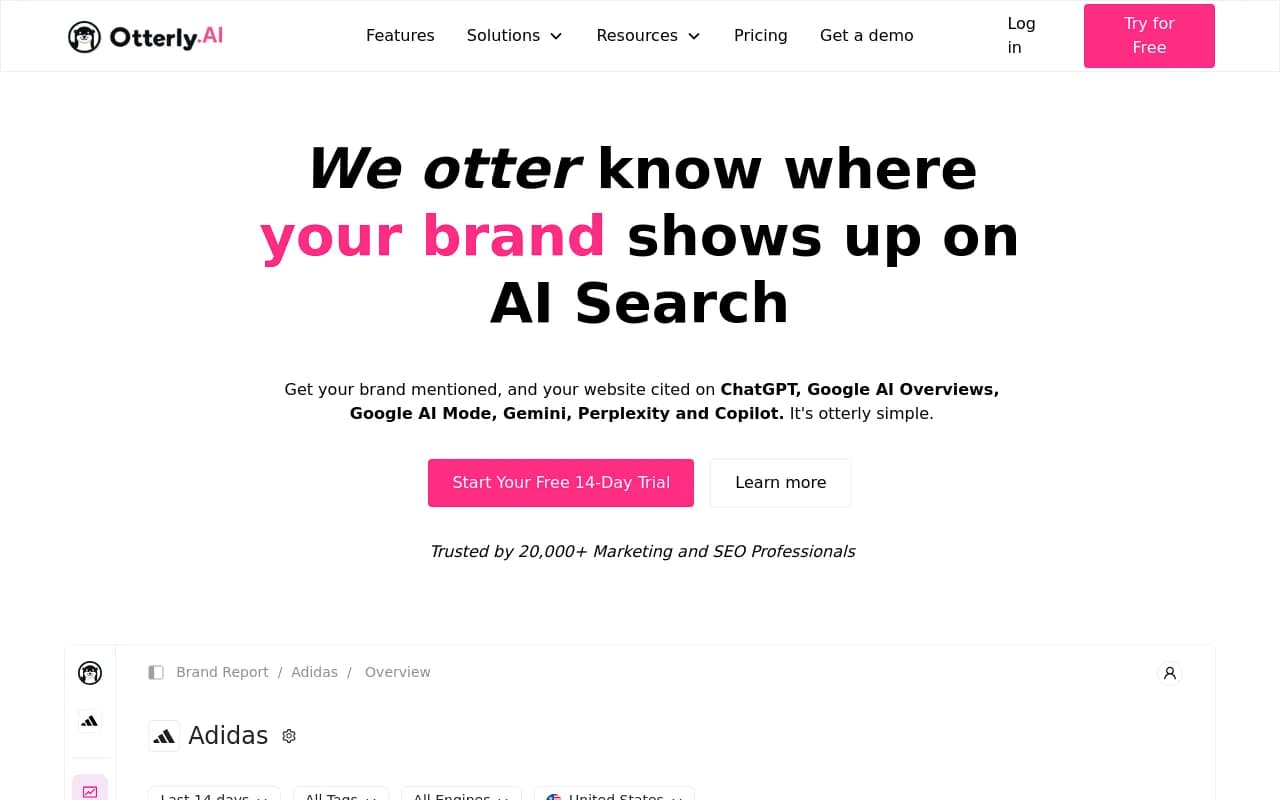
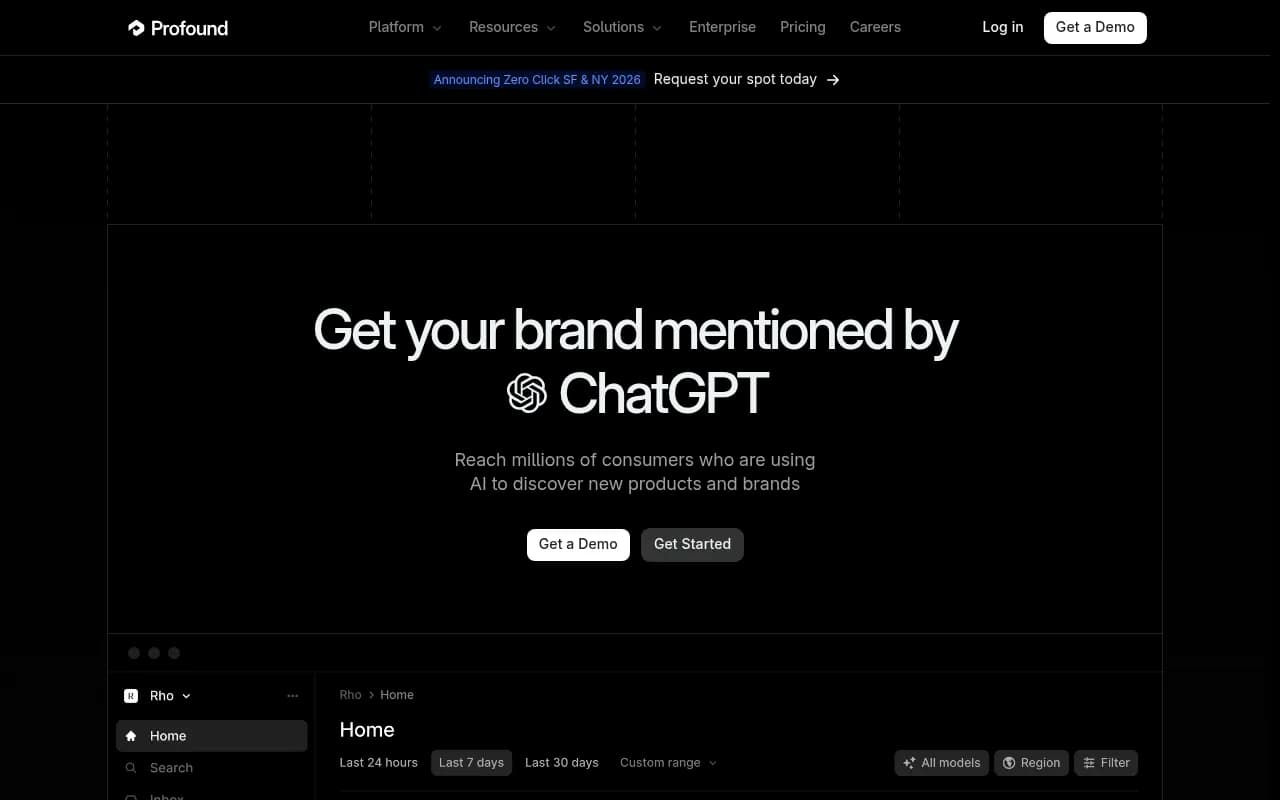

The pattern is clear: Scrunch is a monitoring-first platform with some technical differentiation (AXP, hallucination detection, bot traffic). It doesn't try to help you create content that improves your visibility -- that's a deliberate product decision, not an oversight.
If your team's workflow is "monitor, then take findings to a content team," Scrunch fits. If you want a platform that closes the loop from gap identification to content creation to tracking improvement, you'll need something different.
Promptwatch is worth looking at here -- it tracks 10 AI models, includes built-in AI content generation grounded in citation data, and starts at $99/month. The answer gap analysis specifically shows which prompts competitors rank for that you don't, then helps you create content to address those gaps.
Real user feedback
G2 reviewers consistently praise Scrunch's interface and the quality of its monitoring data. Common themes:
- "The competitive benchmarking view is genuinely useful for understanding where we stand"
- "Hallucination detection caught something we never would have found otherwise"
- "The price is hard to justify when we're still figuring out our AI search strategy"
- "We wish there was more guidance on what to actually do with the data"
The 4.6/5 average is real -- users who are getting value from Scrunch tend to be enthusiastic. The frustration comes from teams that expected more actionable output for the price.
The verdict
Scrunch is a well-built product that does what it says it does. The monitoring is comprehensive, the UI is clean, and features like hallucination detection and AXP (when it's fully available) are genuinely differentiated.
The honest limitation is that it's a monitoring platform at a price point that implies it should be doing more. At $500/month, teams reasonably expect not just to see their AI visibility gaps but to have tools to close them. Scrunch doesn't provide that -- and the absence of a free trial means you're making a significant financial commitment before you can validate whether the monitoring data alone is worth it to your specific situation.
For mid-market and enterprise brands with dedicated SEO or AI search teams, established reporting needs, and a separate content workflow, Scrunch is a reasonable choice. For everyone else -- especially teams that need to both understand and improve their AI visibility -- the math gets harder to justify.
The GEO space is moving fast. Scrunch has the funding and the technical foundation to evolve, and the AXP concept is genuinely interesting if it delivers on its promise. But right now, in 2026, it's a strong monitoring tool that stops short of being an optimization platform.