Key takeaways
- Goodie AI is a genuinely capable AEO platform tracking 11+ AI engines, with enterprise clients like Unilever and SteelSeries -- but it's priced and designed for serious enterprise teams, not small or mid-market businesses.
- The three biggest complaints from real users: no free trial, no public pricing, and a setup process that requires internal buy-in before you even see the product.
- Pricing estimates from third-party sources put entry at $199-$495/month, with no way to verify until you book a demo.
- Several alternatives offer comparable AI visibility tracking at lower price points, with self-serve access and transparent pricing.
- If you want a platform that goes beyond monitoring to actually help you create content that ranks in AI search, there are better-suited options depending on your team size and budget.
Goodie AI has been around since 2022, which makes it something of a veteran in a space that barely existed three years ago. Founded by Mostafa ElBermawy, it positioned itself early as the first dedicated Answer Engine Optimization (AEO) platform -- and that head start shows in the feature set. But being first doesn't always mean being the best fit for every team, and in 2026, the alternatives have caught up considerably.
This review covers what Goodie actually does well, where it falls short, and which alternatives are worth considering depending on your situation.
What Goodie AI actually is
Goodie AI (operating at higoodie.com) is an all-in-one AEO platform that helps brands track and improve how they appear in AI-powered answer engines. That means ChatGPT, Gemini, Claude, Perplexity, DeepSeek, Grok, Meta AI, Microsoft Copilot, and several others -- 11+ platforms in total, which is the broadest coverage of any tool in this space right now.
The pitch is simple: Google rankings matter less than they used to. When someone asks ChatGPT "what's the best project management tool for remote teams?" your SEO rank doesn't determine whether you get mentioned. What matters is whether the AI has been trained on or crawled content that positions you as a credible answer. Goodie helps you understand where you stand, why competitors are getting cited instead of you, and what to do about it.
That's the right problem to be solving. The question is whether Goodie's execution matches the ambition.
Core features
AI visibility monitoring
This is Goodie's strongest area. Monitoring across 11+ AI platforms is genuinely impressive -- most competitors track 5-8. The platform shows where your brand appears in AI-generated responses, how often, in what context, and how that compares to competitors. You can segment by country, language, and persona, which matters for enterprise brands running multi-region campaigns.
The real-time analytics layer lets you spot shifts quickly -- if a competitor suddenly starts getting cited more frequently in a particular category, you'll see it.
Content creation tools
Goodie includes a built-in AEO content writer that generates citation-optimized content. This is meaningful because most monitoring-only tools leave you with data but no clear path to acting on it. Goodie at least attempts to close that loop.
Traffic attribution
One of the harder problems in AI search is connecting visibility to actual revenue. Goodie offers traffic attribution tools that help you understand whether your AI search presence is driving real clicks and conversions. This is a capability many competitors don't have at all.
Agentic commerce features
For e-commerce brands, Goodie has built features specifically around AI shopping assistants -- tracking when your products appear in AI-powered shopping recommendations. This is niche but genuinely useful if you're in retail.
The onboarding problems (and they're real)
Here's where the honest part of this review gets uncomfortable for Goodie.
Three friction points come up consistently in user feedback and third-party evaluations:
No free trial, no self-serve access. Every competing tool in this space -- Otterly.AI, Peec AI, AthenaHQ, Promptwatch, and others -- lets you sign up and evaluate the product before paying. Goodie requires a sales conversation before you see anything. That's a significant ask in 2026, when buyers expect to try before they buy.
No public pricing. Third-party estimates put Goodie's entry price somewhere between $199 and $495/month depending on scope, but there's no pricing page to verify this. You need to book a demo just to find out if it fits your budget. One review from ContentMonk described this as a genuine barrier: teams can't even run an internal cost-benefit analysis without going through sales first.
Real setup time. Goodie is not a plug-and-play tool. One reviewer described having to "evangelize internally" before their team understood why AI visibility mattered -- before they could even justify the setup effort. That's partly a market education problem (AEO is still new), but Goodie's onboarding doesn't make it easier.
None of these are dealbreakers for a large enterprise team with a dedicated marketing ops person and budget approval already in place. But for a mid-market SaaS company or a digital agency evaluating tools on a tight timeline, they're real obstacles.
Who Goodie AI is actually built for
Based on the feature set and the enterprise clients (Unilever, SteelSeries, Dermalogica), Goodie is clearly designed for:
- Large brands with multi-region, multi-language needs
- E-commerce companies that want to track AI shopping assistant appearances
- Teams that have already bought into AEO as a strategic priority and have budget to match
- Organizations that want a single platform covering monitoring, content, and attribution
If you're a small business, a lean startup, or an agency managing multiple clients on varied budgets, Goodie's pricing structure and onboarding process will likely frustrate you.
Goodie AI vs. the alternatives: a direct comparison
The AEO tool market has expanded rapidly. Here's how Goodie stacks up against the main alternatives across the dimensions that actually matter:
| Tool | Free trial | Public pricing | AI platforms tracked | Content generation | Traffic attribution | Best for |
|---|---|---|---|---|---|---|
| Goodie AI | No | No | 11+ | Yes | Yes | Enterprise brands |
| Promptwatch | Yes | Yes ($99-$579/mo) | 10 | Yes | Yes | Marketing teams, agencies |
| Otterly.AI | Yes | Yes | 6-8 | No | No | Budget monitoring |
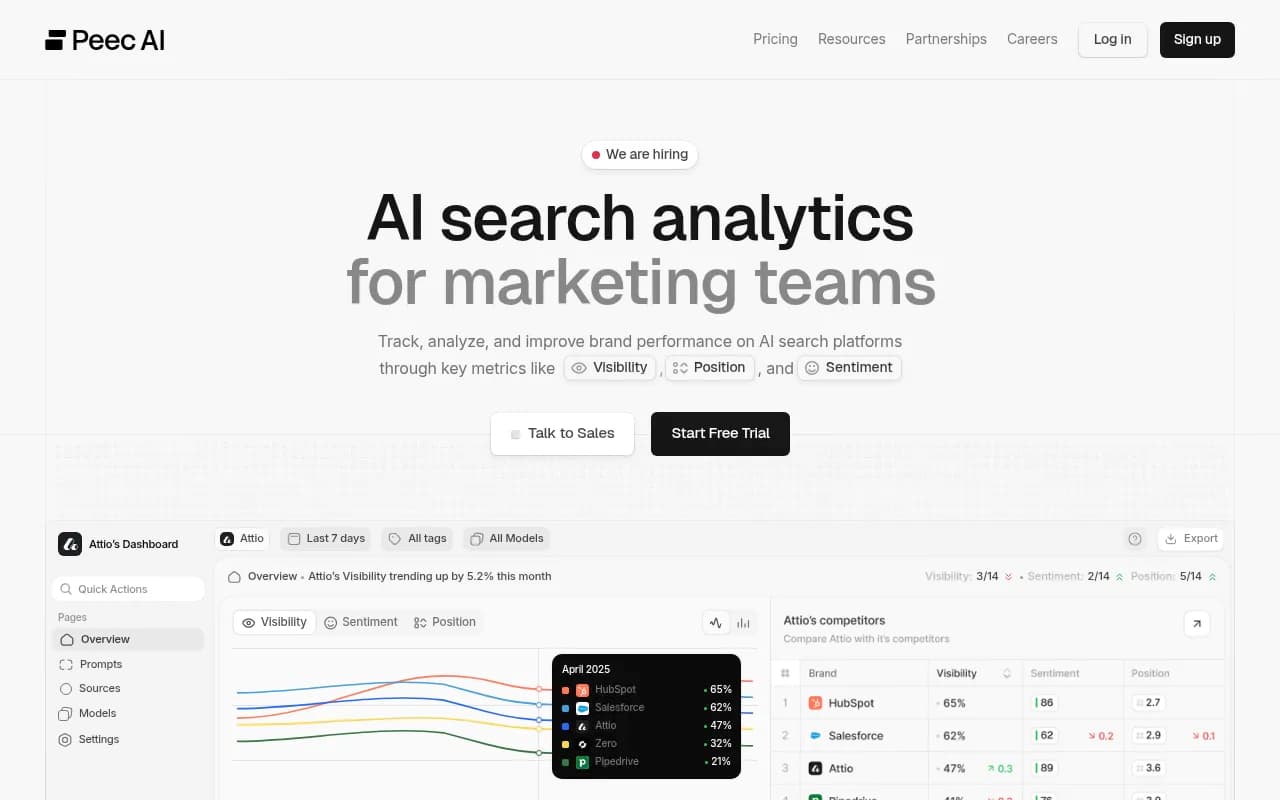
| Peec AI | Yes | Yes | 6+ | No | No | Multi-language tracking |
| AthenaHQ | Yes | Yes | 8+ | No | No | Monitoring-focused teams |
| Profound | Demo | No | 8+ | No | No | Enterprise analytics |
| Relixir | Yes | Yes ($199/mo+) | 6+ | Yes | No | Content gap filling |
| ContentMonk | Yes | Yes | 6+ | Yes | No | Agencies + content teams |
A few things stand out here. Goodie's 11+ platform coverage is genuinely best-in-class. But the lack of a free trial and public pricing puts it at a disadvantage compared to nearly every competitor. And while Goodie does offer content generation and traffic attribution, it's not the only platform that does -- which weakens the "all-in-one" justification for the price premium.
The best Goodie AI alternatives in 2026
Promptwatch -- best for teams that want to act, not just monitor
Promptwatch is the platform I'd point most teams toward first, especially if the goal is actually improving AI visibility rather than just measuring it. The core difference is the action loop: find content gaps, generate content engineered to get cited by AI models, then track whether it worked.
The Answer Gap Analysis shows exactly which prompts competitors rank for that you don't -- not vague category-level insights, but specific questions and topics your site isn't answering. The built-in AI writing agent then generates content grounded in real citation data (880M+ citations analyzed), not generic SEO filler. And the crawler logs show you which pages AI engines are actually reading, which is something most competitors don't offer at all.
Pricing is transparent: $99/month for Essential, $249/month for Professional, $579/month for Business. Free trial available. No sales call required to see the product.

Otterly.AI -- best for budget-conscious monitoring
If you mainly need to track brand mentions across AI platforms and don't need content generation or attribution, Otterly.AI is a solid, affordable option. It's monitoring-only, but it's honest about that. Good for teams just getting started with AEO who want to understand the landscape before committing to a more expensive platform.

Peec AI -- best for multi-language tracking
Peec AI has built strong multi-language and multi-region capabilities, which makes it worth considering for brands operating across multiple markets. The feature set is more limited than Goodie's, but the self-serve access and transparent pricing make it much easier to evaluate.
AthenaHQ -- best for monitoring-focused enterprise teams
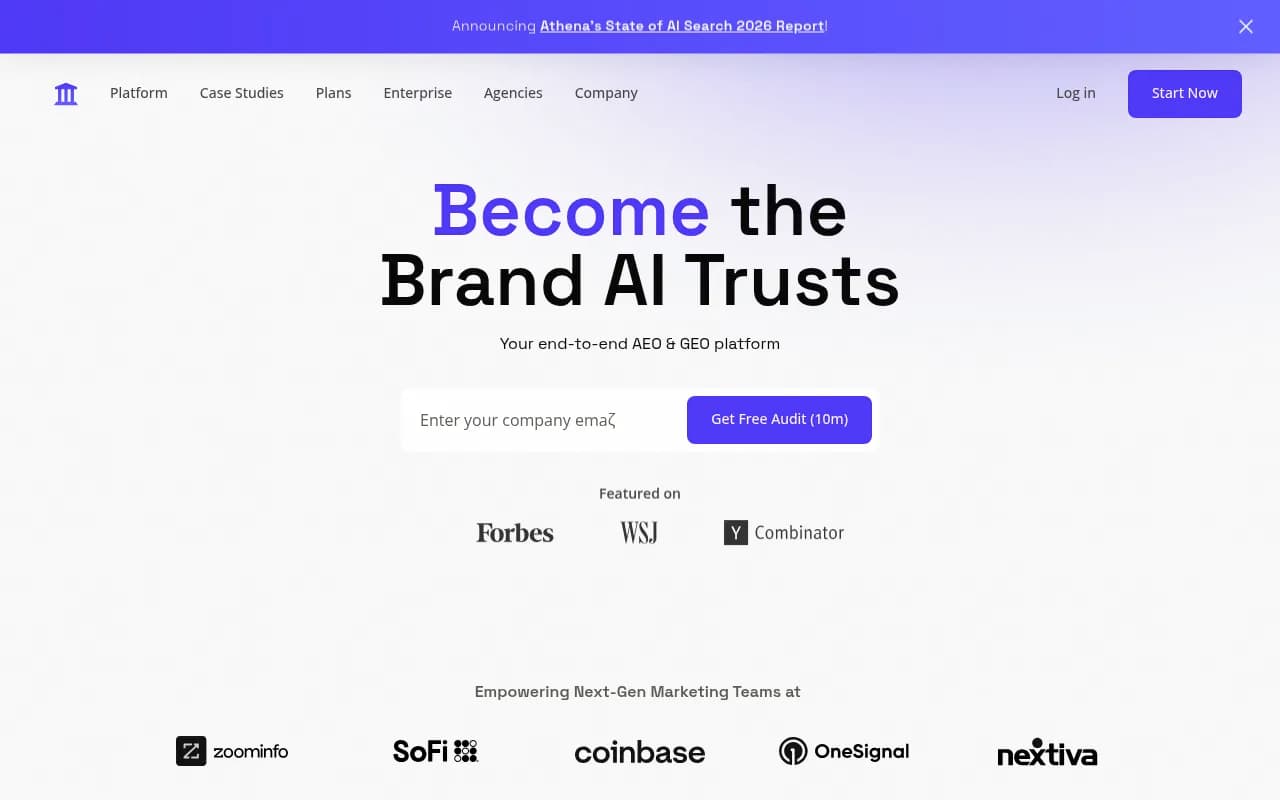
AthenaHQ tracks 8+ AI platforms and has a clean interface that enterprise teams tend to find easier to onboard than Goodie. It's monitoring-focused -- no content generation -- but if your team has a separate content workflow and just needs reliable visibility data, it's a strong option.
Profound -- best for teams that need deep analytics
Profound has a strong analytics layer and is often mentioned alongside Goodie for enterprise use cases. It doesn't offer content generation, and pricing requires a demo, but the data depth is genuinely impressive for teams that need granular prompt-level analysis.
Relixir -- best for content gap filling at mid-market price
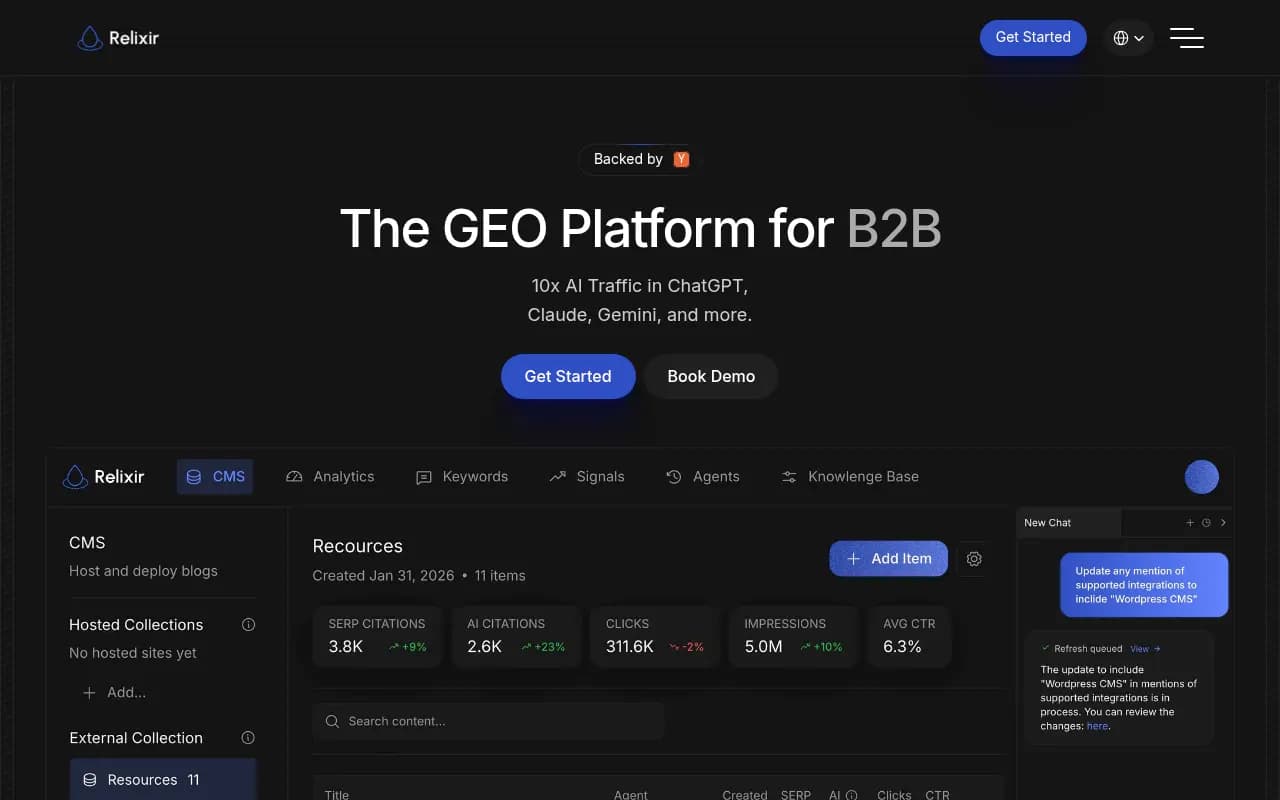
Relixir sits at $199/month and combines AI visibility tracking with content generation focused on filling gaps. It's not as comprehensive as Goodie, but it's self-serve, transparent on pricing, and gives teams a clear path from insight to action.
ContentMonk -- best for agencies managing multiple clients
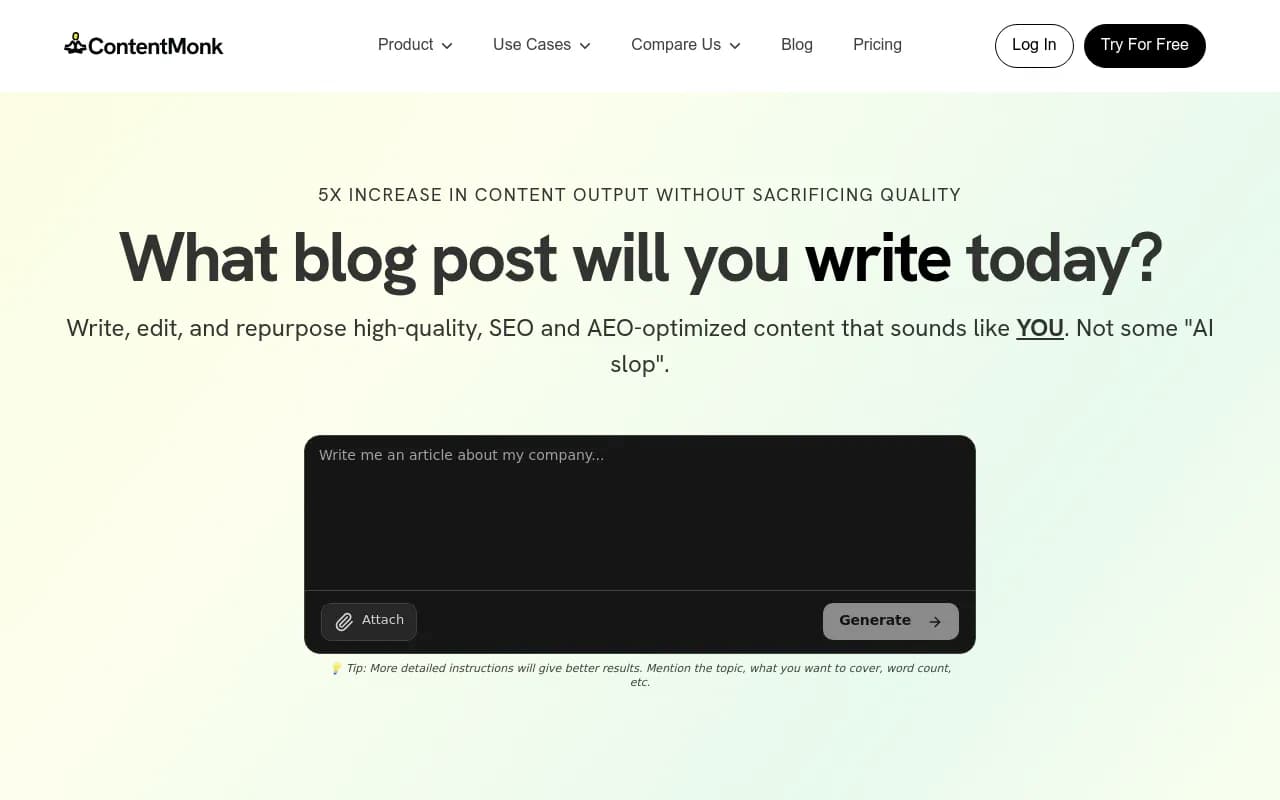
ContentMonk is built with agencies in mind, combining AEO monitoring with content creation tools. If you're managing AI visibility for multiple clients and need a workflow that scales, it's worth evaluating alongside Promptwatch.
What to look for when choosing a Goodie alternative
Before picking a tool, be clear on what you actually need. Most teams overestimate how much platform they need on day one.
A few questions worth answering first:
- Do you need content generation, or just monitoring? Many teams start with monitoring and add content tools later. Don't pay for generation capabilities you won't use.
- How many AI platforms do you actually need to track? 11 platforms sounds impressive, but if your audience is primarily using ChatGPT and Perplexity, tracking DeepSeek and Grok may not move the needle.
- Do you need traffic attribution? This is genuinely hard to do well and most tools don't offer it. If connecting AI visibility to revenue is a priority, it narrows your options significantly.
- What's your internal capacity for setup and maintenance? Goodie requires real setup time. If you need something running in a week, that matters.
- Do you need multi-region or multi-language support? If yes, this should be a hard requirement, not a nice-to-have.
The honest verdict on Goodie AI
Goodie AI is a serious platform. The 11+ platform coverage is real, the enterprise client list is real, and the reported results (one case study cites a 335% traffic lift) suggest it can deliver when deployed properly. For a large brand with dedicated resources and a clear AEO strategy, it's worth evaluating.
But the barriers to evaluation are genuinely frustrating. No free trial, no public pricing, and a setup process that requires internal buy-in before you see the product -- these aren't minor inconveniences. They're structural choices that signal Goodie is built for a specific type of buyer, and if you're not that buyer, you'll feel it immediately.
Most teams in 2026 are better served by a platform they can actually try before committing. The alternatives above -- particularly Promptwatch for teams that want to move from monitoring to action -- offer comparable or better value for most use cases, with none of the onboarding friction.
The AEO space is maturing fast. The tools that win long-term won't just be the ones with the most platform coverage -- they'll be the ones that make it easiest to turn visibility data into content that actually gets cited. Goodie has the right instincts on that front. The execution just needs to catch up with the ambition.