Key takeaways
- All three platforms track brand visibility across AI models, but they differ sharply in what they do with that data after the monitoring step.
- Profound has strong enterprise analytics and real-user prompt data, but its pricing jumps steeply once you need multi-model coverage.
- Searchable is a capable monitoring dashboard but stops short of content generation and crawler-level diagnostics.
- Promptwatch is the only platform of the three that closes the full loop: find gaps, generate content, track results -- including AI crawler logs, page-level citation tracking, and built-in content agents.
- For teams that want to act on their AI visibility data (not just observe it), Promptwatch is the clear choice.
Running the same 50 prompts through three different GEO platforms sounds like a clean experiment. In practice, it's a little messier than that -- because the platforms don't just differ in their answers. They differ in what they think the question even is.
Profound thinks the question is: "Where does your brand appear in AI responses?" Searchable asks something similar. Promptwatch asks: "Where don't you appear, why not, and what are you going to do about it?"
That difference in framing shapes everything -- what data you see, what you can do with it, and whether you leave the dashboard feeling informed or actually equipped to change something.
Here's what we found when we put all three through their paces.
The test setup
We used 50 prompts across three verticals: B2B SaaS, financial services, and e-commerce. The prompts ranged from broad awareness queries ("what's the best project management software for remote teams?") to specific comparison queries ("Asana vs Monday vs ClickUp for enterprise") to bottom-of-funnel buying questions ("which project management tool has the best Salesforce integration?").
Each platform was given the same brand, the same competitor list, and the same prompt set. We tracked:
- Which models each platform monitors
- How it surfaces citation and mention data
- Whether it identifies content gaps (not just what you rank for, but what you're missing)
- What it lets you do next
Profound: strong data architecture, steep pricing curve
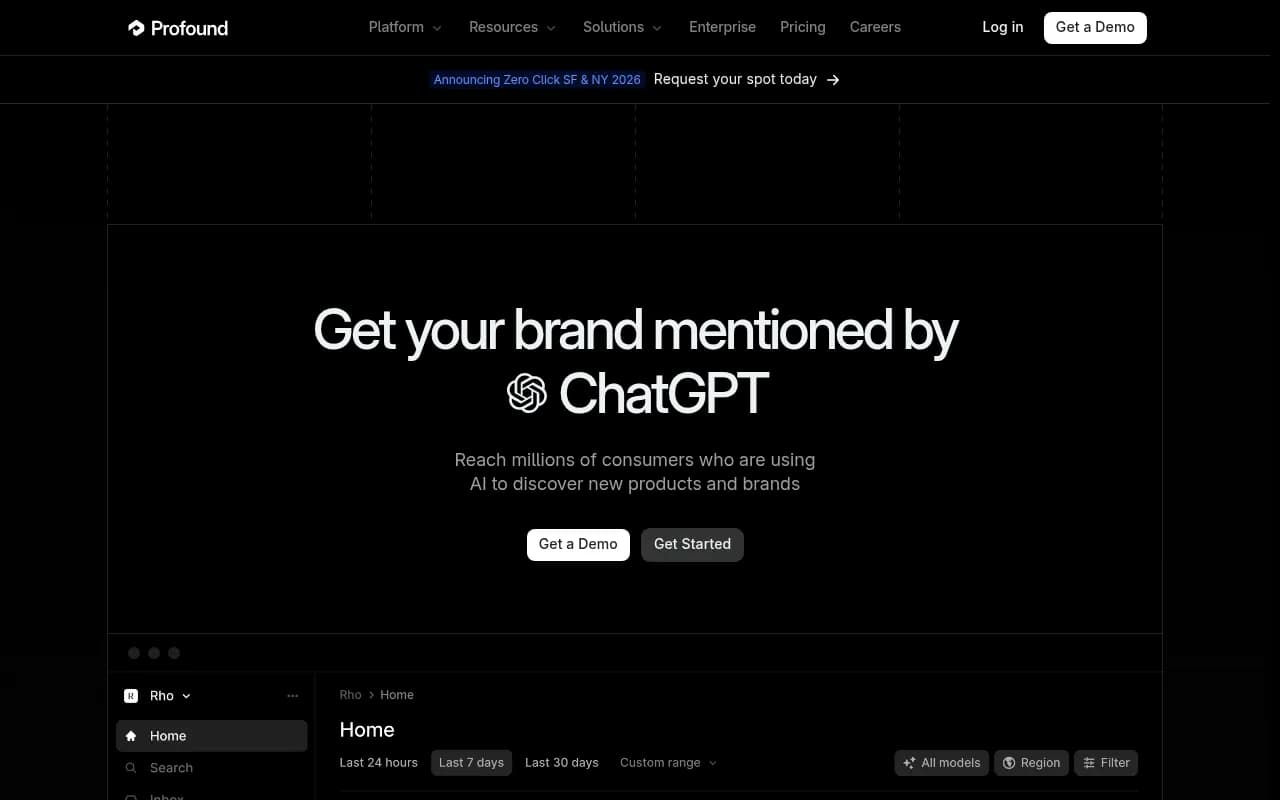
Profound was one of the first serious players in the AEO space, and it shows. The platform captures front-end AI responses rather than relying purely on API outputs -- which matters because what ChatGPT shows a real user can differ from what the API returns. That's a genuine data quality advantage.
On our 50-prompt test, Profound surfaced citation data cleanly. The dashboard is well-organized, and the competitive heatmaps (showing which brands appear for which prompts) are genuinely useful for understanding the landscape.
Where things get complicated is pricing. The Starter plan at $99/mo covers ChatGPT only. To add Perplexity and Google AI Overviews, you're looking at $399/mo. Full model coverage -- Claude, Gemini, Grok, DeepSeek, and the rest -- requires enterprise pricing that isn't published. For a 50-prompt test across multiple models, you're already in Growth or Enterprise territory.
The other limitation: Profound is primarily a monitoring and analytics platform. It will tell you where you're visible and where you're not. It won't help you create the content that would make you visible. There's no built-in content generation, no AI crawler logs showing why certain pages aren't being cited, and no direct path from "I see the gap" to "I've fixed the gap."
For large enterprises with dedicated content teams who just need the intelligence layer, that's fine. For marketing teams that need to act on the data themselves, it's a real gap.
What Profound does well: Front-end response capture, real-user prompt data, Amazon Rufus shopping module, clean competitive heatmaps.
Where it falls short: Price jumps sharply for multi-model coverage, no content generation, no crawler diagnostics.
Searchable: solid monitoring, limited execution
Searchable positions itself as an enterprise-grade visibility platform, and for pure monitoring it delivers a reasonable experience. The interface is clean, prompt tracking works across the main AI models, and the citation reporting is straightforward.
On our 50-prompt test, Searchable identified brand mentions and competitor appearances without issues. The sentiment analysis layer adds some useful context -- knowing whether an AI model is recommending you enthusiastically or mentioning you as a footnote is different information.
But Searchable runs into the same wall as most monitoring-only tools: it shows you the problem without giving you the tools to solve it. There's no content gap analysis that maps your existing pages against what AI models actually want to cite. There's no content generation. No crawler logs. No way to see which of your pages AI agents are visiting, how often, or whether they're hitting errors.
In a market where the monitoring layer is increasingly commoditized -- there are now 40+ tools that will track your brand mentions across ChatGPT and Perplexity -- the differentiator is what happens after you see the data. Searchable doesn't have a strong answer to that question yet.
What Searchable does well: Clean interface, multi-model monitoring, sentiment analysis.
Where it falls short: No content generation, no crawler logs, no gap-to-action workflow.
Promptwatch: the only platform that closes the loop

Promptwatch approached our 50-prompt test differently from the start. Yes, it tracked citations and brand mentions across 10 AI models (ChatGPT, Perplexity, Google AI Overviews, Google AI Mode, Claude, Gemini, Meta/Llama, DeepSeek, Grok, Mistral, Copilot). But the more interesting output wasn't the visibility scores -- it was the Answer Gap Analysis.
For each prompt where a competitor appeared and we didn't, Promptwatch showed exactly what content was being cited and why our pages weren't in the mix. Not a vague "you need more content on this topic" suggestion -- specific gaps, mapped to actual AI responses, with prompt volume data to help prioritize which gaps are worth closing first.
From there, the Content Agents take over. They generate articles, listicles, and comparison pages grounded in real citation data, prompt volumes, competitor analysis, and brand guidance. This isn't generic AI content -- it's built around the specific prompts and angles that AI models are already citing sources for.
The third piece is the AI Crawler Logs. This is where Promptwatch separates itself most clearly from both Profound and Searchable. You can see in real time which AI crawlers (ChatGPT, Claude, Perplexity) are hitting your pages, which pages they're reading, what errors they're encountering, and how long it takes for a newly published page to move from crawl to citation. Most competitors don't have this at all.
On our 50-prompt test, Promptwatch identified 23 specific content gaps where competitors were being cited and we weren't. It generated briefs for the highest-priority gaps within the same session. And the page-level tracking showed exactly which of our existing pages were already being cited -- and by which models.
Head-to-head comparison
| Feature | Searchable | Profound | Promptwatch |
|---|---|---|---|
| AI models covered | 5-6 | ChatGPT only (Starter); more at higher tiers | 10 (ChatGPT, Perplexity, Claude, Gemini, Grok, DeepSeek, Copilot, Meta, Mistral, Google AIO) |
| Front-end response capture | Partial | Yes | Yes |
| Citation & source analysis | Yes | Yes | Yes |
| Competitor heatmaps | Basic | Yes | Yes |
| Content gap analysis | No | No | Yes (Answer Gap Analysis) |
| AI content generation | No | No | Yes (Content Agents) |
| AI crawler logs | No | No | Yes |
| Page-level citation tracking | No | No | Yes |
| Reddit & YouTube insights | No | No | Yes |
| ChatGPT Shopping tracking | No | Yes (Amazon Rufus) | Yes |
| Traffic & revenue attribution | No | Limited | Yes |
| Prompt volume & difficulty scores | No | Partial | Yes |
| Multi-language / multi-region | Limited | Yes | Yes |
| Starting price | Not public | $99/mo (ChatGPT only) | $99/mo (50 prompts, 5 articles) |
| Full model coverage price | Not public | Enterprise (not published) | $249/mo (Professional) |
| Free trial | No | Demo only | Yes (7 days) |
What the 50-prompt test actually revealed
A few things stood out that don't show up in feature lists.
Prompt quality matters more than prompt quantity. Profound's use of real-user prompt data (derived from actual search behavior) is a genuine advantage over platforms that fabricate their own queries. Promptwatch also uses real prompt data with volume estimates and difficulty scores, so you're not optimizing for hypothetical questions. Searchable's prompt methodology was less transparent.
Monitoring without action creates a data backlog. After running 50 prompts through Searchable and Profound, we had dashboards full of visibility scores and competitor comparisons. Useful, but the next step was entirely on us -- figure out what content to create, brief a writer, publish, wait, re-run. With Promptwatch, the gap analysis and content generation happened in the same workflow. The time from "I see the gap" to "I have a brief ready to publish" was measured in minutes, not days.
Crawler logs change how you think about the problem. Seeing that a newly published page was crawled by the Perplexity bot within 48 hours but hadn't been cited yet -- and understanding why based on the page's content structure -- is a different kind of intelligence than a visibility score. It tells you what to fix, not just that something is broken.
Price transparency is a real differentiator. Profound's pricing opacity at the enterprise level is frustrating when you're trying to evaluate ROI. Promptwatch's pricing is public: $99/mo (Essential), $249/mo (Professional), $579/mo (Business). You know what you're getting before you talk to anyone.
Which platform is right for which team?
Choose Profound if: You're a large enterprise with a dedicated analytics team, you need Amazon Rufus / shopping visibility data, and you have budget for enterprise contracts. The data quality is strong and the front-end capture methodology is solid. Just know you're buying intelligence, not execution.
Choose Searchable if: You need a lightweight monitoring dashboard and your team handles content strategy separately. It's a reasonable choice for teams that already have robust content workflows and just need the visibility data layer.
Choose Promptwatch if: You want to actually improve your AI visibility, not just measure it. The combination of gap analysis, content generation, crawler logs, and page-level tracking means you can run the entire optimization cycle inside one platform. At $249/mo for the Professional plan, it's also significantly cheaper than Profound's multi-model tiers.
The broader context: why "monitoring only" isn't enough in 2026
The GEO market has matured fast. In 2024, just tracking your brand mentions in ChatGPT felt like a competitive advantage. In 2026, that's table stakes. Every serious marketing team knows they need AI visibility. The question is whether they're doing anything about it.
The platforms that are winning client budgets right now are the ones that answer the "so what?" question. Seeing that a competitor appears in 78% of prompts for your target category and you appear in 12% is alarming. But the alarm is only useful if the platform can tell you why the gap exists and help you close it.
That's the core limitation of monitoring-only tools -- and it's why the comparison between Searchable, Profound, and Promptwatch ultimately comes down to what you're trying to accomplish. If you're building a reporting dashboard for a quarterly review, any of these will do. If you're trying to actually move your AI visibility numbers, you need a platform that treats optimization as the goal, not a side effect.
A note on the competitive landscape
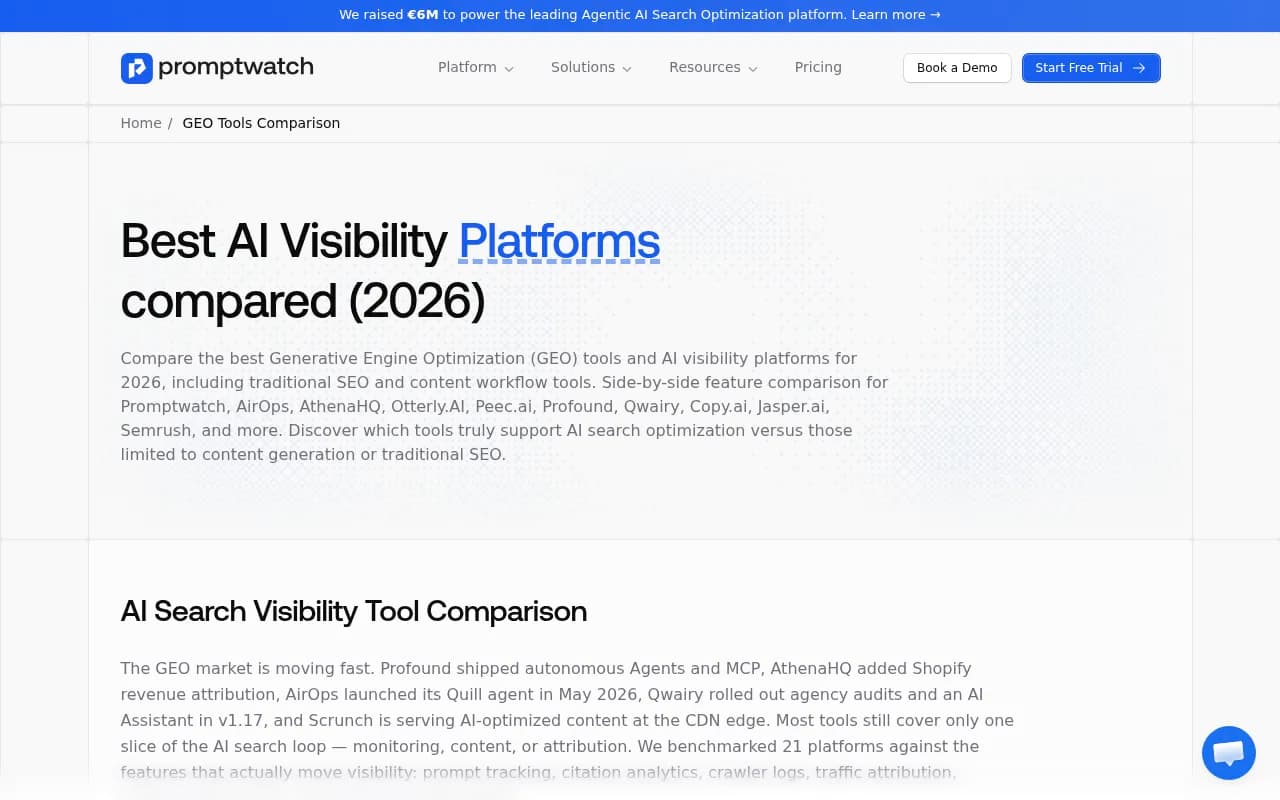
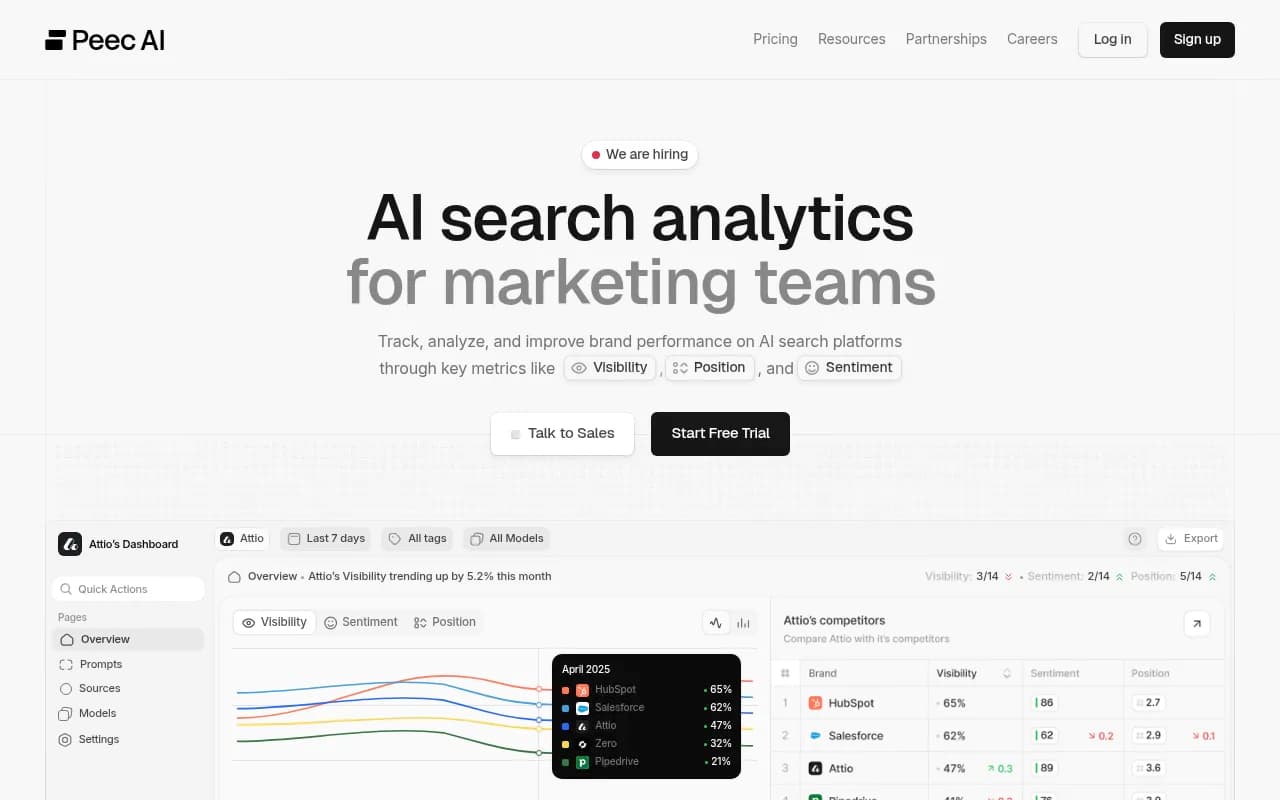
It's worth acknowledging that the GEO space has more than three players. Tools like Otterly.AI and Peec.ai offer affordable entry points for smaller teams.

AthenaHQ has added Shopify revenue attribution and is worth watching for e-commerce use cases.

Scrunch is doing interesting work at the CDN edge, serving AI-optimized content in real time.
But when you're evaluating enterprise-grade platforms specifically -- tools that can handle hundreds of prompts, multiple sites, multi-region monitoring, and a full optimization workflow -- the field narrows quickly. Profound, Searchable, and Promptwatch are the three most commonly evaluated at that level, which is why the comparison is worth doing carefully.
The 50-prompt test confirmed what the feature comparison suggests: Promptwatch is the only platform of the three that treats visibility as a problem to be solved, not just a metric to be reported.
Bottom line
If you're evaluating GEO platforms for an enterprise team in 2026, the monitoring capabilities across Searchable, Profound, and Promptwatch are all serviceable. The real question is what happens after the monitoring.
Profound has the best data architecture of the three and is worth the investment if you have the budget and a team that can act on raw intelligence. Searchable is a reasonable lightweight option. But for teams that need to move from insight to action -- identifying gaps, generating content, tracking crawls, and attributing results to revenue -- Promptwatch is the only platform that covers the full cycle.
Start with the 7-day free trial and run your own prompt set. The Answer Gap Analysis alone tends to surface things that teams hadn't realized they were missing.