Key takeaways
- SE Ranking (via SE Visible) adds AI visibility on top of a full SEO suite, making it cost-effective if you already need traditional SEO tools -- but its AI tracking depth is limited compared to dedicated platforms.
- Peec AI is a solid choice for multilingual monitoring, with clean UI and good model coverage, but it stops at tracking and offers no content generation or gap-closing workflow.
- Promptwatch is the only platform of the three built around a full optimization loop: find gaps, generate content that gets cited, and track the results -- making it the strongest choice if AI visibility is a primary goal.
- Pricing differs significantly: SE Visible starts around $65/mo bundled, Peec AI around $105/mo, and Promptwatch at $99/mo for its Essential plan.
- If you're serious about actually improving your AI visibility (not just measuring it), monitoring-only tools will leave you with data but no clear path forward.
The AI search landscape has changed fast enough that most marketing teams are still figuring out what they even need to track. ChatGPT now has over 900 million weekly users. Google AI Overviews appear on the majority of searches. Perplexity is eating into traditional research queries. And none of these platforms surface your brand the same way Google's ten blue links did.
So naturally, a wave of tools has emerged claiming to solve "AI visibility." The problem is that "AI visibility tool" now covers everything from basic brand mention counters to full optimization platforms -- and the gap between them is enormous.
This guide compares three tools that often come up in the same conversation: SE Ranking (specifically its SE Visible add-on), Peec AI, and Promptwatch. They're not the same category of product, even if they're frequently listed side by side.
What problem are we actually solving?
Before comparing tools, it's worth being precise about what "AI visibility" means in practice.
When someone asks ChatGPT "What's the best project management software for remote teams?", the model generates a response. It may cite your brand, a competitor, or nobody. It may link to your website or to a Reddit thread. You have no idea this happened unless you're actively monitoring it.
Traditional SEO tools track your Google rankings. They don't touch this. They can't tell you whether ChatGPT is recommending you, whether Perplexity is citing a competitor's blog post instead of yours, or whether your brand sentiment in AI responses is positive or negative.
The tools in this comparison all try to address that gap -- but they do it in very different ways.
SE Ranking + SE Visible: broad coverage, shallow AI depth
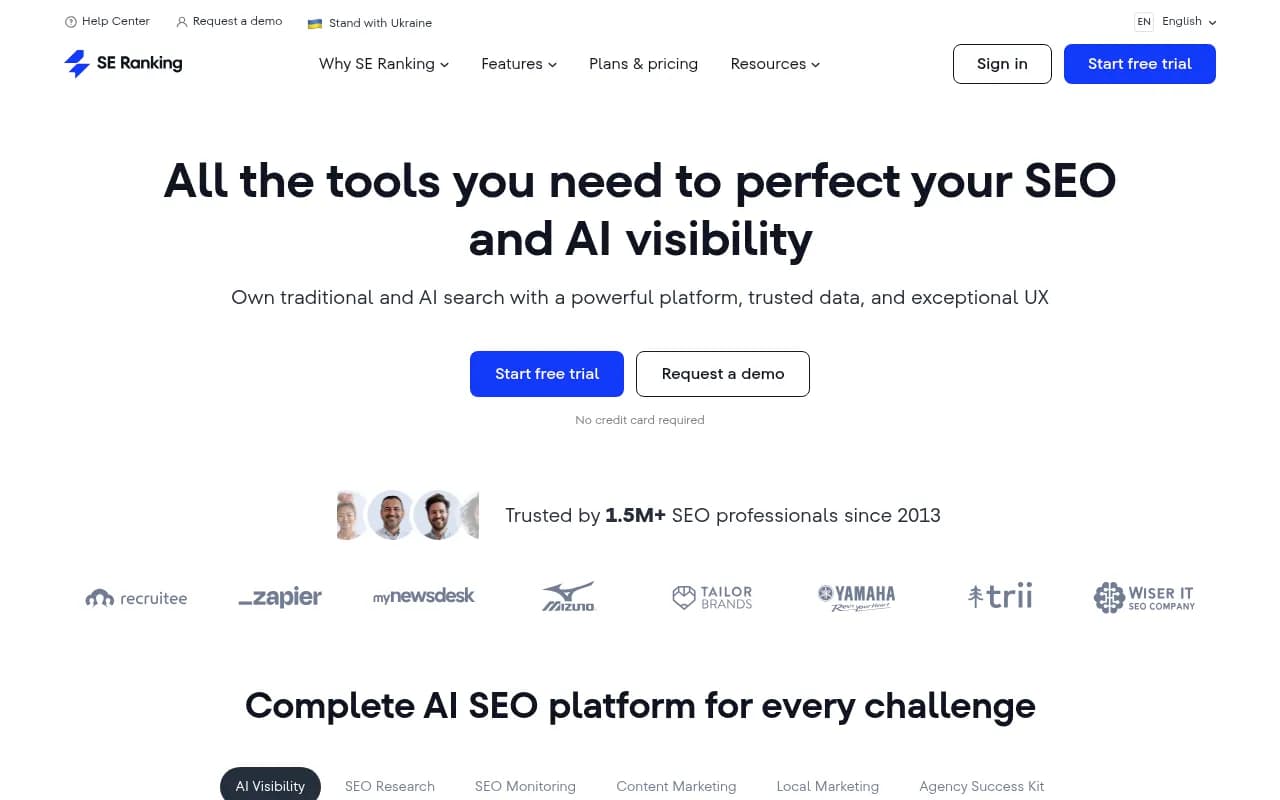
SE Ranking is one of the most established mid-market SEO platforms. It covers keyword research, rank tracking, site audits, backlink analysis, and competitor research. It's a legitimate all-in-one SEO suite with a strong price-to-feature ratio.
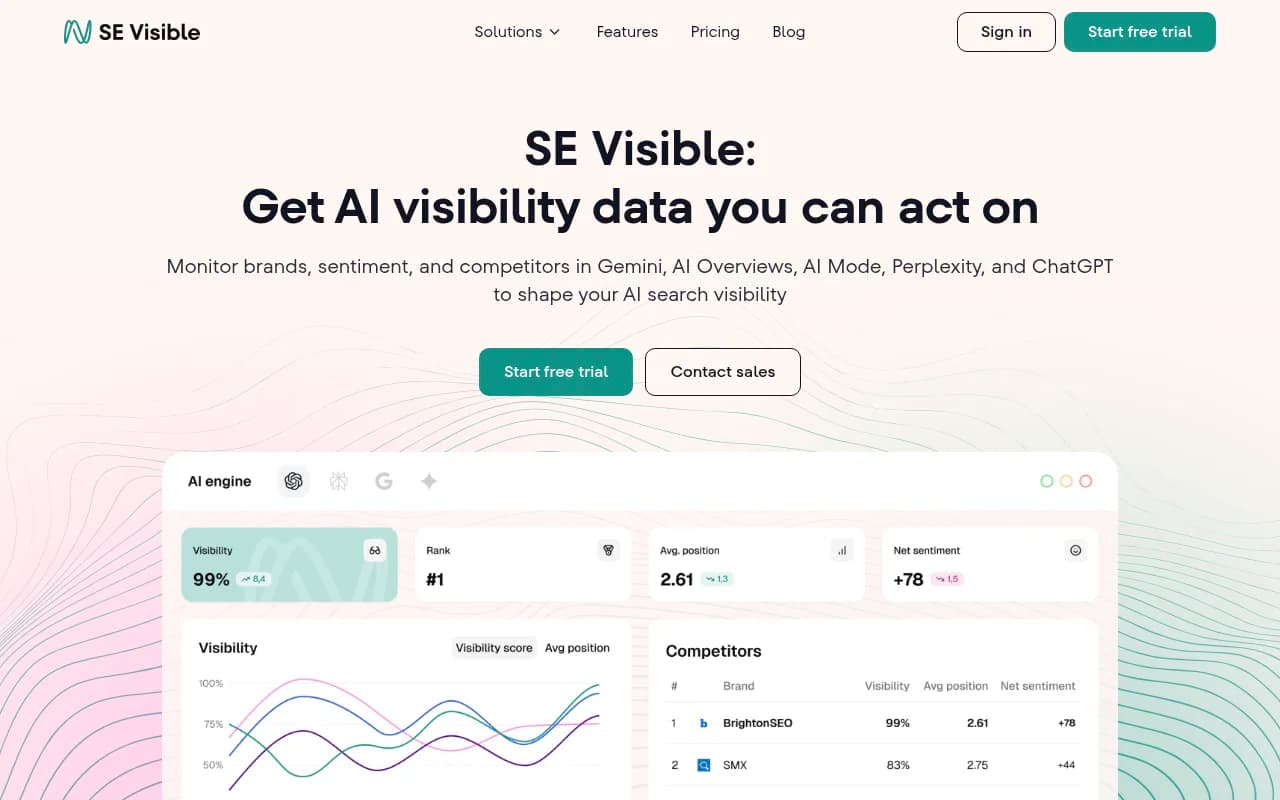
The AI visibility piece comes through SE Visible, a companion product that tracks brand mentions and citations across AI search engines. Together, the bundle starts at around $65/month with a 14-day free trial.
What SE Ranking + SE Visible does well
The main appeal here is consolidation. If you're already paying for an SEO tool and want to add AI monitoring without managing a separate platform, the SE Ranking + SE Visible bundle makes financial sense. You get keyword research, site audits, and AI brand tracking in one ecosystem.
SE Visible tracks mentions across several AI models and gives you sentiment data and share-of-voice metrics. For teams that want a single dashboard covering both traditional and AI search, it's a reasonable option.
Where it falls short
The AI visibility features feel like an add-on rather than a core product. The depth of prompt intelligence, citation analysis, and competitive benchmarking doesn't match what dedicated AI visibility platforms offer.
More importantly, SE Ranking + SE Visible is a monitoring stack. It tells you where you appear (or don't appear) in AI responses, but it doesn't help you do anything about it. There's no content gap analysis that shows you which specific topics or questions you're missing. There's no built-in content generation tuned for AI citation. There's no crawler log analysis to understand how AI bots are actually reading your site.
For teams where traditional SEO is the primary job and AI visibility is a secondary concern, this bundle works. For teams where AI search is a strategic priority, it's not deep enough.
Peec AI: clean multilingual monitoring, nothing more
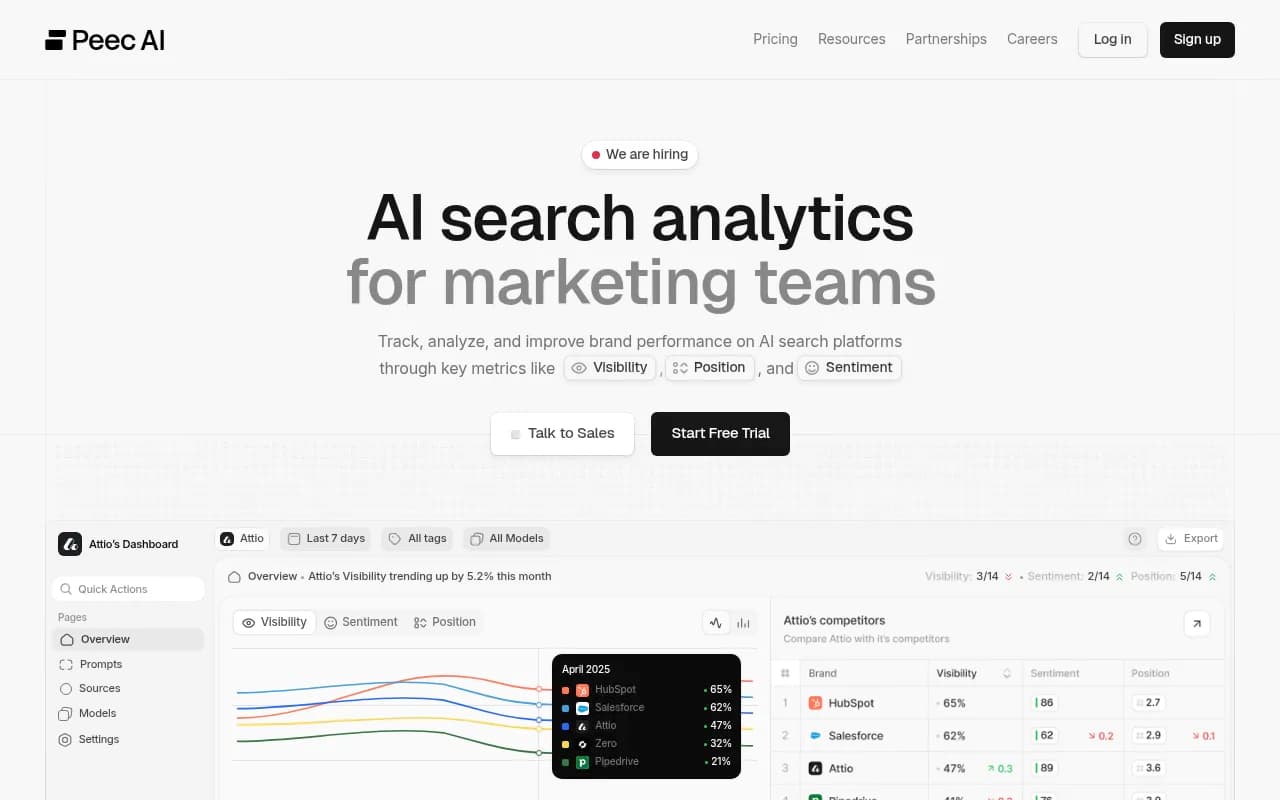
Peec AI has carved out a clear niche: multilingual AI visibility tracking. It monitors how your brand appears in AI responses across multiple languages and markets, which is genuinely useful for international brands that need to know whether their visibility in German, French, or Spanish AI responses matches their English performance.
The G2 rating is strong (5/5, though from a small review base), and the interface is clean. Pricing starts around $105/month with a free trial available.
What Peec AI does well
Multilingual coverage is the standout feature. Most AI visibility tools are English-first, with other languages bolted on as an afterthought. Peec AI treats multilingual monitoring as a core capability, which matters if you're running campaigns across European or LATAM markets.
The monitoring itself is solid. You get brand mention tracking, sentiment analysis, and competitor comparisons across AI models. The UI is clean and accessible for non-technical marketers.
Where it falls short
Peec AI is a monitoring tool. Full stop. It shows you data about where you appear in AI responses, but the workflow ends there. There's no content gap analysis, no AI writing tools, no crawler log visibility, no Reddit or YouTube citation tracking, and no traffic attribution to connect AI visibility to actual revenue.
If you're a marketing team that needs to understand your AI visibility and then go fix it, Peec AI gives you the first half of that equation. You'll need to figure out the second half yourself.
Promptwatch: the full optimization loop
Promptwatch is built around a different premise than the other two tools. The core idea is that knowing you're invisible in AI search is only useful if you can do something about it. So the platform is designed around a three-step loop: find the gaps, create content that gets cited, track the results.

Finding the gaps
Promptwatch's Answer Gap Analysis shows you exactly which prompts your competitors are visible for that you're not. This isn't a vague "you're missing topics" report -- it shows you the specific questions and prompts where a competitor appears in ChatGPT or Perplexity responses and you don't. You can see what content is missing from your site and why AI models are choosing competitors over you.
Prompt Intelligence adds volume estimates and difficulty scores to each prompt, so you can prioritize the gaps that are actually worth closing. Query fan-outs show how a single prompt branches into related sub-queries, which helps you understand the full scope of a topic before you create content.
Creating content that gets cited
This is where Promptwatch separates itself most clearly from monitoring-only tools. The built-in AI writing agent generates articles, listicles, and comparisons grounded in real citation data -- over 880 million citations analyzed. It's not generic content generation; it's content engineered around what AI models actually cite, which pages they reference, and what topics they want answered.
The Citation & Source Analysis feature shows you which pages, Reddit threads, YouTube videos, and domains AI models are currently citing in their responses. That tells you where to publish and what to optimize, not just what topics to cover.
Tracking the results
Page-level tracking shows exactly which of your pages are being cited, how often, and by which AI models. As you publish new content, you can watch your visibility scores move. Traffic attribution (via a code snippet, Google Search Console integration, or server log analysis) connects AI citations to actual website visits and revenue.
The AI Crawler Logs feature is something most competitors don't offer at all. It shows you in real time which AI crawlers (ChatGPT, Claude, Perplexity, etc.) are hitting your website, which pages they're reading, and what errors they encounter. This is critical for understanding how AI engines discover your content and fixing indexing issues before they become visibility problems.
Coverage and pricing
Promptwatch monitors 10 AI models: ChatGPT, Perplexity, Google AI Overviews, Google AI Mode, Claude, Gemini, Meta/Llama, DeepSeek, Grok, Mistral, and Copilot. It also tracks ChatGPT Shopping carousels, Reddit and YouTube discussions that influence AI recommendations, and competitor heatmaps across LLMs.
Pricing starts at $99/month for the Essential plan (1 site, 50 prompts, 5 articles), $249/month for Professional (2 sites, 150 prompts, 15 articles, crawler logs), and $579/month for Business (5 sites, 350 prompts, 30 articles). A free trial is available.
Head-to-head comparison
| Feature | SE Ranking + SE Visible | Peec AI | Promptwatch |
|---|---|---|---|
| Traditional SEO tools | Yes (full suite) | No | No |
| AI model coverage | Several (via SE Visible) | Multiple | 10 models |
| Multilingual monitoring | Limited | Strong | Yes |
| Brand mention tracking | Yes | Yes | Yes |
| Sentiment analysis | Yes | Yes | Yes |
| Share of voice | Yes | Yes | Yes |
| Answer Gap Analysis | No | No | Yes |
| Prompt volume & difficulty | No | No | Yes |
| AI content generation | No | No | Yes |
| Citation & source analysis | No | No | Yes |
| Reddit/YouTube tracking | No | No | Yes |
| AI crawler logs | No | No | Yes |
| ChatGPT Shopping tracking | No | No | Yes |
| Traffic attribution | No | No | Yes |
| Starting price | ~$65/mo (bundled) | ~$105/mo | $99/mo |
| Free trial | Yes (14 days) | Yes | Yes |
Who should use which tool
The honest answer depends on what your actual job is.
SE Ranking + SE Visible makes sense if traditional SEO is your core workflow and you want to add AI monitoring without switching platforms or paying for a separate tool. The bundle is cost-effective for that specific scenario. If you're an SEO manager who needs keyword research, site audits, and backlink analysis every day, and AI visibility is a secondary metric you want to keep an eye on, this is a reasonable choice.
Peec AI is worth considering if you're running campaigns across multiple languages and markets, and your primary need is understanding AI visibility across those regions. The multilingual monitoring is genuinely better than most competitors. If your team is comfortable pulling insights from a monitoring dashboard and doing the content work separately, Peec AI covers the tracking side well.
Promptwatch is the right choice if AI visibility is a strategic priority and you need to actually improve it, not just measure it. The gap analysis, content generation, and crawler log features turn AI visibility from a reporting metric into something you can actively work on. Teams that have tried monitoring-only tools and found themselves staring at dashboards without knowing what to do next will recognize the difference immediately.
The monitoring trap
There's a pattern worth naming directly. A lot of teams buy an AI visibility tool, set up their brand tracking, watch their mention rate for a few weeks, and then... get stuck. The dashboard tells them they're less visible than a competitor. It doesn't tell them why, or what to create to change it.
This is the monitoring trap. You have data, but no clear path from that data to action. Most AI visibility tools -- including Peec AI and SE Visible -- leave you in this position. They're built to show you where you stand, not to help you move.
The tools that are actually useful for improving AI visibility are the ones that close the loop: show you the specific gaps, help you create content that fills them, and then confirm that the content is working. That's a much harder product to build, which is why most platforms haven't done it.
A note on the broader market
SE Ranking, Peec AI, and Promptwatch aren't the only options here. The AI visibility tool market has expanded quickly in 2026, with platforms like Otterly.AI, AthenaHQ, Profound, and Search Party all competing for the same budget.
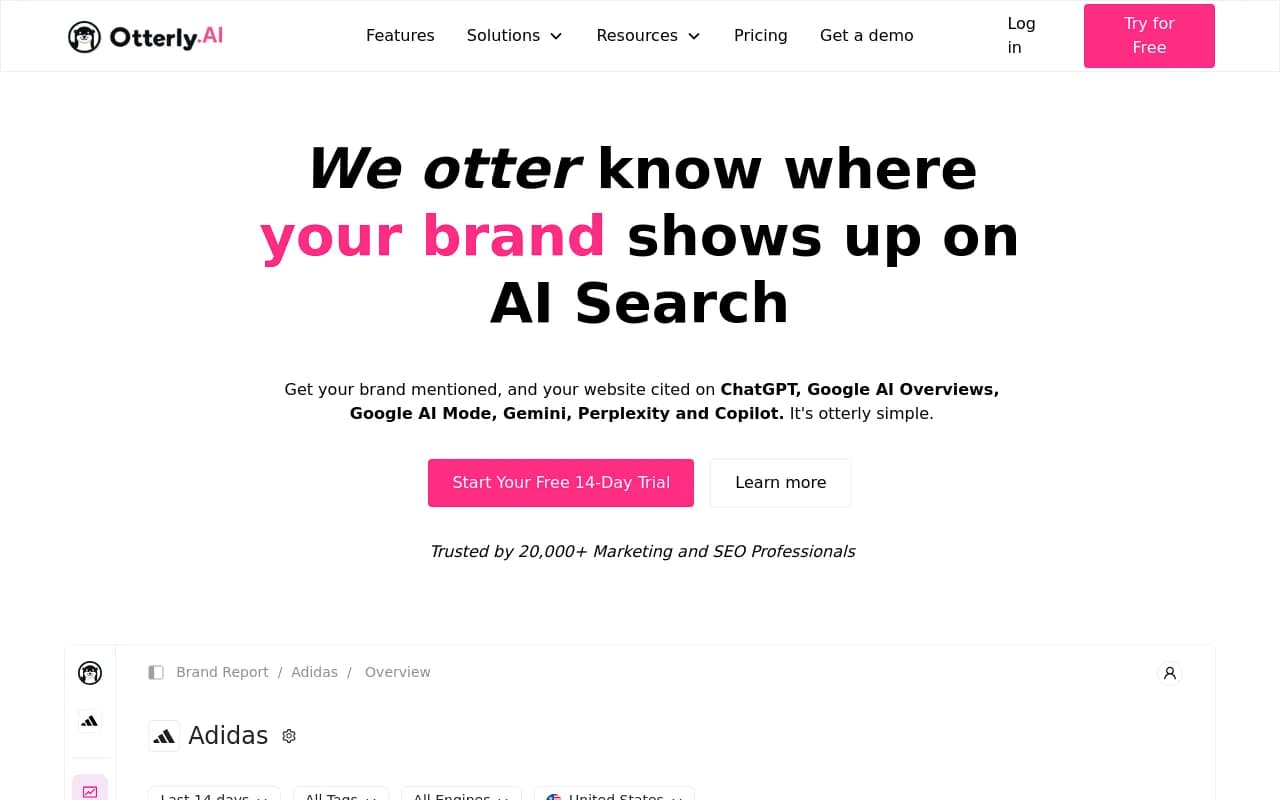

Most of them share the same limitation as Peec AI: strong monitoring, weak optimization. Profound and Scrunch have more robust feature sets but come at higher price points and still lack content generation. Otterly.AI and Peec AI are solid entry-level options but don't support the full workflow from gap to content to traffic.
If you want to see how the broader market stacks up, the comparison of 12 GEO platforms conducted in 2026 found Promptwatch to be the only platform rated as a "Leader" across all categories -- specifically because of the action loop that monitoring-only tools can't replicate.
The bottom line
SE Ranking is a great SEO platform. SE Visible is a reasonable add-on if you're already in that ecosystem. Peec AI is a clean, multilingual-friendly monitoring tool. Neither of them will help you create content that gets cited by ChatGPT or tell you why Perplexity keeps recommending a competitor instead of you.
If AI search visibility is something you're trying to actively improve -- not just track -- the tool you need is one that shows you the gaps, helps you fill them, and confirms the results. That's what separates an optimization platform from a dashboard.