Key takeaways
- BrightEdge is an established enterprise SEO platform that added AI visibility through its AI Catalyst module -- useful if you're already deep in the BrightEdge ecosystem, but not purpose-built for AI search.
- Promptwatch was built specifically for AI search visibility and GEO, with a full action loop: find gaps, generate content, track results.
- BrightEdge's pricing is enterprise-only and opaque; Promptwatch starts at $99/month with transparent tiers.
- The core difference is action vs. observation: BrightEdge shows you data, Promptwatch helps you do something about it.
- For teams that need AI crawler logs, content gap analysis, Reddit/YouTube tracking, and AI-native content generation, Promptwatch covers ground BrightEdge doesn't reach.
The context: why this comparison matters right now
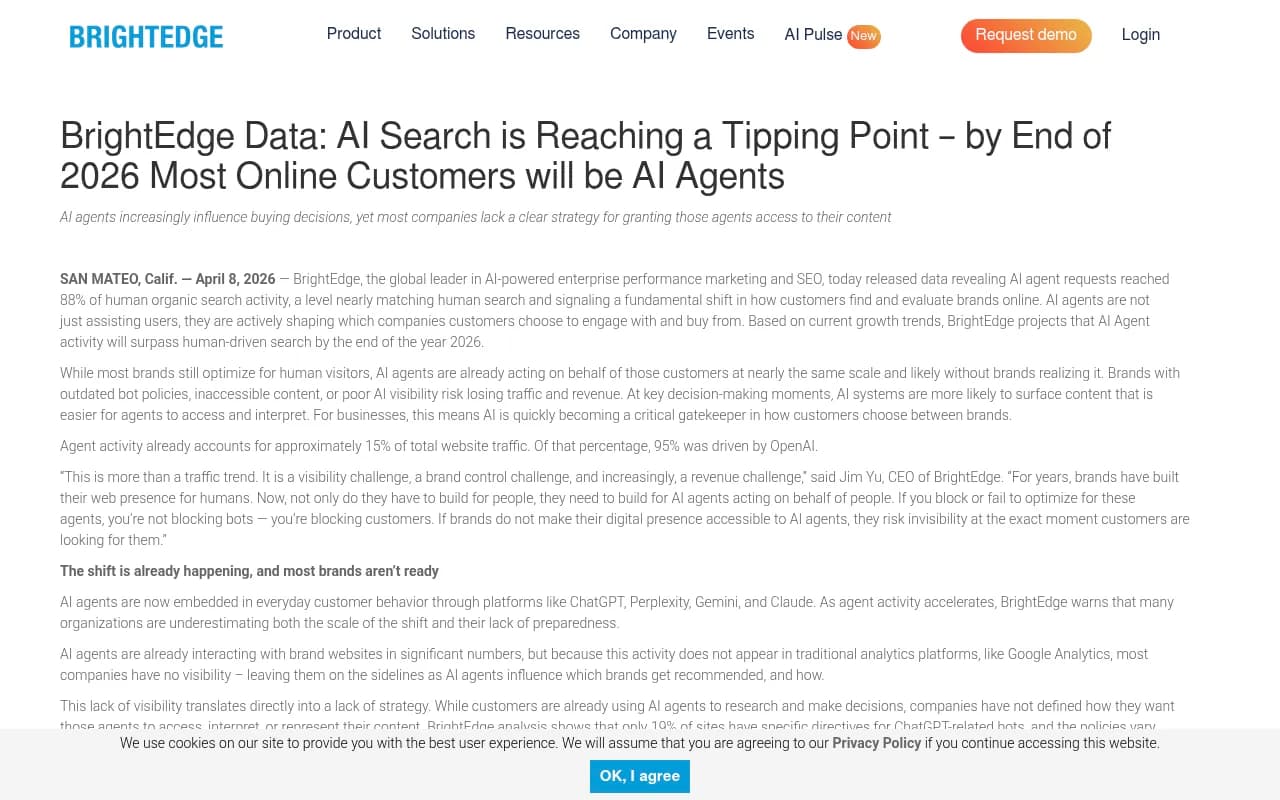
BrightEdge published data in April 2026 showing AI agent requests had reached 88% of human organic search activity -- and projected that AI agent activity would surpass human-driven search before the end of the year. That's their own research, and it's striking. The company that built its business on traditional SEO is now telling its customers that the old model is running out of road.
That context matters for this comparison. BrightEdge has been around since 2007. It has deep roots in enterprise SEO, content performance forecasting, and organic search reporting. When AI search exploded, BrightEdge responded by adding AI visibility features on top of what already existed. That's not a criticism -- it's just the reality of how a mature platform evolves.
Promptwatch took the opposite path. It was built from scratch to answer a specific question: how do you show up when AI models are generating the answers, not just ranking blue links?
These are genuinely different philosophies, and they produce genuinely different tools.
What BrightEdge actually does
BrightEdge's core strength is enterprise SEO at scale. Large organizations with thousands of pages, complex content workflows, and teams that need detailed organic search reporting have used it for years. Its DataMind AI engine powers recommendations across content, technical SEO, and competitive analysis.
The AI visibility layer -- called AI Catalyst -- was added to track how brands appear in AI-generated answers. It monitors platforms like ChatGPT, Perplexity, and Google AI Overviews, and provides reporting on brand mentions and citation frequency.
What BrightEdge does well:
- Enterprise-scale organic search reporting and forecasting
- Content performance tracking across large site architectures
- Integration with existing enterprise marketing stacks
- AI Catalyst for basic AI mention monitoring
Where it runs into limits:
- AI visibility features feel like an add-on rather than a core capability
- No AI crawler logs showing which pages AI agents actually visit
- No content generation tools built around AI prompt data
- Pricing is enterprise-tier and requires a sales conversation -- no self-serve option
- Limited prompt-level intelligence (volume estimates, difficulty scoring, query fan-outs)
What Promptwatch actually does
Promptwatch monitors how brands appear across 10 AI models -- ChatGPT, Perplexity, Google AI Overviews, Google AI Mode, Claude, Gemini, Meta/Llama, DeepSeek, Grok, and Copilot. But the monitoring is just the starting point.

The platform is built around what it calls an action loop: find the gaps, create content to fill them, then track whether that content gets cited. Most AI visibility tools stop at step one. Promptwatch is designed to take you through all three.
A few things that stand out:
Answer Gap Analysis shows you exactly which prompts your competitors are visible for that you're not. Not vague category-level data -- specific prompts, with the content gaps spelled out.
Content Agents generate articles, listicles, comparisons, and briefs grounded in real prompt data, citation patterns, and competitor analysis. This isn't generic AI writing; it's content built to answer the specific questions AI models are already asking.
AI Crawler Logs show which pages ChatGPT, Claude, Perplexity, and other crawlers are actually visiting on your site, how often, what errors they hit, and when a crawled page moves to a cited page. BrightEdge doesn't have an equivalent.
Prompt Intelligence gives volume estimates and difficulty scores for individual prompts, plus query fan-outs that show how one prompt branches into sub-queries. This lets teams prioritize instead of guessing.
Reddit and YouTube tracking surfaces discussions that directly influence AI recommendations -- a channel most platforms ignore entirely.
Feature comparison
| Feature | Promptwatch | BrightEdge |
|---|---|---|
| AI model coverage | 10 models (ChatGPT, Perplexity, Gemini, Claude, Grok, DeepSeek, Copilot, Meta AI, Google AI Overviews, Google AI Mode) | Select AI platforms via AI Catalyst |
| Prompt volume & difficulty scoring | Yes | No |
| Answer gap analysis | Yes | Limited |
| AI content generation | Yes (Content Agents) | No |
| AI crawler logs | Yes | No |
| Page-level citation tracking | Yes | Limited |
| Reddit & YouTube tracking | Yes | No |
| ChatGPT Shopping tracking | Yes | No |
| Competitor heatmaps | Yes | Basic |
| Multi-language / multi-region | Yes | Yes |
| Traffic attribution to AI | Yes | Limited |
| Self-serve pricing | Yes (from $99/mo) | No (enterprise sales only) |
| Free trial | Yes | No |
| Traditional SEO features | Limited | Comprehensive |
Pricing: a significant practical difference
BrightEdge does not publish pricing. It's enterprise-only, sold through a sales process, and typically positioned at a price point that puts it out of reach for most marketing teams outside of large organizations.
Promptwatch publishes its pricing:
- Essential: $99/month (1 site, 50 prompts, 5 articles/month)
- Professional: $249/month (2 sites, 150 prompts, 15 articles, crawler logs, city/state tracking)
- Business: $579/month (5 sites, 350 prompts, 30 articles)
- Agency/Enterprise: custom pricing
There's also a free trial, which BrightEdge doesn't offer. For teams that want to test before committing, that matters.
The monitoring-only problem
Here's the thing that keeps coming up when you look at how teams actually use AI visibility tools: monitoring data is only useful if you can act on it.
BrightEdge can tell you that a competitor is appearing more frequently in ChatGPT responses for a given topic. That's useful information. But then what? You're back to your content team, trying to figure out what to write, briefing writers without prompt-level data, and hoping the result gets picked up.
Promptwatch's answer gap analysis doesn't just show you the gap -- it shows you the specific content your site is missing, the topics AI models want answers to but can't find on your pages. The Content Agents then generate that content using real prompt data, citation patterns, and competitor analysis as inputs. And the crawler logs let you see when AI agents start visiting the new pages, and when those visits turn into citations.
That cycle -- find gaps, generate content, track results -- is what separates an optimization platform from a monitoring dashboard.
When BrightEdge makes more sense
BrightEdge isn't the wrong choice for everyone. If your organization:
- Is already deeply invested in BrightEdge for traditional SEO and wants to add AI visibility without switching platforms
- Has a large content operation that depends on BrightEdge's forecasting and reporting tools
- Has enterprise procurement requirements that favor established vendors with long track records
...then staying with BrightEdge and using AI Catalyst as an add-on is a reasonable path. The AI features aren't as deep, but the integration with existing workflows has real value.
The honest version: BrightEdge is a strong traditional SEO platform that has added AI visibility features. If traditional SEO is still your primary channel and AI visibility is secondary, that's a defensible stack.
When Promptwatch makes more sense
If AI search is a primary concern -- or becoming one -- the purpose-built approach wins. Specifically, Promptwatch is the better fit if you:
- Want to know not just where you're invisible, but why, and what content to create
- Need to track AI crawler behavior on your site (which pages get visited, which get cited)
- Want prompt-level data: volume, difficulty, query fan-outs
- Are tracking competitors across multiple AI models and need share-of-voice data
- Run a marketing or SEO team that needs to produce content optimized for AI citation, not just traditional search
- Want self-serve access without a sales process
The 1,480+ brands using Promptwatch -- including Booking.com and Center Parcs -- are mostly in this camp: organizations where AI search visibility is a core part of the marketing strategy, not an afterthought.
What the broader market says
Independent comparisons have consistently placed Promptwatch in a different category from monitoring-only tools. A 2026 comparison of 12 GEO platforms rated Promptwatch as the only "Leader" across all categories. The pattern that keeps appearing: most competitors show you data, Promptwatch helps you act on it.
BrightEdge's position in that landscape is as a traditional SEO platform with AI features added -- valuable for its core use case, but not designed around the AI search workflow from the ground up.
For teams evaluating other options in the same space, a few tools worth knowing:
Profound is another purpose-built AI visibility platform with strong enterprise credentials and deep prompt analytics.
Scrunch focuses on monitoring how AI assistants like ChatGPT and Claude represent your brand, with good brand safety features.
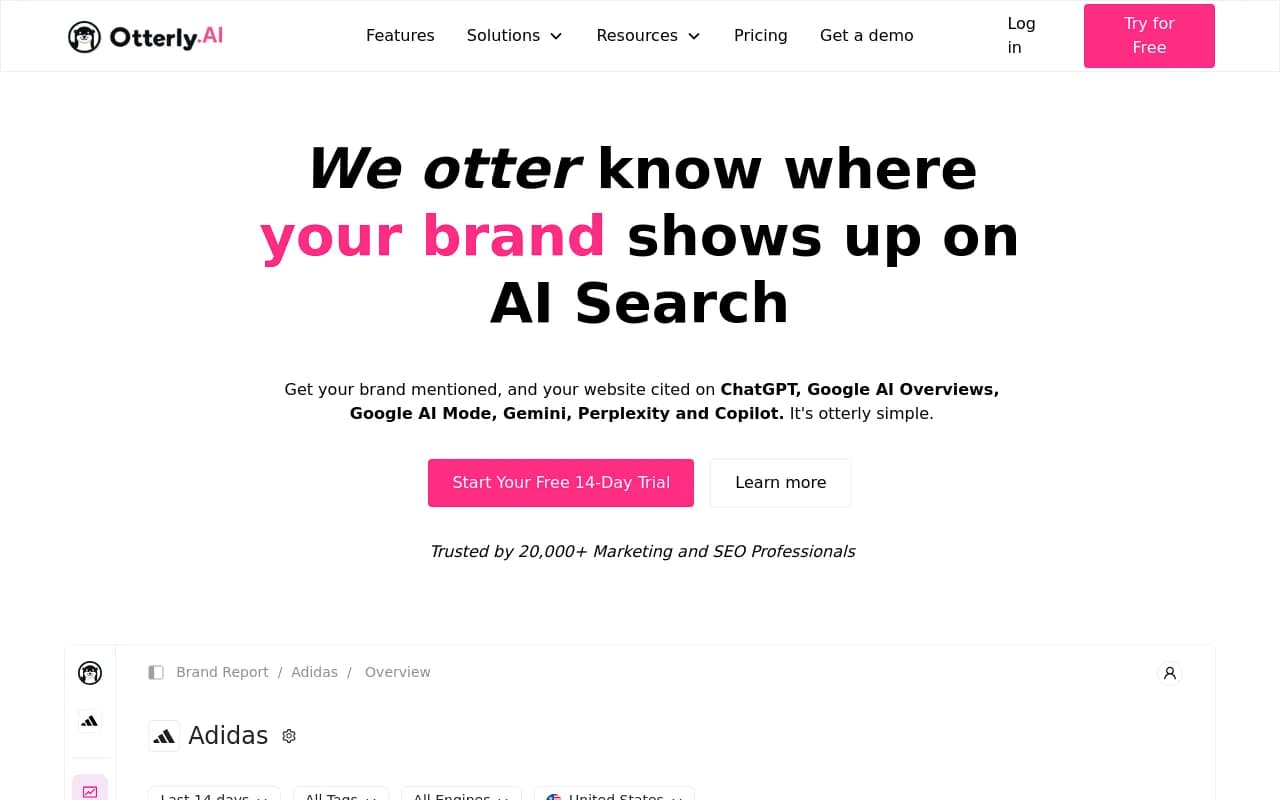
Otterly.AI is a lighter-weight monitoring option for teams that don't need content generation or crawler logs.
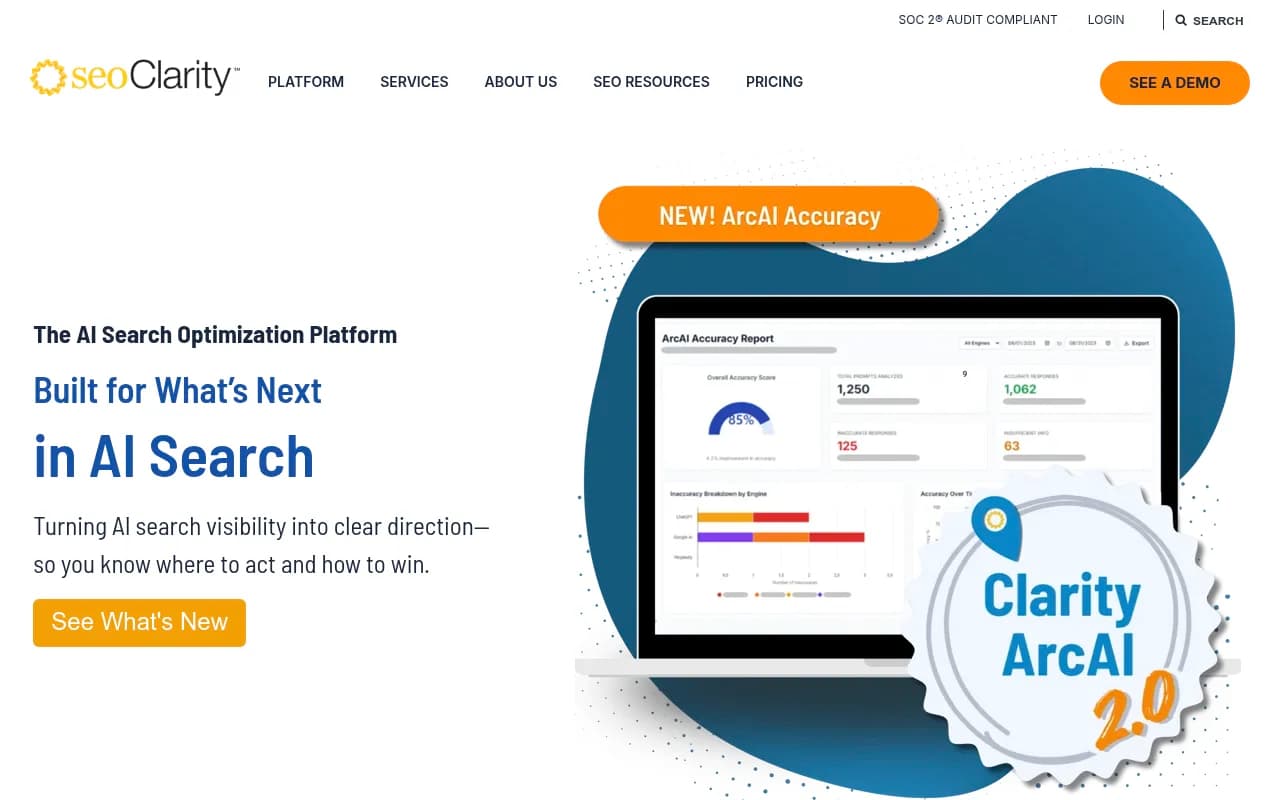
seoClarity sits in a similar position to BrightEdge -- enterprise SEO with AI visibility tracking added on.
The bottom line
BrightEdge and Promptwatch are solving related but different problems. BrightEdge is an enterprise SEO platform that has extended into AI visibility. Promptwatch is an AI visibility platform that was built for this moment specifically.
If you're running a large enterprise with deep BrightEdge integration and AI visibility is one of many concerns, the switching cost might not be worth it. But if AI search is where your customers are going -- and BrightEdge's own data says it will be the dominant channel by the end of 2026 -- then a platform built around that reality from day one is the more logical choice.
The monitoring-only approach has a shelf life. At some point, knowing you're invisible isn't enough. You need to fix it.