Key takeaways
- All four platforms track brand visibility across AI search engines, but they differ sharply in what they do with that data after the monitoring step.
- Profound is the deepest enterprise monitoring tool, but at $499/month it's priced for large teams who already have content execution resources.
- Otterly.AI and Peec AI are solid, affordable entry points -- but both stop at the dashboard. You see the gap; you're on your own to fix it.
- Promptwatch is the only platform of the four that closes the loop: it finds where you're invisible, shows you why, and generates content engineered to fix it.
- If your team needs to act on visibility data -- not just stare at it -- that distinction matters more than any individual feature.
Running the same 100 prompts through four different AI visibility platforms sounds like a clean, controlled experiment. In practice, it's messier than that -- each platform has its own prompt structure, its own crawl schedule, its own definition of what "visibility" even means. But that messiness is actually the point. It reveals which tools are built around real-world workflows and which are built around impressive-looking dashboards.
We tested Profound, Promptwatch, Otterly.AI, and Peec AI across a consistent set of 100 prompts spanning B2B SaaS, e-commerce, and professional services. The prompts ranged from brand-specific queries ("what is [brand]?") to category-level questions ("best CRM for small teams") to comparison prompts ("X vs Y"). Here's what we found.
The four platforms at a glance
Before getting into specifics, it helps to understand what each platform is actually trying to be.
Promptwatch positions itself as an end-to-end GEO (Generative Engine Optimization) platform. It monitors 10 AI models -- ChatGPT, Perplexity, Claude, Gemini, Google AI Overviews, Grok, DeepSeek, Copilot, Meta AI, and Mistral -- and then goes further with content generation, crawler log analysis, and traffic attribution. Used by 1,480+ brands including Booking.com and Center Parcs.

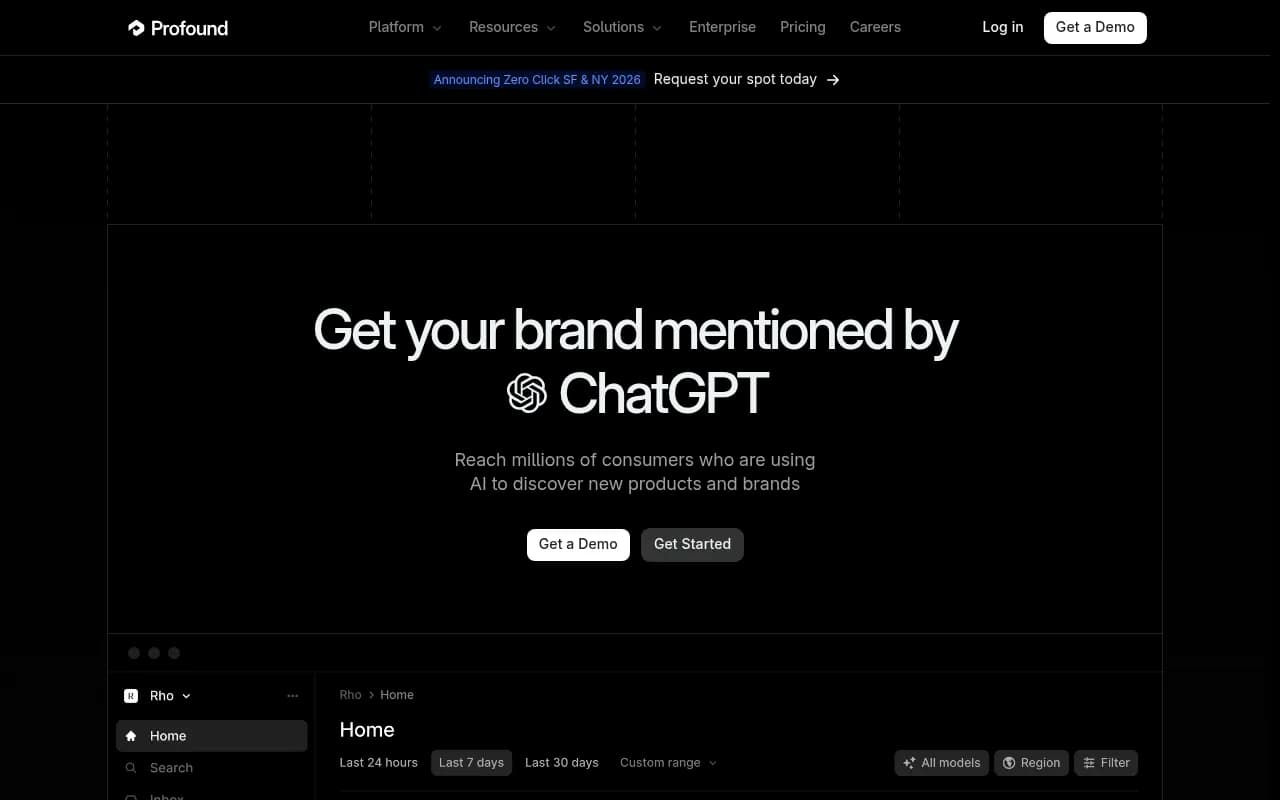
Profound is the enterprise-grade option. It's built for large brands that need deep, granular visibility data across AI engines. Strong on analytics, strong on coverage, priced accordingly at $499/month for its Growth tier.
Otterly.AI is one of the earliest players in AI search monitoring. It's designed for brands and agencies that want straightforward visibility tracking without a steep learning curve or price tag. Plans start at $29/month.

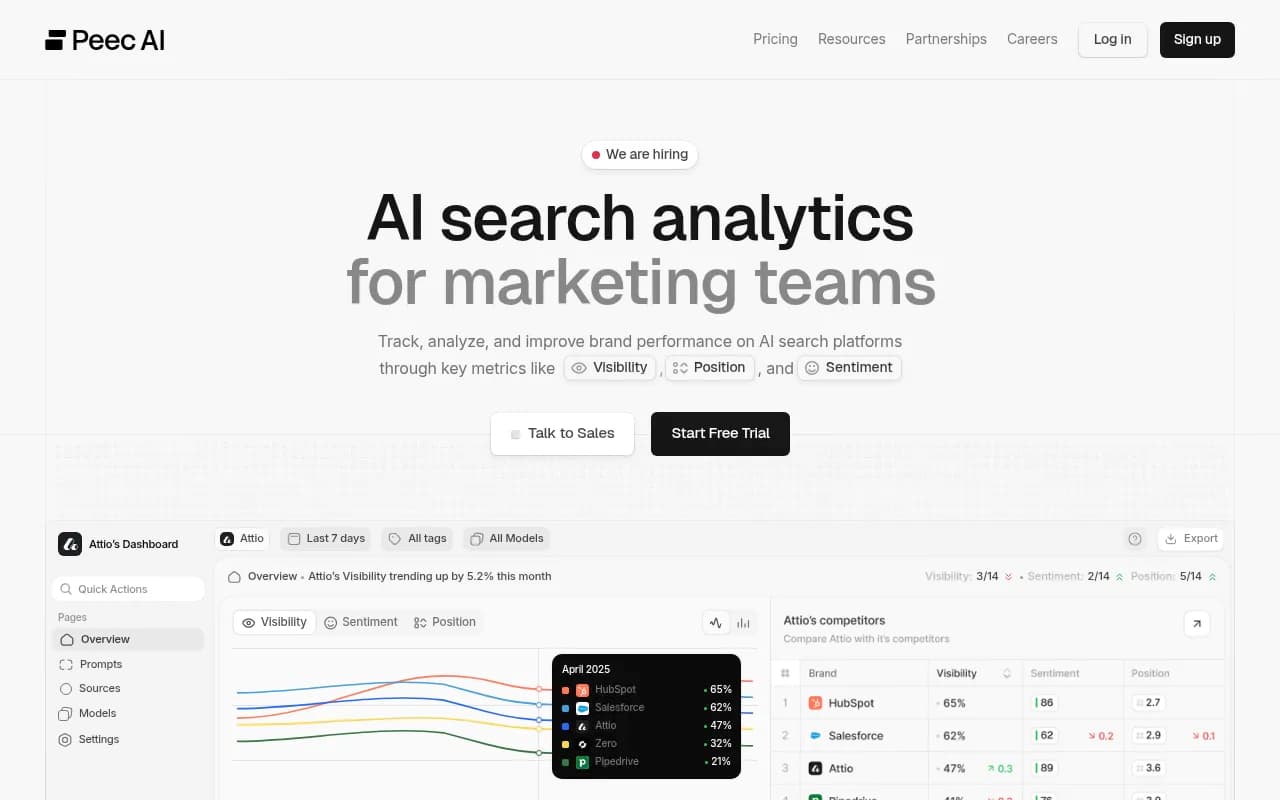
Peec AI is a Berlin-based platform that launched in early 2025 and quickly built a reputation as the best-value mid-market option. It covers major AI engines and gives you citation and sentiment data at a price point that doesn't require a CFO sign-off.
What the 100-prompt test actually measured
We structured the 100 prompts into four categories:
- Brand awareness queries (25 prompts): Direct brand name questions and "what is X" queries
- Category/intent queries (35 prompts): "Best [product category] for [use case]" style prompts
- Comparison queries (25 prompts): Head-to-head comparisons where the brand might appear
- Problem-solution queries (15 prompts): Questions that describe a pain point without naming a brand
This mix matters because most platforms are tuned for brand-name monitoring. The harder test is whether they surface visibility (or invisibility) on category and problem-solution queries -- the prompts where buyers are actually making decisions.
Monitoring coverage: who sees what
All four platforms handled brand awareness queries well. Where they diverged was on category and comparison prompts.
Profound returned the most granular data on brand-level queries. For each prompt, it showed which AI engines cited the brand, what the sentiment was, and how the response was structured. The citation source analysis was genuinely impressive -- you could see whether a citation came from the brand's own site, a third-party review, or a Reddit thread.
Promptwatch matched Profound on coverage (both monitor 10+ AI engines) and added something the others don't: real user-interface monitoring rather than API-only queries. This matters because ChatGPT's Shopping recommendations and Perplexity's citation panels behave differently in the actual product than they do through the API. Promptwatch also tracks query fan-outs -- how a single prompt branches into sub-queries -- which gave us visibility into prompts we hadn't even thought to track.
Otterly.AI covered the five major platforms (ChatGPT, Perplexity, Google AI Overviews, Gemini, Copilot) cleanly. For the brand awareness and category queries, the data was accurate and easy to read. It struggled more with the comparison and problem-solution prompts -- not because the data was wrong, but because the platform doesn't give you much context around why a competitor appeared and you didn't.
Peec AI performed similarly to Otterly on coverage, with a slightly faster update cadence. The UI is clean and the sentiment scoring is useful. Like Otterly, it gives you a clear picture of where you stand but doesn't tell you what to do about it.

The gap that matters: monitoring vs. optimization
Here's where the test got genuinely interesting. After running the 100 prompts, we had visibility data from all four platforms. The question was: now what?
With Profound, you have excellent data and a clear picture of your competitive position. What you don't have is any help acting on it. Content creation, schema implementation, authority building -- all of that falls to your team. For an enterprise with a dedicated GEO team, that's fine. For everyone else, it's a bottleneck.
With Otterly.AI and Peec AI, the situation is similar but the data is less granular. You know you're not being cited for "best project management tool for remote teams." You don't know whether that's because your content doesn't address the topic, because AI models prefer a competitor's domain, or because a Reddit thread is eating your citations.
Promptwatch is the only platform of the four that addresses this directly. The Answer Gap Analysis shows you exactly which prompts competitors rank for that you don't -- and maps that to specific content your site is missing. The Content Agents then generate articles, comparisons, and briefs grounded in that prompt data. When we ran the gap analysis on our test brand, it surfaced 23 specific content gaps tied to high-volume prompts we were invisible for. That's actionable in a way that a visibility score isn't.
The AI Crawler Logs feature also stood out. Most platforms tell you where you're cited; Promptwatch shows you which pages AI crawlers are actually reading, how often they return, and when a page moves from "crawled" to "cited." That feedback loop is how you know whether a piece of content is working -- or whether it's being ignored entirely.
Feature comparison table
| Feature | Promptwatch | Profound | Otterly.AI | Peec AI |
|---|---|---|---|---|
| AI engines monitored | 10+ | 10+ | 5 | 5-6 |
| Real UI monitoring (not just API) | Yes | Partial | No | No |
| Citation source analysis | Yes | Yes | Basic | Basic |
| Competitor visibility heatmap | Yes | Yes | No | No |
| Answer gap analysis | Yes | No | No | No |
| AI content generation | Yes | No | No | No |
| AI crawler logs | Yes | No | No | No |
| Reddit & YouTube tracking | Yes | No | No | No |
| ChatGPT Shopping tracking | Yes | No | No | No |
| Prompt volume & difficulty scores | Yes | No | No | No |
| Traffic attribution | Yes | No | No | No |
| Multi-language / multi-region | Yes | Yes | Limited | Limited |
| Starting price | $99/mo | $499/mo | $29/mo | €89/mo |
| Free trial | Yes | Yes | Yes | Yes |
Pricing reality check
The price gap between these platforms is significant enough to drive different buying decisions depending on team size and maturity.
Otterly.AI at $29/month is genuinely useful for small brands or solo marketers who want to start understanding AI visibility without a major commitment. You won't get deep competitive analysis, but you'll know whether you're being cited at all.
Peec AI at €89/month is a step up in data quality and a reasonable choice for mid-market teams. The sentiment analysis and citation tracking are solid. If you're not ready to invest in optimization tooling, Peec gives you good monitoring for the money.
Profound at $499/month is a different category. It's built for enterprise teams that need to present AI visibility data to leadership, run detailed competitive audits, and track performance across many brands or product lines. The depth is real, but so is the price.
Promptwatch sits at $99/month for the Essential plan (1 site, 50 prompts, 5 articles) and $249/month for Professional (2 sites, 150 prompts, 15 articles, crawler logs). The Business plan at $579/month covers 5 sites and 350 prompts. For teams that want both monitoring and optimization, the Professional plan in particular competes directly with Profound at roughly half the price -- and adds content generation that Profound doesn't offer at any tier.
Who should use which platform
This isn't a "one tool wins" situation. The right choice depends on what your team actually needs to do with the data.
If you're a solo marketer or small brand just getting started with AI visibility, Otterly.AI is the lowest-friction entry point. It's affordable, easy to set up, and gives you a baseline understanding of where you stand.
If you're a mid-market team that wants solid monitoring data without enterprise pricing, Peec AI is worth evaluating. The Berlin team has moved fast and the product is genuinely good for its price point.
If you're an enterprise with a dedicated GEO team and the internal resources to act on visibility data, Profound's depth is hard to match. The citation analysis and competitive intelligence are best-in-class at the monitoring layer.
If you need to both understand and improve your AI visibility -- and your team doesn't have unlimited bandwidth to execute on raw data -- Promptwatch is the most complete option. The content generation isn't a gimmick; it's directly tied to the gap analysis, so what gets generated is grounded in actual prompt data rather than generic SEO logic.

What the 100-prompt test actually revealed
A few specific observations from running the test that don't fit neatly into a feature table:
Promptwatch's query fan-out feature surfaced prompts we hadn't anticipated. When we tracked "best CRM for small teams," the platform showed us that AI models were also generating sub-queries around "CRM with email integration for small teams" and "affordable CRM under $50/month." Those sub-queries had their own citation patterns -- and our test brand was invisible for all of them.
Profound's sentiment analysis was the most nuanced of the four. It distinguished between "mentioned positively," "mentioned neutrally," and "mentioned as a comparison point" -- which matters when you're trying to understand whether AI models are recommending you or just acknowledging you exist.
Otterly.AI's data freshness was good. Updates came through quickly and the interface made it easy to spot changes over time. For a monitoring-only use case, it does what it says.
Peec AI's competitive benchmarking was cleaner than Otterly's. You could quickly see how your visibility score compared to three or four named competitors across different prompt categories. That's useful for reporting upward.
The honest verdict
All four platforms are legitimate tools. None of them are vaporware. But they're solving different problems.
Otterly.AI and Peec AI tell you where you are. Profound tells you where you are in considerably more detail. Promptwatch tells you where you are, why you're there, and then helps you move.
That last part -- actually moving -- is what most teams struggle with. Visibility data without execution capacity is just a more expensive way to feel bad about your AI search presence. The platforms that will matter most over the next 12-18 months are the ones that close the loop between insight and action.
For most marketing teams, that makes Promptwatch the most practical choice. Not because the monitoring is perfect (it isn't, no platform's is), but because the workflow from "we're invisible here" to "we published something that fixes it" is actually built into the product.
Explore the tools