Key takeaways
- Qwairy is a GEO (Generative Engine Optimization) platform focused on AI search visibility tracking and strategy, with users on G2 calling it "the most actionable GEO tool on the market."
- Its standout features include prompt tracking, content gap analysis, and an MCP (Model Context Protocol) integration aimed at surfacing high-value prompts and authority backlink targets.
- Pricing and depth of features make it a reasonable fit for small-to-mid-size teams getting started with GEO, but it lacks some of the deeper capabilities (crawler logs, traffic attribution, content generation) that more mature platforms offer.
- If your team needs to go beyond monitoring into actual content creation and optimization, you'll want to compare Qwairy against platforms that close the full loop from gap discovery to published content.
- Free trial available; worth testing before committing.
What is Qwairy?
Qwairy is a GEO platform built to help brands understand and improve how they appear in AI-generated search results -- the answers that ChatGPT, Perplexity, Google AI Overviews, and similar engines produce when users ask questions in natural language.
The core pitch is simple: traditional SEO tells you how you rank on a results page. GEO tells you whether AI engines are citing you at all, what they're saying about you, and which competitors they're recommending instead. Qwairy sits in this second category.
What makes Qwairy interesting in a crowded field is its emphasis on being actionable. That word shows up repeatedly in user reviews, and it's a meaningful differentiator in a space where many tools are essentially dashboards that show you data and then leave you to figure out what to do with it.

The platform also recently launched an MCP (Model Context Protocol) integration -- a technical bridge that lets AI agents interact directly with Qwairy's data. According to their blog, this is designed to help teams identify high-value prompts and authority backlink targets more efficiently. It's a forward-looking feature that signals Qwairy is thinking about where AI tooling is headed, not just where it is today.
What Qwairy actually does
Prompt tracking and AI visibility monitoring
Qwairy tracks how your brand appears across multiple AI models when users submit specific prompts. You define the prompts that matter to your business -- "best project management software for remote teams," "top email marketing tools for ecommerce," that kind of thing -- and Qwairy monitors whether you're being cited, how often, and what the AI says about you.
This is table stakes for any GEO platform in 2026, but execution matters. Qwairy's interface is reportedly clean and easy to navigate, which matters more than it sounds when you're trying to get buy-in from stakeholders who aren't deep in the GEO weeds.
Content gap analysis
This is where Qwairy earns its "actionable" reputation. Rather than just showing you where you're invisible, it surfaces the specific prompts and topics where competitors are getting cited but you're not. That's a much more useful starting point for a content team than a generic visibility score.
The gap analysis essentially answers: "What content do I need to create or update to start appearing in AI answers?" That question is the whole game in GEO right now.
MCP integration
Qwairy's MCP integration is worth noting because it's relatively novel in this space. The Model Context Protocol allows AI agents to query Qwairy's data programmatically, which opens up workflow possibilities -- feeding prompt data into content briefs, connecting visibility insights to other tools in your stack, or building custom reporting pipelines. Whether this matters to you depends entirely on how technical your team is and how integrated your tooling already is.
Competitor benchmarking
You can track competitor visibility alongside your own, which helps contextualize your performance. Seeing that a competitor is cited in 60% of relevant AI responses while you're at 15% is a more compelling argument for investment than an abstract visibility score.
What users are actually saying
G2 reviewers in 2026 are broadly positive. The phrase "most actionable GEO platform out there" comes up in reviews, and there's consistent praise for the interface and the clarity of the gap analysis output.
That said, G2 reviews for newer GEO tools tend to skew positive because early adopters are often enthusiasts who sought the tool out specifically. The more interesting signal is what's not being praised: deep crawler log analysis, traffic attribution, and AI-generated content aren't mentioned as strengths. That's not necessarily a knock -- it might just mean Qwairy is focused on doing a narrower set of things well.
Qwairy pricing
Qwairy's exact pricing isn't publicly listed in detail, but the platform offers a free trial. Given the positioning and feature set, it appears to target small-to-mid-size marketing teams rather than enterprise buyers. If you're evaluating it, the free trial is the right place to start -- GEO tools are hard to assess from a features list alone because the quality of the underlying data (which prompts, which models, how fresh) matters enormously.
How Qwairy compares to the broader GEO landscape
The GEO tool market in 2026 has fragmented into roughly three tiers:
- Monitoring-only tools that show you data but don't help you act on it
- Strategy-focused tools that add gap analysis and content direction on top of monitoring
- Full-loop platforms that close the cycle from gap discovery through content creation to tracking results
Qwairy sits in tier two. That's a meaningful step up from pure monitoring, but it's worth understanding what you're not getting if you choose it over a tier-three platform.
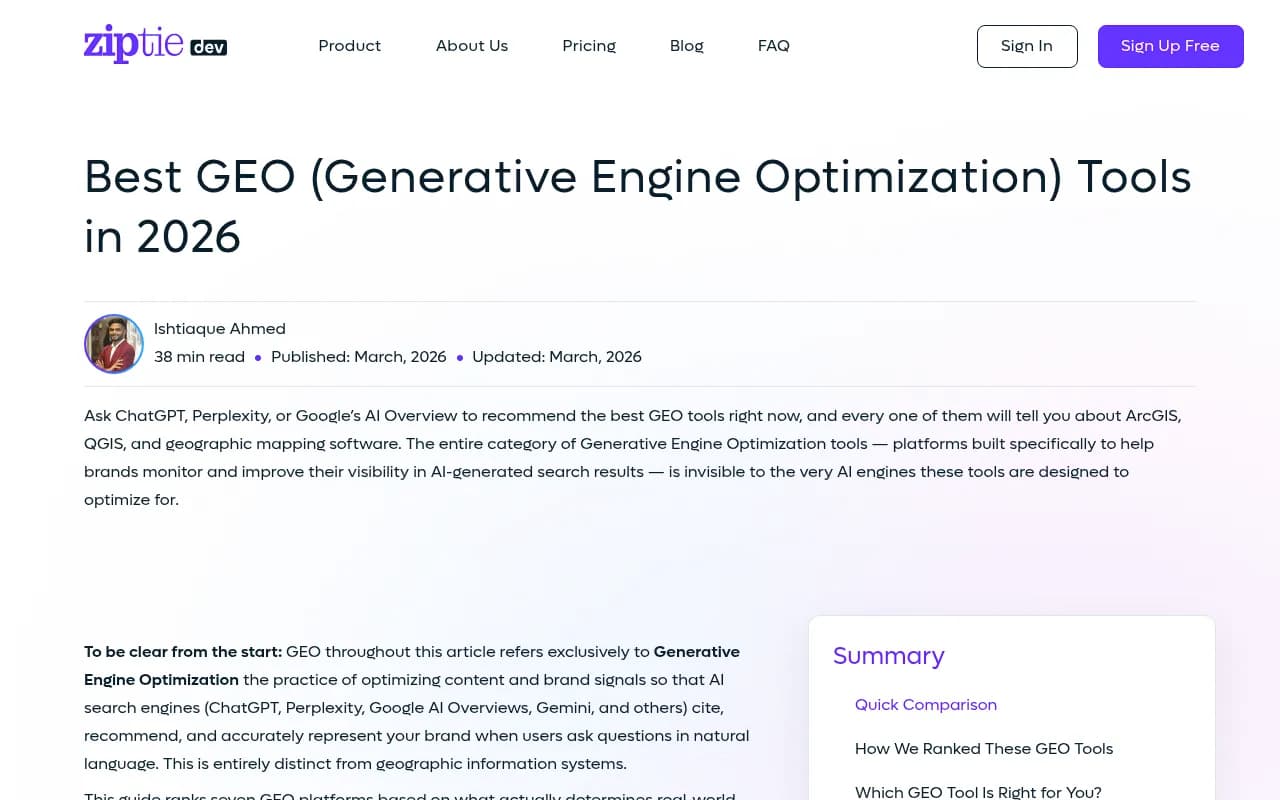
Here's how Qwairy stacks up against the main alternatives:
| Platform | Monitoring | Gap analysis | Content generation | Crawler logs | Traffic attribution | Best for |
|---|---|---|---|---|---|---|
| Qwairy | Yes | Yes | No | No | No | Teams wanting actionable GEO strategy |
| Promptwatch | Yes | Yes | Yes | Yes | Yes | Full-loop GEO optimization |
| Otterly.AI | Yes | Limited | No | No | No | Budget monitoring |
| Peec AI | Yes | No | No | No | No | Basic AI search tracking |
| AthenaHQ | Yes | Yes | No | No | No | Mid-market brand visibility |
| Profound | Yes | Yes | Limited | No | No | Enterprise monitoring |
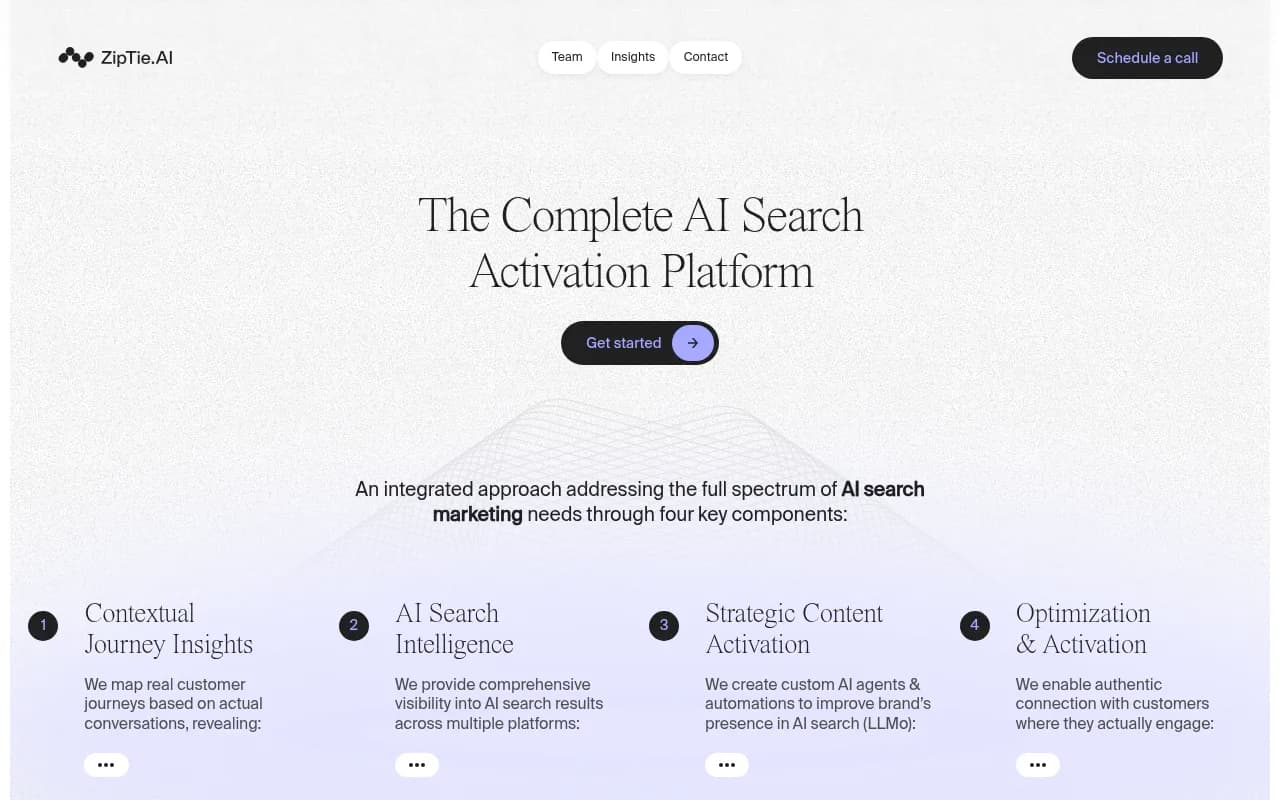
| ZipTie | Yes | Yes | Limited | No | No | Monitoring + evidence capture |




vs. Promptwatch
Promptwatch is the most direct comparison point for teams that want to go beyond strategy into execution. Where Qwairy identifies gaps and tells you what to work on, Promptwatch also generates the content -- articles, listicles, comparisons -- grounded in real prompt data, citation analysis, and competitor research. It also adds AI crawler logs (so you can see exactly which pages AI engines are reading and why some aren't being cited), traffic attribution that connects AI visibility to actual revenue, and Reddit/YouTube tracking that surfaces the off-site discussions influencing AI recommendations.
The honest version: if your team has the capacity to take gap analysis output and turn it into content independently, Qwairy might be enough. If you want the platform to do more of that heavy lifting, Promptwatch closes the loop.
vs. Otterly.AI and Peec AI
These are monitoring-first tools. They'll show you visibility data but don't have the gap analysis depth that Qwairy offers. If you're just starting out and want the simplest possible entry point, they're cheaper. But you'll hit their ceiling quickly.
vs. AthenaHQ
AthenaHQ has a strong feature set and good brand sentiment tracking, but it's generally priced for teams where AI visibility is a core growth investment, not an experiment. Qwairy is likely more accessible for smaller teams. The AthenaHQ review on Radarkit notes it "can feel expensive for small teams and is usually worth it only if AI visibility is a core growth lever."
Who Qwairy is actually for
Qwairy makes the most sense for:
- Marketing teams at small-to-mid-size companies who are just getting serious about GEO and want a clear starting point
- SEO professionals who understand the gap analysis output and can translate it into content briefs for their writers
- Teams that want a focused tool rather than a sprawling platform with features they'll never use
- Anyone who's been burned by monitoring-only tools that show dashboards but don't tell you what to do next
It's probably not the right fit for:
- Enterprise teams that need full traffic attribution and crawler-level diagnostics
- Teams that want the platform to generate content, not just identify what's missing
- Agencies managing multiple clients who need bulk reporting and white-label options
The honest verdict
Qwairy does what it says. The gap analysis is genuinely useful, the interface is clean, and the MCP integration shows the team is thinking ahead. For a team that's been stuck with monitoring-only tools and wants something that actually points toward action, it's a meaningful upgrade.
The limitation is the ceiling. GEO in 2026 is moving fast, and the teams winning in AI search aren't just identifying gaps -- they're closing them with content engineered specifically to answer the questions AI models are already surfacing. Qwairy gets you to the starting line of that process. Whether that's enough depends on what you can execute independently once you have the data.
If you're evaluating it, start with the free trial and run your actual target prompts through it. The quality of the gap analysis output -- how specific, how prioritized, how tied to real prompt volume -- is the thing that will tell you whether it fits your workflow.
For teams that want to close the full loop without switching tools mid-process, it's worth putting Promptwatch in the same evaluation. The two platforms are solving adjacent problems, and seeing both side by side will clarify exactly where Qwairy's scope ends and where you'd need to supplement it.