Key takeaways
- Profound is a strong monitoring platform for large enterprises with dedicated analytics teams -- it gives you deep visibility data but leaves the optimization work to you.
- Promptwatch goes further: it finds content gaps, generates AI-optimized content, and tracks whether that content gets cited -- closing the loop that most platforms leave open.
- For teams that want to act on data (not just read it), Promptwatch's built-in content generation and Answer Gap Analysis make a meaningful difference.
- Profound's pricing is higher and less transparent; Promptwatch starts at $99/mo with a clear tier structure.
- If your team already has the resources to turn raw data into content strategy, Profound can work. If you need the platform to do more of that work, Promptwatch is the better fit.
The GEO (Generative Engine Optimization) space has matured fast. A year ago, most teams were just trying to figure out whether AI models were mentioning their brand at all. Now the question is sharper: which platform actually helps you improve that visibility, not just measure it?
Profound and Promptwatch are two of the most-discussed options for enterprise teams. Both have real strengths. But they're built around different philosophies, and that difference matters more than any individual feature comparison.
This guide breaks down how they actually compare -- on features, workflow fit, pricing, and what you get for your money in 2026.
What each platform is trying to do
Before getting into features, it's worth understanding the design intent behind each tool.
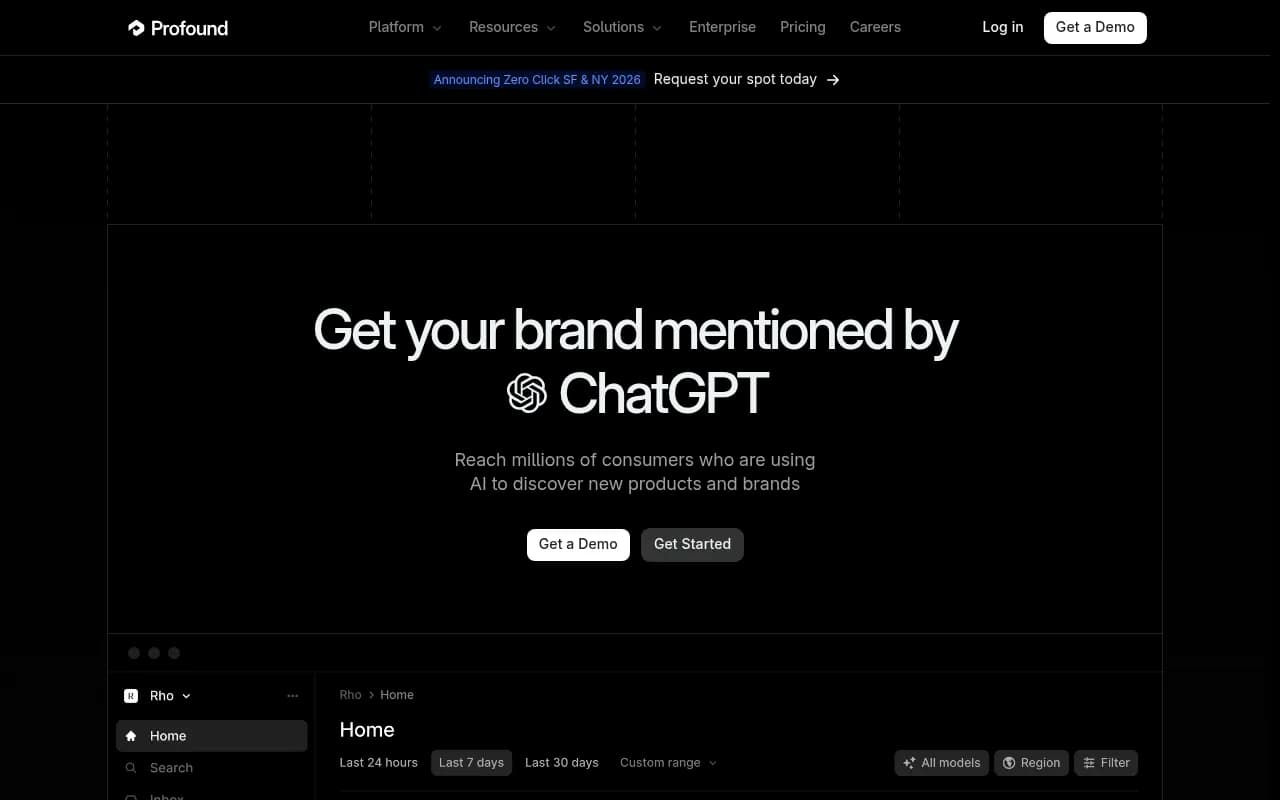
Profound was built for enterprise analytics. It's designed to give large organizations a comprehensive view of how their brand appears across AI models -- think dashboards, share-of-voice metrics, sentiment analysis, and competitive benchmarking. The assumption baked into the product is that your team has the capacity to take that data and act on it independently.
Promptwatch was built around a different assumption: that data without action is mostly noise. The platform is structured around a loop -- find the gaps in your AI visibility, generate content to fill those gaps, then track whether that content actually gets cited. It's less "here's your dashboard" and more "here's what to do next."
That's not a knock on Profound. For the right team, a deep analytics platform is exactly what you need. But it does mean these tools serve different workflows, and picking the wrong one for your team is a real risk.

Feature comparison
Here's a direct look at how the two platforms compare across the capabilities that matter most to enterprise teams:
| Feature | Profound | Promptwatch |
|---|---|---|
| AI model coverage | ChatGPT, Perplexity, Gemini, others | 10 models incl. Claude, Grok, DeepSeek, Copilot, Meta AI |
| Prompt tracking | Yes | Yes (with volume + difficulty scoring) |
| Answer Gap Analysis | Limited | Yes -- shows exactly which prompts competitors rank for that you don't |
| Content generation | No | Yes -- built-in AI writing agent |
| AI crawler logs | No | Yes (Professional tier+) |
| Citation & source analysis | Yes | Yes (880M+ citations analyzed) |
| Reddit/YouTube tracking | No | Yes |
| ChatGPT Shopping tracking | No | Yes |
| Traffic attribution | No | Yes (GSC, code snippet, server logs) |
| Competitor heatmaps | Yes | Yes |
| Multi-language/region | Limited | Yes |
| Looker Studio / API | Limited | Yes |
| Starting price | ~$500+/mo (enterprise) | $99/mo |
| Free trial | Yes | Yes |
A few things stand out here. Profound's feature set is solid for monitoring -- it covers the core visibility tracking that enterprise teams expect. But several capabilities that matter for actually improving visibility are missing: no content generation, no AI crawler logs, no Reddit tracking, no ChatGPT Shopping monitoring, no traffic attribution.
Promptwatch covers all of those. And the combination of Answer Gap Analysis + content generation is where it pulls ahead most clearly for teams that want to close the loop between insight and action.
The monitoring-only problem
This is worth spending a moment on, because it's the central issue with a lot of GEO tools right now.
Most platforms -- Profound included -- are fundamentally monitoring dashboards. They show you where you're visible, where you're not, and how competitors compare. That's genuinely useful information. But it leaves a big question unanswered: now what?
If your brand isn't appearing when someone asks ChatGPT for project management software recommendations, knowing that fact doesn't fix it. You need to know which specific prompts you're missing, what content would address them, and whether publishing that content actually moves the needle.
Profound's approach is to surface the data and trust your team to figure out the rest. That works if you have a large content team, a clear GEO strategy, and the bandwidth to translate analytics into action. Many enterprise teams do have those resources. But many don't -- and even those that do often find that the gap between "we have the data" and "we published the content" is where momentum dies.
Promptwatch's Answer Gap Analysis shows you the specific prompts where competitors are visible and you're not. Then the built-in writing agent generates articles, listicles, and comparisons grounded in actual citation data. Then page-level tracking shows whether those pages start getting cited. That's a complete workflow in one platform.
How enterprise teams actually use these tools
Based on what's been discussed in communities like r/seogrowth and reviews on platforms like Orchly.ai, the usage patterns are pretty consistent.
Teams that gravitate toward Profound tend to be larger enterprises with dedicated analytics functions. They want the data in a form they can slice and present to leadership -- share-of-voice charts, competitive benchmarking, sentiment trends. The platform fits naturally into a reporting-heavy workflow where insights flow to a separate content or SEO team.
Teams that gravitate toward Promptwatch tend to be marketing or SEO teams that own both the strategy and the execution. They want to know what to do, not just what's happening. The tighter loop between gap analysis and content generation means fewer handoffs and faster iteration.
One Reddit user in r/seogrowth put it plainly: "Promptwatch feels more practical in real workflows -- the clearer link-tracking and citation data make it easier to act on." That's a fair summary of what separates the two in day-to-day use.
Neither is wrong. But if your team is measured on improving AI visibility (not just reporting on it), the action-oriented workflow matters a lot.
Pricing reality
Profound's pricing isn't publicly listed in detail -- it's positioned as an enterprise product with custom pricing for most tiers. Third-party sources suggest starting costs in the $500+/month range, with enterprise contracts going significantly higher.
Promptwatch's pricing is transparent:
- Essential: $99/mo (1 site, 50 prompts, 5 articles)
- Professional: $249/mo (2 sites, 150 prompts, 15 articles, crawler logs, local tracking)
- Business: $579/mo (5 sites, 350 prompts, 30 articles)
- Agency/Enterprise: custom pricing
For enterprise teams, the Business or custom tier is the relevant comparison point. At that level, Promptwatch is competitive with Profound on price while offering more features -- particularly the content generation and traffic attribution capabilities that Profound lacks.
The free trial on both platforms is worth using before committing. The gap in workflow fit becomes obvious pretty quickly once you're actually in the product.
Where Profound still has an edge
It's worth being honest about where Profound holds up well.
For organizations where the primary use case is executive reporting and competitive benchmarking, Profound's dashboards are polished and well-suited to that job. If your CMO wants a quarterly slide showing share-of-voice across AI models versus five competitors, Profound produces that cleanly.
Profound also has a longer track record with Fortune 500 clients and may have deeper integrations with enterprise data stacks in some cases. For teams where procurement and security reviews are a significant factor, that enterprise pedigree can matter.
And if your content team is large and well-resourced, the lack of built-in content generation is less of a gap -- you're not looking for the platform to write for you, you're looking for it to tell you what to write.
What Promptwatch does that Profound can't
The capabilities that genuinely differentiate Promptwatch for enterprise teams:
AI crawler logs. Real-time logs of when ChatGPT, Claude, Perplexity, and other AI crawlers hit your website -- which pages they read, errors they encounter, how often they return. This is the kind of technical visibility that SEO teams are used to having for Google, and it's surprisingly rare in GEO tools. Profound doesn't have this.
Answer Gap Analysis. The specific prompts where competitors are visible and you're not. Not just "your visibility is lower than competitor X" but "here are the 23 prompts where they appear and you don't, ranked by volume." That's actionable in a way that aggregate share-of-voice isn't.
Content generation grounded in citation data. The writing agent isn't generating generic SEO content. It's generating content based on 880M+ analyzed citations -- what AI models actually cite, what topics they want answered, what angles they respond to. That's a meaningful difference from a general-purpose AI writer.
Traffic attribution. Connecting AI visibility to actual website traffic and revenue. Via GSC integration, a code snippet, or server log analysis, you can see whether your AI visibility improvements are driving clicks. Profound has no equivalent.
Reddit and YouTube tracking. AI models cite Reddit threads and YouTube videos heavily. Knowing which discussions are influencing AI recommendations in your category is genuinely useful for content strategy. Most platforms ignore this channel entirely.
The verdict for enterprise teams in 2026
If your enterprise team's primary need is a polished monitoring and reporting platform -- and you have the internal resources to act on the data independently -- Profound is a reasonable choice. It's built for that use case.
But if your team is accountable for actually improving AI visibility (not just measuring it), Promptwatch is the stronger platform. The combination of gap analysis, content generation, crawler logs, and traffic attribution means you're not just watching your visibility scores -- you're moving them.
The GEO space in 2026 has enough mature tools that "we're tracking it" is no longer a sufficient answer for most marketing teams. The question leadership is asking is "what are we doing about it?" Promptwatch is built to answer that question. Profound, largely, is not.
For teams evaluating both: run the free trials in parallel, feed the same set of prompts into both platforms, and see which one tells you what to do next. That test will make the decision obvious.
Other tools worth knowing about
If neither Profound nor Promptwatch is the right fit, a few other platforms are worth evaluating depending on your specific needs:



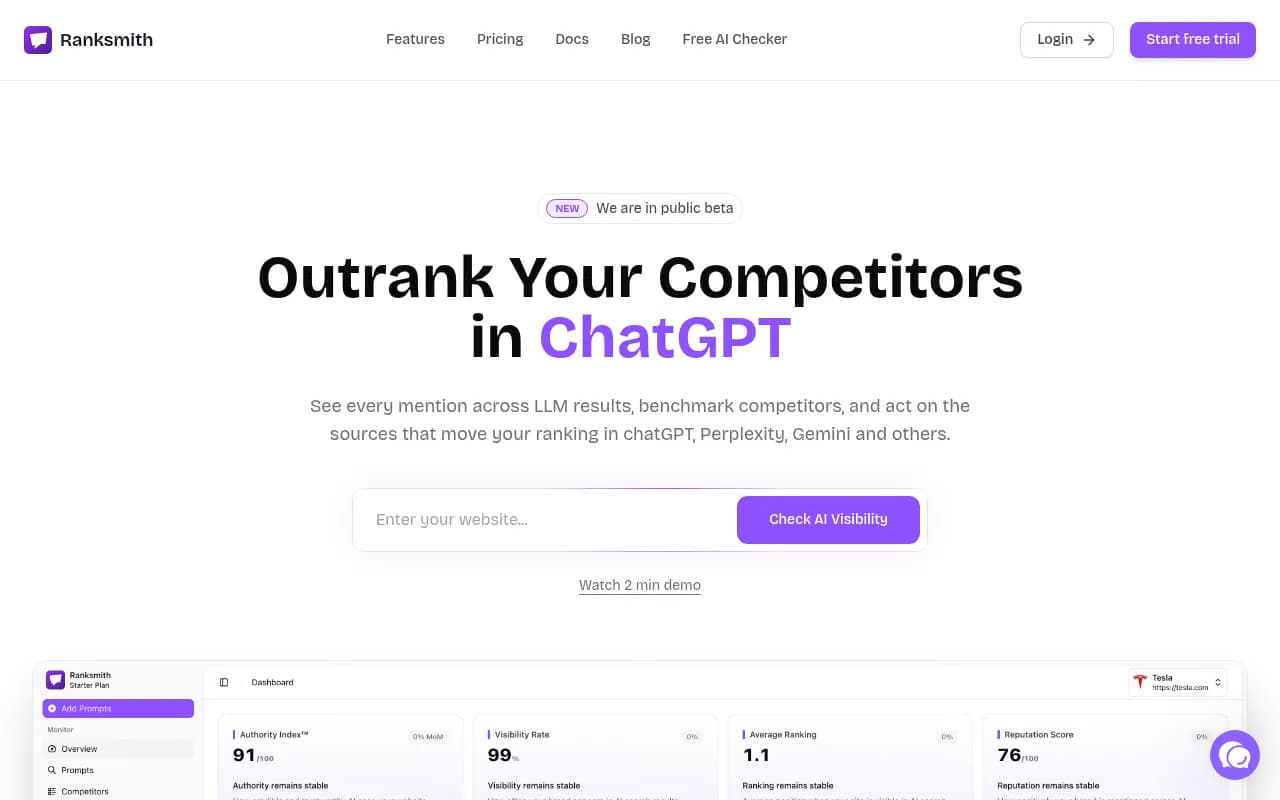
Otterly.AI is the most budget-friendly option with a GEO audit feature. Peec AI stands out for multi-language support across 100+ languages. AthenaHQ has solid monitoring capabilities for mid-market teams. Ranksmith is worth a look for teams that prioritize source attribution and citation tracking.
None of them close the full loop the way Promptwatch does -- but depending on your team's workflow and budget, one of them might be the right fit.