Key takeaways
- In finance and healthcare, an inaccurate AI answer about your brand is a potential compliance problem, not just a marketing one. Fees, eligibility, side effects, and coverage claims all show up in AI responses.
- Perception tracking means measuring how often AI names you, what it says about you (claim by claim), and which sources it learned that from.
- Promptwatch Data's October 2026 healthcare report shows ChatGPT leans on NIH, the FDA, and the NHS. If your claims are not consistent with those sources, AI is unlikely to repeat them correctly.
- You cannot edit what a model says directly. You can fix the pages and third-party sources it reads, then re-measure.
- Keep a dated log of prompts, responses, and fixes. Regulators increasingly expect ongoing monitoring, not one-off checks.
Why perception tracking is different in regulated industries
A consumer brand with a bad AI answer loses a sale. A bank or health brand with a bad AI answer can mislead someone about a loan rate, a drug interaction, or whether a procedure is covered. Nobody has to prove the AI was your own deployment for it to become a reputational and sometimes legal headache.
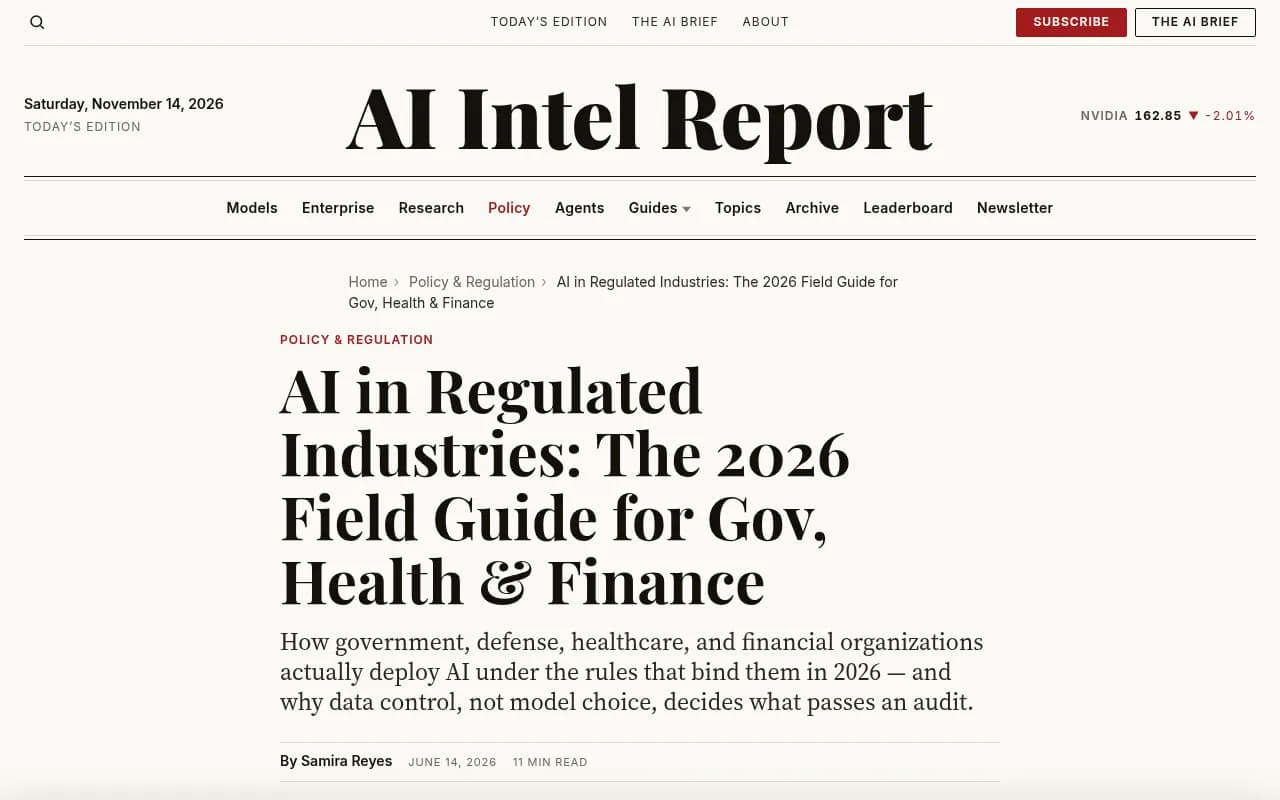
There is also a second layer worth separating out. Most of the regulated-industry AI content you will find online is about the AI you deploy: your chatbot, your underwriting model, your clinical scribe. That is a real obligation. The AI Intel Report field guide frames it well: the technology is the easy part, the rules are the constraint. One example from the research: the CFPB has confirmed that incorrect information delivered by an AI chatbot can be a UDAAP violation.
This guide covers the other side. It is about the AI you do not control. ChatGPT, Gemini, Perplexity, Claude, and Google AI Overviews answer questions about your brand every day, and none of them ask your legal team first.
Two problems that get mixed up
| Problem | Who controls it | Typical owner | What you do |
|---|---|---|---|
| Your own AI systems (chatbots, models, scribes) | You | Compliance, model risk, IT | Validate, monitor, keep audit trails |
| What public AI says about you | The AI vendors and the open web | Marketing, SEO, comms, compliance | Track, trace sources, fix inputs, re-measure |
The BN Digital piece makes a similar point about the word "AI compliance" covering at least three different things. Perception tracking is a fourth that rarely gets named. If a vendor says they do AI compliance, ask which one they mean.
What regulators already expect
No regulator has issued a rule saying "you must monitor what ChatGPT says about you." Be honest about that with your stakeholders. What exists is a clear direction of travel toward continuous oversight, and it is easy to extend that logic to external AI answers.
From the research gathered for this guide:
- Financial services: the Monetary Authority of Singapore requires continuous monitoring and lifecycle controls for AI, and the Financial Stability Board's November 2024 report flagged model risk, data quality, governance, and third-party concentration as vulnerabilities. In the US, consumer-facing AI in lending has drawn more CFPB attention, and the research cites SR 26-2 expecting a feedback loop between production behavior and model improvement.
- Healthcare: FDA clinical decision support guidance was revised in 2026 and expands which software can reach the market without premarket review. States filled the gap. In 2025, 47 states introduced more than 250 health AI bills, 34 of which were enacted across 21 states, according to the Horizon Scan. Texas requires written patient disclosure before AI is used in treatment from January 1, 2026, and California's SB 1120 requires human clinical review for medical necessity decisions.
- Both sectors: regulators are converging on lifecycle oversight rather than point-in-time validation.
None of this is about public AI answers. But if your compliance team already documents ongoing monitoring of deployed systems, a monitoring record of external AI statements about your products fits the same habit. I would frame it internally as risk intelligence, not as a regulatory requirement, until your counsel says otherwise.
What perception tracking actually measures
A lot of AI visibility tools answer one question: was my brand mentioned? For regulated brands that is the least interesting question. You need four.
1. Are you being named at all
Basic share of voice and visibility across the models your customers use. A mid-size credit union that never appears in "best savings accounts near me" has a coverage problem. Fine, but fixable with ordinary content work.
2. What is AI saying about you
This is the claim level. Not "positive sentiment," but individual statements: "has no monthly fee," "requires a minimum balance of $5,000," "is approved for adults with type 2 diabetes," "does not cover out-of-network providers." Each of those is checkable against a source of truth.
3. Is it accurate
The step most dashboards skip. Someone, usually in compliance or product, has to mark claims as accurate, inaccurate, or outdated. Without this you just have a pile of AI quotes.
4. Where did it learn that
AI answers are assembled from retrieved sources. If the wrong claim traces to an old rate sheet, a review aggregator, or a Reddit thread, you know where to intervene. This is also how you tell an access problem (AI crawlers cannot read your page) from a content problem (they read it, and it is vague or outdated).
What the healthcare data says about sources
Promptwatch has published first-party research on this for healthcare. Promptwatch Data's report on the most cited sites in ChatGPT for healthcare prompts covers organic healthcare prompts from September 9 to October 8, 2026, run through ChatGPT's real interface. A few numbers matter for planning:
| Source type | Share of healthcare citations |
|---|---|
| Government and public health | 7.06% |
| NIH and medical research databases | 5.46% |
| Medical associations | 1.39% |
| Hospitals and clinics | 0.89% |
| Reviews and directories | 0.46% |
NIH alone takes 5.46% across six subdomains, with PubMed Central at 2.38% and PubMed at 2.33%. The FDA is next at 1.76%, then the NHS at 1.1%. Mayo Clinic (0.49%) and Cleveland Clinic (0.40%) are the only hospitals in the top 20. The top 20 domains together earn only 15.54% of healthcare citations, so the long tail is large.
Three practical readings:
- Authority sources dominate. If your product page says something that conflicts with FDA or NHS guidance, AI has a stronger source to prefer.
- Medical associations punch above hospitals. The American Academy of Dermatology and the American Society of Plastic Surgeons together earn 1.18%, more than Mayo and Cleveland combined. Relationships with specialty bodies are a perception lever.
- Peer-reviewed links help. The report recommends backing medical claims with studies linked on PubMed or PubMed Central.
I found no equivalent first-party report for finance, so I will not invent numbers. For a rough proxy, Promptwatch's software citation report and the travel report show the same pattern: category-specific authority and comparison sites lead. Expect finance to look similar, with regulators, comparison sites, and major reviewers carrying weight, then verify with your own prompts.
One more thing before you rely on any single source type. Promptwatch Data found that ChatGPT's citation of social platforms was only 0.46% from September 28 to October 4, 2026, while Google AI Overviews drew 12.2% of citations from social sources (social media citations by AI model, October 2026). Different engines read different parts of the web, so track each one separately.
Building a perception tracking program step by step
Step 1: Define your claim inventory
Before you track anything, write down the claims that carry regulatory weight. For a bank: APR ranges, fees, FDIC or deposit insurance language, eligibility, and turnaround times. For a health brand: indications, contraindications, coverage and pricing, and credentials. For an insurer: what is covered, prior authorization rules, and claim timelines.
This list becomes your Brand Book or instruction set for whatever tool you use. It also tells you which inaccuracies are urgent and which are cosmetic.
Step 2: Build prompts the way customers ask
Track a mix of prompt types:
- Category discovery: "best HSA providers for families"
- Brand-specific: "is [brand] legit," "[brand] fees," "[brand] side effects"
- Comparison: "[brand] vs [competitor] for small business loans"
- Risk-sensitive: anything where a wrong answer causes harm
Use personas where it matters. A retiree and a first-time homebuyer ask differently and may get different answers. Track by country and, for local products, by state or city, since state-level rules differ so much in US healthcare.
Step 3: Track the real interfaces, not just APIs
Answers users see in ChatGPT, AI Overviews, or Perplexity can differ from raw API output. For a compliance record, the user-facing version is the one that matters. When you evaluate tools, ask whether they collect from real interfaces and how often they run.
Step 4: Review claims and label them
Assign a named reviewer, usually compliance or product, to label claims. Set a cadence. Weekly is realistic for a first quarter. High-risk topics may justify daily or faster checks during launches, rate changes, or regulatory news.
Step 5: Trace and fix sources
For every inaccurate claim, find the page AI cited. Then decide:
- If it is your page: update it, make the claim explicit, and add dates ("rates as of...").
- If it is a third-party page: correct the listing, request an update, or publish a clearer first-party page that outranks it for that prompt.
- If AI crawlers cannot read your page at all: fix robots rules, rendering, or CDN blocking before writing any more content.
Step 6: Re-measure and log
Run the same prompts again after the fix and record the change. This closes the loop and gives you a dated trail. Keep the prompt text, model, location, response, labeled claim, and the remediation ticket together.
Tools for perception tracking
The catalog has dozens of AI visibility trackers. Most are good at one slice. For regulated industries the deciding factors are claim-level analysis, source tracing, crawler visibility, audit-friendly exports, and security posture (ISO 27001, GDPR).
Promptwatch is the one I would put on a shortlist first for this use case. Its Brand Narrative pulls individual claims AI makes about you and your competitors out of every tracked response, groups repeated claims, shows which models say them, and files them under themes like Pricing, Features, Support, and Reputation. Fact Check, available on Business, Agency Scale, and Enterprise plans, lets you mark a claim accurate or inaccurate and then identifies the crawled pages on your site that state it or its opposite. The tool is ISO/IEC 27001 certified and GDPR compliant, which tends to matter in procurement reviews at banks and health systems. It also has IP-verified AI crawler logs, so you can tell whether a bot read a page before you blame the content, plus an Action Board and Content Agent to do the fixing. Pricing starts at $95 per month; confirm current plans at promptwatch.com/pricing, and the free AI visibility report is a no-login way to see a first snapshot.

Other options worth looking at, depending on your needs:

Profound targets enterprise buyers and has strong monitoring. It tends to cost more and stops short of publishing content for you.
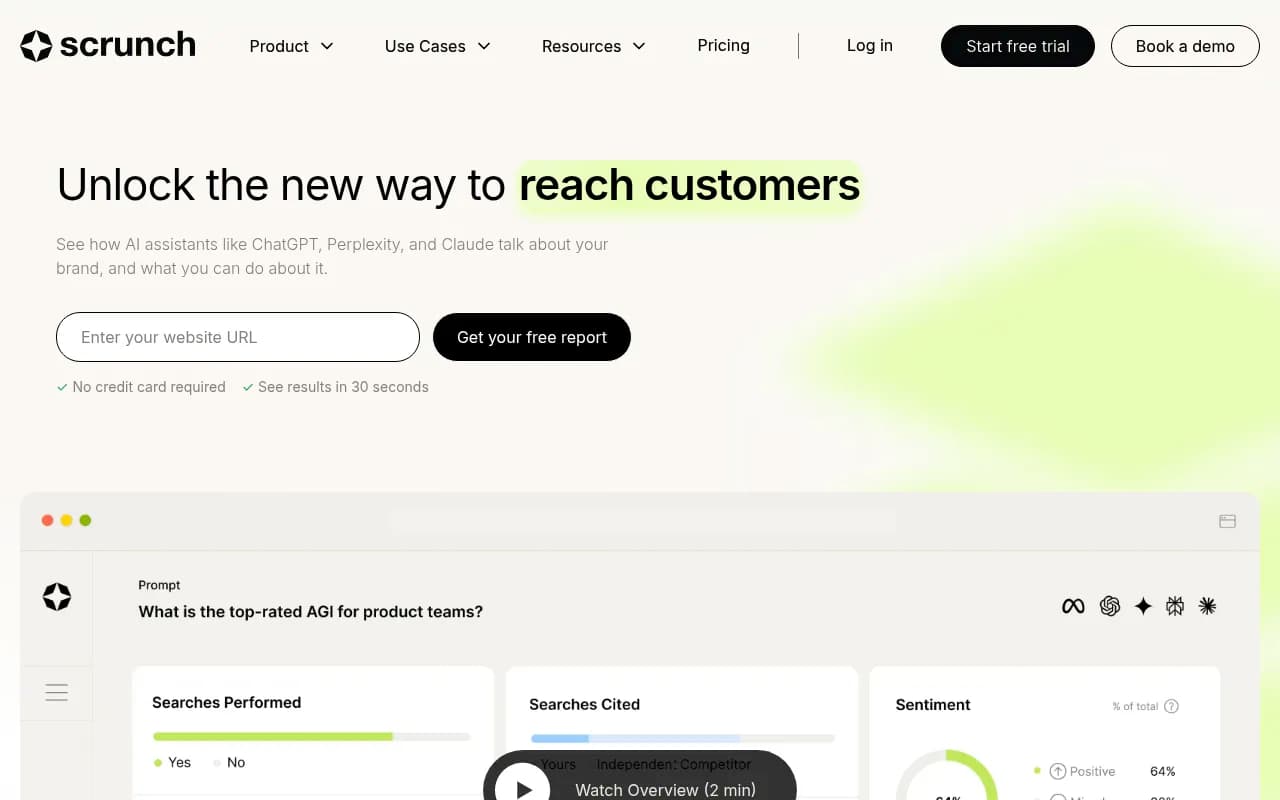
Scrunch monitors and optimizes how AI assistants represent a brand.
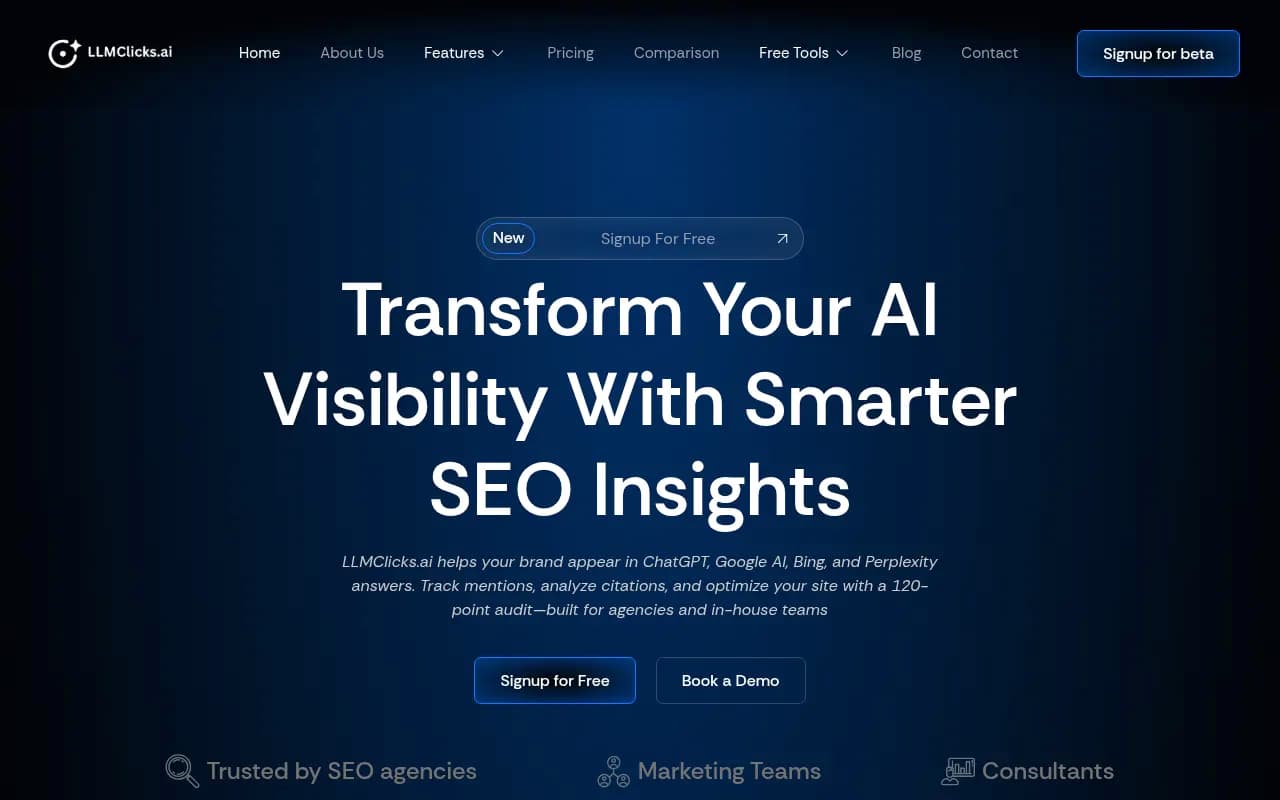
LLMClicks advertises hallucination detection alongside visibility tracking, which is close to what a claims-accuracy workflow needs. Evaluate how it handles labeled claims and exports.

BrandRank.AI is built around recommendation share, useful if your concern is whether you get recommended rather than what is said.

Peec AI is a monitoring-focused option and lighter on optimization.
Comparison at a glance
| Need | Promptwatch | Profound | Peec AI | LLMClicks |
|---|---|---|---|---|
| Prompt and visibility tracking | Yes | Yes | Yes | Yes |
| Claim-level analysis | Brand Narrative, Fact Check | Check demo | Limited | Hallucination detection |
| AI crawler logs | Yes, IP-verified | Check | No | Check |
| Content creation and publishing | Content Agent, CMS publishing | No | No | Check |
| Security certification | ISO/IEC 27001, GDPR | Ask vendor | Ask vendor | Ask vendor |
I have marked "check" where I do not have verified details. Confirm each vendor in a demo, and ask specifically how they would produce evidence for an audit or a legal hold.
If you are comparing more broadly, the GEO software directory at bestgeosoftware.com lists a wider set of platforms.
Pitfalls specific to finance and healthcare
Treating sentiment as the goal
A positive tone around a wrong claim is worse than a neutral tone around a right one. Sentiment scores help with reputation, but accuracy has to be judged separately.
Writing content that creates new risk
Automated content publishing is a real efficiency gain, and it is also a regulatory exposure if copy about rates or clinical claims ships without review. Whatever tool you use, put compliance in the approval loop. A review inbox beats hands-off mode for regulated brands, at least at first.
Ignoring who is not you
Hospitals and banks rarely lose perception battles to their own pages. They lose them to aggregators, outdated directories, forum threads, and competitors' comparison pages. In the healthcare data, directory and review sites like Doctify and WebMD doctor profiles appear at 0.23% each, small but present. Keep profiles complete and consistent.
Skipping the audit trail
If nobody can show what AI said in March and what you did about it, the program is invisible to compliance. Export data on a schedule and store it with your other records.
Assuming one model equals all models
Behavior shifts. Promptwatch Data recorded ChatGPT's share of reddit.com citations falling from about 4% to 0.5% on August 14, 2026 (report). A source you relied on for correcting a narrative can vanish from one engine overnight. Track multiple engines and re-check regularly.
A simple governance model
You do not need a new department.
- Marketing or SEO owns prompt sets, source fixes, and content.
- Compliance owns the claim inventory and labels claims accurate or inaccurate.
- Legal decides escalation paths: when an inaccurate claim needs a vendor takedown request, a public correction, or nothing.
- A monthly summary goes to risk or the CMO: top inaccuracies, fixes shipped, open items.
For agencies that handle several regulated clients, per-client projects and white-label reporting save time. If you want help setting up this kind of program, 1001 SEO Media works on AI search and GEO and uses Promptwatch for this kind of tracking.
Where to start this week
- List the 20 claims about your brand that would worry your legal team most.
- Turn them into 30 to 50 prompts across discovery, brand, and comparison intent.
- Run them in ChatGPT, Gemini, Perplexity, and AI Overviews, either manually or with a tracker. Label what you find.
- Pick the five worst inaccuracies and trace the sources.
- Fix what you control, log it, and re-run in two weeks.
Expect the first pass to be uncomfortable. Most teams find at least one outdated fee, one wrong eligibility rule, or one competitor being credited with something they do. Better to find it yourself.