Key takeaways
- All three platforms track brand visibility in AI search engines like ChatGPT, Perplexity, and Gemini -- but they differ significantly in depth and what you can do with the data.
- Brandlight.ai is a solid entry-level monitoring tool, but it stops at showing you data without helping you act on it.
- Meteoria.ai occupies a similar space: lightweight tracking with limited optimization features.
- Promptwatch is the only one of the three that closes the full loop -- from finding content gaps to generating AI-optimized content to tracking the results.
- If you're a marketing team or agency that needs to actually improve AI visibility (not just observe it), Promptwatch is the strongest choice.
Why this comparison matters in 2026
AI search has stopped being a trend and started being a budget line item. ChatGPT handles over a billion queries per week. Perplexity is growing fast. Google's AI Overviews now appear on roughly half of all searches. And organic click-through rates have dropped 61% since AI Overviews launched, according to Demand Sage's 2026 analysis.
That shift means your brand can rank #1 on Google and still be invisible to the millions of people asking AI assistants for recommendations. A new category of tools has emerged to fix that: AI brand monitoring and GEO (Generative Engine Optimization) platforms.
Three names that come up regularly are Meteoria.ai, Brandlight.ai, and Promptwatch. They all promise to help you track and improve how AI models talk about your brand. But they're not the same product. Not even close.
This guide breaks down what each one actually does, where each one falls short, and which one makes sense for your situation.
What these platforms are supposed to do
Before comparing specifics, it helps to understand what a good AI brand monitoring platform should actually deliver. At minimum, you need:
- Tracking across multiple AI models (not just ChatGPT)
- Visibility into which prompts your brand appears in -- and which ones you're missing
- Some way to understand why competitors appear when you don't
- A path to actually improving your visibility, not just measuring it
That last point is where most tools fail. Monitoring is easy. Optimization is hard. The platforms that only do the first half leave you with a dashboard full of bad news and no way to fix it.
Meteoria.ai
Meteoria.ai is a relatively new entrant in the AI visibility space. It positions itself as a brand monitoring tool for AI search, with a focus on tracking how brands appear across LLM responses.
What it does
Meteoria.ai lets you set up prompts and monitor how your brand appears in AI-generated answers. It covers a handful of major models and gives you a visibility score over time. The interface is clean and relatively easy to get started with.
For teams that are just beginning to think about AI search visibility -- maybe they've heard about GEO and want to see where they stand -- Meteoria.ai offers a low-friction entry point.
Where it falls short
The core limitation is that Meteoria.ai is primarily a monitoring dashboard. It shows you data but doesn't help you interpret it strategically or act on it. There's no content gap analysis, no AI content generation, no crawler log visibility, and no traffic attribution.
If you discover that a competitor appears in 40% more AI responses than you do, Meteoria.ai can tell you that. It can't tell you why, which content is missing, or what to write to close the gap.
For teams that need to show ROI or move the needle on AI visibility, that's a significant gap.
Brandlight.ai
Brandlight.ai has been around a bit longer and has built a reputation as a monitoring-focused tool for brands that want to understand their AI search presence.
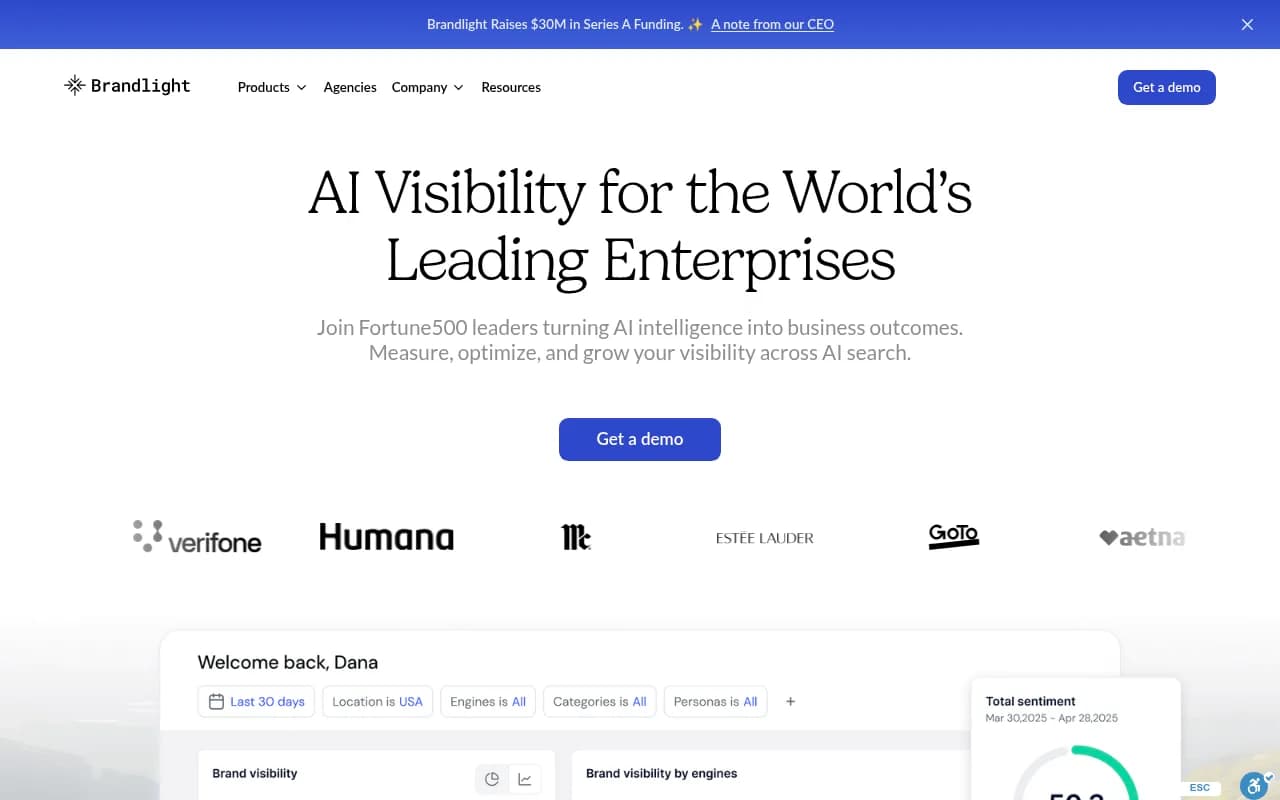
Promptwatch published a direct comparison with Brandlight.ai, and the positioning is telling: Brandlight.ai sits in the "Challengers" quadrant, while Promptwatch sits in the "Leaders" quadrant -- a gap driven largely by the absence of optimization and attribution features.
What it does
Brandlight.ai tracks brand mentions across AI models, gives you sentiment analysis, and lets you monitor how your brand narrative changes over time. It's useful for PR teams and brand managers who want a pulse on how AI is representing them.
The platform covers several major LLMs and provides basic reporting that's easy to share with stakeholders.
Where it falls short
Like Meteoria.ai, Brandlight.ai is fundamentally a monitoring tool. The features it lacks are the ones that matter most for teams trying to grow AI visibility:
- No crawler logs (you can't see when or how AI bots crawl your site)
- No content gap analysis (you don't know which prompts competitors win that you don't)
- No AI content generation (no built-in way to create content that gets cited)
- No traffic attribution (no connection between AI visibility and actual site visits or revenue)
- No Reddit or YouTube tracking (two major sources AI models cite heavily)
The result is a tool that's good for awareness but not for action. You know you have a problem. You just can't fix it from within the platform.
Promptwatch
Promptwatch takes a different approach. Rather than building a monitoring dashboard, it built an optimization platform -- one where monitoring is the starting point, not the end point.

The core difference: the action loop
Most AI visibility tools show you a score and leave you to figure out what to do next. Promptwatch is built around a three-step cycle:
- Find the gaps -- Answer Gap Analysis shows exactly which prompts competitors appear in that you don't. You see the specific topics, angles, and questions AI models want to answer but can't find on your site.
- Create content that gets cited -- A built-in AI writing agent generates articles, listicles, and comparisons grounded in real citation data from over 880 million citations analyzed. This isn't generic content; it's engineered to get cited by ChatGPT, Claude, Perplexity, and others.
- Track the results -- Page-level tracking shows which pages are being cited, how often, and by which models. Traffic attribution (via code snippet, GSC integration, or server log analysis) connects AI visibility to actual revenue.
That loop -- find gaps, generate content, track results -- is what separates Promptwatch from monitoring-only tools.
Features that go beyond monitoring
A few capabilities stand out as genuinely different from what Brandlight.ai and Meteoria.ai offer:
AI Crawler Logs: Real-time logs showing when ChatGPT, Claude, Perplexity, and other AI crawlers visit your site, which pages they read, and how often they return. This is the kind of technical visibility that helps you fix indexing issues before they become visibility problems. Most competitors lack this entirely.
Prompt Intelligence: Volume estimates and difficulty scores for each prompt, plus query fan-outs that show how one prompt branches into sub-queries. This lets you prioritize high-value, winnable prompts instead of guessing.
Reddit and YouTube tracking: AI models cite Reddit threads and YouTube videos heavily. Promptwatch surfaces the specific discussions that influence AI recommendations -- a channel most competitors ignore.
ChatGPT Shopping tracking: If your brand sells products, Promptwatch monitors when you appear in ChatGPT's shopping carousels and product recommendations.
Multi-model coverage: Promptwatch monitors 10 AI models -- ChatGPT, Perplexity, Google AI Overviews, Google AI Mode, Claude, Gemini, Meta/Llama, DeepSeek, Grok, Mistral, and Copilot. That's broader than most competitors.
Who uses it
Promptwatch is used by 8,830+ brands and agencies, including Booking.com, Center Parcs, Duolingo, Yelp, and Typeform. It holds a 4.7/5 rating on G2. The platform is built for marketing teams, SEO teams, and digital agencies that need to show measurable results from AI search investment.
Feature comparison
Here's how the three platforms stack up across the features that matter most:
| Feature | Meteoria.ai | Brandlight.ai | Promptwatch |
|---|---|---|---|
| AI model coverage | Limited | Several major LLMs | 10 models (ChatGPT, Claude, Gemini, Perplexity, Grok, DeepSeek, Copilot, Meta AI, Google AI Overviews, Mistral) |
| Brand mention tracking | Yes | Yes | Yes |
| Competitor visibility tracking | Basic | Basic | Yes, with heatmaps |
| Answer gap analysis | No | No | Yes |
| Prompt volume & difficulty scoring | No | No | Yes |
| Query fan-out analysis | No | No | Yes |
| AI content generation | No | No | Yes (built-in writing agent) |
| AI crawler logs | No | No | Yes |
| Traffic attribution | No | No | Yes (snippet, GSC, server logs) |
| Reddit tracking | No | No | Yes |
| YouTube tracking | No | No | Yes |
| ChatGPT Shopping tracking | No | No | Yes |
| Multi-language / multi-region | Limited | Limited | Yes |
| G2 rating | N/A | N/A | 4.7/5 |
| Free trial | Yes | Yes | Yes |
| Starting price | ~$49/mo | Custom | $99/mo |
The gap in the table isn't subtle. Meteoria.ai and Brandlight.ai cover the monitoring column reasonably well. Promptwatch covers monitoring and everything after it.
Pricing overview
Promptwatch's pricing is transparent and tiered:
- Essential: $99/month -- 1 site, 50 prompts, 5 articles per month
- Professional: $249/month -- 2 sites, 150 prompts, 15 articles, crawler logs, state/city tracking
- Business: $579/month -- 5 sites, 350 prompts, 30 articles
- Agency/Enterprise: Custom pricing
Brandlight.ai uses custom pricing, which typically means it's pitched to enterprise buyers. Meteoria.ai has a lower entry price but correspondingly fewer features.
For teams that need to justify spend, Promptwatch's traffic attribution feature is worth noting specifically -- it's the only one of the three that can connect AI visibility to actual revenue, which makes the ROI conversation much easier.
Which platform is right for you?
The honest answer depends on what you're trying to accomplish.
Choose Meteoria.ai if you're a small team or solo marketer who just wants a quick read on where your brand stands in AI search, and you're not yet ready to invest in optimization. It's a reasonable starting point for awareness.
Choose Brandlight.ai if you're primarily a PR or brand team focused on narrative monitoring -- how AI models describe your brand, whether sentiment is positive or negative, and how that changes over time. It's a decent tool for that specific use case.
Choose Promptwatch if you need to actually move the needle. If your job is to grow AI search visibility, show ROI, generate content that gets cited, and understand the technical side of how AI crawlers interact with your site, Promptwatch is the only one of the three that covers the full picture.
The monitoring-only tools have their place. But if you're serious about AI search as a growth channel in 2026, you need a platform that helps you do something with what you find.
Other tools worth knowing about
If you're evaluating this space more broadly, a few other platforms are worth a look depending on your needs:
Otterly.AI is one of the more affordable monitoring options for teams on tight budgets. It doesn't do optimization, but the tracking is solid for the price.

Scrunch AI focuses on AI discoverability and has some optimization features, though it's priced higher than Promptwatch for comparable functionality.
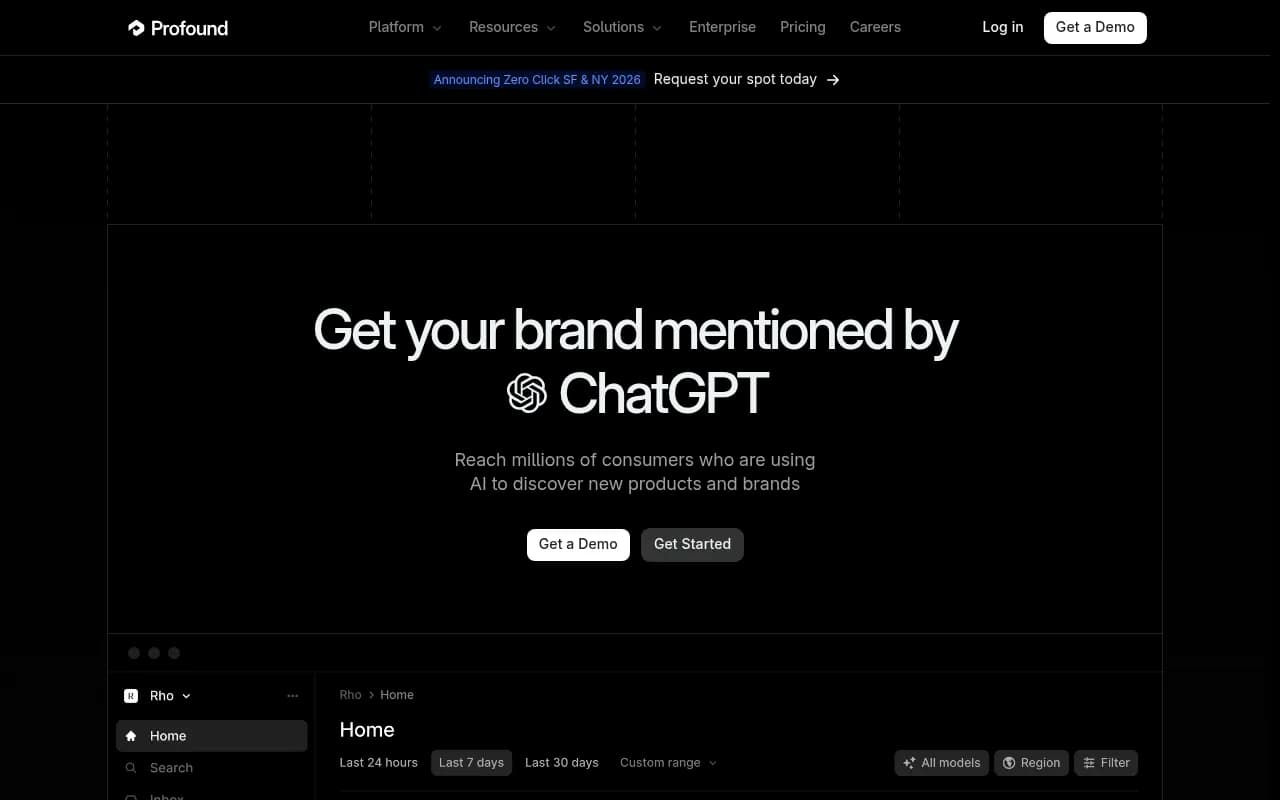
Profound AI is a strong enterprise option with good agency features, though it's priced at the higher end and lacks some of Promptwatch's content generation capabilities.
Peec AI is another lightweight monitoring tool -- good for getting started, limited for scaling.

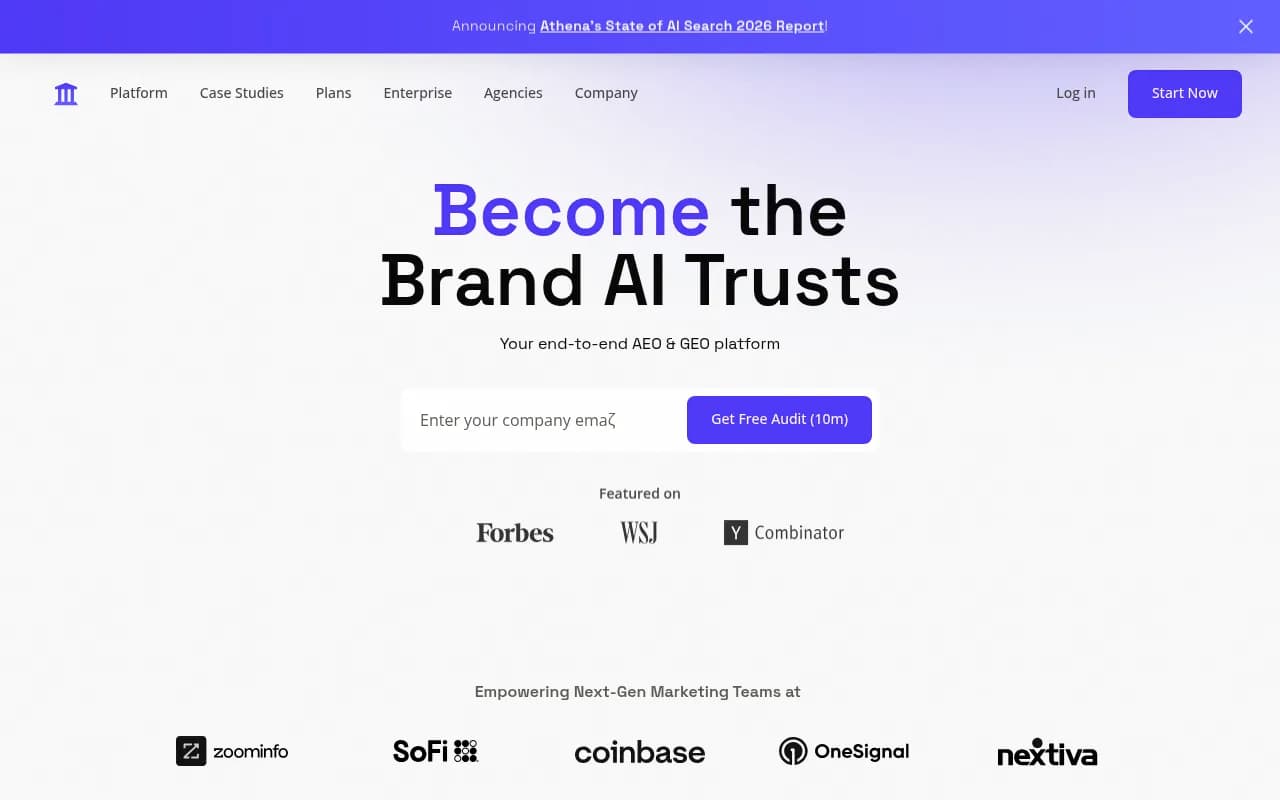
Athena HQ covers multi-LLM tracking well but is monitoring-focused without the optimization loop.
The bottom line
The AI brand monitoring space in 2026 has a lot of tools that look similar from the outside. Most of them show you a dashboard, give you a visibility score, and leave you to figure out the rest.
Meteoria.ai and Brandlight.ai both fit that pattern. They're useful for understanding where you stand, but they don't help you change it.
Promptwatch is built differently. The monitoring is there, but it's the foundation for a workflow that ends with content getting cited and traffic being attributed. That's the difference between a reporting tool and an optimization platform -- and in a competitive AI search environment, that difference is what determines whether your brand shows up or gets left out.