Key takeaways
- Signal AI wins on depth of licensed, paywalled financial media (WSJ, Barron's, FT-tier sources) but that same paywalled content is often invisible to AI crawlers, which creates a gap between "best media coverage" and "best AI visibility."
- Meltwater has moved faster into generative engine monitoring with GenAI Lens, giving it an edge if your mandate includes tracking how ChatGPT, Perplexity, and Gemini describe your bank, insurer, or fintech.
- Neither platform was built from the ground up as an AI visibility tool. Both bolted AI monitoring onto a media intelligence core, which shows in the shallowness of their prompt-level data.
- For financial services specifically, reputation risk (Signal AI's strength) and AI discovery (Meltwater's growing strength) are now two separate jobs, and most teams end up needing a third tool for proper GEO.
- If AI search visibility and content remediation are the actual priority, not just "did a journalist mention us," a dedicated GEO platform will outperform both on citation-level detail.
Why financial services teams keep comparing these two
Comms and risk teams at banks, insurers, and asset managers have used Meltwater and Signal AI for years as the default media monitoring stack. Both show up constantly in G2 comparisons for "financial services" as a named use case, and for good reason: regulated industries care about who said what, where, and how fast it spreads. Meltwater sits at 4.1/5 from roughly 2,674 reviews on G2, Signal AI at 4.3/5 from about 189. Both report roughly a one-month implementation time, and Signal AI's reported ROI timeline (about 15 months) runs slightly longer than Meltwater's (about 14 months), according to G2's buyer survey data.
But the brief has changed. A compliance officer at a regional bank used to worry about a Reuters headline. Now they also have to worry about what GPT-5 says when a prospective client asks "is [bank] trustworthy" or "compare [insurer] to [competitor] for small business coverage." That's a different monitoring problem, and it's the one both vendors are scrambling to solve with varying degrees of success.
Signal AI's pitch: the deepest paywalled coverage, for risk and reputation
Signal AI positions itself squarely for Chief Communications Officers and Chief Risk Officers, and its financial services client base backs that up, with 40% of the Fortune 500 reportedly using the platform and over 800 enterprises calling it their tool of record. The company's core differentiator is licensed access to premium, paywalled sources: the Wall Street Journal, Barron's, the New York Times, South China Morning Post, and similar outlets that most monitoring tools simply can't see.
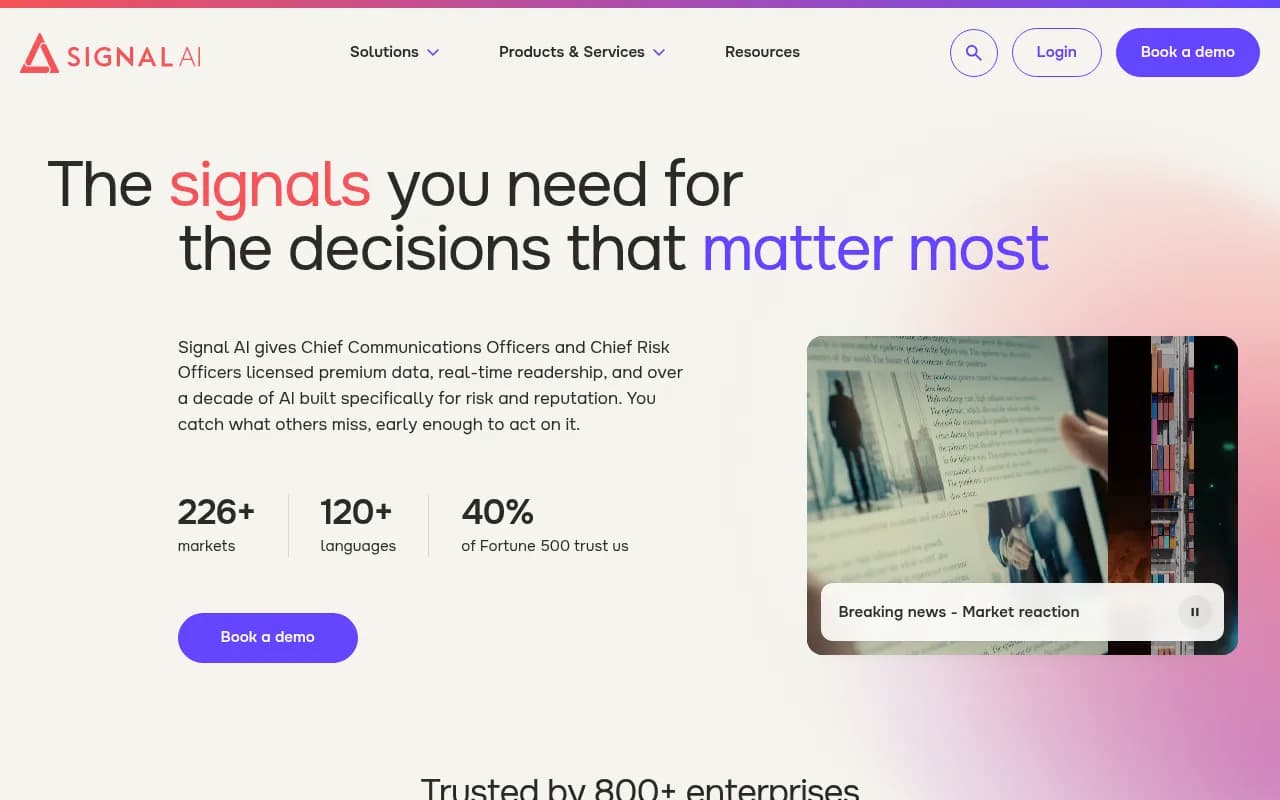
For a risk team tracking regulatory exposure or executive reputation, this matters. If a story breaks in a paywalled financial outlet, Signal AI is more likely to surface it in real time, in one of 226+ markets and 120+ languages, than a tool relying only on open-web crawling.
Here's the problem for AI search specifically: the same paywall that makes Signal AI's coverage valuable to a human reader makes it close to worthless to an AI crawler. ChatGPT, Perplexity, and Google's AI Overviews can't index content sitting behind a WSJ or Barron's paywall in the way they index an open blog post or press release. So a brand can have glowing, deep coverage in exactly the outlets Signal AI monitors and still be functionally invisible in AI-generated answers, because the model never saw the content in a form it could cite. Signal AI's own product page doesn't claim deep AI search engine monitoring (ChatGPT, Claude, Gemini) as a core capability; its strength is traditional and social media plus sentiment and risk signals, not generative engine citation tracking.
Meltwater's pitch: wider coverage, now extending into AI visibility
Meltwater has historically competed on breadth rather than exclusivity: more sources, more languages, more social platforms, built for PR and comms teams who need a single dashboard across media, social listening, and consumer intelligence. That breadth-over-depth approach (as ZoomInfo's own comparison of Brandwatch, Meltwater, and itself puts it) carries over into how Meltwater has approached AI search.
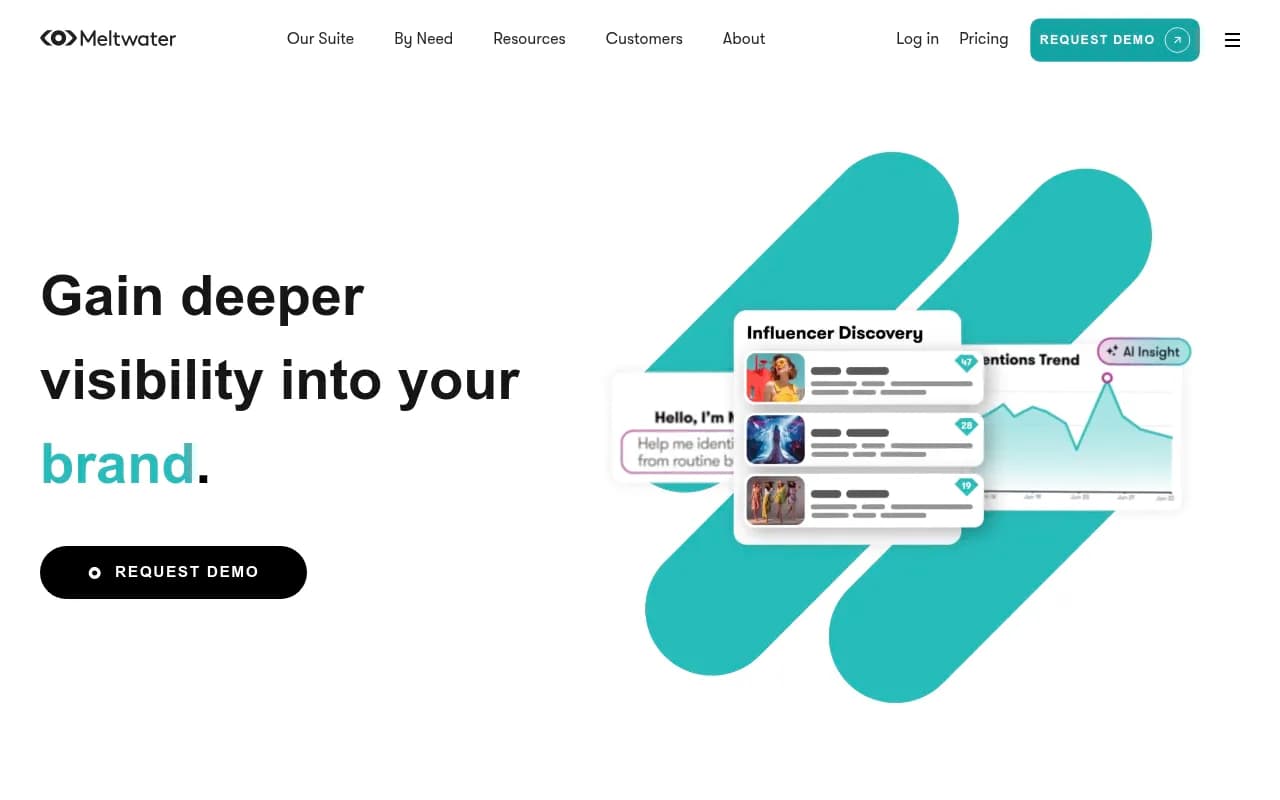
Meltwater launched GenAI Lens, which sends visibility rank change alerts when a tracked brand moves up or down in AI-generated answers, according to Meltwater's own LinkedIn product update. It's also published detailed guidance on building an AI brand monitoring strategy, explicitly framing the problem as tracking "how your brand appears across generative AI platforms (ChatGPT, Perplexity, Claude, Gemini) and the data sources they pull from."
Meltwater also connects the dots between earned media and AI visibility in a way Signal AI's marketing doesn't: its blog content on digital PR explicitly tells PR teams to track "where coverage appears, whether AI tools cite those sources, how the brand is described, and how often it shows up compared to competitors in buyer-stage prompts." That's the right framing for financial brands trying to figure out why their press releases aren't translating into AI citations. Whether GenAI Lens delivers prompt-level depth comparable to a dedicated GEO platform is a separate question, and based on the publicly available feature descriptions, it reads more like an alert layer bolted onto existing social listening infrastructure than a ground-up AI search intelligence product.
Side-by-side comparison
| Dimension | Meltwater | Signal AI |
|---|---|---|
| G2 rating | 4.1/5 (2,674 reviews) | 4.3/5 (189 reviews) |
| Core strength | Breadth: media, social, consumer intelligence | Depth: licensed paywalled financial/business press |
| AI search monitoring | GenAI Lens: visibility rank alerts across ChatGPT, Perplexity, Claude, Gemini | Not a core advertised capability; focus is traditional/social risk signals |
| Paywalled source access | Standard, broad open-web + licensed feeds | Deepest paywalled coverage (WSJ, Barron's, NYT, SCMP) |
| Typical buyer | PR/comms teams needing wide coverage | CCOs/CROs needing risk and reputation depth |
| Markets/languages | Global, broad | 226+ markets, 120+ languages |
| Reported time to implement | ~1 month | ~1 month |
| Reported ROI timeline | ~14 months | ~15 months |
| AI crawler visibility of core content | Mixed, depends on source | Weak, given paywall reliance |
The paywall problem, and why it matters more than vendor marketing admits
This is worth dwelling on because it's the single biggest blind spot in how financial services teams evaluate these tools. Promptwatch's research on how AI search engines actually cite content shows that the content types AI cites most are product pages, listicles, how-tos, and news articles, overwhelmingly from openly crawlable domains (see Promptwatch's ChatGPT Citation Types Over Time report for August 2026). A platform that monitors paywalled, premium journalism is measuring a different thing than AI citation volume. It's measuring human-read reputation, not machine-read visibility.
For a regional bank or insurer, both matter, but they're not the same project and shouldn't be bought as if they are. If your general counsel wants to know whether a Barron's investigation is gaining traction, Signal AI is the right tool. If your marketing team wants to know why ChatGPT recommends three competitors before mentioning your brand when someone asks about retirement accounts, neither Signal AI nor, frankly, Meltwater's current GenAI Lens feature set gives you the granularity to diagnose and fix it.
Where both platforms fall short for true GEO work
I've gone through both vendors' public product pages and blog content, and neither publishes the kind of data a serious GEO program needs: per-prompt search volume and difficulty, AI crawler logs showing which bots hit which pages and whether they error out, citation rate per page, or automated content generation tied to identified gaps. Meltwater's AI brand monitoring content talks about the right outcomes (tracking sentiment, accuracy, competitive positioning, building entity authority) but the product itself, based on what's documented, is an alerting and dashboard layer on top of existing listening infrastructure, not an execution engine that writes and publishes content to close citation gaps.
This is the gap that purpose-built AI visibility platforms are built to close. Promptwatch, for instance, tracks crawler logs from ChatGPTBot, ClaudeBot, PerplexityBot, and 400+ other AI crawlers to show exactly which pages get read and whether they convert into citations, something neither Meltwater nor Signal AI's public documentation describes doing. It also runs Content Agents that draft and publish GEO-optimized content to your CMS when a gap is found, closing the loop from "you're invisible here" to "here's the fix, published."

For financial services specifically, this distinction matters because compliance review cycles are slow. A monitoring tool that just flags that you're losing visibility on "best robo-advisor for retirees" doesn't help much if nobody on the team has time to brief, write, and route a new article through legal review. A platform with a Brand Book feature that keeps generated drafts on-brand and on-tone, paired with a review inbox before anything gets published, fits the regulated-industry workflow better than a pure alerting tool.
What to actually do with these three tools
In practice, the financial services teams I'd point toward a sane setup would run something closer to a three-tool stack rather than picking one winner:
- Signal AI (or Meltwater, depending on existing contracts) for paywalled, premium press monitoring and traditional reputation risk
- Meltwater's social listening for broad open-web and social sentiment, since it's already wide by design
- A dedicated GEO platform for the AI search layer: prompt tracking, crawler logs, citation analytics, and content remediation
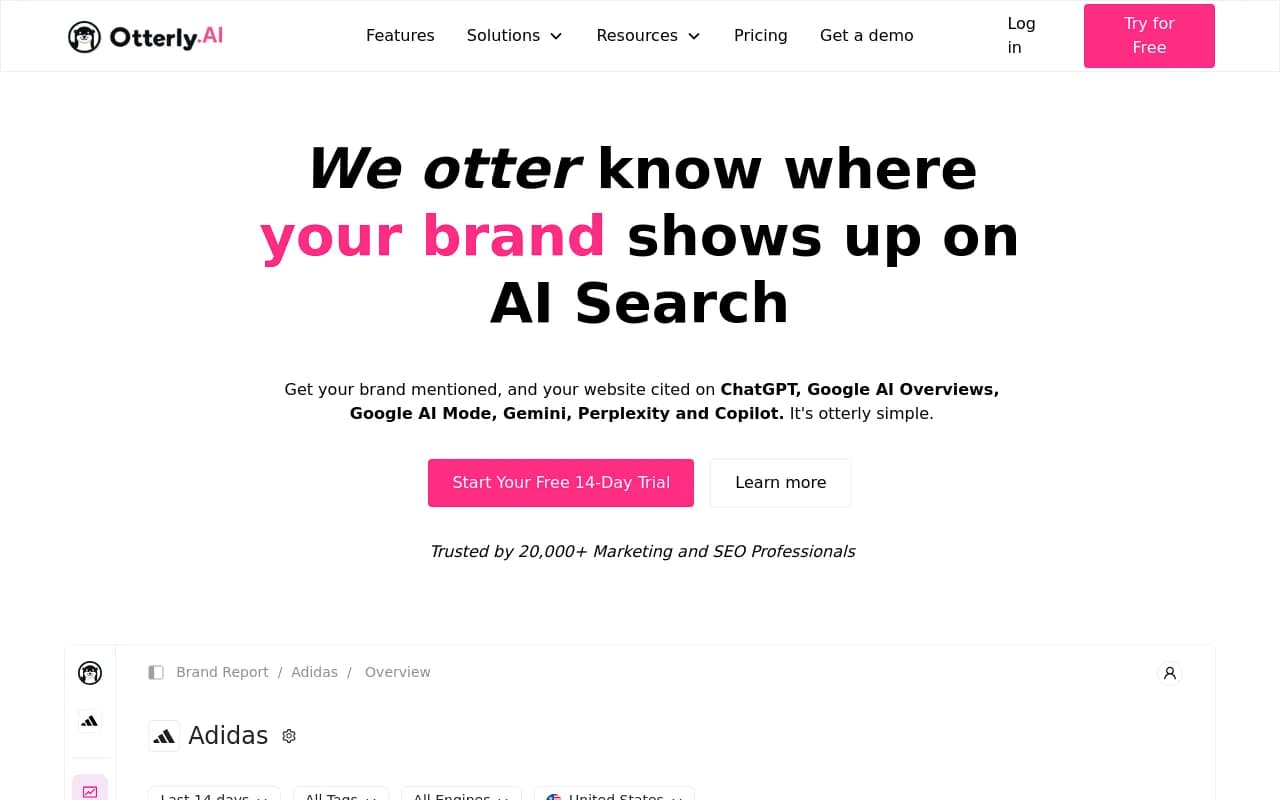
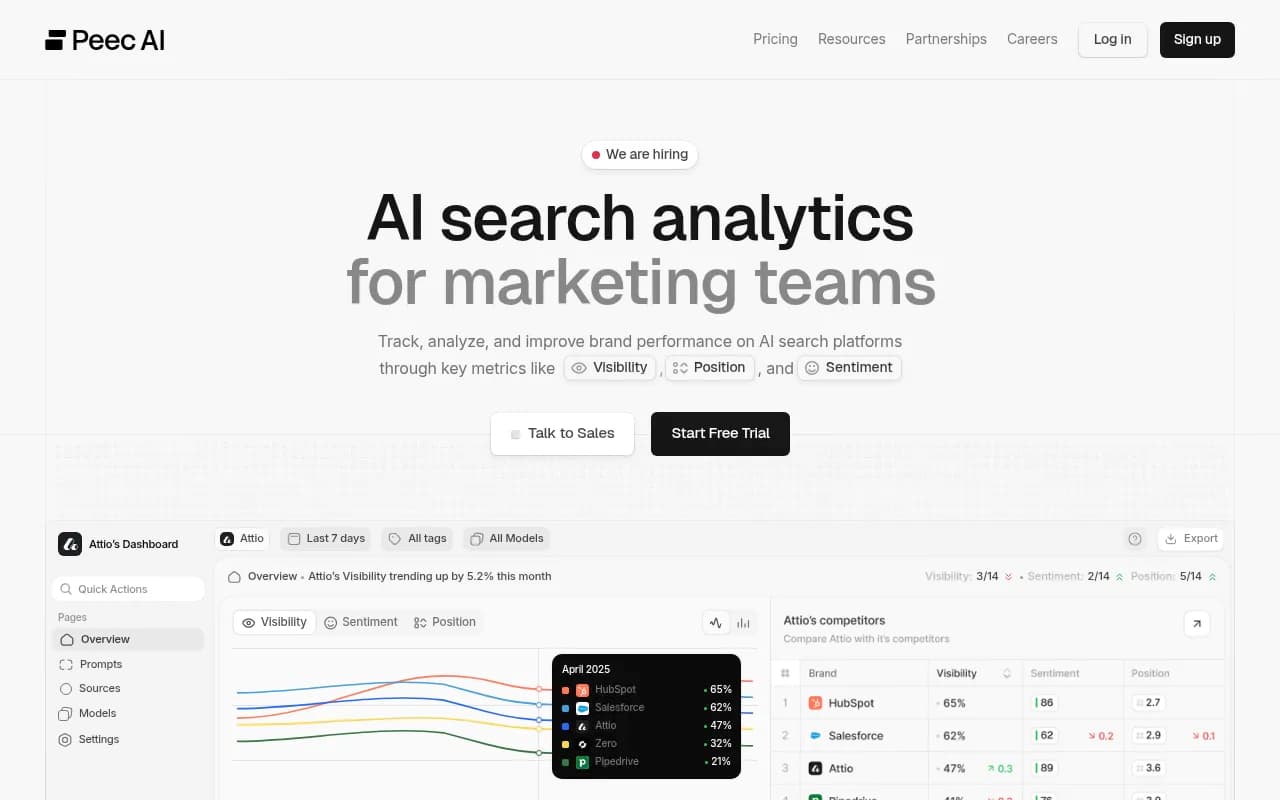
Otterly.AI and Peec.ai are fine if all you want is a basic "were we mentioned" check, but they stop at monitoring, same as Meltwater's GenAI Lens and Signal AI's risk alerts. If the goal is understanding why you're invisible and fixing it, not just confirming that you are, that's a different buying decision.
Reddit citations are also worth watching if your brand gets discussed in investing or personal finance subreddits. Promptwatch's data shows ChatGPT's reliance on Reddit as a citation source collapsed sharply in mid-2026 (see Reddit Citations Are Dropping in ChatGPT), which is a useful reminder that AI citation patterns shift fast and neither Meltwater nor Signal AI publishes this kind of granular, source-level trend data for their clients.
Bottom line
Signal AI wins the depth argument for financial services reputation and risk, full stop. Meltwater wins on breadth and is clearly investing more visibly in generative engine monitoring through GenAI Lens. But if your mandate this year includes "make sure we show up correctly when prospects ask AI assistants about us," treat that as a separate line item. Readers who want to compare more options built specifically for AI search visibility, rather than retrofitted media monitoring tools, can browse the GEO software directory at bestgeosoftware.com or the broader AI rank tracking options at ai-rank-tools.com. Buying the right tool for the right job beats hoping one platform quietly covers both.