Key Takeaways
- AI answers are the new SERP. Your competitors are now whoever ChatGPT, Gemini, Perplexity, and Claude recommend, and that list often looks nothing like your Google top 10.
- AI responses vary run to run, so single checks are worthless. Run the same prompt 20+ times (or use a monitoring tool) to find real patterns.
- The real intel is in the citations. Once you know which brands get mentioned, find out which sites the models cite, then get your brand onto those sites.
- The best platforms go beyond tracking. Promptwatch, for example, shows crawler logs, citation sources, and prompt volumes, then helps you close the gap with generated content.
- Manual research is free and still valuable. A structured ChatGPT or Perplexity session can map your competitive landscape in an afternoon.
Why competitor research changed in 2026
For twenty years, competitor research meant one thing: fire up an SEO tool, plug in your keywords, and see who ranks. That told you who you were up against.
Now your prospects ask ChatGPT for a shortlist of tools. They ask Perplexity to compare vendors. They ask Gemini for local business recommendations. The brands that show up in those answers are your competitors now, whether or not they outrank you on Google.
Darren Shaw, writing for Search Engine Land in May 2026, put it well: in the old days a local business could win with a decent website, a Google Business Profile, some citations, and review requests. In an AI search world, those are table stakes. What matters now is what the broader web says about you, and the same goes for your competitors. Studying how they've shaped that conversation is the starting point of any serious AI search strategy.
There's a second reason this matters. AI Overviews now appear across a huge percentage of Google searches, as Jake Ward noted in his 2026 SEO playbook, which means Google itself is becoming an AI search engine. The competitive set you need to understand has quietly doubled.
Step 1: Find out who AI actually recommends
Your first job is to build a list of AI-first competitors. These are the brands LLMs name when someone asks a question you want to be the answer to.
The manual method
Open ChatGPT, Gemini, Perplexity, and Claude. Ask the questions a real buyer would ask:
- "What's the best [your category] for [your use case]?"
- "Compare [your product] vs alternatives."
- "Who should I hire for [your service] in [your city]?"
Here's the catch: AI responses change constantly. Run each prompt at least 20 times and record who gets mentioned. One run tells you nothing. Twenty runs reveal a pattern. It's tedious, which is exactly why monitoring software exists.
The tool method
AI visibility platforms automate this. They run synthetic prompts based on your business details across multiple models and report how often you and your competitors appear. Promptwatch does this across ChatGPT, Gemini, Claude, Perplexity, Grok, Copilot, AI Overviews, and more, with prompt volumes and difficulty scores so you know which prompts are worth fighting for.

Other options in our catalog worth a look:
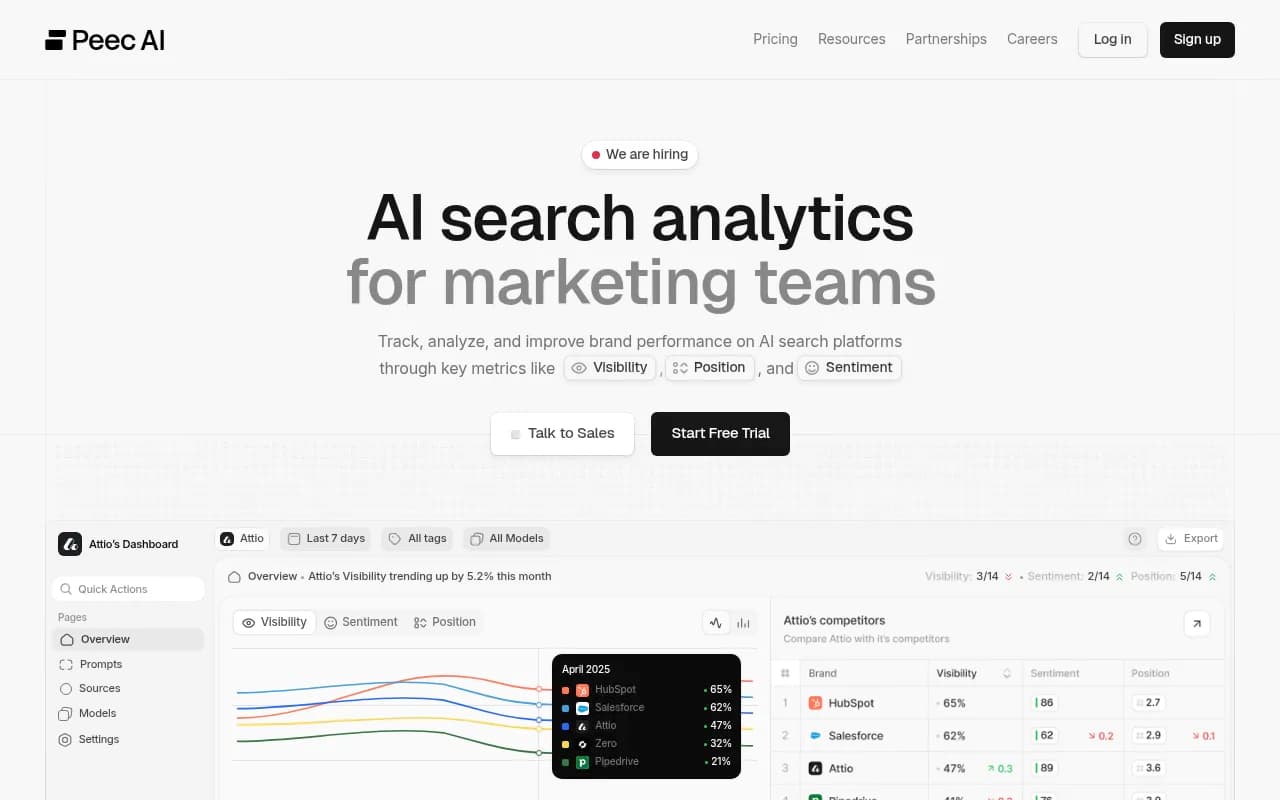
- Peec AI for straightforward, affordable monitoring
- Otterly.AI if you want a lightweight tracker
- Profound for enterprise-scale monitoring

What to record
For each competitor you discover, note:
- Which prompts they appear in and which they don't
- Whether they're mentioned first, last, or in passing
- Whether the model describes them positively, neutrally, or with caveats
- Whether they show up in one model or across all of them
That last point matters more than people think. A competitor visible in every model has built broad brand recognition across the web. One visible only in ChatGPT may have simply optimized for the sources ChatGPT leans on.
Step 2: Dig into the citations
This is where most competitor research stops, and where the real work begins. Every AI answer is built on sources. When Perplexity recommends your competitor, it's usually because a specific set of pages, reviews, Reddit threads, or YouTube videos said something convincing about them.
Your job is to reverse-engineer that citation trail.
Find the sources
Perplexity and AI Overviews show citations inline, which makes manual research straightforward. Ask your target prompt, then click through every source and log it. After ten or fifteen runs, you'll see the same domains appearing again and again: review sites, industry blogs, comparison pages, forums.
Promptwatch automates this with citation analytics that show which of your competitors' pages get cited, which Reddit posts mention them, and which YouTube videos drive recommendations about them. It even catches offsite mentions, cases where a competitor is named inside a third-party page the model cites, even without a link back. That last part is worth sitting with for a second: AI models read the whole page, not just the linked parts.
Sort the sources by type
Group what you find into buckets:
- Review platforms (G2, Capterra, Trustpilot, Google reviews)
- Editorial content (blogs, publications, "best of" lists)
- Community content (Reddit, Quora, niche forums)
- Video and audio (YouTube channels, podcasts)
- Comparison and alternative pages
Each bucket needs a different play. If AI systems cite blogs, offer to contribute expert content. If they cite podcasts or YouTube channels, pitch yourself as a guest. If they lean on review sites, your review generation strategy just became a competitive weapon.
Check the crawl path
One thing most tools miss: before a model can cite your competitor's page, a crawler has to read it. Promptwatch's Agent Analytics logs when AI crawlers like ChatGPT and ClaudeBot visit a site, which pages they read, and whether they hit errors. If your competitor gets cited and you don't, crawler logs can tell you whether the problem is that AI never reads your content, or that it reads it and doesn't like it. That distinction shapes everything you do next.
Step 3: Use AI itself for deeper competitive analysis
Beyond visibility tracking, AI tools are genuinely good at the analysis part of competitor research. A few workflows that work well in 2026:
Competitive teardowns
Feed a competitor's homepage, pricing page, and docs into ChatGPT or Claude and ask for a structured teardown: positioning, target customer, key claims, weaknesses. One Reddit thread on competitive analysis in product marketing made a point that matches my experience: AI tools work best when you have a clear framework for what you're looking for, not when you ask open-ended questions. "Tell me about this competitor" produces mush. "Score this landing page against these five criteria" produces insight.
Positioning and messaging gaps
Ask an LLM to role-play a skeptical buyer comparing you against three competitors. The objections it raises are usually objections your real prospects have, and they reveal where competitors have sharper messaging than you.
Market scans
Perplexity is excellent for fast market research: recent funding, new product launches, who's hiring, what's trending in your category. It's a good habit to run a weekly market scan and log anything that shifts the competitive picture.
Perplexity
Dedicated competitive intelligence platforms
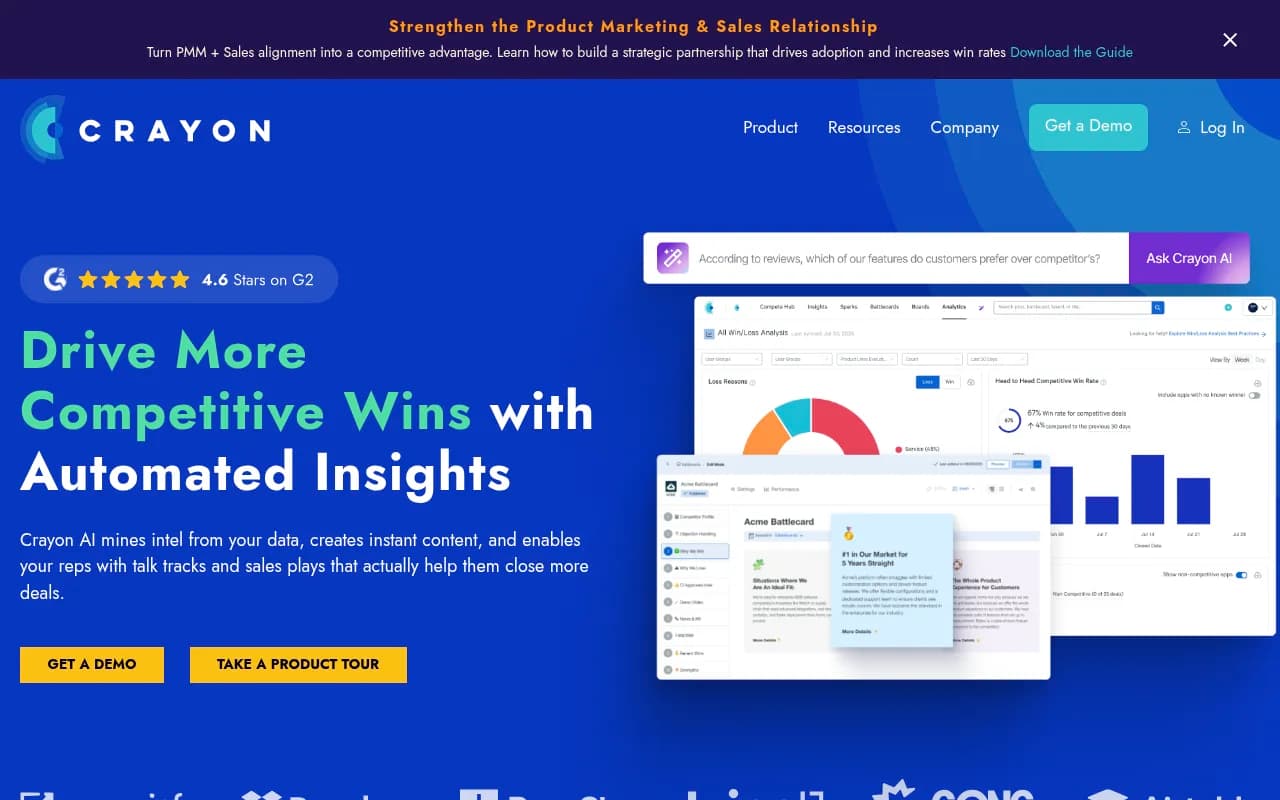
If competitor research is a core part of your job rather than a quarterly task, dedicated CI platforms go deeper. Klue and Crayon track competitor websites for changes, collect battlecards, and push insights to sales teams. Similarweb shows where competitor traffic comes from. These are a different category from AI visibility tools, but the two complement each other well.
Step 4: Turn research into action
Research without execution is trivia. Here's how to convert what you've learned into visibility.
Get mentioned where AI looks
Take your list of frequently cited sources and get your brand onto them. Guest posts, expert quotes, podcast appearances, review profiles, Reddit participation where it's genuine. Consistency matters: whatever you say about your brand on your website should match what you say everywhere else, because models notice contradictions.
Fix your content against the gap
Compare your pages against the AI answers you recorded. If ChatGPT recommends competitors for a prompt you care about and never mentions you, look at what those competitors publish that you don't. Promptwatch's content gap analysis does this systematically, scoring your content coverage against AI responses and generating briefs to close the gap, and its Content Agents can write and publish the optimized pieces straight to your CMS.
Watch the ads and shopping layer
AI search is starting to monetize. Promptwatch's Ads Radar shows which competitors bid on your prompts and what their ad copy says. If a competitor is sponsoring placements on prompts where you're invisible, you've found both a threat and a to-do list.
Track whether it's working
Re-run your prompt sets monthly, or let a platform do it continuously. Watch three things: your share of mentions, your citation sources, and, most importantly, actual traffic and conversions from AI platforms. Mentions are nice. Revenue is better.
A sample research workflow
Here's how this looks as a repeatable monthly process:
- Run your 20 core prompts across ChatGPT, Gemini, and Perplexity (or pull the data from your visibility platform).
- Log every brand mentioned and every source cited.
- Pick the three competitors who appear most often and dig into their citation trails.
- Choose two or three high-citation sources you're absent from and plan how to get mentioned there.
- Run a content gap check on your five most important prompts.
- Ship one or two pieces of content or outreach pushes before the next cycle.
Six steps, one afternoon a month once it's set up. The teams doing this consistently are the ones showing up in AI answers by the end of the quarter.
Tool comparison at a glance
| Tool | What it does | Monitoring | Helps you fix gaps? | Best for |
|---|---|---|---|---|
| Promptwatch | Full AI visibility platform | Yes, 11+ models | Yes, content agents, gap analysis, CMS publishing | Teams that want insight and execution |
| Peec AI | AI search monitoring | Yes | No | Budget-conscious monitoring |
| Otterly.AI | Lightweight prompt tracking | Yes | Limited | Small businesses |
| Profound | Enterprise AI visibility | Yes | Partially | Large brands and agencies |
| ChatGPT / Claude | Manual analysis and teardowns | No | No | One-off competitive research |
| Perplexity | Cited market research | No | No | Market scans and source discovery |
| Klue / Crayon | Sales-focused competitive intel | No (not AI search) | N/A | Product marketing teams |
Common mistakes
A few things I see teams get wrong regularly:
- Checking a prompt once and drawing conclusions. AI answers vary; single runs mislead you.
- Assuming your Google competitors are your AI competitors. The overlap is smaller than you'd expect.
- Ignoring Reddit and YouTube. These get cited constantly, and most monitoring tools don't track them.
- Stopping at monitoring. Knowing you're invisible is not a strategy. The platforms that help you close the gap are worth the premium.
- Letting the research go stale. Models update, competitors adapt, and the citation graph shifts. What was true in January may be dead by June.
The bottom line
Competitor research in 2026 means finding out who AI recommends, reverse-engineering the sources behind those recommendations, and then earning your way into those same sources. The manual version costs you an afternoon and a spreadsheet. The automated version costs a subscription and saves you the afternoon. Either way, the brands winning AI search right now are the ones who treat it as a monthly discipline rather than a one-time audit.