Key takeaways
- Peec.ai is a solid monitoring tool, but it only covers three AI models and has no content creation, no SEO features, and no traffic attribution
- The teams switching away are mostly hitting the same wall: they can see the gaps but have no way to act on them inside the same platform
- A true replacement should close the loop between finding gaps and publishing content that fixes them
- Platforms like Promptwatch, ContentMonk, and Relixir go beyond monitoring to actually generate and optimize content for AI search
- Migration is straightforward -- most platforms import prompt lists in minutes and start returning data within 24-48 hours
Why people are leaving Peec.ai
Peec.ai is genuinely good at what it does. The setup takes about three minutes, there's no credit card required for the trial, seats are unlimited, and the citation tracking interface is clean. For a team that just wants to know whether their brand shows up in ChatGPT or Perplexity, it gets the job done.
The problem is the ceiling.
All standard plans only cover three AI models. If you need broader coverage -- say, Google AI Overviews, Grok, or DeepSeek -- you're talking to their sales team. More importantly, no matter which plan you're on, Peec.ai is a monitoring dashboard. It shows you where you're invisible. It does not help you become visible.
There's no content generation. No content briefs. No gap analysis that tells you which topics your competitors are winning and you're not. No traffic attribution connecting AI citations to actual revenue. No crawler logs showing whether AI bots are even reading your pages.
One user on r/DigitalMarketing described the frustration well: "Even when my content ranks in the top 10, I barely see any traffic. And when I check the AI summaries, it's never my pages getting cited."
That's the gap Peec.ai surfaces. But it doesn't fill it.
If your team's workflow is: check Peec.ai, export a CSV, paste it into a content brief doc, write something, publish it, then go back to Peec.ai two weeks later to see if anything changed -- you're doing manually what a better platform should do automatically.
What to actually look for in a replacement
Before jumping to a tool list, it's worth being specific about what "better" means here. There are roughly three tiers of capability in the GEO/AI visibility space right now:
Tier 1: Monitoring only. These tools track brand mentions and citations across AI models. Peec.ai sits here. So do Otterly.AI, Peasy, and most of the newer lightweight trackers. They're fine for awareness but leave all the optimization work to you.
Tier 2: Monitoring plus gap analysis. These platforms show you not just where you appear, but where you don't -- and why. They surface competitor visibility, prompt-level data, and content recommendations. Useful step up.
Tier 3: Full optimization loop. These platforms find the gaps, generate content to fill them, track whether that content gets cited, and connect citations to traffic and revenue. This is where the real leverage is.
Most teams migrating from Peec.ai are looking for Tier 2 at minimum, and Tier 3 if budget allows.
Here's a comparison of the main options:
| Platform | Tier | Content generation | Crawler logs | Models covered | Best for |
|---|---|---|---|---|---|
| Peec.ai | 1 | No | No | 3 (standard plans) | Basic monitoring |
| Otterly.AI | 1 | No | No | 5+ | Budget monitoring |
| Promptwatch | 3 | Yes (Content Agents) | Yes | 10+ | Full optimization loop |
| ContentMonk | 3 | Yes | No | 5+ | AEO + content creation |
| Relixir | 3 | Yes | No | 5+ | All-in-one GEO |
| Profound | 2-3 | Limited | No | 6+ | Enterprise analytics |
| Scrunch AI | 2 | No | No | 5+ | Partnership + visibility |
| ZipTie | 2 | No | No | 5+ | Deep AI traffic analysis |
The platforms worth migrating to
Promptwatch: the full loop
Promptwatch is the option that goes furthest beyond what Peec.ai offers. Where Peec.ai stops at "here's where you're not showing up," Promptwatch shows you the specific prompts your competitors are winning and you're not, generates content to fill those gaps, and then tracks whether that content starts getting cited.
The Content Agents feature is what makes this genuinely different. It produces articles, listicles, and comparison pages grounded in real prompt data -- not generic SEO filler. The briefs include prompt volumes, difficulty scores, competitor citation analysis, and brand guidance. You can upload your own knowledge base files.
It also has AI crawler logs, which almost no competitor offers. These show you which pages ChatGPT, Claude, and Perplexity are actually reading, how often they return, and whether pages move from crawled to cited. If your content is being ignored by AI crawlers entirely, that's a technical problem -- and you can't fix what you can't see.
Coverage spans 10+ models: ChatGPT, Perplexity, Google AI Overviews, Google AI Mode, Claude, Gemini, Meta/Llama, DeepSeek, Grok, Mistral, and Copilot. Pricing starts at $99/month for the Essential plan (1 site, 50 prompts, 5 articles), with Professional at $249/month and Business at $579/month.

ContentMonk: monitoring plus content, tightly integrated
ContentMonk positions itself specifically at the AEO + content creation overlap. The platform tracks AI visibility and then helps you produce content that targets the gaps. It's a strong choice if your main frustration with Peec.ai is the lack of a content workflow, and you don't need the depth of crawler logs or traffic attribution.

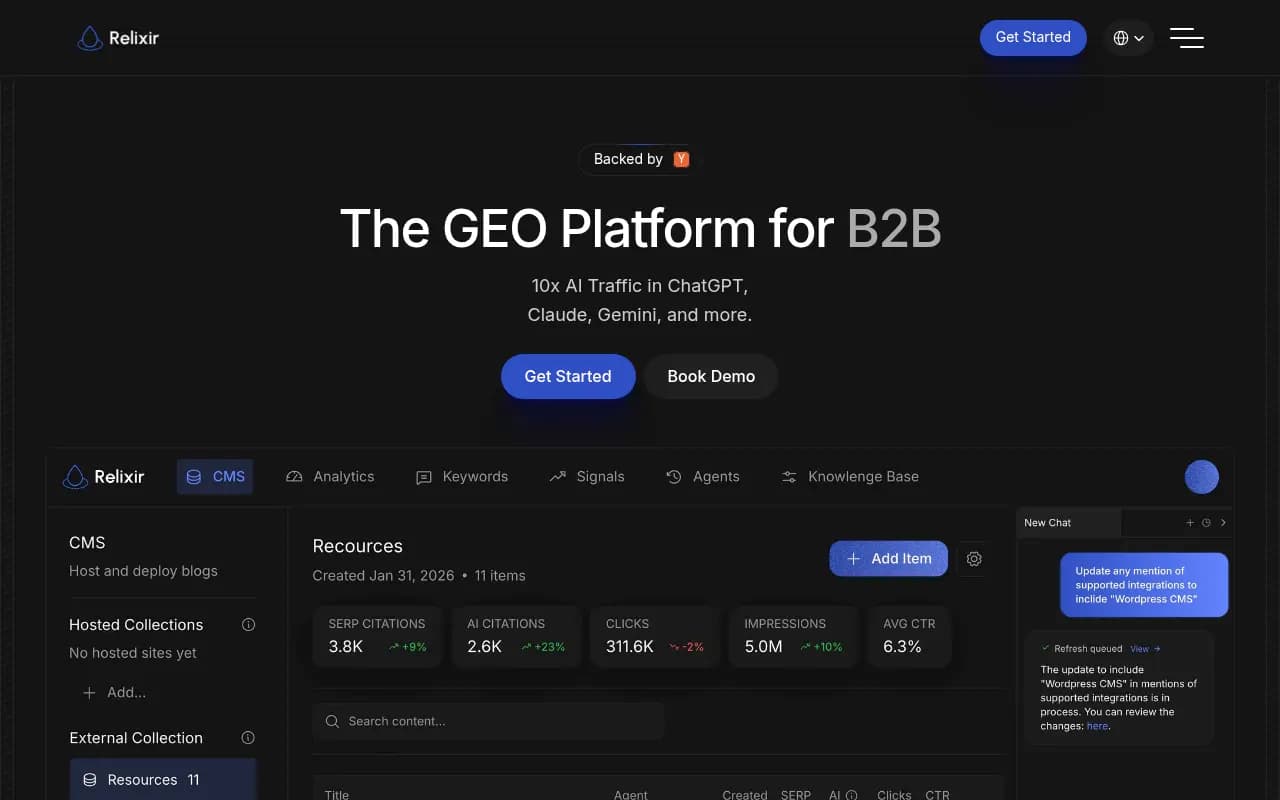
Relixir: all-in-one GEO with content generation
Relixir combines AI visibility analysis with content generation in a single platform. It's worth evaluating if you want a Peec.ai replacement that handles both tracking and publishing without requiring you to stitch together multiple tools.
Otterly.AI: if you just want a cheaper Peec.ai
Honest caveat: Otterly.AI is still a Tier 1 monitoring tool. It doesn't solve the content gap problem. But if your team's actual need is just broader model coverage at a lower price point -- and you're handling content creation elsewhere -- Otterly.AI is a reasonable lateral move.

Scrunch AI: visibility plus partnership intelligence
Scrunch AI is worth considering if you're a brand or agency that cares about offsite AI visibility -- which third-party pages, Reddit threads, and external sources are driving your AI citations. It combines visibility tracking with content and partnership intelligence. Not a content generator, but useful for understanding where to invest offsite.
ZipTie: deep AI traffic analysis
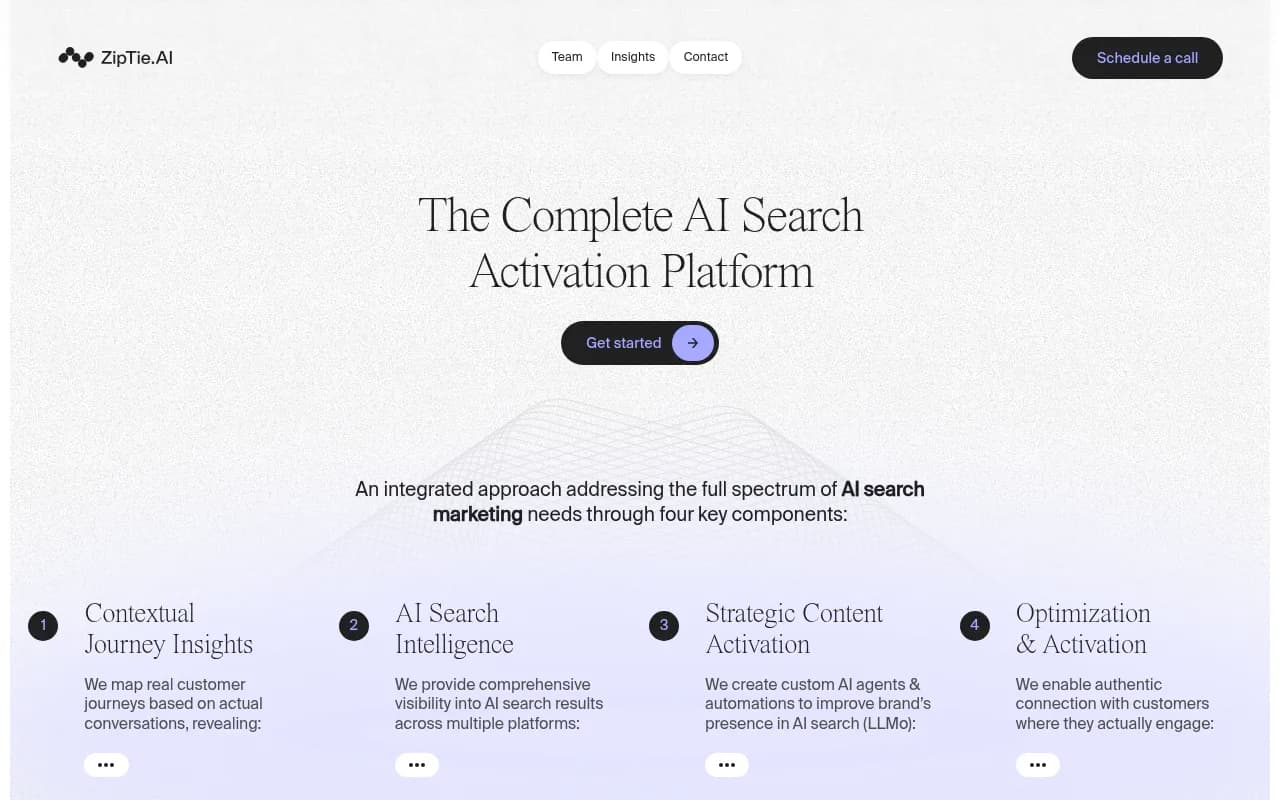
ZipTie focuses on the traffic attribution side of AI search -- understanding how AI referral visits behave, which models drive the most engaged traffic, and where drop-offs happen. If your primary frustration with Peec.ai is the lack of traffic data rather than the lack of content tools, ZipTie is worth a look.
Profound: enterprise analytics depth
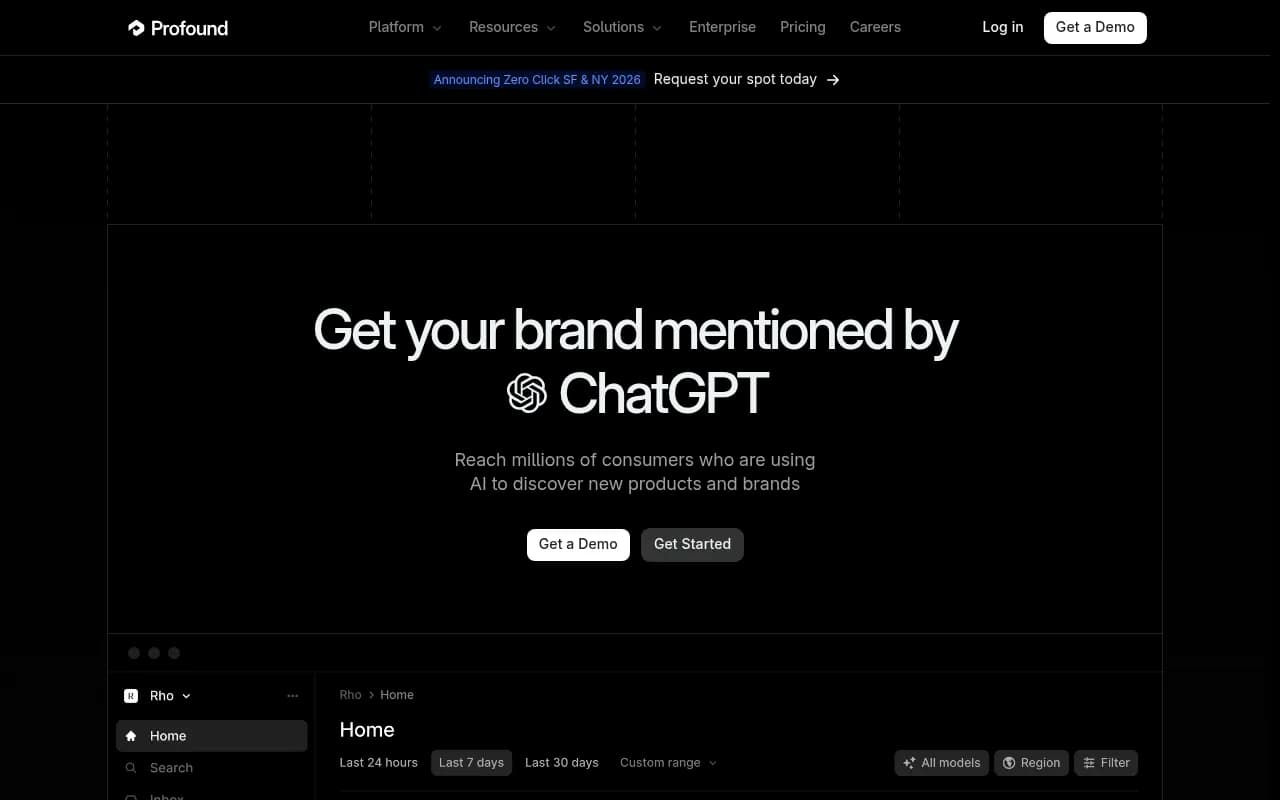
Profound has strong analytics capabilities and is built for larger organizations with complex reporting needs. It's more expensive than most alternatives and doesn't have content generation, but the depth of its visibility data and competitive analysis is genuinely good at the enterprise tier.
How to actually migrate
The good news: migrating away from Peec.ai is not complicated. Here's a practical sequence.
Step 1: Export your prompt list
Before you cancel anything, export every prompt you've been tracking in Peec.ai. This is your baseline. You'll want to import these into your new platform so you have continuity in the data and can compare before/after visibility scores.
Most platforms accept prompt lists as a CSV or let you paste them directly. Promptwatch, ContentMonk, and Profound all support this.
Step 2: Set up your new platform in parallel
Run both tools for at least two weeks before canceling Peec.ai. This lets you:
- Verify the new platform is picking up the same citations Peec.ai was tracking
- Catch any discrepancies in how different platforms query AI models (they do differ)
- Build a baseline in the new tool before you lose the old one
Step 3: Map your content gaps
Once your new platform has a week or two of data, run a gap analysis. If you're on Promptwatch, this is the Answer Gap Analysis feature -- it shows you the specific prompts where competitors appear and you don't, along with the content your site is missing.
If you're on a monitoring-only platform, you'll need to do this manually by comparing your visibility scores against competitors and identifying the topics where the gap is largest.
Step 4: Prioritize by prompt volume and difficulty
Not all gaps are worth filling. A prompt that gets asked 10 times a month is worth less than one that gets asked 10,000 times. Platforms like Promptwatch surface prompt volume estimates and difficulty scores so you can prioritize the gaps with the best return on effort.
Without this data, you're guessing. With it, you can build a content calendar that targets the highest-value AI search opportunities first.
Step 5: Publish and track
Create content targeting your priority gaps. If your platform has content generation (Promptwatch's Content Agents, ContentMonk's workflow, Relixir's generation tools), use it -- the output is grounded in actual prompt data and citation patterns, which matters more than raw writing quality for AI visibility.
Then track. Watch for:
- Citation rate changes on the pages you published
- Crawler activity (if your platform has logs)
- Traffic attribution from AI referrals
Give it 4-6 weeks. AI models don't update their responses instantly -- they need to crawl your new content, process it, and start incorporating it into responses. The timeline from publish to citation is typically 2-8 weeks depending on the model and the topic.
Step 6: Cancel Peec.ai
Once you've confirmed your new platform is tracking everything Peec.ai was tracking, and you've got your first round of gap-filling content live, you can safely cancel. Keep your exported prompt list as a historical record.
A note on model coverage
One thing worth checking carefully when evaluating alternatives: how each platform actually queries AI models. Some tools use API access, which can return different results than what users see in the actual ChatGPT or Perplexity interface. Shopping recommendations, citation carousels, and AI Overview formats can differ significantly between API and user-facing outputs.
Promptwatch specifically tracks how AI search engines behave in real user interfaces, not just through APIs. This matters if you're trying to understand what your actual customers see when they ask about your product category.
The bottom line
Peec.ai is a good monitoring tool that's genuinely easy to use. If all you need is a quick read on whether your brand appears in a handful of AI models, it does that well.
But if you've been using it for a few months and you're still staring at a list of gaps with no clear path to fixing them, that's the product's limit -- not yours. The tools that close the loop between "here's where you're invisible" and "here's content that makes you visible" are worth the upgrade.
For most teams, Promptwatch is the most complete option in 2026. ContentMonk and Relixir are strong alternatives if you want something more focused. And if you genuinely just need monitoring with broader model coverage, Otterly.AI gets you there without the complexity.
The migration itself takes a few hours. The data continuity takes a couple of weeks. The results -- if you actually use the gap analysis and content tools -- show up within a month or two.