Key Takeaways
- Prompt intelligence data (volume estimates, difficulty scores, query fan-outs) helps you prioritize which AI search queries to target first—eliminating guesswork and focusing effort on high-impact prompts
- Not all prompts are equal: branded queries show existing awareness, unbranded queries drive discovery, and transactional prompts convert—your mix determines whether you're building awareness or capturing demand
- Persona-based tracking ensures you monitor the prompts your actual customers ask, not generic queries that look good on a dashboard but don't reflect real search behavior
- Query fan-outs reveal how one parent prompt branches into dozens of sub-queries—understanding this structure lets you create content that captures entire topic clusters instead of isolated questions
- Constraint mapping (location, use case, budget, industry) shows you which prompt variations matter most to your business and which you can safely ignore
AI search has fundamentally changed how people discover products, compare solutions, and make buying decisions. Instead of clicking through ten blue links, users ask ChatGPT, Claude, Perplexity, or Google AI Overviews a direct question—and the AI model synthesizes an answer from multiple sources, citing the ones it trusts most.
If your brand isn't being cited in those responses, you're invisible. And if you're tracking the wrong prompts, you're flying blind.
This guide walks through how to use prompt intelligence data to prioritize AI search queries strategically—so you're optimizing for the prompts that actually drive visibility, traffic, and revenue.
What is prompt intelligence data?
Prompt intelligence data is the layer of insights that tells you which AI search queries matter most. It includes:
- Volume estimates: How often a prompt is asked across AI engines (ChatGPT, Perplexity, Claude, etc.)
- Difficulty scores: How competitive a prompt is—how hard it is to get cited as a top source
- Query fan-outs: How one parent prompt branches into sub-queries and related variations
- Citation patterns: Which domains, pages, and content types AI models prefer for specific prompts
- Persona signals: Who's asking the prompt (job title, industry, intent stage)
Traditional SEO keyword research gives you search volume and keyword difficulty. Prompt intelligence gives you the same framework for AI search—but with a critical difference: AI engines don't rank pages, they cite sources. You're not optimizing for position 1 on a SERP. You're optimizing to be the first citation in a synthesized answer.
Platforms like Promptwatch provide this data at scale, analyzing over 1.1 billion citations and prompts to surface volume estimates, difficulty scores, and query fan-outs for any topic.

Why prioritization matters in AI search
You can't track every possible prompt. Even a narrow B2B SaaS product could generate thousands of potential queries—branded, unbranded, comparison, how-to, troubleshooting, feature-specific, use-case-driven, persona-targeted.
Without prioritization, you end up in one of two traps:
- Tracking vanity prompts: High-volume queries that look impressive on a dashboard but don't reflect how your actual customers search (e.g. "best project management software" when your ICP asks "project management for remote engineering teams")
- Tracking too broadly: Monitoring 500+ prompts with no clear action plan—you see data but can't act on it because you don't know which gaps to fix first
Prioritization solves this. It lets you focus on the prompts that:
- Reflect real customer search behavior (persona-aligned)
- Drive meaningful traffic and conversions (high intent)
- Are winnable given your domain authority and content resources (realistic difficulty)
- Cover the full funnel (awareness, consideration, decision)
The four dimensions of prompt prioritization
1. Volume: How often is this prompt asked?
Volume estimates tell you the size of the opportunity. A prompt asked 10,000 times per month is worth more attention than one asked 50 times—assuming the audience and intent align with your goals.
But volume alone is misleading. A high-volume generic prompt ("AI tools") might drive impressions but zero conversions. A lower-volume, highly specific prompt ("AI tools for legal contract review") might convert at 10x the rate.
How to use volume data:
- Prioritize prompts with volume above your minimum threshold (e.g. 500+ monthly queries)
- Balance volume with specificity—don't chase generic head terms if your product serves a niche
- Use volume to identify emerging trends—prompts with rising volume signal shifting buyer behavior
2. Difficulty: How competitive is this prompt?
Difficulty scores estimate how hard it is to get cited for a given prompt. High-difficulty prompts are dominated by authoritative domains (think: Wikipedia, major publications, established SaaS vendors). Low-difficulty prompts are open—fewer strong competitors, more opportunity to rank.
Difficulty is influenced by:
- Domain authority: How trusted your website is in the eyes of AI models
- Content depth: Whether you have comprehensive, citation-worthy content on the topic
- Competitor strength: Who else is competing for citations on this prompt
How to use difficulty data:
- Start with low-to-medium difficulty prompts where you can win quickly
- Avoid high-difficulty prompts unless you have strong domain authority and deep content
- Use difficulty to set realistic expectations—don't expect to outrank Wikipedia for "what is project management" if you launched six months ago
3. Intent: What is the user trying to do?
Not all prompts drive the same business outcome. Intent determines whether a prompt generates awareness, consideration, or conversion.
Intent categories:
- Informational: "What is generative engine optimization?" (awareness)
- Navigational: "Promptwatch login" (existing customer)
- Comparison: "Promptwatch vs Otterly.AI" (consideration)
- Transactional: "Best GEO platform for agencies" (decision)
How to prioritize by intent:
- Early-stage brands: Focus on informational and comparison prompts to build awareness
- Established brands: Prioritize transactional and navigational prompts to capture demand
- Full-funnel strategy: Track a balanced mix across all intent stages
4. Persona alignment: Who's asking this prompt?
The most overlooked dimension of prioritization is persona fit. A prompt might have high volume and low difficulty—but if it's asked by the wrong audience, it's worthless.
Example: A B2B SaaS tool for enterprise marketing teams shouldn't prioritize "free social media scheduling tools"—even if the volume is massive. The persona (solopreneurs, small businesses) doesn't match the ICP.
How to ensure persona alignment:
- Map prompts to buyer personas (job title, company size, industry, pain points)
- Use constraint mapping (see below) to filter prompts by location, budget, use case
- Validate prompts against real customer conversations—sales calls, support tickets, onboarding surveys
How to build a prioritized prompt list
Step 1: Define your core topics
Start with the high-level topics your brand needs to own in AI search. These are the categories where you want to be cited consistently.
Example topics for a GEO platform:
- Generative engine optimization
- AI search visibility
- Brand monitoring in AI engines
- Content optimization for ChatGPT
- Competitor analysis in AI search
Topics are not prompts. Topics are the buckets. Prompts are the specific questions within each bucket.
Step 2: Generate prompt variations using query fan-outs
Query fan-outs show how one parent prompt branches into sub-queries. Understanding this structure helps you capture entire topic clusters instead of isolated questions.
Example fan-out for "generative engine optimization":
- What is generative engine optimization?
- How does GEO differ from SEO?
- Best GEO tools in 2026
- GEO strategies for B2B SaaS
- How to track AI search visibility
- GEO case studies and examples
Each sub-query represents a content opportunity. Platforms like Promptwatch surface these fan-outs automatically, showing you the full tree of related prompts.
Step 3: Apply constraint mapping
Constraint mapping filters prompts by the dimensions that matter to your business:
- Location: "GEO tools for UK agencies" vs "GEO tools for US agencies"
- Industry: "AI search optimization for healthcare" vs "AI search optimization for e-commerce"
- Company size: "GEO for startups" vs "enterprise GEO platform"
- Budget: "affordable AI visibility tracking" vs "premium GEO software"
- Use case: "GEO for product launches" vs "GEO for rebranding"
Constraint mapping ensures you're tracking prompts that reflect real customer search behavior—not generic queries that sound relevant but don't convert.
Step 4: Score and rank prompts
Create a scoring framework that weights volume, difficulty, intent, and persona alignment. Example:
| Prompt | Volume | Difficulty | Intent | Persona Fit | Score |
|---|---|---|---|---|---|
| Best GEO tools for agencies | High | Medium | Transactional | Strong | 9/10 |
| What is generative engine optimization? | High | Low | Informational | Medium | 7/10 |
| GEO vs SEO | Medium | Low | Informational | Strong | 8/10 |
| Free AI visibility tracking | High | High | Transactional | Weak | 4/10 |
Prioritize prompts with scores above your threshold (e.g. 7+). These are your high-impact targets.
Step 5: Validate with real data
Before committing to a prompt list, validate it against:
- Search Console data: Which queries already drive traffic to your site?
- Sales conversations: What questions do prospects ask during demos?
- Support tickets: What problems are customers trying to solve?
- Competitor analysis: Which prompts are competitors winning for?
Validation ensures your prompt list reflects reality, not assumptions.
Balancing branded vs unbranded prompts
Your prompt mix determines whether you're building awareness or capturing demand.
Branded prompts (e.g. "Promptwatch features", "Promptwatch pricing") show existing awareness. They're easy to win—you already own your brand name—but they don't expand your reach.
Unbranded prompts (e.g. "best GEO platform", "how to track AI search visibility") drive discovery. They're harder to win but unlock new audiences.
Recommended mix:
- Early-stage brands: 70% unbranded, 30% branded (focus on discovery)
- Established brands: 50/50 split (balance discovery and demand capture)
- Market leaders: 30% unbranded, 70% branded (defend your position)
Which AI engines should you track?
Not all AI engines matter equally. Prioritize based on:
- Audience behavior: Where do your customers actually search? (ChatGPT, Perplexity, Google AI Overviews?)
- Market share: ChatGPT and Google AI Overviews dominate usage—start there
- Differentiation: Some engines (Perplexity, Claude) are better for research-heavy queries; others (ChatGPT Shopping) are better for product discovery
Recommended tracking setup:
- Core engines: ChatGPT, Google AI Overviews, Perplexity (cover 80%+ of AI search volume)
- Secondary engines: Claude, Gemini, Copilot (add if your audience skews technical or enterprise)
- Niche engines: Grok, DeepSeek, Meta AI (track if you have data showing usage)
Platforms like Promptwatch monitor 10+ AI engines in one dashboard, so you don't have to choose—but if you're manually tracking, start with the big three.
How to act on prompt intelligence data
Tracking prompts is step one. The real value comes from closing the loop: finding gaps, creating content, and measuring results.
Find the gaps
Answer Gap Analysis shows which prompts competitors are visible for but you're not. This is your content roadmap—the exact topics, angles, and questions AI models want answers to but can't find on your site.
Example gap: Competitors are cited for "GEO strategies for B2B SaaS" but you're not. The gap tells you what to write.
Create content that ranks in AI
Generic blog posts don't get cited. AI models prefer:
- Comprehensive guides: 2,000+ words with clear structure, examples, and data
- Comparison content: Side-by-side feature breakdowns with tables and screenshots
- Case studies: Real results with specific metrics and outcomes
- How-to tutorials: Step-by-step instructions with visuals
Platforms like Promptwatch include an AI writing agent that generates articles grounded in real citation data—content engineered to get cited by ChatGPT, Claude, and Perplexity.
Track the results
Page-level tracking shows which content is being cited, how often, and by which models. Close the loop with traffic attribution (code snippet, GSC integration, or server log analysis) to connect visibility to revenue.
This cycle—find gaps, generate content, track results—is what separates optimization platforms from monitoring dashboards.
Common mistakes in prompt prioritization
Mistake 1: Tracking too many prompts
More prompts ≠ better insights. Tracking 500 prompts with no action plan is worse than tracking 50 high-impact prompts and optimizing aggressively.
Fix: Start with 20-50 core prompts. Expand only after you've closed the gaps on your initial list.
Mistake 2: Ignoring persona fit
High-volume prompts that don't match your ICP waste resources. A B2B enterprise tool shouldn't chase "free" or "cheap" queries.
Fix: Map every prompt to a buyer persona. If it doesn't align, cut it.
Mistake 3: Focusing only on branded prompts
Branded prompts are easy wins but don't expand your reach. If 90% of your tracked prompts include your brand name, you're not building awareness.
Fix: Aim for a 50/50 branded/unbranded split (adjust based on your growth stage).
Mistake 4: Treating all AI engines equally
ChatGPT and Google AI Overviews drive 80%+ of AI search volume. Spending equal effort on niche engines (Grok, DeepSeek) dilutes focus.
Fix: Prioritize the engines your audience actually uses. Validate with user surveys or analytics.
Mistake 5: Not validating with real data
Prompt lists built on assumptions fail. Always validate against Search Console, sales calls, and competitor analysis.
Fix: Cross-reference your prompt list with at least two real data sources before committing.
Tools for prompt intelligence and prioritization
Several platforms provide prompt intelligence data, but capabilities vary widely:
Full-featured platforms (tracking + content generation + optimization):
- Promptwatch: The only platform rated as a "Leader" across all GEO categories in 2026. Provides volume estimates, difficulty scores, query fan-outs, Answer Gap Analysis, and an AI writing agent. Monitors 10 AI engines. Pricing starts at $99/mo.
- Conductor: Enterprise AEO platform with prompt tracking and content optimization. Strong for large teams with complex workflows.
- Semrush: Traditional SEO platform that added AI search tracking. Uses fixed prompts, lacks content generation.
Monitoring-only platforms (tracking but no content tools):
- Otterly.AI: Basic visibility tracking. No crawler logs, no content gap analysis.

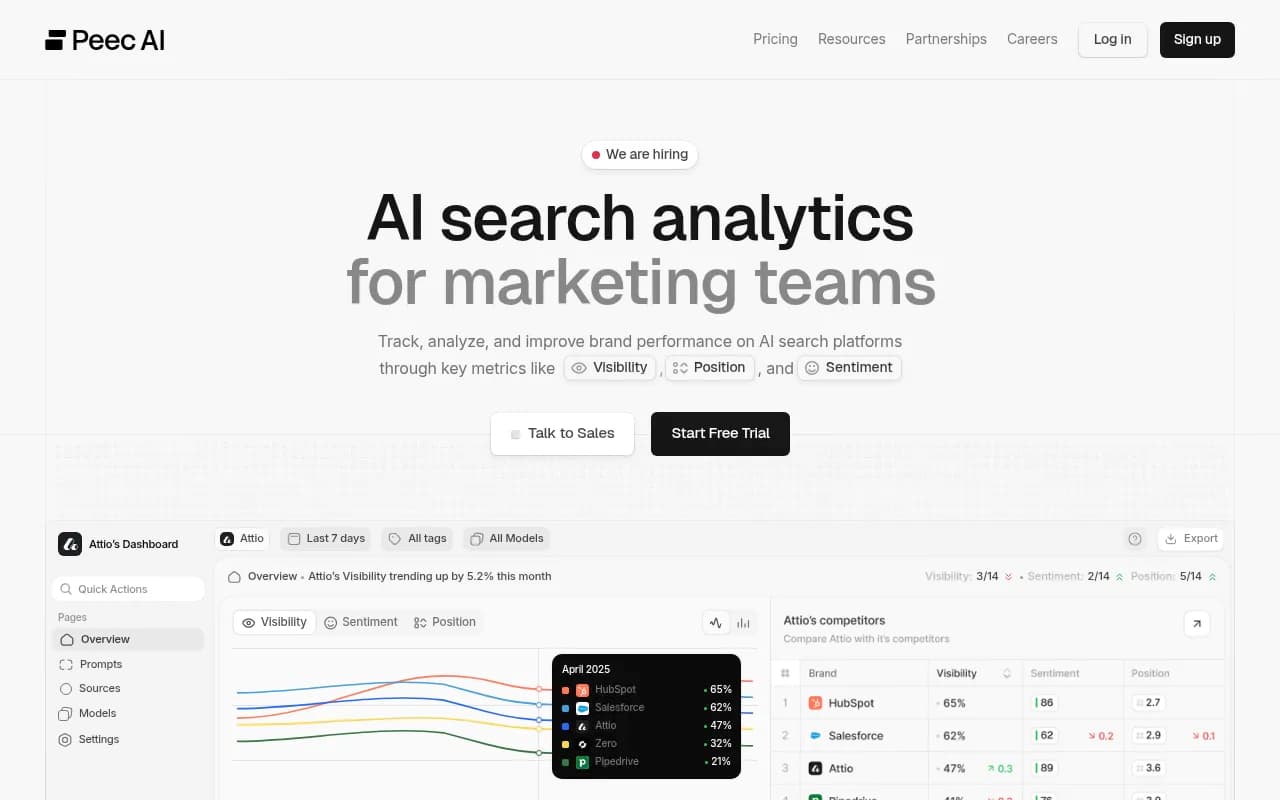
- Peec.ai: Multi-language tracking. Limited prompt metrics.
- AthenaHQ: Monitoring-focused. Lacks optimization capabilities.
Niche or limited-feature players:
- Search Party: Agency-oriented. Limited prompt metrics.
Search Party
- Brandlight.ai: Basic brand monitoring. No query fan-outs.
Comparison: Prompt intelligence features across platforms
| Platform | Volume estimates | Difficulty scores | Query fan-outs | Content generation | Crawler logs | Pricing |
|---|---|---|---|---|---|---|
| Promptwatch | Yes | Yes | Yes | Yes | Yes | $99-579/mo |
| Conductor | Limited | No | No | Yes | No | Custom |
| Semrush | No | No | No | No | No | $139+/mo |
| Otterly.AI | No | No | No | No | No | $49-299/mo |
| Peec.ai | Limited | No | No | No | No | €99-499/mo |
| AthenaHQ | No | No | No | No | No | Custom |
Promptwatch is the only platform that provides all four core prompt intelligence features—volume, difficulty, fan-outs, and content generation—in one place.
Building a scalable prompt prioritization workflow
Month 1: Foundation
- Define 5-10 core topics
- Generate 20-50 priority prompts using query fan-outs
- Set up tracking in your GEO platform
- Run initial Answer Gap Analysis
Month 2: Content creation
- Write 5-10 articles targeting high-priority gaps
- Optimize existing pages for top prompts
- Monitor crawler logs to ensure AI engines are indexing your content
Month 3: Measurement and iteration
- Track citation increases for targeted prompts
- Identify new gaps as competitors publish content
- Expand prompt list to 50-100 queries
- Refine scoring framework based on actual conversion data
Ongoing: Scale and optimize
- Add new prompts as search behavior evolves
- Retire low-performing prompts
- A/B test content formats (guides vs comparisons vs case studies)
- Integrate AI traffic attribution to connect visibility to revenue
The future of prompt intelligence
Prompt intelligence is still early. As AI search matures, expect:
- Real-time volume tracking: Live data on prompt popularity, not monthly estimates
- Intent classification at scale: Automated tagging of informational vs transactional prompts
- Predictive difficulty scoring: ML models that forecast how hard a prompt will be to win based on your domain authority and content depth
- Cross-engine normalization: Unified metrics that account for differences in how ChatGPT, Perplexity, and Claude cite sources
The platforms that build these capabilities first will dominate the GEO market. Right now, Promptwatch is the furthest ahead—but the gap is narrowing.
Final thoughts: Prioritization is the difference between noise and signal
AI search has created an explosion of trackable data. Every prompt, every citation, every model response is a data point. Without prioritization, you drown in noise.
Prompt intelligence data—volume, difficulty, intent, persona fit—turns noise into signal. It tells you which prompts matter, which gaps to fix first, and which content to create next.
The brands winning in AI search in 2026 aren't tracking more prompts. They're tracking the right prompts—and acting on the insights faster than their competitors.
Start with 20-50 high-impact queries. Close the gaps. Measure the results. Scale from there.
That's how you win in AI search.