Key takeaways
- YouTube transcripts are one of the most underused sources AI models pull from when generating answers -- structured, well-captioned videos get cited more often than unstructured ones
- AI models don't recommend the biggest brands; they recommend brands most clearly associated with specific concepts that match a user's query
- The "query fan-out" approach -- creating content that answers a cluster of related sub-questions -- dramatically increases the chance your brand appears multiple times in a single AI response
- Optimizing for AI citation requires treating your YouTube channel as a text-rich knowledge base, not just a video library
- Tracking whether your YouTube content is actually being cited requires dedicated AI visibility tooling, not just YouTube Analytics
YouTube has always been a search engine. But in 2026, it's also become a citation source -- one that ChatGPT, Perplexity, Google AI Overviews, and other AI models actively pull from when generating answers.
Most brands haven't caught up to this. They're still optimizing YouTube for views and watch time, which matters, but they're missing the bigger opportunity: getting their video content cited in AI-generated responses that millions of people read every day without ever clicking through to a website.
This guide walks through exactly how to build a YouTube strategy that serves both goals -- growing your channel and getting your brand recommended by AI search engines.
Why YouTube is now an AI citation source
The connection between YouTube and AI search isn't obvious until you think about how AI models actually work. They're trained on and retrieve from large bodies of text. YouTube, it turns out, generates enormous amounts of text -- through auto-generated transcripts, video descriptions, chapter markers, and comments.
When someone asks Perplexity "what's the best skincare routine for oily skin," the AI isn't just scanning blog posts. It's pulling from wherever authoritative, structured text exists on that topic. A well-optimized YouTube video with a detailed transcript, clear chapters, and a keyword-rich description is exactly the kind of structured content AI models can parse and cite.
According to research from JCT Growth, AI-generated search results increasingly pull from transcript-rich content, and video results often outrank traditional blog posts for informational queries. That means your YouTube content is competing in the same arena as your written content -- and if you're not optimizing it for AI readability, you're leaving citations on the table.
There's another factor worth understanding: AI models don't necessarily recommend the biggest brands. Exposure Ninja's work with The Ordinary is a good example. They helped that brand dominate "good value skincare" recommendations across multiple AI platforms not by outspending competitors, but by ensuring every piece of content -- across their own site, third-party publications, and user-generated reviews -- consistently reinforced the same two concepts: good value and scientifically backed. YouTube was part of that ecosystem.
That's the opportunity. Sharp positioning, consistently expressed across YouTube content, can outperform larger competitors who are less focused.
Step 1: Treat your channel as a structured knowledge base
The biggest mindset shift is this: stop thinking of YouTube as a place to publish videos and start thinking of it as a place to publish structured, AI-readable content that happens to be in video format.
What does that mean practically?
Write transcripts that work as standalone documents
Auto-generated captions are better than nothing, but they're messy. Upload a clean, edited transcript for every video. Write it so that someone reading the transcript alone -- without watching the video -- would get full value from it. AI models read transcripts this way.
Avoid filler phrases like "um, so, like I was saying." Structure your transcript with clear topic progressions. If you're explaining a five-step process, make sure each step is clearly labeled in the text.
Use chapters to signal structure
YouTube chapters (added via timestamps in the description) do two things: they help viewers navigate, and they signal to AI systems that your content is organized around specific sub-topics. A video titled "How to choose a B2B CRM" with chapters like "0:00 What to look for in a CRM," "2:30 Pricing models explained," and "5:00 Integration requirements" is far more parseable than an unstructured 10-minute video.
Each chapter is essentially a mini-article. AI models can cite specific sections of your video, not just the video as a whole.
Write descriptions as mini-articles
Most YouTube descriptions are either blank or a few lines of promotional copy. That's a missed opportunity. Write descriptions of 300-500 words that summarize the video's key points, include the main keywords naturally, and answer the core question the video addresses. Think of it as the article version of your video.
Step 2: Build content around query clusters, not individual keywords
Traditional YouTube SEO optimizes one video for one keyword. AI search doesn't work that way. When someone asks an AI a question, the model fans out across dozens of related sub-queries to build its answer. If your content only covers one angle of a topic, you'll get cited once at best.
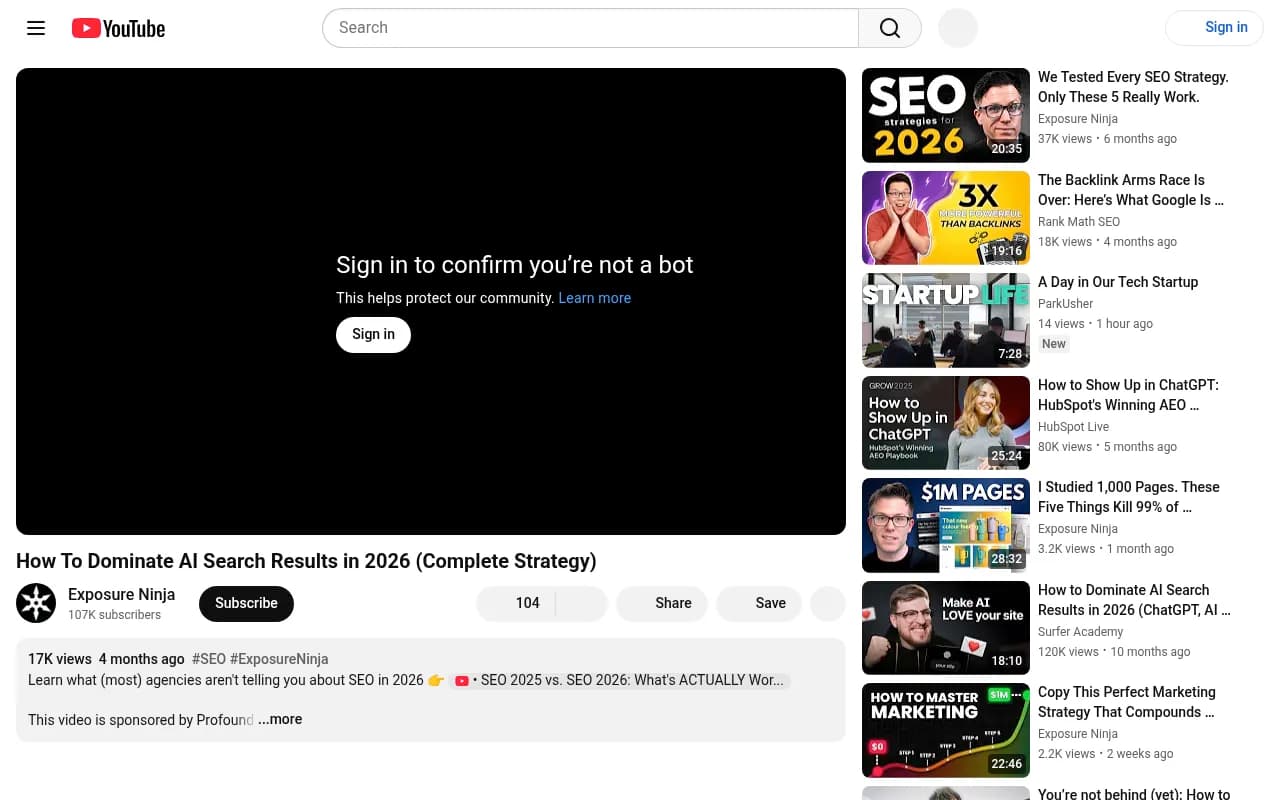
The "query fan-out" approach -- which Exposure Ninja describes as one of the most effective tactics for getting cited multiple times within a single AI response -- means building a cluster of videos that collectively cover every angle of a topic.
Here's how to apply this to YouTube:
- Identify a core topic your brand wants to own (e.g., "email marketing for e-commerce")
- Map out 8-12 sub-questions someone researching that topic would ask
- Create a video for each sub-question, with each video clearly referencing the others
- Link all videos in a playlist with a keyword-rich playlist title and description
When an AI model pulls together an answer about email marketing for e-commerce, it's more likely to cite your brand multiple times if you have content covering deliverability, segmentation, automation, subject line best practices, and platform comparisons -- rather than one generic overview video.
Tools like Promptwatch can help you identify which specific prompts competitors are being cited for but you're not, which is useful for finding the gaps in your content cluster.

Step 3: Optimize for the concepts AI associates with your brand
This is the part most YouTube strategies miss entirely. AI models don't just index content -- they build associations. They learn that certain brands are associated with certain concepts based on how consistently those concepts appear alongside the brand name across the web.
For YouTube, this means every video should reinforce the same 2-3 core concepts you want AI to associate with your brand. Not vaguely -- specifically.
If you want to be the brand AI recommends when someone asks about "affordable project management software for remote teams," then:
- Your video titles should include those concepts
- Your descriptions should use those exact phrases
- Your transcripts should return to those themes repeatedly
- Your channel description should state them clearly
Consistency matters more than volume. Ten videos that all reinforce the same positioning are more valuable for AI citation than fifty videos that cover random topics.
What concepts should you own?
Think about the specific query your ideal customer types into ChatGPT or Perplexity. Not "project management software" -- that's too broad. "Best project management software for remote teams under $20 per user" is the kind of specific, intent-rich query where a focused brand can win.
Work backwards from those queries to define the 2-3 concepts your YouTube content should consistently reinforce.
Step 4: Build authority through third-party validation
AI models weight content from authoritative sources more heavily. For YouTube, this means your channel's authority matters -- but so does whether other authoritative sources reference your videos.
A few tactics that work:
- Get your videos embedded in high-authority blog posts (your own and others')
- Collaborate with creators whose channels already have strong topical authority in your space
- Encourage citations in industry publications -- even a brief mention of your YouTube series in a Forbes or industry trade piece signals authority to AI models
- Respond to questions on Reddit and Quora with links to your relevant videos (done naturally, not spammy)
The Forbes Agency Council piece from Uri Samet at Buzz Dealer makes a useful point here: most marketing teams have never tested how their brand appears in AI-generated answers. Before investing in authority-building, audit where you currently stand. You need a baseline.
Step 5: Make your content AI-readable at a technical level
There are a few technical optimizations that specifically help AI models parse and cite your YouTube content.
Use structured, declarative language
AI models prefer content that makes clear, direct statements. "The three most important factors in choosing a CRM are integration capability, pricing transparency, and customer support quality" is more citable than "there are a lot of things to think about when choosing a CRM."
Write your scripts -- and therefore your transcripts -- with declarative sentences that state facts, recommendations, and conclusions clearly. Avoid hedging everything.
Include your brand name naturally in the transcript
AI models learn brand associations partly from co-occurrence -- how often your brand name appears alongside specific concepts in text. If your transcript never mentions your brand name, you're missing an association-building opportunity. Mention it naturally where it fits.
Answer the question directly, early
AI models often pull the most direct, concise answer from a piece of content. If your video spends three minutes on background before getting to the actual answer, the AI may not cite you at all -- or may cite a competitor who answers more directly.
Structure your videos so the core answer comes early. The "inverted pyramid" structure from journalism works well here: lead with the conclusion, then provide supporting detail.
Step 6: Track whether it's actually working
This is where most YouTube strategies fall apart. You can optimize everything above and still not know if your videos are being cited in AI responses -- because YouTube Analytics won't tell you that.
You need dedicated AI visibility tracking. A few tools worth knowing about:
Promptwatch tracks your brand's visibility across 10 AI models including ChatGPT, Perplexity, Claude, and Google AI Overviews. Critically, it also surfaces which sources AI models are citing -- including YouTube content -- so you can see whether your videos are actually being referenced. The Answer Gap Analysis shows which prompts competitors are being cited for that you're not, which helps you prioritize which video topics to create next.

Otterly.AI is a more affordable option for basic AI visibility monitoring if you're just starting out and want to track brand mentions across AI platforms.

Peec AI covers multi-language AI visibility tracking, useful if your YouTube content targets audiences in multiple countries.
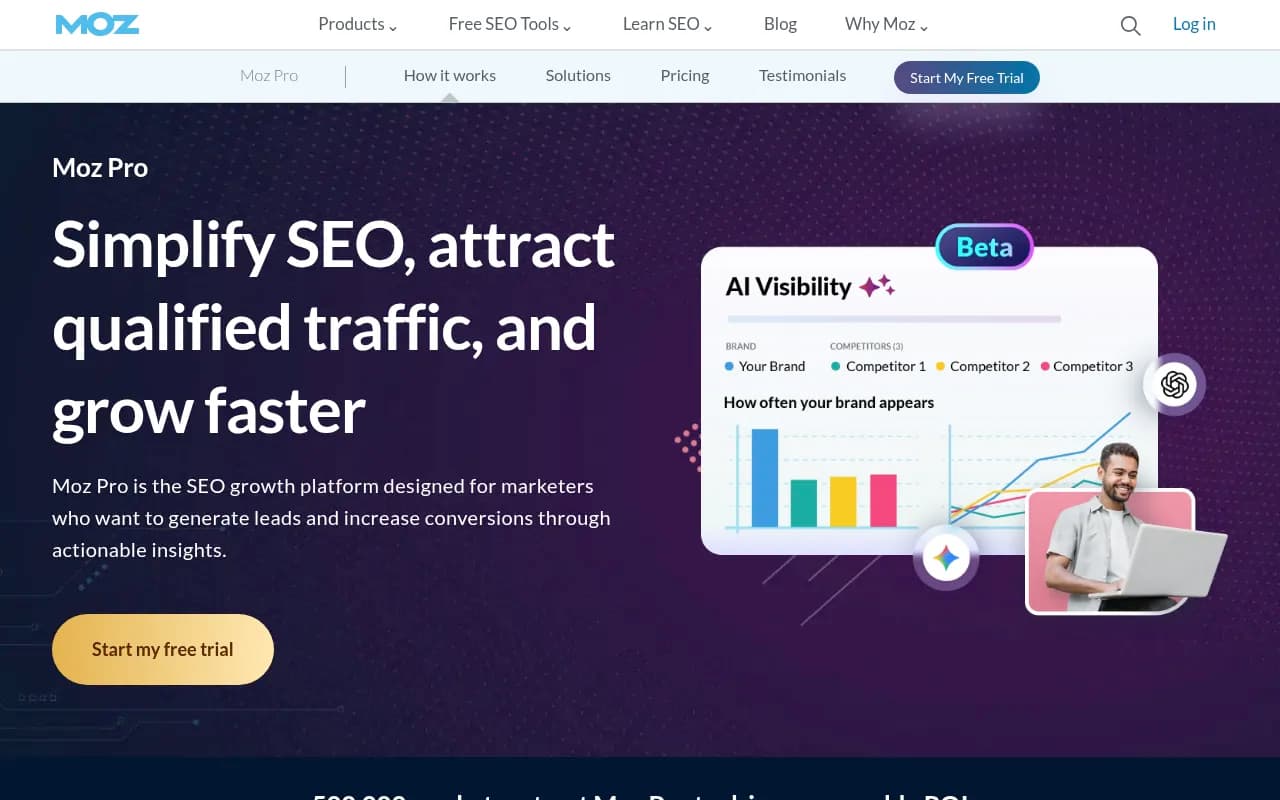
For tracking the traditional YouTube side of performance, tools like Moz Pro and Semrush still provide useful keyword and competitive data to inform your content planning.
A comparison of approaches: traditional YouTube SEO vs. AI citation optimization
| Factor | Traditional YouTube SEO | AI citation optimization |
|---|---|---|
| Primary goal | Views, watch time, subscribers | Brand citations in AI responses |
| Keyword strategy | One video per keyword | Content clusters covering query fan-outs |
| Description approach | Short, promotional | 300-500 word mini-article |
| Transcript quality | Auto-generated captions | Clean, edited, structured text |
| Success metric | YouTube Analytics | AI visibility tracking tools |
| Brand positioning | Implicit | Explicit, repeated, consistent |
| Third-party signals | Backlinks | Citations in publications, Reddit, forums |
| Content structure | Engaging narrative | Declarative, answer-first |
The good news: these two approaches aren't in conflict. A video optimized for AI citation -- clear structure, strong transcript, declarative language, query-focused title -- also tends to perform well in traditional YouTube search. You're not choosing between them.
Putting it together: a practical content calendar approach
Here's a simple framework for building a YouTube content calendar that serves both goals:
- Pick one topic cluster per quarter (e.g., "B2B email marketing")
- Map 8-10 sub-questions using a tool like Promptwatch's Answer Gap Analysis or manual research in ChatGPT and Perplexity
- Create one video per sub-question, each with a clean transcript, chapters, and a 300-word description
- Publish them as a playlist with a keyword-rich title
- Embed the videos in corresponding blog posts on your website
- Track AI citation rates monthly -- adjust topics based on where gaps remain
The brands winning AI citations in 2026 aren't publishing more content. They're publishing more structured, more focused, more consistently positioned content. YouTube is one of the most underused channels for doing exactly that.
Zero-click searches now account for nearly 60% of all Google queries according to SparkToro's 2024 data, and that number has only grown since. If your brand isn't showing up in the AI responses people read instead of clicking, you're invisible to a significant and growing portion of your potential customers. YouTube, done right, is one of the most practical ways to fix that.